

Katana Signed By Yasutsuga With Blade Length Test, Nbthk Hozon Certificate - Kanbun-enpo Era (1661–1680)
JAPAN - Kanbun-Enpo period (1661-1680), the beginning of the Edo period.
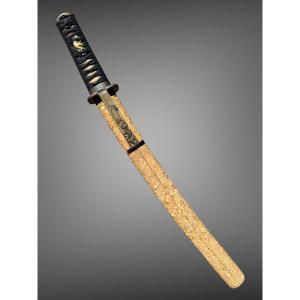
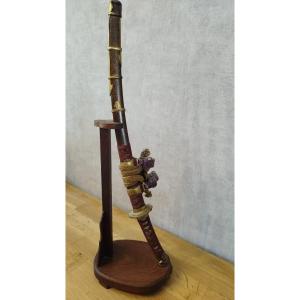
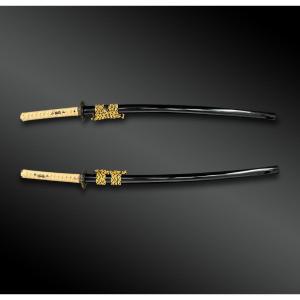
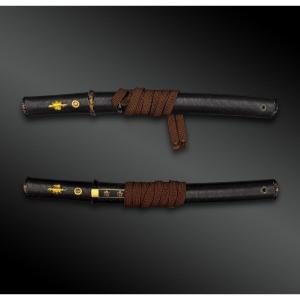
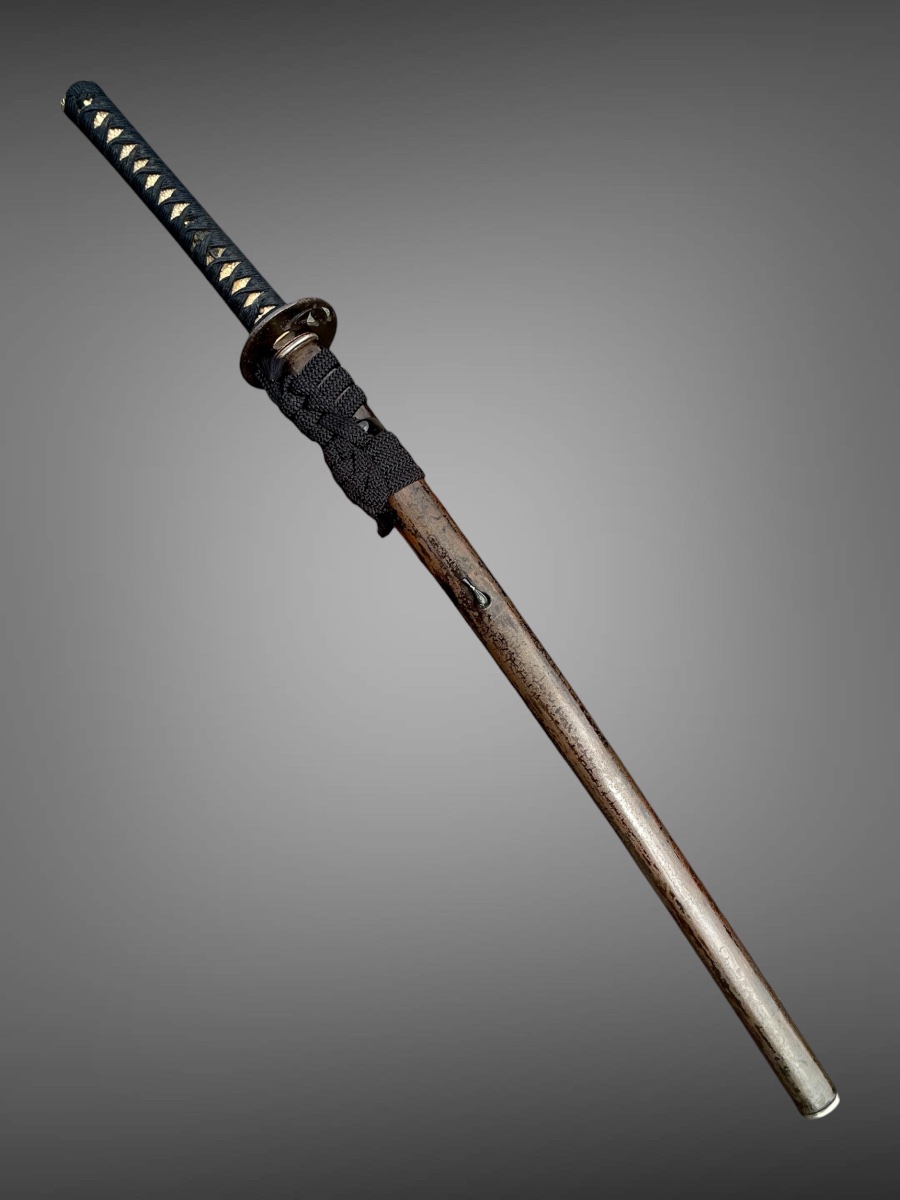
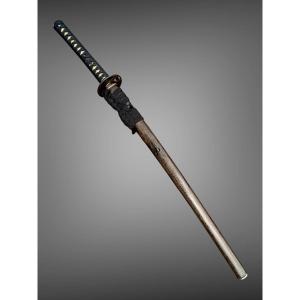
Samurai katana.
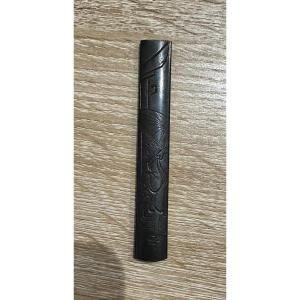
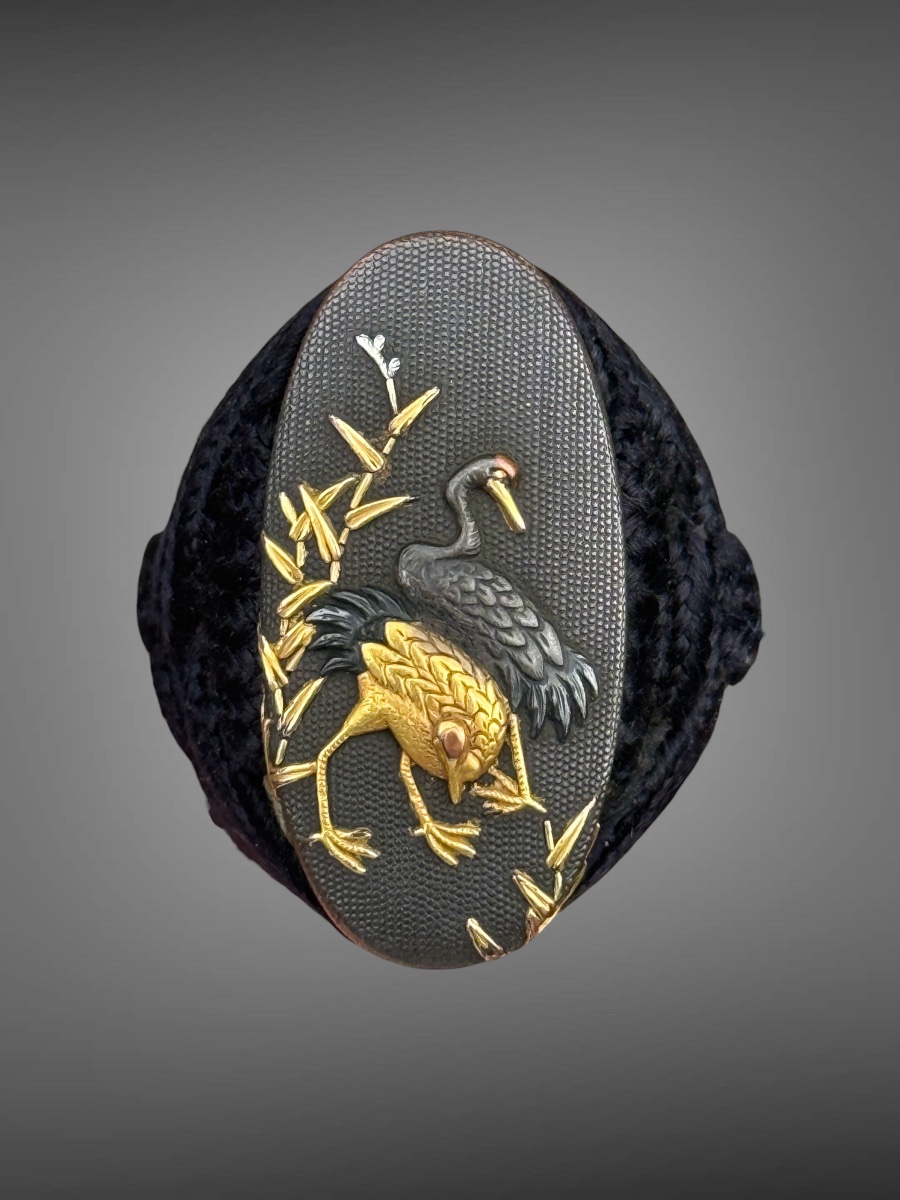
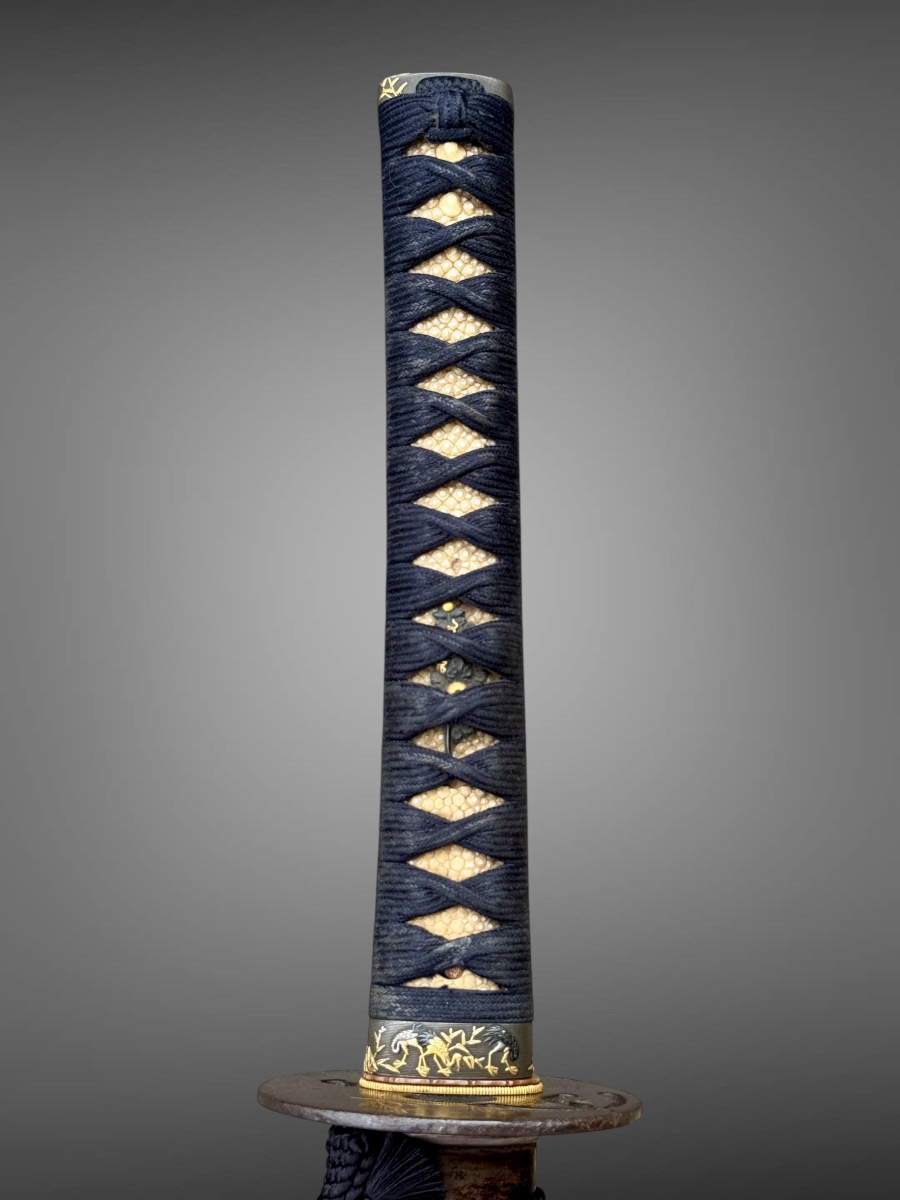
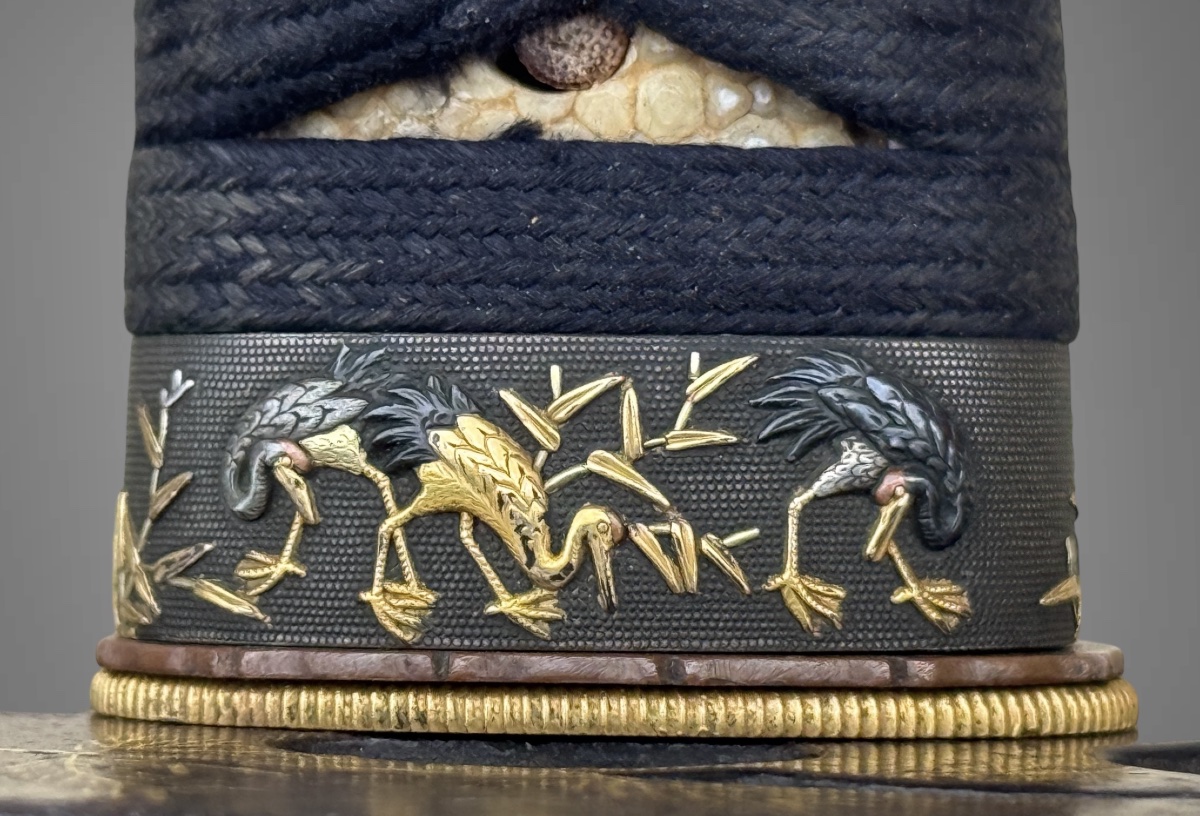
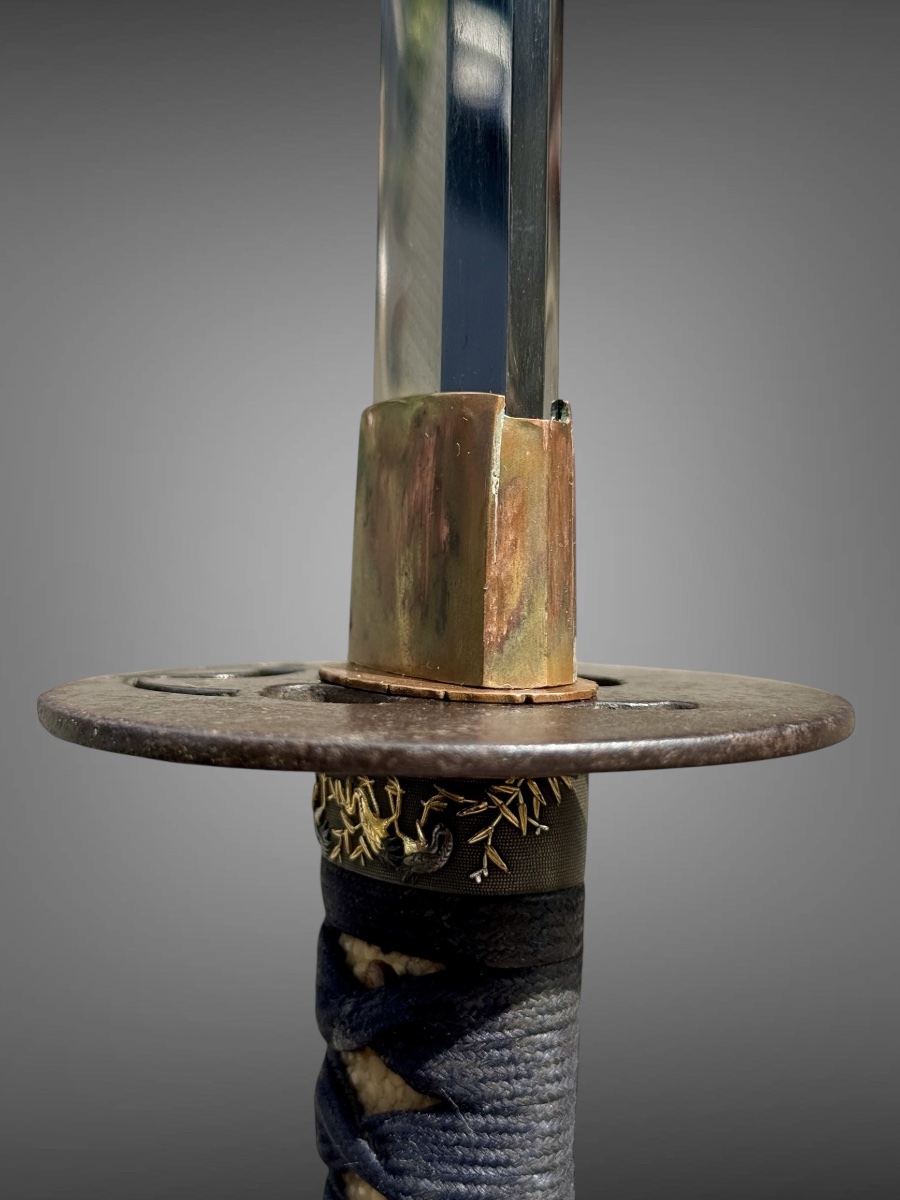
FUSHI and KASHIRA set in finely chased, patinated, and gilded copper, decorated with red-crowned cranes (prestigious animals whose hunting was once the exclusive prerogative of the Tokugawa shogunate).
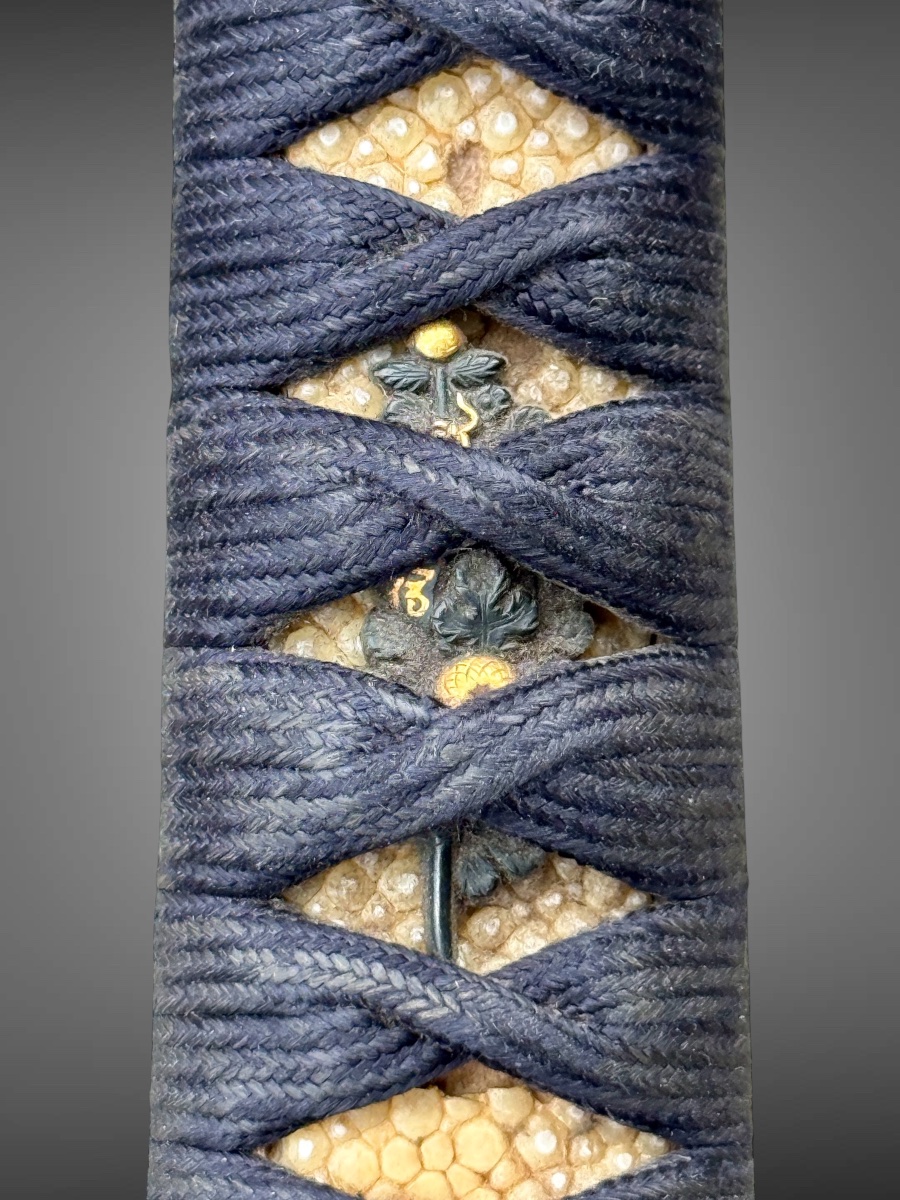
TSUKA in wood covered with ray skin and blue silk braid.
MENUKI in chased, patinated, and gilded copper, decorated with chrysanthemum flowers (symbol of autumn and longevity) and vine leaves (karakusa, also a symbol of longevity).
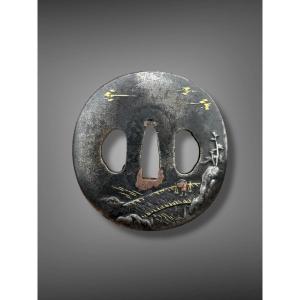
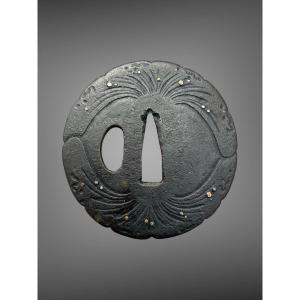
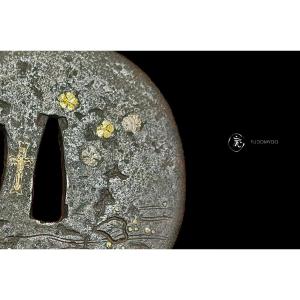
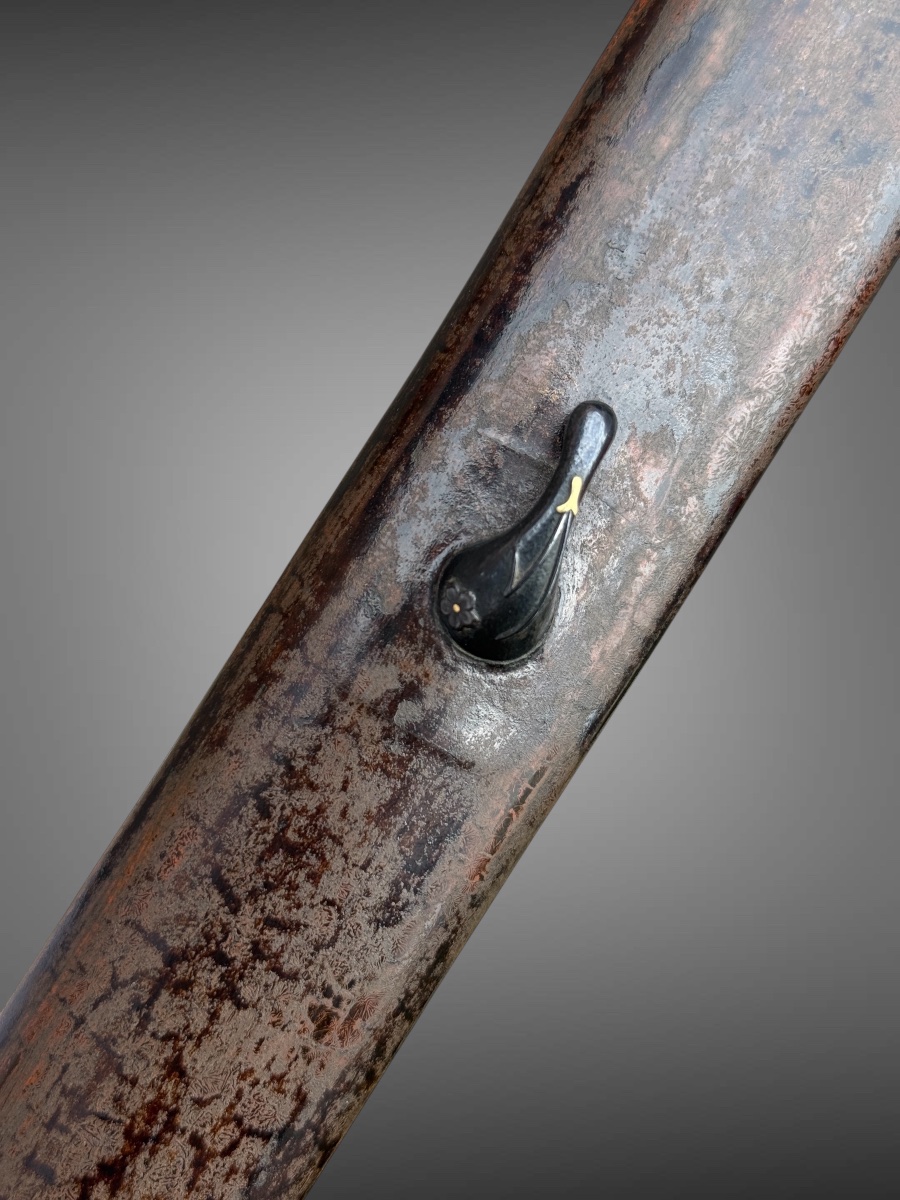
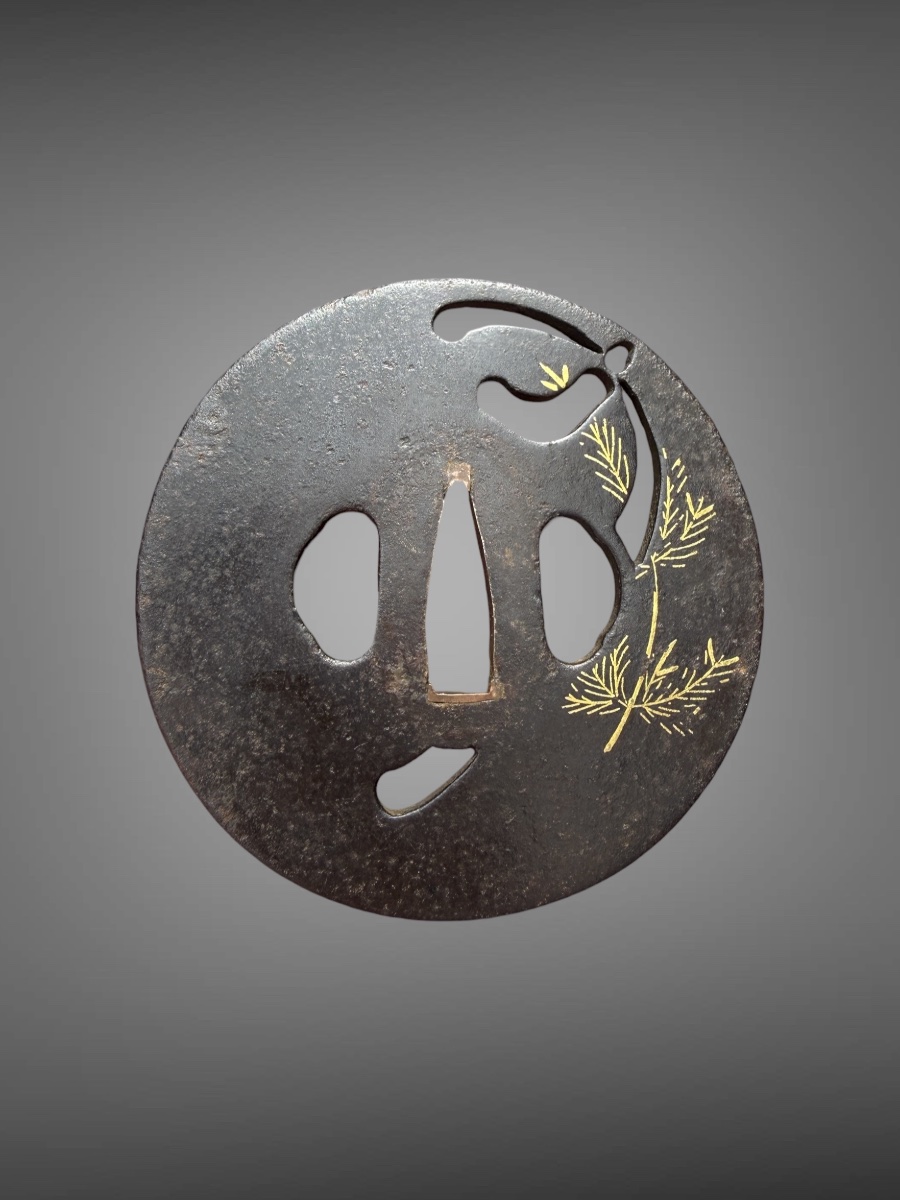
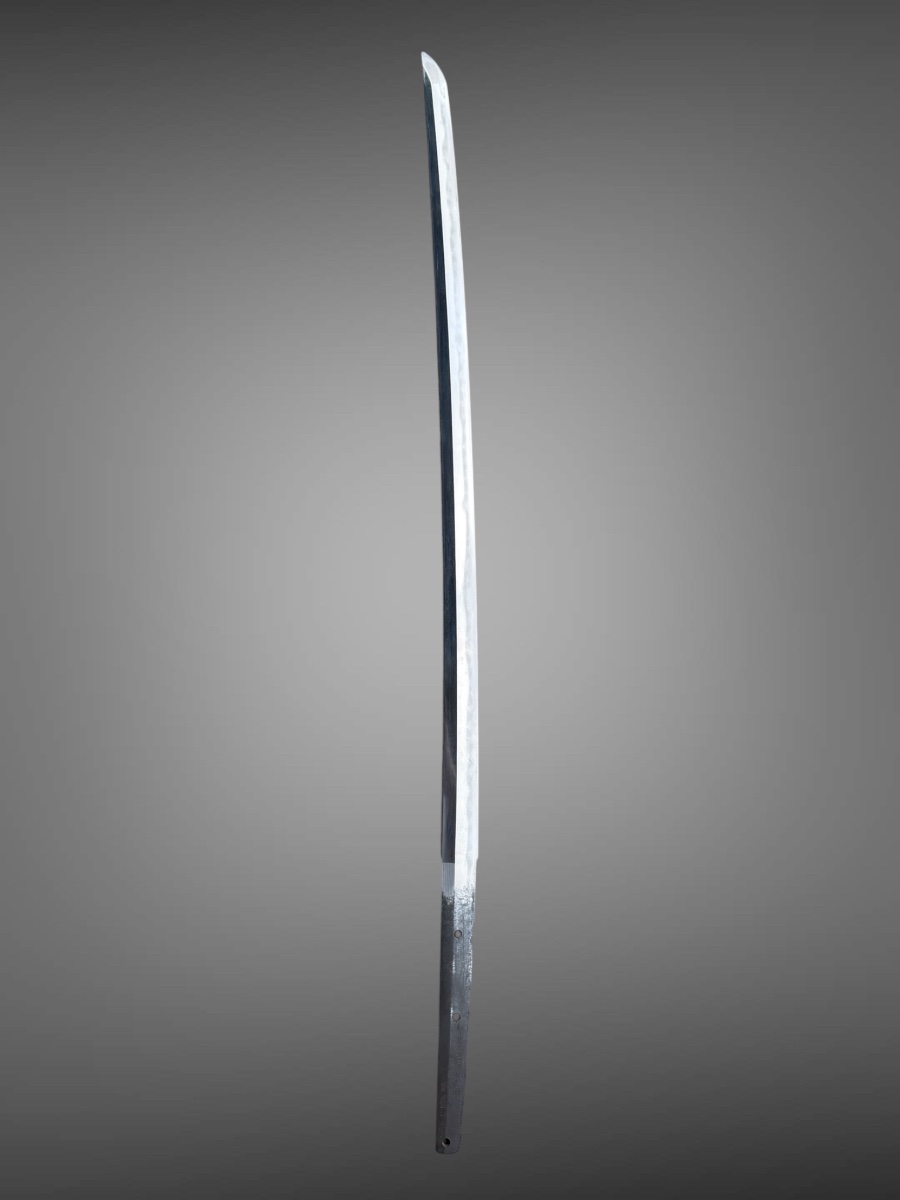
TSUBA maru-gata in wrought iron, openwork and inlaid with gold, decorated with pine needles (symbol of unity and harmony). SAYA in brown lacquered wood, kurigata featuring the pine needle symbol, kojiri in silver. Simple copper habaki. Straight blade, regular, straight, and well-defined hamon.
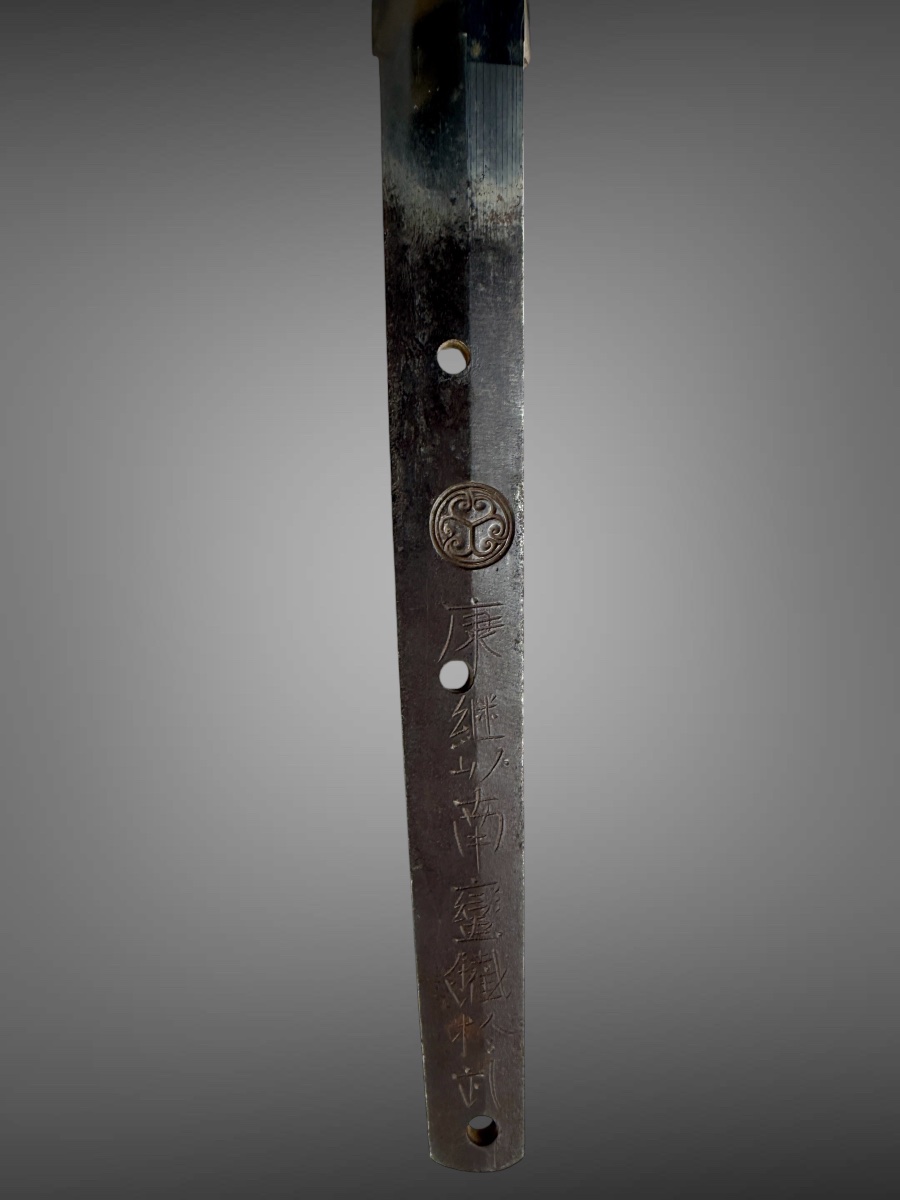
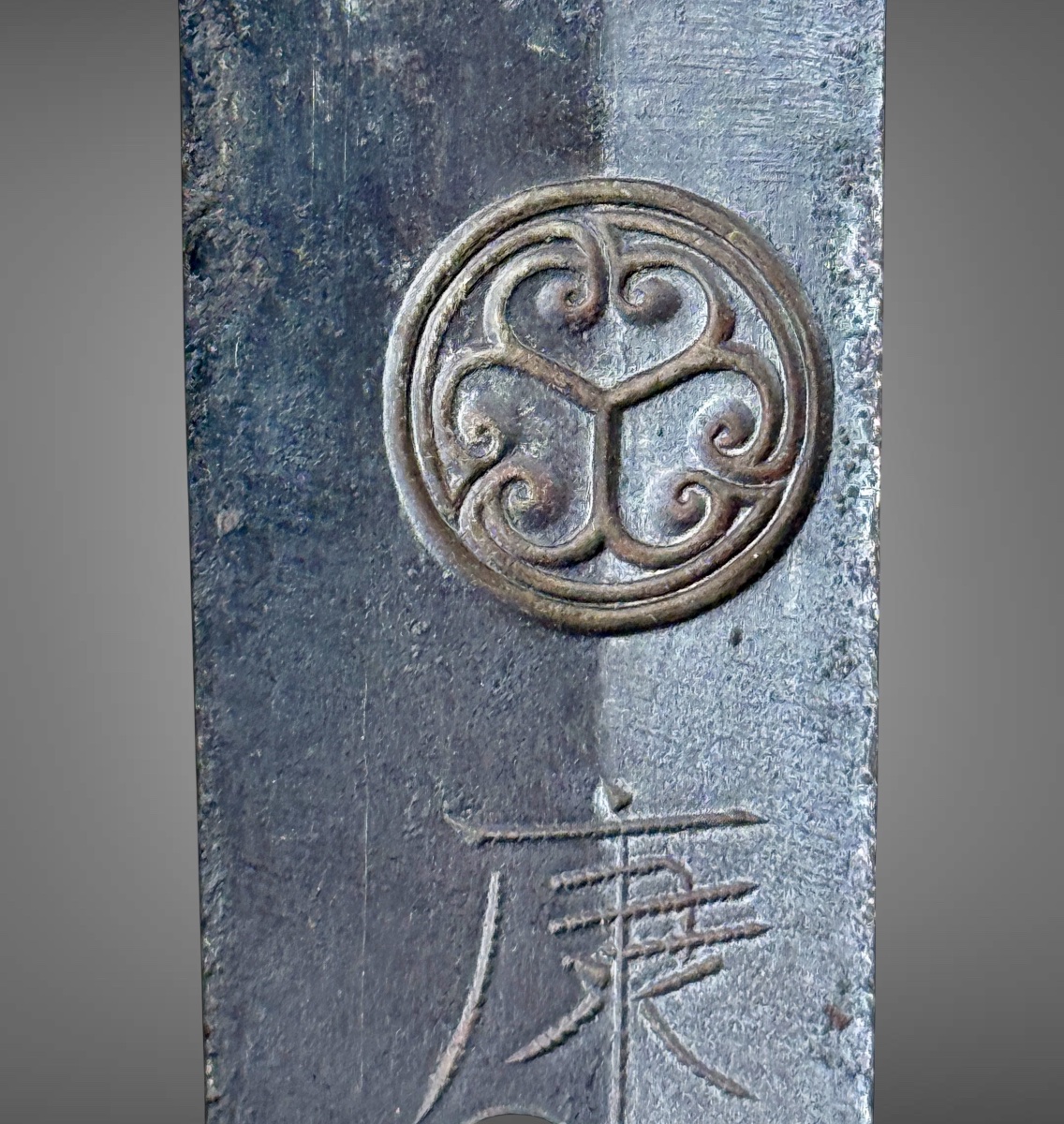
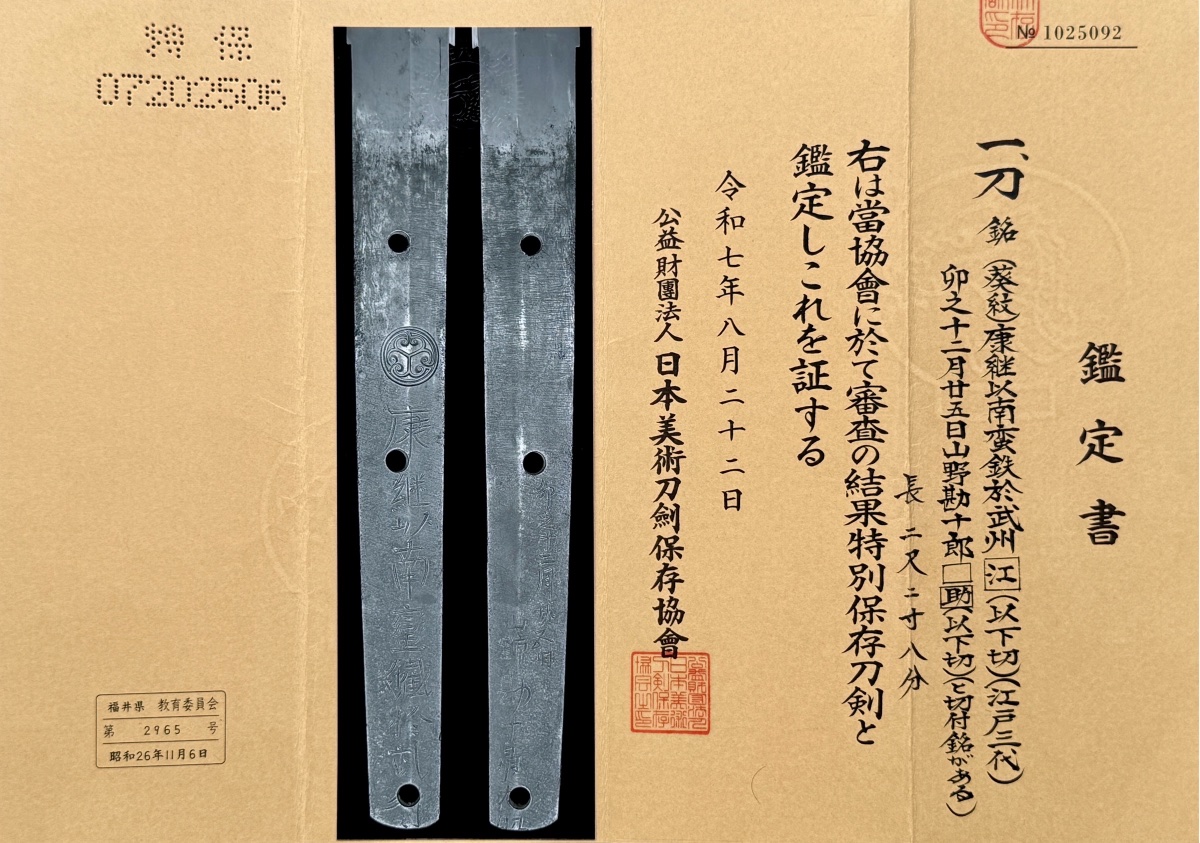
The tang is pierced three times and bears several inscriptions:
- The signature of the third generation of Edo Yasutsugu.
- The mon of the Tokugawa clan, a privilege granted by the shogunate recognizing a high-ranking swordsmith.
- A Saidan-mei inscription indicating a cutting test performed by Yamano Kanjuro (active circa 1661-1673).
Sold with stand, silk carrying case, and NBTHK Hozon certificate. NBTHK, also known as Nihon Bijutsu Touken Hozon Kyokai (the Society for the Preservation of Japanese Art Swords), is one of the oldest Japanese sword evaluation organizations in modern Japan.
Dimensions: 97 x 9 x 9 cm.
Edge length: 69.3 cm.
Bend: 0.75 cm.
Samurai katana.
FUSHI and KASHIRA set in finely chased, patinated, and gilded copper, decorated with red-crowned cranes (prestigious animals whose hunting was once the exclusive prerogative of the Tokugawa shogunate).
TSUKA in wood covered with ray skin and blue silk braid.
MENUKI in chased, patinated, and gilded copper, decorated with chrysanthemum flowers (symbol of autumn and longevity) and vine leaves (karakusa, also a symbol of longevity).
TSUBA maru-gata in wrought iron, openwork and inlaid with gold, decorated with pine needles (symbol of unity and harmony). SAYA in brown lacquered wood, kurigata featuring the pine needle symbol, kojiri in silver. Simple copper habaki. Straight blade, regular, straight, and well-defined hamon.
The tang is pierced three times and bears several inscriptions:
- The signature of the third generation of Edo Yasutsugu.
- The mon of the Tokugawa clan, a privilege granted by the shogunate recognizing a high-ranking swordsmith.
- A Saidan-mei inscription indicating a cutting test performed by Yamano Kanjuro (active circa 1661-1673).
Sold with stand, silk carrying case, and NBTHK Hozon certificate. NBTHK, also known as Nihon Bijutsu Touken Hozon Kyokai (the Society for the Preservation of Japanese Art Swords), is one of the oldest Japanese sword evaluation organizations in modern Japan.
Dimensions: 97 x 9 x 9 cm.
Edge length: 69.3 cm.
Bend: 0.75 cm.
19 500 €
Period: 17th century
Style: Asian art
Condition: Good condition
Material: Wrought iron
Length: 97 cm.
Height: 9 cm.
Depth: 9 cm.
Reference (ID): 1779560
Availability: In stock
Print