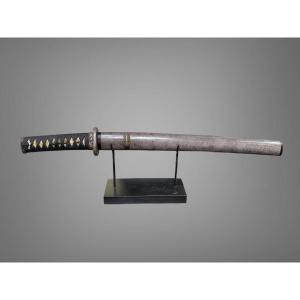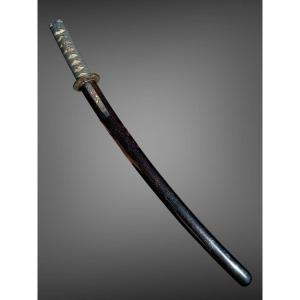


Japanese Wakizashi Sword Attributed To Fujiwara Munemishi, Nbthk Hozon Certificate - Late Edo.
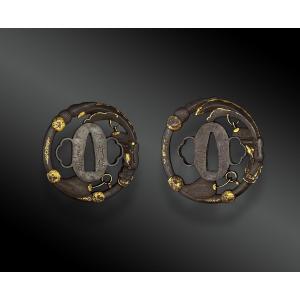
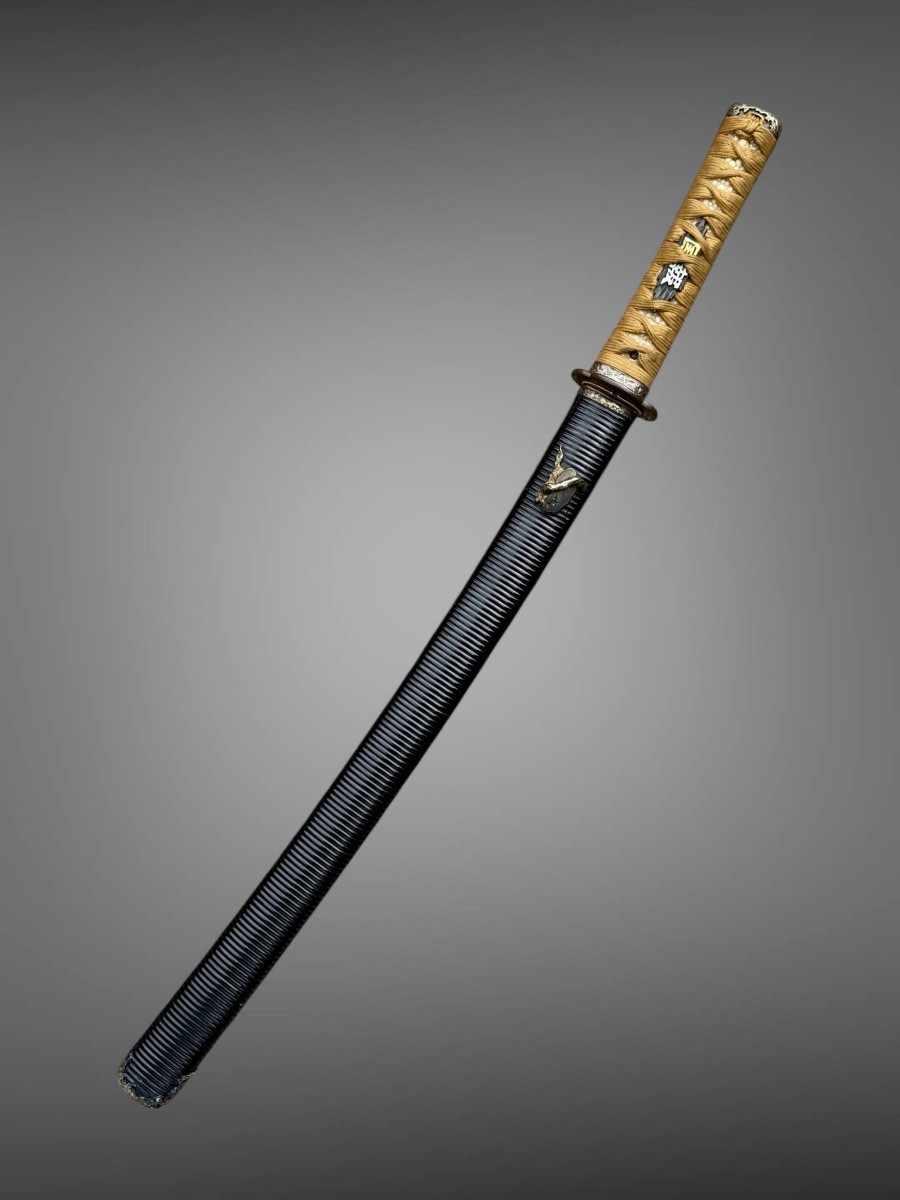
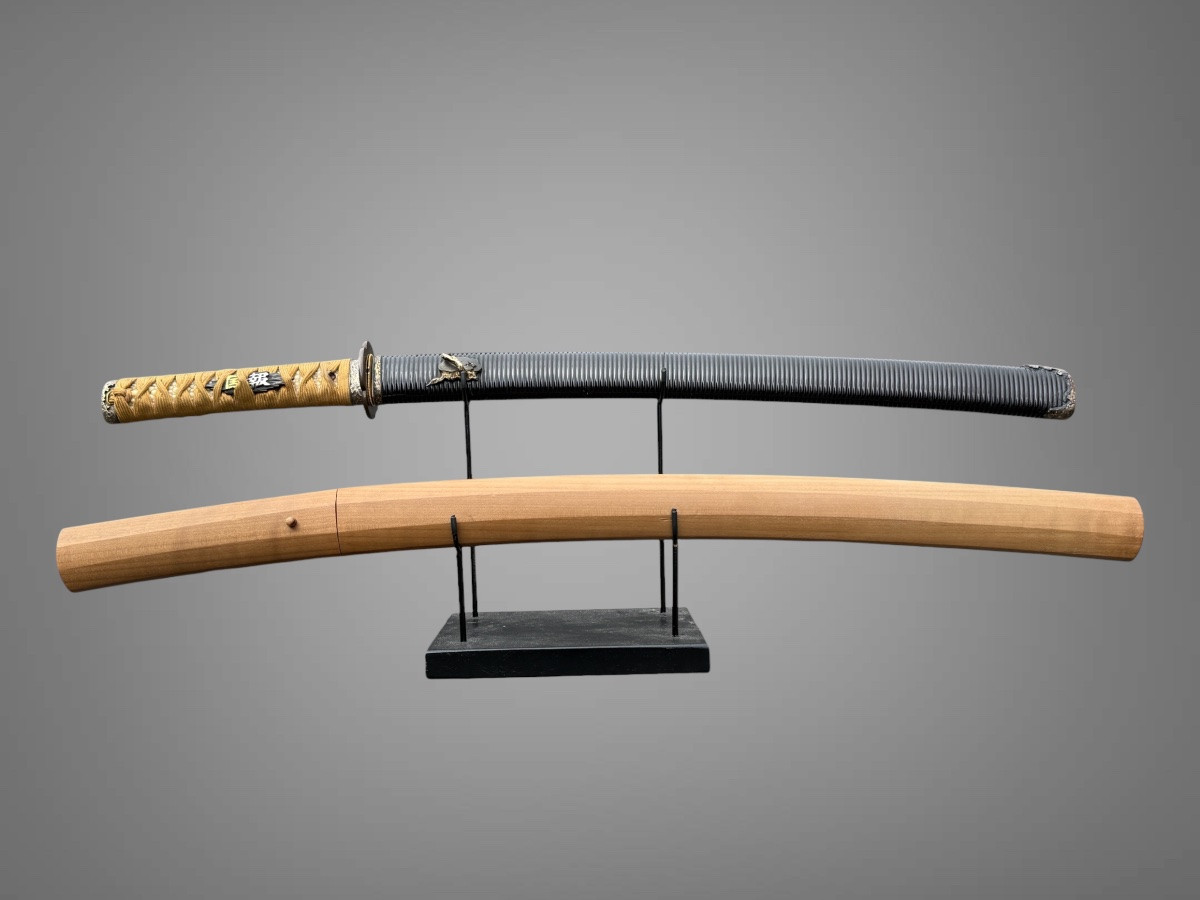
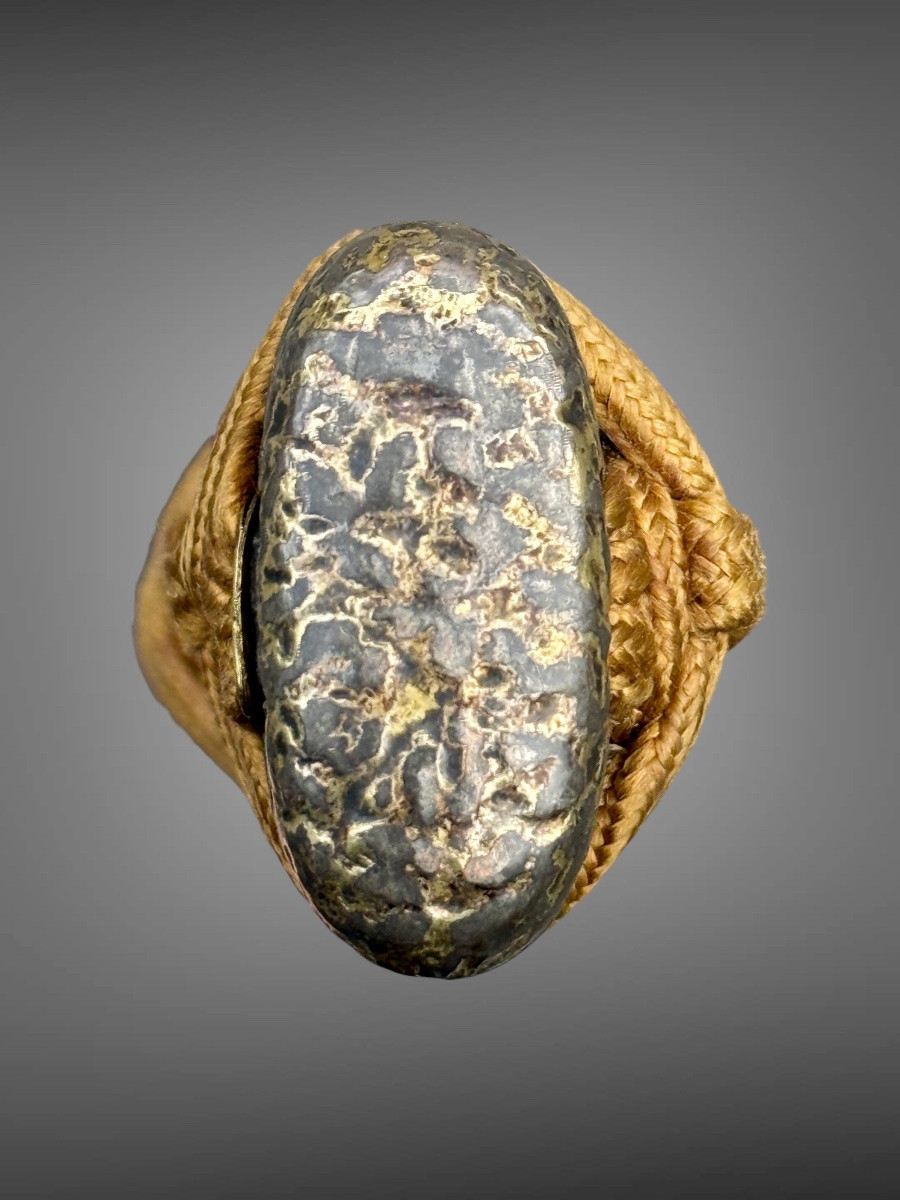
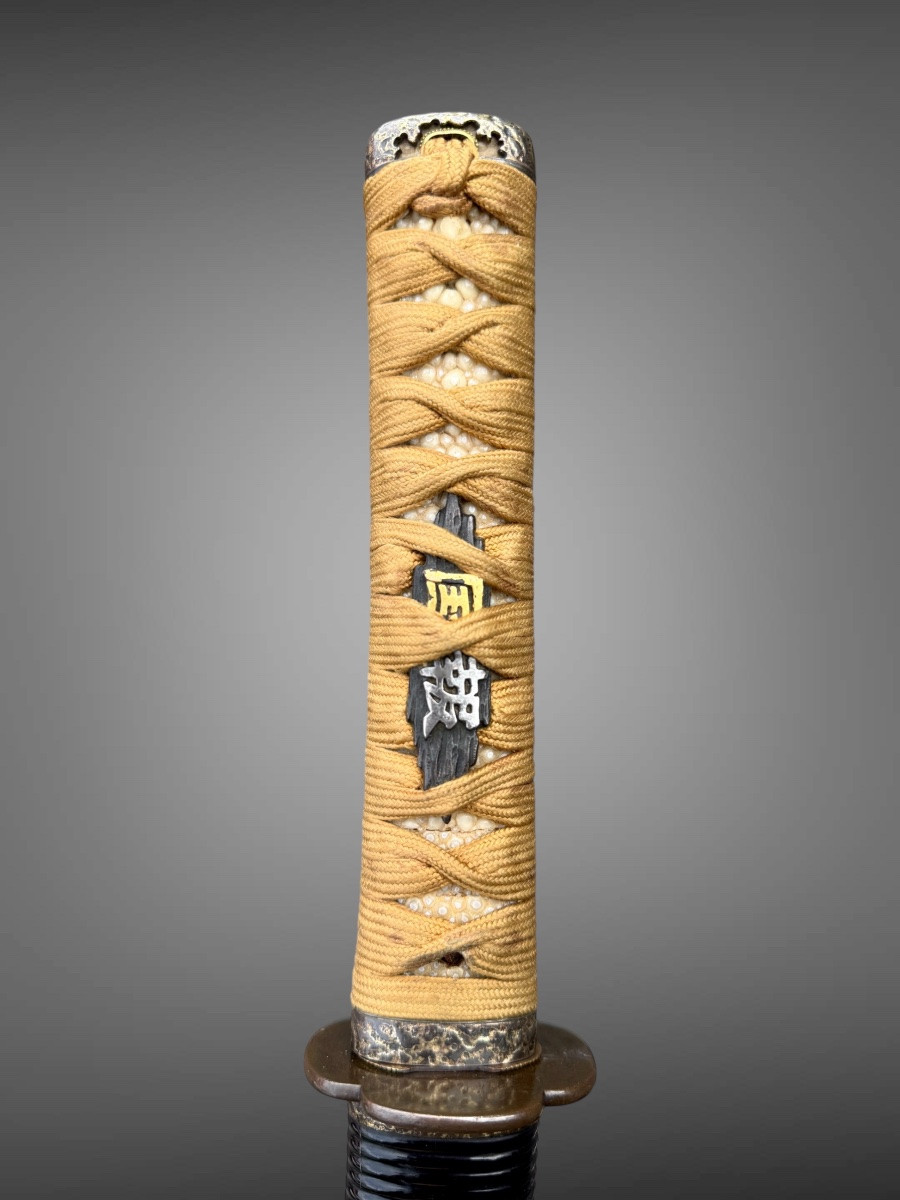
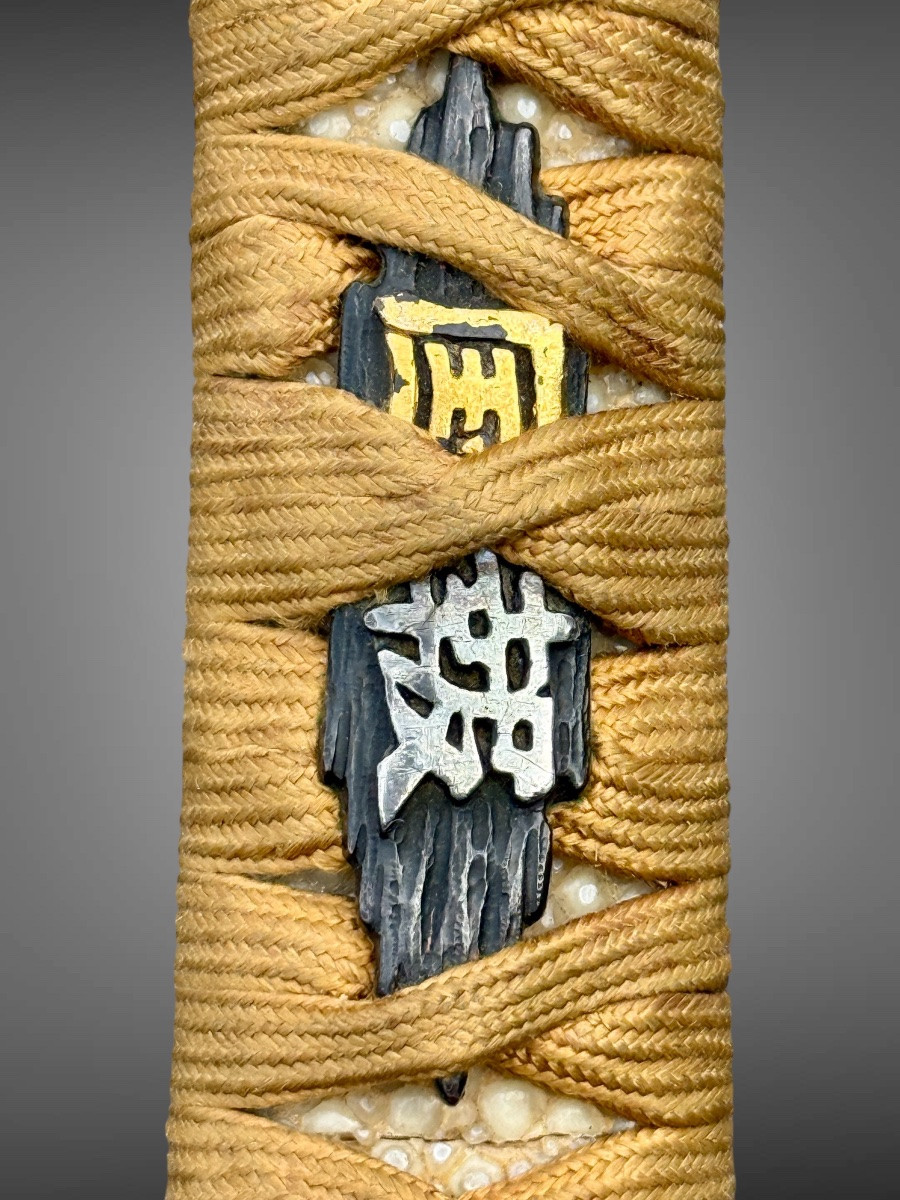
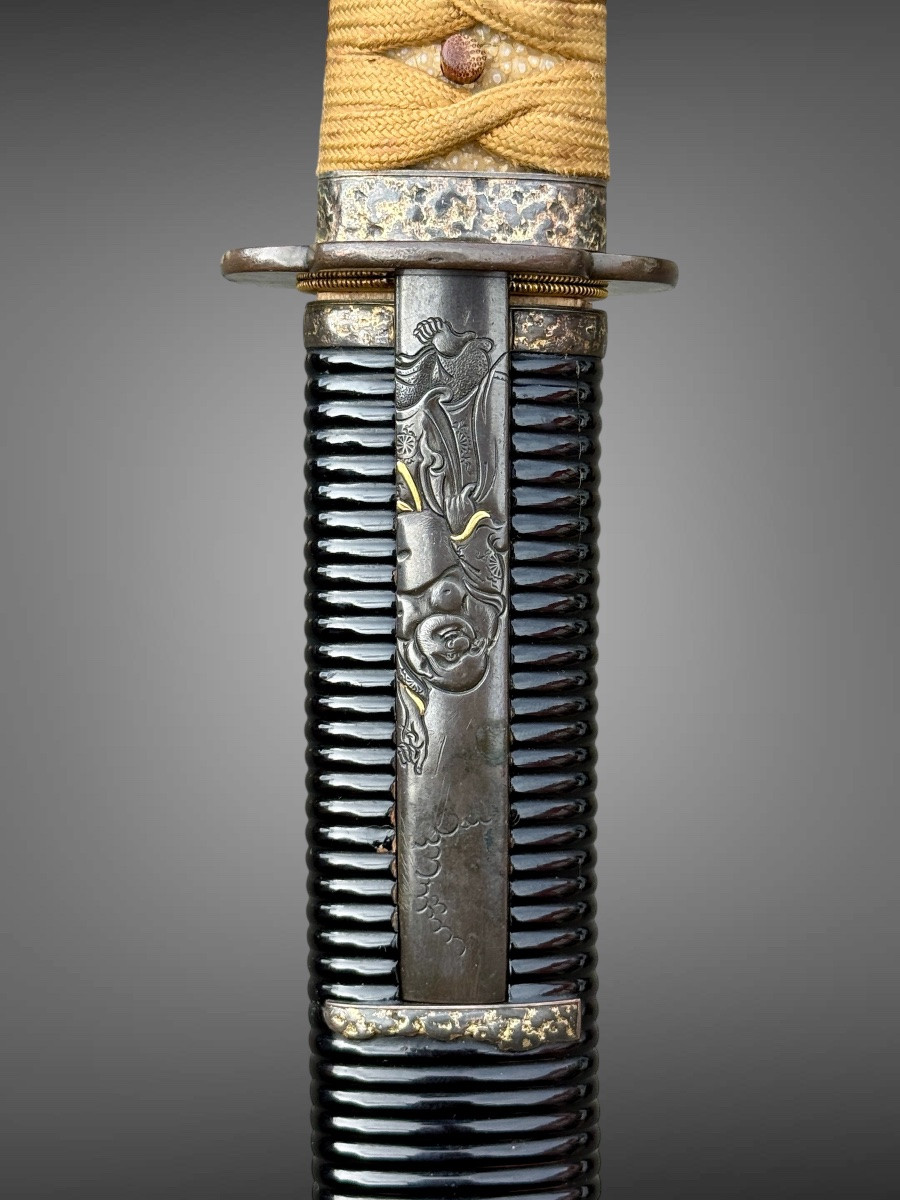
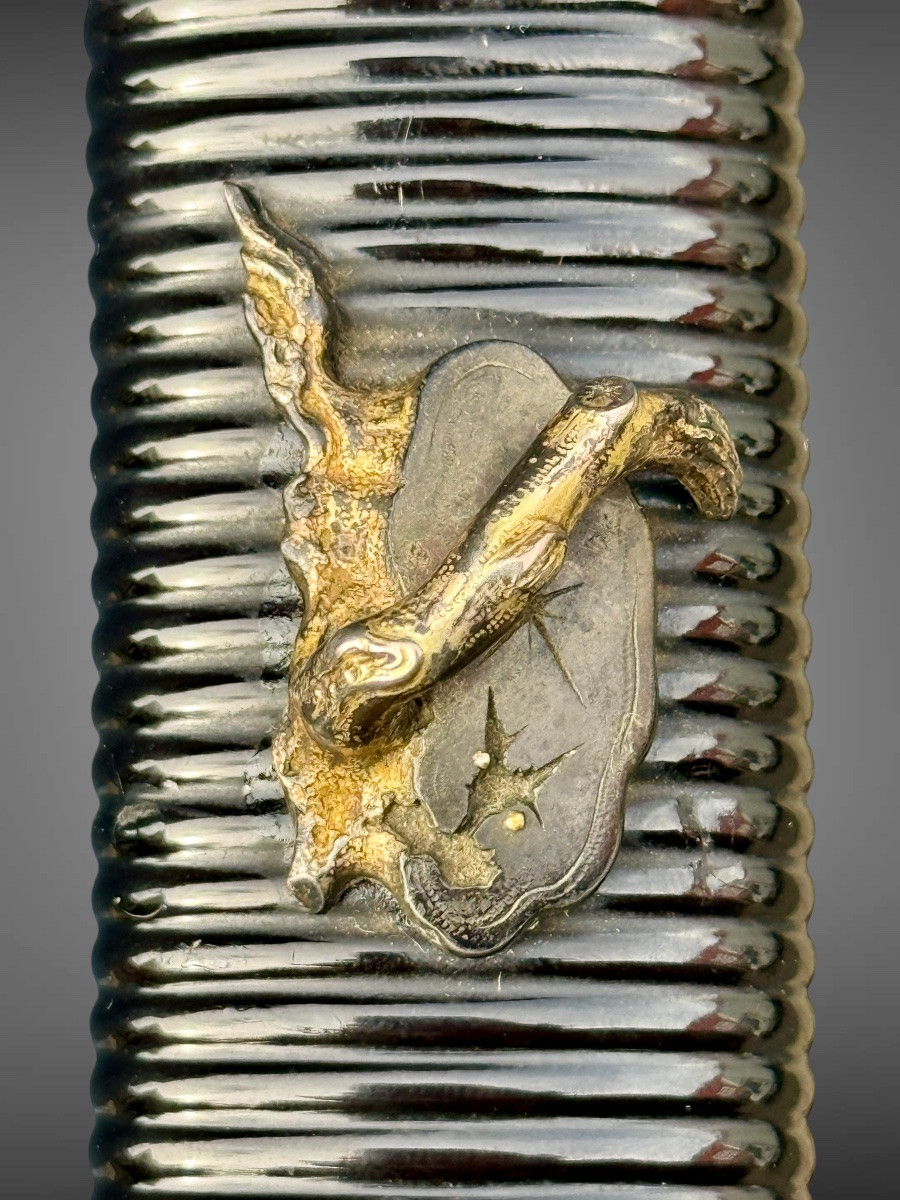
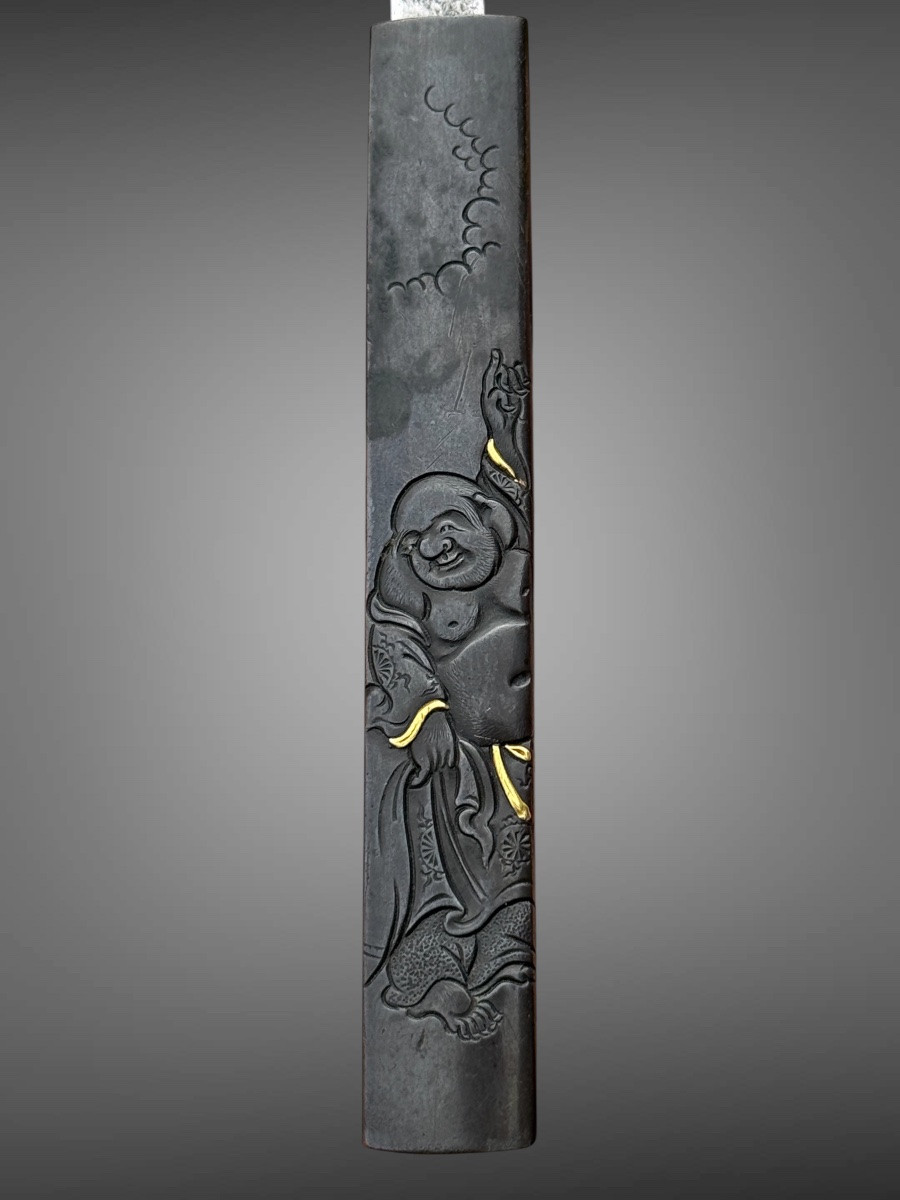
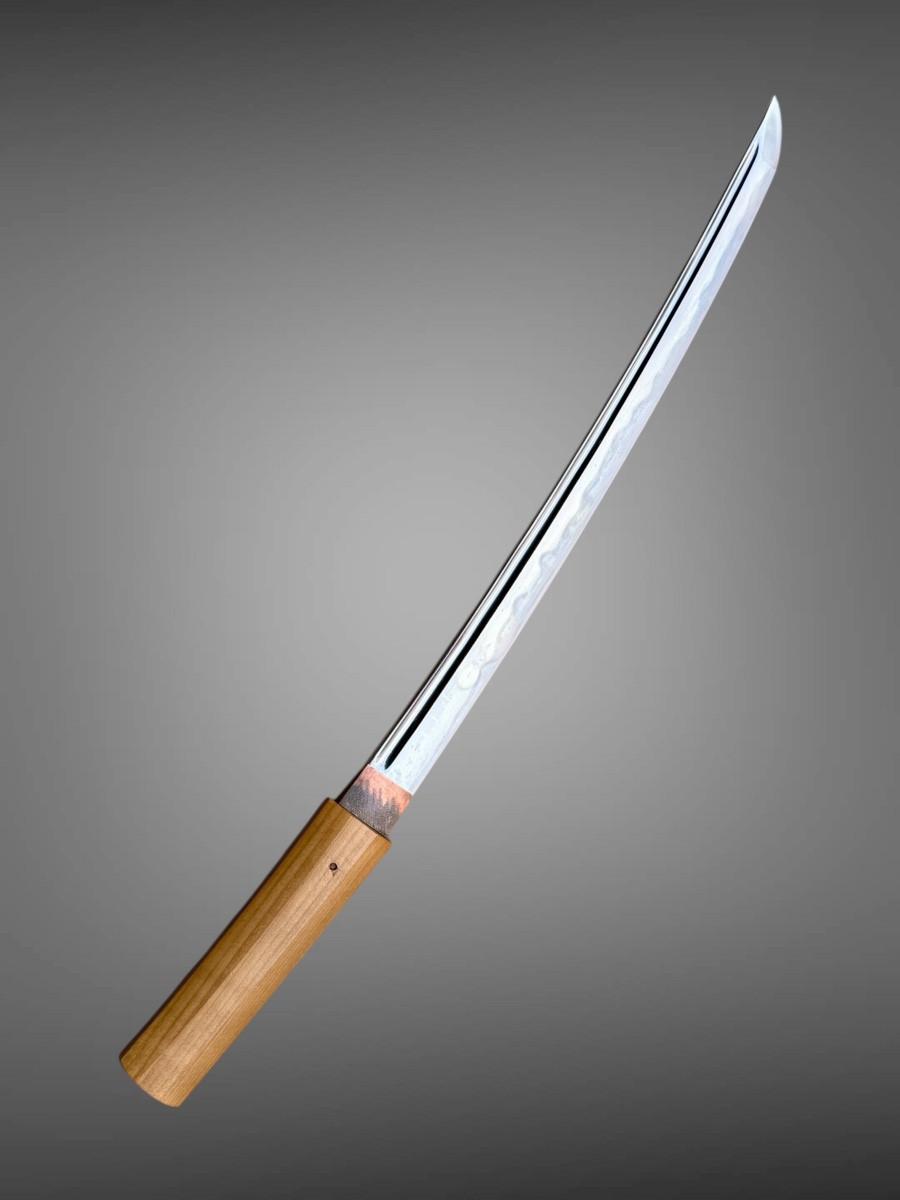
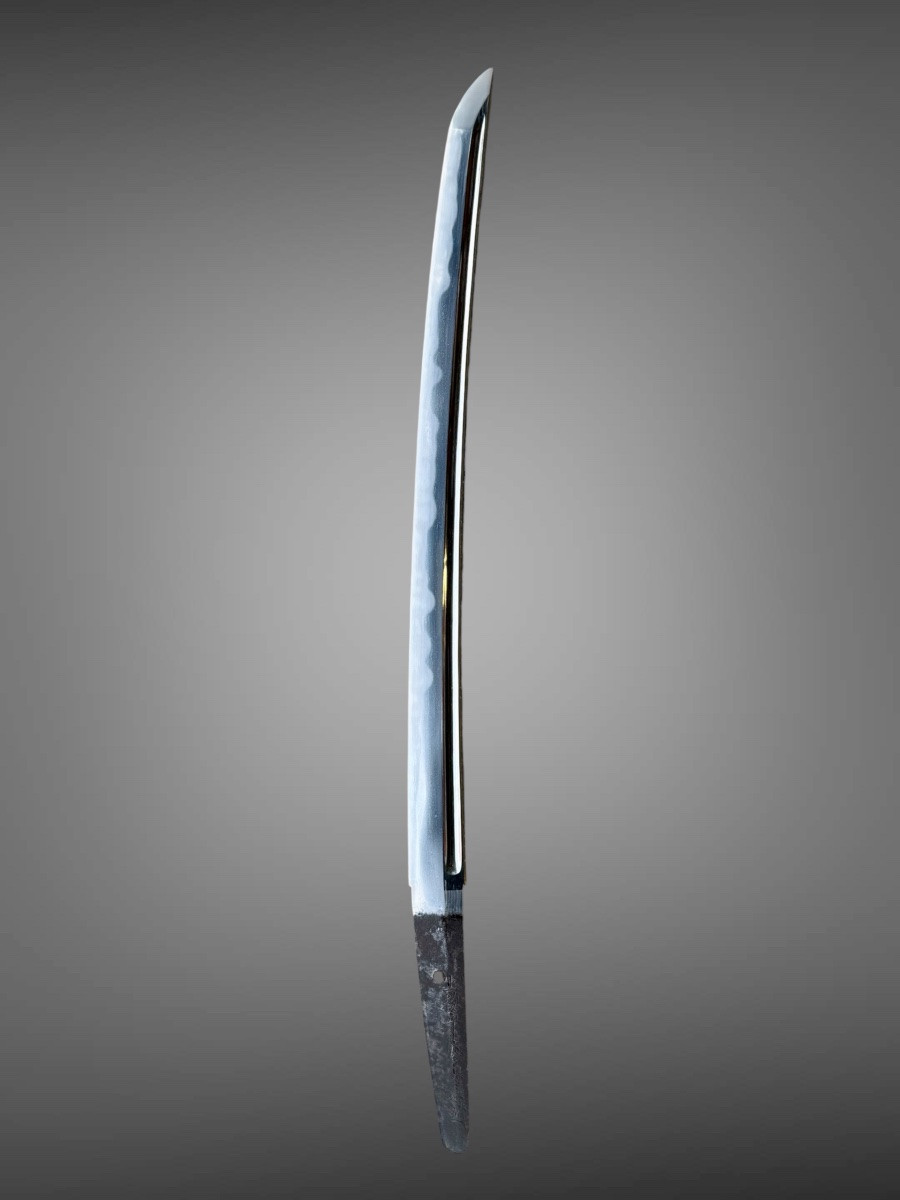
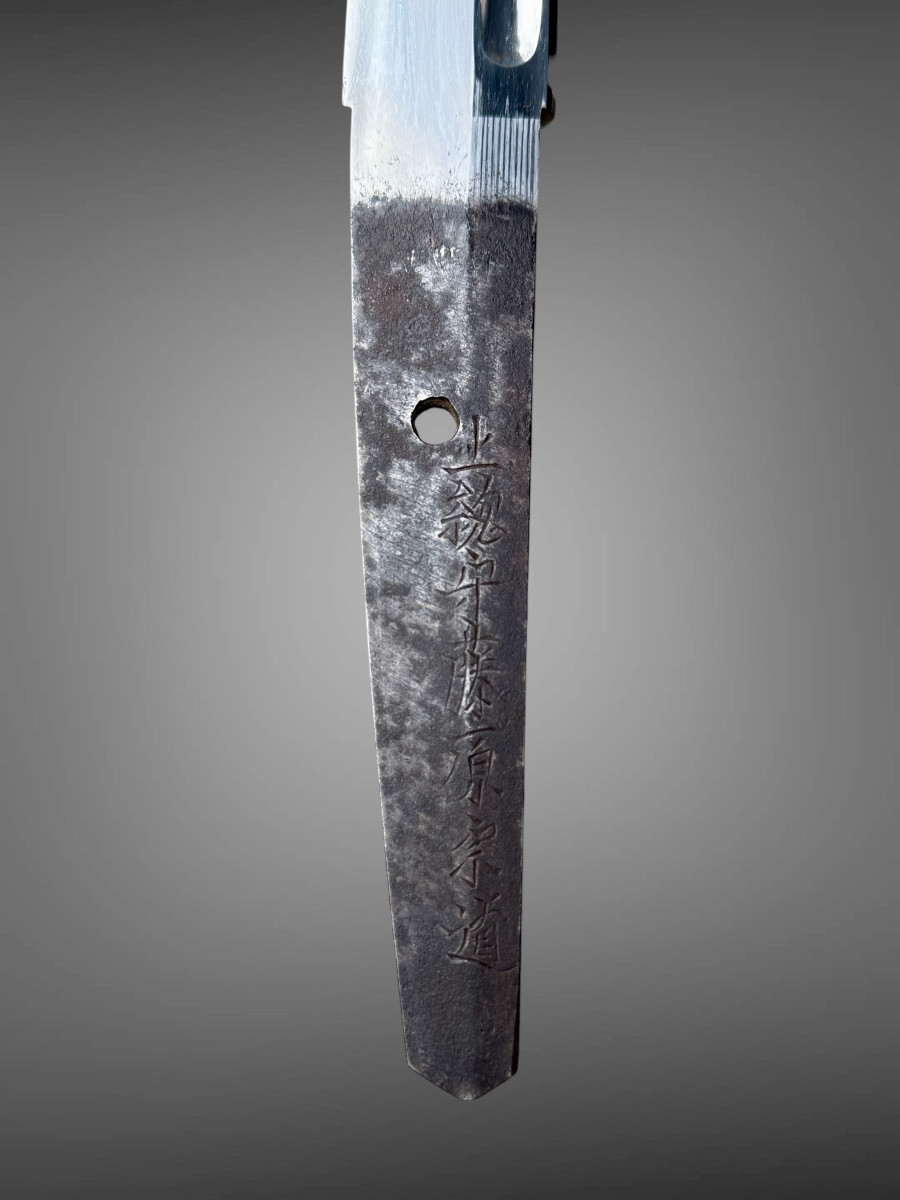
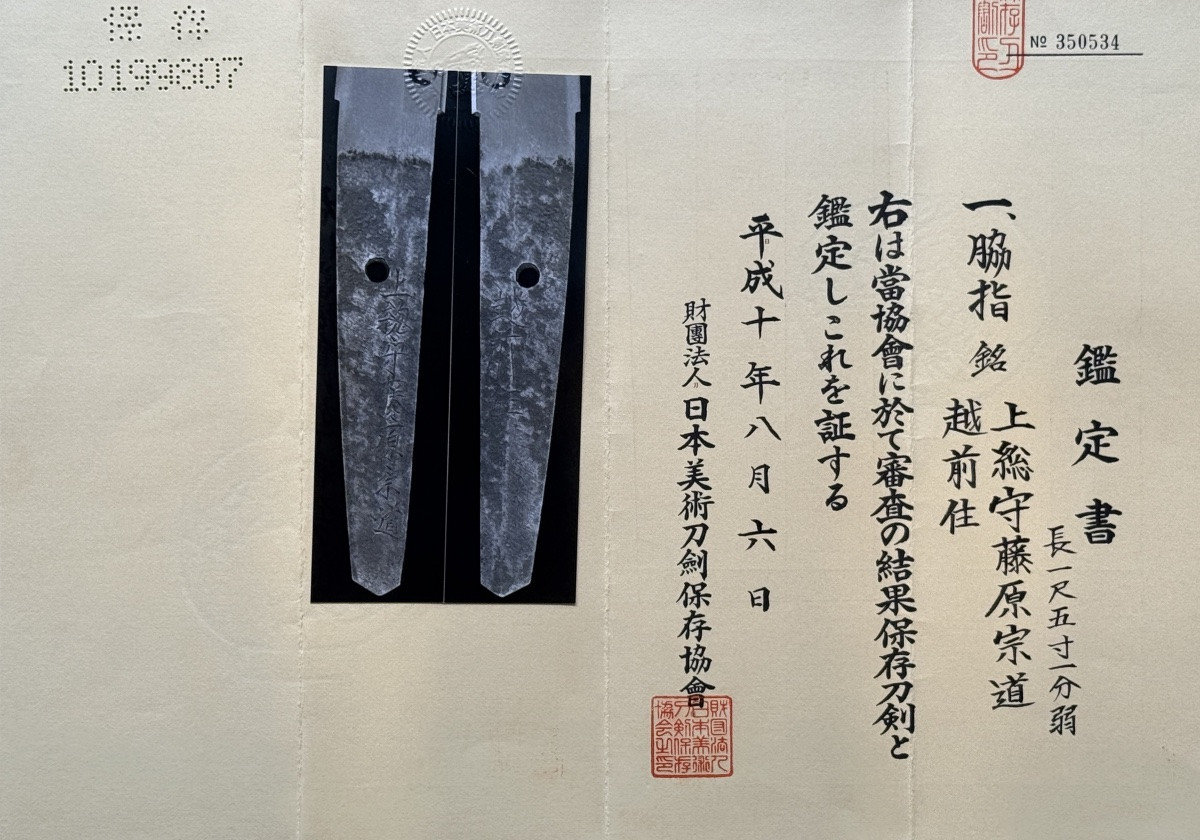
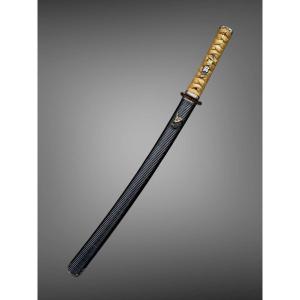
JAPAN - Late Edo period. Samurai wakizashi mounted in a shirasaya style. Fushi and kashira in a matching set in textured and patinated copper. Tsuka in wood covered with stingray skin and yellow silk braid. Menuki in chased, patinated, gilded, and silvered copper depicting wooden planks inscribed with Chinese characters. Tsuba mokko-gata in matching patinated finish. Saya in ringed, glossy black lacquered wood. Kojiri in a matching set of fushi and kashira. Kurigata finely chased in a tree stump design. Kozuka in chased, patinated, and gilded copper depicting a hotei, signed Haruchika. Simple habaki in copper decorated with oblique striations. Straight blade, regular, straight, and well-defined hamon. The tang is pierced once and signed Fujiwara Munemishi. Sold with stand, silk carrying case, and NBTHK Hozon Token certificate. NBTHK, also known as Nihon Bijutsu Touken Hozon Kyokai (the Society for the Preservation of Japanese Art Swords), is one of the oldest Japanese sword evaluation organizations in modern Japan. Dimensions: 6 x 71 x 5 cm. Blade length: 45.7 cm. Curvature (sori): 1.0 cm. Thickness (kasane): 0.7 cm. Weight: 475 g. Notes: Fujiwara Munemichi, also known as Sugaya Kurouemon, was a mid-level swordsmith from Echizen. His original name was Muneji, and he lived in Shimosaka, Echizen Province. Although classified among the mid-level swordsmiths of Echizen, his hamon often features active sunagashi and kinsuji. His jigane blends masame and itame hada, resulting in a rich visual hamon.
6 500 €
Period: 19th century
Style: Asian art
Condition: Good condition
Material: Wrought iron
Length: 71 cm.
Height: 6 cm.
Depth: 5 cm.
Reference (ID): 1712023
Availability: In stock
Print