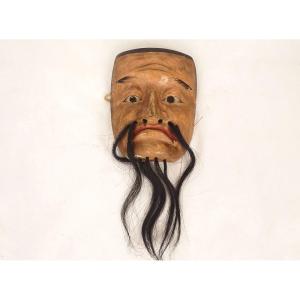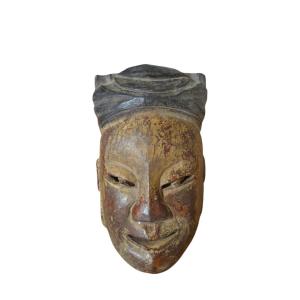

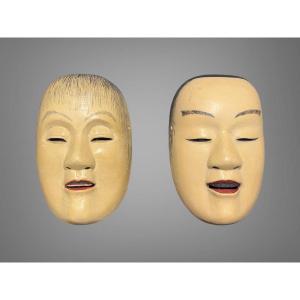


A Pair Of Noh Theater Masks - Showa Period (1912–1989).
JAPAN - Showa period (1912–1989).
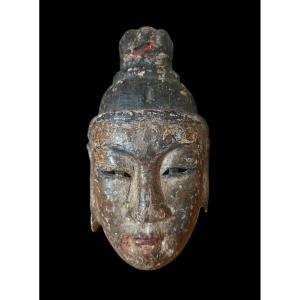
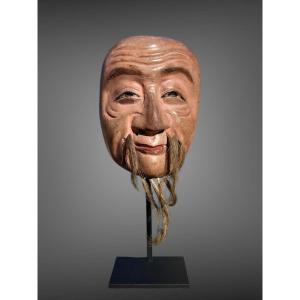
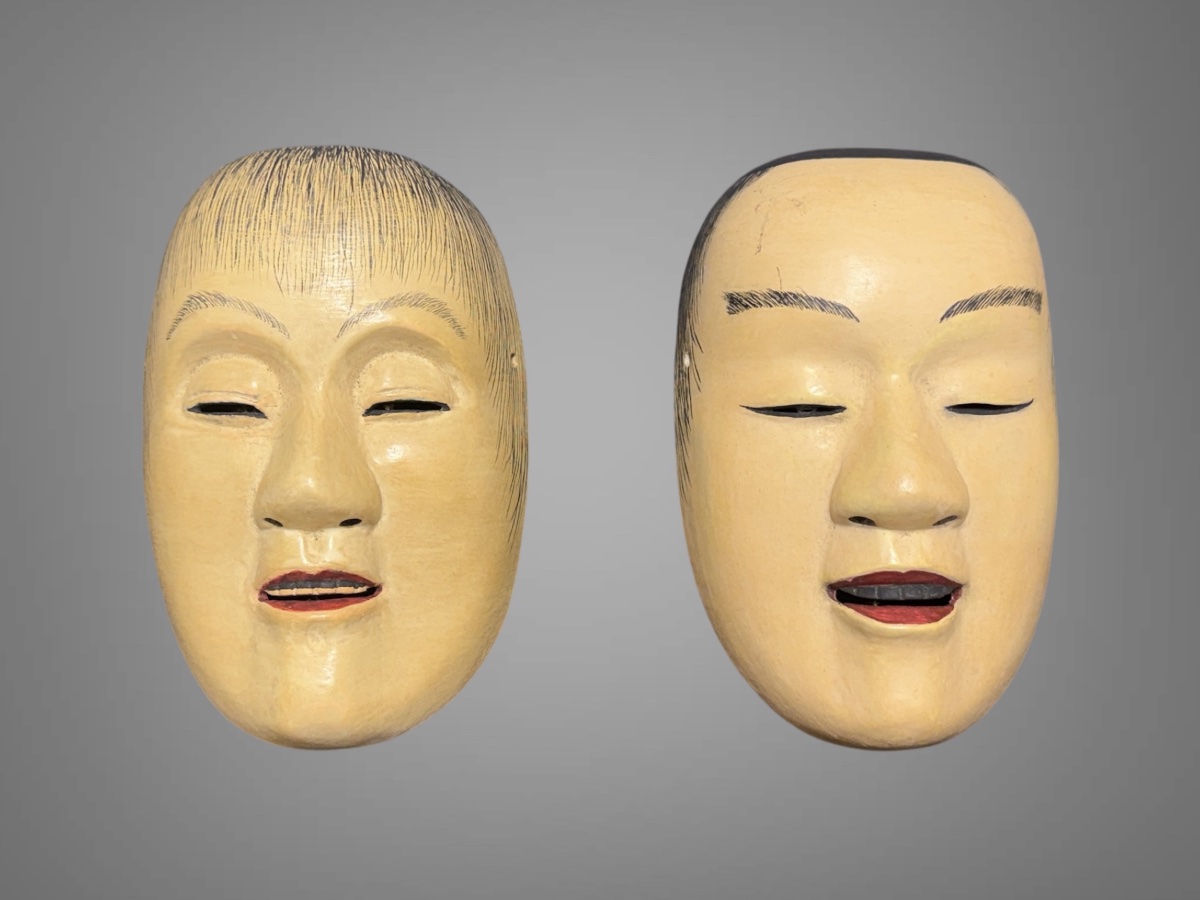
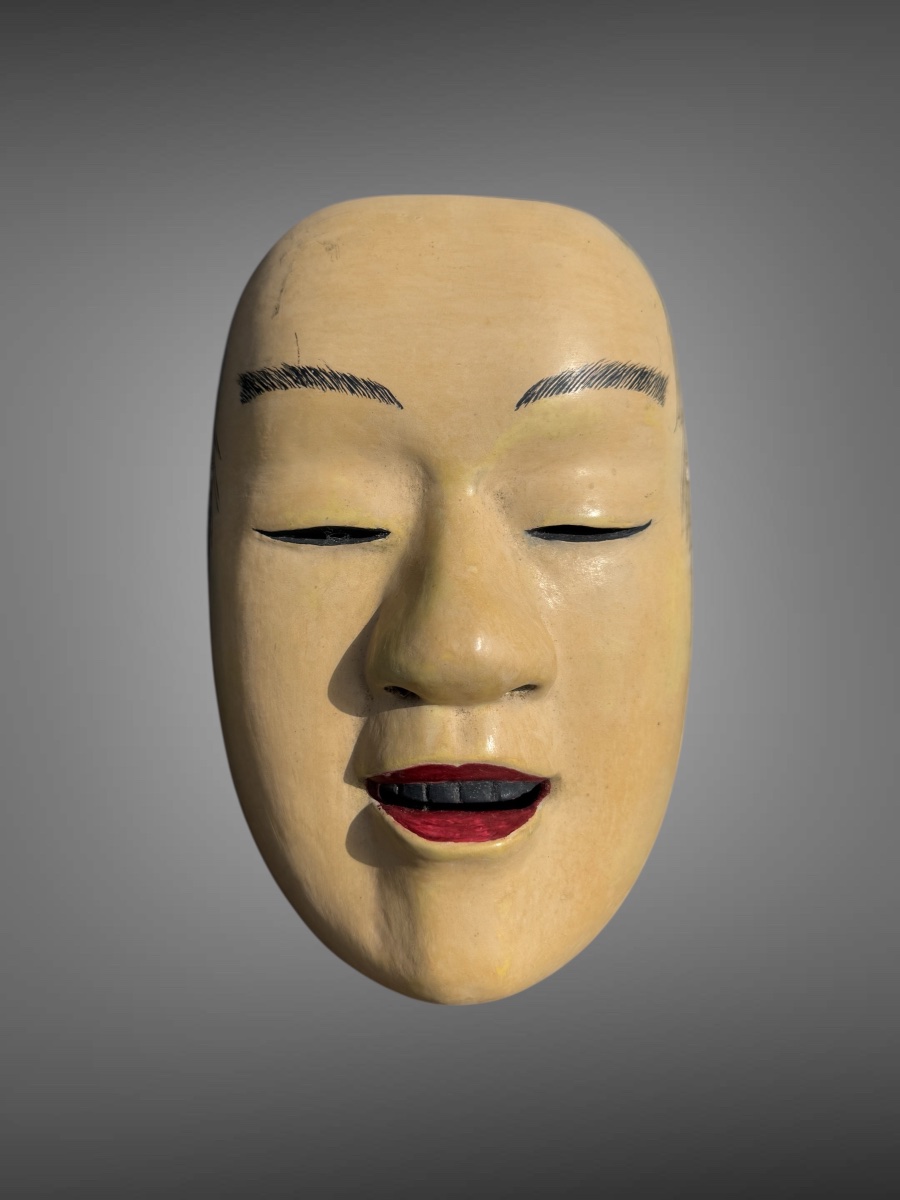
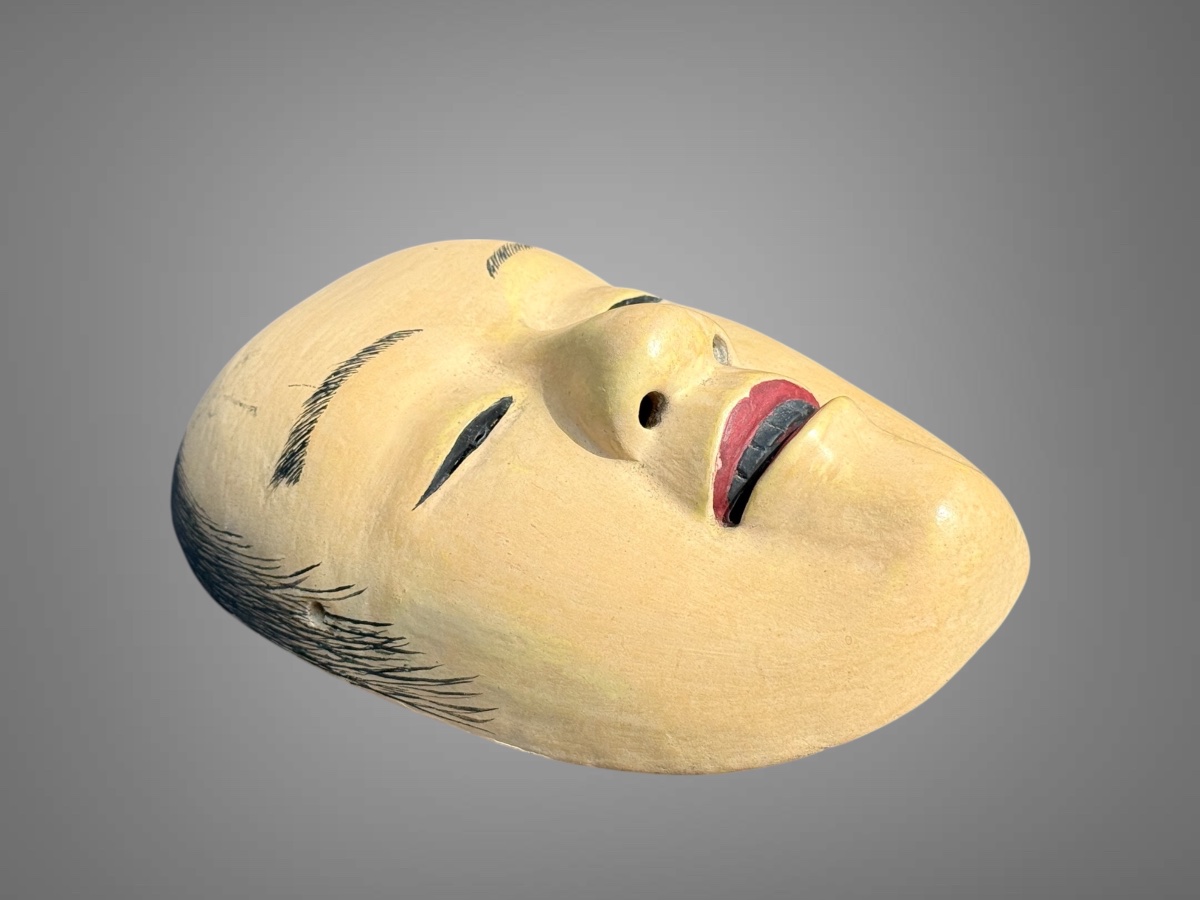
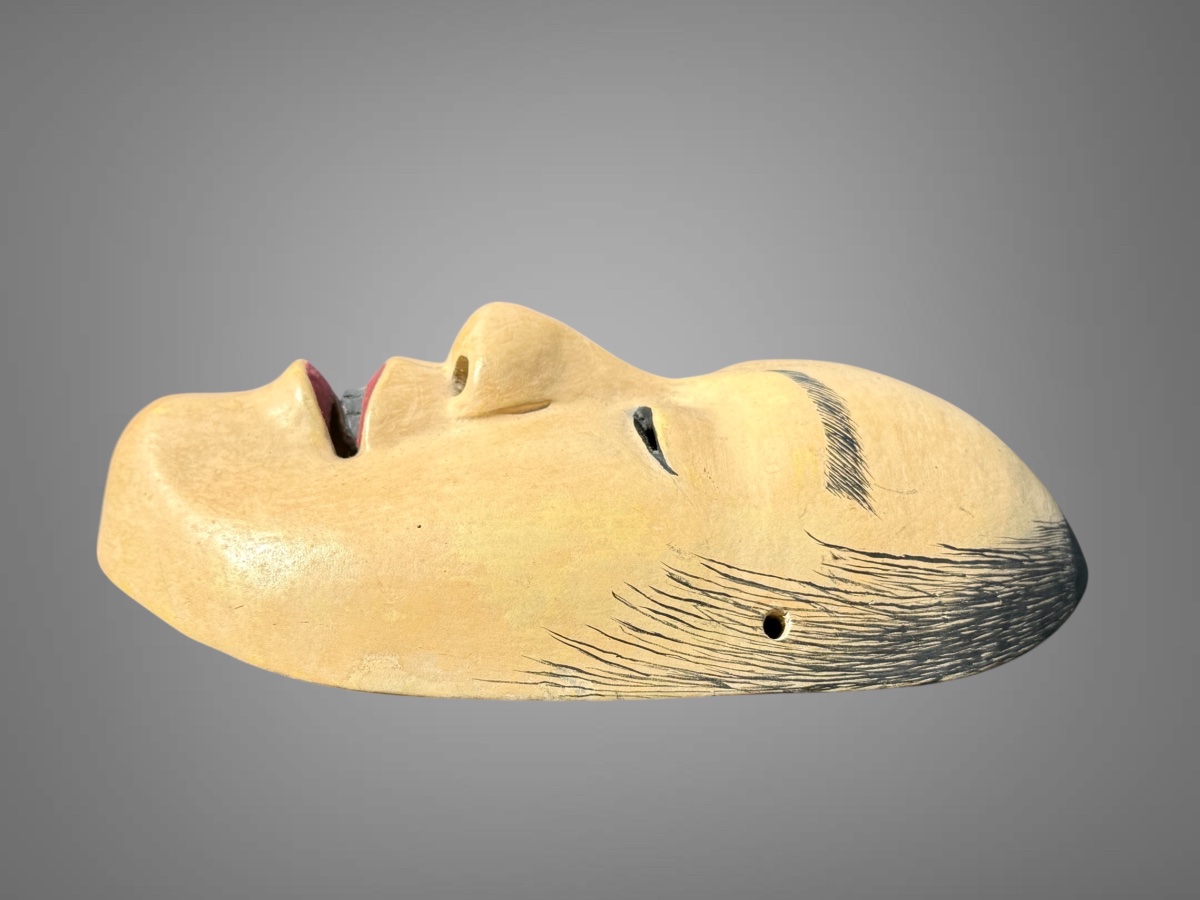
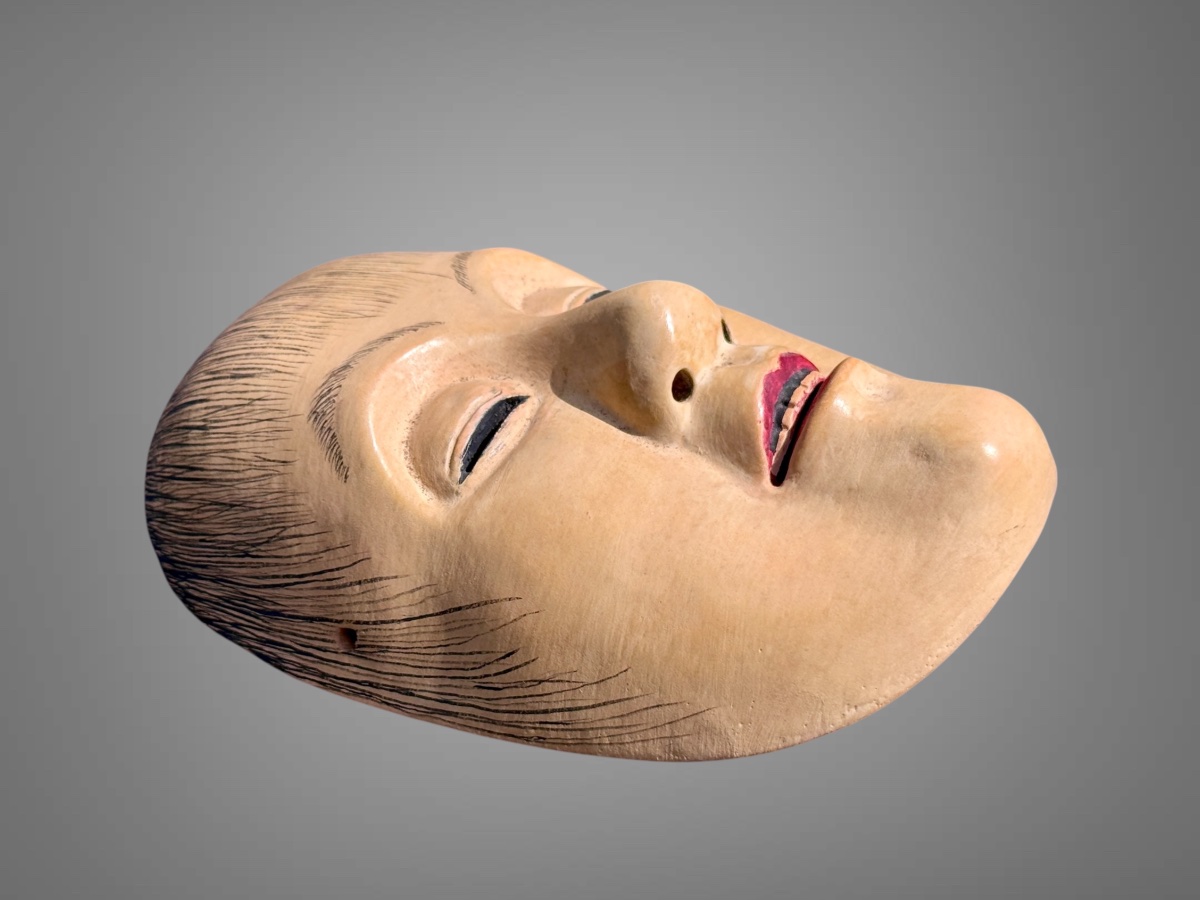
Noh theater mask depicting the character Ko-Omote, carved from a single piece of hinoki wood.
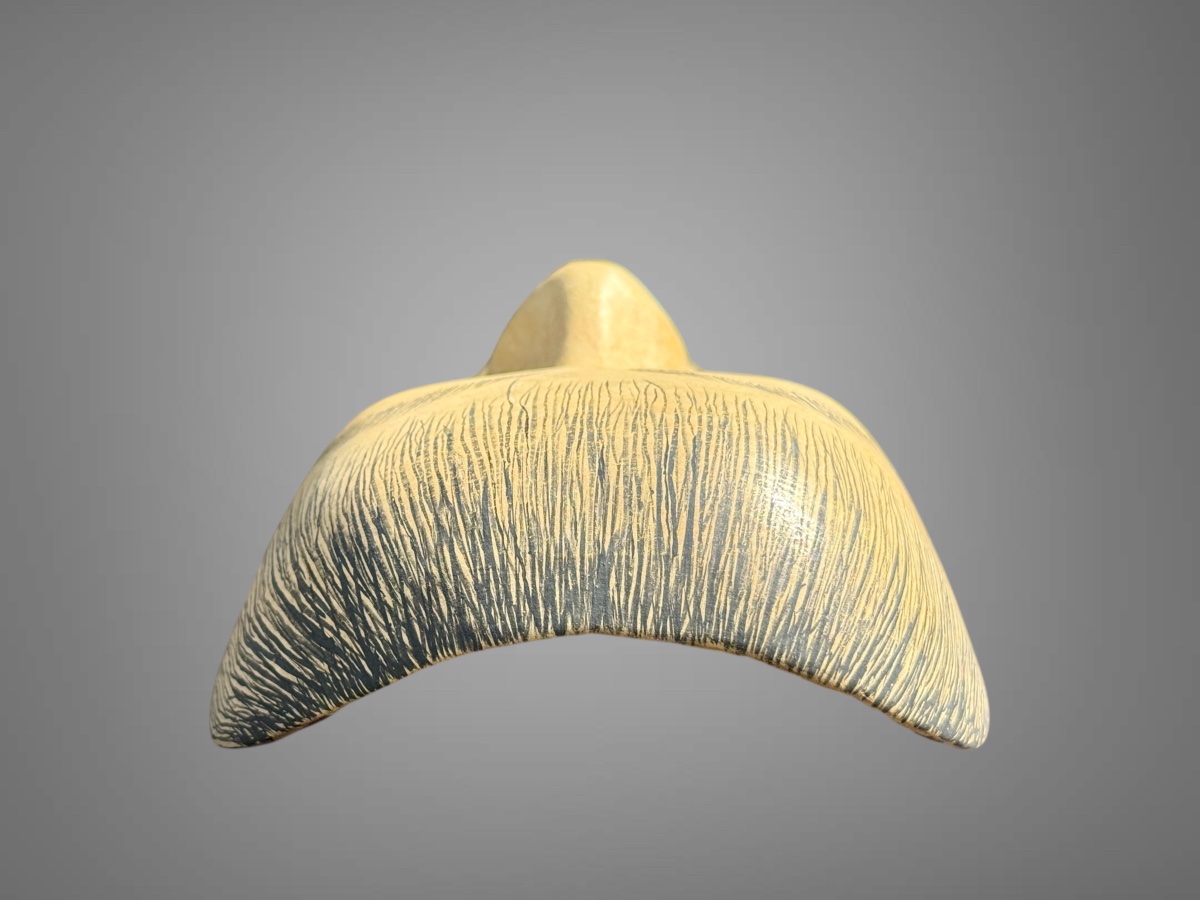
Oval in shape, with a smooth upper forehead, half-closed eyes, and high-set eyebrows evoking the fashion of the Heian period (794–1185); the mouth is slightly open, revealing the upper row of black-lacquered teeth. The hair is painted black, with strands falling down the sides.
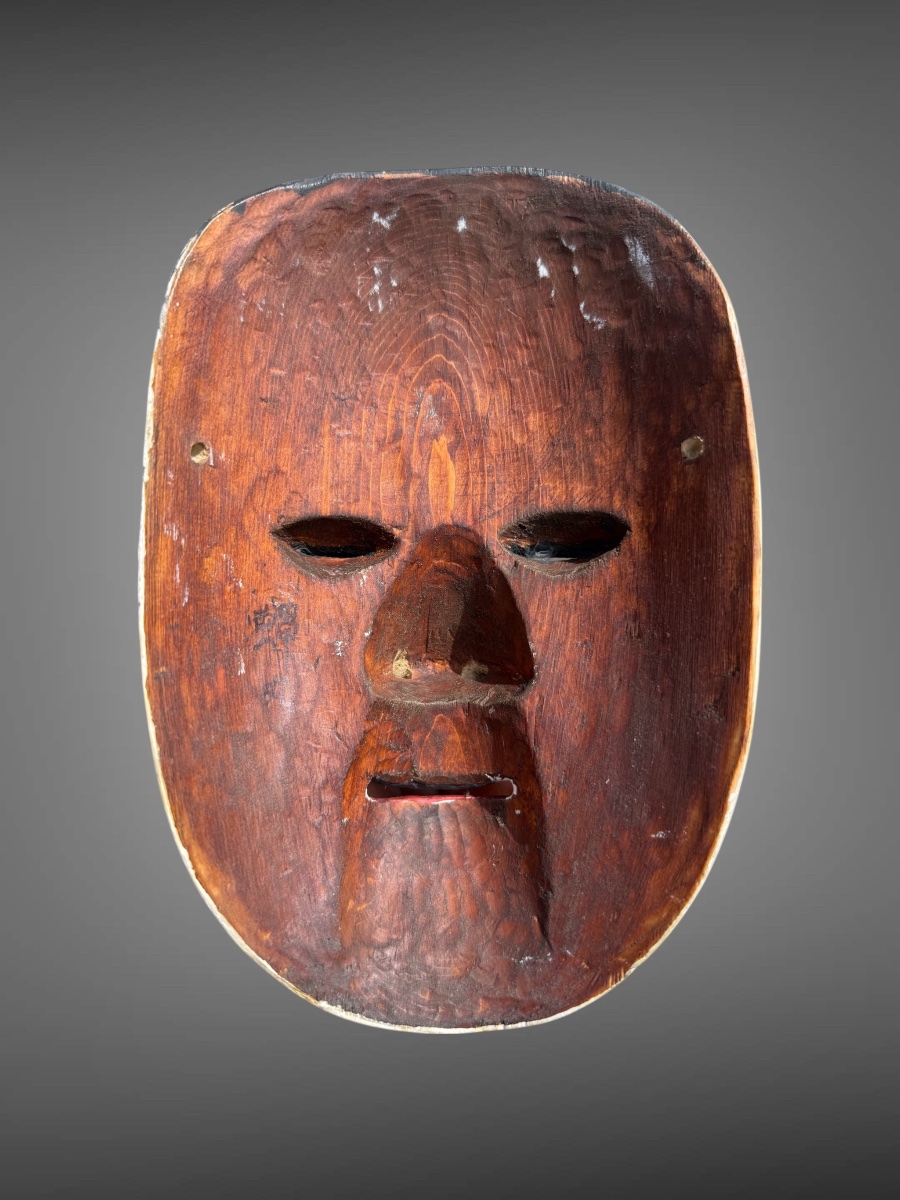
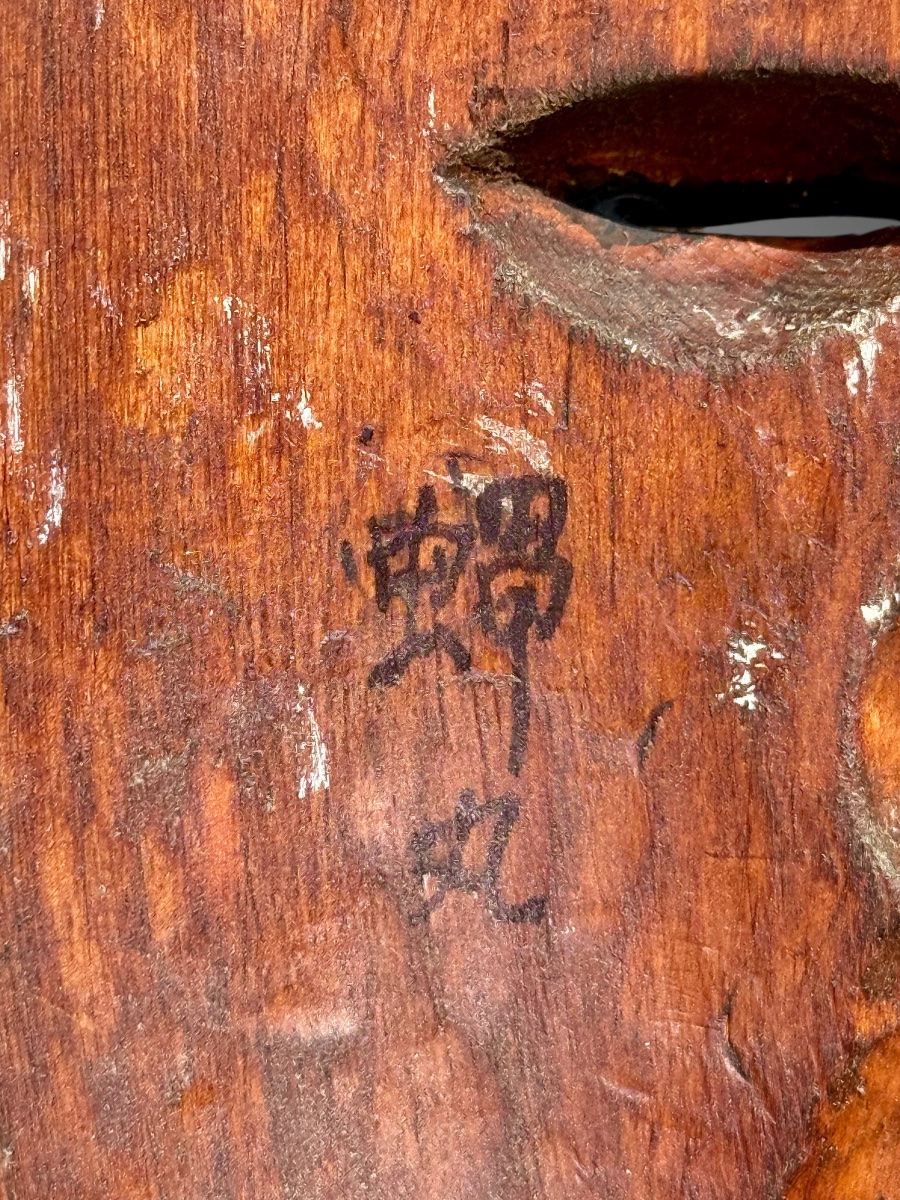
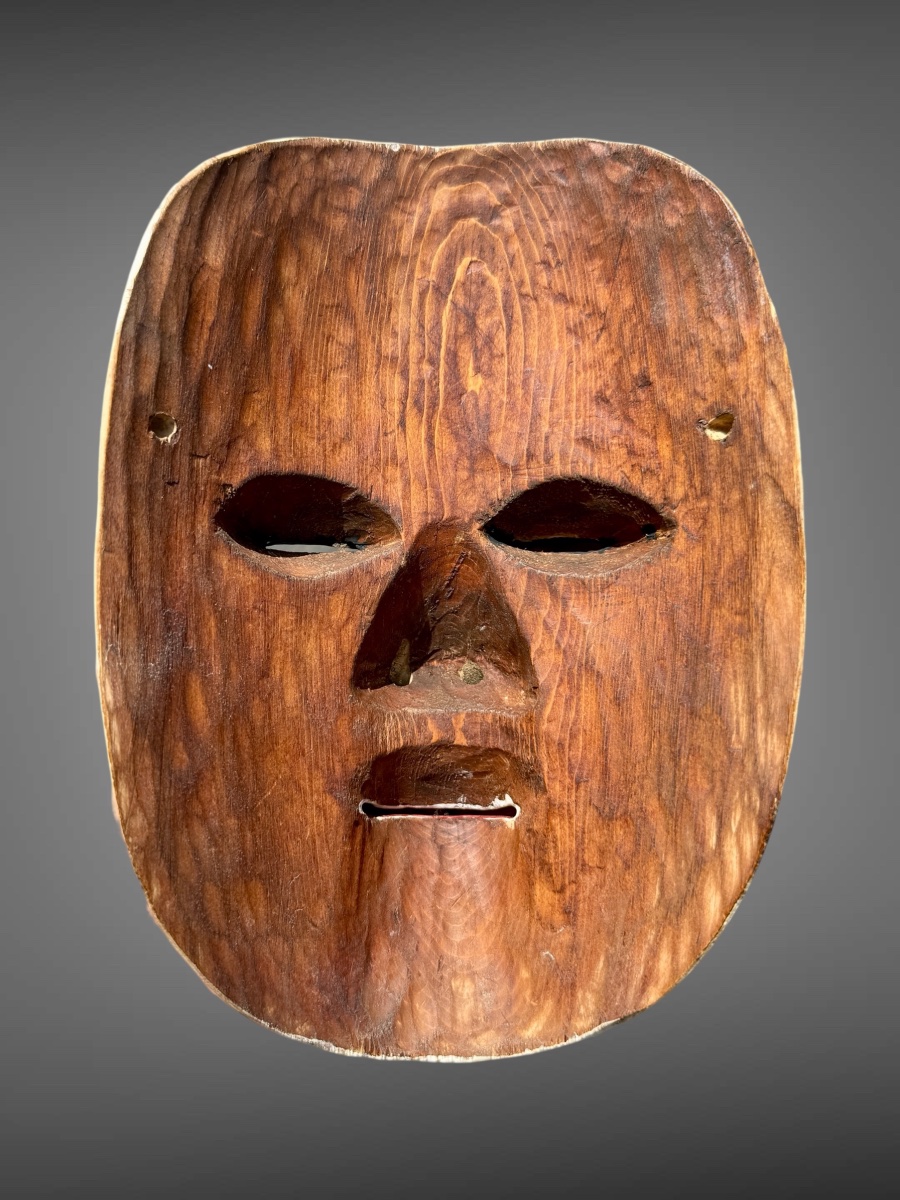
Traces of chisel marks on the back and a signature.
Dimensions: 20.4 x 13.3 x 6.5 cm.
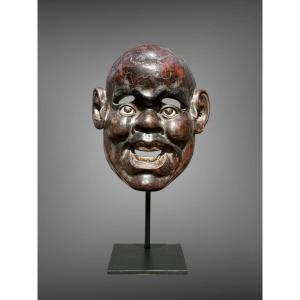
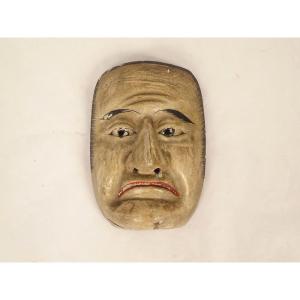
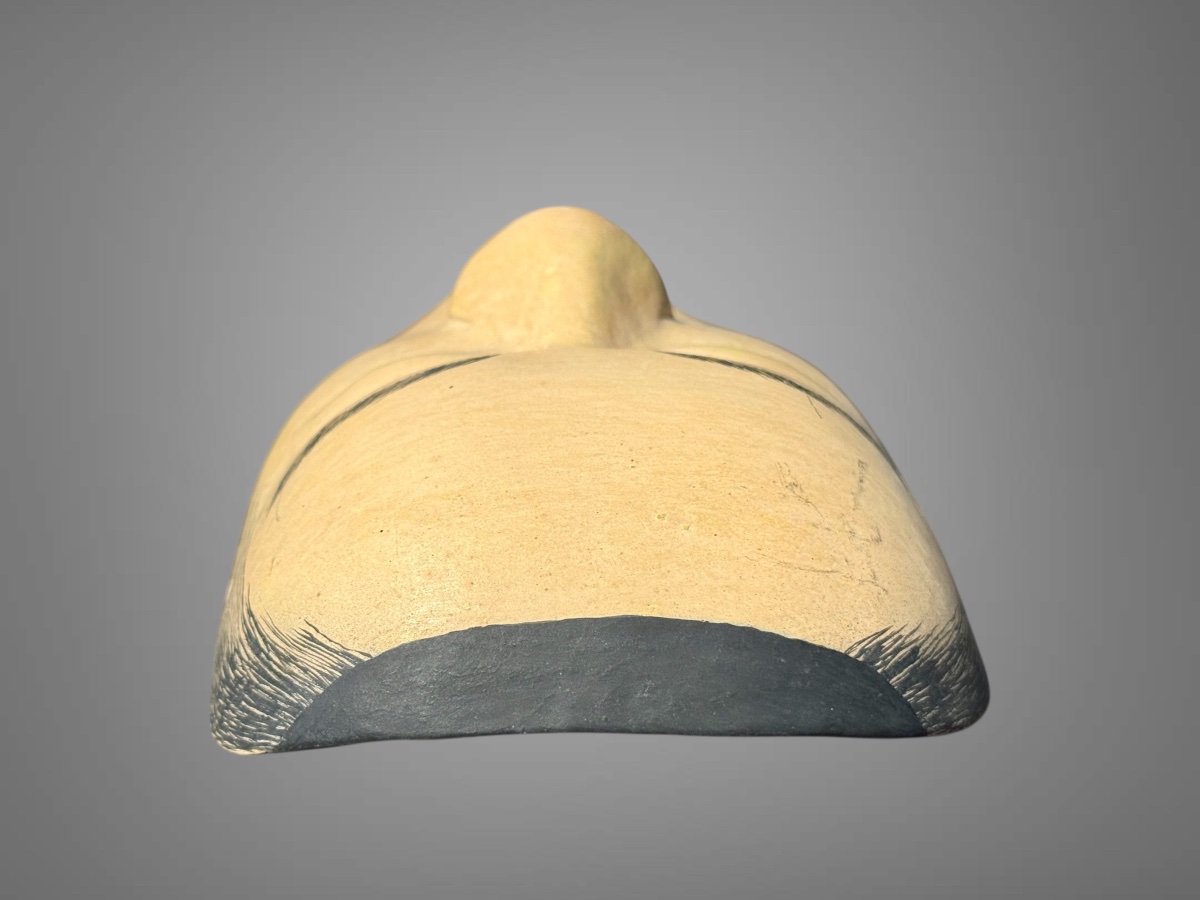
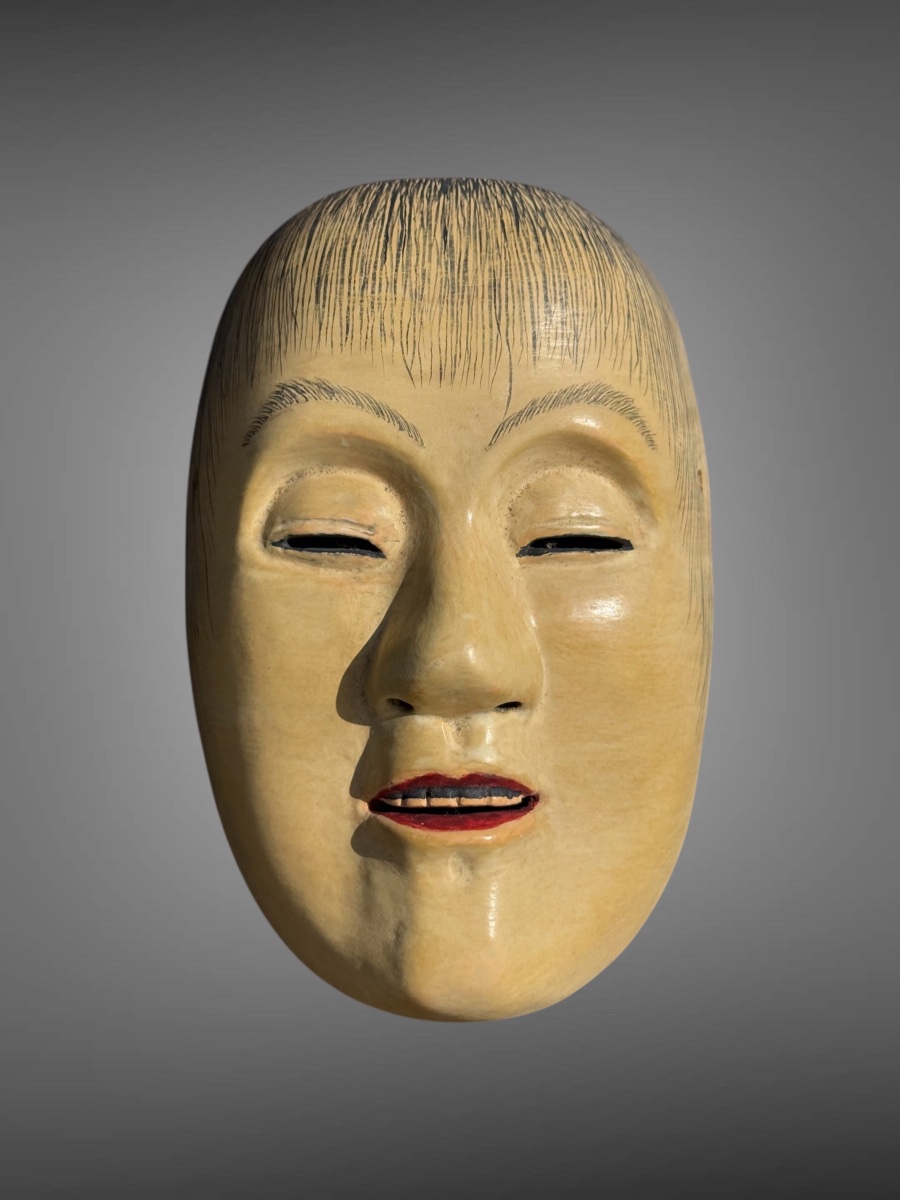
Noh theater mask depicting the character Yoroboshi, a blind monk, carved from a single block of hinoki wood. Oval in shape, with a smooth, high forehead, closed eyes, lips outlined in red, and a slightly parted mouth revealing a row of teeth, the upper half of which is blackened. The hair is painted with long strands falling across the entire forehead and down the sides.
Traces of chisel marks on the back; unsigned.
Dimensions: 20 x 13.4 x 6.7 cm.
Notes: Noh is a purely Japanese classical theater style inspired by literary and poetic themes, implicitly blending Buddhist and Shinto concepts with popular beliefs. Noh began to develop as early as the 14th century, drawing inspiration from another highly popular theatrical form of the time called _Sarugaku no Noh_ (monkey music). During this period, Kan’ami and his son Zeami, both actors and playwrights, established the rules of Noh that are still followed today. A Noh performance consists of three to five acts separated by comic interludes (kyōgen), and can thus last several hours. An orchestra and a chorus accompany the actors’ performance, which combines danced pantomime and lyrical singing. These dramas, most of which tell stories of war, love, and jealousy, fall into two categories: those based on real-life events and those featuring supernatural beings. This form of performance uses masks, considered to be the embodiment of the divine presence, worn exclusively by the lead actor (shite). The Noh mask (nōmen) is “placed” on the actor’s face in such a way that the cheeks and chin remain visible; it is tilted slightly downward.
The masks are carved from hinoki wood (Japanese cypress) and lacquered on the reverse side to make them impervious to the actor’s sweat; the carved wood is then coated with a mixture called gofun (pulverized oyster shell powder mixed with animal glue and pigments). After drying, the mask is polished, and the hair, eyes, mouth, and teeth are painted with India ink and pigments.
At the end of the manufacturing process, artificial “aging” is achieved by intentionally creating signs of wear around the cord holes, eyes, and mouth—designed to highlight the mask’s use and function without detracting from its harmony and beauty; a coloring treatment (koshoku = “old color”) is also applied. This process does not aim to realistically reproduce the marks of the passage of time, but rather to evoke the timeless quality inherent in Noh. For a mask that appears devoid of any lived experience could not fit into the world of Noh.
Noh masks thus evoke life, culture, its conventions, theatrical characters, sculptors, expressions, and, of course, a particular aesthetic.
Period: 20th century
Style: Asian art
Condition: Good condition
Material: Painted wood
Width: 13,3 et 13,4 cm.
Height: 20 et 20,4 cm.
Depth: 6,5 et 6,7 cm.
Reference (ID): 1779527
Availability: In stock