

Nuo Theater Mask, Guizhou, Southwest China, 19th Century
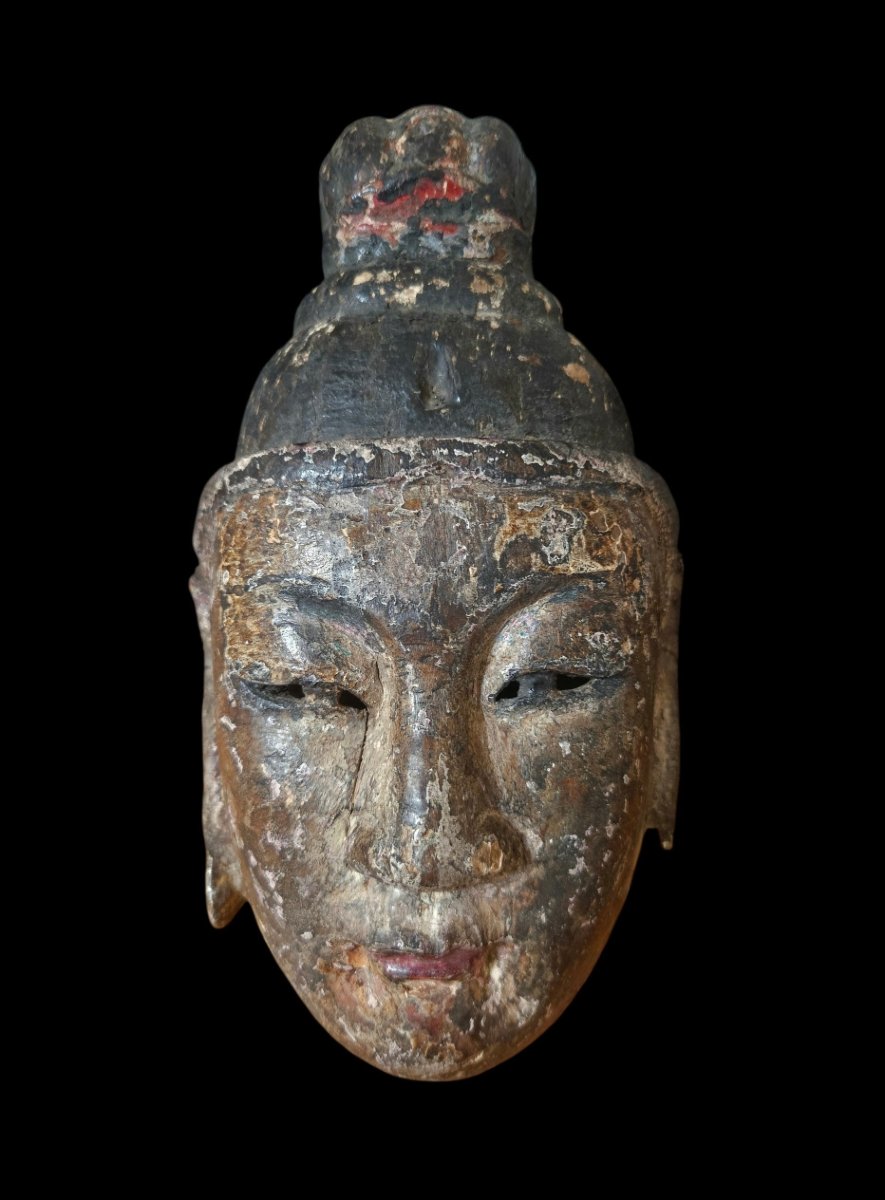
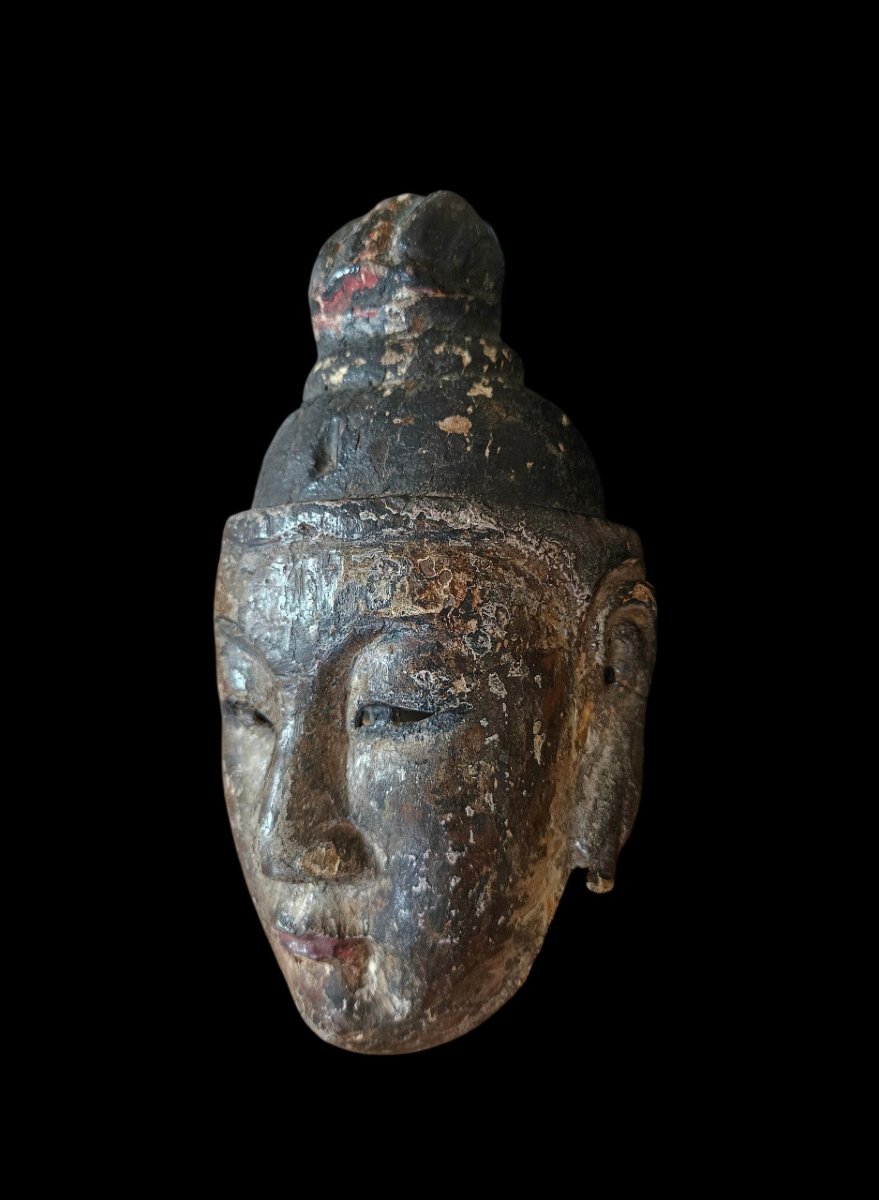
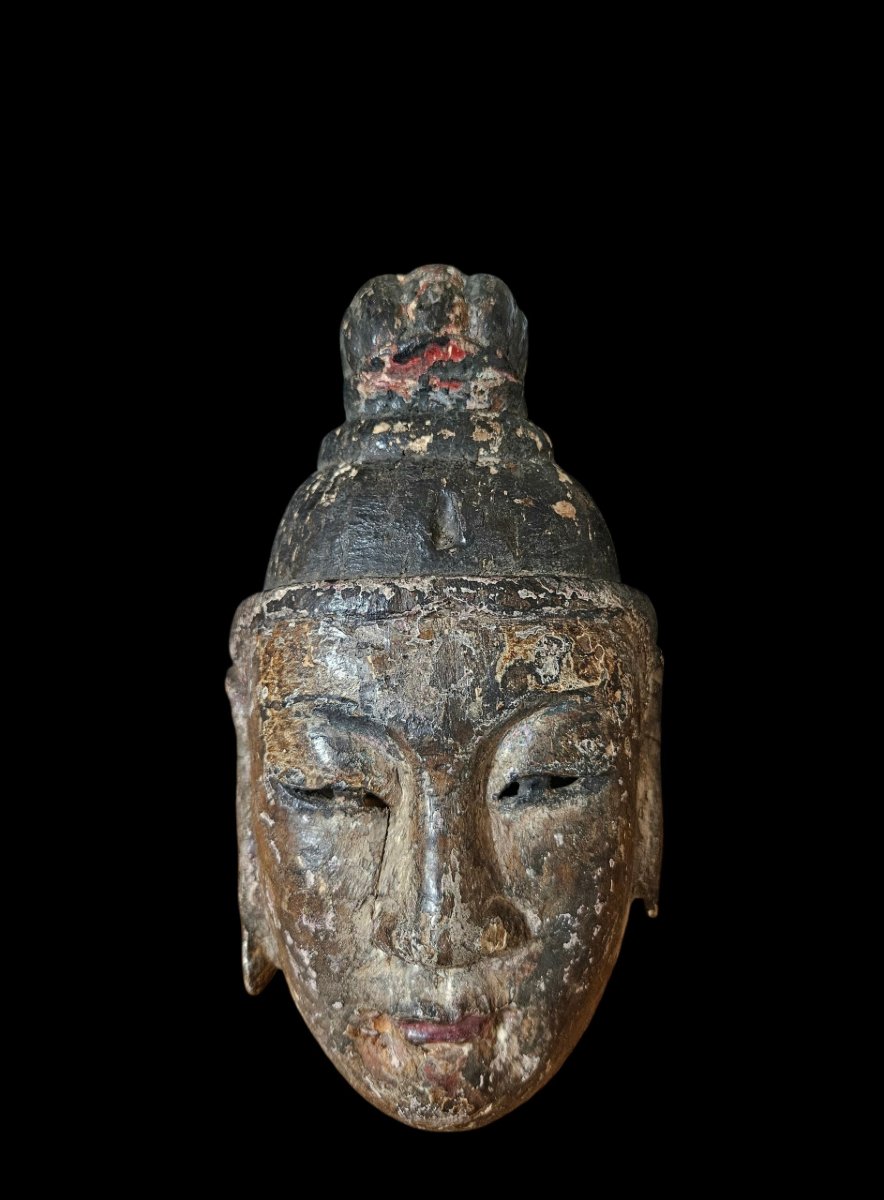
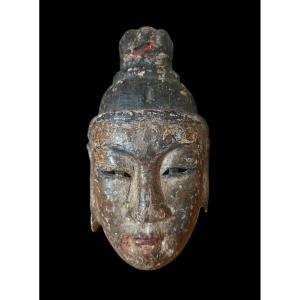
Mask depicting Gan Sheng Balang (甘生八郎) — The Young Scholar
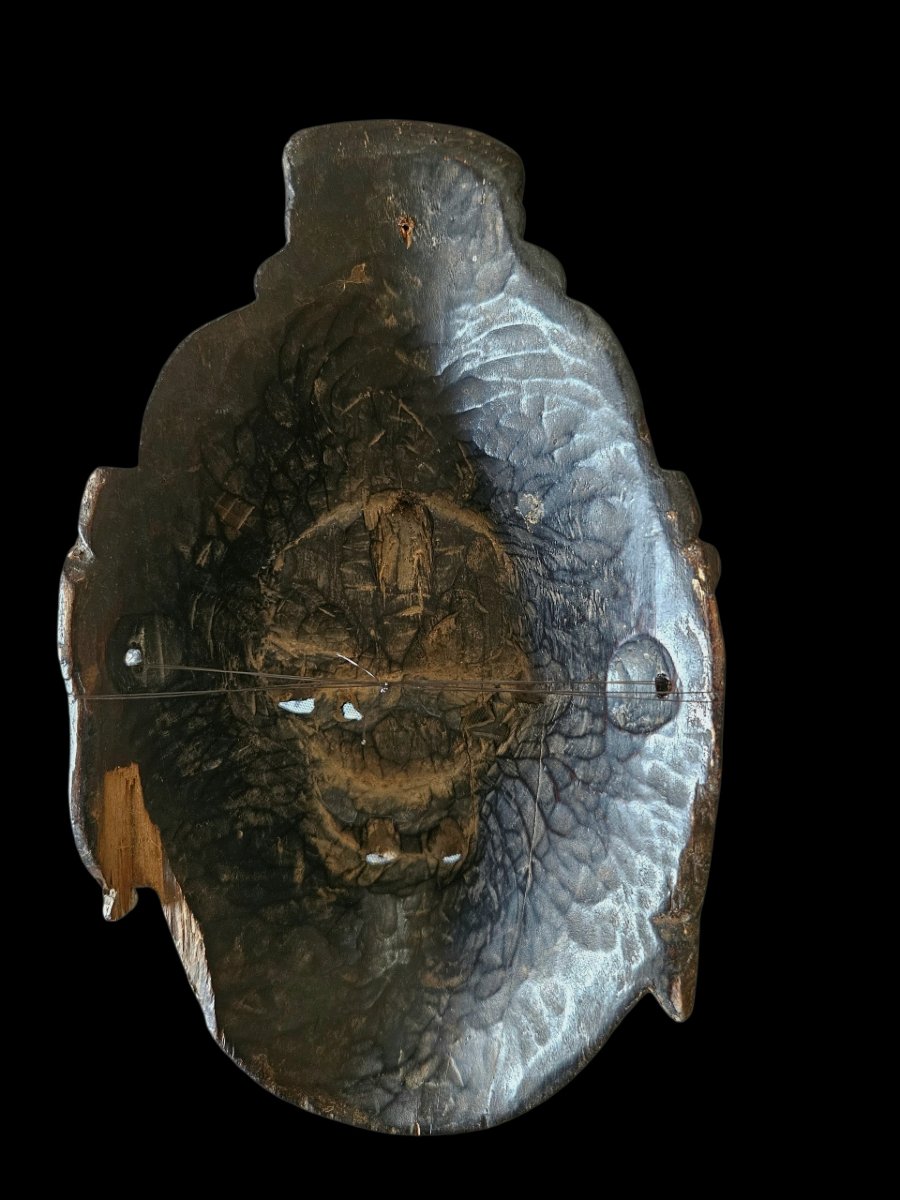
Stuccoed and polychrome wood, original brown patina, signs of internal wear, chip on the back of the mask (see photos).
Guizhou, Southwest China19th century
Dimensions: 24 × 13.5 cm
Gan Sheng Balang belongs to the Guizhou Nuotangxi repertoire, associated with the Nuo (傩) and Dixi (地戲) ritual theaters.
The hero of the play, Gan Sheng, sets out to take the imperial examinations; he embodies the young scholar on the path to success, a civilian figure in whom knowledge, family aspirations, and hopes for social advancement are intertwined.
The most significant detail is the guan (冕), a headdress worn over the male topknot.
“In ancient China, this attribute marked the transition to adulthood and, depending on its form, could signify distinction, rank, or civic dignity. Here, it accompanies a face of great restraint, where authority is conveyed not through anger or force, but through inner mastery.The long, drooping eyelids, straight nose, thin mouth, and large ears give the figure a silent, almost meditative presence. Far removed from the wrathful figures of the Nuo (傩), this young scholar embodies a different kind of power: that of scholarship, moderation, and the destiny one hopes to fulfill. In this calm face, one sees less action than anticipation, less struggle than the promise of elevation.
Sold with a certificate of authenticity from expert Serge Reynes and an invoice from Galerie Ocarina.
* Shipping costs to be quoted by DHL
Stuccoed and polychrome wood, original brown patina, signs of internal wear, chip on the back of the mask (see photos).
Guizhou, Southwest China19th century
Dimensions: 24 × 13.5 cm
Gan Sheng Balang belongs to the Guizhou Nuotangxi repertoire, associated with the Nuo (傩) and Dixi (地戲) ritual theaters.
The hero of the play, Gan Sheng, sets out to take the imperial examinations; he embodies the young scholar on the path to success, a civilian figure in whom knowledge, family aspirations, and hopes for social advancement are intertwined.
The most significant detail is the guan (冕), a headdress worn over the male topknot.
“In ancient China, this attribute marked the transition to adulthood and, depending on its form, could signify distinction, rank, or civic dignity. Here, it accompanies a face of great restraint, where authority is conveyed not through anger or force, but through inner mastery.The long, drooping eyelids, straight nose, thin mouth, and large ears give the figure a silent, almost meditative presence. Far removed from the wrathful figures of the Nuo (傩), this young scholar embodies a different kind of power: that of scholarship, moderation, and the destiny one hopes to fulfill. In this calm face, one sees less action than anticipation, less struggle than the promise of elevation.
Sold with a certificate of authenticity from expert Serge Reynes and an invoice from Galerie Ocarina.
* Shipping costs to be quoted by DHL
1 050 €
Period: 19th century
Style: Asian art
Condition: Condition of use
Material: Painted wood
Width: 13,5 cm
Height: 24 cm
Reference (ID): 1825352
Availability: In stock
Print