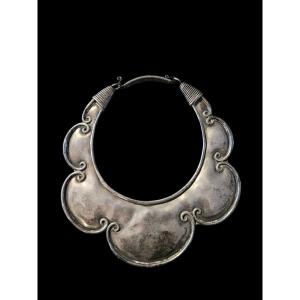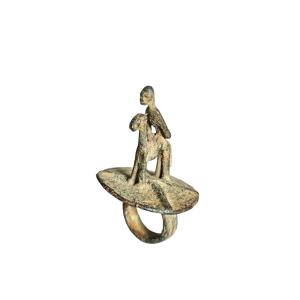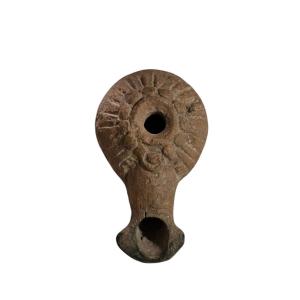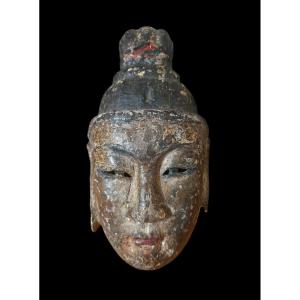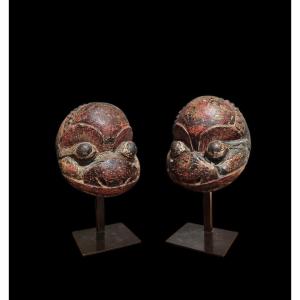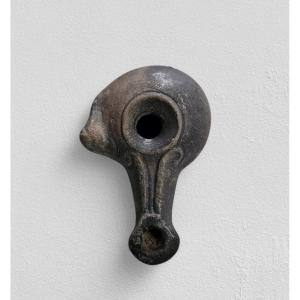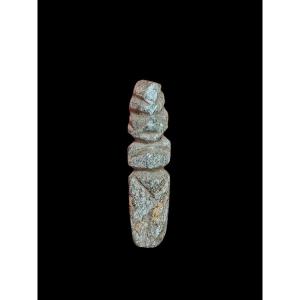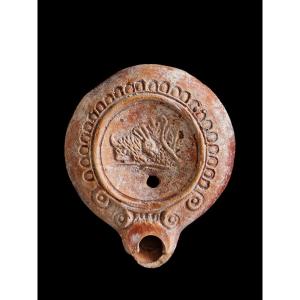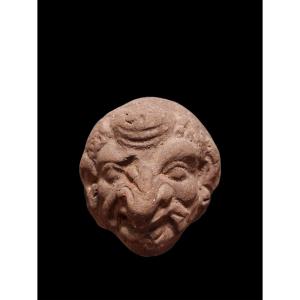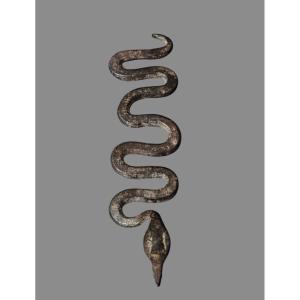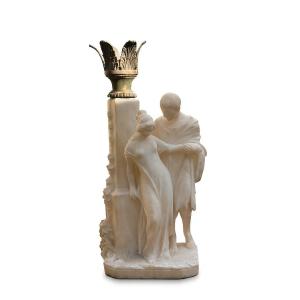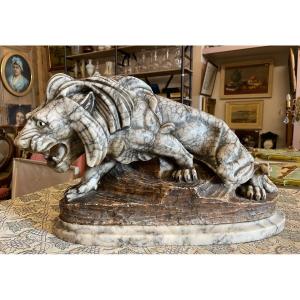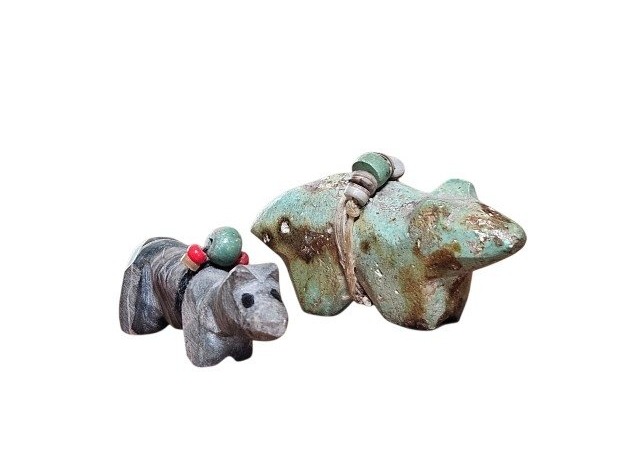
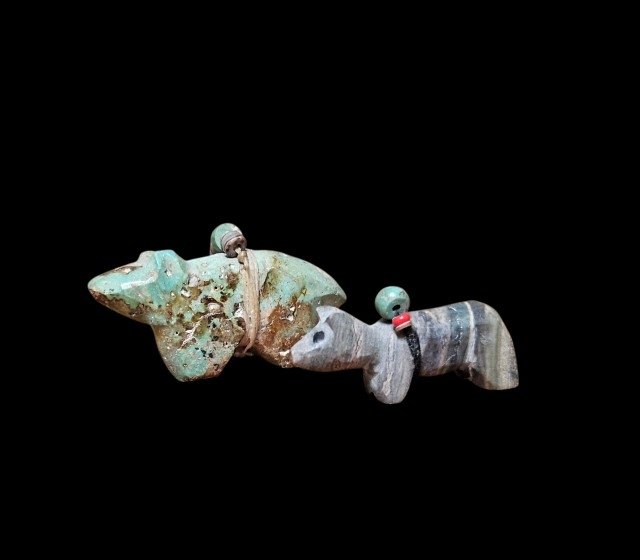

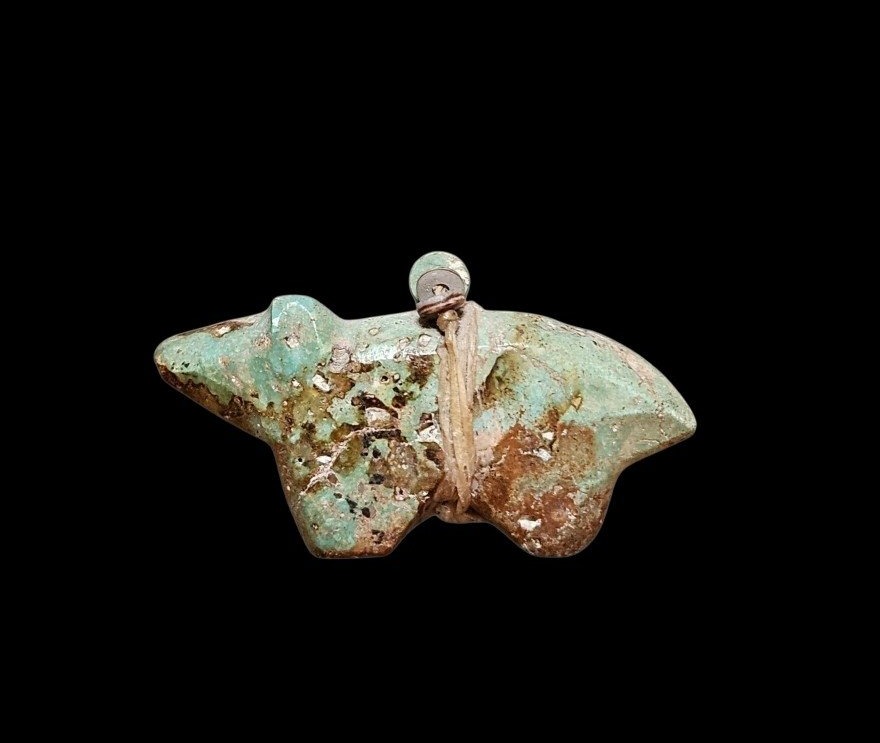
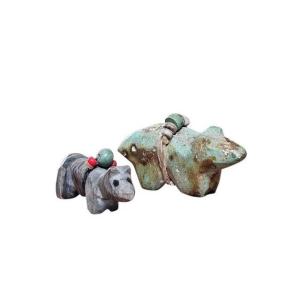


Two Zuni Amulets, New Mexico, United States, Circa 1950–1960
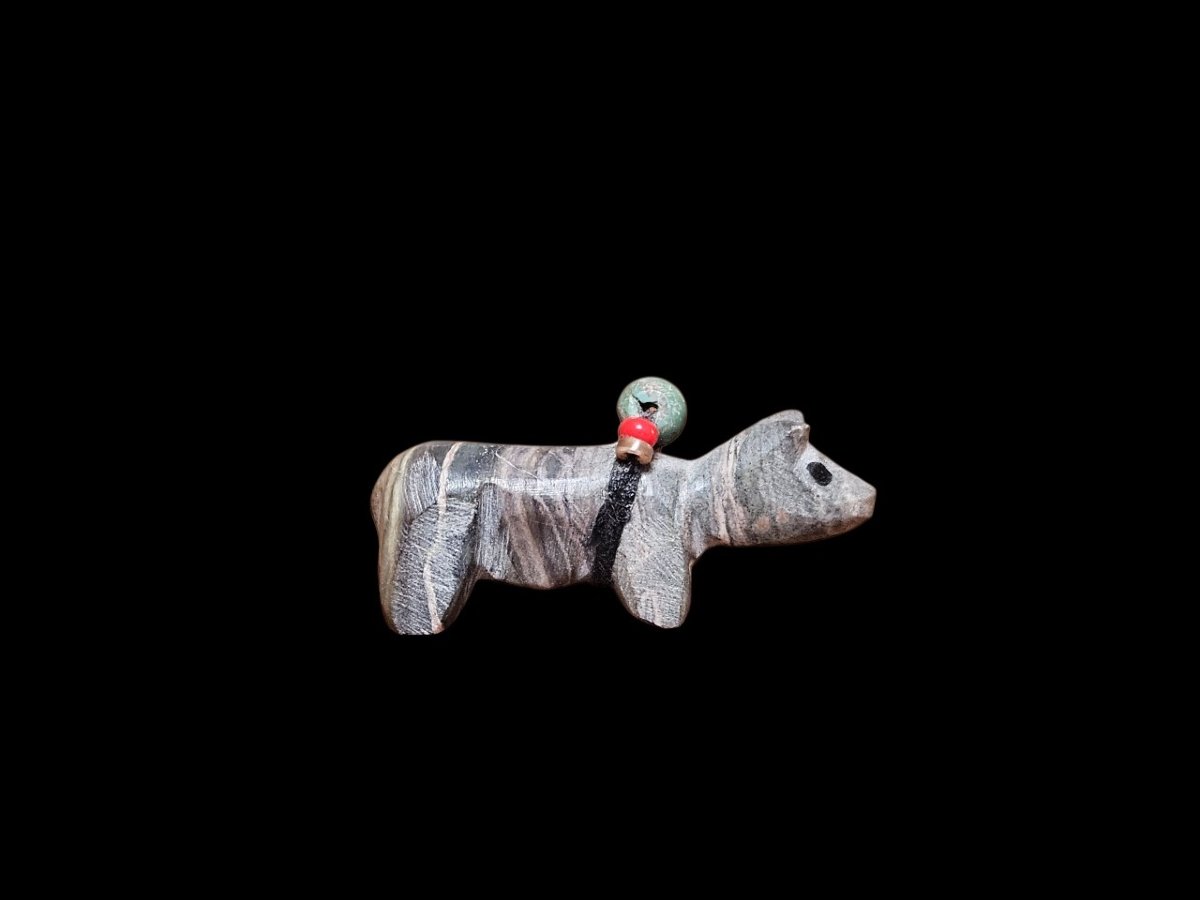
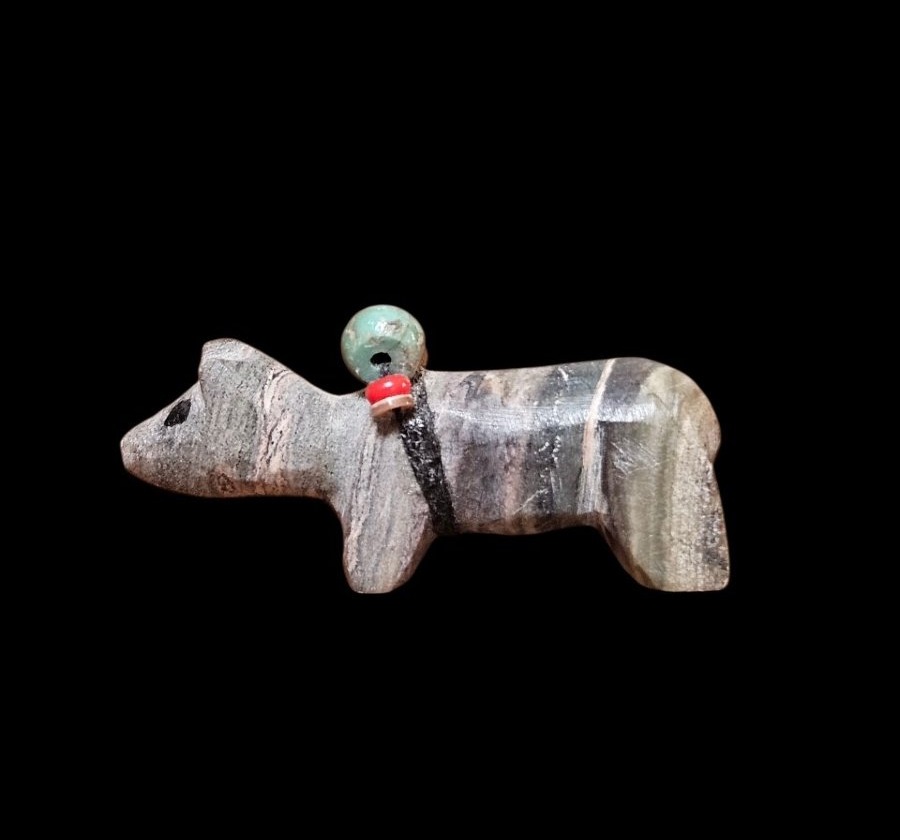
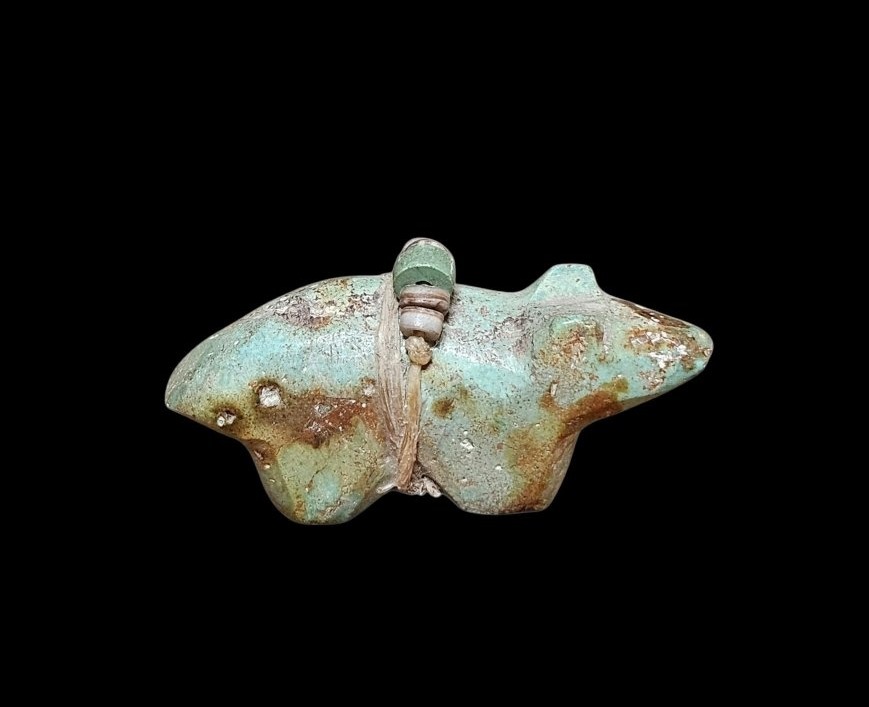
Two amulets likely depicting a bear and a wildcat
Turquoise with brown inclusions; green-gray banded stone; the wildcat’s eyes are inlaid with dark stones. Tendon ties hold stone beads and small disc-shaped beads. Signs of wear and age.
Zuni, New Mexico, United States
Circa 1950–1960 for the bear; mid- to late 20th century for the bobcat.
Dimensions: bear: 2.8 × 4.3 cm; wildcat: 1.1 × 3.3 cm.
The bear is distinguished by its compact and powerful form, small ears, and short tail. The wildcat has an elongated silhouette, a short muzzle, and a barely sketched tail, suggesting a bobcat. Each wears a string of beads fastened to its back.
"In the Zuni tradition recorded by Frank Hamilton Cushing, the bear is the guardian of the West, a mediator between humans and the forces of nature. The story of Mí-tsi, a man who neglected his ritual obligations, recounts how a bear’s intervention reminded him of his duties. The animal thus appears as a guardian of ritual order.”
The wildcat, Té-pi in Cushing’s transcription, is associated with the South in the hunting cycle. When the animals were released from a primordial enclosure, it captured a pronghorn—commonly known as the American antelope—and then pursued this game toward the southern lands. Its effigy was particularly favored by hunters of this animal.
Museum reference for this type of bear figure
Peabody Museum of Archaeology and Ethnology, Harvard, inv. 985-27-10/59069: a Zuni fetish, likely in the shape of a bear, adorned with disc-shaped turquoise beads strung on sinew. Acquired from C. G. Wallace in 1933 by William H. Claflin Jr. This reference documents the type, without implying a common date with our specimen. Museum catalog entry.
Bibliography
Cushing, Frank Hamilton, “Zuñi Fetishes,” Second Annual Report of the Bureau of Ethnology, 1880–1881, Washington, Government Printing Office, 1883, pp. 3–45; particularly pp. 16–19 for the bear and Mí-tsi’s account; pp. 21–24 and 27–28, pl. VI, for the wildcat.
Sold with a certificate of authenticity from expert Serge Reynes and an invoice.
* Free shipping within France; shipping to other countries available upon request.
280 €
Period: 20th century
Style: Other Style
Condition: Good condition
Material: Stone
Length: 4,3 cm
Height: 2,8 cm
Reference (ID): 1845499
Availability: In stock
Print