

Eugène Alluaud (1866–1947) Flood On The Sedelle. School Of Crozant, Guillaumin, Limoges, Detroy
Artist: Eugène Alluaud ( 1866-1947)
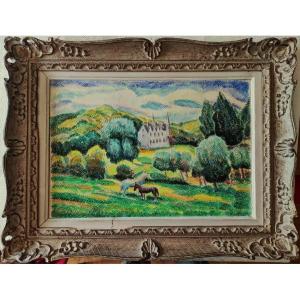
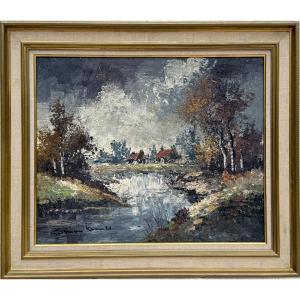
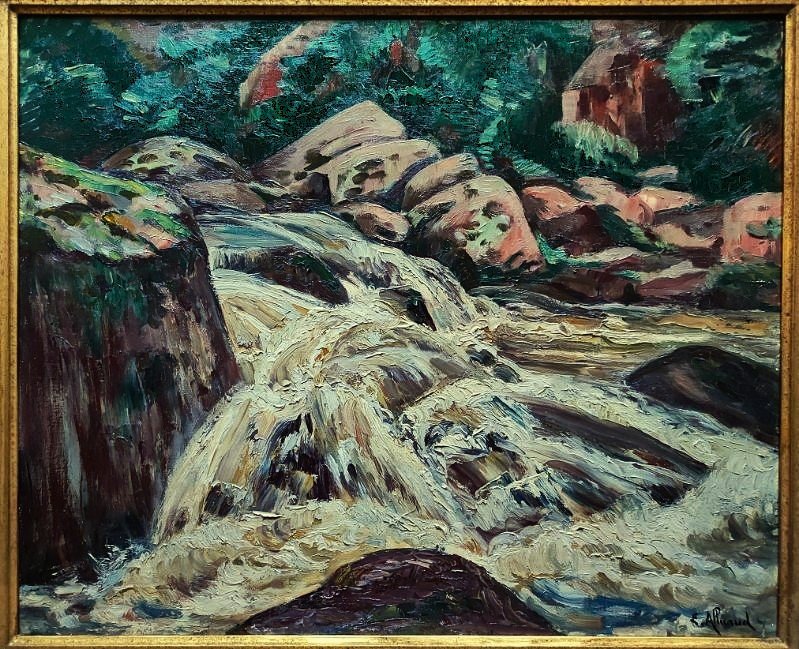
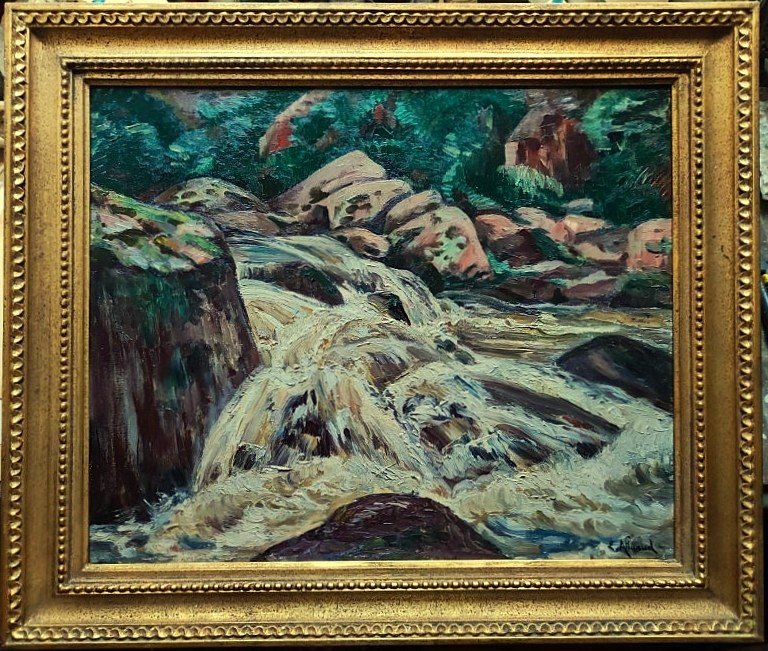
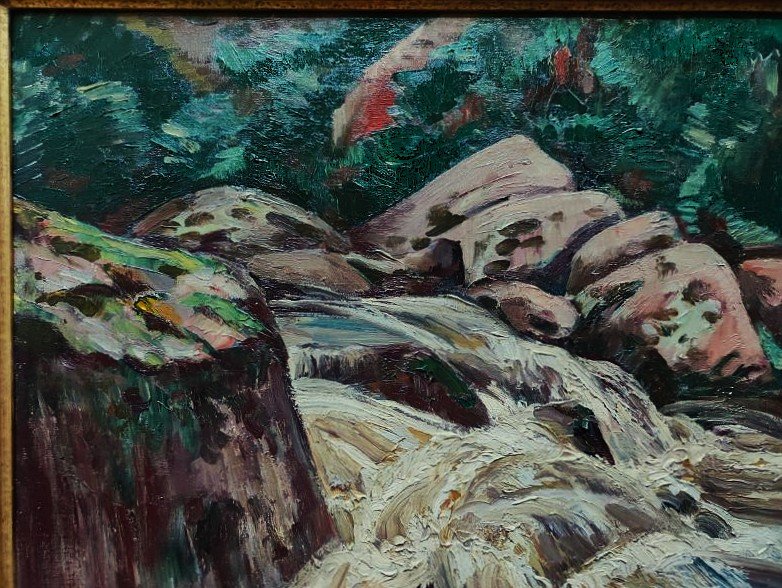
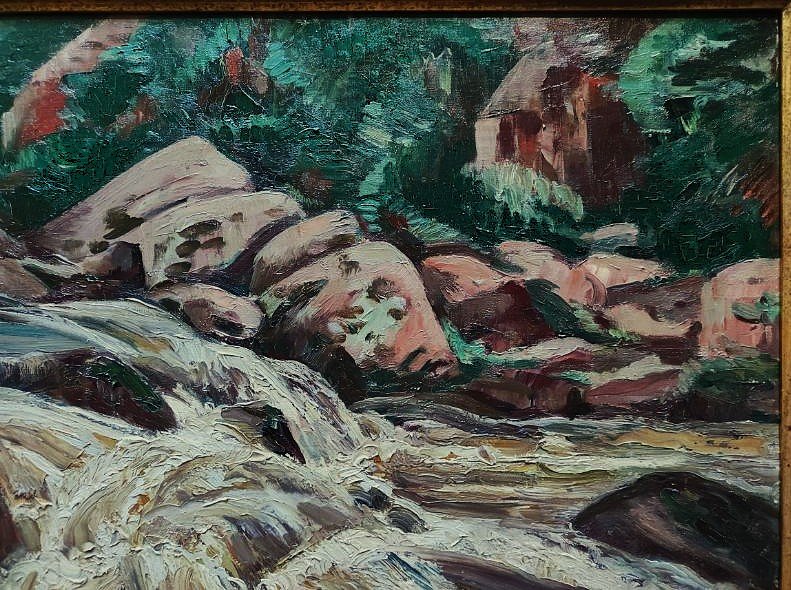
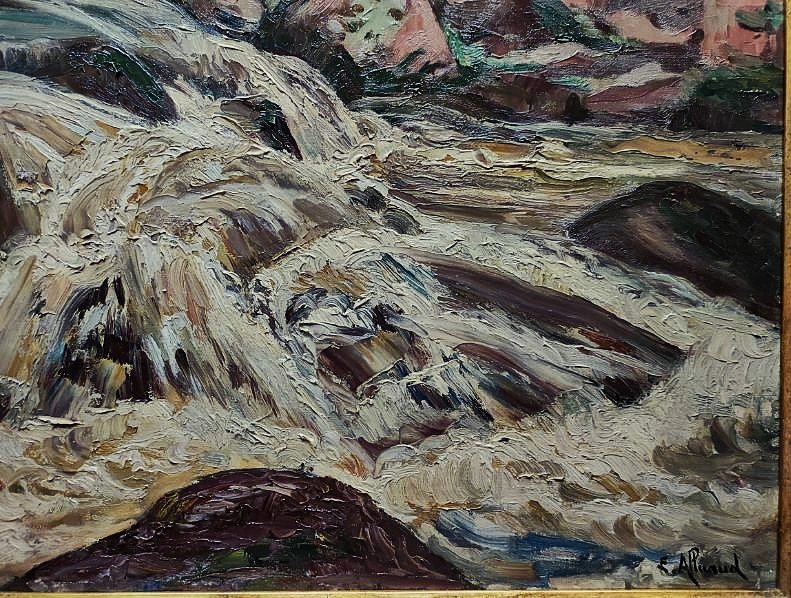
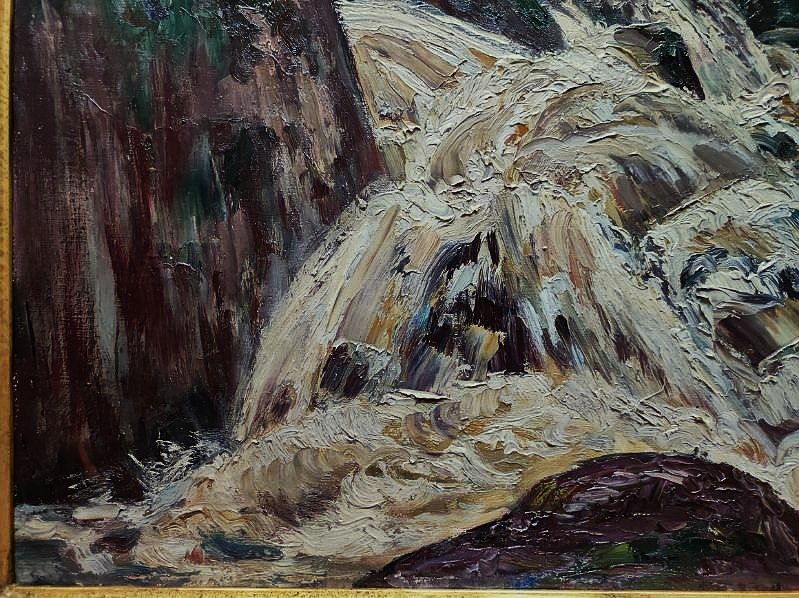
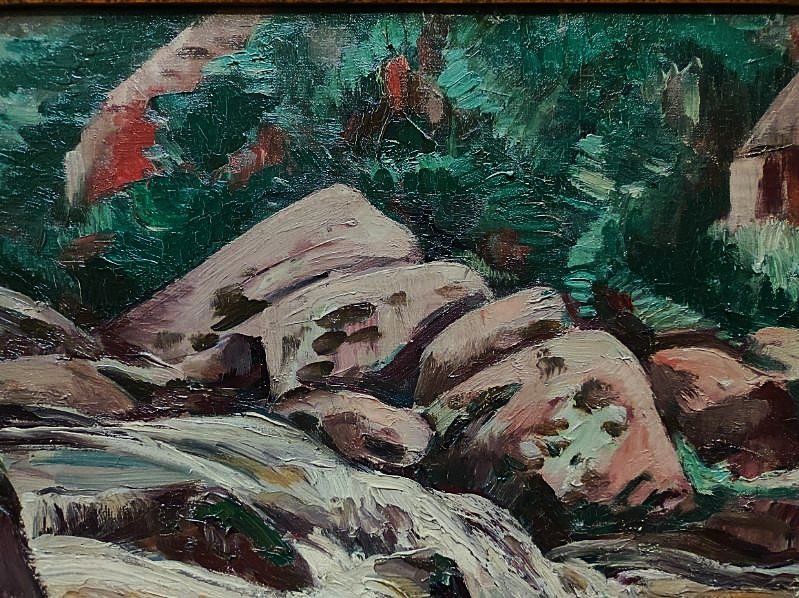
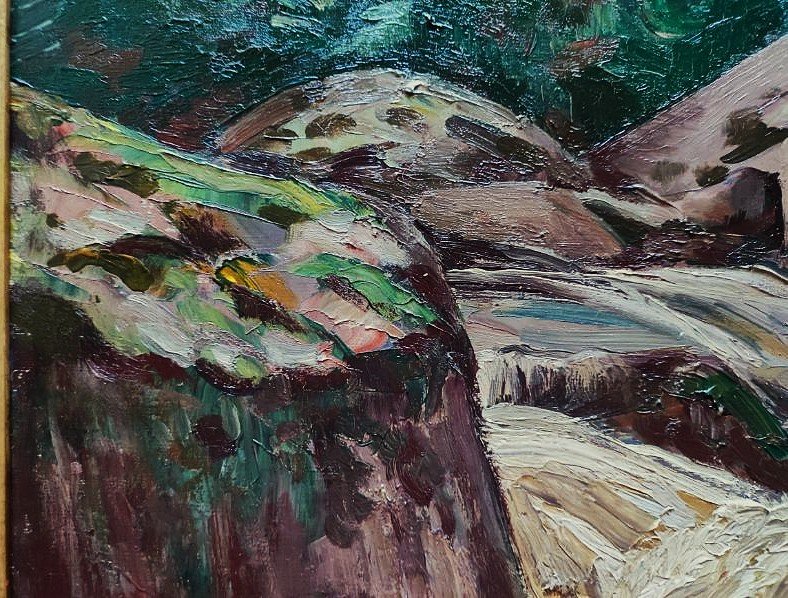
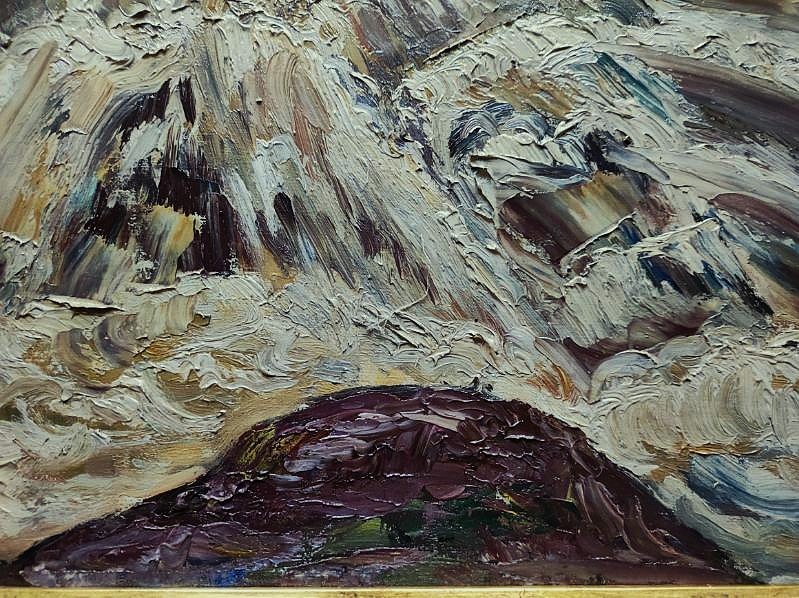
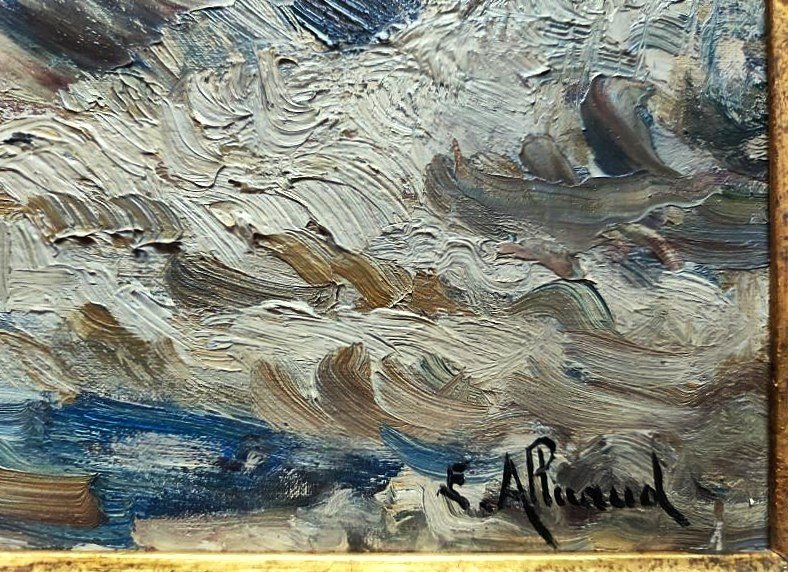
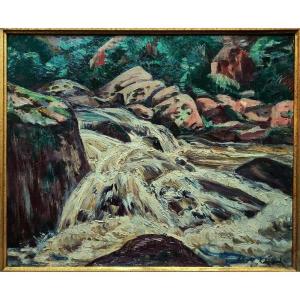
A STUNNING new oil on canvas by Eugène Alluaud depicting the Sedelle River in Flood near Crozant, circa 1920, signed lower right.
Dimensions of the painting alone (unframed): 50x61cm; 52x73cm including frame.
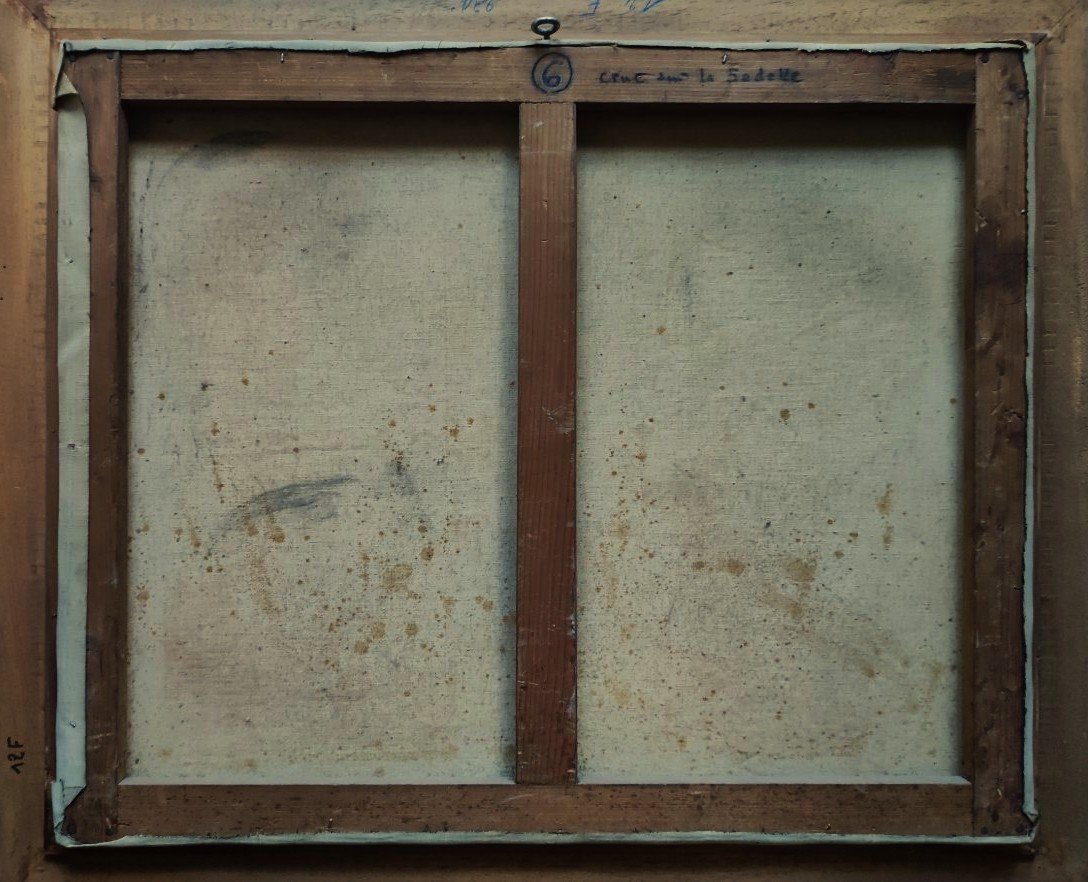
Painting in perfect original condition, recently inspected and cleaned, delivered in a beautiful modern gilded frame.
Authenticity guaranteed.
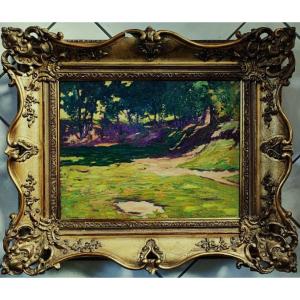
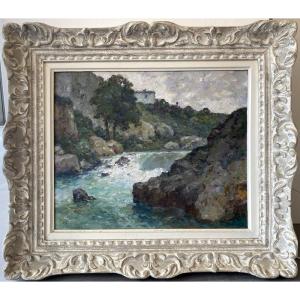
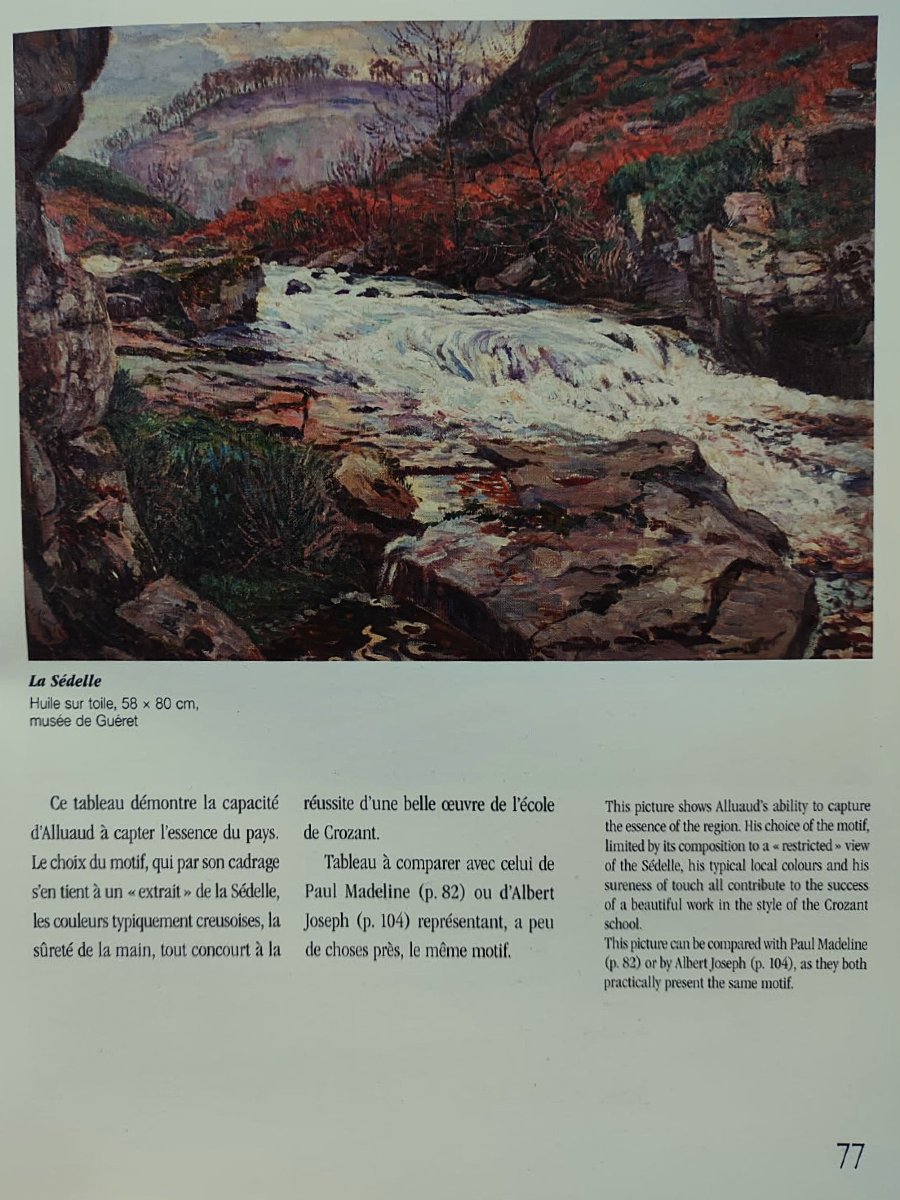
This is a new canvas by Eugène Alluaud, depicting the Sedelle River in flood near Crozant. Created during his mature period between 1915 and 1920, Alluaud had by then developed a very distinctive style thanks to a powerful brushstroke and a highly characteristic palette dominated by greens, grays, pinks, ochres, and Sienna, which he enhances here with subtle touches of yellow, blue, etc... His style here is very different from his earlier period; it is more impressionistic but, above all, more influenced by Guillaumin, with a more “commercial” palette (see my other listing, La Creuse à Fougères); here there are no compromises; Alluaud is being Alluaud, and the result is sublime. This work is comparable to another well-known painting, housed at the Guérêt Museum, which has been reproduced in numerous publications (see last photo).
I need not introduce Eugène Alluaud, the iconic painter and, above all, unifying figure of the Crozant School; he is now among the 5 most highly valued painters of this school alongside his friends: Guillaumin (his teacher), Detroy (his loyal friend), Madeline, and Alfred Smith ( family connections).
Eugène Gilbert Alluaud was born on March 25, 1866, in Ribagnac (in the commune of Saint-Martin-Terressus) into a family of porcelain makers and art lovers. His great-grandfather François Alluaud (1739–1799) was a royal engineer-geographer and porcelain maker; his grandfather François Alluaud (1778–1866) expanded the family business; his father, Amédée (1826–1871), was one of the leading figures in Limousin cultural life during the Second Empire and a close friend of Corot; his brother, Charles Alluaud (1861–1949), made a name for himself as a renowned entomologist.
His father Amédée, an enlightened art lover and collector, hosted Corot on several occasions at his château in Ribagnac. A close friend of Adrien Dubouché, he supported the painters of Crozant. Upon his death, his friend and painter Charles Donzel lavished the young Eugène with advice on painting.
Alluaud studied humanities at the Jesuit college in Vaugirard and then science at the Lycée Condorcet. He completed his military service as a one-year conscript in 1885–1886. It was during this time that he became friends with the painter Jules Adler.
From 1886 to 1889, he was a student at the Académie Julian, in the studios of Bouguereau and Robert-Fleury, and traveled throughout Europe (England, Belgium, and Italy) and North Africa (Algeria and Tunisia).
He owes his most significant artistic experience to Crozant. After first discovering the place in 1887, he returned there for an extended stay in 1891. With his wife Marcelle, he had the house “La Roca” built there, where they settled every summer starting in 1905. He gathered their artist friends around his table. Together they painted the landscapes of the Creuse Valley and enjoyed themselves in a joyful atmosphere.
Two names emerge from this circle of friends: Maurice Rollinat (1846–1903), the poet from Fresselines, and Armand Guillaumin (1841–1927), co-founder of theImpressionist group, who introduced him to light and color. His painting was thus strongly influenced by Impressionism “before he managed to break free from it in the 1920s, adopting a more constructive and synthetic style inspired by Cézanne.”
He exhibited regularly in galleries, in Limoges at Dalpayrat and in Paris at Durand-Ruel and Drouant. He regularly participated in the Salon des Indépendants and the Salon d’Automne. At the 1900 World’s Fair, he decorated the “Palais de la Danse” and the Grandes Marques restaurant pavilion. President of the jury for the Painting Section at the Salon d’Automne in 1928, he himself received the Grand Prix at the French Exhibition in Cairo in 1929.
He was also a master of war sketches and a ceramicist.
Dimensions of the painting alone (unframed): 50x61cm; 52x73cm including frame.
Painting in perfect original condition, recently inspected and cleaned, delivered in a beautiful modern gilded frame.
Authenticity guaranteed.
This is a new canvas by Eugène Alluaud, depicting the Sedelle River in flood near Crozant. Created during his mature period between 1915 and 1920, Alluaud had by then developed a very distinctive style thanks to a powerful brushstroke and a highly characteristic palette dominated by greens, grays, pinks, ochres, and Sienna, which he enhances here with subtle touches of yellow, blue, etc... His style here is very different from his earlier period; it is more impressionistic but, above all, more influenced by Guillaumin, with a more “commercial” palette (see my other listing, La Creuse à Fougères); here there are no compromises; Alluaud is being Alluaud, and the result is sublime. This work is comparable to another well-known painting, housed at the Guérêt Museum, which has been reproduced in numerous publications (see last photo).
I need not introduce Eugène Alluaud, the iconic painter and, above all, unifying figure of the Crozant School; he is now among the 5 most highly valued painters of this school alongside his friends: Guillaumin (his teacher), Detroy (his loyal friend), Madeline, and Alfred Smith ( family connections).
Eugène Gilbert Alluaud was born on March 25, 1866, in Ribagnac (in the commune of Saint-Martin-Terressus) into a family of porcelain makers and art lovers. His great-grandfather François Alluaud (1739–1799) was a royal engineer-geographer and porcelain maker; his grandfather François Alluaud (1778–1866) expanded the family business; his father, Amédée (1826–1871), was one of the leading figures in Limousin cultural life during the Second Empire and a close friend of Corot; his brother, Charles Alluaud (1861–1949), made a name for himself as a renowned entomologist.
His father Amédée, an enlightened art lover and collector, hosted Corot on several occasions at his château in Ribagnac. A close friend of Adrien Dubouché, he supported the painters of Crozant. Upon his death, his friend and painter Charles Donzel lavished the young Eugène with advice on painting.
Alluaud studied humanities at the Jesuit college in Vaugirard and then science at the Lycée Condorcet. He completed his military service as a one-year conscript in 1885–1886. It was during this time that he became friends with the painter Jules Adler.
From 1886 to 1889, he was a student at the Académie Julian, in the studios of Bouguereau and Robert-Fleury, and traveled throughout Europe (England, Belgium, and Italy) and North Africa (Algeria and Tunisia).
He owes his most significant artistic experience to Crozant. After first discovering the place in 1887, he returned there for an extended stay in 1891. With his wife Marcelle, he had the house “La Roca” built there, where they settled every summer starting in 1905. He gathered their artist friends around his table. Together they painted the landscapes of the Creuse Valley and enjoyed themselves in a joyful atmosphere.
Two names emerge from this circle of friends: Maurice Rollinat (1846–1903), the poet from Fresselines, and Armand Guillaumin (1841–1927), co-founder of theImpressionist group, who introduced him to light and color. His painting was thus strongly influenced by Impressionism “before he managed to break free from it in the 1920s, adopting a more constructive and synthetic style inspired by Cézanne.”
He exhibited regularly in galleries, in Limoges at Dalpayrat and in Paris at Durand-Ruel and Drouant. He regularly participated in the Salon des Indépendants and the Salon d’Automne. At the 1900 World’s Fair, he decorated the “Palais de la Danse” and the Grandes Marques restaurant pavilion. President of the jury for the Painting Section at the Salon d’Automne in 1928, he himself received the Grand Prix at the French Exhibition in Cairo in 1929.
He was also a master of war sketches and a ceramicist.
4 900 €
Period: 20th century
Style: Modern Art
Condition: Perfect condition
Material: Oil painting
Length: 61
Height: 50
Reference (ID): 1778566
Availability: In stock
Print