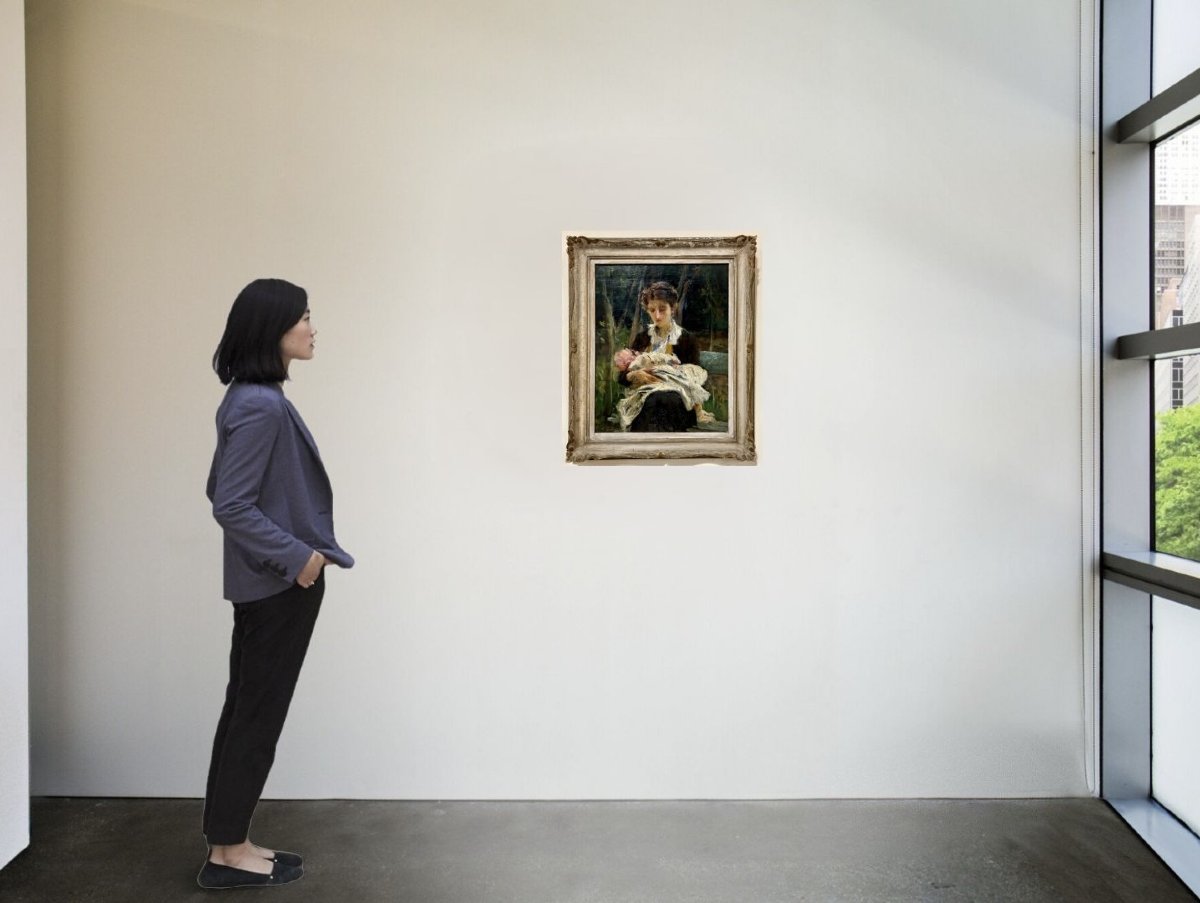


Francesco Galante (1884–1972) “the Young Mother” Neapolitan School
Artist: Francesco Galante
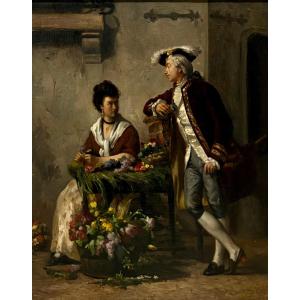
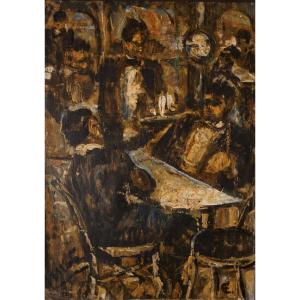
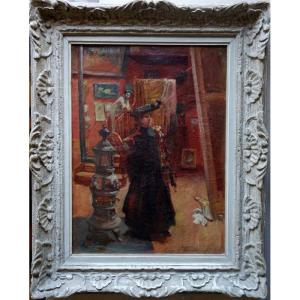
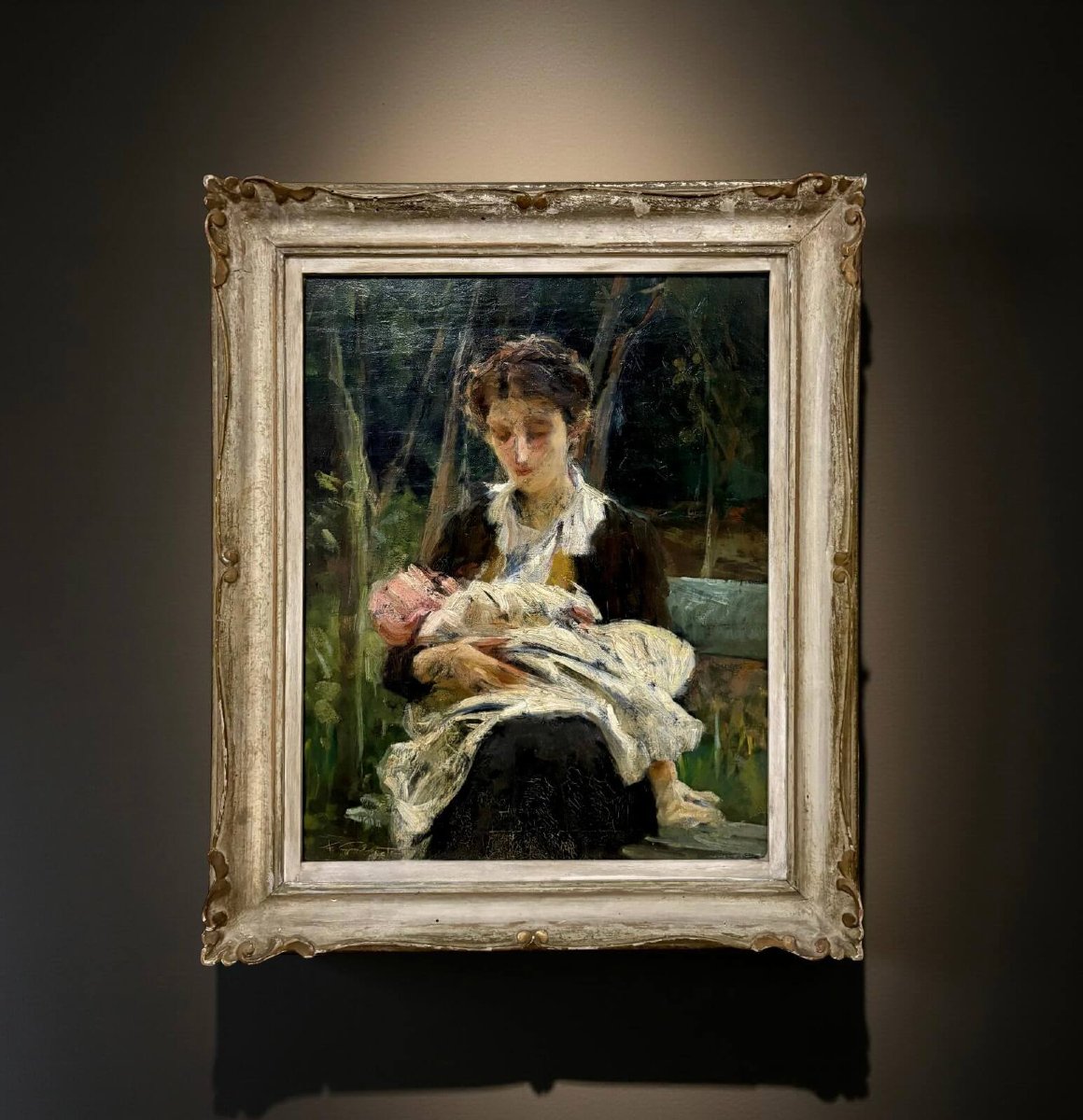
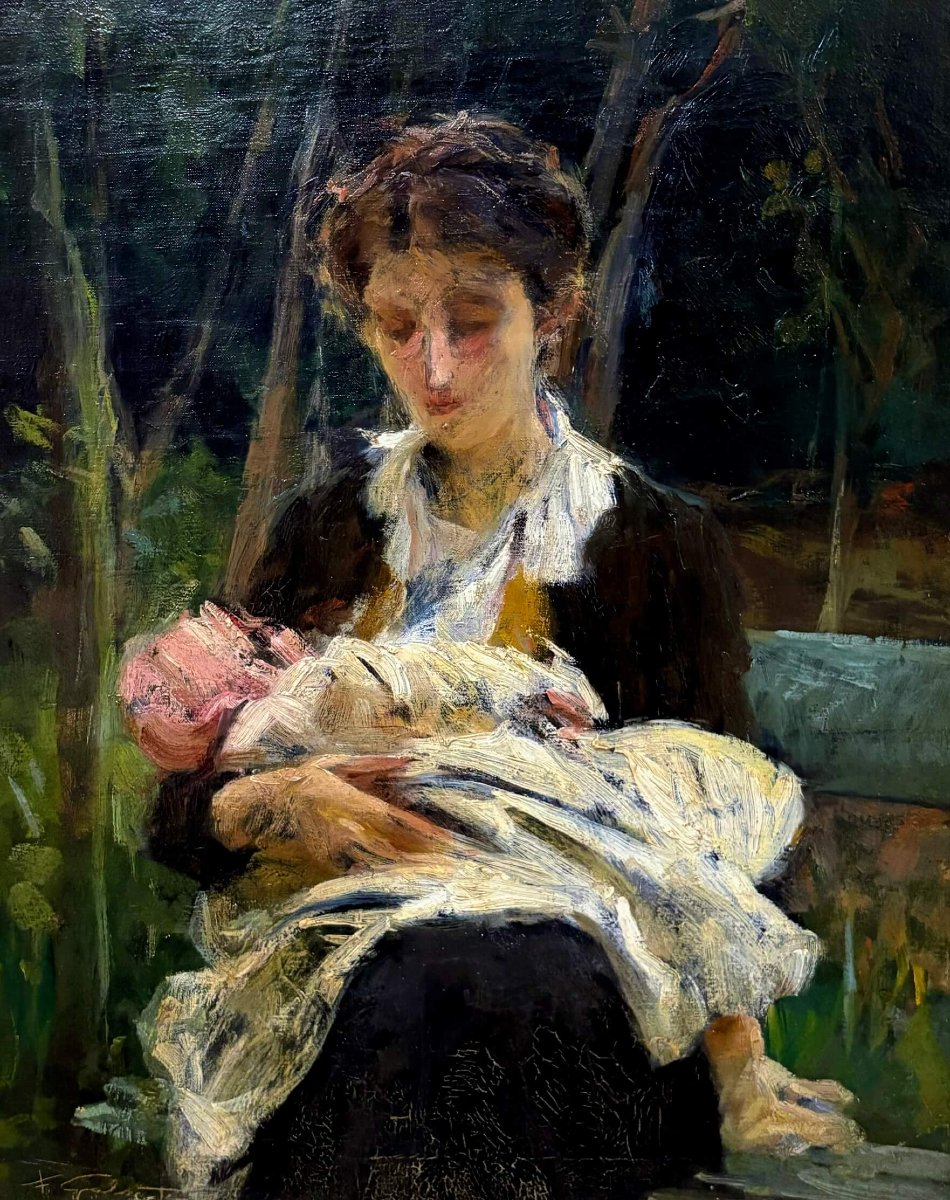
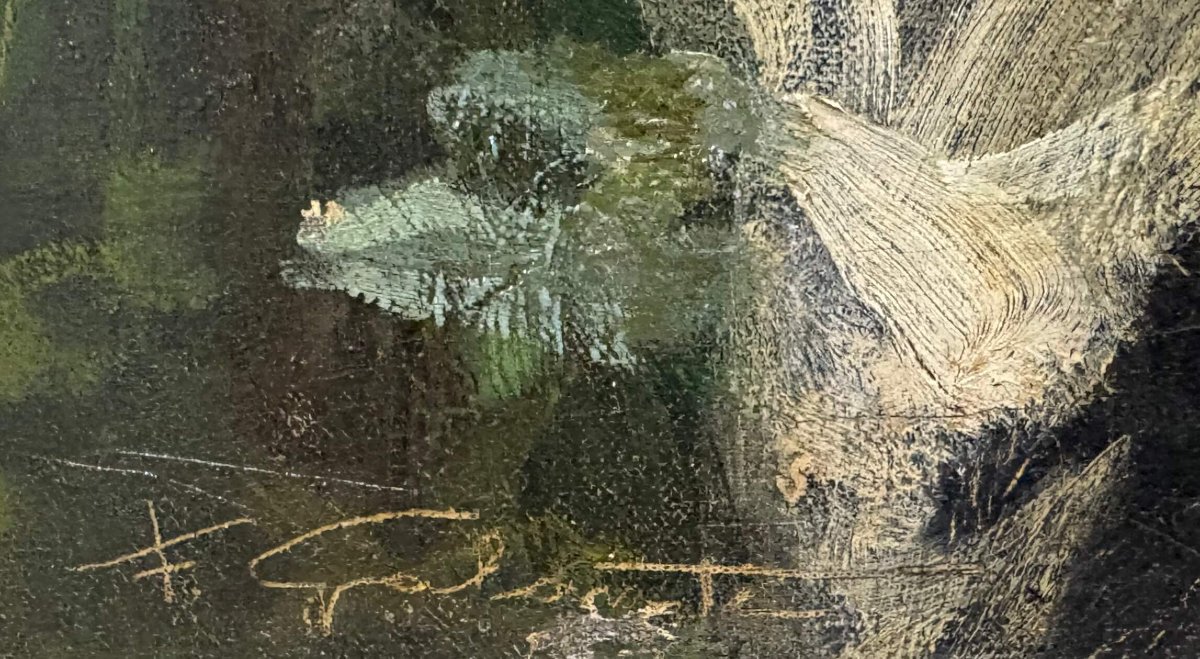
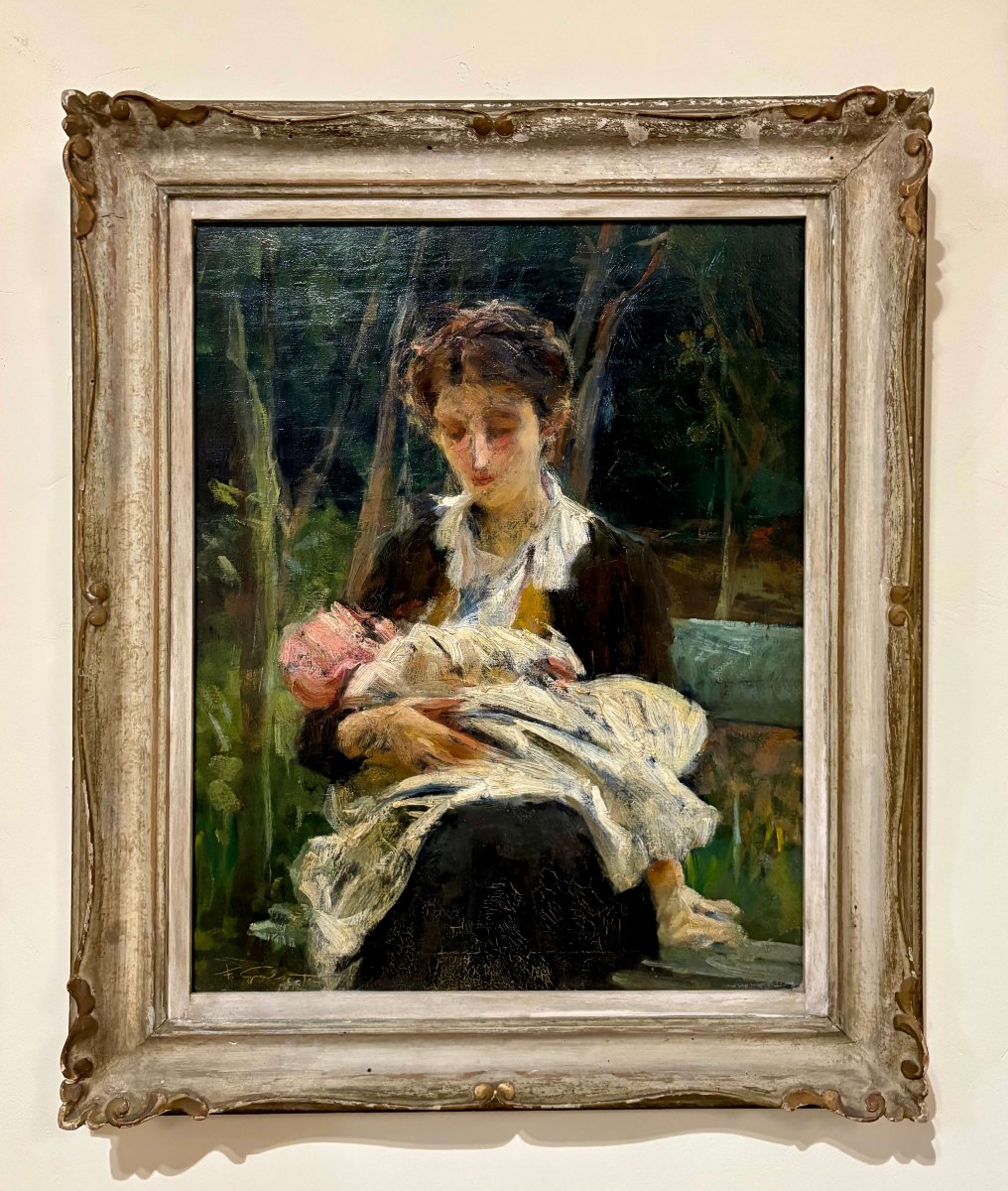
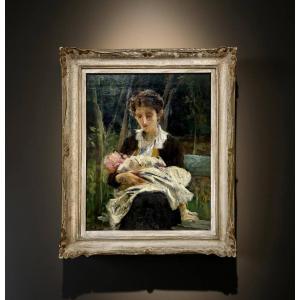
Francesco Galante (1884–1972), “The Young Mother,” oil on canvas, signed lower left F. Galante. Early 20th-century Neapolitan school.
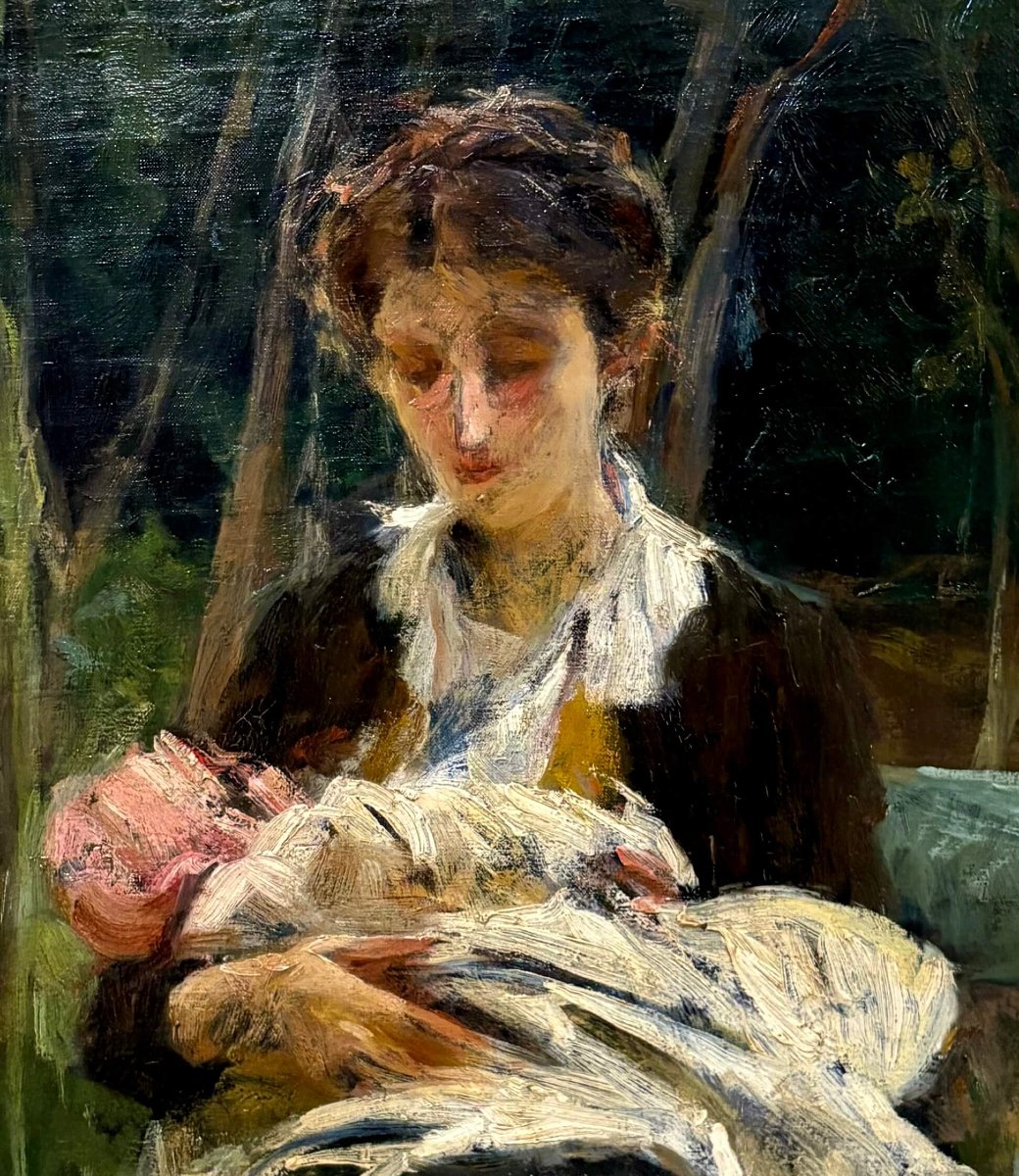
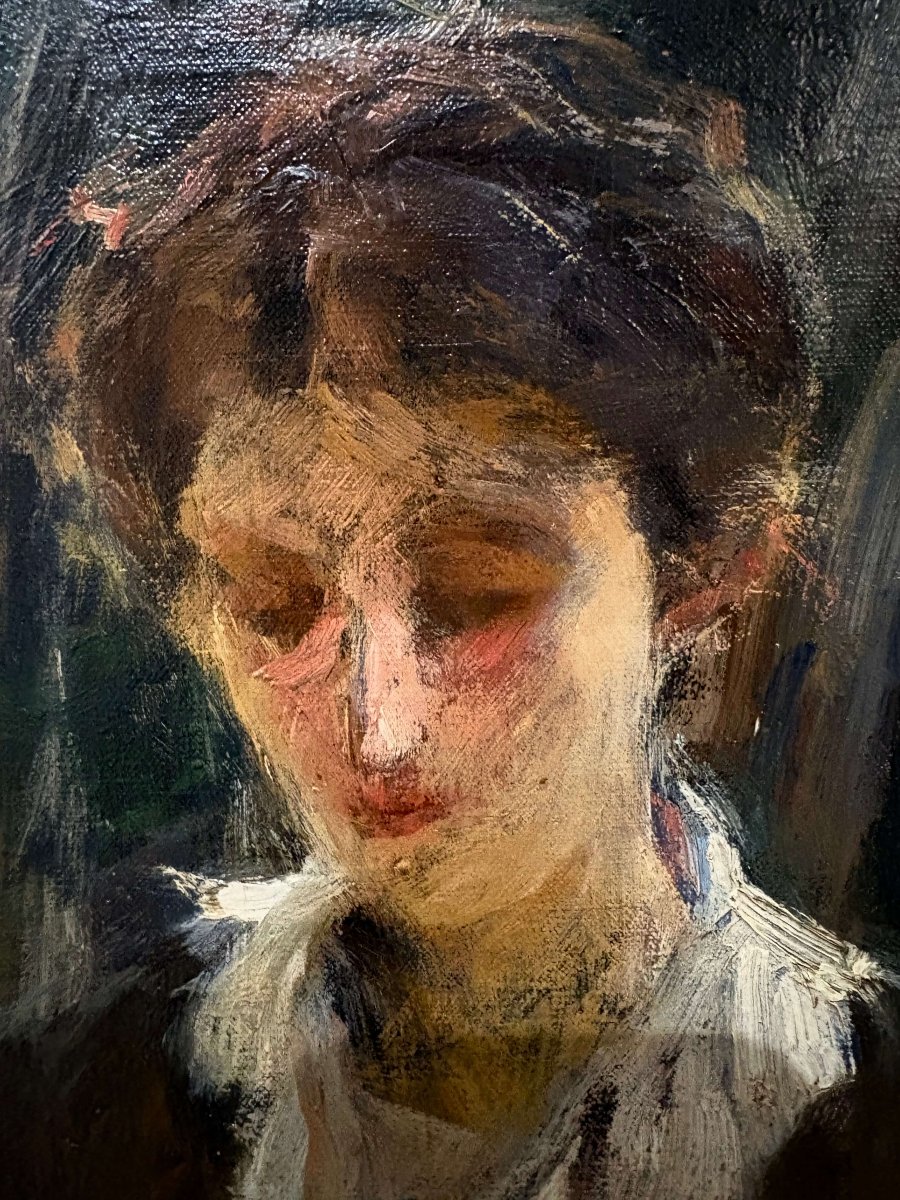
This painting belongs to the peak of Galante’s career, recognizable by the frayed brushstrokes that construct the figures, enveloped in twilight interrupted here and there by imperceptible vibrations of light.
A tireless artist, driven by a spirit of inquiry and imbued with noble fervor, he conceived his art with a wholesome modernity of intent, in a constant striving toward the beautiful, the new, and the daring. His clear, refined, and harmonious painting possesses qualities of elegance that are rare today, combined with a beautiful directness of design, eschewing all artifice and trickery.
Video available here
Dimensions
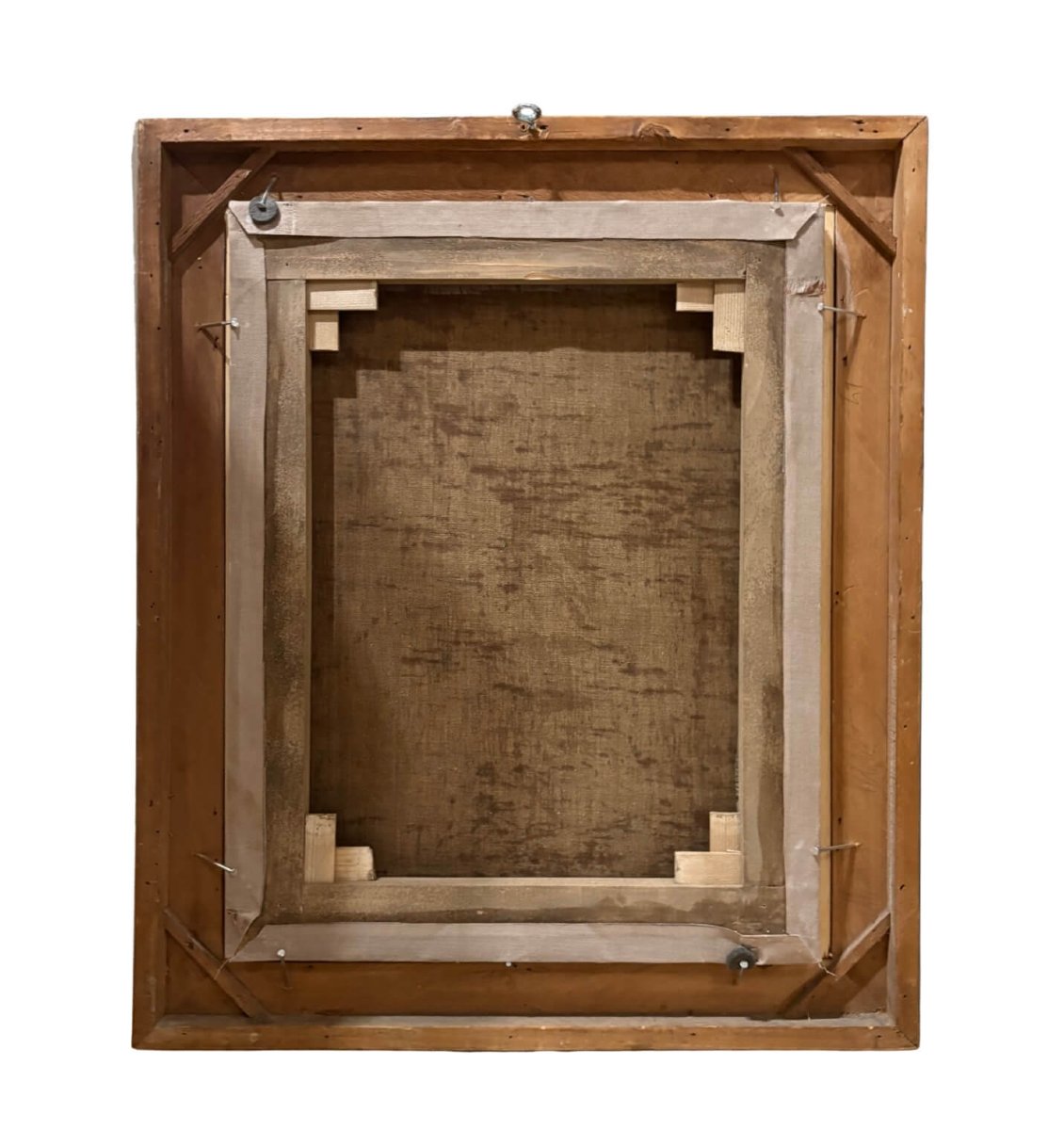
frame 62 x 53 cm
canvas 50 x 39 cm
Biography
Born in Margherita di Savoia, in the province of Foggia, on November 4, 1884, he soon moved to Naples where, beginning in 1896, he attended the Institute of Fine Arts. A student of M. Cammarano and V. Volpe, he completed his studies in 1904, receiving first prize for figure painting and landscape. As a student, he worked as an illustrator for several Neapolitan newspapers. In his painting career, which began alongside his work in graphic arts, Galante embraced a figurative style of European scope starting in the 1910s, as evidenced by his frayed brushstrokes, inspired by Impressionism; However, this tendency soon coexisted with a marked preference for intimate atmospheres, themes, and decorative motifs, as seen in the tempera painting L’Attente (c. 1912: Naples, private collection) or in *Attrazione* (1914; ibid., Circolo Artistico Politecnico), for which references to the Nabi movement have been cited (Ricci, 1981, p. 84). G.’s artistic sensibility during this period was not dissimilar to that of many artists of his generation, who were variously oriented toward modernist movements in search of greater autonomy from the traditional milieu. Already present in 1904 at the exhibitions organized by the promoter Salvator Rosa in Naples (where he would continue to exhibit until the 1940s), in 1909 he joined the “Secessione dei ventitré,” a group that, as its name suggests, intended to draw inspiration from the movements in Munich (1892) and Vienna (1905), bringing together some thirty young Neapolitan painters, sculptors, and graphic artists, including E. Curcio, E. Pansini, G. Ricchizzi, R. Scognamiglio, and E. Viti. In 1909, he participated in the Salon d’Automne in Paris and the 79th Roman Exhibition of the Society of Amateurs and Cultivators of Fine Arts, where he exhibited *Marechiaro* and *Studio* (Rome, National Gallery of Modern Art); in 1910 he made his debut at the Venice Biennale, an exhibition he would continue to participate in until the 13th edition (1922). Around the 1930s, the artist gained prestige, as evidenced by his membership in the National Commission for the Defense of Monuments, Landscape, and Architectural Aesthetics (until 1929), his professorship in Engraving Techniques at the Academy of Fine Arts in Naples (1930–1932), and his appointments as a member of the Academy of Letters and Archaeology in Lecce and the National Society of Sciences, Letters, and Arts in Naples. In the postwar period, the artist moved beyond the polished forms of his immediately preceding work. In the paintings of the 1950s (such as Evening at Santa Lucia, Purple Jacket, Puglia, and Roofs, works reproduced in Limoncelli, 1965), despite a different, at times redundant, use of color, he returned to the technique of multiple brushstrokes from his early years, unanimously considered the most interesting (Menna, 1965; Ricci, 1981, p. 84; Salvatori, 1992, p. 901). Galante died in Naples on March 15, 1972.
++++++++++++++++++++++++++++++++++++DELIVERY AND PAYMENT++++++++++++++++++++++++++++++++++++++
SHIPPING VIA MBE in a custom-made wooden crate via UPS - TNT - FEDEX - DHL
Payment methods: Bank transfer - Online credit card (including AMEX) - PayPal (+3.7%) - NO checks
+++++++++++++++++++++++++++++++++++++++++++++++++++++++++++++++++++++++++++++++++++++++++++++++
This painting belongs to the peak of Galante’s career, recognizable by the frayed brushstrokes that construct the figures, enveloped in twilight interrupted here and there by imperceptible vibrations of light.
A tireless artist, driven by a spirit of inquiry and imbued with noble fervor, he conceived his art with a wholesome modernity of intent, in a constant striving toward the beautiful, the new, and the daring. His clear, refined, and harmonious painting possesses qualities of elegance that are rare today, combined with a beautiful directness of design, eschewing all artifice and trickery.
Video available here
Dimensions
frame 62 x 53 cm
canvas 50 x 39 cm
Biography
Born in Margherita di Savoia, in the province of Foggia, on November 4, 1884, he soon moved to Naples where, beginning in 1896, he attended the Institute of Fine Arts. A student of M. Cammarano and V. Volpe, he completed his studies in 1904, receiving first prize for figure painting and landscape. As a student, he worked as an illustrator for several Neapolitan newspapers. In his painting career, which began alongside his work in graphic arts, Galante embraced a figurative style of European scope starting in the 1910s, as evidenced by his frayed brushstrokes, inspired by Impressionism; However, this tendency soon coexisted with a marked preference for intimate atmospheres, themes, and decorative motifs, as seen in the tempera painting L’Attente (c. 1912: Naples, private collection) or in *Attrazione* (1914; ibid., Circolo Artistico Politecnico), for which references to the Nabi movement have been cited (Ricci, 1981, p. 84). G.’s artistic sensibility during this period was not dissimilar to that of many artists of his generation, who were variously oriented toward modernist movements in search of greater autonomy from the traditional milieu. Already present in 1904 at the exhibitions organized by the promoter Salvator Rosa in Naples (where he would continue to exhibit until the 1940s), in 1909 he joined the “Secessione dei ventitré,” a group that, as its name suggests, intended to draw inspiration from the movements in Munich (1892) and Vienna (1905), bringing together some thirty young Neapolitan painters, sculptors, and graphic artists, including E. Curcio, E. Pansini, G. Ricchizzi, R. Scognamiglio, and E. Viti. In 1909, he participated in the Salon d’Automne in Paris and the 79th Roman Exhibition of the Society of Amateurs and Cultivators of Fine Arts, where he exhibited *Marechiaro* and *Studio* (Rome, National Gallery of Modern Art); in 1910 he made his debut at the Venice Biennale, an exhibition he would continue to participate in until the 13th edition (1922). Around the 1930s, the artist gained prestige, as evidenced by his membership in the National Commission for the Defense of Monuments, Landscape, and Architectural Aesthetics (until 1929), his professorship in Engraving Techniques at the Academy of Fine Arts in Naples (1930–1932), and his appointments as a member of the Academy of Letters and Archaeology in Lecce and the National Society of Sciences, Letters, and Arts in Naples. In the postwar period, the artist moved beyond the polished forms of his immediately preceding work. In the paintings of the 1950s (such as Evening at Santa Lucia, Purple Jacket, Puglia, and Roofs, works reproduced in Limoncelli, 1965), despite a different, at times redundant, use of color, he returned to the technique of multiple brushstrokes from his early years, unanimously considered the most interesting (Menna, 1965; Ricci, 1981, p. 84; Salvatori, 1992, p. 901). Galante died in Naples on March 15, 1972.
++++++++++++++++++++++++++++++++++++DELIVERY AND PAYMENT++++++++++++++++++++++++++++++++++++++
SHIPPING VIA MBE in a custom-made wooden crate via UPS - TNT - FEDEX - DHL
Payment methods: Bank transfer - Online credit card (including AMEX) - PayPal (+3.7%) - NO checks
+++++++++++++++++++++++++++++++++++++++++++++++++++++++++++++++++++++++++++++++++++++++++++++++
1 900 €
Period: 20th century
Style: Art Nouveau
Condition: Excellent condition
Material: Oil painting
Width: 53
Height: 62
Reference (ID): 1777916
Availability: In stock
Print