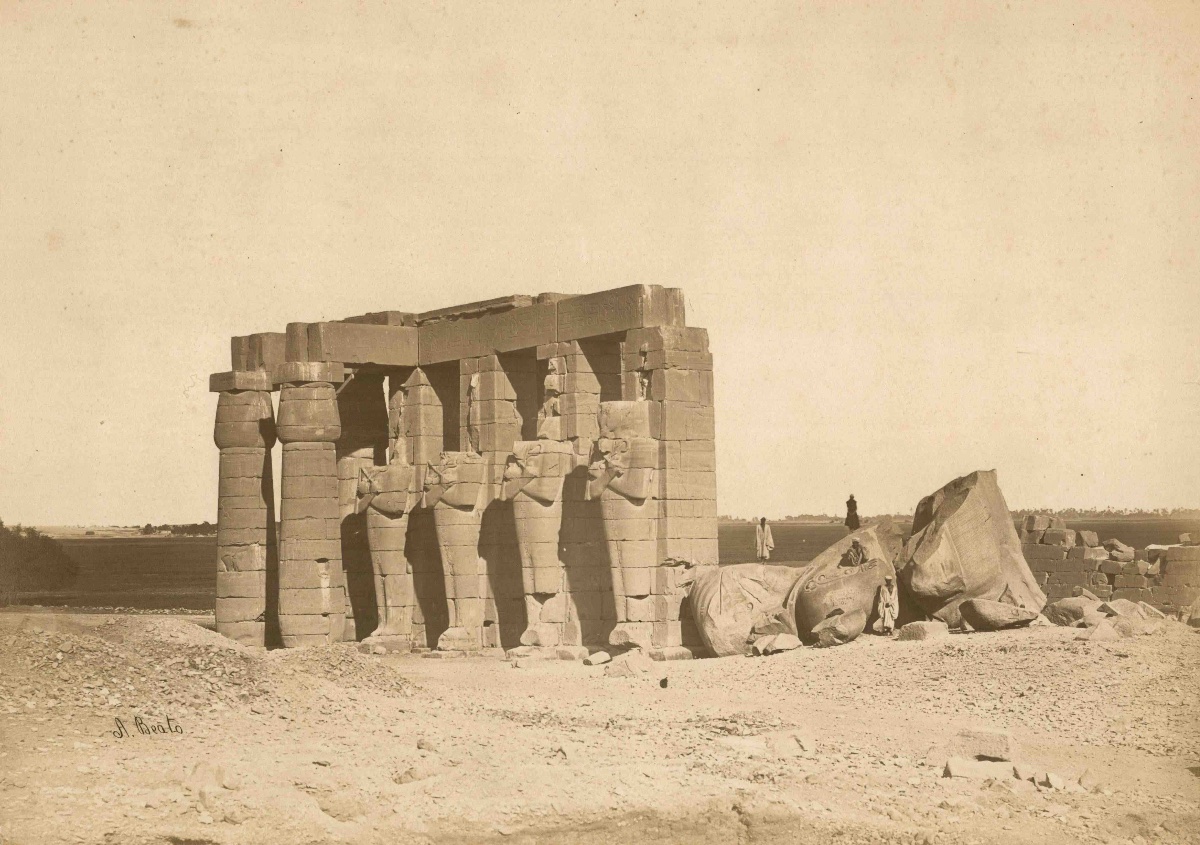
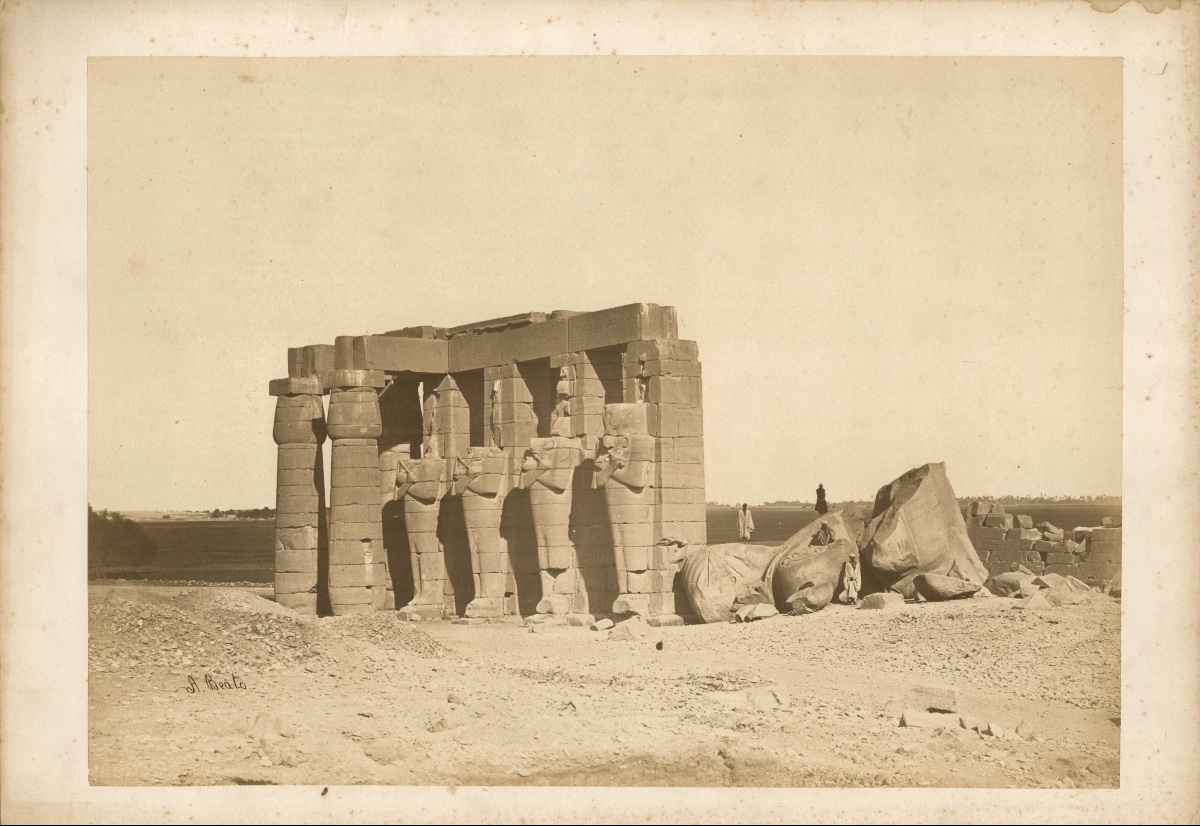
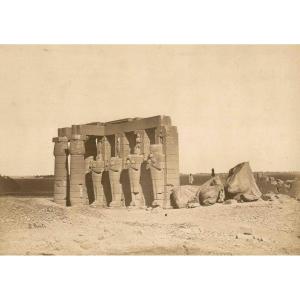


Antonio Beato (1825-1905) Temple Of Ramses Ii, Egypt C.1860 Photograph Albumen Print
Large vintage albumen print signed in the plate with beautiful chemistry and contrasts.
The Ramesseum, Temple of Ramses II, Thebes circa 1862.
Fragments, standing and reclining, of the seated colossi can be distinguished, while smaller silhouettes of local inhabitants help to appreciate the scale of grandeur of the ancient monument.
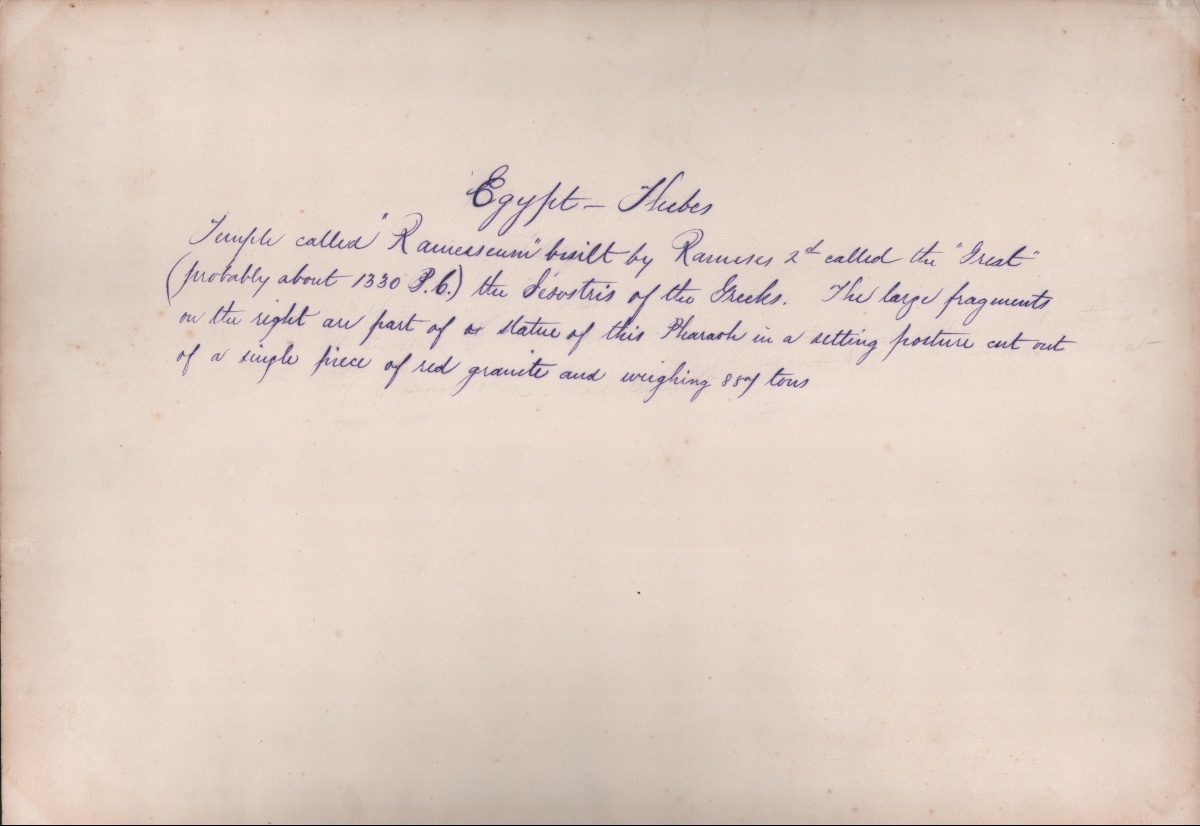
Collector's inscription on back of image:
"The temple called Ramsesium, built by Ramses II, nicknamed the Great (probably around 1331 BC.C.), was ravaged by the Greeks. The large fragments on the right are part of the statue of this pharaoh in a seated position, carved from a single block of red granite and weighing 881 tons."
In 1860, Antonio Beato, a photographer of Italian origin, settled and set up a studio in Luxor in Upper Egypt. Between 1870 and 1900, he photographed the site and the Karnak temple region extensively and regularly.
Antonio BEATO was an Italian-British photographer born around 1825 in Veneto and died in 1905 in Luxor. He is renowned for his genre scenes, portraits, photos of architecture and Egyptian landscapes in particular, and of the Mediterranean region in general.
Ancient travelers referred to this temple, already heavily exploited, as the "Tomb of Ozymandias" and the "Memnonium". It was Jean-François Champollion who correctly identified the ruins as those of the funerary temple of Ramses and coined the name "Ramesséum". To the right lies the upturned torso of a colossal statue of a seated Ramses II, carved from red granite: the Colossus of Ozymandias, originally some 20 metres high and weighing almost 1,000 tonnes. Ozymandias is the Hellenized form of Ramses II's name, Usermaatra. Shelley's famous poem, "Ozymandias", seems to have been inspired by Diodorus Siculus' description of this colossus of Ramses.
- Format Photo 27 x 37 cm
- Sous passe-partout 40x50cm
lien sur le site https://www.lavalisearlesienne.com/product-page/antonio-beato-1825-1905-temple-de-karnak-egypte-c-1870
Period: 19th century
Style: Orientalism
Condition: Excellent condition
Material: Paper
Reference (ID): 1775134
Availability: In stock