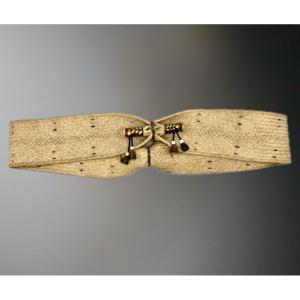


Child Carrying Belt
Kayapó people (Mebêngôkre), Upper Xingu, Brazilian Amazon
XXᵉ century
COLLECTION JEAN-PIERRE DUTILLEUX
DESCRIPTION
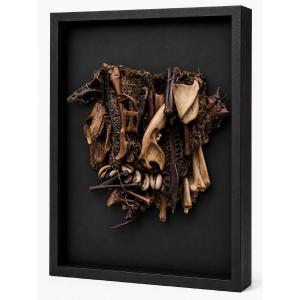
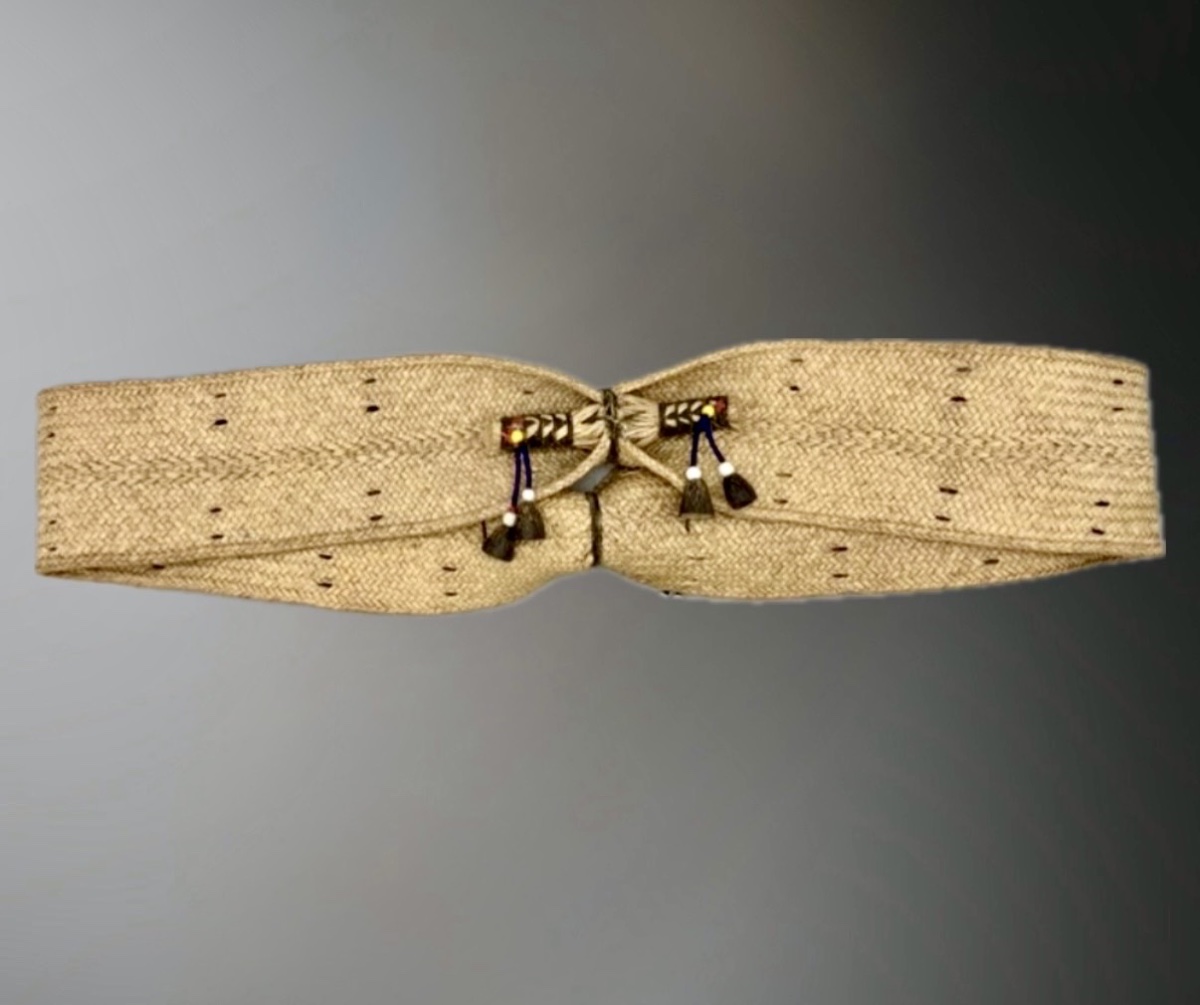
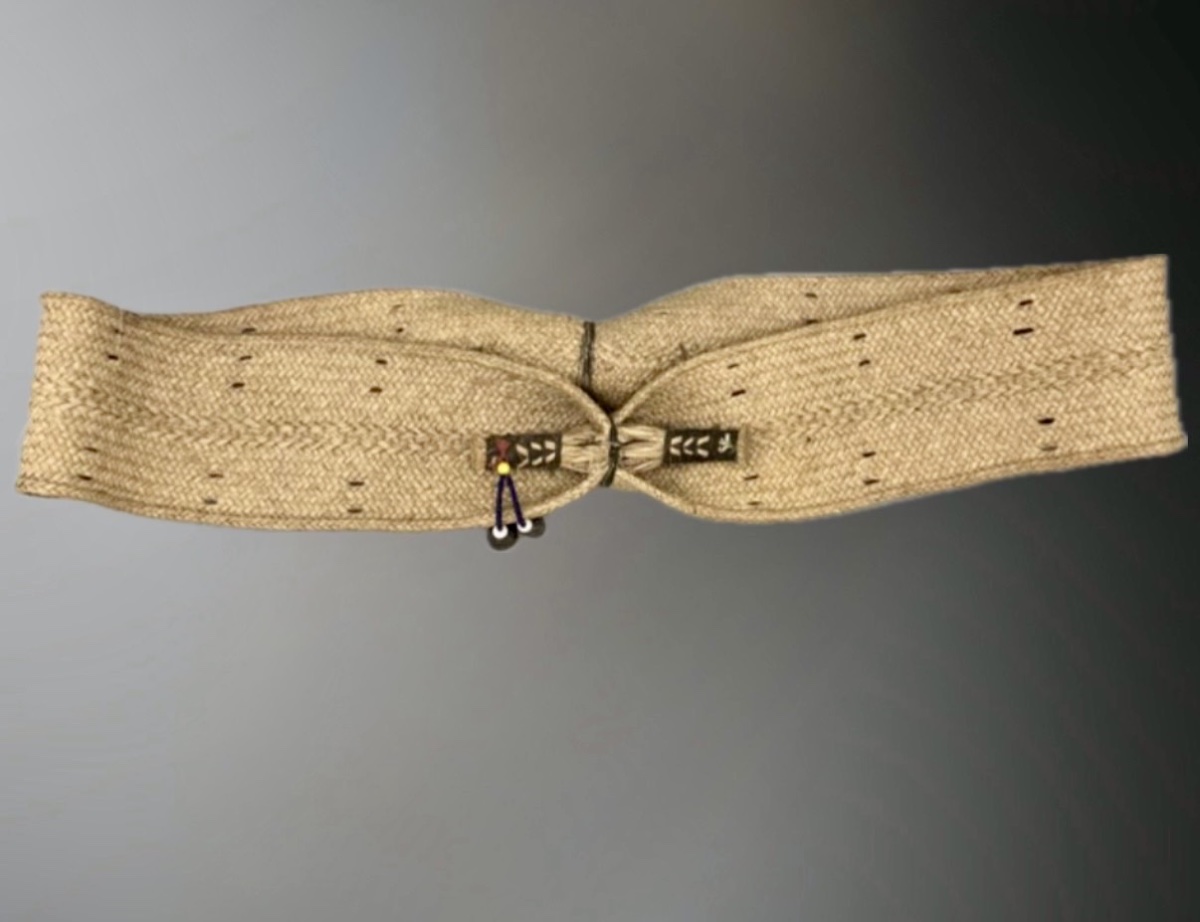
Rare child's carrying belt, made of finely braided plant fibers, attributed to the Kayapó populations of the Upper Xingu region.
Sober in appearance, this object belongs to the most intimate and least documented category of Amazonian material production: that of artifacts linked to the domestic sphere and the female body. Intended for carrying infants against the body, this belt ensured support, protection and constant proximity between mother and child.
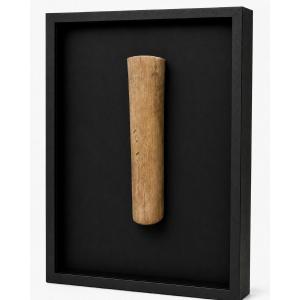
The structure consists of a flexible, resistant braided band, extended by reinforced symmetrical ends, each fitted with a fixed device embellished with plant-fiber pendants and polychrome glass beads.
Contrary to adjustable systems, this example features a pre-calibrated design, with no moving clamping mechanism. This characteristic reflects an object designed for a specific use, guaranteeing constant tension, balanced load distribution and optimal carrying safety.
The set shows a marked patina of use, with softening of the fibers, localized wear and chromatic variations, attesting to real use in the field. This authenticity clearly distinguishes this piece from later productions or those destined for the trade.
DIMENSIONS
Round: approx. 100 cm
ETHNOGRAPHICAL BACKGROUND
Amazonian carrying systems, particularly among the Kayapó and more widely in the Upper Xingu, rely on the use of plant-fiber bands and belts to hold the child against the body, often in a lateral position.
The pre-calibrated nature of this example testifies to a technical approach based on reliability and the repetition of everyday gestures. The symmetrical devices at the ends contribute to the stability of the whole and the distribution of tensions.
These objects, essentially utilitarian, are rarely preserved due to their intensive use. They appear mainly in field photographs, where they are documented in situations of use - giving the rare examples preserved a particularly high ethnographic value.
PROVENANCE
Jean-Pierre Dutilleux Collection
Gathered during field missions in Amazonia, in direct contact with local communities.
EXHIBITION
Presented as part of the exhibition
"Monde Premier", Belgium, 2018
NOTE FOR COLLECTORS
Objects related to the domestic sphere - and in particular those associated with motherhood - are among the rarest to appear on the market.
Unlike ceremonial objects, these artifacts are rarely collected and rarely preserved, their existence being mainly documented by field photography.
In this case, the Dutilleux provenance guarantees a direct and documented collecting context, reinforcing this piece's interest among discerning collectors and institutions alike.
Visible in the documentary film Raoni, directed by Jean-Pierre Dutilleux.
See extract:
https://youtube.com/shorts/GHI8EQ9aZ7c?is=M-KRc1T3GQaNR0Tg
CHILD CARRYING BELT
Period: 20th century
Style: Tribal Art
Condition: Excellent condition
Reference (ID): 1773875
Availability: In stock