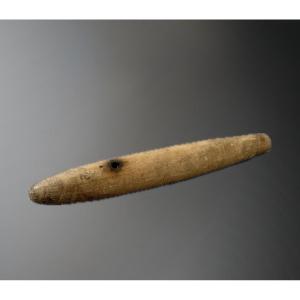



Lower Lip Labret (poturu)
Zo'é people, Brazilian Amazon
Carved wood with use patina
XXᵉ century
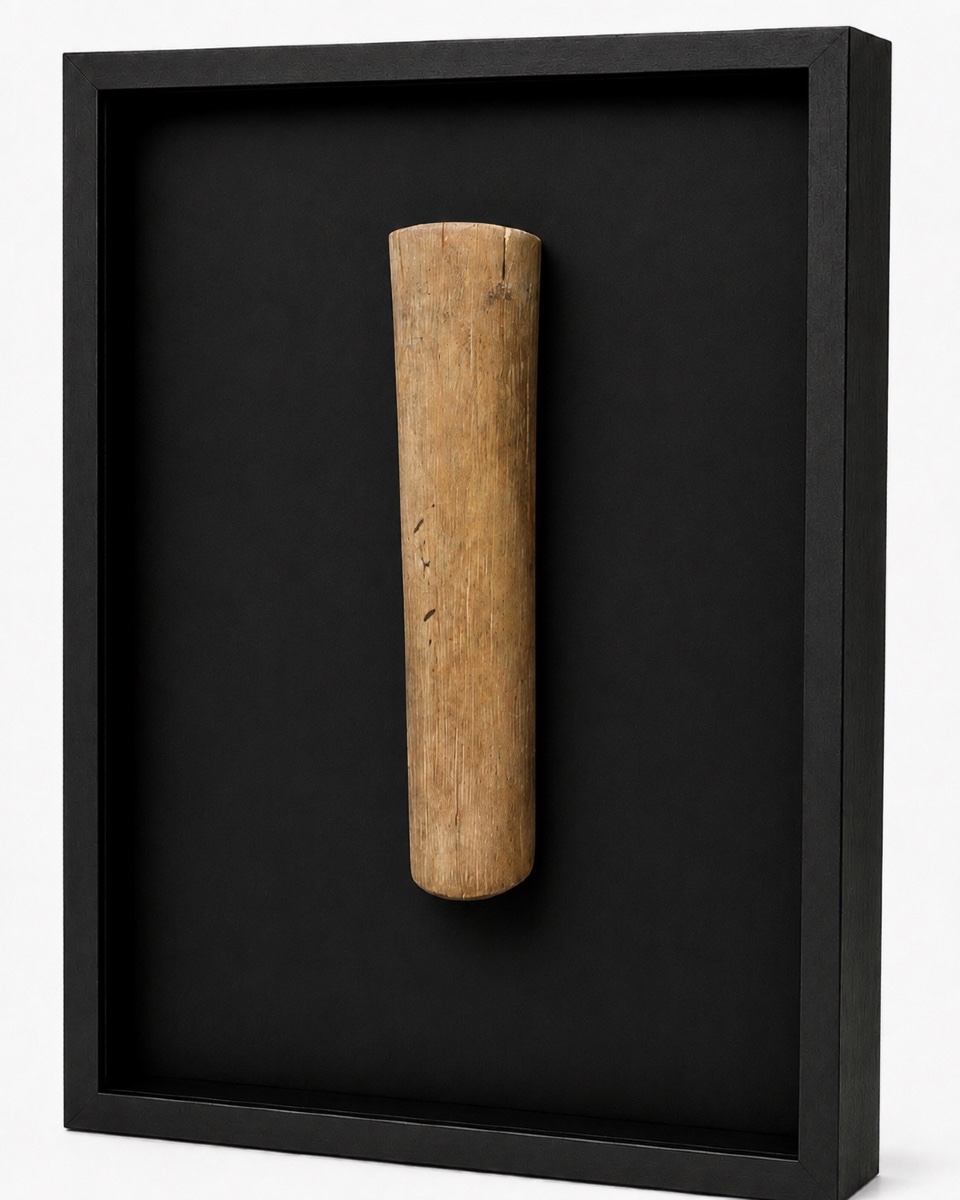
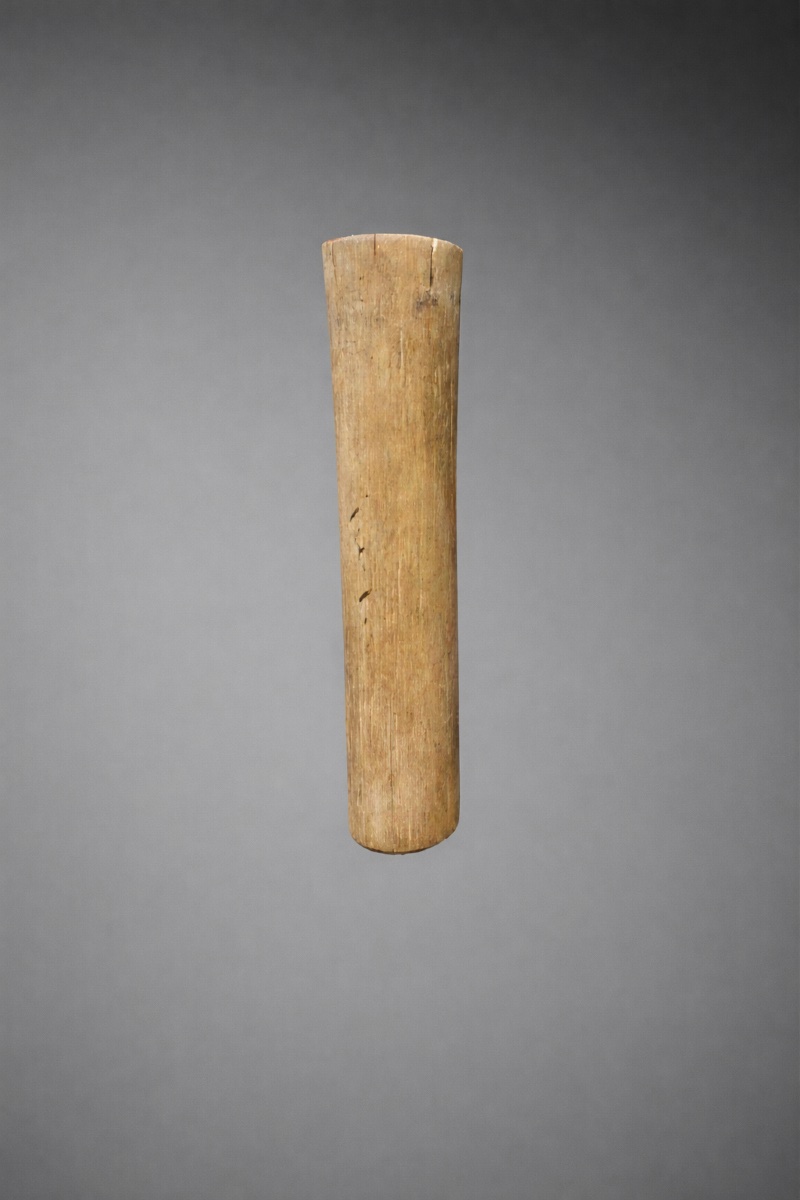
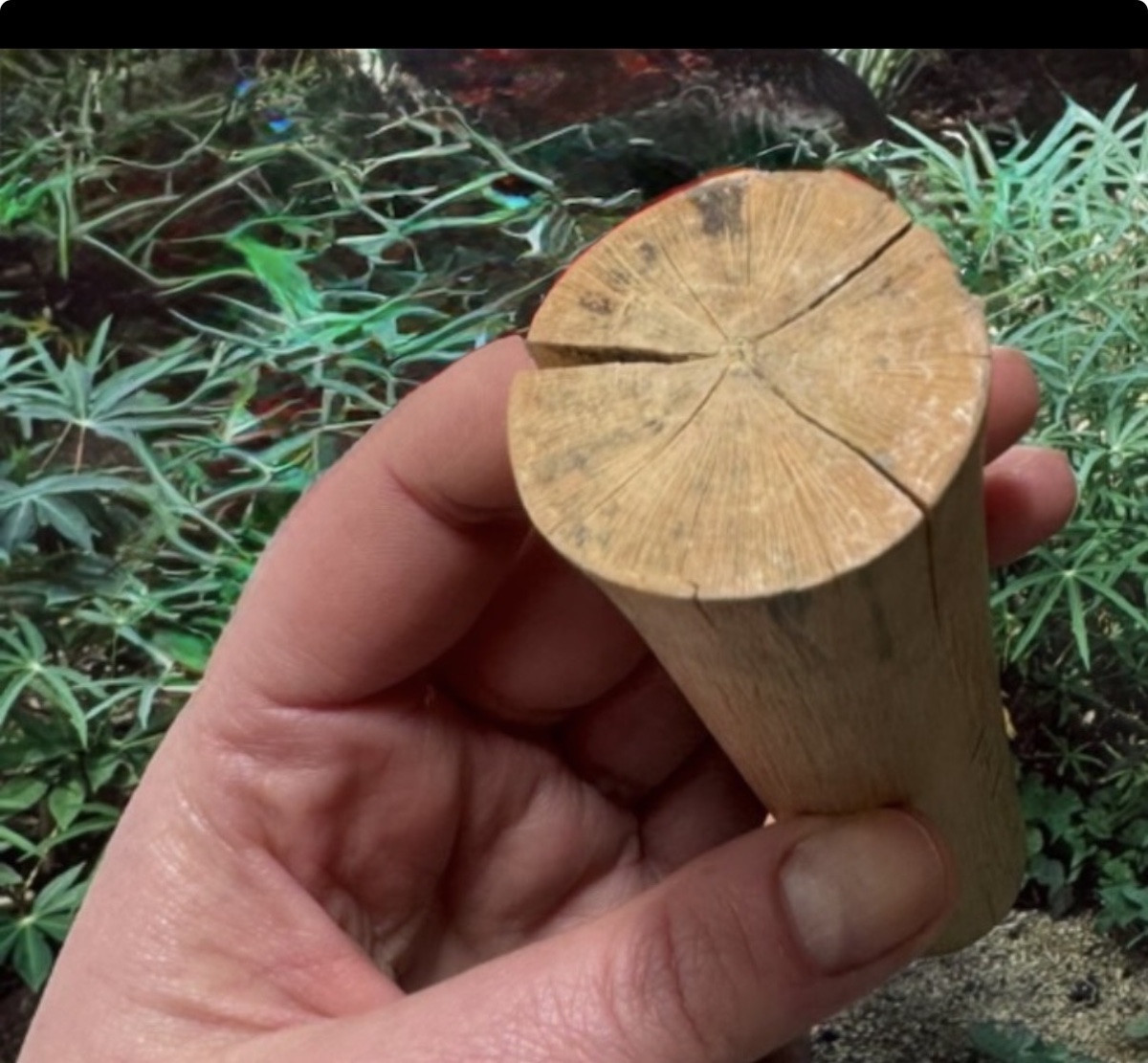
Important carved wood ceremonial labret, cylindrical shape slightly flared, showing a deep ancient patina and numerous traces of use consistent with prolonged use.
Traditionally worn in the lower lip, the poturu is one of the major identity markers of the Zo'é people in the Brazilian Amazon.
Introduced gradually from an early age, this labial ornament accompanies the individual's initiatory journey into adulthood. The diameter attained by the piece thus testifies to social status, endurance and full integration within the community.
By its large dimensions and remarkable sculptural presence, this specimen evokes the large labrets seen in early ethnographic documentation devoted to the Zo'é.
The surface has an antique natural polish, regular micro-wear and a slight radial opening of the wood at the end, characteristic of long use and authentic aging of the organic material.
Here, this labret retains a warm, dense woody hue, reinforcing its visual power and aesthetic quality.
The extreme simplicity of its form, combined with its monumental proportions, gives it a presence akin to contemporary minimalist sculpture.
Large antique labrets remain exceptionally rare outside the context of use and are among the most emblematic objects of Amazonian body traditions. Their importance goes beyond mere adornment: they participate fully in the symbolic, social and aesthetic systems specific to the indigenous peoples of Amazonia.
Provenance:
Jean-Pierre Dutilleux Collection
PUBLICATION
Example reproduced in reference book:
Jean-Pierre Dutilleux, TRIBES - The First People, Éditions Vilo
Note:
Jean-Pierre Dutilleux, Belgian filmmaker and explorer, took part in the international distribution of the first major documentations devoted to the Zo'é, a people who became emblematic for wearing the poturu, their famous wooden lip ornament.
Period: 20th century
Style: Tribal Art
Condition: En l'etat
Reference (ID): 1761564
Availability: In stock