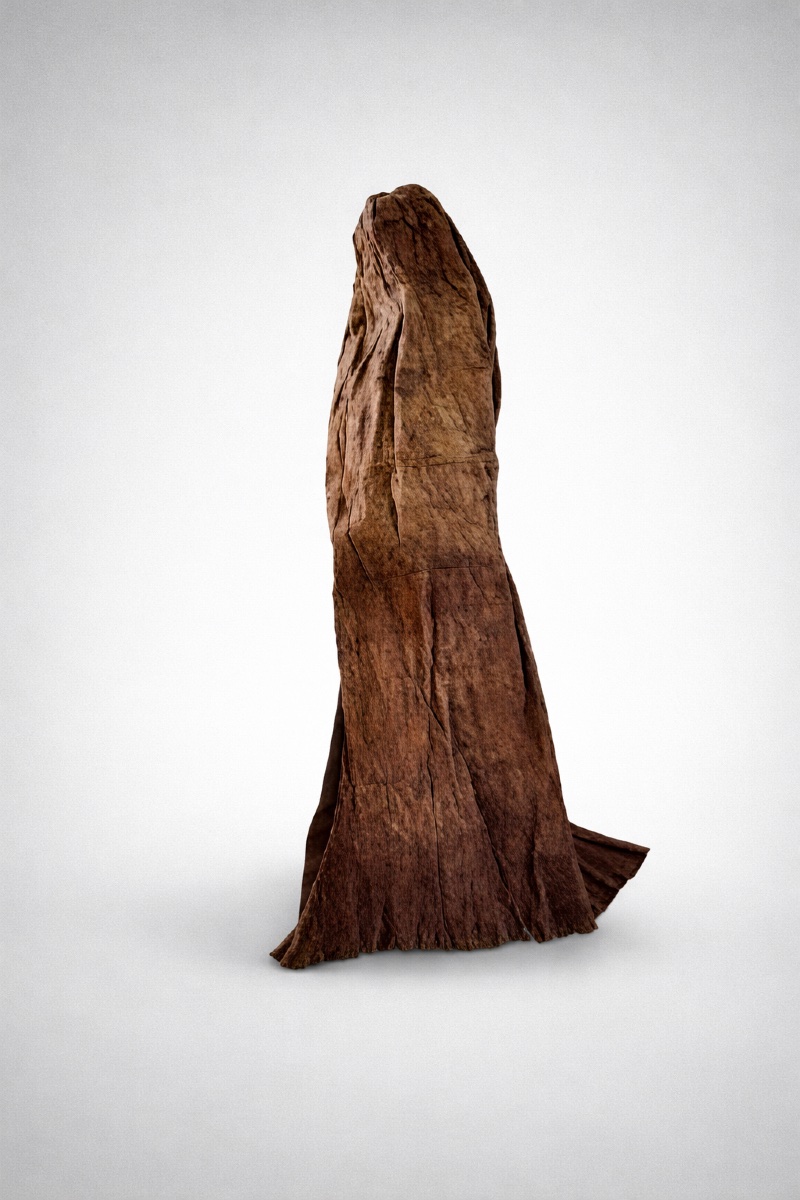



Cape d'écorce -
Papua New Guinea, Highlands
XXᵉ siècle
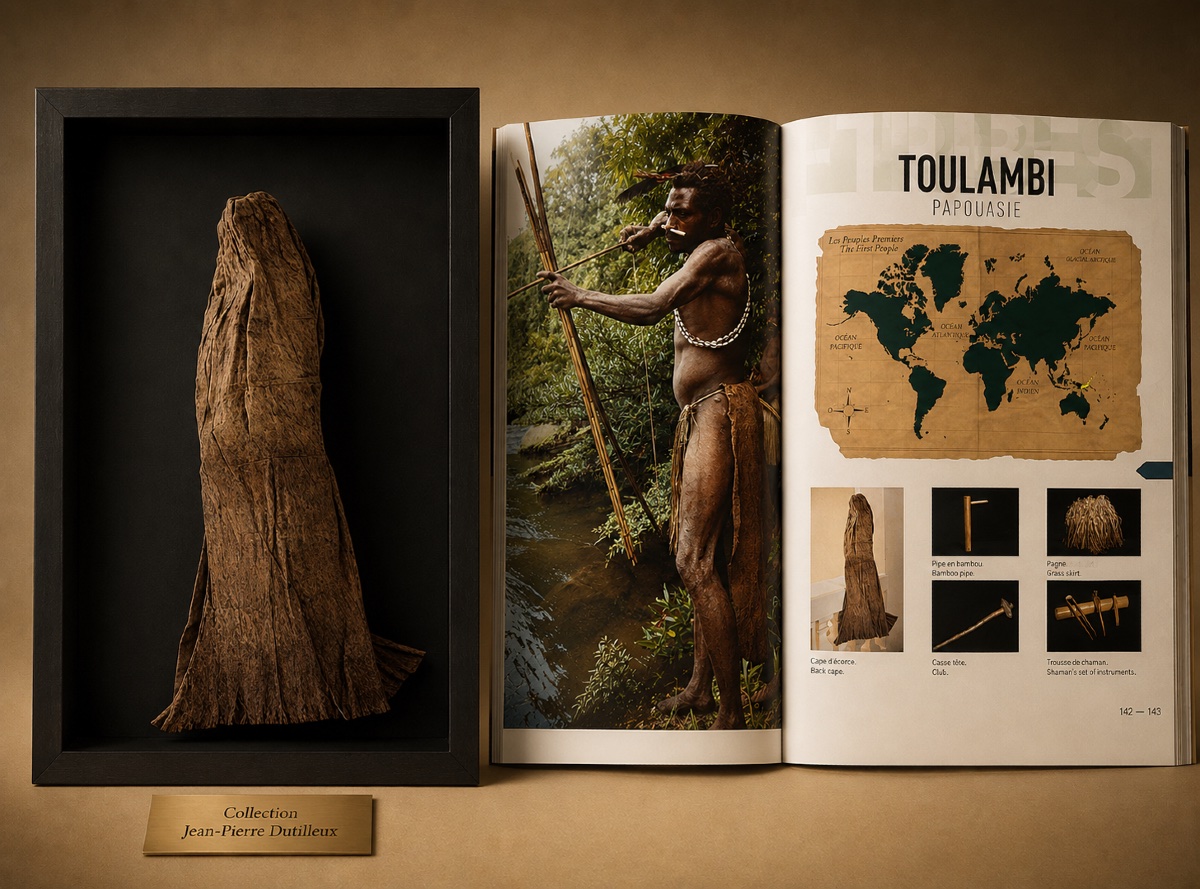
Collection Jean-Pierre Dutilleux - published piece
HISTORY
Well before modern fiction invented the idea of an invisibility cloak, certain forest societies in Papua New Guinea had already, in practice, developed the principle.
In the dense tropical environments of the Highlands, survival meant knowing how to move noiselessly, break one's silhouette, blend into the environment. These bark cloaks were not designed as ceremonial objects, but as functional elements of everyday life, directly linked to life in the forest.
With its organic material, matte surface, natural brown tones and enveloping fall, this cape absorbs light rather than reflecting it. Worn in a wooded environment, it attenuates human presence, blurring the contours of the body and allowing the wearer to merge with the bark, shadow and forest floor.
In this sense, it is indeed a true "cloak of invisibility" - not born of the imagination, but born of observation, experience and a practical intelligence of the natural world.
OBJET
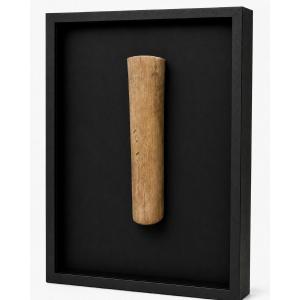
Rare barkcloth cape, made from the inner bast of a tree, prepared and transformed using ancestral techniques specific to the cultures of Papua New Guinea.
The specimen has an elongated, protective shape, with a dense fibrous texture, a beautiful suppleness of material and a deep, homogeneous and consistent patina, indicative of a field object that has seen real use.
Unlike later productions or those designed for decorative use, this piece retains a raw, sober and utilitarian character, without ornamental overload or presentation artifice, which reinforces its ethnographic force and authenticity.
Beyond its material function, this cape is part of one of the most striking narratives of XXᵉ century ethnography: that of the first filmed encounters between groups that have long remained isolated and the outside world.
PROVENANCE & PUBLICATION
Jean-Pierre Dutilleux Collection
Collected in situ during field missions in Papua New Guinea
Published in:
TRIBES - The First People, Éditions VILO
Example strictly reproduced in the book
MARKET LISTING
Published field copies remain extremely rare on the market.
The combination of an authentic collection, a consistent antique patina and a reference publication places this piece in a category above standard ethnographic objects.
CONCLUSION
This is not simply a garment.
It's a testament to human ingenuity and a mastered form of natural invisibility.
"A true cloak of invisibility - not from fiction, but from the forest."
Period: 20th century
Style: Tribal Art
Condition: En l'etat
Reference (ID): 1772901
Availability: In stock