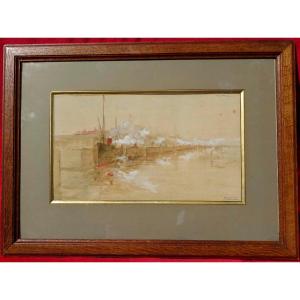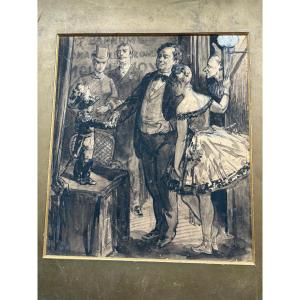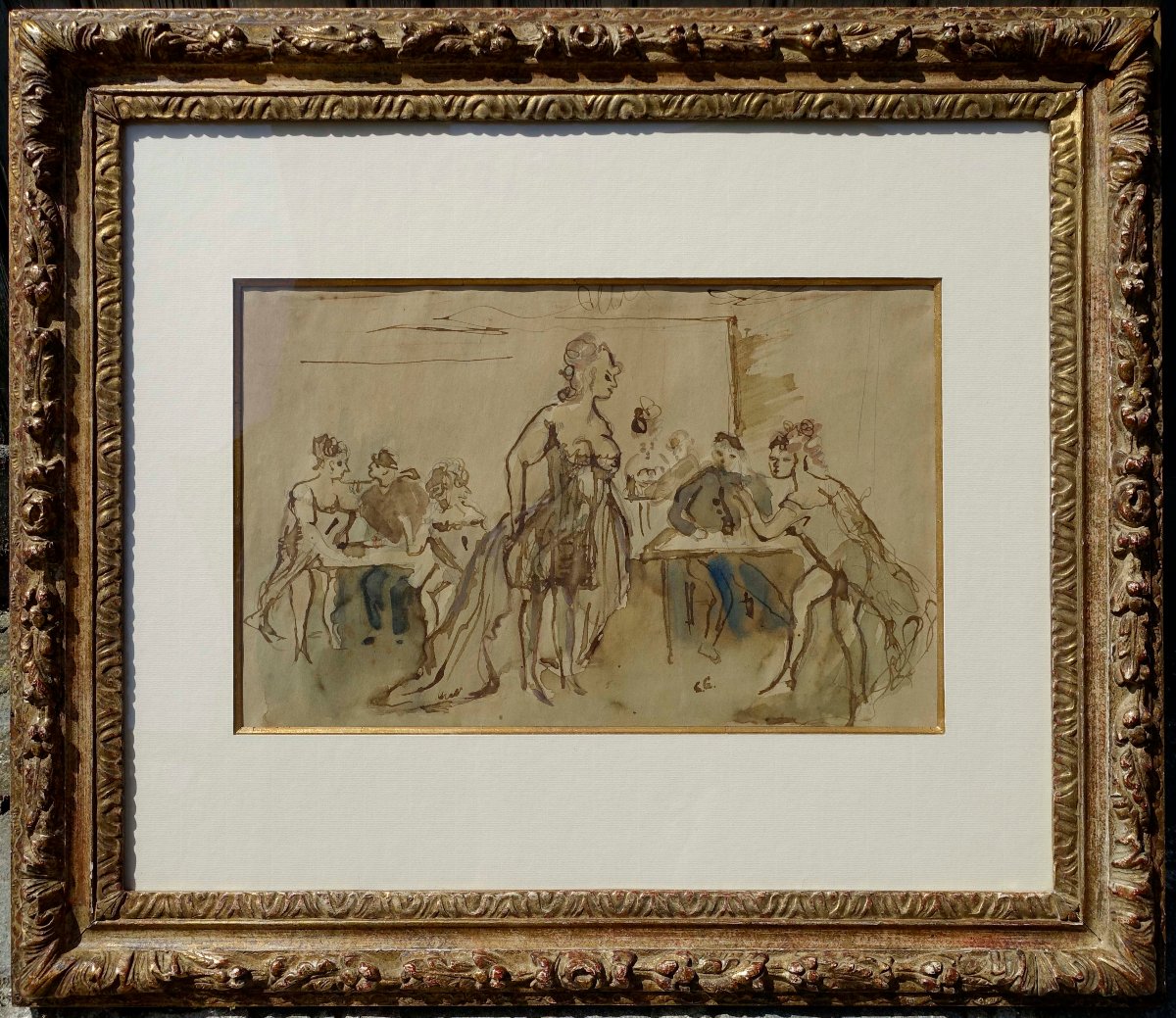
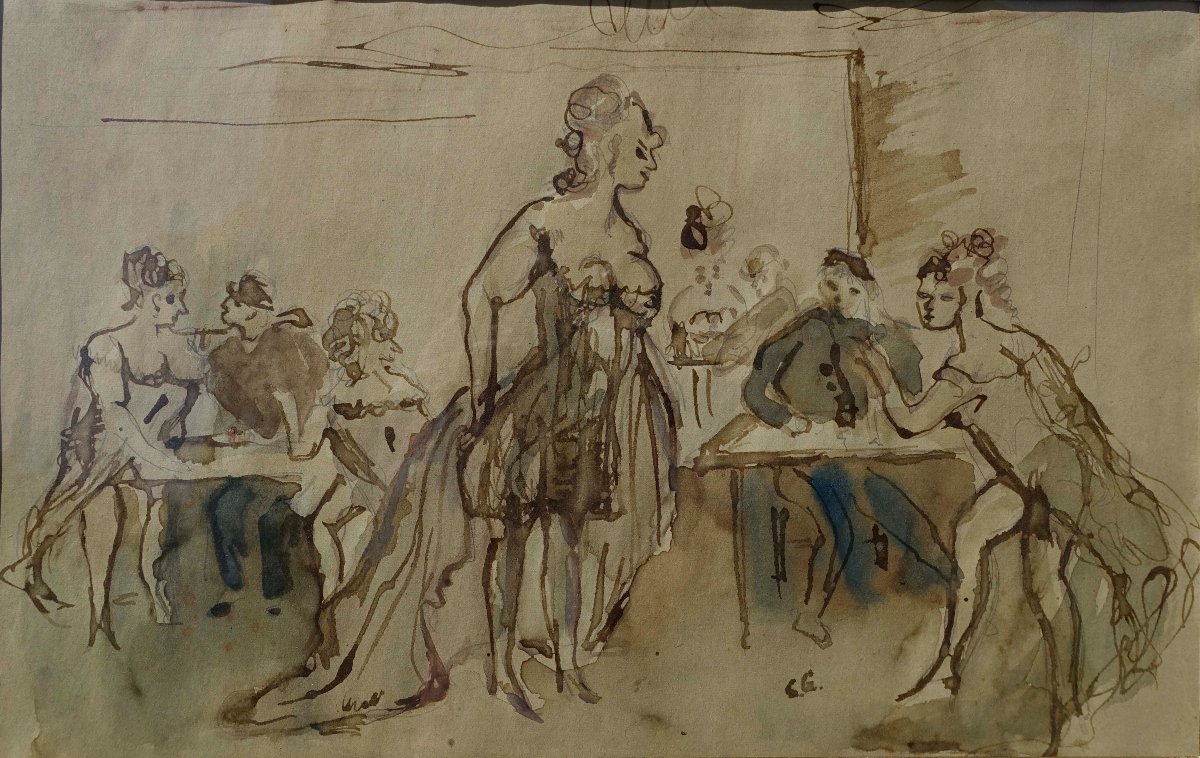
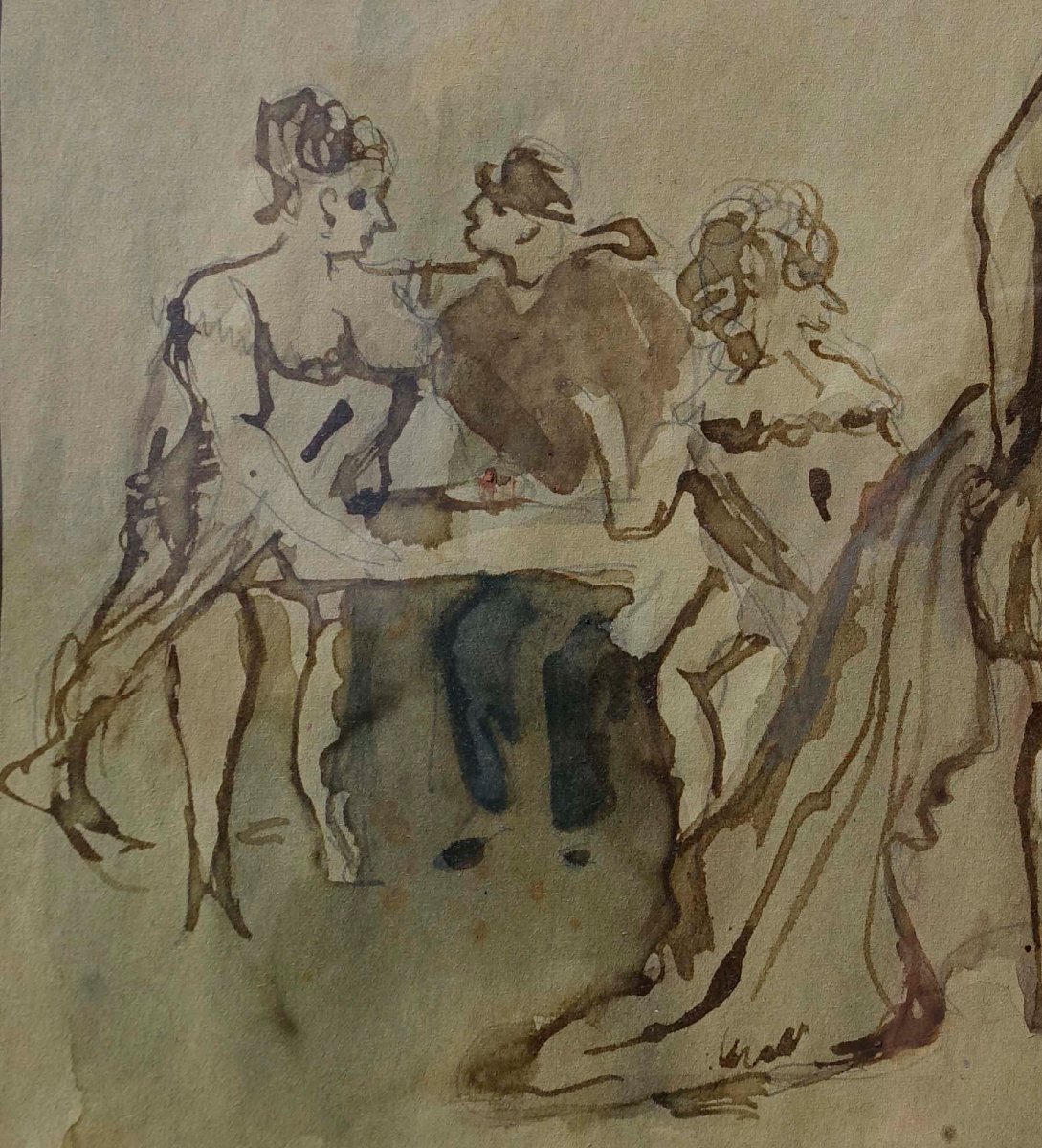
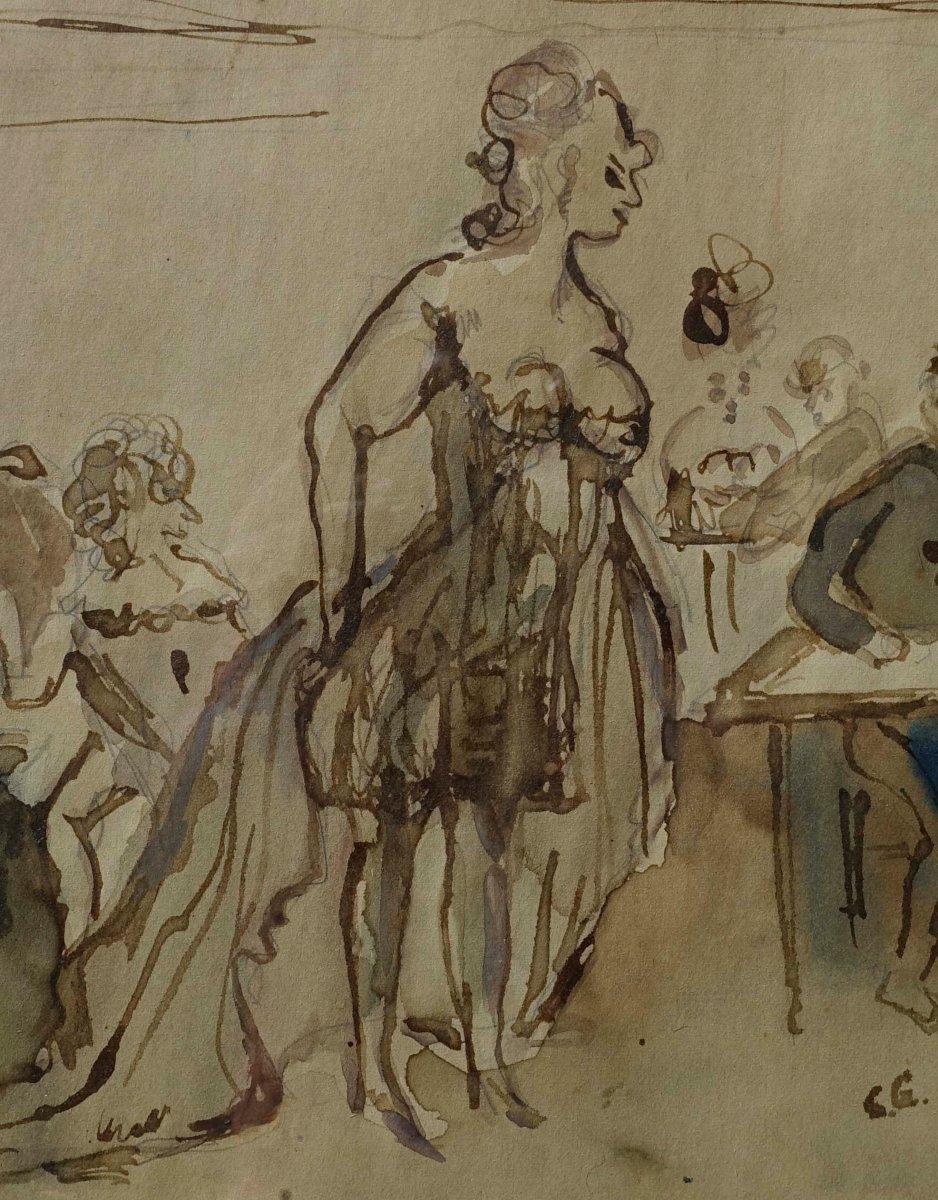
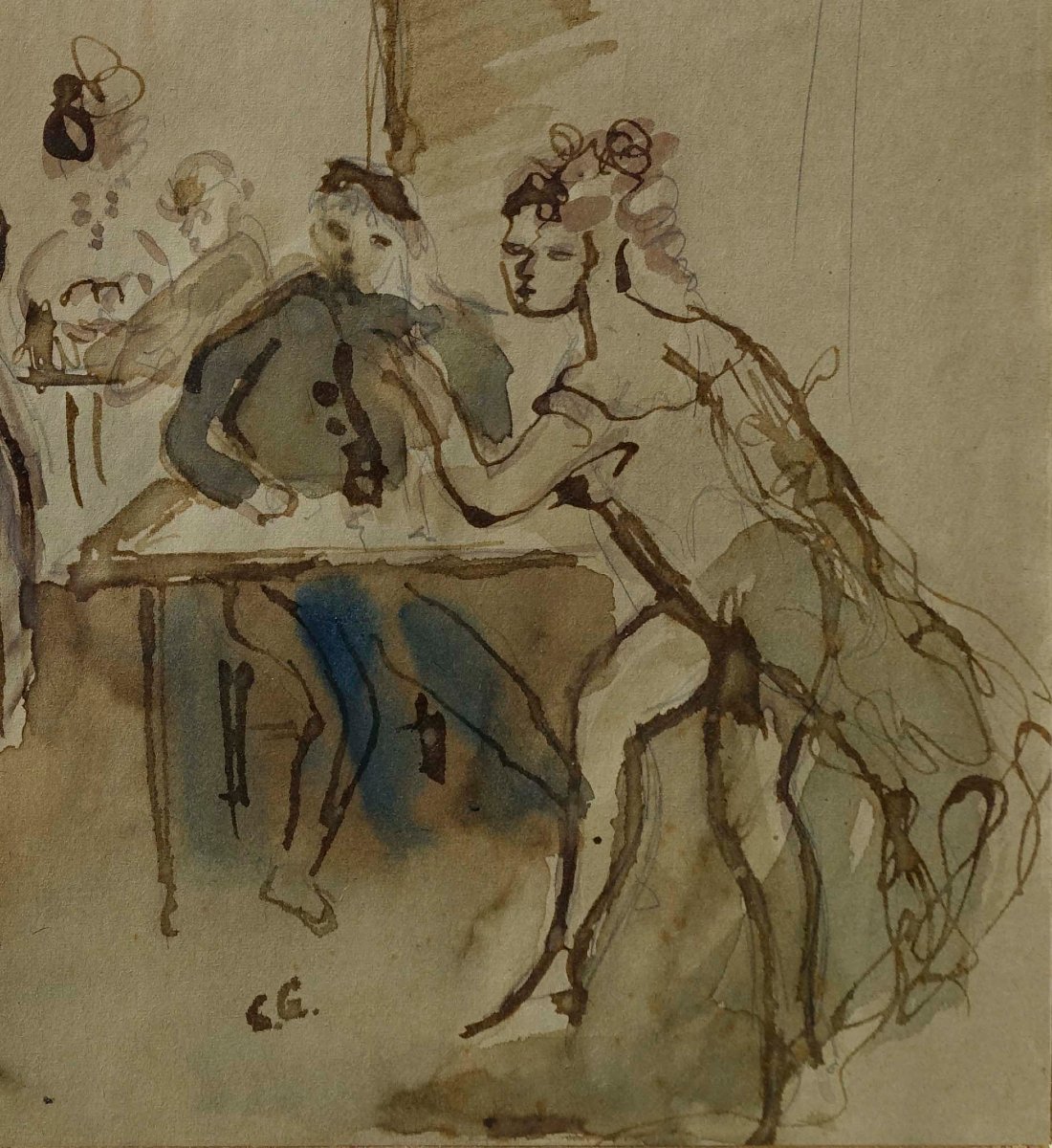
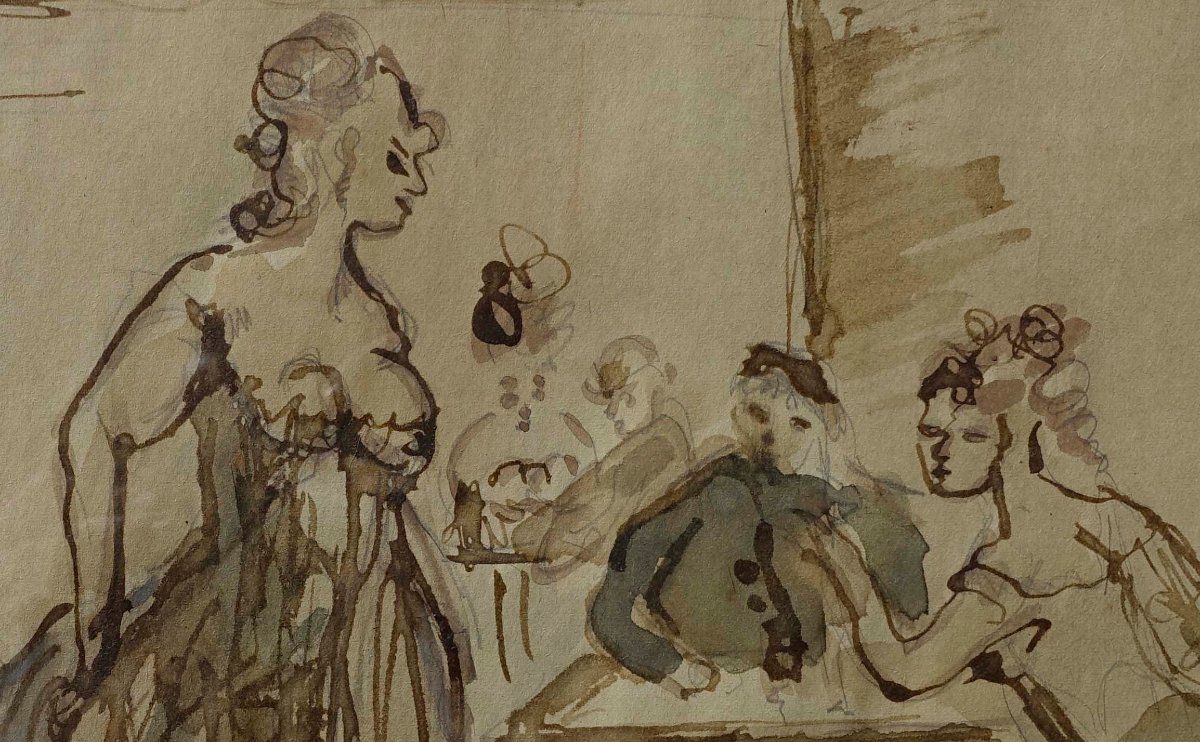


Constantin Guys (1802-1892) - Soliciting -
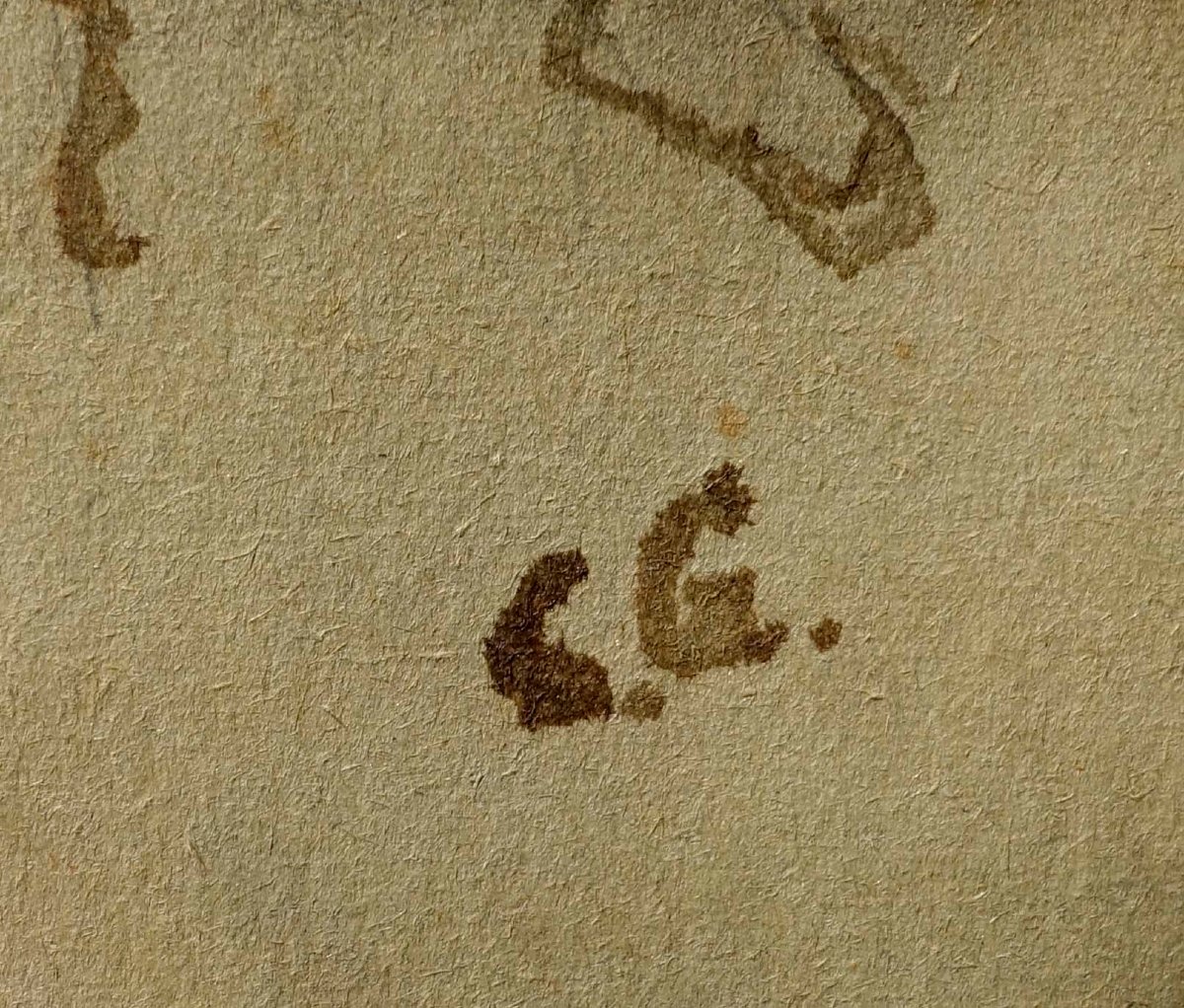
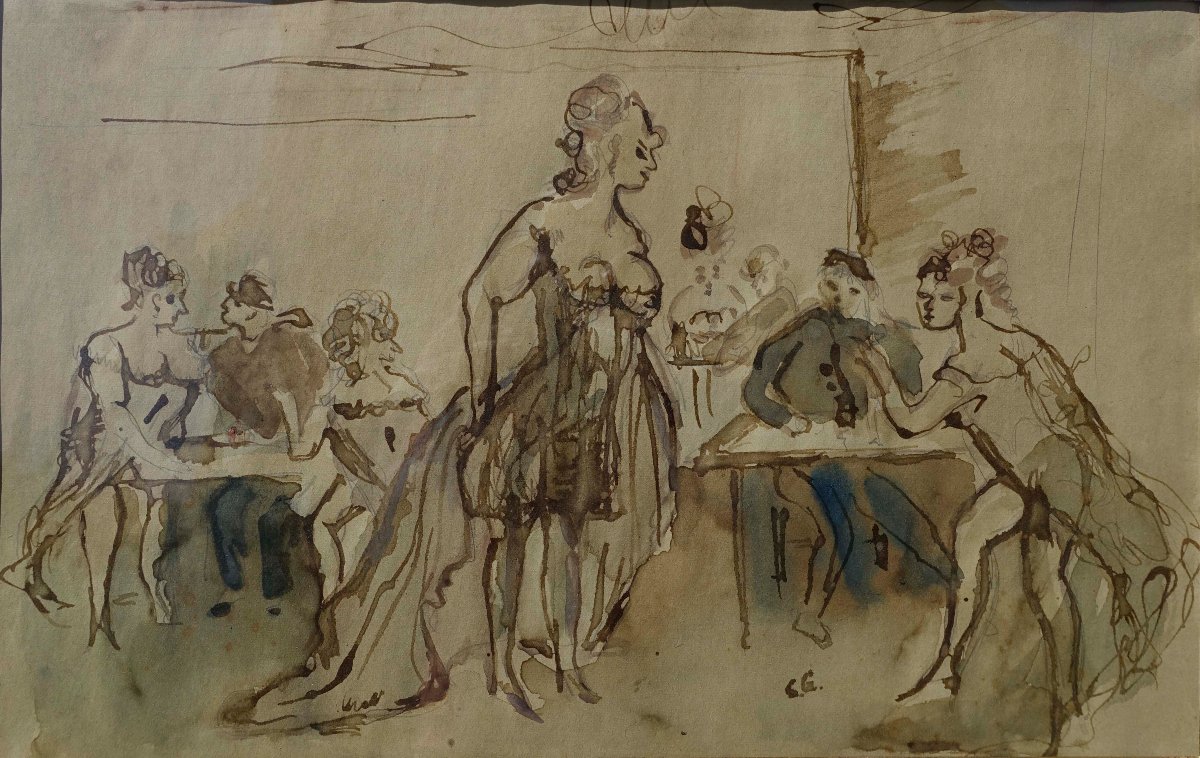
Ink wash drawing and watercolor highlights on paper.Signed with the initials C.G. lower center.
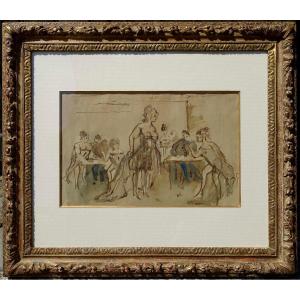
Measuring 44cm x 28cm on view, unframed, 72cm x 63cm overall.
Representing Prostitutes Soliciting in a Bar, painted circa 1880.
Provenance Sale Louis Gaston Vuitton Collection, Golfield Auctions, Luxembourg, October 31, 2021, lot N°166.
Ernest-Adolphe Guys de Saint-Hélène dit Constantin Guys, 1802-1892, French draughtsman and illustrator. The son of François-Lazare Guys (1752-1843), French vice-consul and naval commissioner, and Elisabeth Betin, he was born in Vlissingen in the Netherlands on December 3, 1802. At the tender age of 19, he embarked in Marseille in October 1821 on a Danish ship, Le Jupiter, to take part in the Greek War of Independence. Surviving the disaster at Peta in July 1822, he returned to France, landing in Toulon in December. Questioned by the police (France forbade its nationals to take part in the insurrection at the time), he was held there until February 1823. He then joined the army. In 1830, he gained notoriety in the arts for his drawings and lithographs. Throughout his life, he remained faithful to these two modes of expression, which enabled him to become a prolific chronicler of the life of his time. In 1854 and 1855, he went to the Crimea and illustrated the events of the war for the British magazine The Illustrated London News. He made numerous trips to the Orient, England, Italy, Spain and Germany, although none of his biographers, including Baudelaire, have specified his itineraries. During his many travels, he produced hundreds of drawings, most often enhanced with watercolors. Highly appreciated, he enjoyed the enthusiasm of Manet, Baudelaire, the Goncourts, Geffroy and Roger-Marx, all of whom contributed to his fame. He was the dedicatee of Charles Baudelaire's poem Rêve Parisien, published in Les Fleurs du Mal. Nevertheless, Constantin Guys' fame undoubtedly lives on in Charles Baudelaire's article "La Peinture de la Vie Moderne", published in Le Figaro in 1863. Here, the greatest poet of the Second Empire analyzes the work of this artist, defining his conception of modernity. A precursor and visionary, ink and watercolor was his favorite mode of expression. This "Petit Maître" of illustration died on March 13, 1892, in complete destitution at the Hospice du Faubourg Saint-Denis in Paris. He is buried in the 14th division of the Pantin cemetery in Paris. Nadar wrote his obituary in Le Figaro. Works in the Museums of Anger, Brussels, Lugano, Paris (Louvre - Carnavalet - Petit Palais - Orsay), Baltimore, Los Angeles and Washington. Artist listed in Bénézit, Coté Artprice, Artnet, Akoun, etc...
This paper is in very good condition. Neither Stain nor Aureole.
The Ink, never cleaned, not dirty, is in very good original condition.
In an antique Carved Wood coaster frame with very beautiful patina in very good condition.
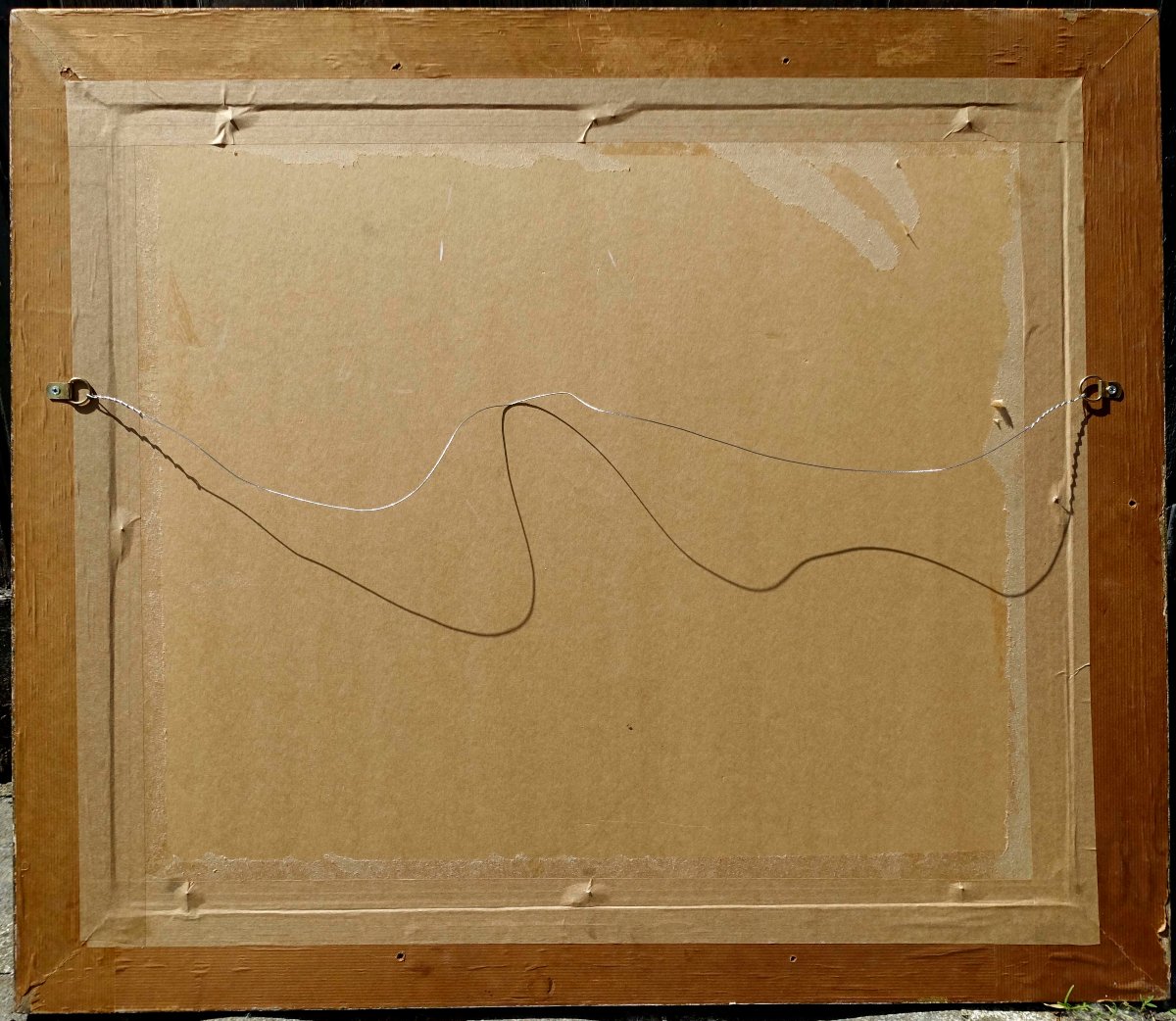
Panel in very good condition.
Shipping costs by Colissimo Recommandé Assuré:
France: 45€
Belgium: 15€
EEC: 60€
USA: On Request.
Period: 19th century
Style: Napoleon 3rd
Condition: Excellent condition
Material: Water color
Width: 72cm avec cadre
Height: 63cm avec cadre
Reference (ID): 1770522
Availability: In stock