

Himalayan Region (tibet / Nepal) - Rare Libatory Spoons - Gang-luk / Zuk-luk - 19th Century
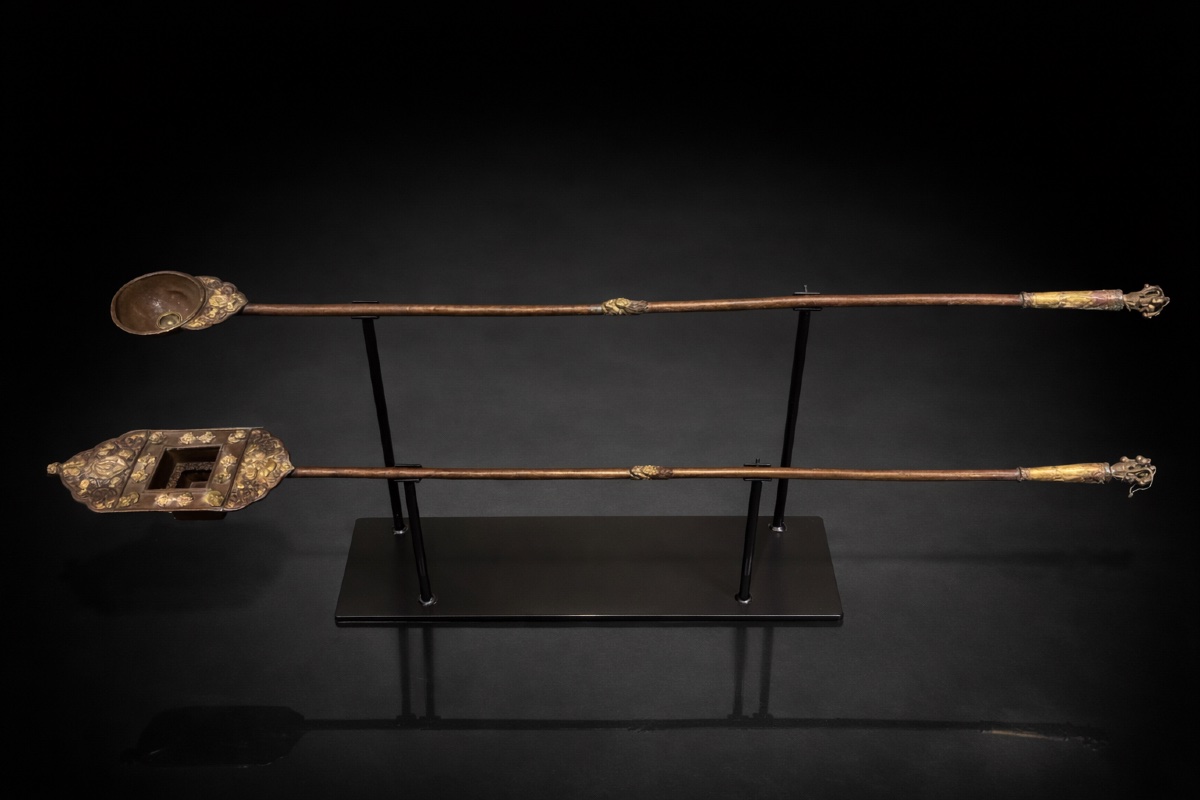
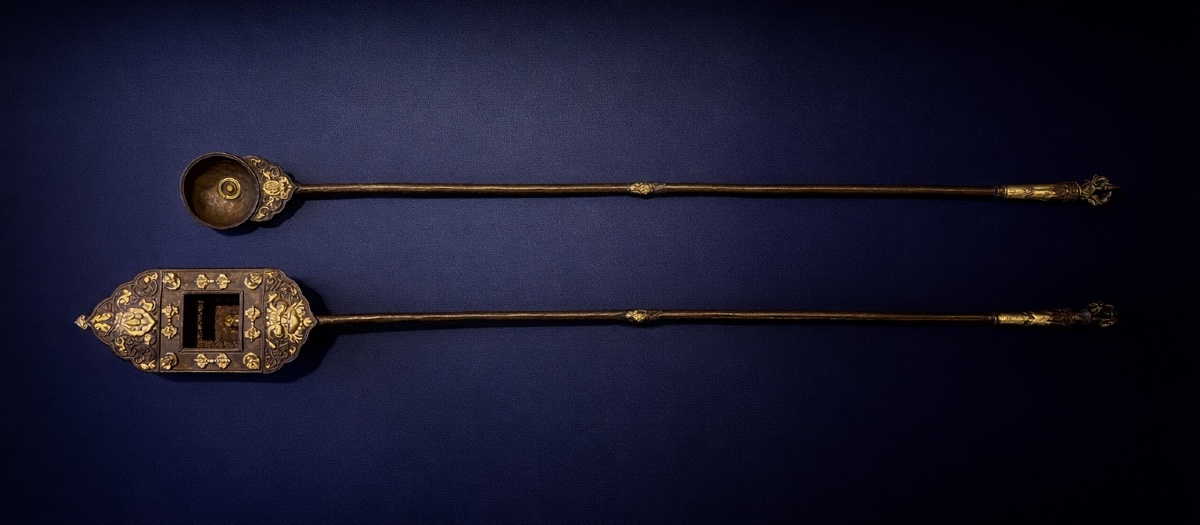
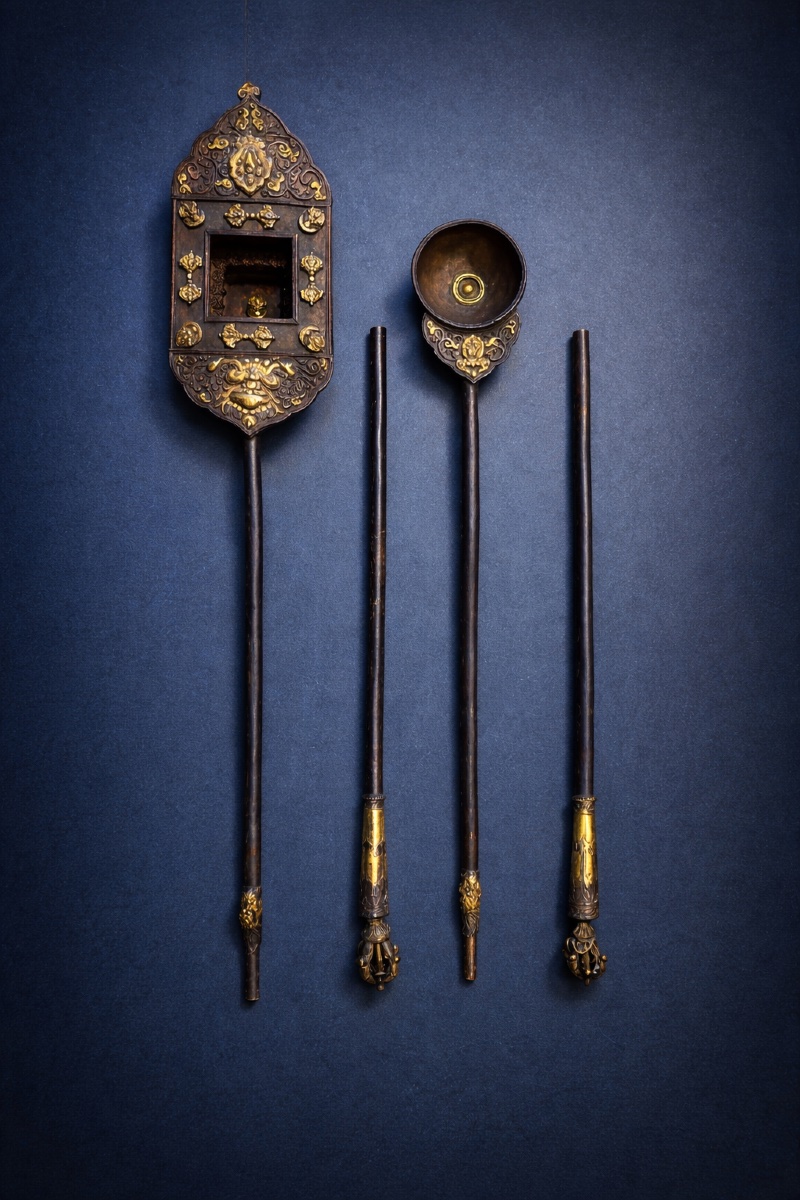
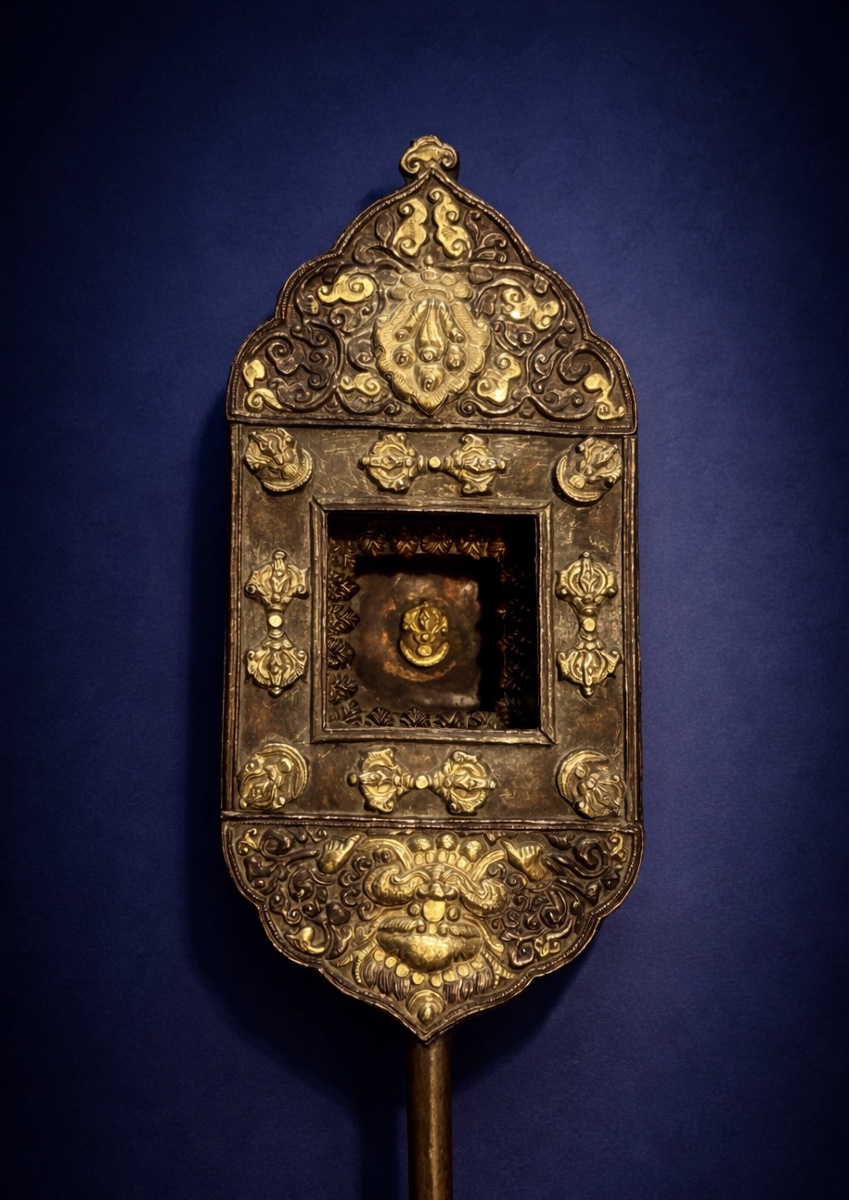
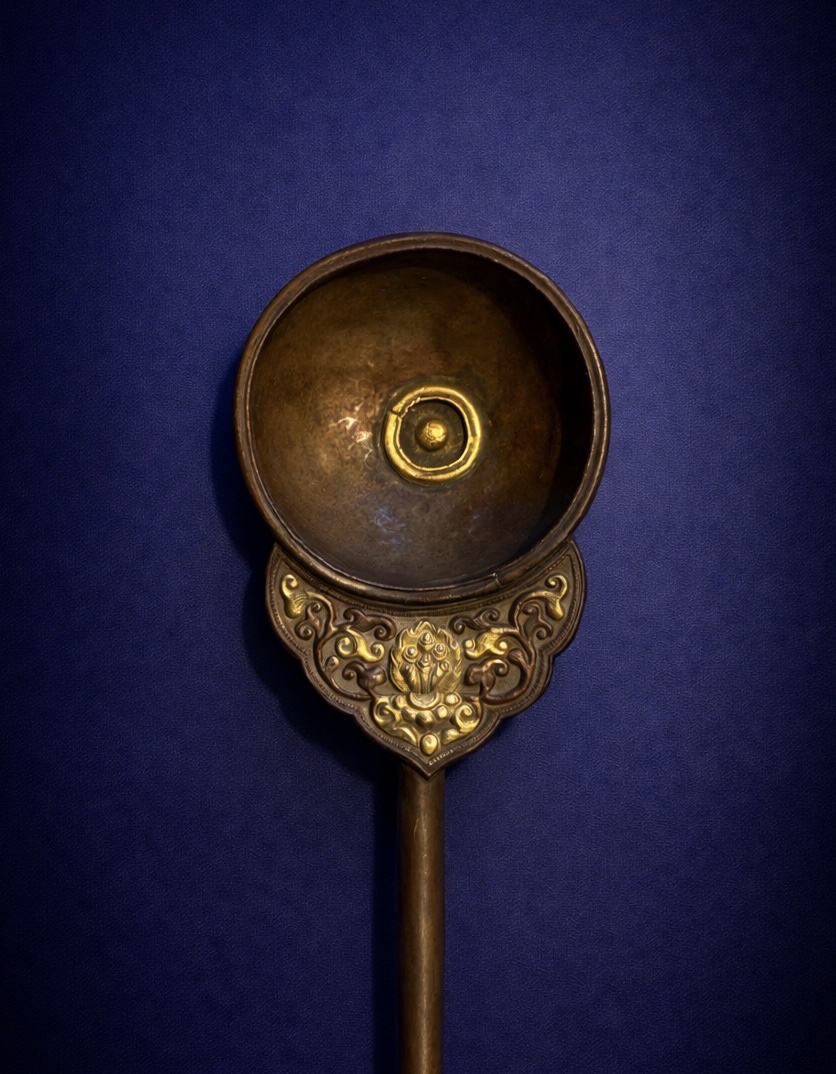
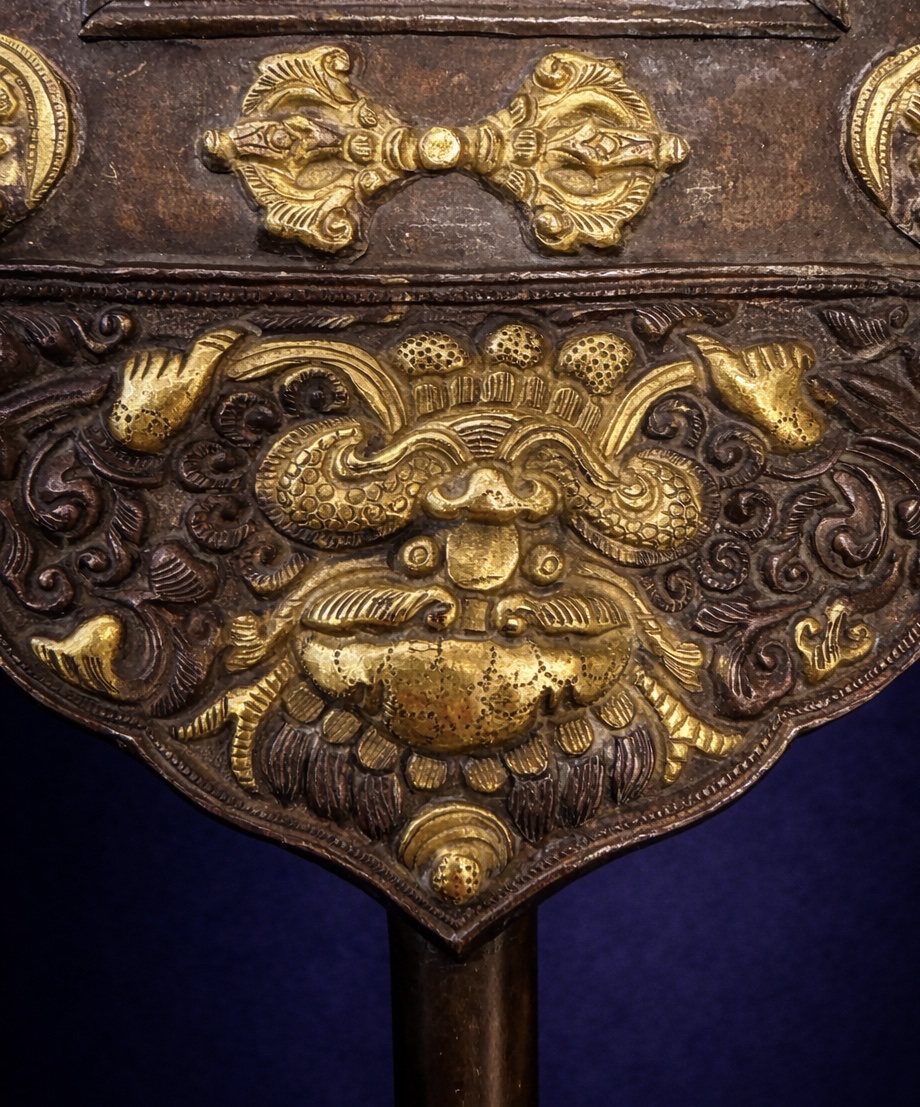
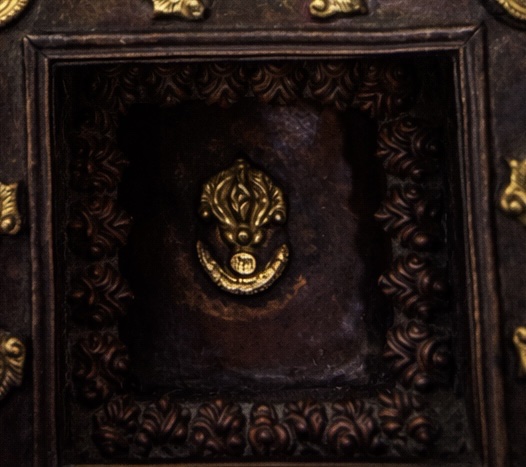
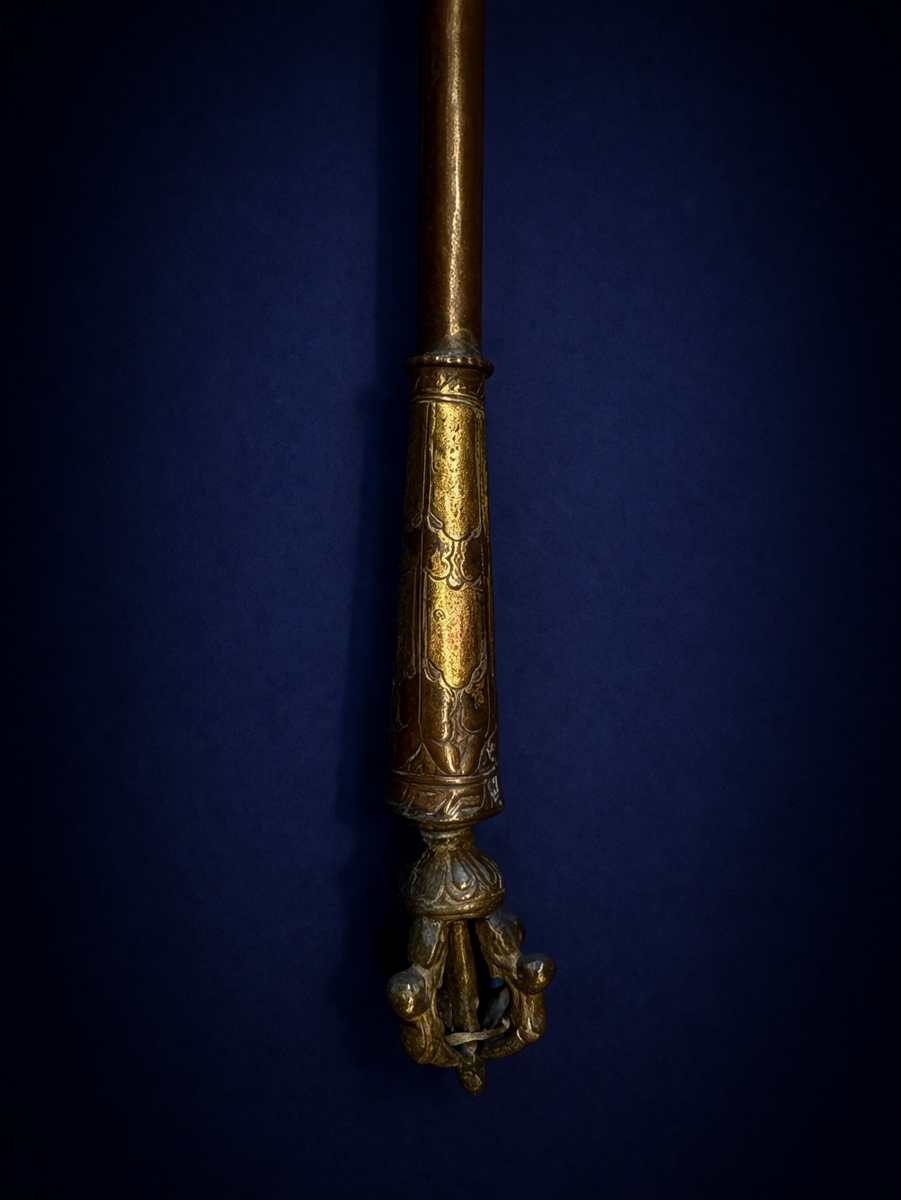
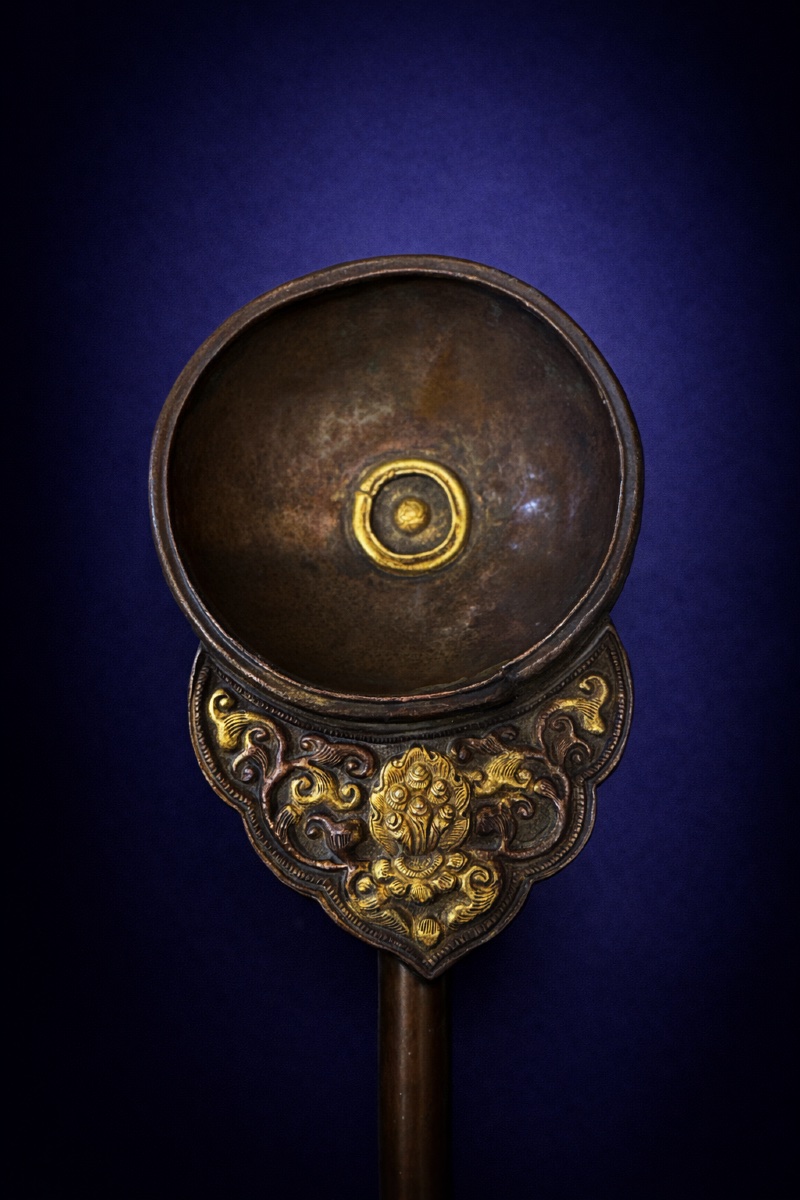
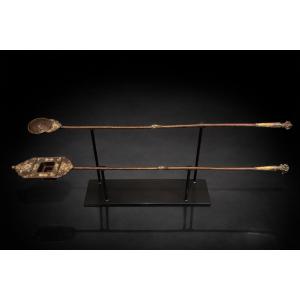
Rarissime duo, composed of the Gang-luk and the Zuk-luk, embodying the sacred choreography of the fire ritual (Homa). Here, every shape is a phrase, every metal a symbol. - Le Carré (Gang-luk): The rectangular reservoir ladle, receptacle of potential. It is adorned with masks of Kirtimukha (the Face of Glory) that devour impurities, ensuring that only the purest intention reaches the hearth. - The Circle (Zuk-luk): The pouring ladle, solar disk that receives the flow of clarified butter. It represents the fulfillment and unfolding of the offering in the manifested world. - The Immutable Axis: The long handles end in Vajras (diamond lightning bolts), reminding us that he who wields these instruments must remain anchored in the indestructible clarity of mind. The square and the circle are the fundamental geometries of the Mandala. By using these two forms in tandem, the ritual balances the earthly (the square) and the celestial (the circle). The presence of the Vajra at the base ensures that every movement made with these ladles is rooted in the path of the "Diamond Vehicle" (Vajrayana).
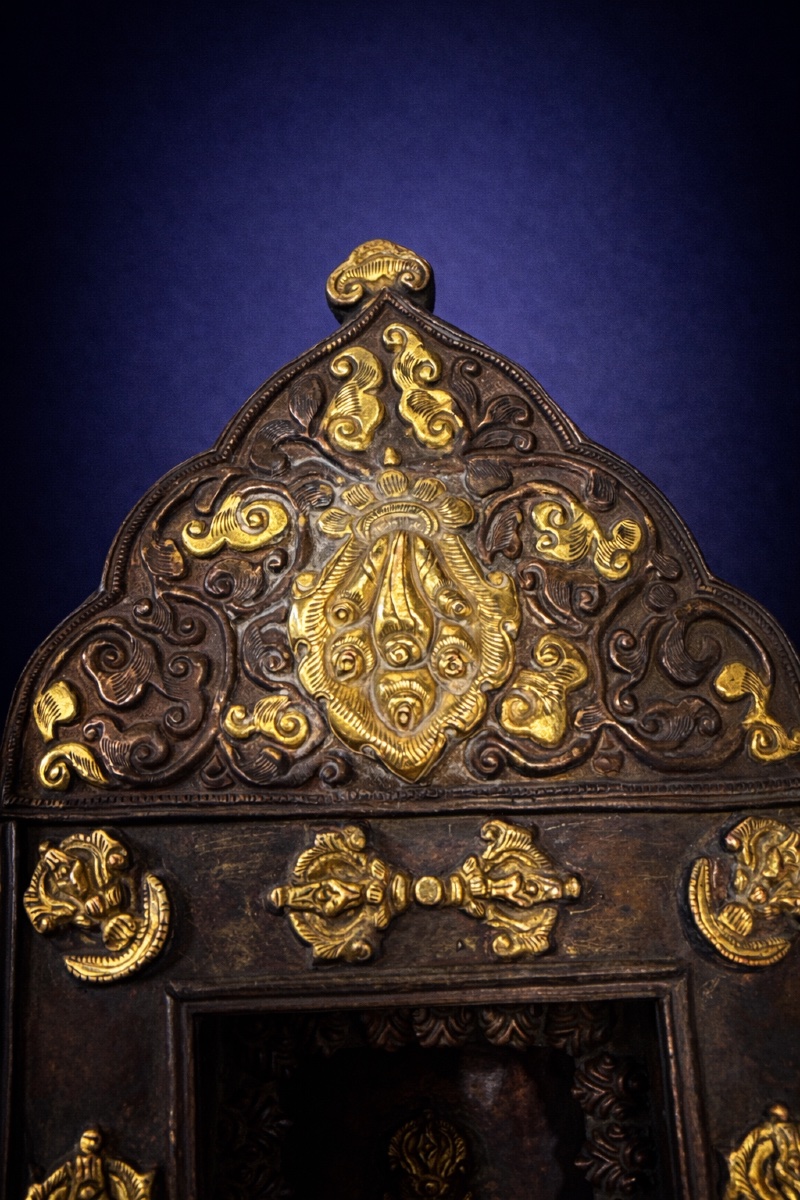
Given the finesse of the repoussé motifs and the patina of the copper, this set can be dated to the second half of the 19th century (circa 1850-1900). The style of the Kirtimukha masks and the precision of the eight auspicious symbols are characteristic of the late production of the Derge workshops (Eastern Tibet) or of Newar art (Nepal) working for the great monastic lineages. The presence of the original gilding and the integrity of the removable structures (often lost or welded by time) suggest careful conservation, probably within a private collection or a temple with little exposure.
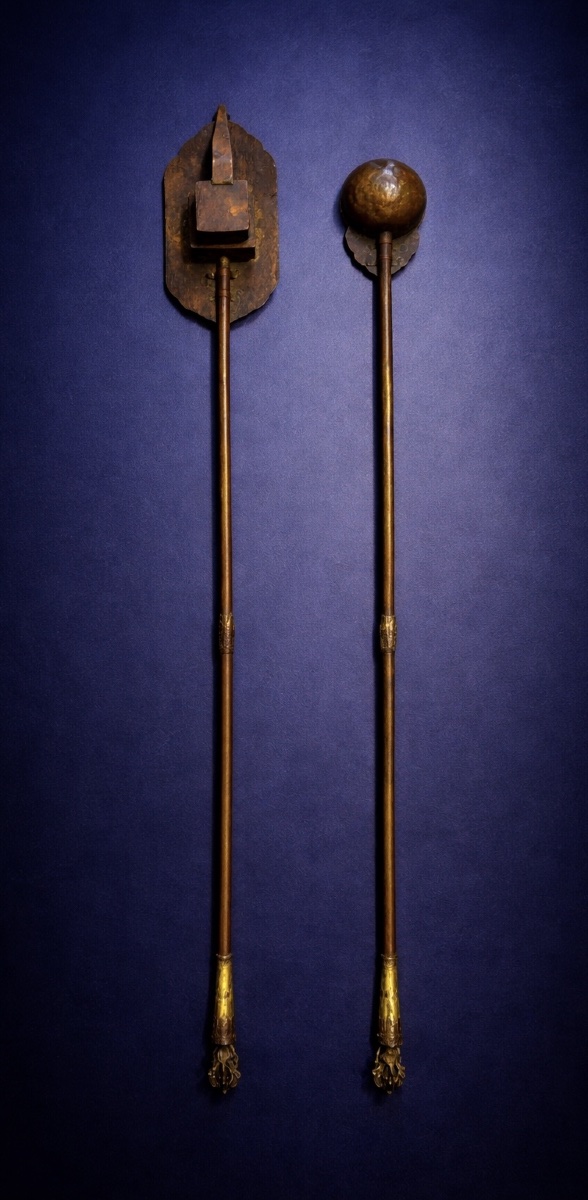
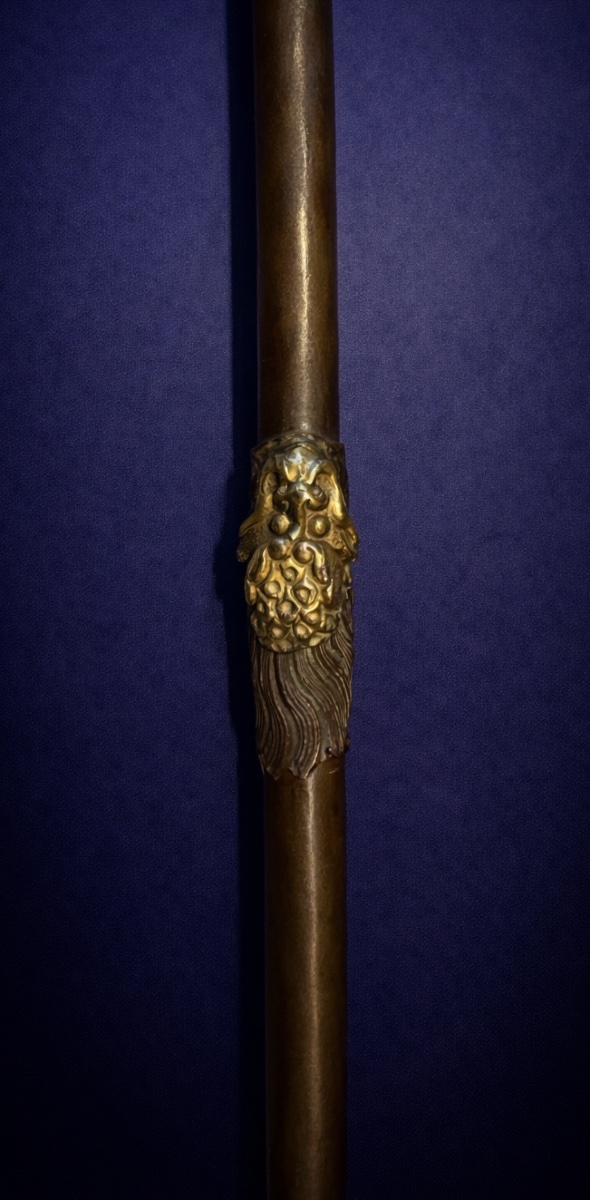
The worn patina on the rods suggests decades, perhaps centuries, of handling by hands in search of enlightenment, while the modular nature of the handles (visible on the dismantled view) evokes the itinerant life of monks traveling between high-altitude monasteries.
This is a very rare set, particularly when presented as a complete pair (Gang-luk and Zuk-luk). Most objects of this type have been separated over the centuries. Their imposing size (almost a metre high) makes them exceptional pieces; more common versions generally measure between 60 and 75 cm. The presence of the original mounting system (interlocking handles) is an additional criterion of rarity.
Origin:Himalayan region (Tibet / Nepal).
Era:Late 19th. (Circa 1850-1900).
Dimensions:Lengths: 103 and 94 cm. Conditions:The set retains very good condition and excellent legibility of details.
Provenance:Private Belgian collection.
Given the finesse of the repoussé motifs and the patina of the copper, this set can be dated to the second half of the 19th century (circa 1850-1900). The style of the Kirtimukha masks and the precision of the eight auspicious symbols are characteristic of the late production of the Derge workshops (Eastern Tibet) or of Newar art (Nepal) working for the great monastic lineages. The presence of the original gilding and the integrity of the removable structures (often lost or welded by time) suggest careful conservation, probably within a private collection or a temple with little exposure.
The worn patina on the rods suggests decades, perhaps centuries, of handling by hands in search of enlightenment, while the modular nature of the handles (visible on the dismantled view) evokes the itinerant life of monks traveling between high-altitude monasteries.
This is a very rare set, particularly when presented as a complete pair (Gang-luk and Zuk-luk). Most objects of this type have been separated over the centuries. Their imposing size (almost a metre high) makes them exceptional pieces; more common versions generally measure between 60 and 75 cm. The presence of the original mounting system (interlocking handles) is an additional criterion of rarity.
Origin:Himalayan region (Tibet / Nepal).
Era:Late 19th. (Circa 1850-1900).
Dimensions:Lengths: 103 and 94 cm. Conditions:The set retains very good condition and excellent legibility of details.
Provenance:Private Belgian collection.
5 000 €
Period: 19th century
Style: Asian art
Condition: Excellent condition
Material: Copper
Length: 94 et 103 cm
Reference (ID): 1768193
Availability: In stock
Print