THIS OBJECT WAS SOLD
Marquetry Multi-game Table In The Regional Louis XV Style, Attributed To André Mailfert.


Louis XV regional style marquetry multiple game table, attributed to André Mailfert.
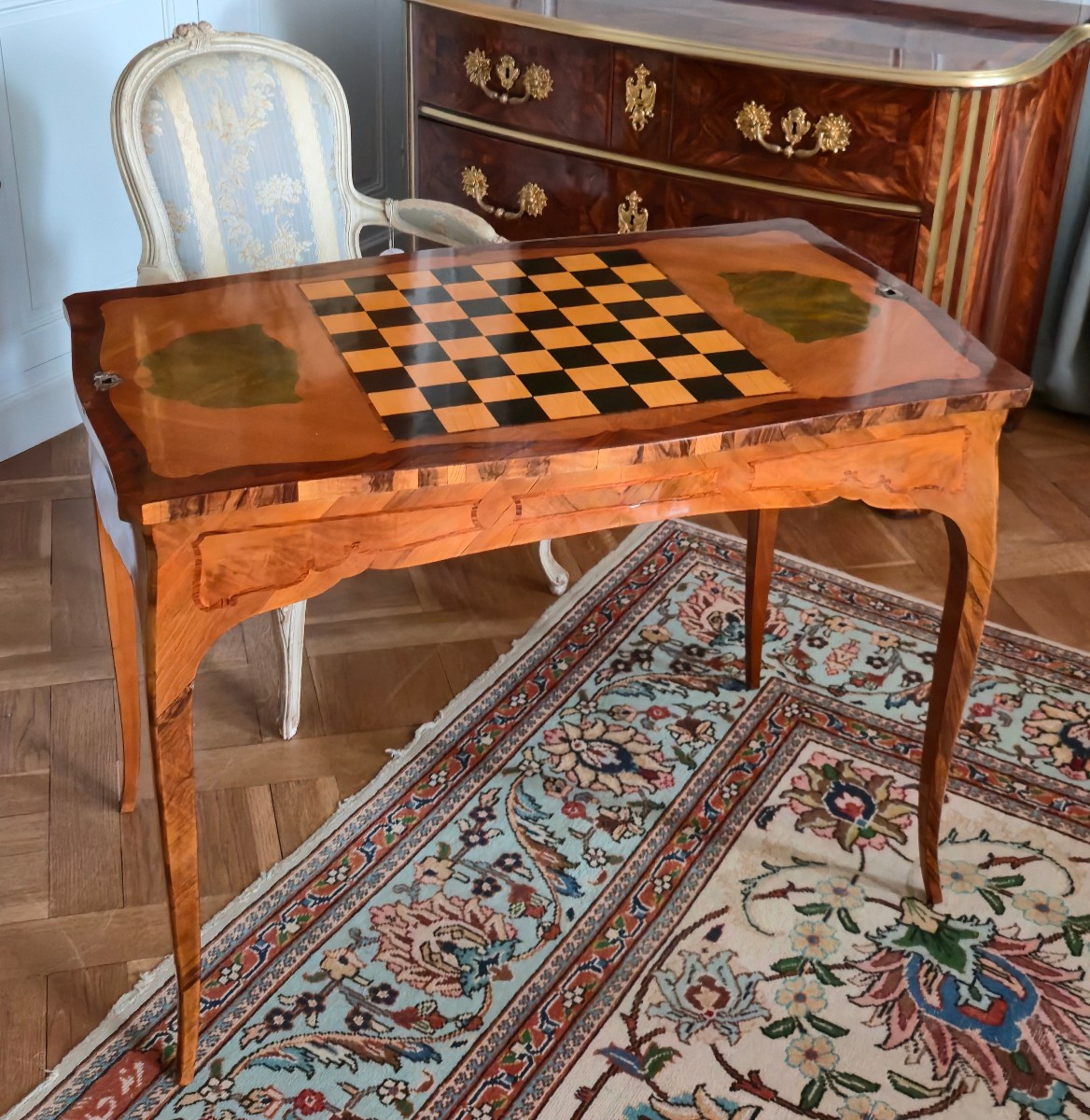
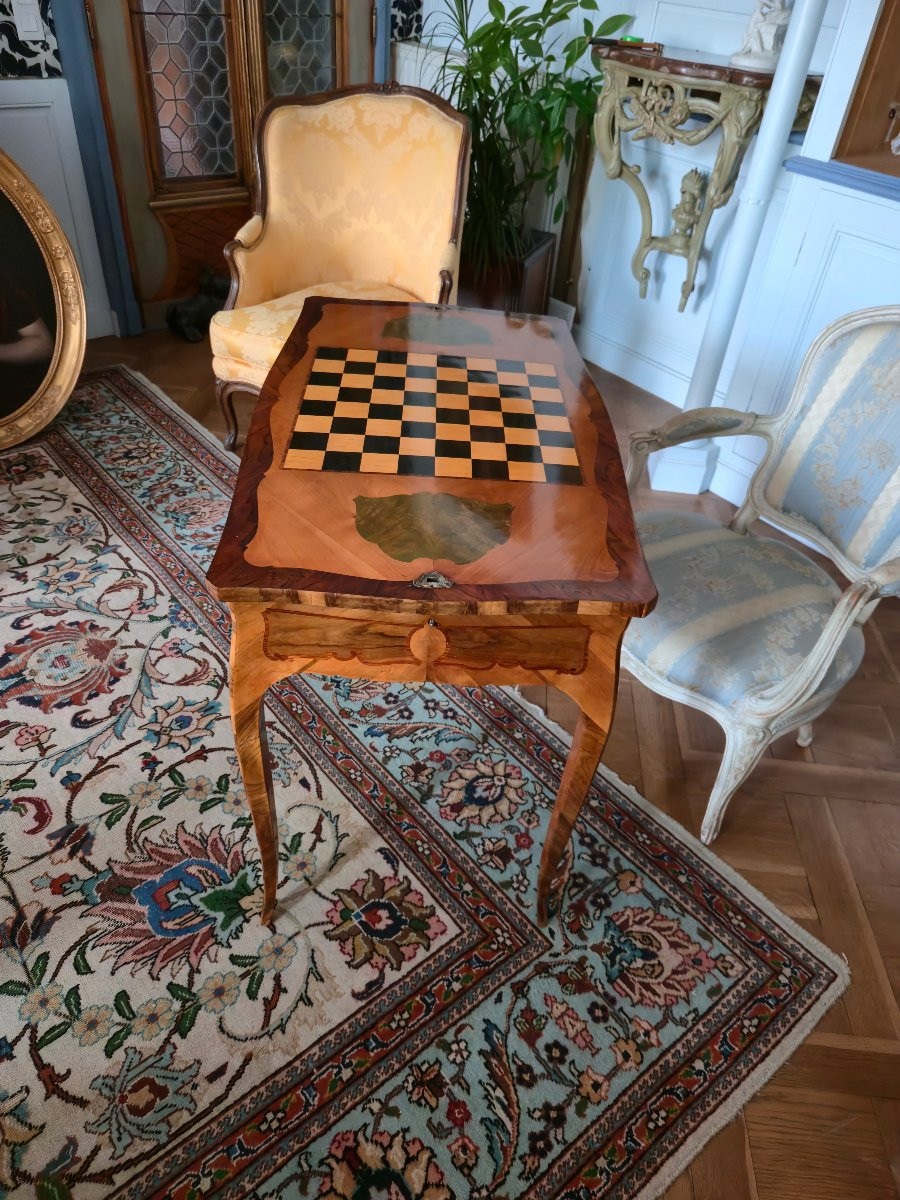
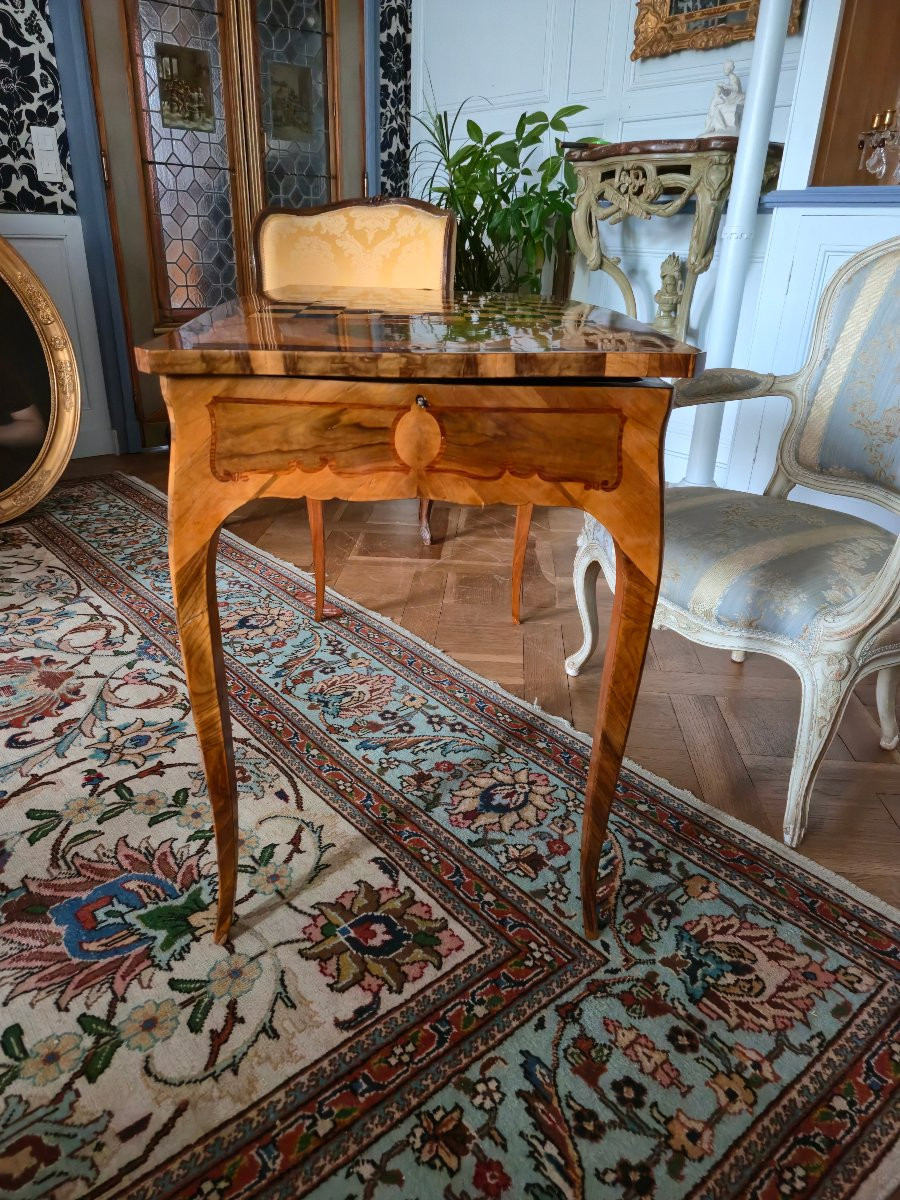
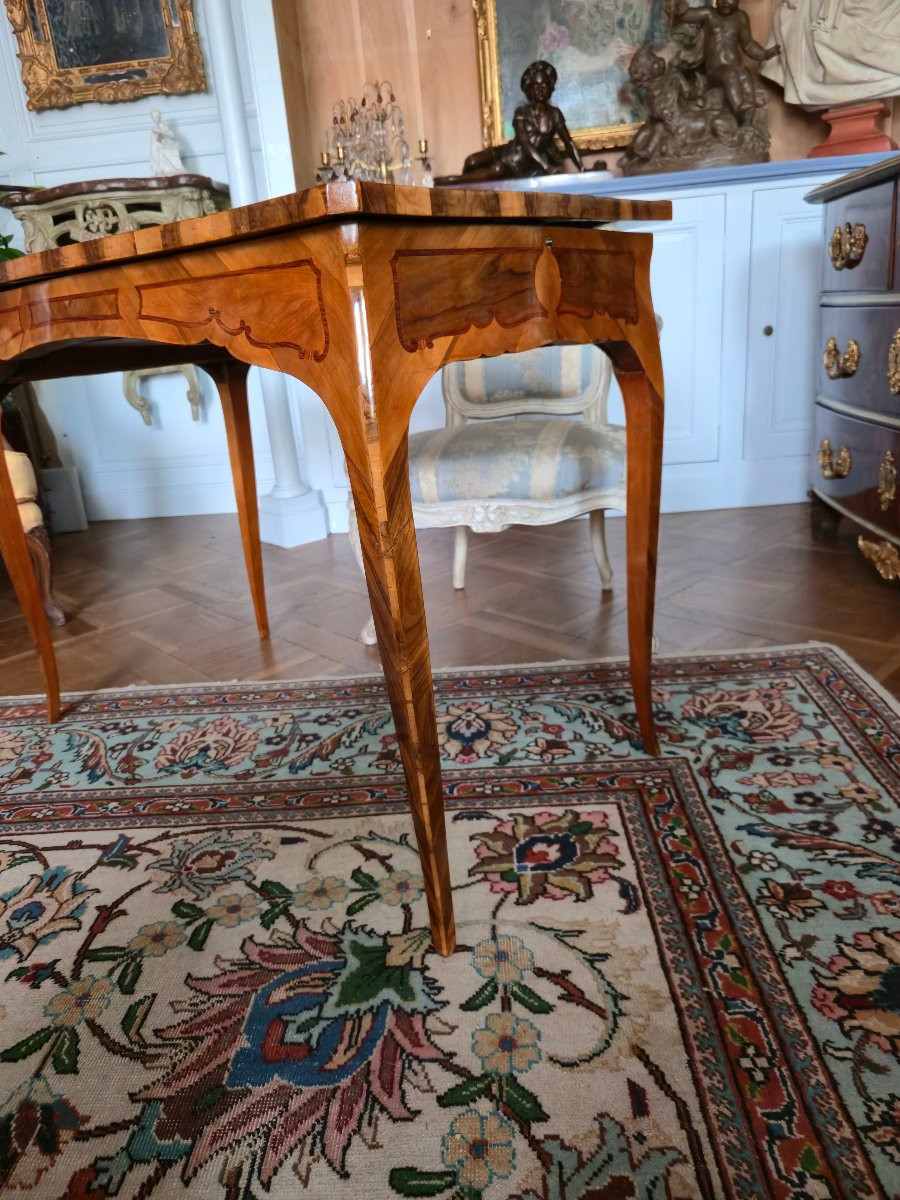
This elegant salon game table is distinguished by its precise design and light silhouette. It rests on four slender, curved legs, linked by a fine, flowing belt that is both supple and well-proportioned. The whole piece cleverly recaptures the vocabulary of the Louis XV style, without heaviness, with a lively, balanced line, perfectly conceived for a piece of salon furniture.
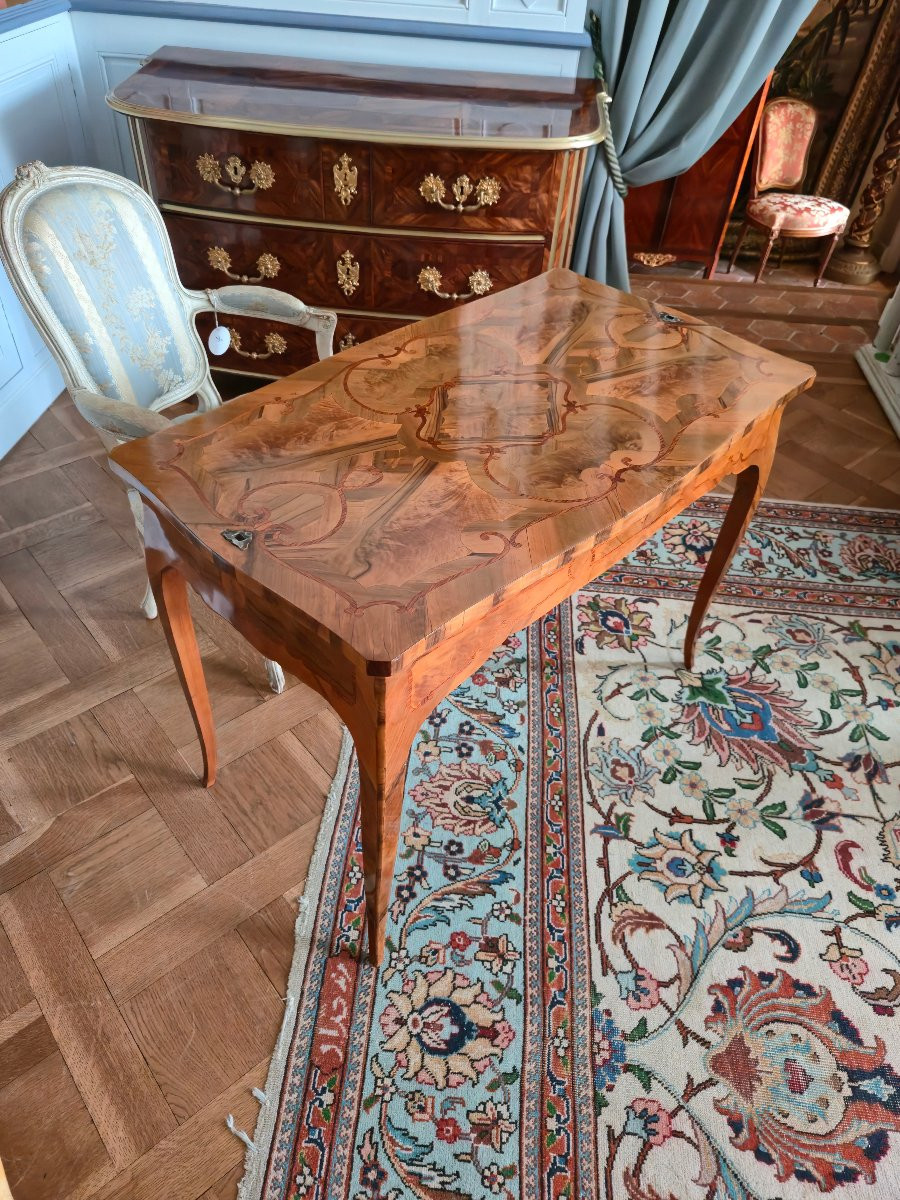
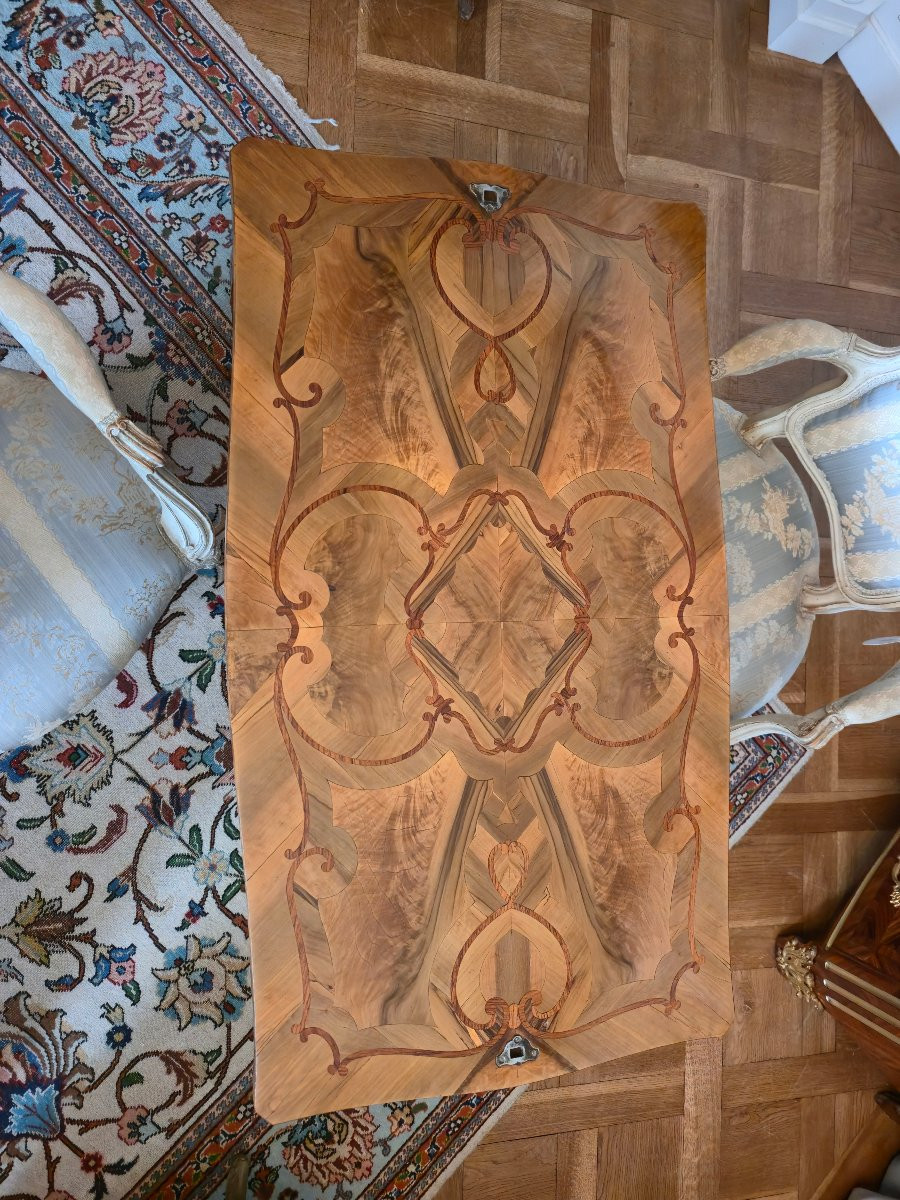
The marquetry decoration is particularly meticulous. The main face of the top, intended as a coffee table, is decorated with reserves, fillets and finely drawn frames. Regional veneers, notably walnut, olive and cherry, are combined with more precious woods such as rosewood, used for the fillets, scrolls and cartouche frames. This interplay of veneers offers a highly decorative reading, where natural veining dialogues with the precision of the design.
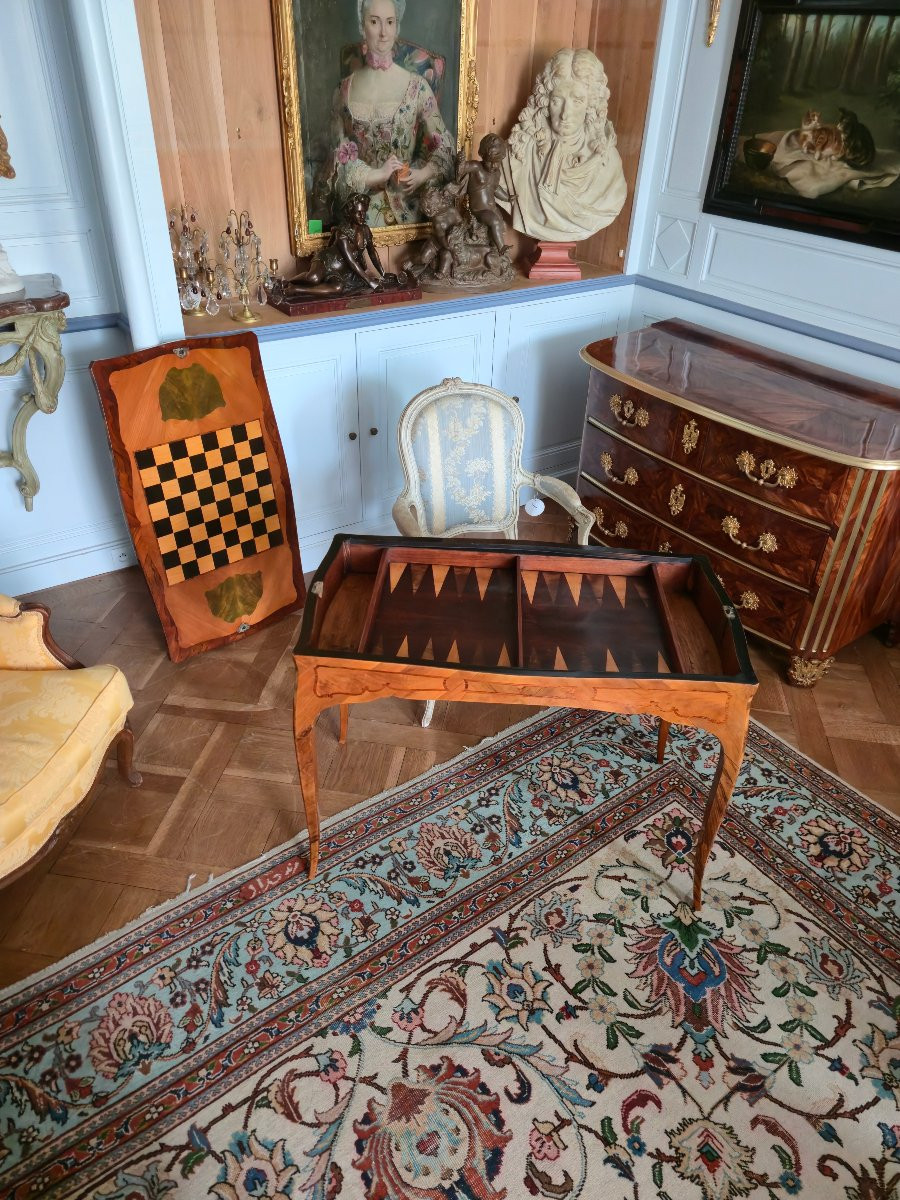
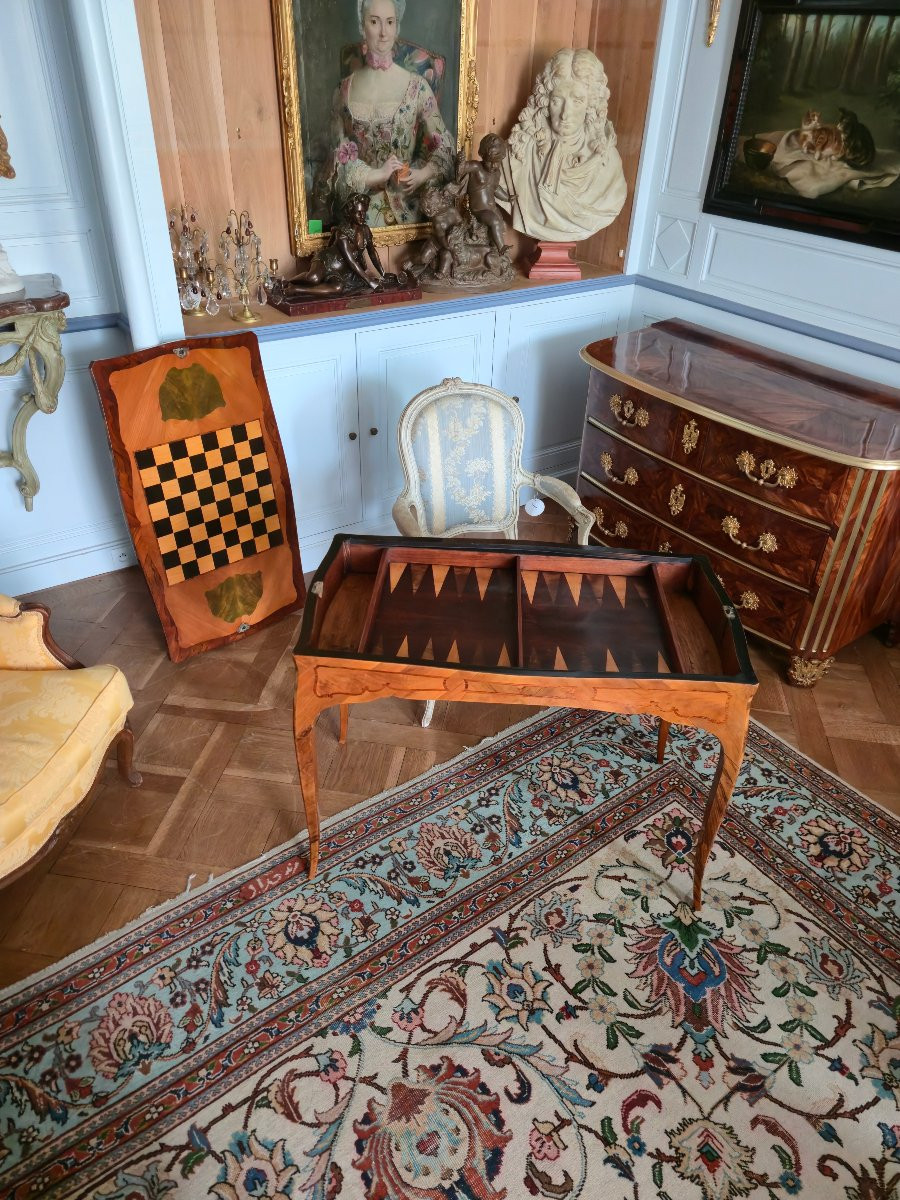
The reversible top reveals an inlaid chessboard on the other side. The light squares are in maple, the dark squares in black-stained wood, all framed in rosewood and set against a cherry wood background. On either side of the board, two storage compartments hold the pieces. When the board is removed, the interior reveals a veneered backgammon set, composed of stained wood and rosewood, with two side reserves for the pawns.
Certain decorative choices, notably the green-stained walnut burl cartouches, clearly evoke the regional productions of Eastern France and more particularly the spirit of Grenoble. The use of stained woods, cherry and highly expressive veneers is reminiscent of the decorative research associated with the Dauphiné workshops, notably around Jean-François Hache. This is not an 18th-century piece of furniture, but rather a historicist work of the highest quality.
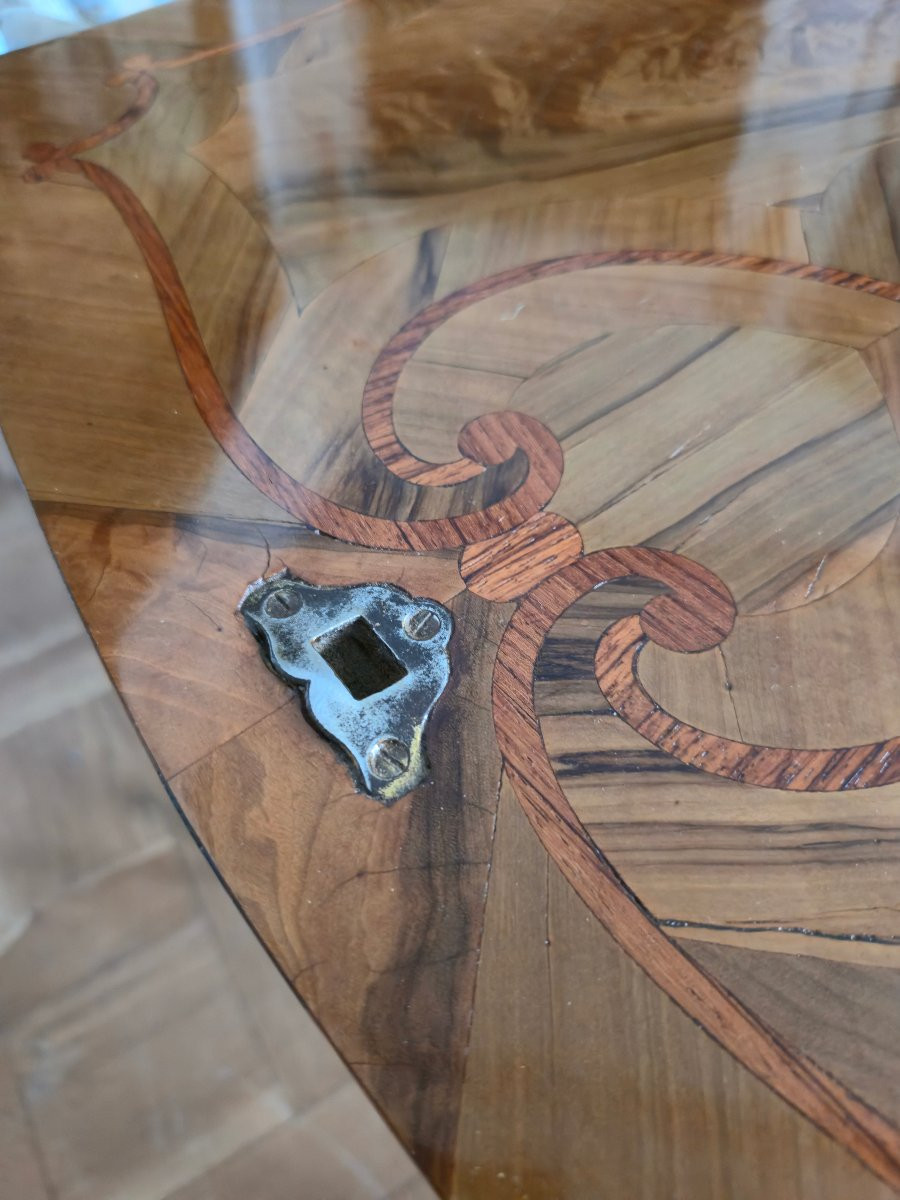
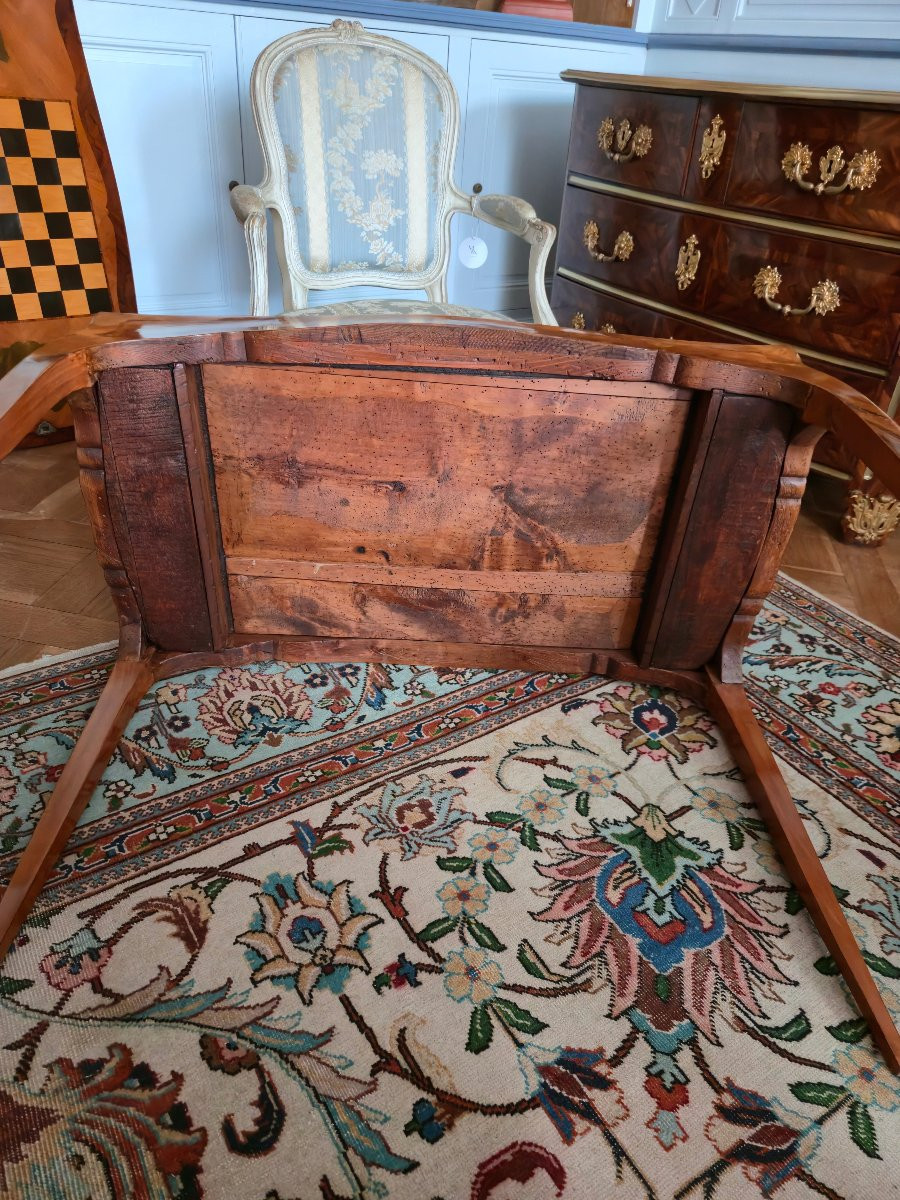
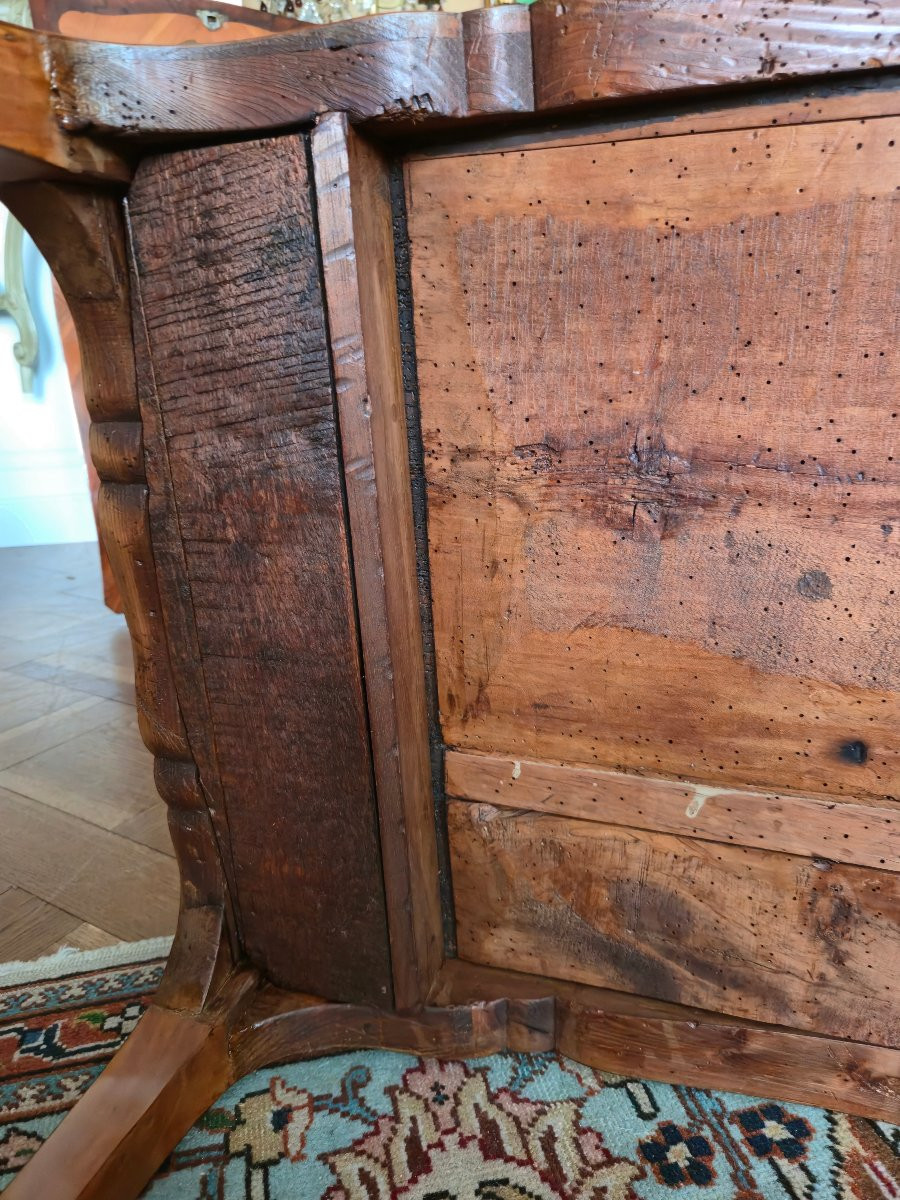
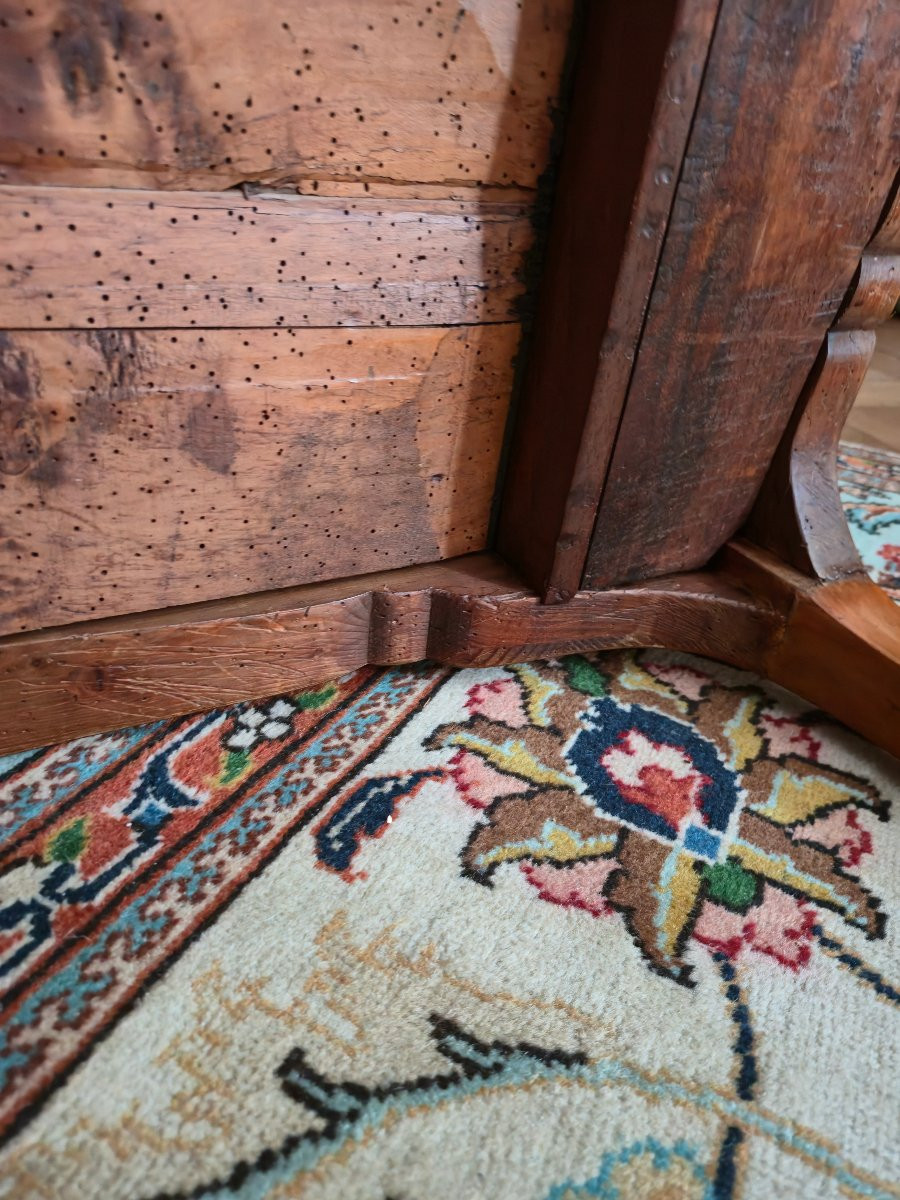
Examination of the underside is particularly interesting. The construction uses old wood, with real traces of wood-eating insects and old hand tool marks. These elements are not artificial: they correspond to the reuse of old materials, integrated into the manufacturing process to give the furniture a very convincing appearance. The ironwork follows the same logic, with small cut-iron bolts, operated by a push-button, engaging in the lights in the top. The system, now partially functional due to a slight haze in the top, remains complete and very striking.
This table can be attributed to André Mailfert for its quality of execution, its use of antique woods, its deliberately credible construction and its perfect knowledge of 18th-century regional furniture codes. Mailfert is renowned for his high-level historicist work, particularly during his first period, when he produced particularly convincing pieces of furniture, sometimes using antique woods and processes designed to restore the appearance of genuine period furniture.
This table is fully in keeping with this spirit: a regional Louis XV-style piece of great decorative finesse, designed to fit naturally into an antique interior. It has been cleaned and varnished, and is now in perfect presentation condition.
Dimensions : Height : 73.5 cm Width : 98.5 cm Depth : 57.5 cm
This elegant salon game table is distinguished by its precise design and light silhouette. It rests on four slender, curved legs, linked by a fine, flowing belt that is both supple and well-proportioned. The whole piece cleverly recaptures the vocabulary of the Louis XV style, without heaviness, with a lively, balanced line, perfectly conceived for a piece of salon furniture.
The marquetry decoration is particularly meticulous. The main face of the top, intended as a coffee table, is decorated with reserves, fillets and finely drawn frames. Regional veneers, notably walnut, olive and cherry, are combined with more precious woods such as rosewood, used for the fillets, scrolls and cartouche frames. This interplay of veneers offers a highly decorative reading, where natural veining dialogues with the precision of the design.
The reversible top reveals an inlaid chessboard on the other side. The light squares are in maple, the dark squares in black-stained wood, all framed in rosewood and set against a cherry wood background. On either side of the board, two storage compartments hold the pieces. When the board is removed, the interior reveals a veneered backgammon set, composed of stained wood and rosewood, with two side reserves for the pawns.
Certain decorative choices, notably the green-stained walnut burl cartouches, clearly evoke the regional productions of Eastern France and more particularly the spirit of Grenoble. The use of stained woods, cherry and highly expressive veneers is reminiscent of the decorative research associated with the Dauphiné workshops, notably around Jean-François Hache. This is not an 18th-century piece of furniture, but rather a historicist work of the highest quality.
Examination of the underside is particularly interesting. The construction uses old wood, with real traces of wood-eating insects and old hand tool marks. These elements are not artificial: they correspond to the reuse of old materials, integrated into the manufacturing process to give the furniture a very convincing appearance. The ironwork follows the same logic, with small cut-iron bolts, operated by a push-button, engaging in the lights in the top. The system, now partially functional due to a slight haze in the top, remains complete and very striking.
This table can be attributed to André Mailfert for its quality of execution, its use of antique woods, its deliberately credible construction and its perfect knowledge of 18th-century regional furniture codes. Mailfert is renowned for his high-level historicist work, particularly during his first period, when he produced particularly convincing pieces of furniture, sometimes using antique woods and processes designed to restore the appearance of genuine period furniture.
This table is fully in keeping with this spirit: a regional Louis XV-style piece of great decorative finesse, designed to fit naturally into an antique interior. It has been cleaned and varnished, and is now in perfect presentation condition.
Dimensions : Height : 73.5 cm Width : 98.5 cm Depth : 57.5 cm
Explore similar pieces and discover your ideal find:
Game Tables