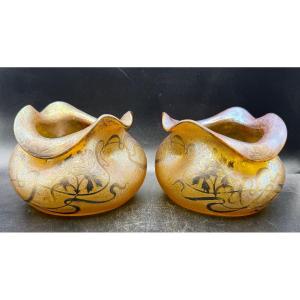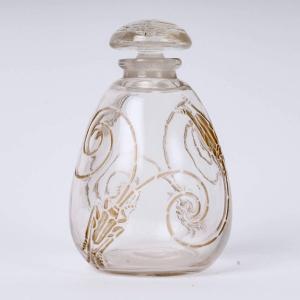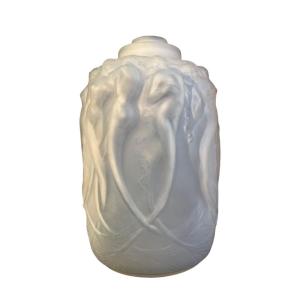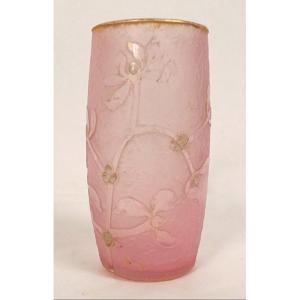
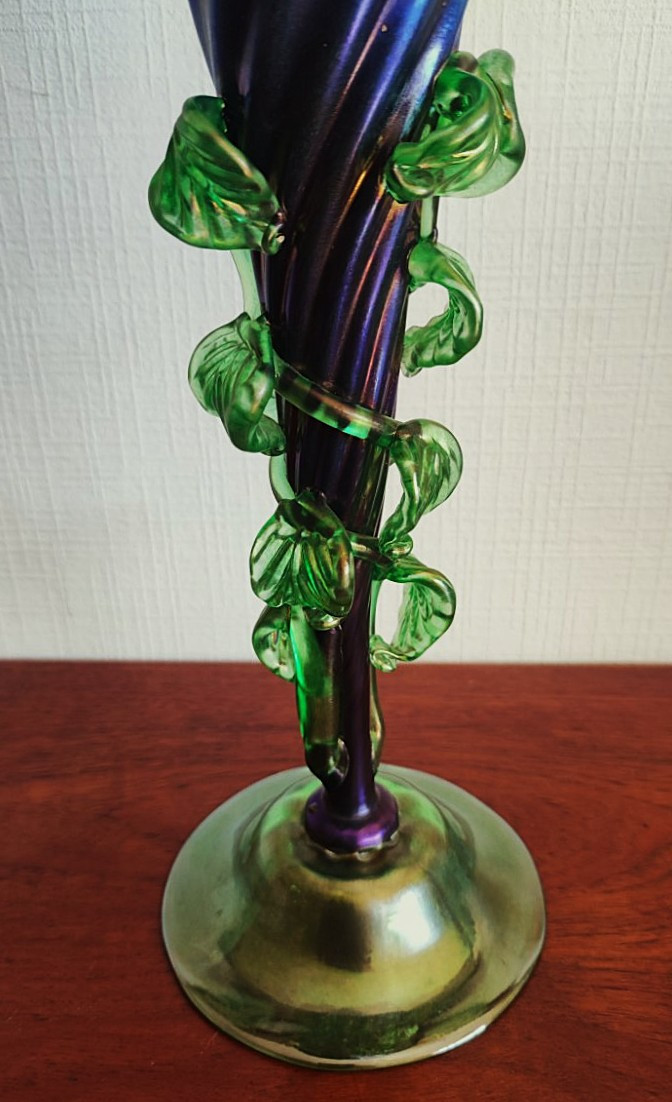
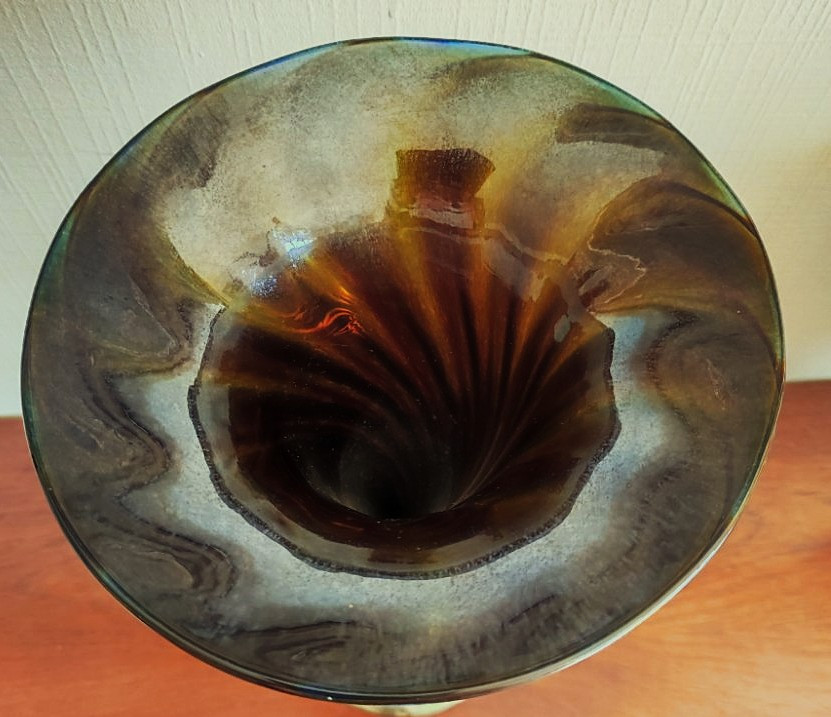
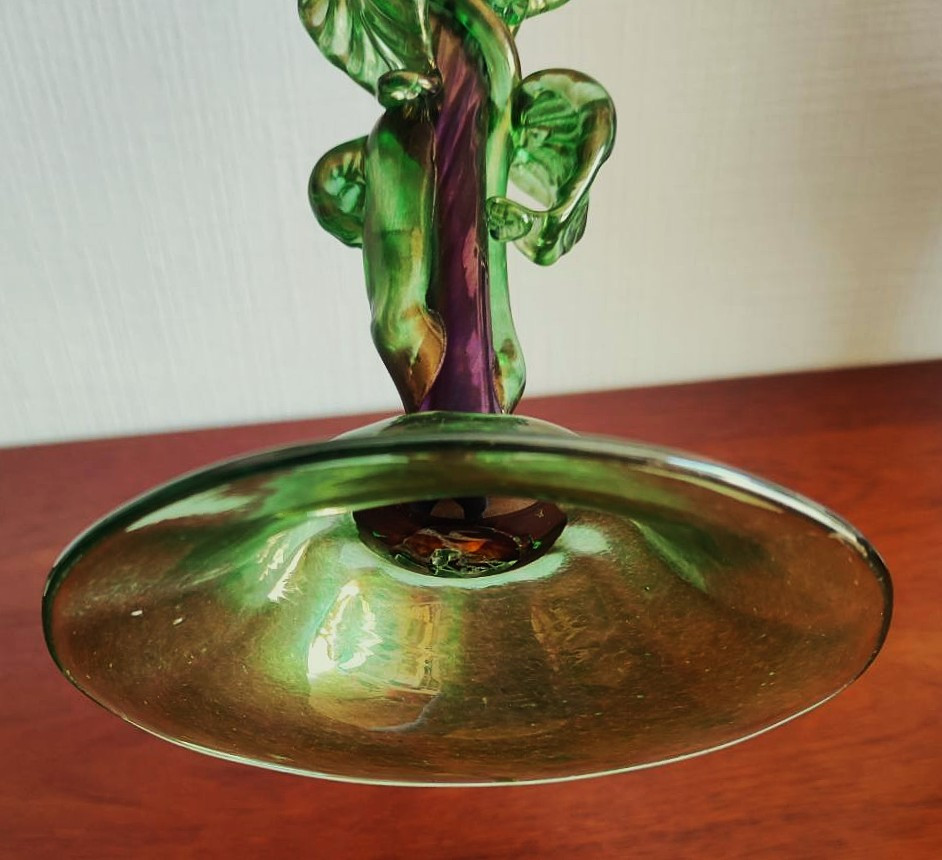
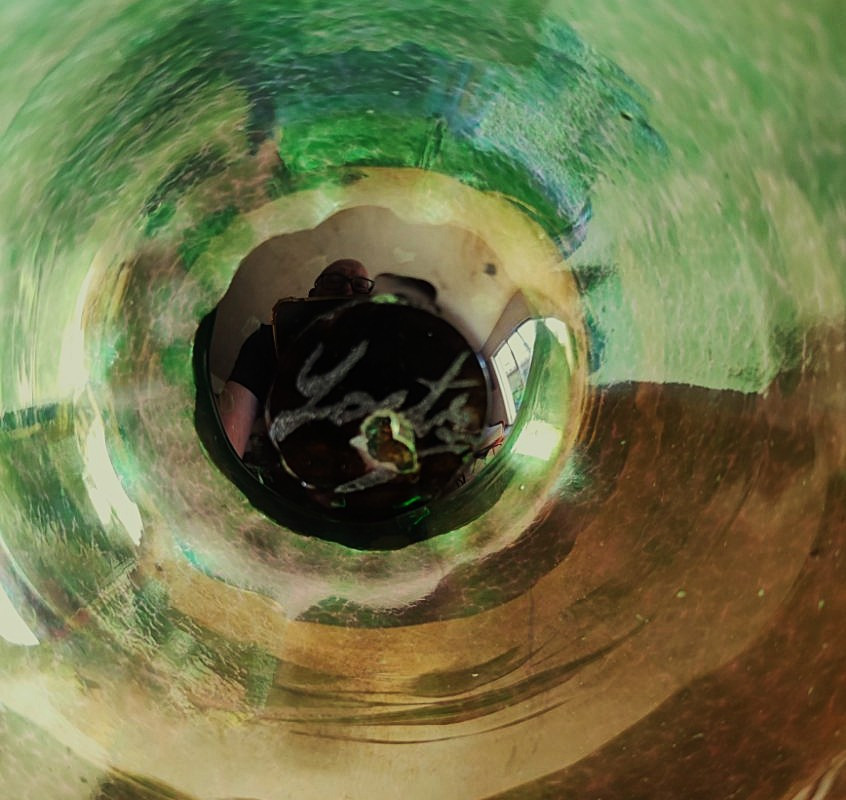


Loetz (1880-1940) Large Cobalt Vase Signed C.1900 Austria, Art Nouveau, Gallé, Daum Koenig
Height: 33cm.
Perfect condition; piece guaranteed authentic.
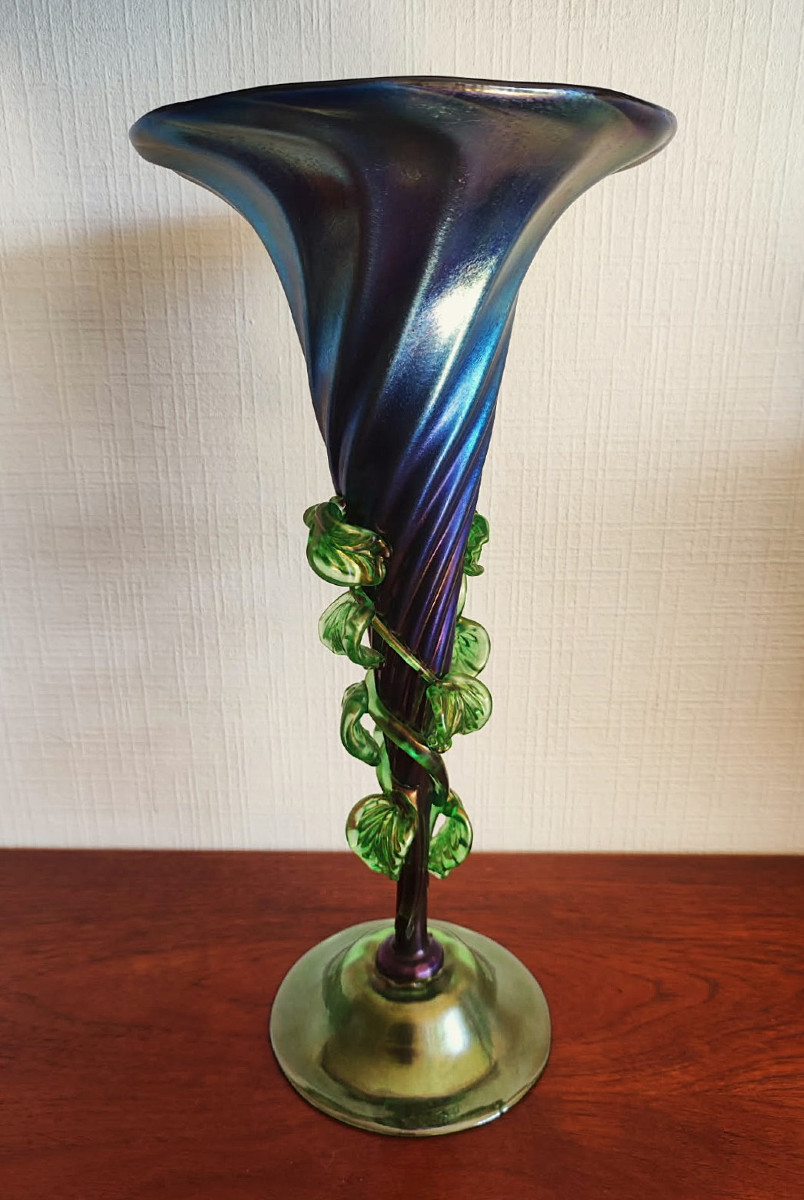
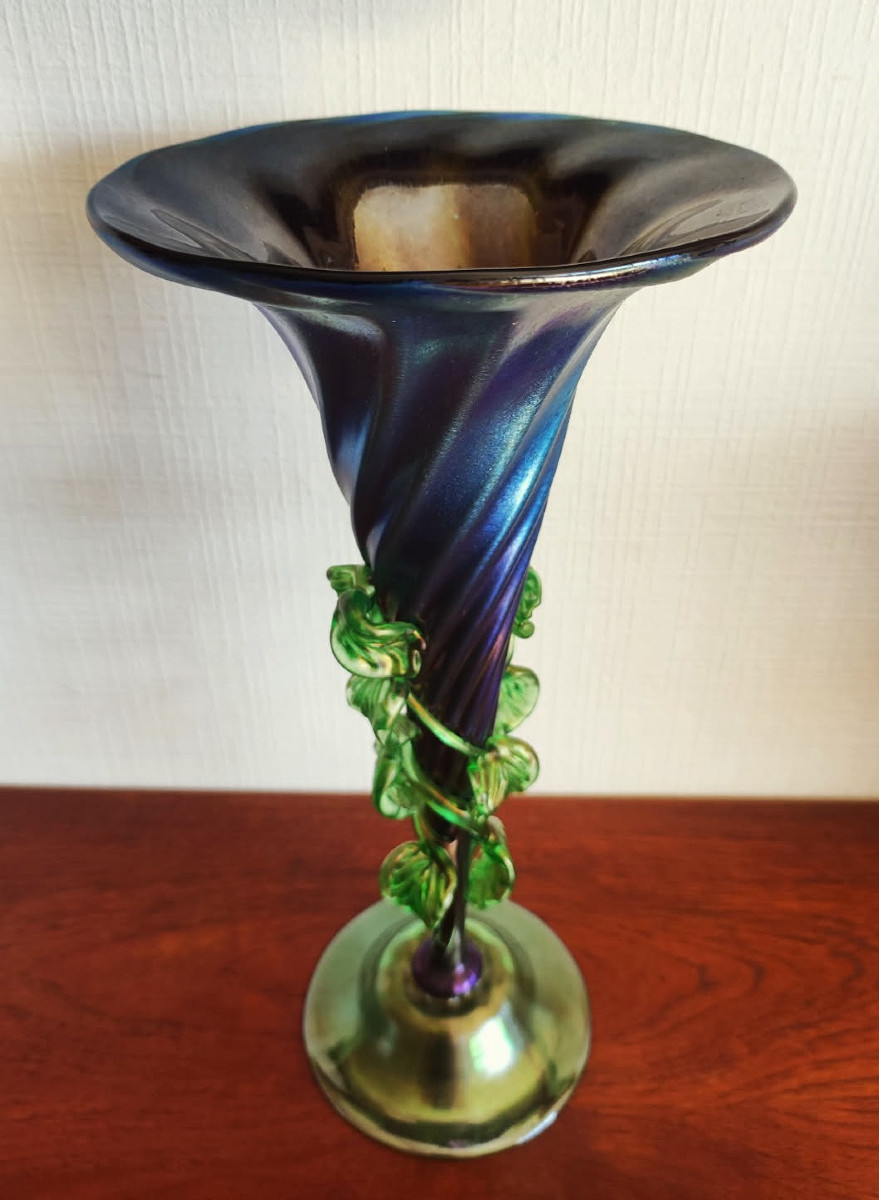
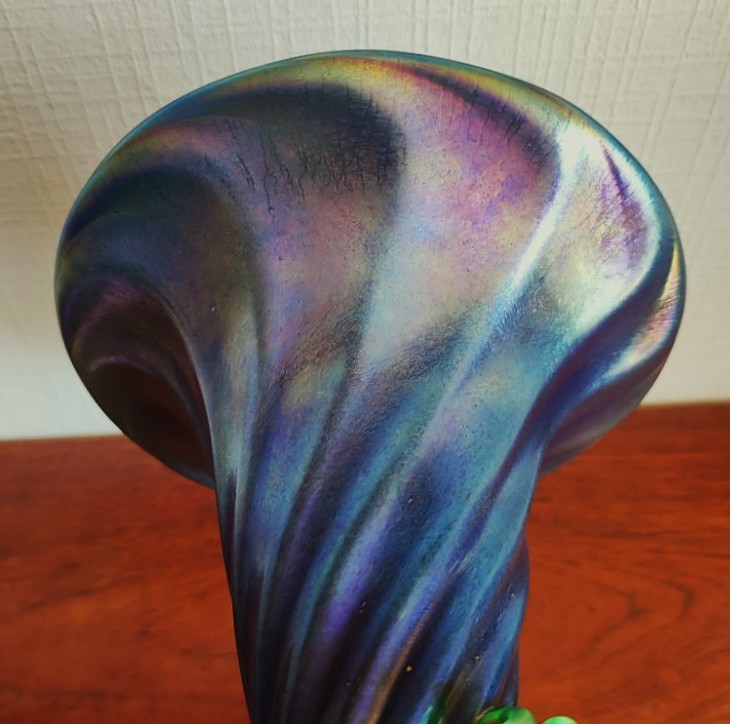
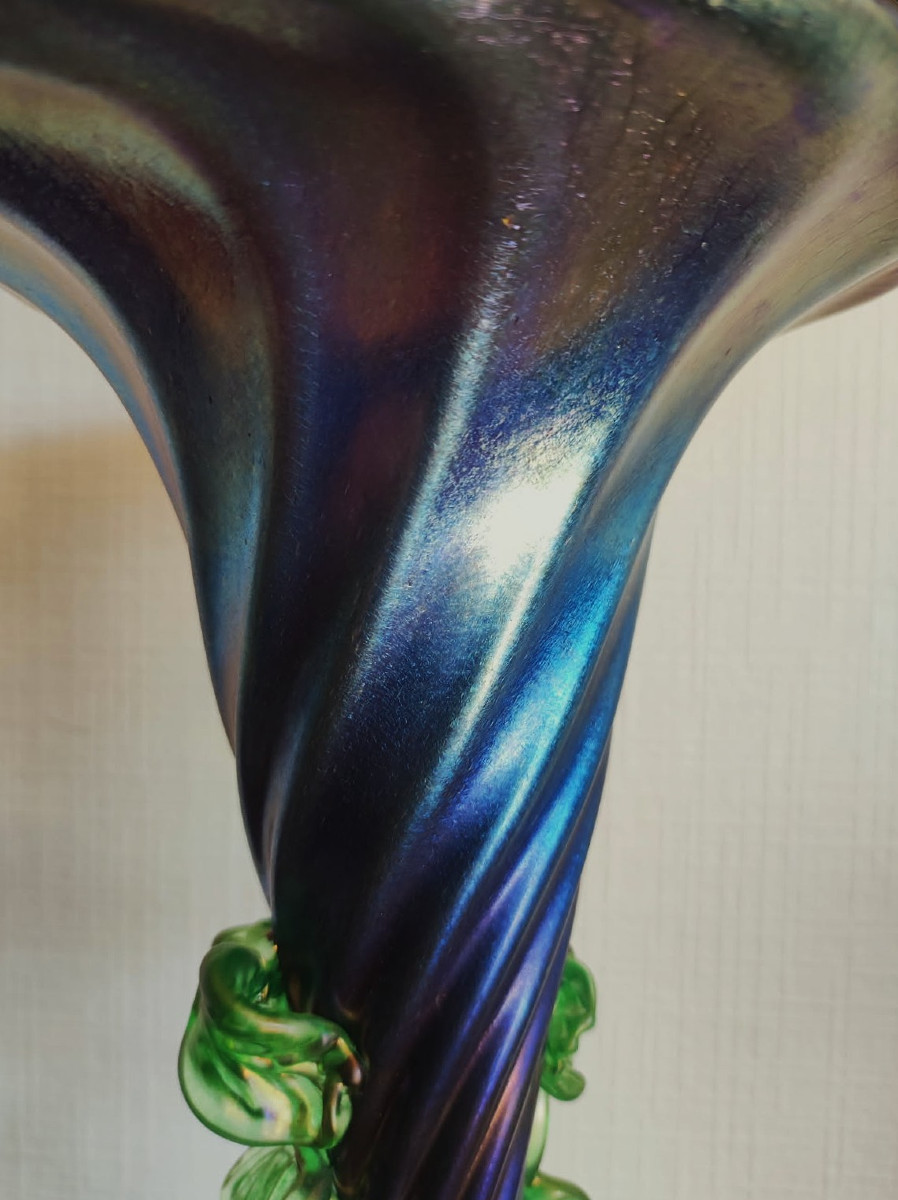
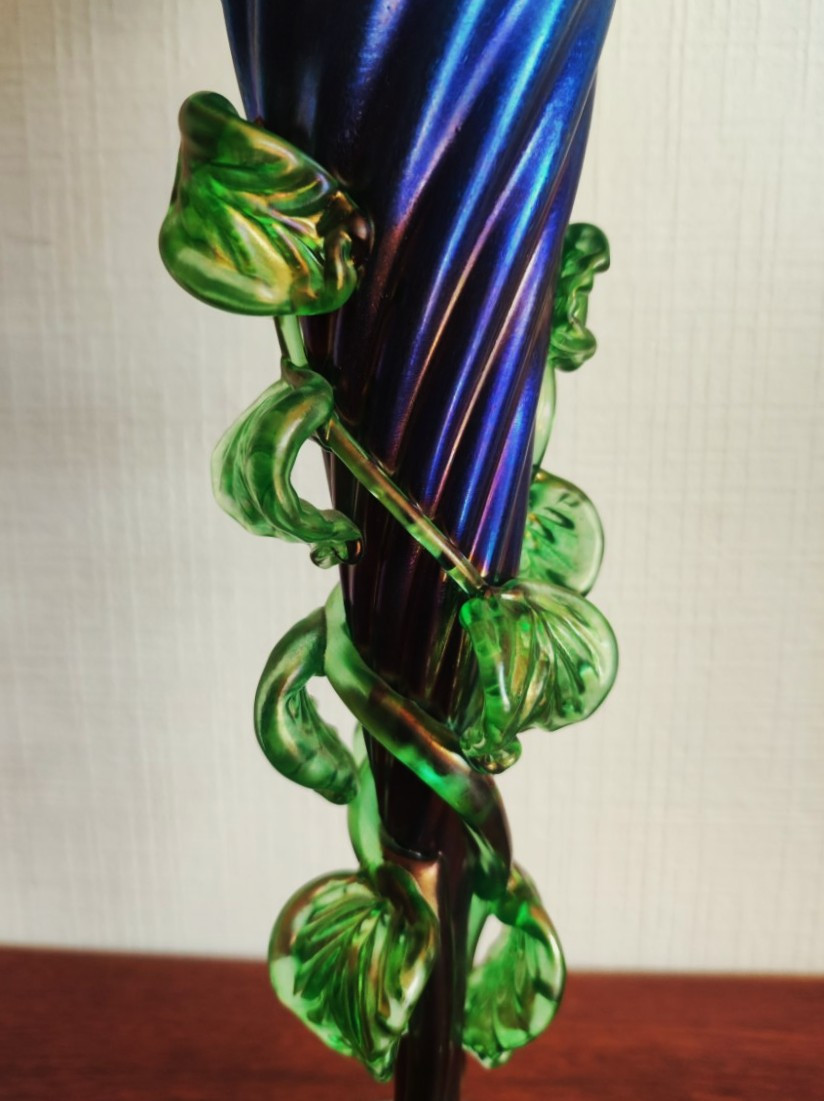
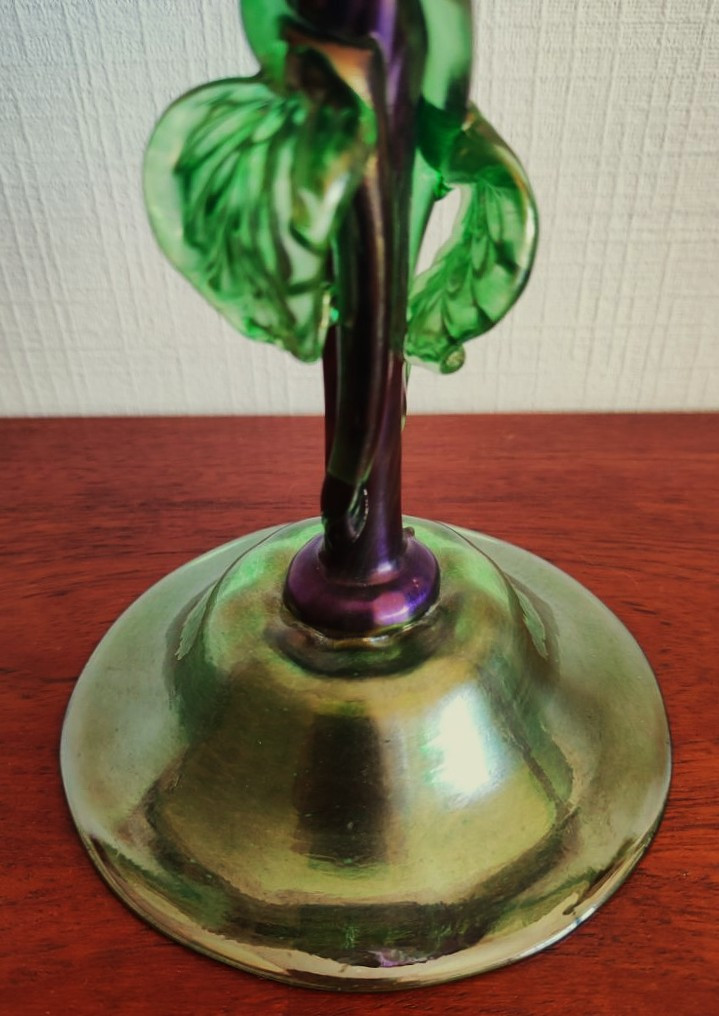
This is indeed a rather rare Loetz Austria vase made circa 1898/1902; it has a flared cornet form with twisted movement, the body is covered by a superb cobalt iridescent blue decoration with violet reflections, the foot is iridescent green/yellow, finally the artist has adorned the body of the vase with a frieze of foliage in high relief in transparent green glass.
the LOETZ glassworks (1836-1947)
In 1836, Johann Eisner established a glassworksglassworks in the South Bohemian town of Klostermühle, which todaytoday part of the Czech Republic and called Klášterský Mlýn. His heirs sold Martin Schmidt's glassworks in 1849, and two yearsSchmidt sold to Frank Gerstner, a lawyer, and his wife Susanne.wife Susanne. She was the widow of Johann Loetz, a glassmaker about whom know very little about. Gerstner transferred the company to Susanne shortly before his death in 1855, and she ran it successfully, mainly manufacturing manufacture of crystal, overlay and painted glass. In 1879, Susannetransferred the business now called "Johann Loetz Witwe" toMaximilien von Spaun, the son of her daughter Karoline. A year later, von Spaun hired Edouard Prochaska to modernize the factory and introduce newtechniques, including the filing of patents.
The first fruits of this collaborationThe first fruits of this collaboration were interesting innovations in glass. Successat the Brussels exhibition. Munich and Vienna were awarded prizes prizes, including at the 1889 Paris Universal Exhibition. At1897, von Spaun saw Tiffany's products on display in Bohemia and Vienna.Vienna, which convinced him that the Art Nouveau style was also the way the way forward for Loetz Witwe. The next eight years were the most artisticallymost artistically significant and profitable period in the company'scompany's history. Loetz produces many Art Nouveau pieces.Nouveau pieces.
The LOETZ Style:The special color and reliefgive Loetz glass an extremely refined touch.Loetz was also one of the pioneers in the use of electroplatingand patented many of them.
The innovative and original shapesinnovative and original shapes used by Loetz, inspired by theof ancient Persian and Roman art, are typical of Art Nouveau glassware.Art Nouveau glassware. Other equally popular Loetz designs Loetz are vases inspired by nature and decorated with originaloriginal "swan-neck" shapes or "peacock" colors in iridescent blue-green hues.
In 1904, the beginning of the decline. After theWorld War I, a temporary respite appeared thanks to the productionproduction of popular colored opal glass, but the inevitableinevitable investments in glassworks renovation in 1920 led to furtherfinancial problems. In the absence of new ideas, Loetz Witwereverted to adapting its old Art Nouveau decorations to the ArtDeco style, but sales continued to decline. The Great Depression in the the twenties and another fire in 1930 hit the company hard.During the thirties, the glassworks changed owners several times.several times. It closed for long periods and finally declared bankrupt once again in 1939, after the German invasion ofinvasion of Czechoslovakia. Futility glassware manufactured for the the 3rd Reich during the war, but a definitive end to productionproduction in 1947.
Period: 20th century
Style: Art Nouveau
Condition: Perfect condition
Material: Glass
Height: 33
Reference (ID): 1745964
Availability: In stock