

Seal Matrix Of The Connétablie Et Maréchaussée De France - Balincourt Coat Of Arms -1764
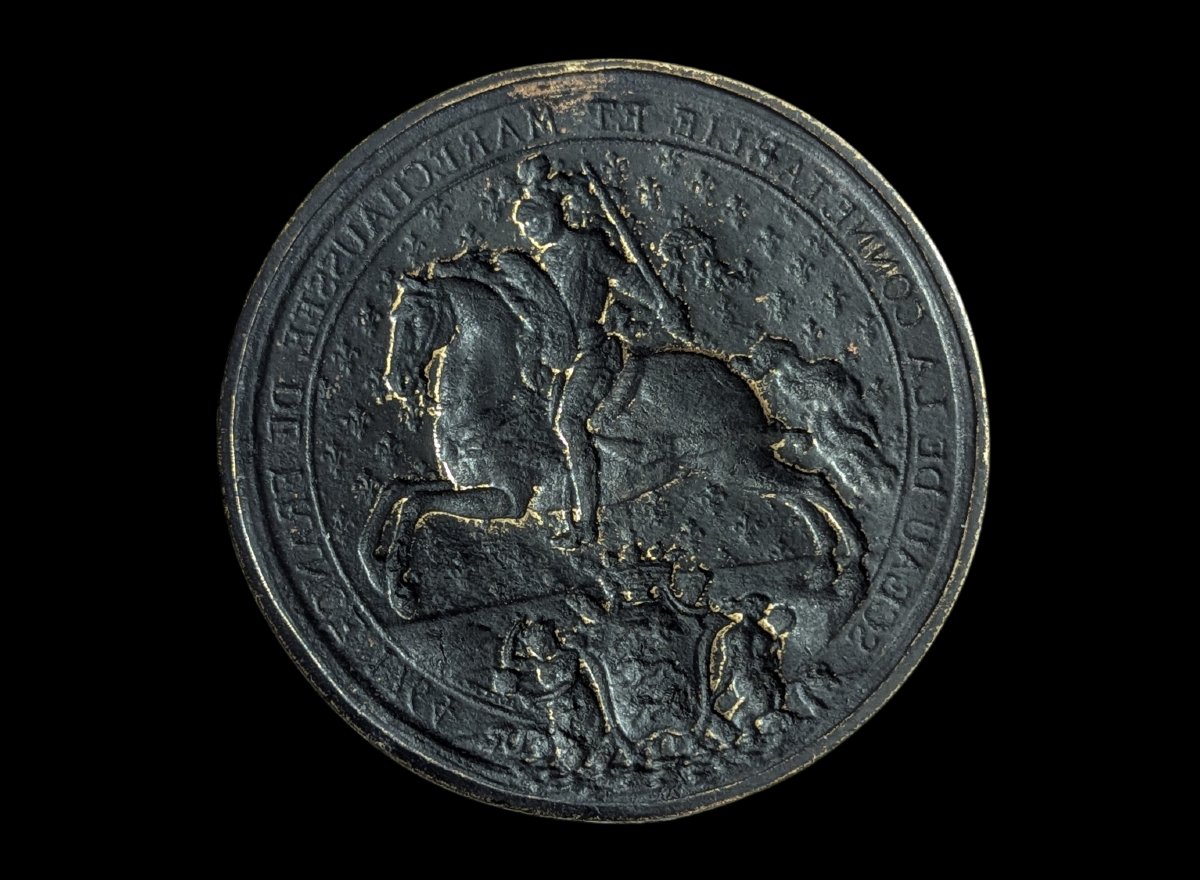
Great Seal Matrix of the Constabulary and Maréchaussée of France – Arms of Balincourt – 1764
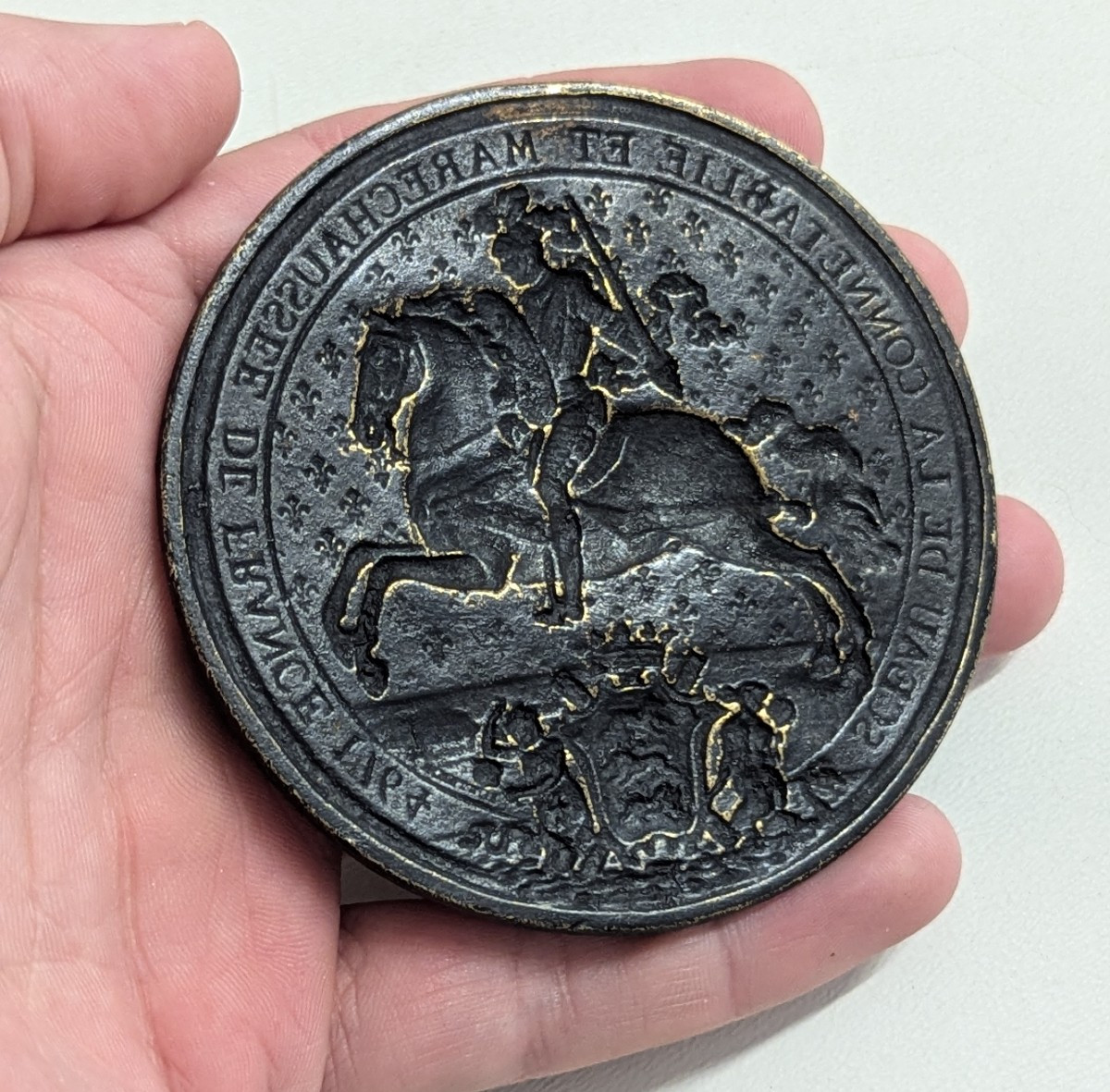
This is the bronze seal matrix of the Marshal and Constable of France, Claude Guillaume Testu de Balincourt. It is the seal matrix itself, not the seal impression. This is an अत्यremely rare object, for which no comparable example has been identified.
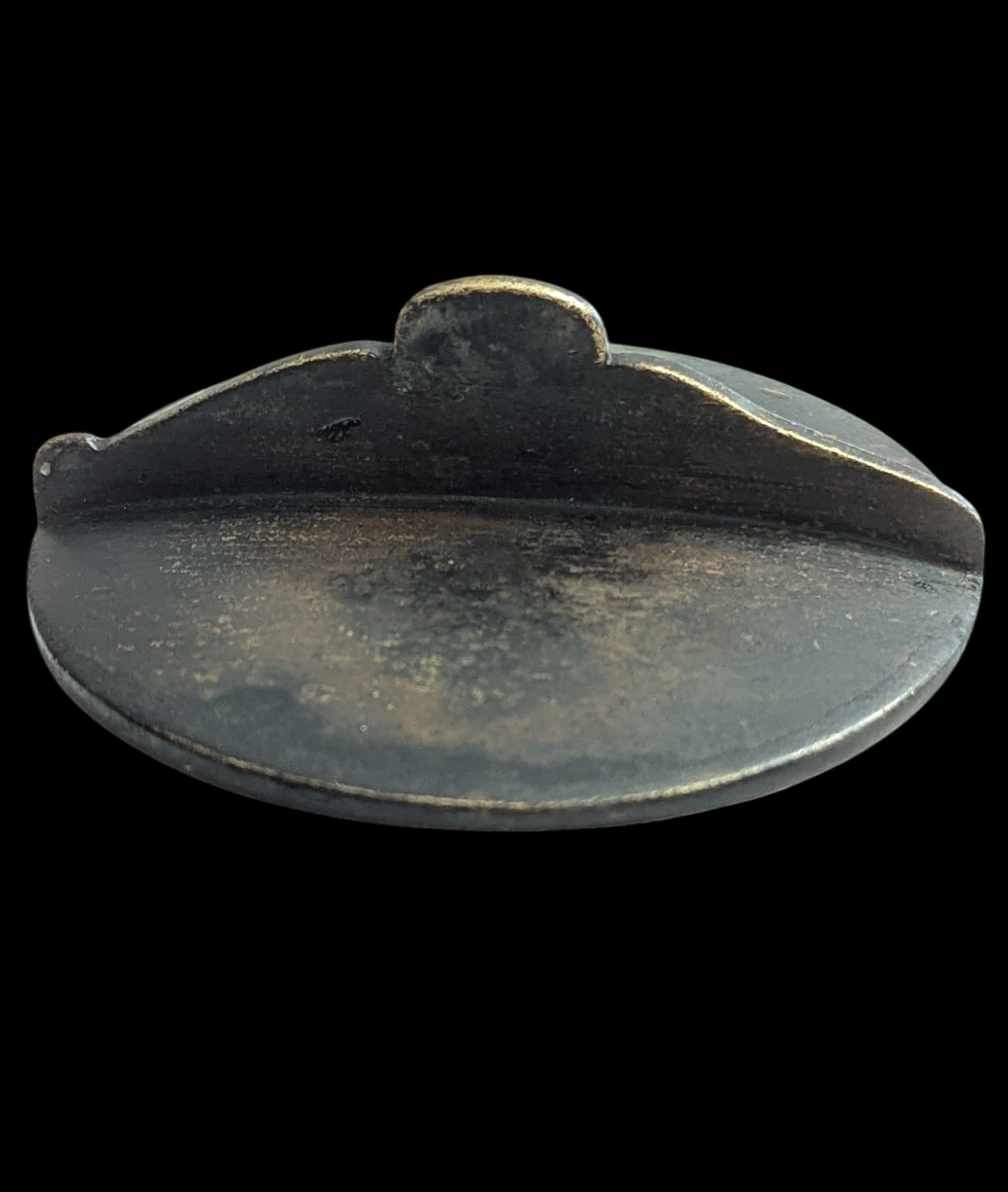
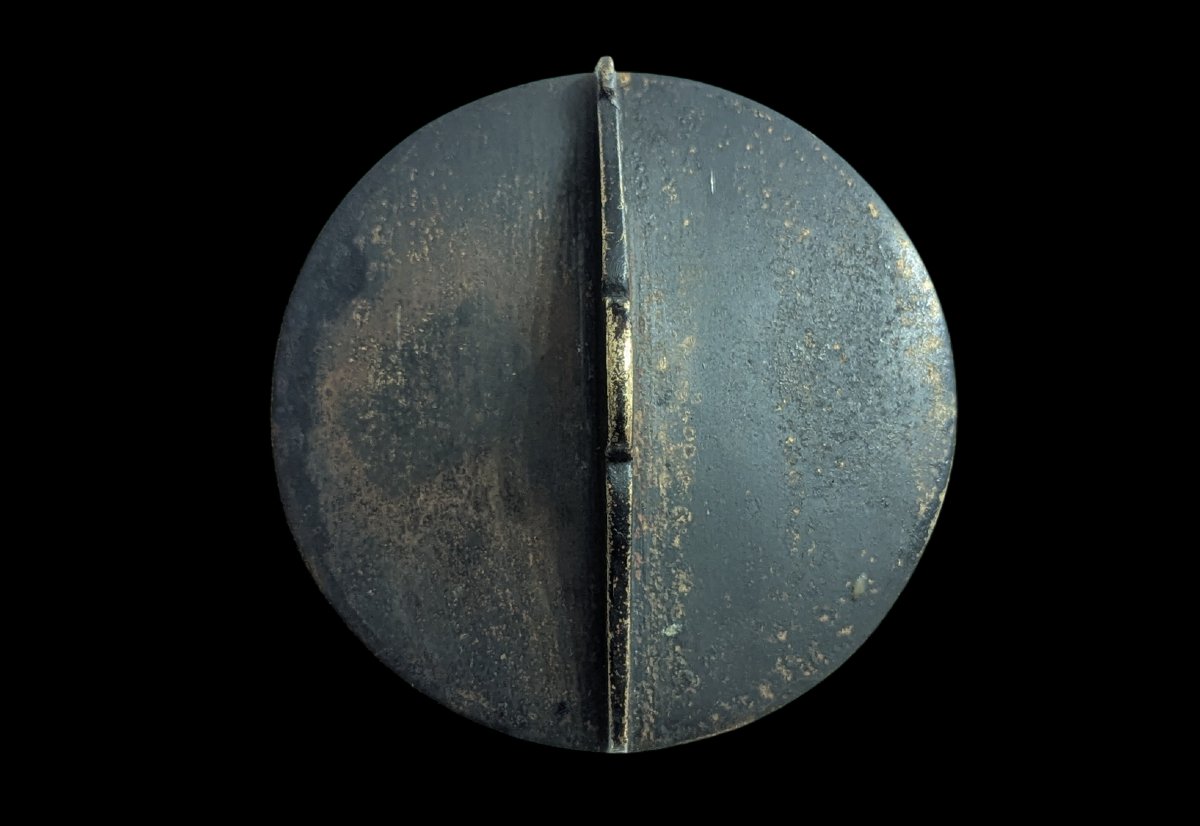
It is circular in form. On the obverse, it features a handle running the length of the matrix, with a central swelling designed to facilitate grip.
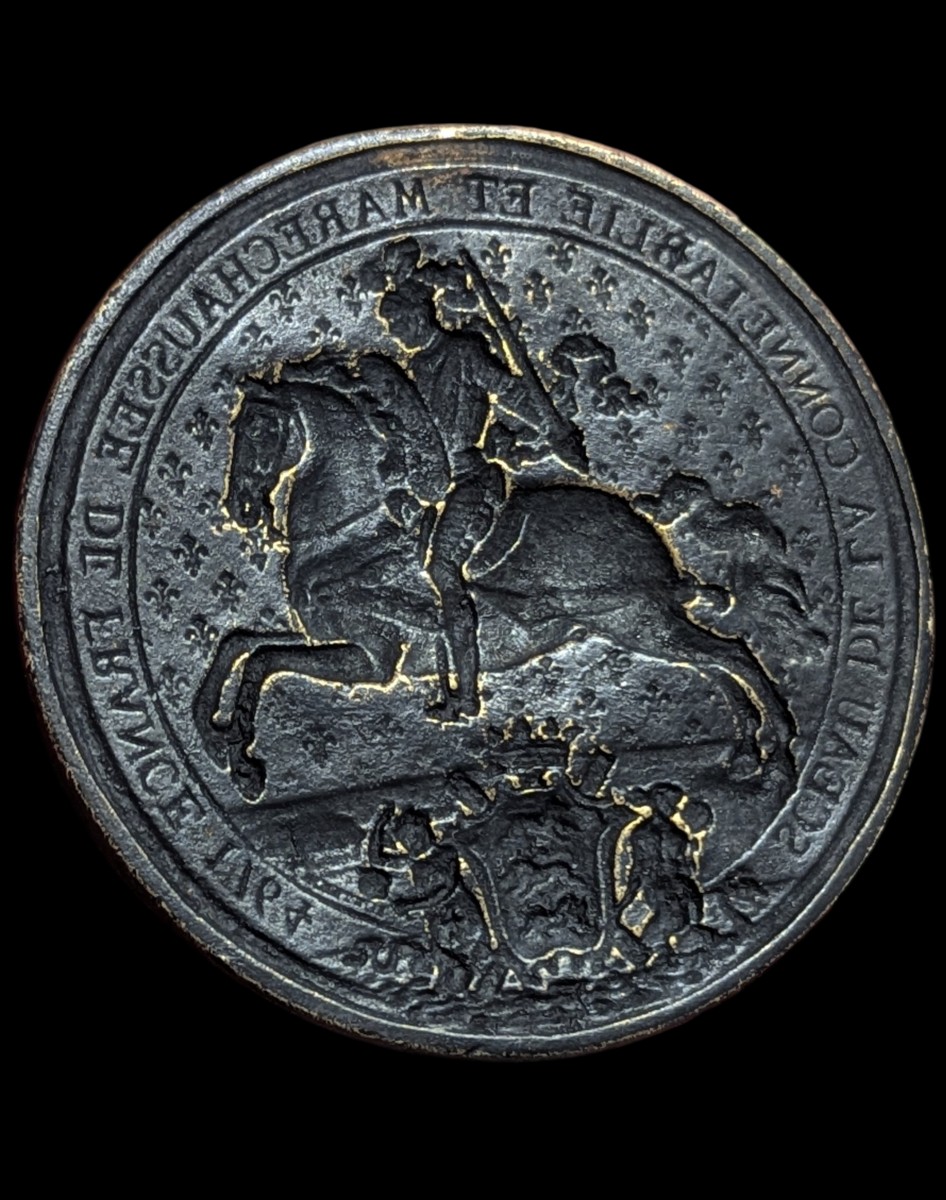
On the reverse appear the arms associated with the Marshals and the Constable of France. Within a field of France strewn with fleurs-de-lys, the Constable is depicted fully armed, mounted on a galloping horse. He wears a sash across the body, a helmet surmounted by a ducal coronet, open so as to reveal the face except for the chin guard. In his right hand, protected by a gauntlet, he raises a naked sword point upward; the scabbard hangs in its customary place, and in his left hand he holds a shield.
At the base of the escutcheon, beneath the horse, are the arms of the Marshal of Balincourt: Or, three lions passant one above the other, the middle one contourné; supporters, two mermaids issuing from the water. Around the escutcheon runs the legend: “Sceau de la Connétablie & Maréchaussée de France” with the date 1764.
The matrix was engraved by Pierre-Joseph Lorthior, a medallist and engraver responsible for numerous medals, seals, and tokens. He notably executed the great seal of Marie-Antoinette and produced portraits of Louis XV and Louis XVI.
The matrix measures 75 mm in diameter.
Who was the Marshal of Balincourt?
Claude Guillaume Testu de Balincourt was a French officer of the Ancien Régime, born in Paris in 1680 and deceased there in 1770, whose long career was devoted to royal service.
From a family of the lesser nobility, he entered the army at a young age as a Musketeer of the King in the late 17th century, before becoming an infantry officer. He took an active part in the War of the Spanish Succession, serving notably in Flanders, Germany, and Catalonia. His advancement was steady: colonel in 1703, brigadier in 1710, and maréchal de camp in 1719.
In 1719, he was elevated to the rank of Marquis of Balincourt, his lands being united into a marquisate. He continued his military and administrative rise: appointed lieutenant general in 1734, he held significant posts such as governor of Mont-Dauphin and later Strasbourg in 1746, within the strategic context of 18th-century European conflicts.
That same year, 1746, marked the peak of his career, when he was made Marshal of France, one of the highest military dignities of the kingdom. He subsequently received several honors, including the Orders of the King.
Married but without issue, he ended his life in Paris, where he died in 1770 at nearly 90 years of age, after a long existence marked by military service and loyalty to the monarchy.
The Seal of the Marshals
The seal was, from time immemorial, a right belonging to the Constable of France. All judgments, sentences, commissions, and other judicial acts issued by the jurisdiction of the Constabulary and Maréchaussée of France, at the Table de Marbre, were sealed with it. This seal, both particular and universal throughout the kingdom, had the advantage of being royal in nature and therefore enforceable everywhere.
This prerogative was confirmed by King Charles IX in a declaration of 6 December 1568, enabling the Constable and the Marshals of France to authenticate their decisions and seal official copies.
After the disappearance of the office of Constable, the seal continued to be issued in his name but bore the arms of the senior Marshal (maréchal-doyen). Upon the death of the senior Marshal, a new seal was produced. Its strictly personal character prohibited its use after the holder’s death or retirement. As soon as a new senior Marshal took office, a formal judgment annulled the previous seal, rendering void all acts sealed thereafter.
The seal was entrusted to the custody of the lieutenant general of the seat of the Constabulary, appointed by special provisions issued by the senior Marshal upon his accession.
Iconographically, the seal depicts, in a field of France strewn with fleurs-de-lys, the Constable fully armed on a galloping horse, wearing a sash, a helmet surmounted by a ducal coronet, open to reveal the face; he raises a naked sword in his right hand and holds a shield in his left. At the base appear the arms of the senior Marshal, and around runs the legend: “Sceau de la Connétablie & Maréchaussée de France” followed by the year.
The matrix is preserved in a custom-made wooden case produced by a former owner.
It was exhibited in 1922 during a retrospective exhibition on the Marshals of France, at which time it belonged to the Count of Balincourt. It later passed into the family of the collector from whom it was acquired in the Tarn.
Period: 18th century
Style: Louis 15th - Transition
Condition: Good condition
Material: Bronze
Diameter: 75
Reference (ID): 1745141
Availability: In stock