THIS OBJECT WAS SOLD
Louis XVI Period Chiffonniere In Mahogany, Circa 1785-1790.

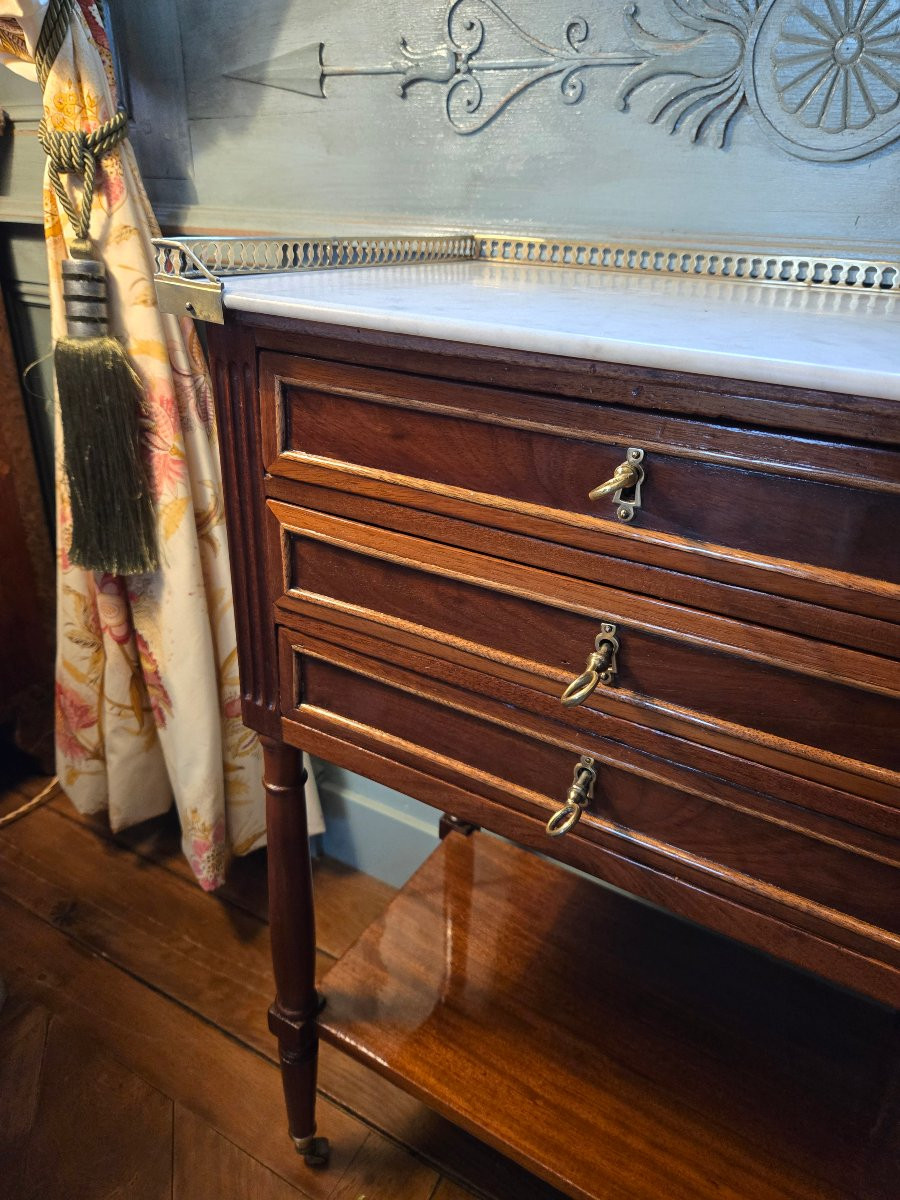
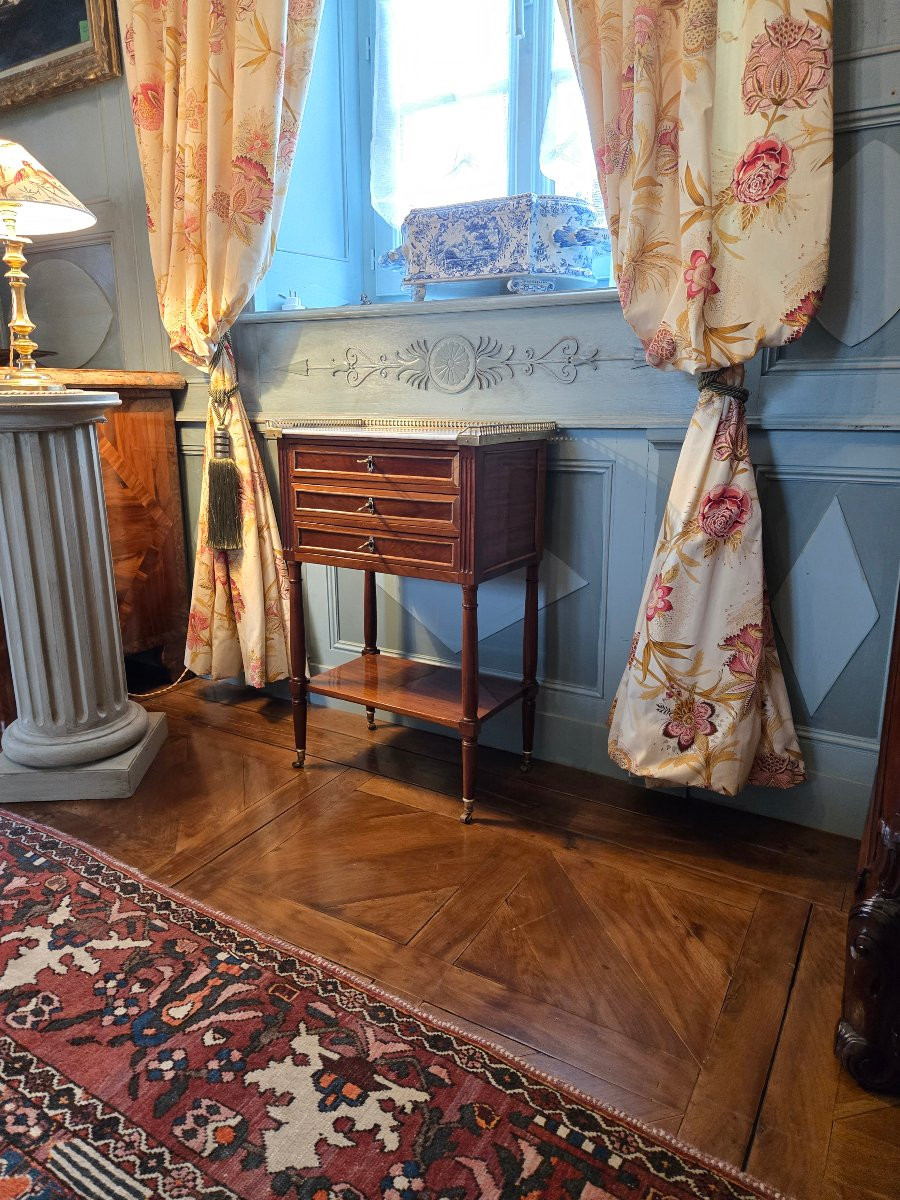
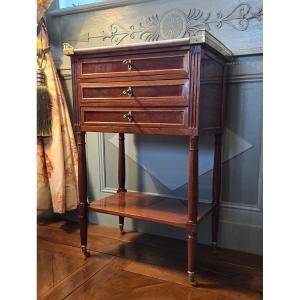


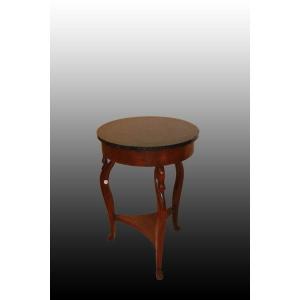
Charming Louis XVI period chiffonniere, made in the last years of the Ancien Régime, in solid mahogany and mahogany veneer, fully illustrating the craze for exotic woods that spread widely in the major European production centers, and particularly in Paris, in the last third of the 18th century.
During this period, mahogany - particularly from the islands, especially Saint-Domingue - became the material of choice for cabinetmakers. Imported from the major Atlantic ports, it was noted for its stability, fine grain and rich colors. Its use became widespread, both in solid wood and in veneer, giving rise to furniture of great sobriety, where the quality of the wood and the correctness of proportions take precedence over more demonstrative ornamentation. Our chiffonier is fully in line with this trend.
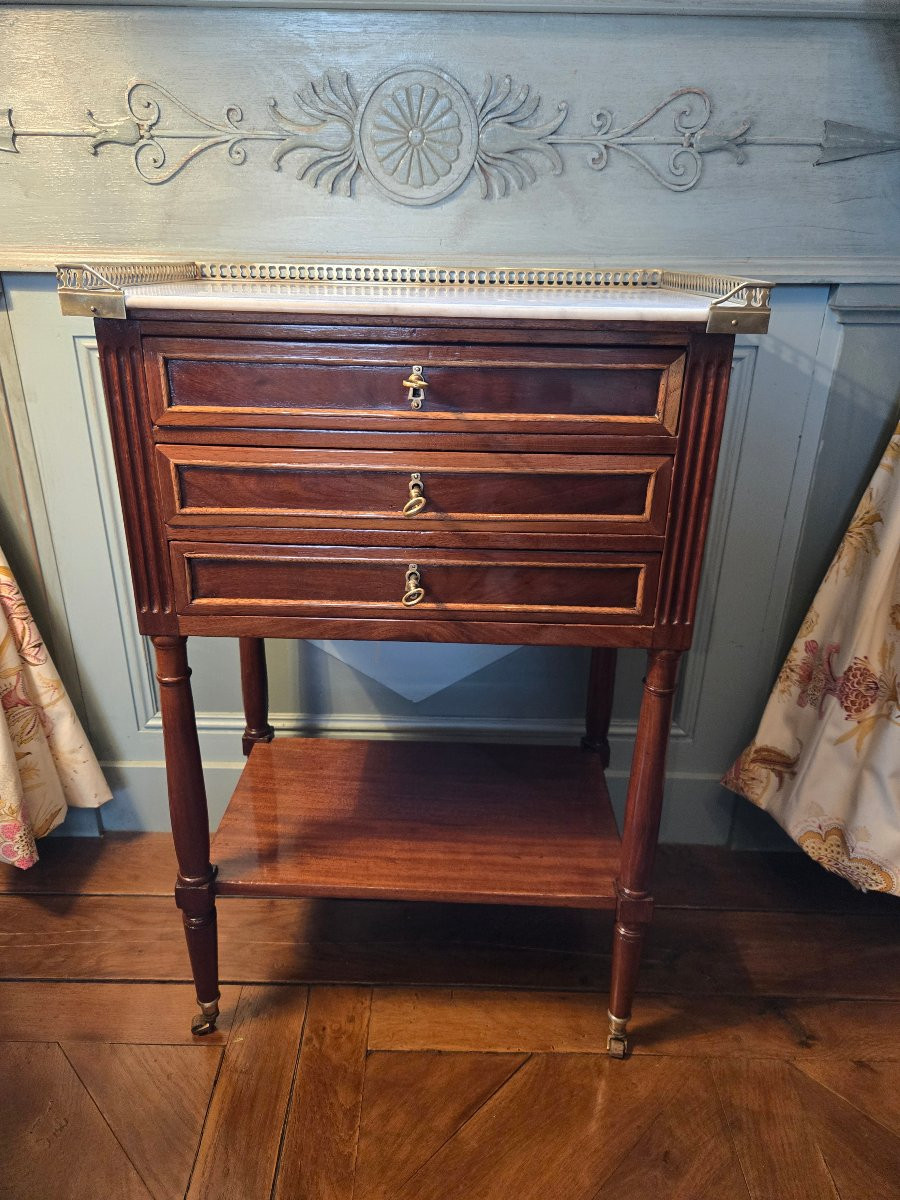
It opens with three drawers on the front, the structure of which is made of oak, as was common practice in 18th-century cabinetmaking. The fronts are veneered in a beautiful mahogany with slight variations in grain. There is a subtle interplay between more evenly grained parts and more animated, burl-like ones, bringing depth and vibration to the surface.
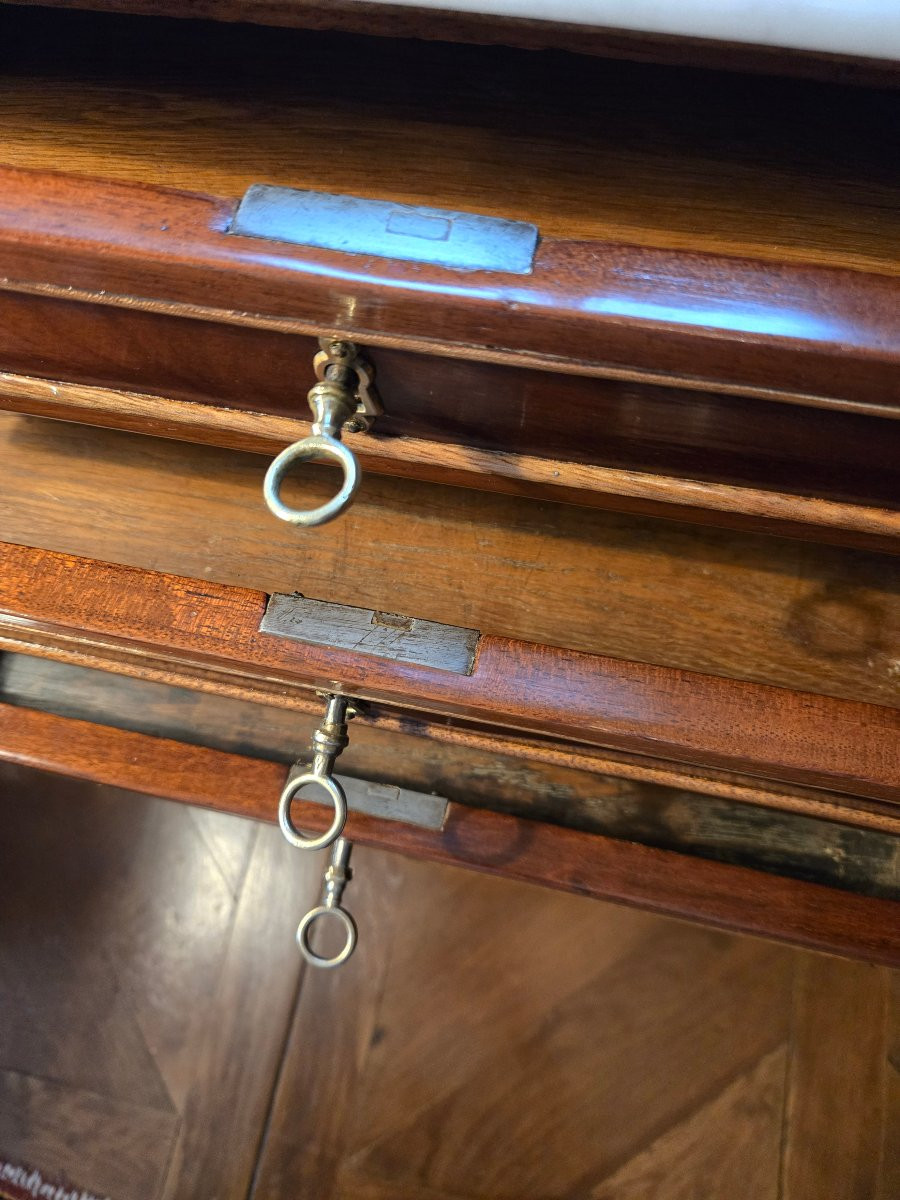
The drawers retain their original iron locks, as well as their brass escutcheons, reduced to simple applied fillets, in perfect keeping with the decorative restraint of the Louis XVI style.
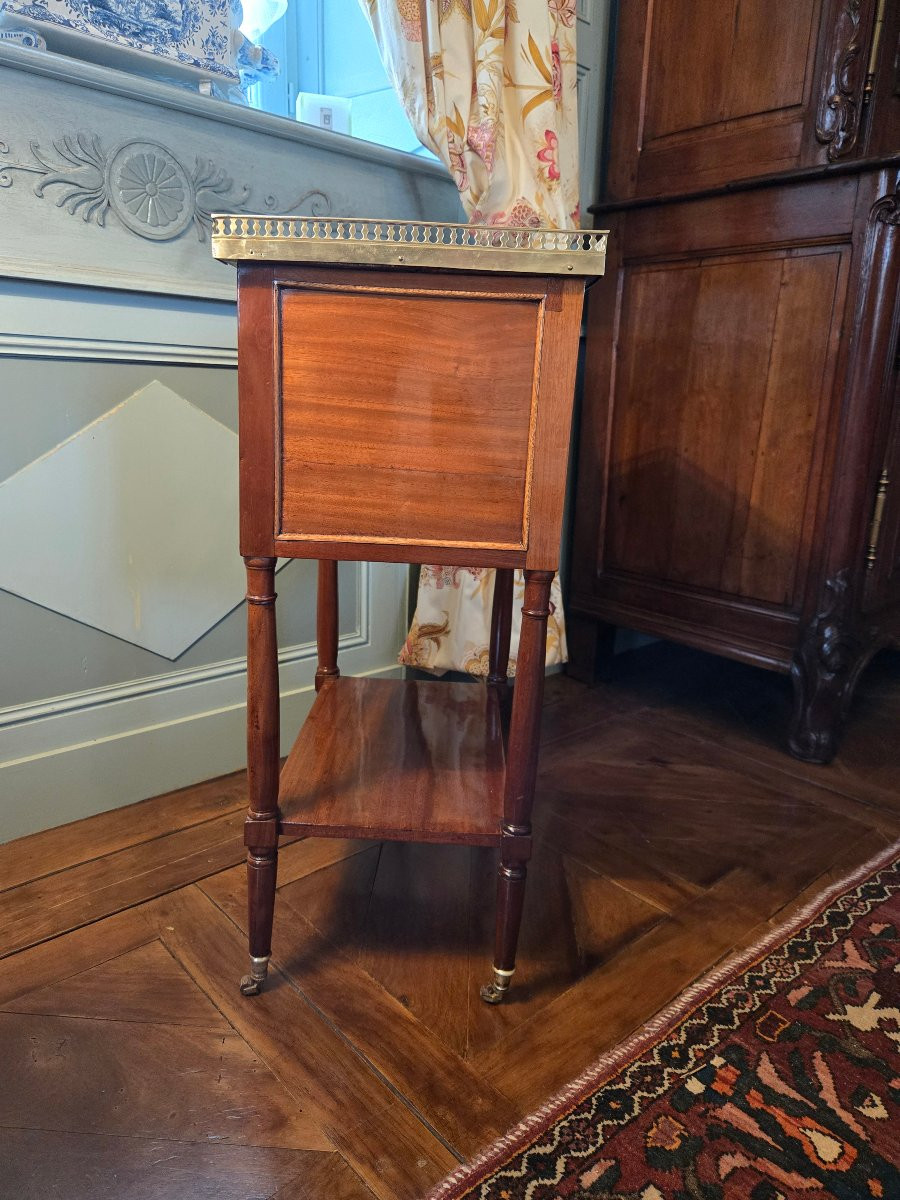
The drawer frames and side panels are highlighted by fine quarter-round baguettes in a lighter wood, providing a discreet, elegant contrast that enlivens the surface without breaking its balance.
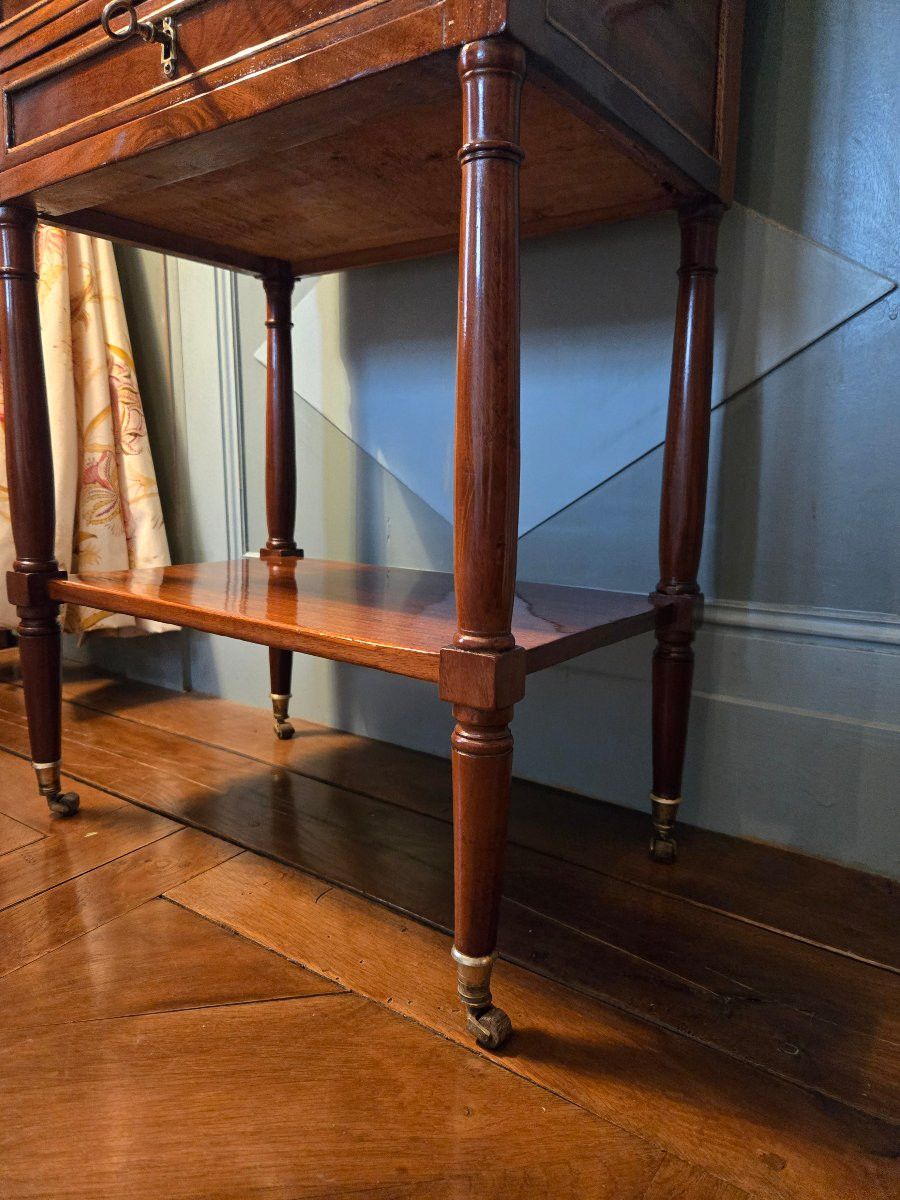
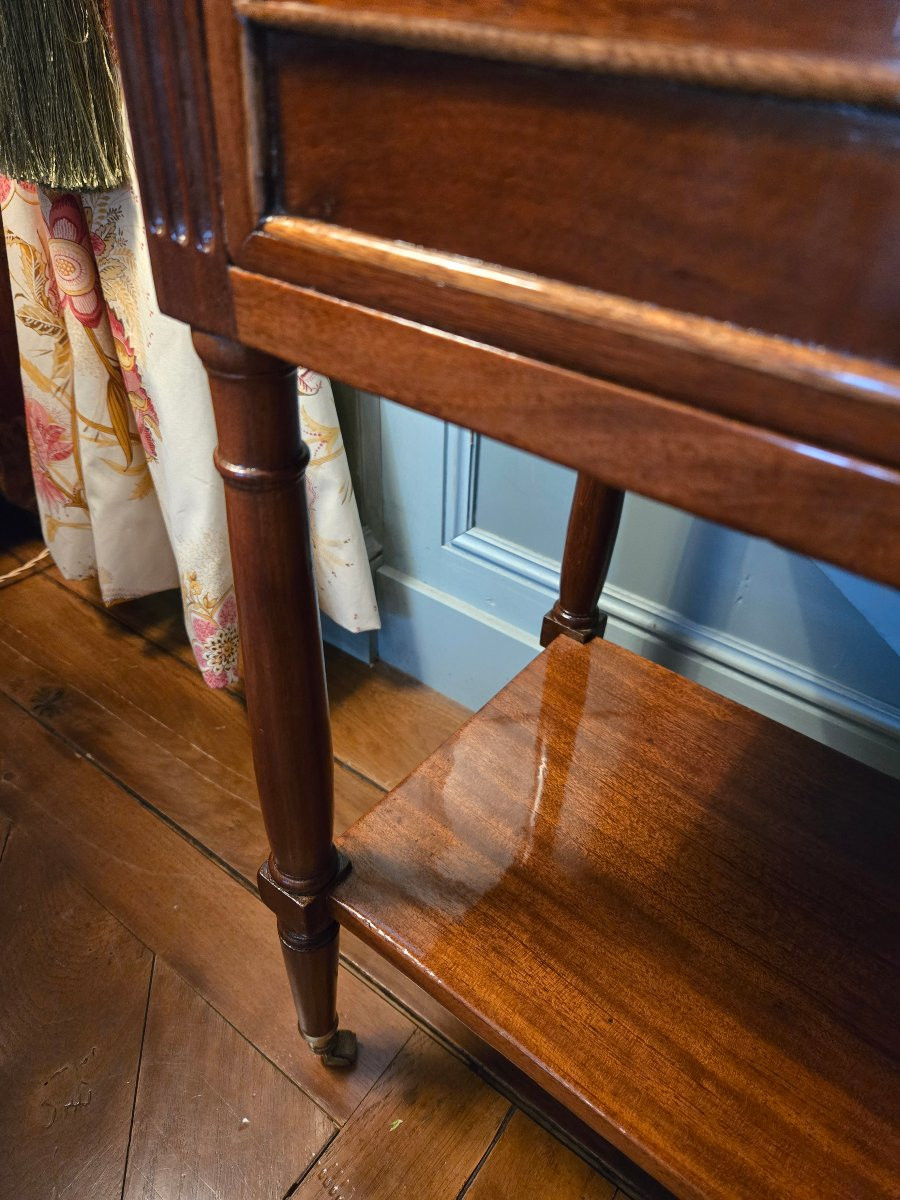
The fluted front jambs are directly inspired by the ornamental vocabulary inherited from Antiquity. They rest on four solid mahogany turned column feet, aptly evoking the Tuscan order. This reference to classical architecture, transposed into the furniture, fully reflects the neoclassical taste that asserted itself in the 1780's.
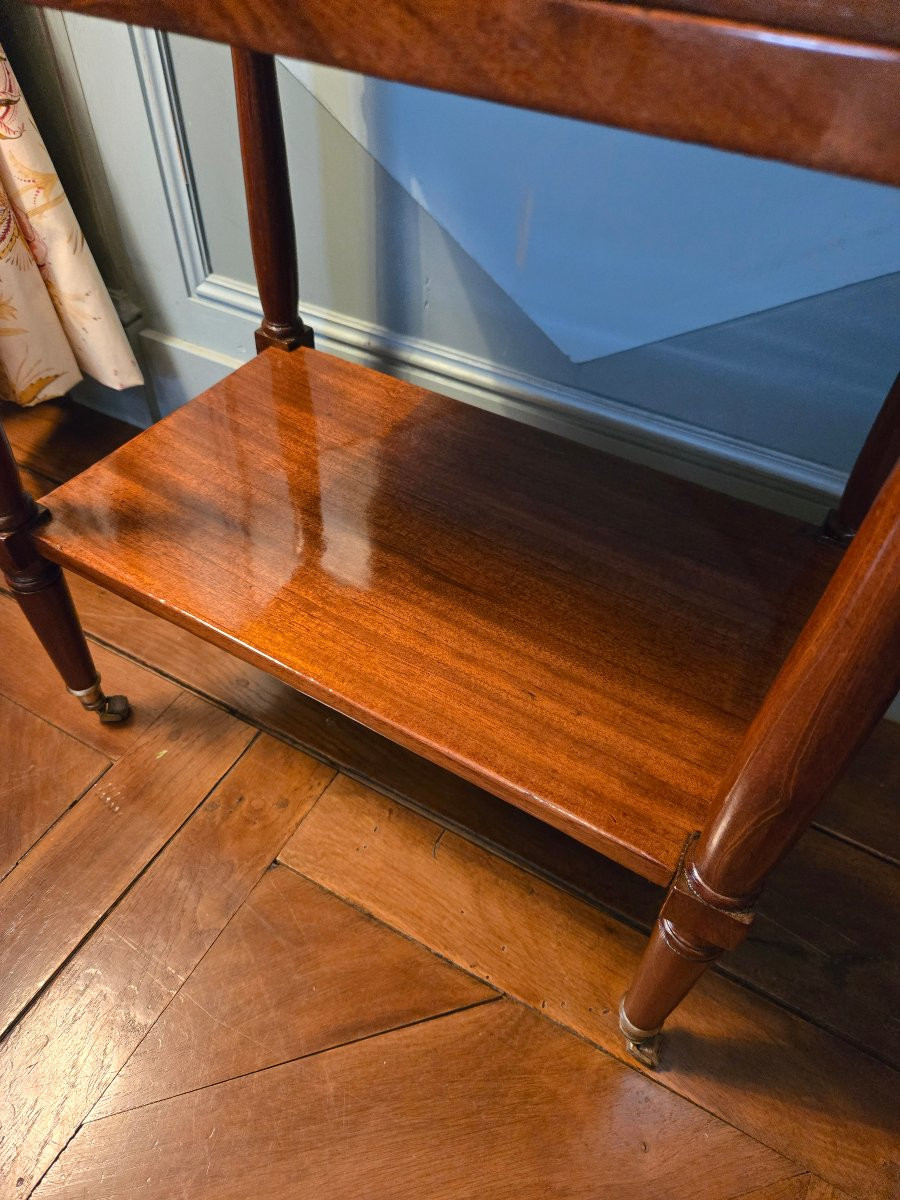
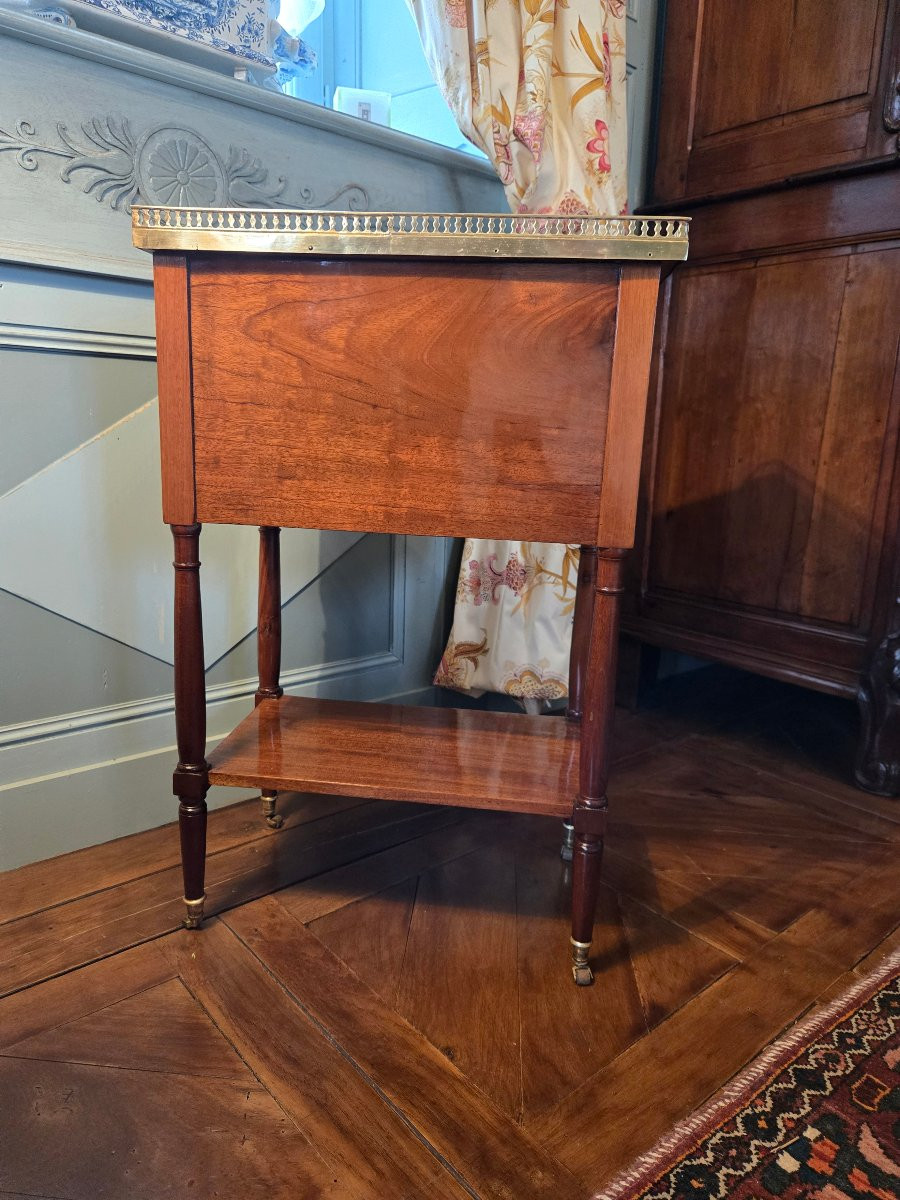
These columns are joined at the bottom by a mahogany veneered spacer shelf, ensuring the stability of the whole while offering an additional surface for use. The legs extend into a tapered form at the bottom, encircled by original bronze hooves, and resting on "barrel" castors, also in bronze, most probably from the period, enabling the furniture to be moved easily.
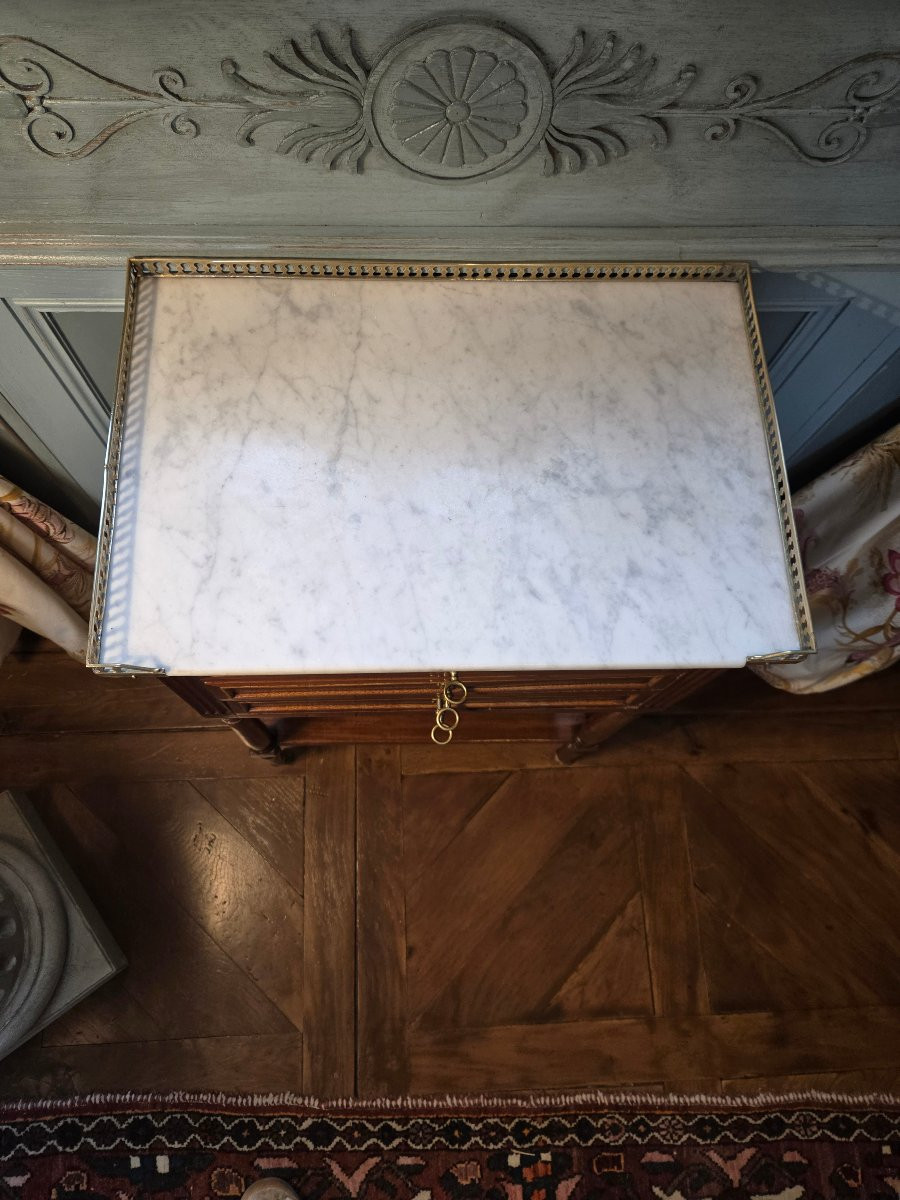
The top is topped with original white marble, encircled by an openwork bronze gallery. This gallery, sober and elegant, shows an old accident visible on a corner, today stabilized, without incidence on the solidity nor on the general harmony of the whole.
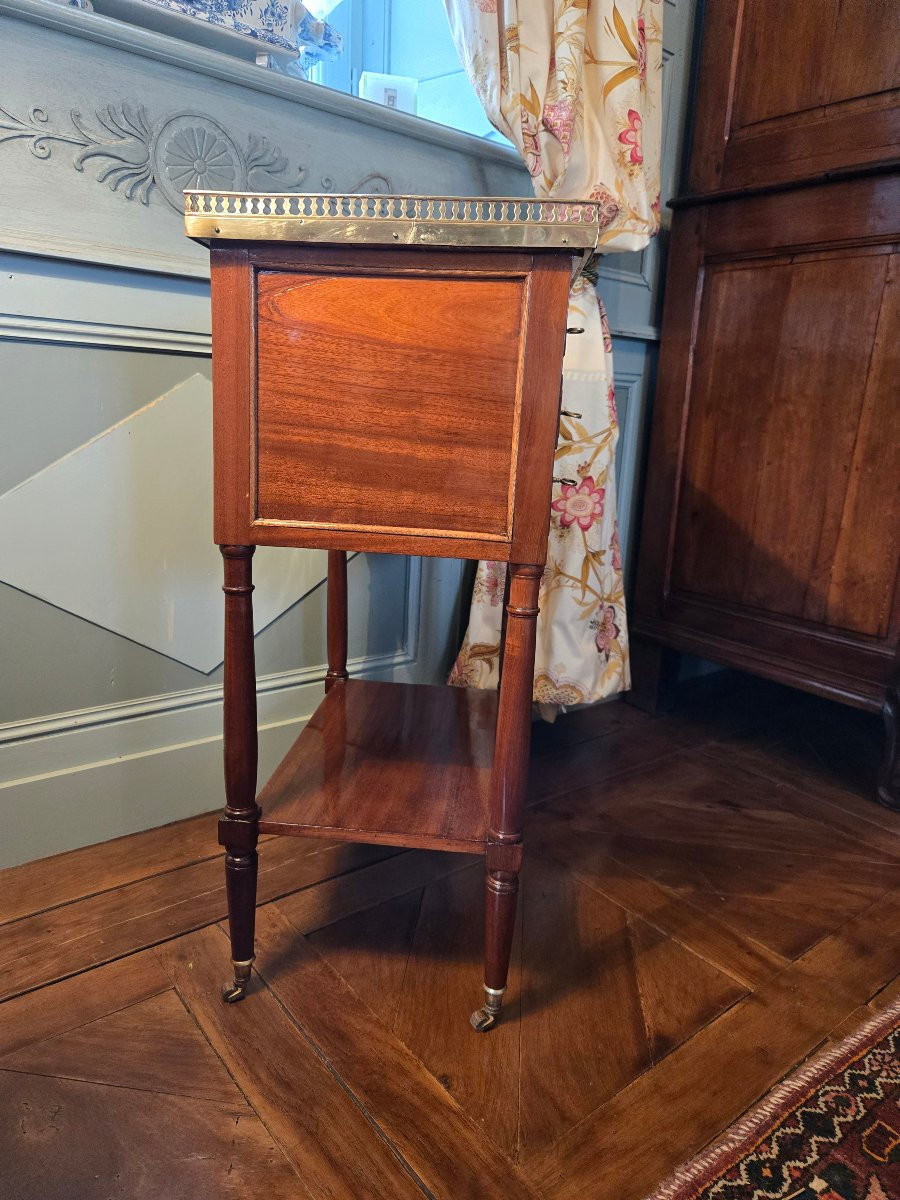
Interestingly, the piece is veneered on all sides, including the back, which features a neat mahogany veneer. This complete finish indicates that this was not simply a piece of furniture intended to be permanently leaned against a wall, but a flying piece of furniture, designed to be moved as and when required. It could be placed in the center of a room, between seats, or moved closer to an armchair or a shepherd's chair.
This type of furniture was perfectly suited to the new lifestyles of the late 18th century: more mobile, freer, where practical yet elegant furniture was sought. The presence of castors confirms this use. The chiffonnière could be used as a small piece of furniture to write on its marble top, place objects or have a snack, while the drawers held papers, accessories or small personal effects.
From a construction point of view, the piece combines solid mahogany for the visible and structural elements - notably the columns - with a white wooden frame for the secondary parts, entirely veneered in mahogany, in line with late 18th-century cabinetmaking practices.
The ensemble is in an excellent state of preservation. It has been respectfully cleaned and re-varnished, highlighting the beautiful patina of the mahogany, with its deep, nuanced tones.
Through the quality of its materials, the finesse of its details and the accuracy of its decorative vocabulary, this chiffonniere is a representative testimony to Louis XVI mahogany production of the years 1785-1790.
Dimensions:
Height: 75.5 cm
Width: 48 cm
Depth: 32.5 cm
During this period, mahogany - particularly from the islands, especially Saint-Domingue - became the material of choice for cabinetmakers. Imported from the major Atlantic ports, it was noted for its stability, fine grain and rich colors. Its use became widespread, both in solid wood and in veneer, giving rise to furniture of great sobriety, where the quality of the wood and the correctness of proportions take precedence over more demonstrative ornamentation. Our chiffonier is fully in line with this trend.
It opens with three drawers on the front, the structure of which is made of oak, as was common practice in 18th-century cabinetmaking. The fronts are veneered in a beautiful mahogany with slight variations in grain. There is a subtle interplay between more evenly grained parts and more animated, burl-like ones, bringing depth and vibration to the surface.
The drawers retain their original iron locks, as well as their brass escutcheons, reduced to simple applied fillets, in perfect keeping with the decorative restraint of the Louis XVI style.
The drawer frames and side panels are highlighted by fine quarter-round baguettes in a lighter wood, providing a discreet, elegant contrast that enlivens the surface without breaking its balance.
The fluted front jambs are directly inspired by the ornamental vocabulary inherited from Antiquity. They rest on four solid mahogany turned column feet, aptly evoking the Tuscan order. This reference to classical architecture, transposed into the furniture, fully reflects the neoclassical taste that asserted itself in the 1780's.
These columns are joined at the bottom by a mahogany veneered spacer shelf, ensuring the stability of the whole while offering an additional surface for use. The legs extend into a tapered form at the bottom, encircled by original bronze hooves, and resting on "barrel" castors, also in bronze, most probably from the period, enabling the furniture to be moved easily.
The top is topped with original white marble, encircled by an openwork bronze gallery. This gallery, sober and elegant, shows an old accident visible on a corner, today stabilized, without incidence on the solidity nor on the general harmony of the whole.
Interestingly, the piece is veneered on all sides, including the back, which features a neat mahogany veneer. This complete finish indicates that this was not simply a piece of furniture intended to be permanently leaned against a wall, but a flying piece of furniture, designed to be moved as and when required. It could be placed in the center of a room, between seats, or moved closer to an armchair or a shepherd's chair.
This type of furniture was perfectly suited to the new lifestyles of the late 18th century: more mobile, freer, where practical yet elegant furniture was sought. The presence of castors confirms this use. The chiffonnière could be used as a small piece of furniture to write on its marble top, place objects or have a snack, while the drawers held papers, accessories or small personal effects.
From a construction point of view, the piece combines solid mahogany for the visible and structural elements - notably the columns - with a white wooden frame for the secondary parts, entirely veneered in mahogany, in line with late 18th-century cabinetmaking practices.
The ensemble is in an excellent state of preservation. It has been respectfully cleaned and re-varnished, highlighting the beautiful patina of the mahogany, with its deep, nuanced tones.
Through the quality of its materials, the finesse of its details and the accuracy of its decorative vocabulary, this chiffonniere is a representative testimony to Louis XVI mahogany production of the years 1785-1790.
Dimensions:
Height: 75.5 cm
Width: 48 cm
Depth: 32.5 cm
Explore similar pieces and discover your ideal find:
Side Tables