



Polychrome Embossed Leather
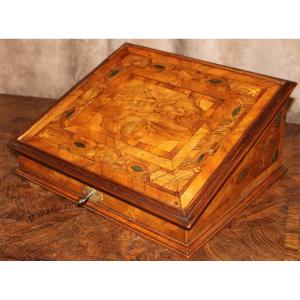
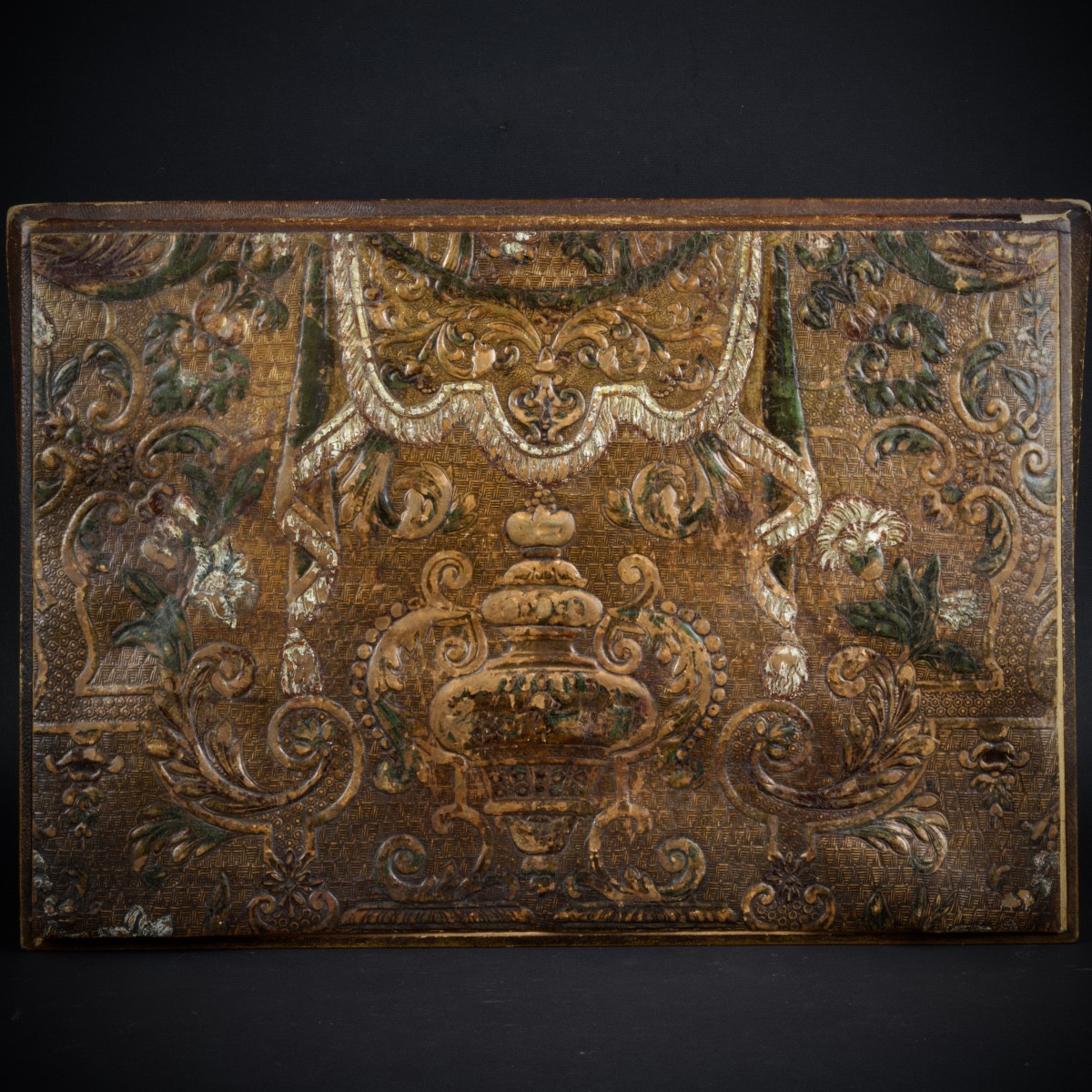
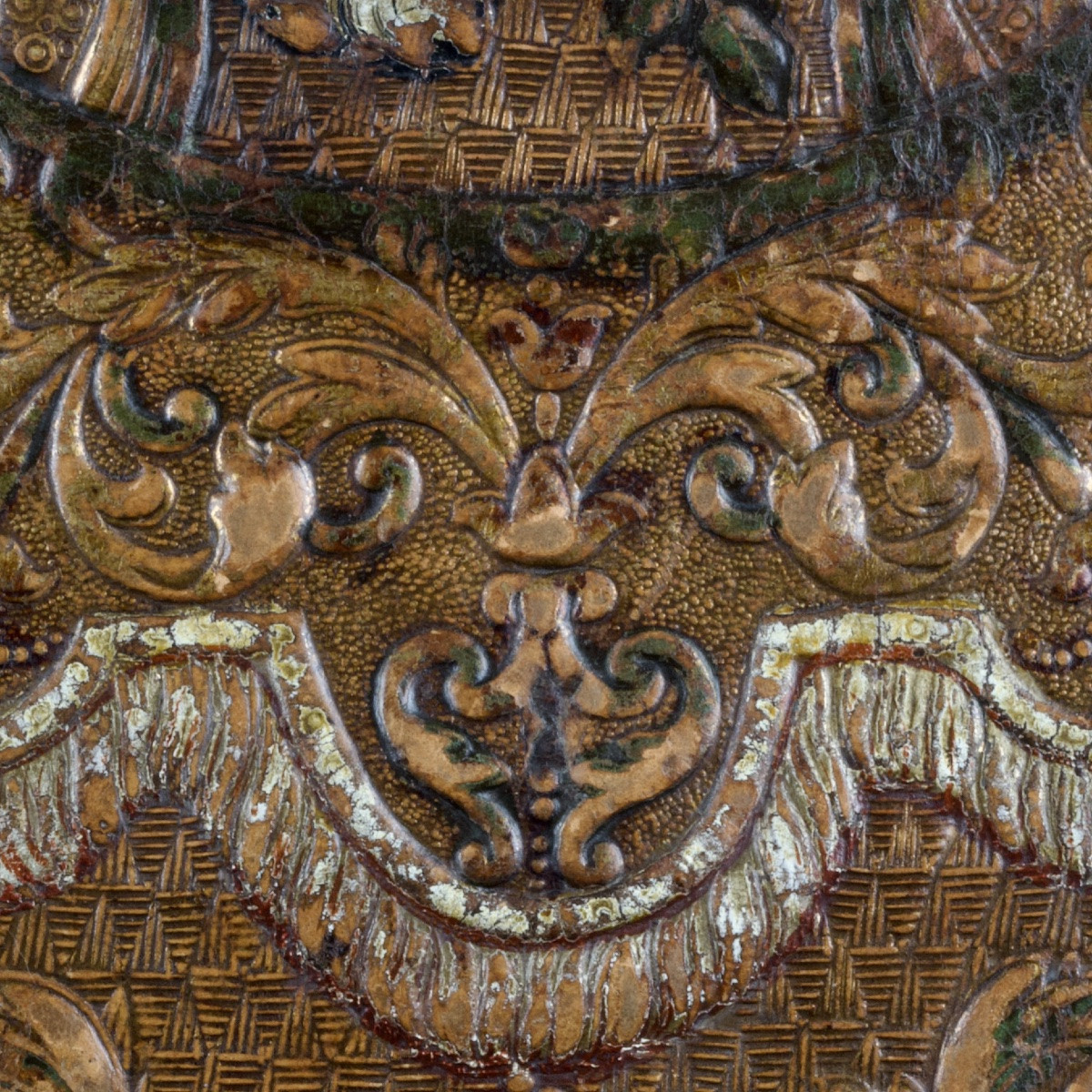
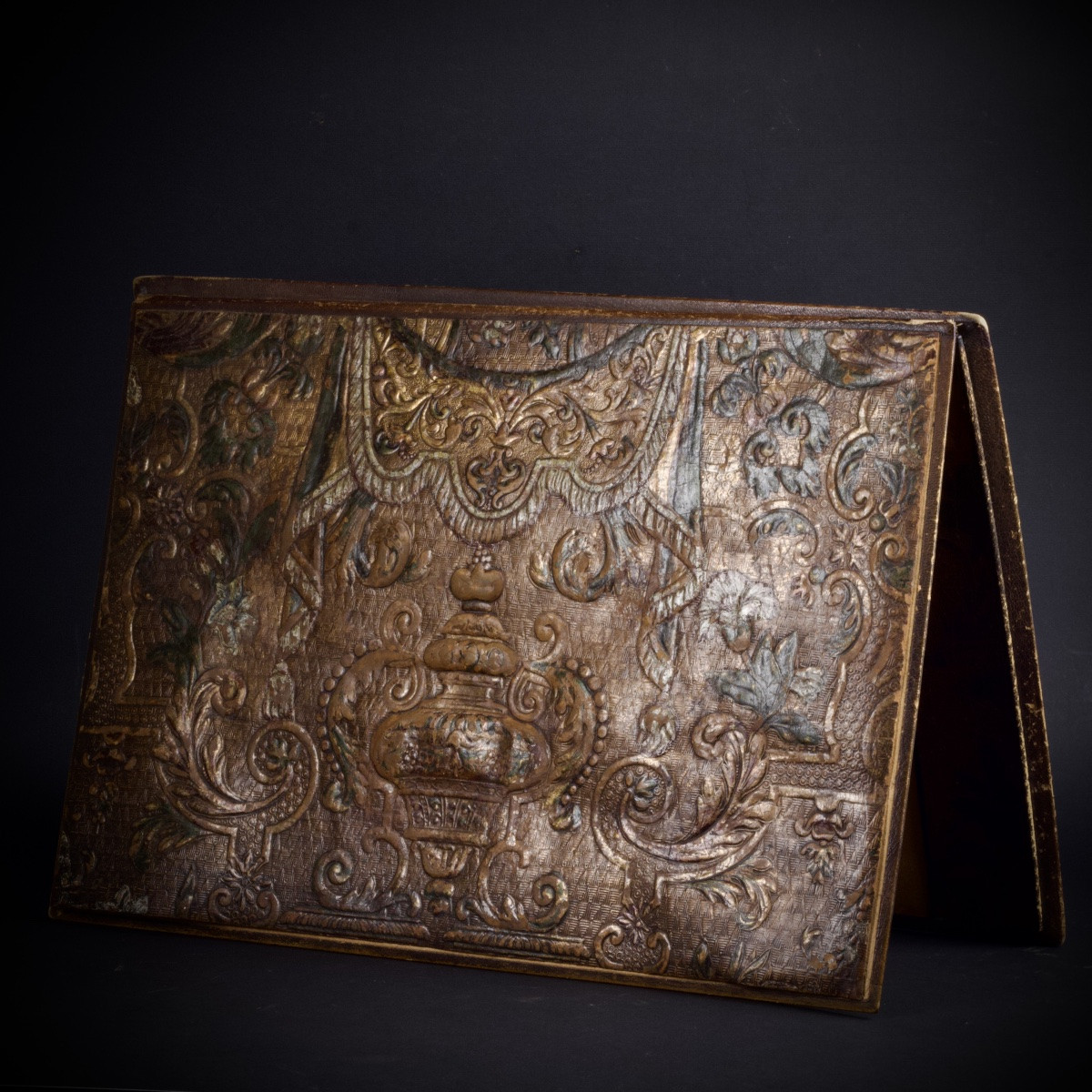
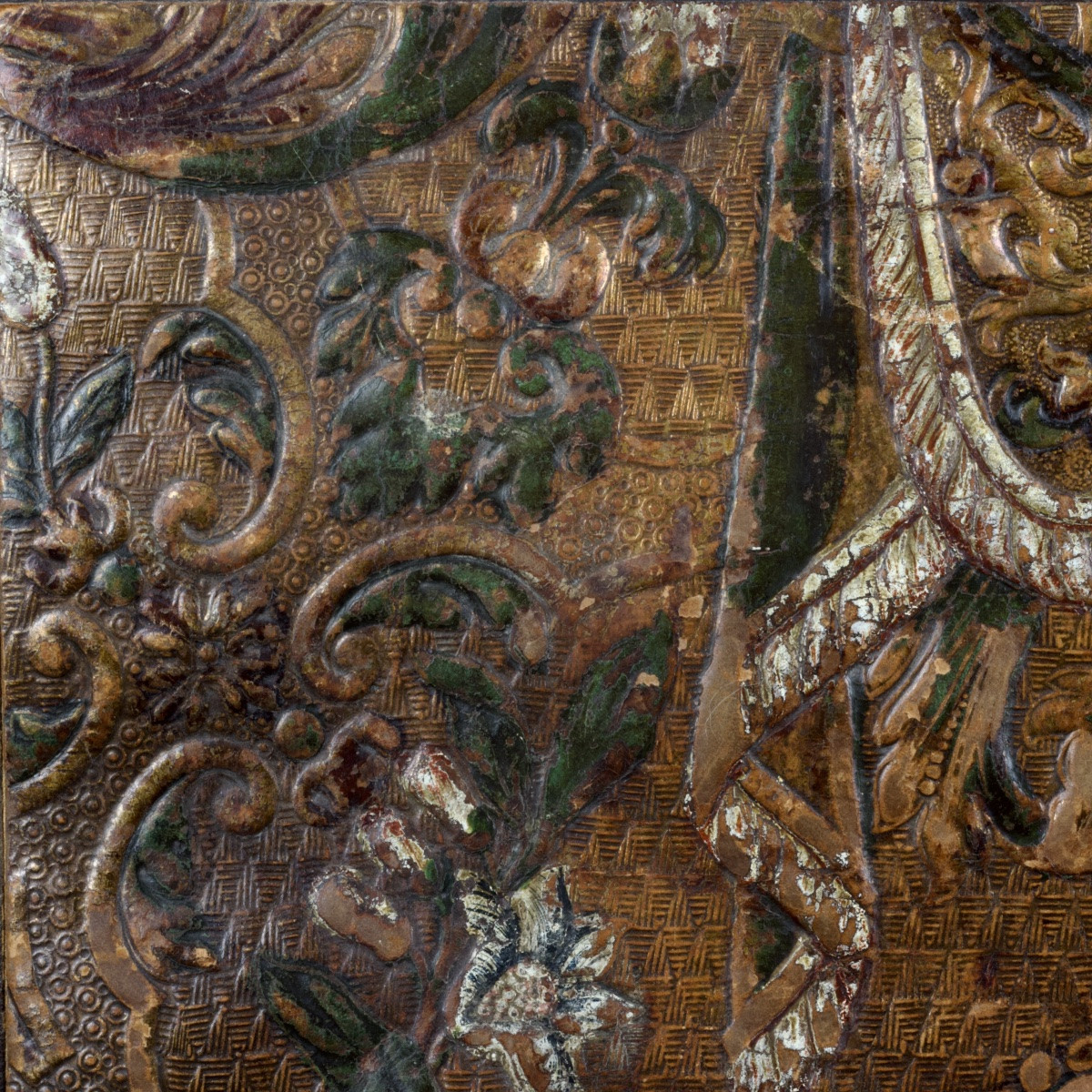
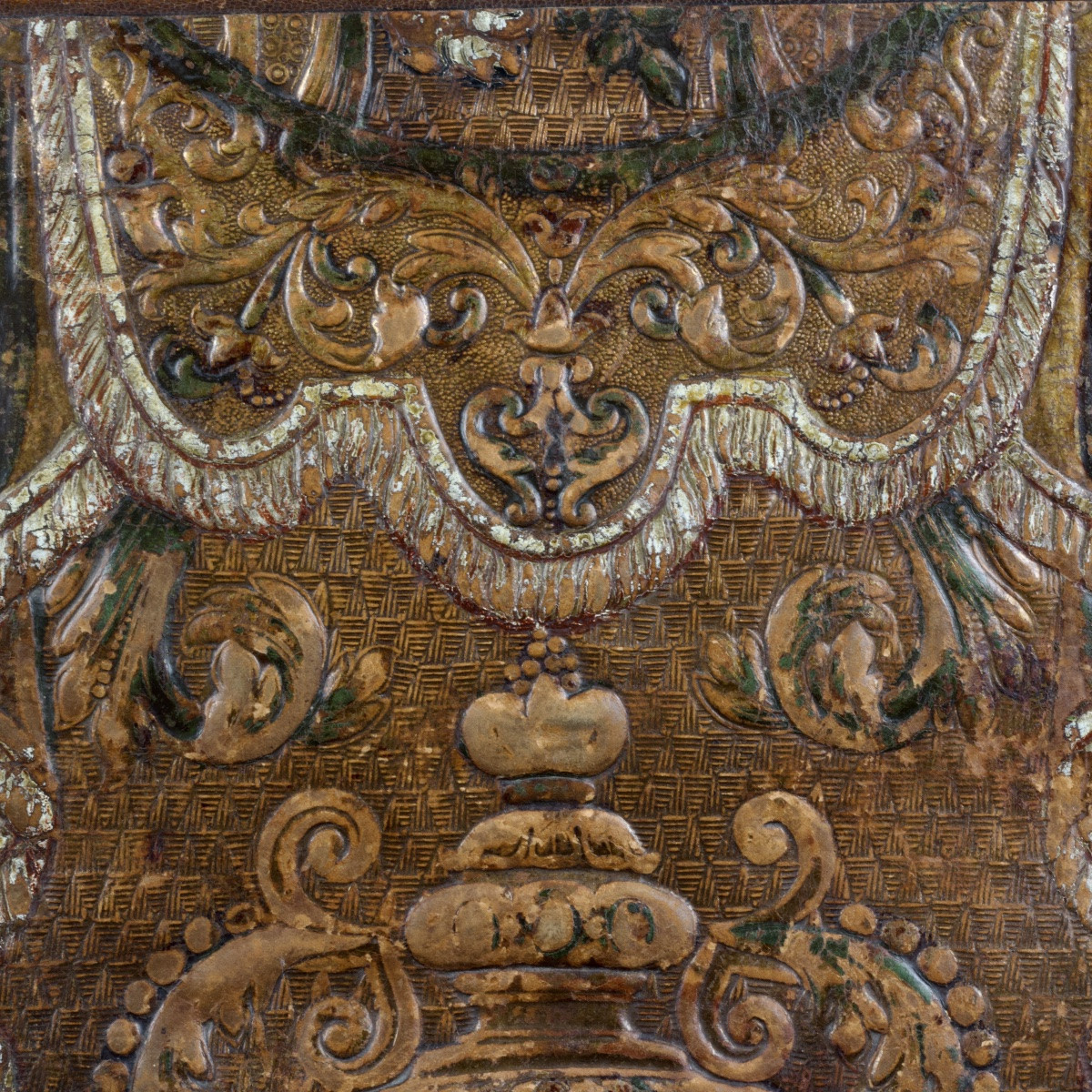
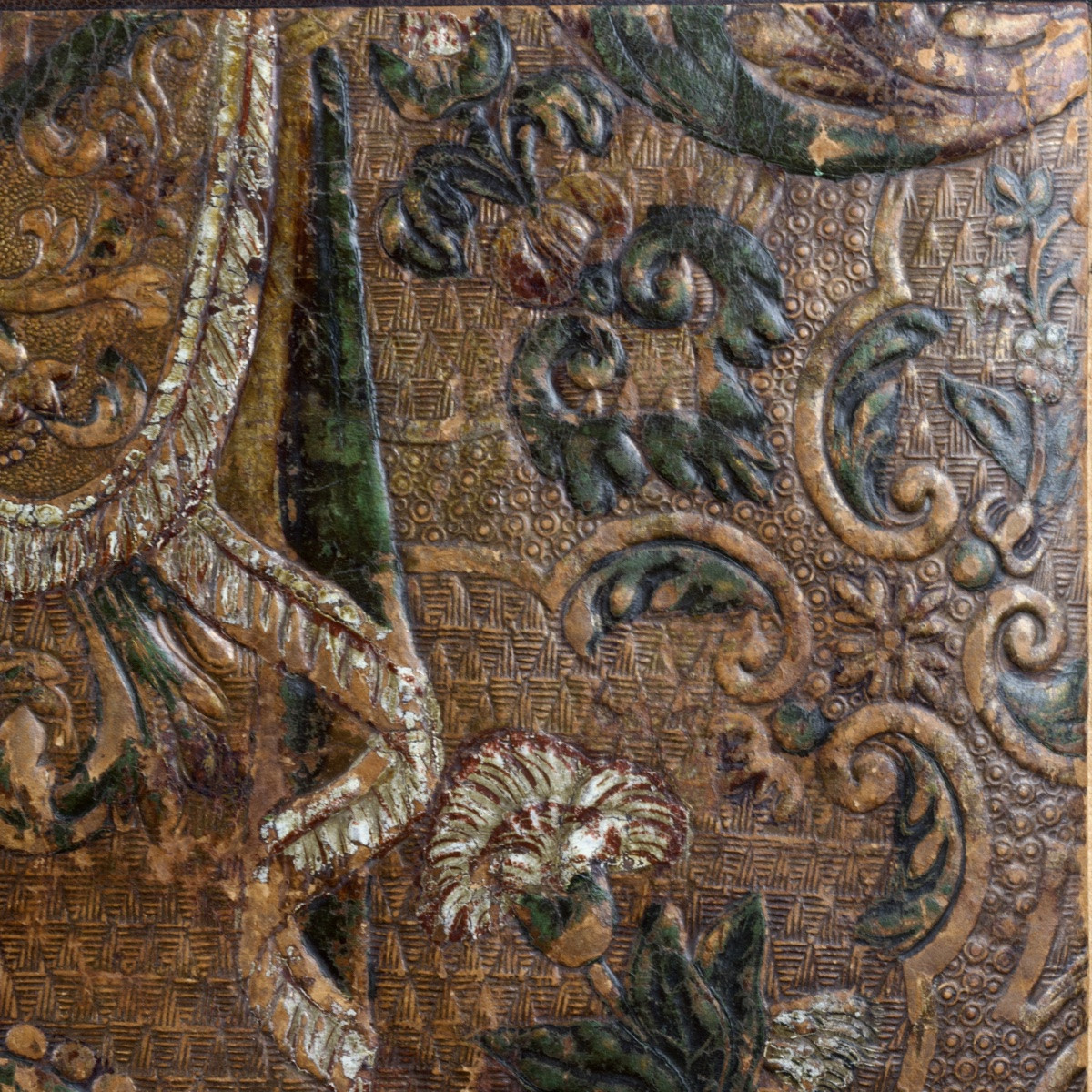
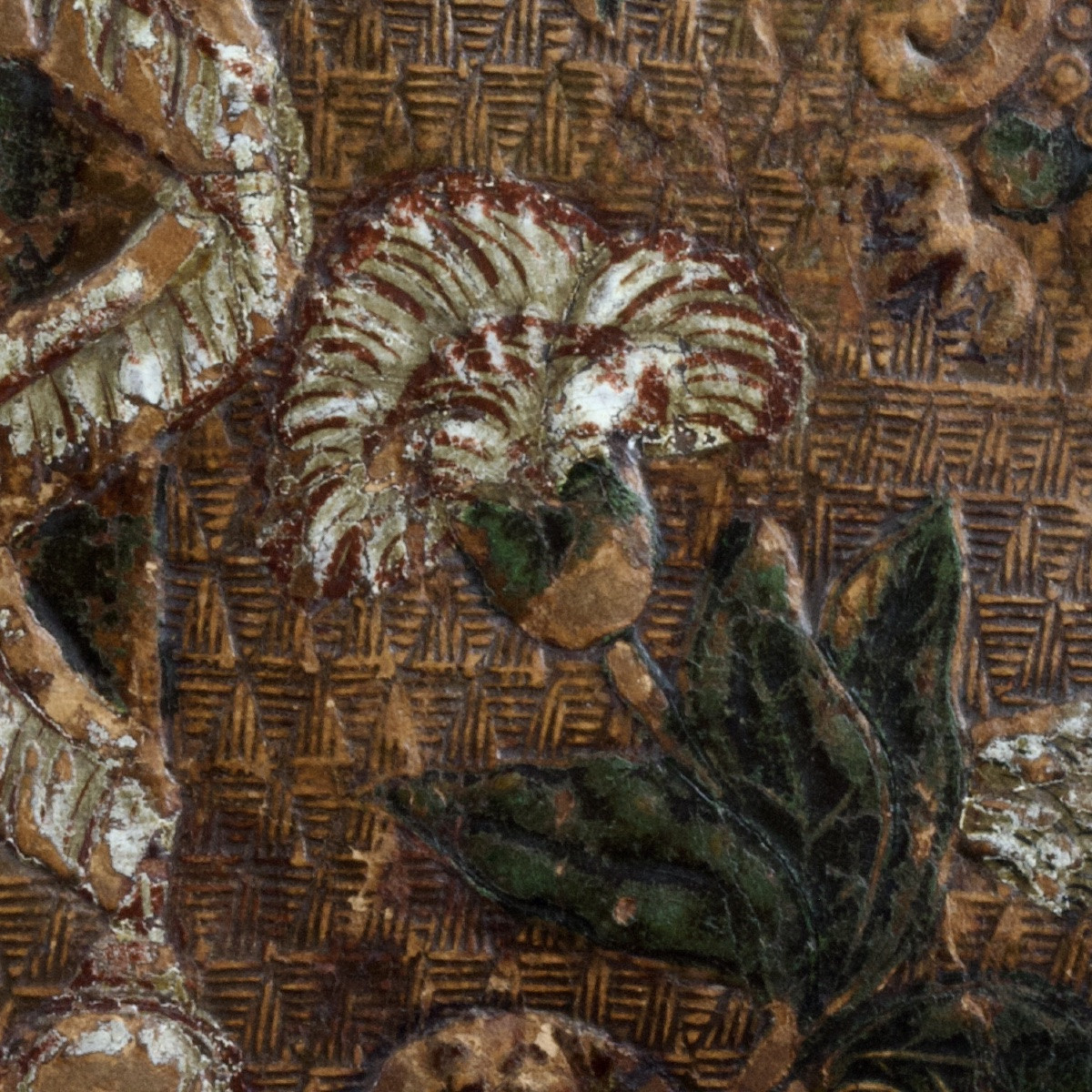
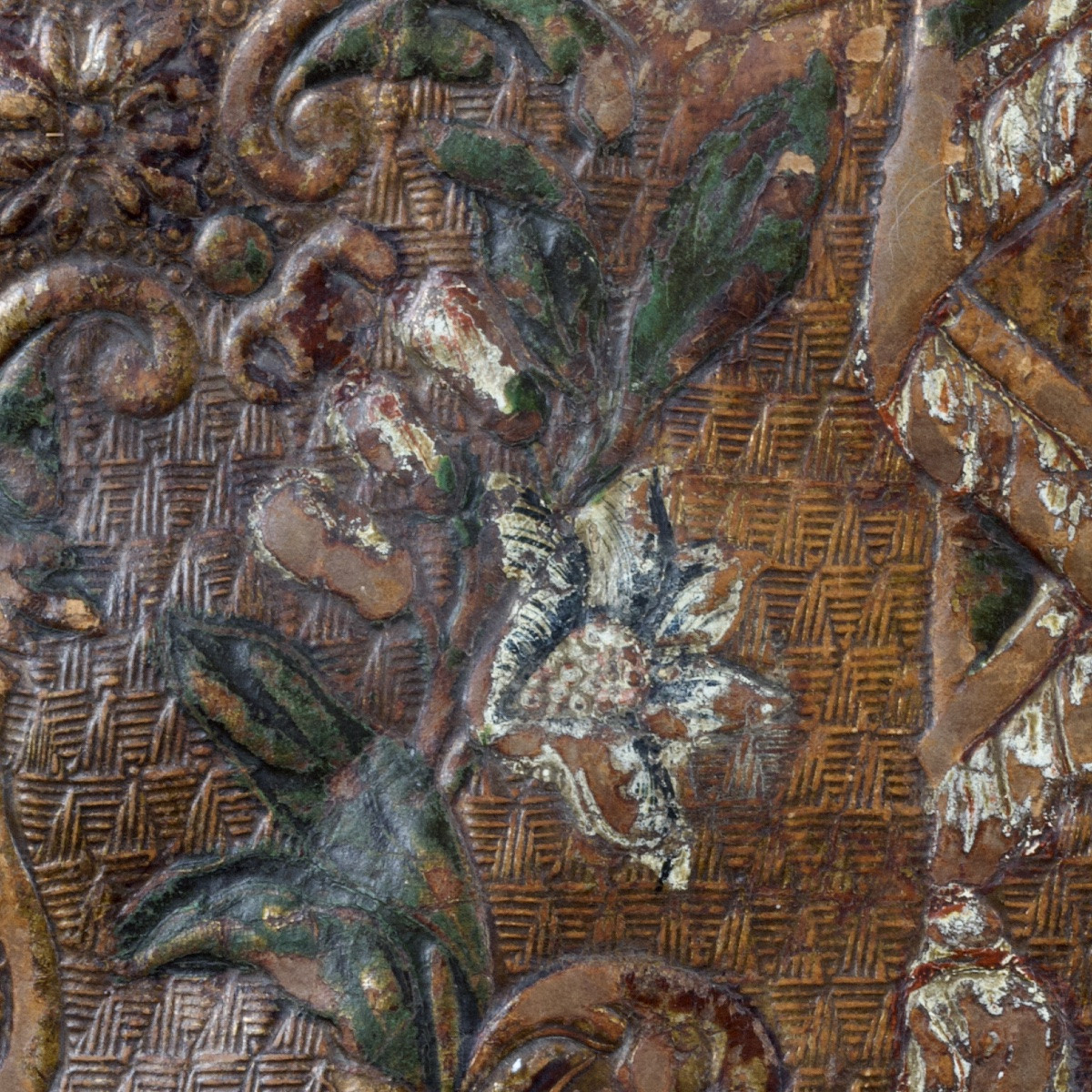
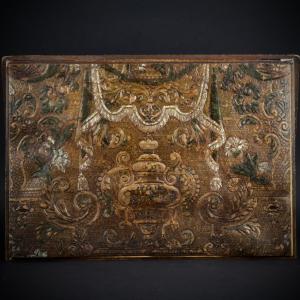
Polychrome embossed leather panel decorated with a pearl-ear urn under a richly ornate lambrequin, flanked by foliate scrolls and floral motifs on a die-cut lattice background, in the spirit of the productions of French ornamentalist Daniel Marot (1661?-1752).
Protestant, he was forced into exile in the United Provinces following the revocation of the Edict of Nantes, and entered the service of the Stathouder, notably William III of Orange, whose palaces and gardens he was responsible for harmonizing, including in England when William and Mary II Stuart acceded to the throne (1688 - Hampton Court, Kensington Palace).
Returning to the Netherlands in 1697, in the service of the local Stathouders and the upper middle classes of The Hague and Amesterdam, his work engraved between 1703 and 1712 had a definite impact on the work of local ornamentalists and in particular on the workshops that produced these leathers, which were counted as the most skilled in Europe (it was in The Hague, in 1628, that the technique of repoussé-worked leather was invented) ; the kinship between the ornamental vocabulary of the engravings and the leathers of the early 18th century is obvious, and our copy is a testimony to this.
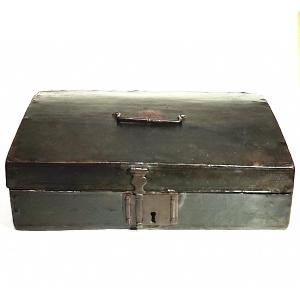
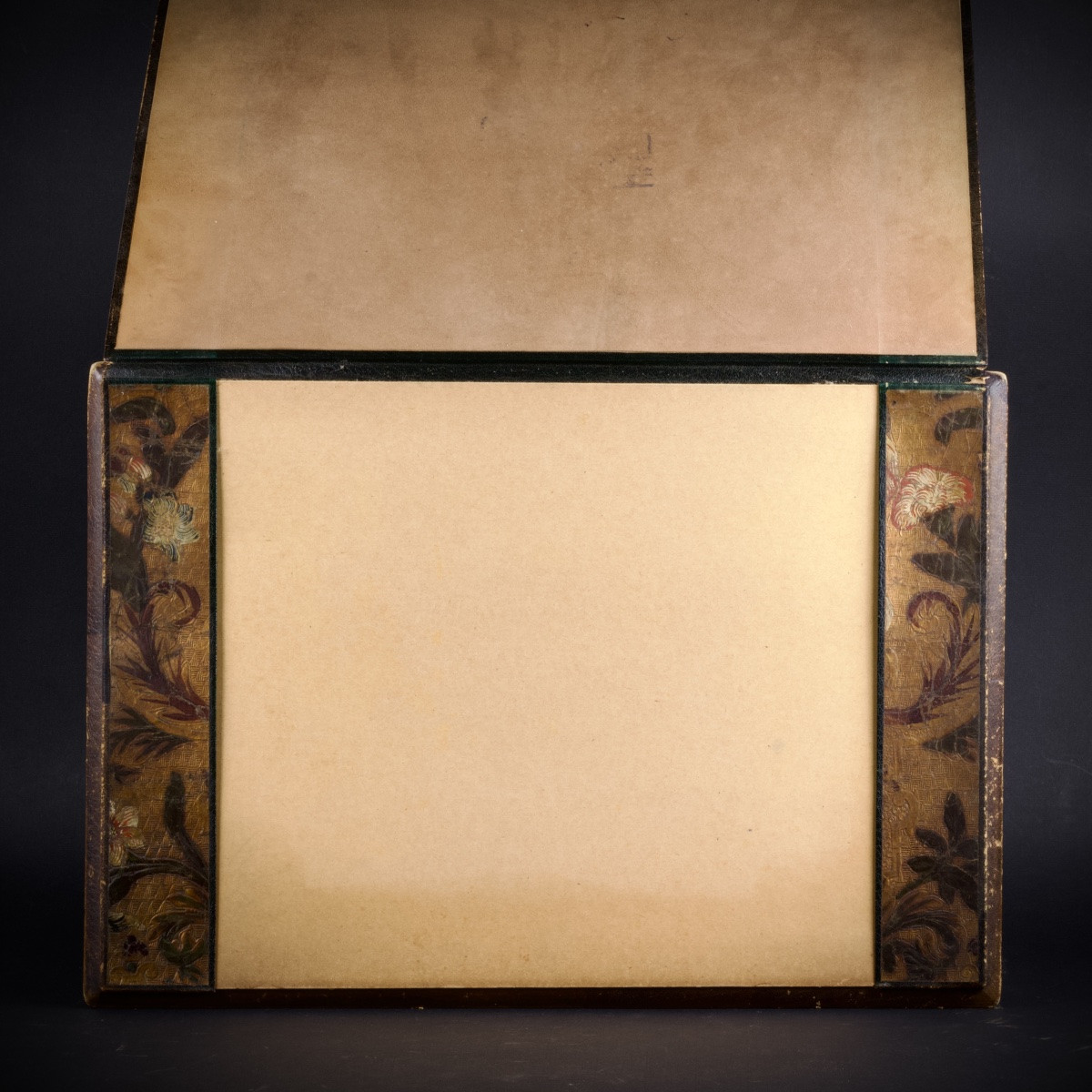
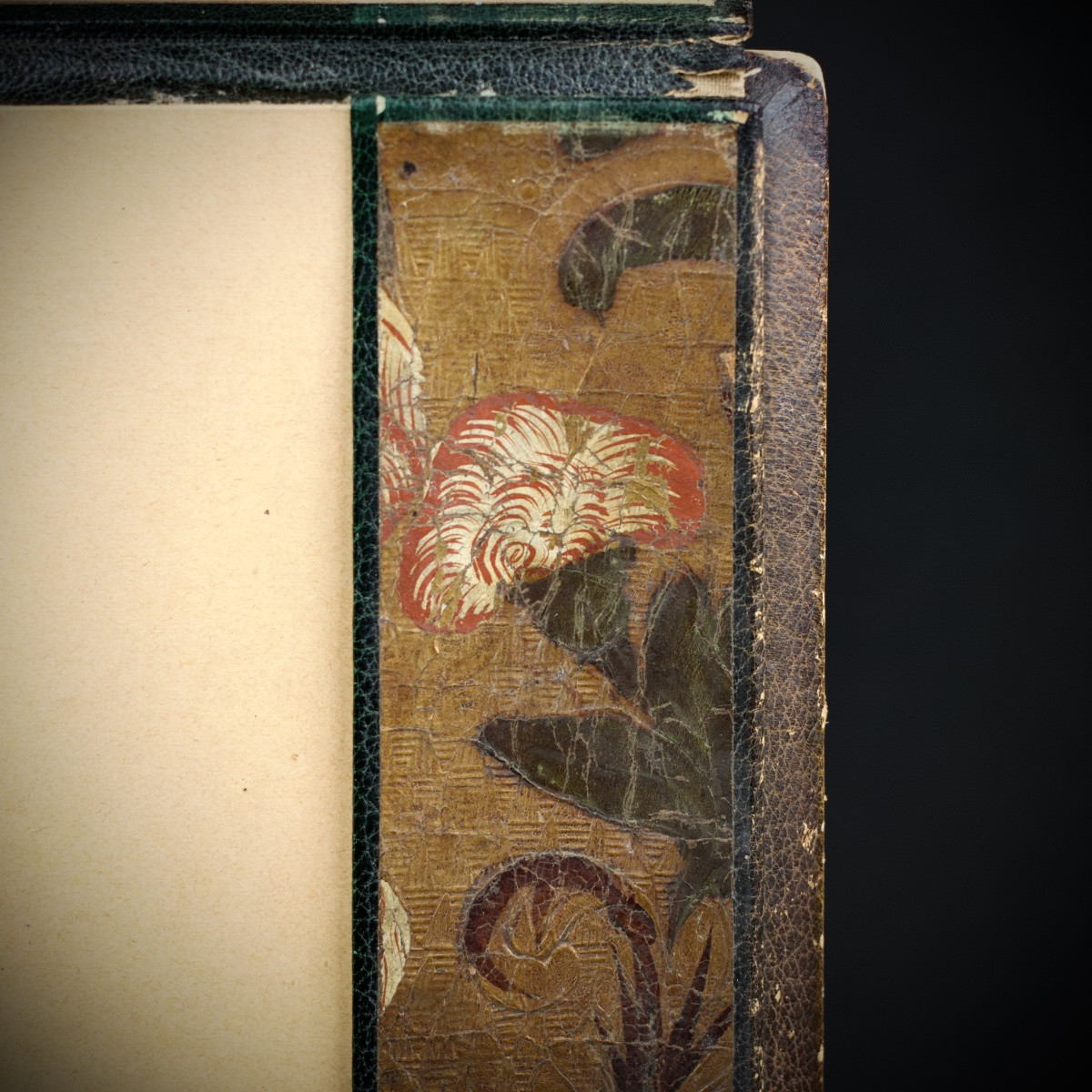
The leather was mounted as a blotter in the twentieth century, but it can just as easily be unmounted and framed on its own. Inside are two small strips of embossed and polychrome leather from a fragment of the same origin and period.
Some missing polychromy as documented in the photographs.
Protestant, he was forced into exile in the United Provinces following the revocation of the Edict of Nantes, and entered the service of the Stathouder, notably William III of Orange, whose palaces and gardens he was responsible for harmonizing, including in England when William and Mary II Stuart acceded to the throne (1688 - Hampton Court, Kensington Palace).
Returning to the Netherlands in 1697, in the service of the local Stathouders and the upper middle classes of The Hague and Amesterdam, his work engraved between 1703 and 1712 had a definite impact on the work of local ornamentalists and in particular on the workshops that produced these leathers, which were counted as the most skilled in Europe (it was in The Hague, in 1628, that the technique of repoussé-worked leather was invented) ; the kinship between the ornamental vocabulary of the engravings and the leathers of the early 18th century is obvious, and our copy is a testimony to this.
The leather was mounted as a blotter in the twentieth century, but it can just as easily be unmounted and framed on its own. Inside are two small strips of embossed and polychrome leather from a fragment of the same origin and period.
Some missing polychromy as documented in the photographs.
280 €
Period: 18th century
Style: Louis 14th, Regency
Condition: Some scratches and chips
Material: Leather
Length: 50 cm
Height: 37 cm
Reference (ID): 1734255
Availability: In stock
Print