




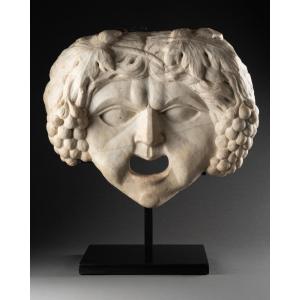


Mascaron Representing Bacchus - Marble - Italy - 16th Century
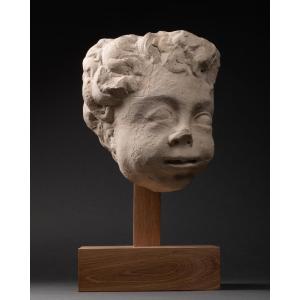
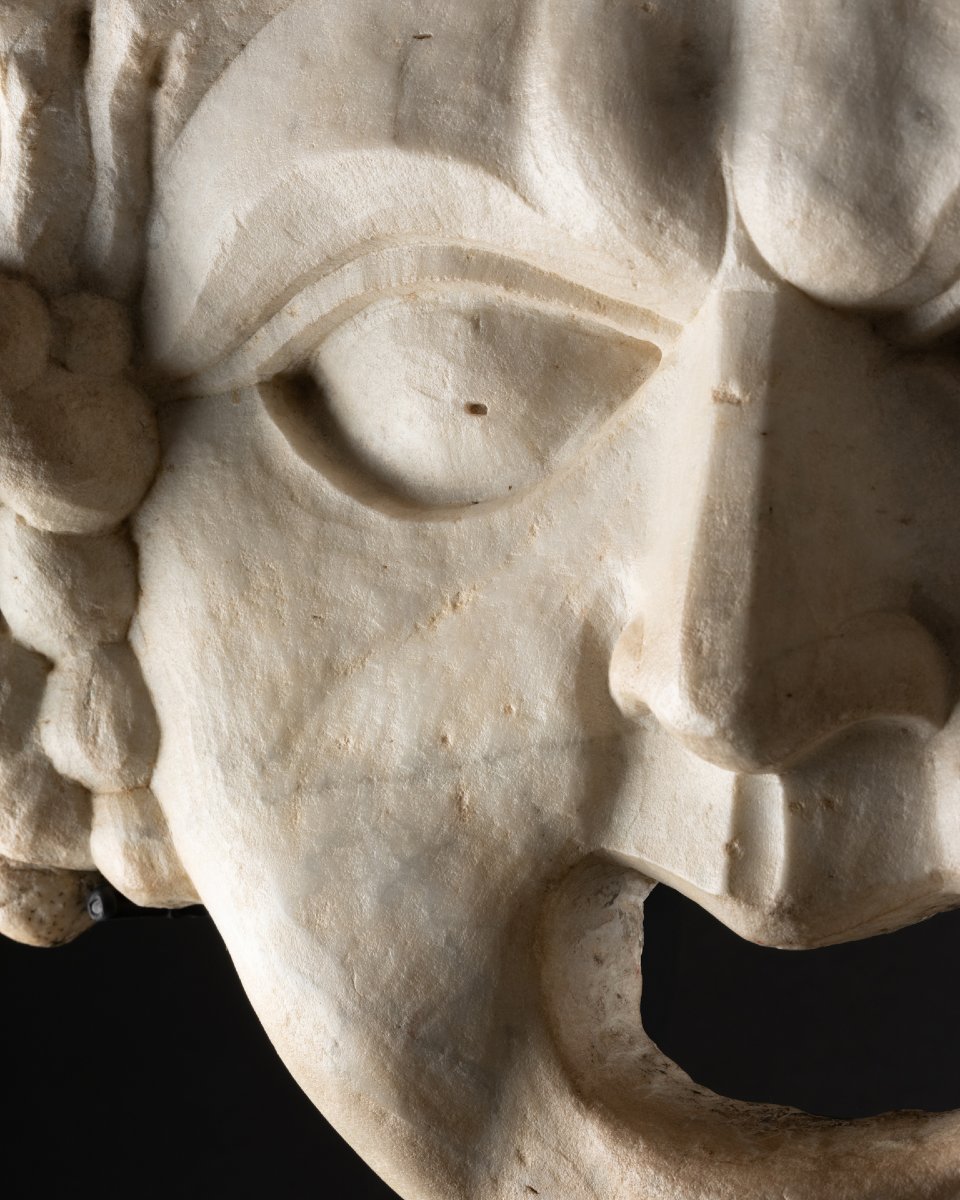
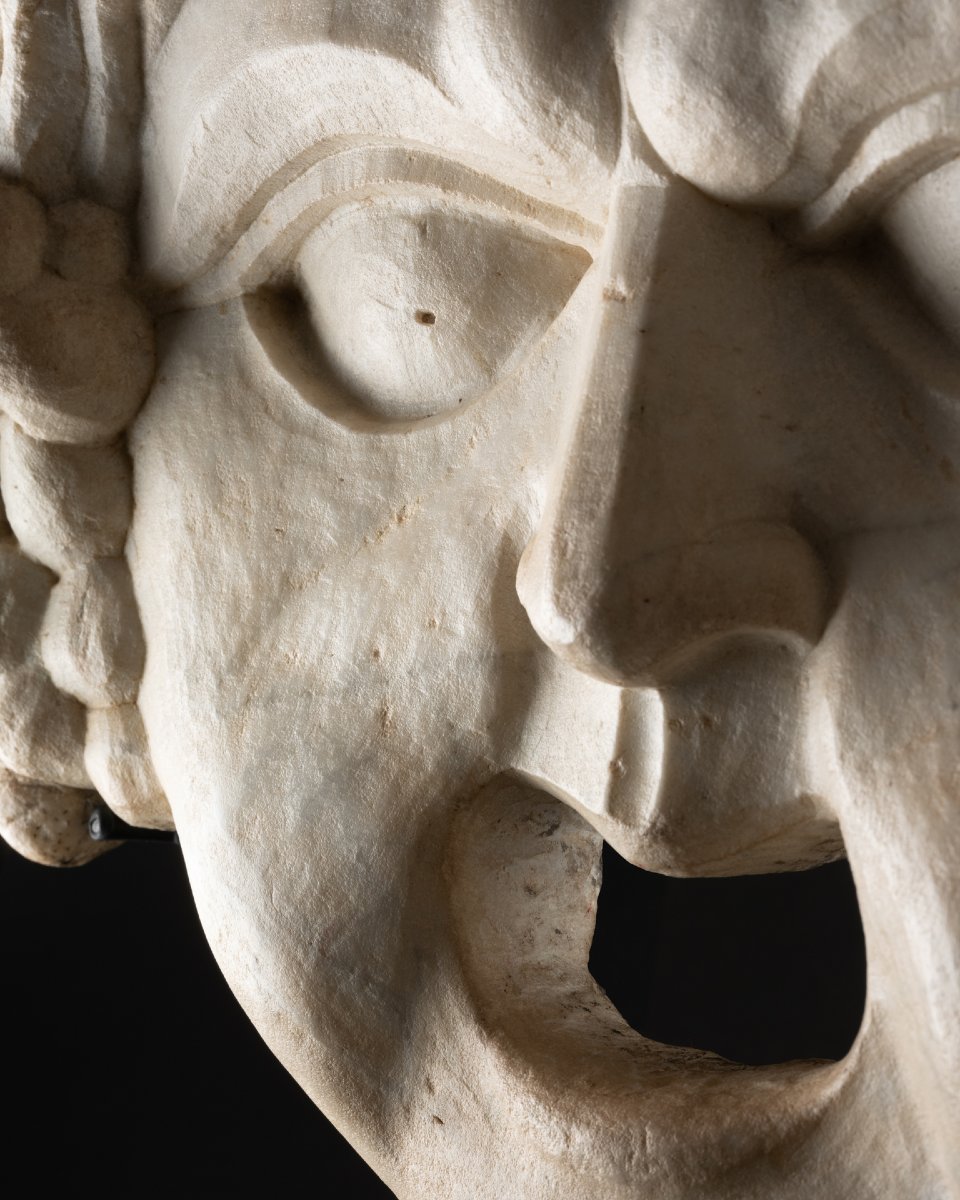
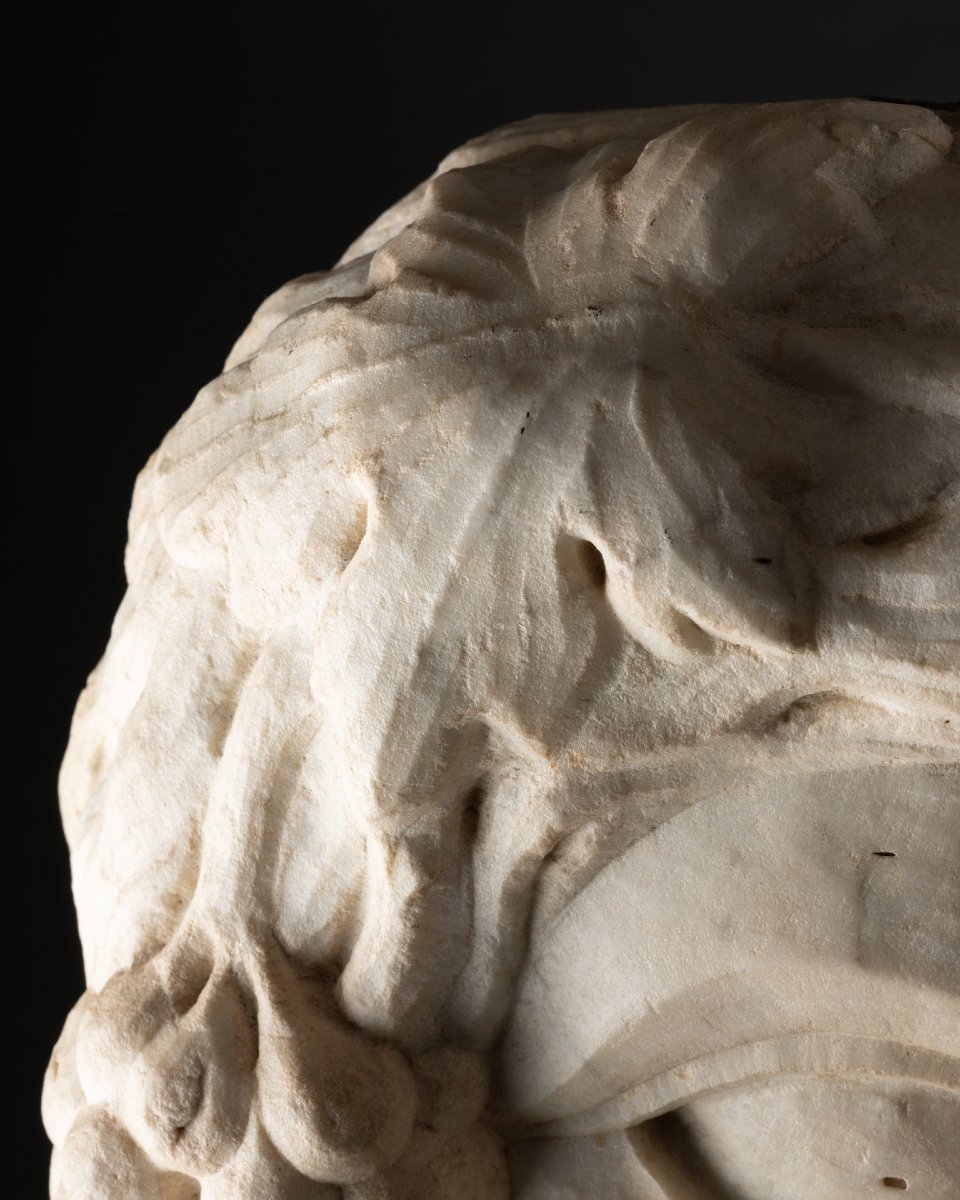
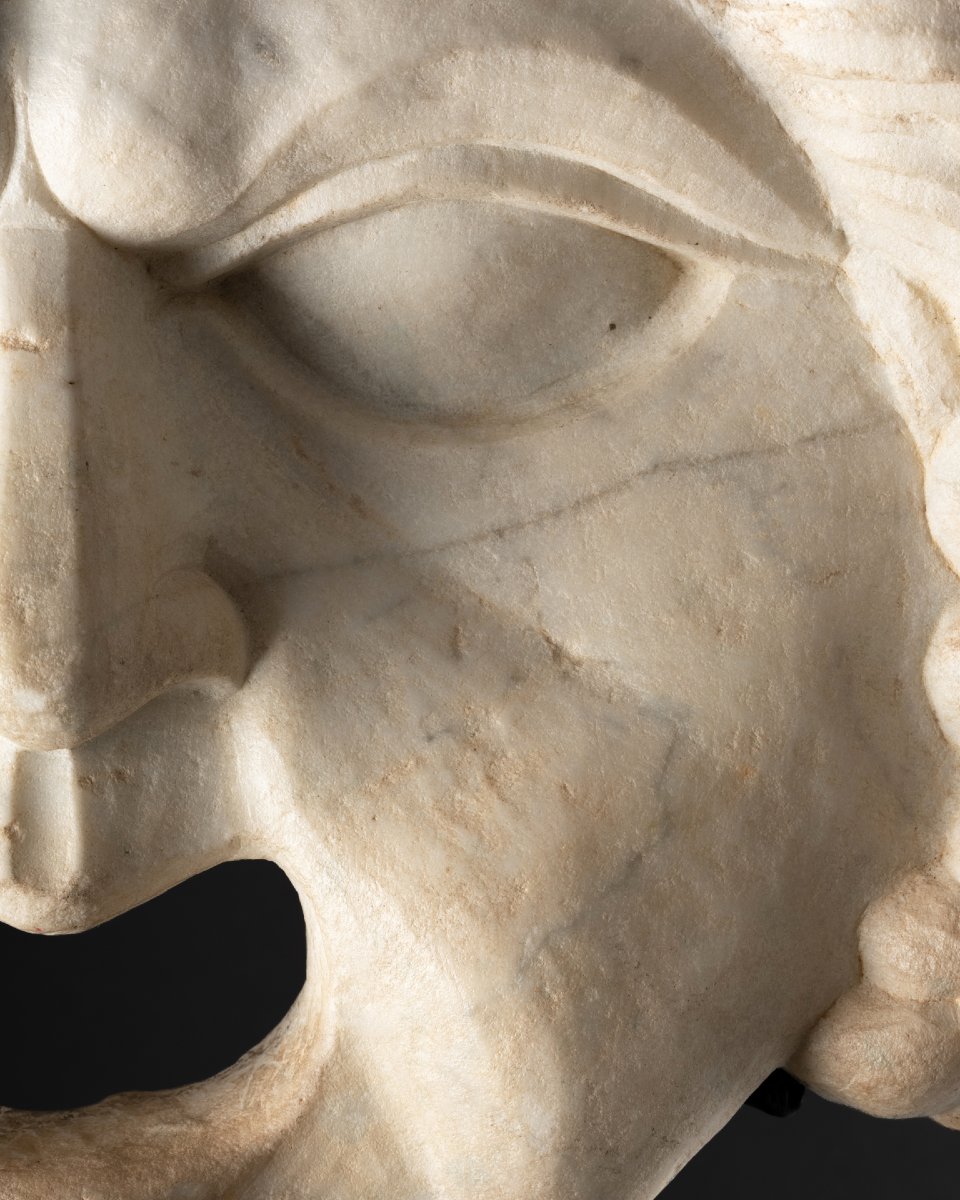
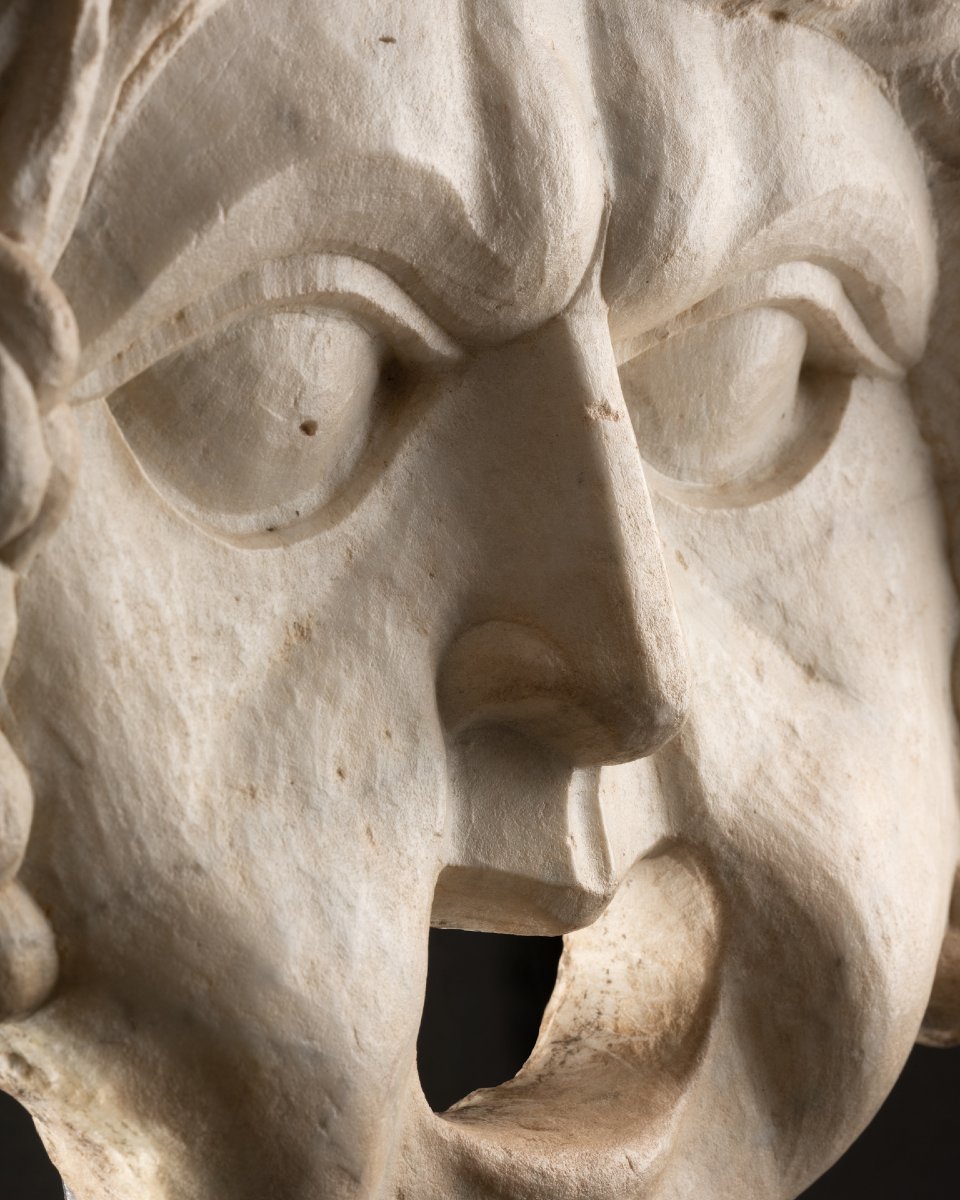
This white marble mascaron represents Bacchus, the god of wine and theater in Greco-Roman mythology. Large in size, it features a very playful expression, with a wide open mouth and large eyes whose pupils are not sculpted. This mask is faithful to the traditional iconography of the festive god and inspiration for the dramatic arts, notably in the thick hair ending in bunches of grapes, symbolizing wine and drunkenness.
Bacchus is depicted with abundant hair, framed by vine branches and bunches of grapes, symbols of his power over wine and drunkenness. His face features a broad forehead, an expressive, almost frightening gaze and a wide-open mouth, reminiscent of the ancient theatrical masks used on stage.
This Bacchus mask is reminiscent of the theatrical masks from the Roman villa of Chiragan, preserved at the Musée Saint-Raymond in Toulouse, dating mainly from the late 3rd and early 4th centuries AD.C.
These marble sculptures, associated with the cult of Dionysus/Bacchus and the world of theater, were part of the rich décor of this Gallo-Roman villa. They bear witness to Greco-Roman cultural influence and the importance of theater in the late Roman Empire.
Inspired by ancient traditions, this mascaron is part of the Mannerist movement of the late 16th century. During this period, theatrical representations and sculpted decorations were inspired by the ancient marble masks often used as ornaments in villas and theaters.
This mascaron could have had a dual function: decorative, preaching a theatrical art, and symbolic, embodying Bacchus, god of the theater, guarantor of the actors' transformation and guide of the faithful towards a form of ecstasy and spiritual renewal.
This mascaron may have been a wall ornament in a garden, possibly as the mouth of a fountain, projecting water through its mouth to fall below into a basin.
A true testament to the importance of the decorative arts in late 16th-century Italy, this work impresses with its great expressiveness as much as it reveals the intoxication of human passions.
Bacchus is depicted with abundant hair, framed by vine branches and bunches of grapes, symbols of his power over wine and drunkenness. His face features a broad forehead, an expressive, almost frightening gaze and a wide-open mouth, reminiscent of the ancient theatrical masks used on stage.
This Bacchus mask is reminiscent of the theatrical masks from the Roman villa of Chiragan, preserved at the Musée Saint-Raymond in Toulouse, dating mainly from the late 3rd and early 4th centuries AD.C.
These marble sculptures, associated with the cult of Dionysus/Bacchus and the world of theater, were part of the rich décor of this Gallo-Roman villa. They bear witness to Greco-Roman cultural influence and the importance of theater in the late Roman Empire.
Inspired by ancient traditions, this mascaron is part of the Mannerist movement of the late 16th century. During this period, theatrical representations and sculpted decorations were inspired by the ancient marble masks often used as ornaments in villas and theaters.
This mascaron could have had a dual function: decorative, preaching a theatrical art, and symbolic, embodying Bacchus, god of the theater, guarantor of the actors' transformation and guide of the faithful towards a form of ecstasy and spiritual renewal.
This mascaron may have been a wall ornament in a garden, possibly as the mouth of a fountain, projecting water through its mouth to fall below into a basin.
A true testament to the importance of the decorative arts in late 16th-century Italy, this work impresses with its great expressiveness as much as it reveals the intoxication of human passions.
15 000 €
Period: 16th century
Style: Renaissance, Louis 13th
Condition: Excellent condition
Material: Marble
Width: 44 cm
Height: 47 cm
Reference (ID): 1733718
Availability: In stock
Print