THIS OBJECT WAS SOLD
View Of Vesuvius From The Vicinity Of Pompeii Italian School, Late 18th – Early 19th Century.

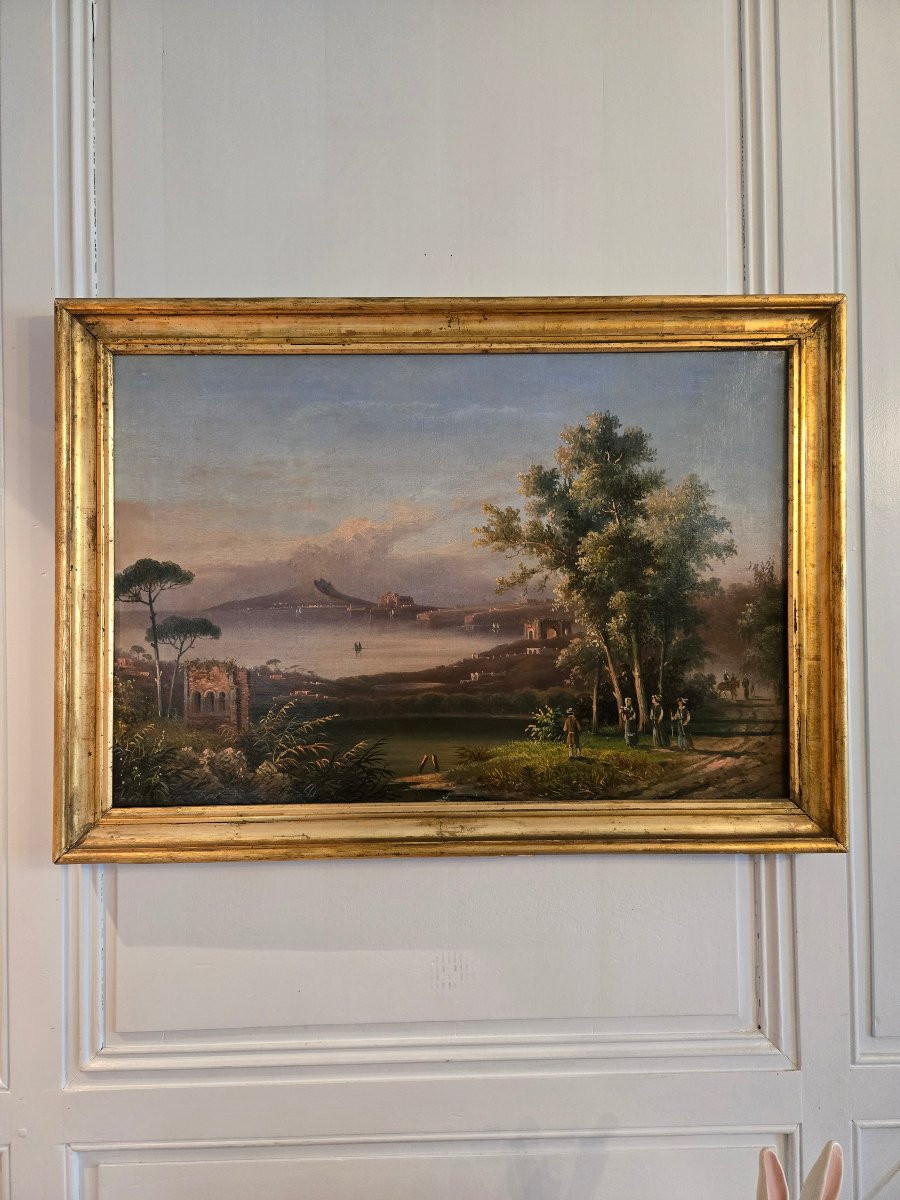
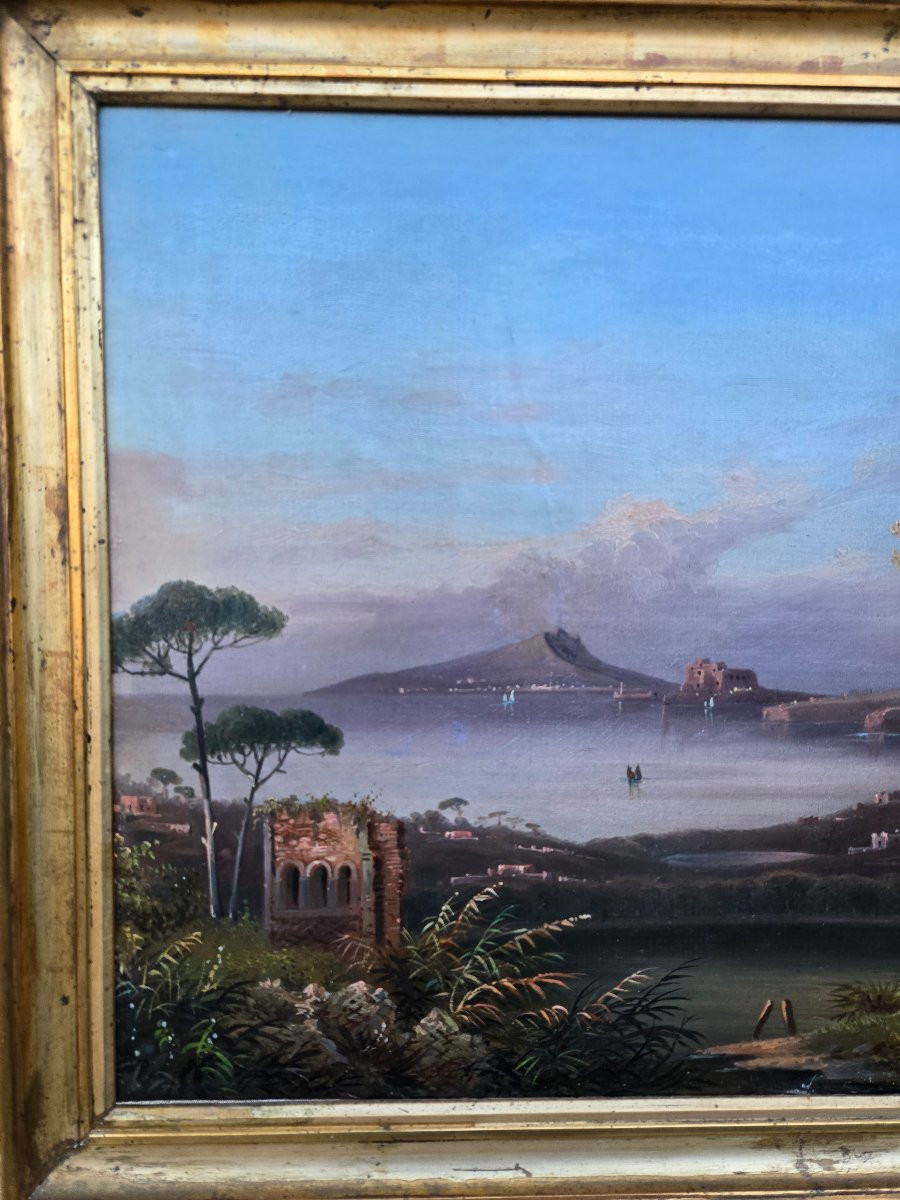
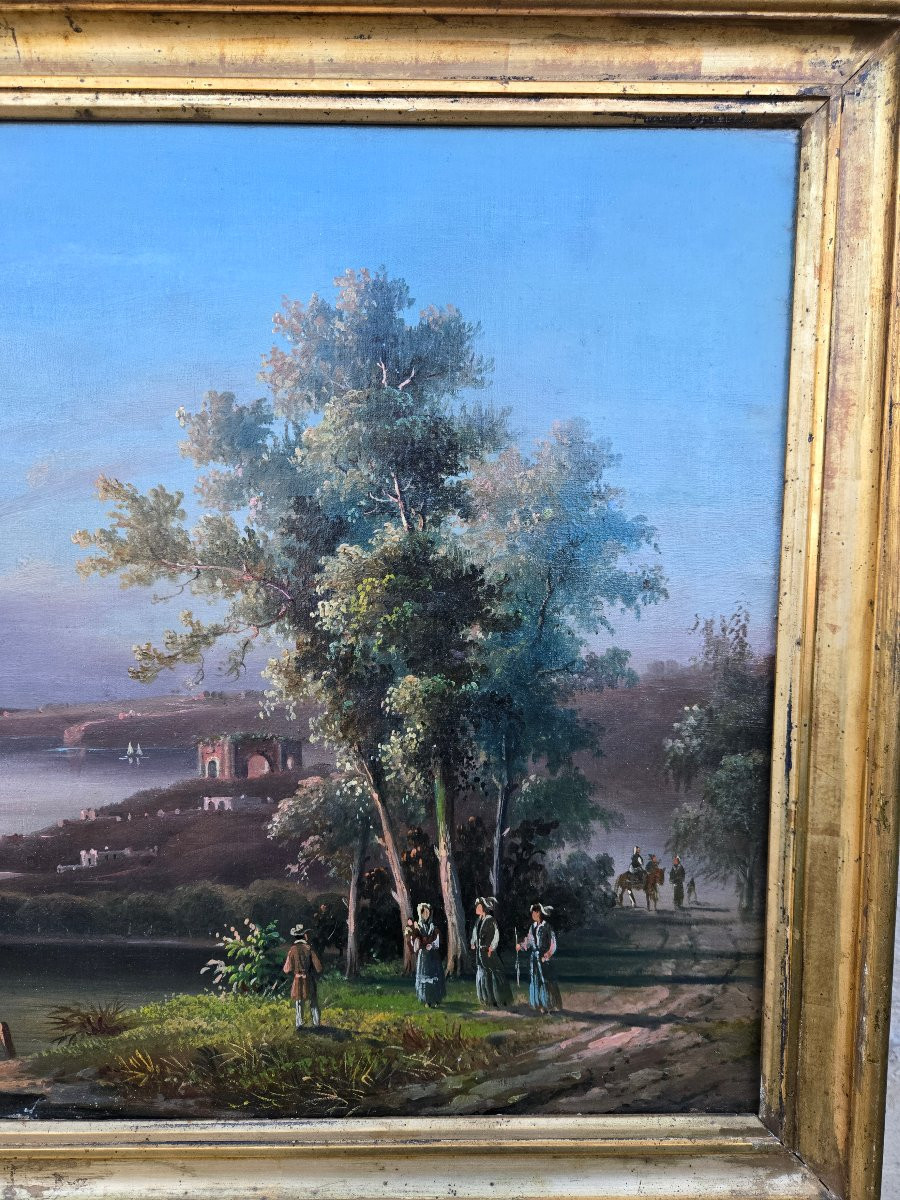
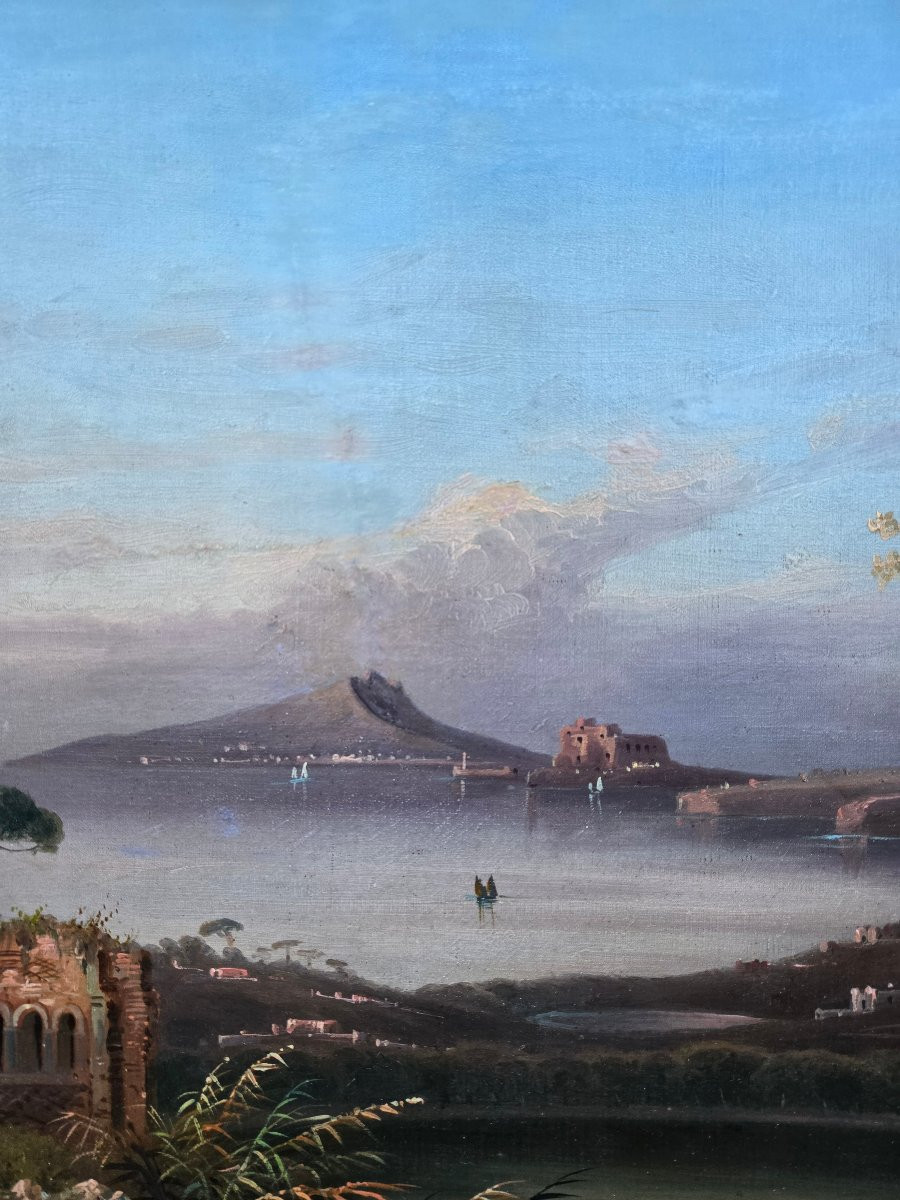

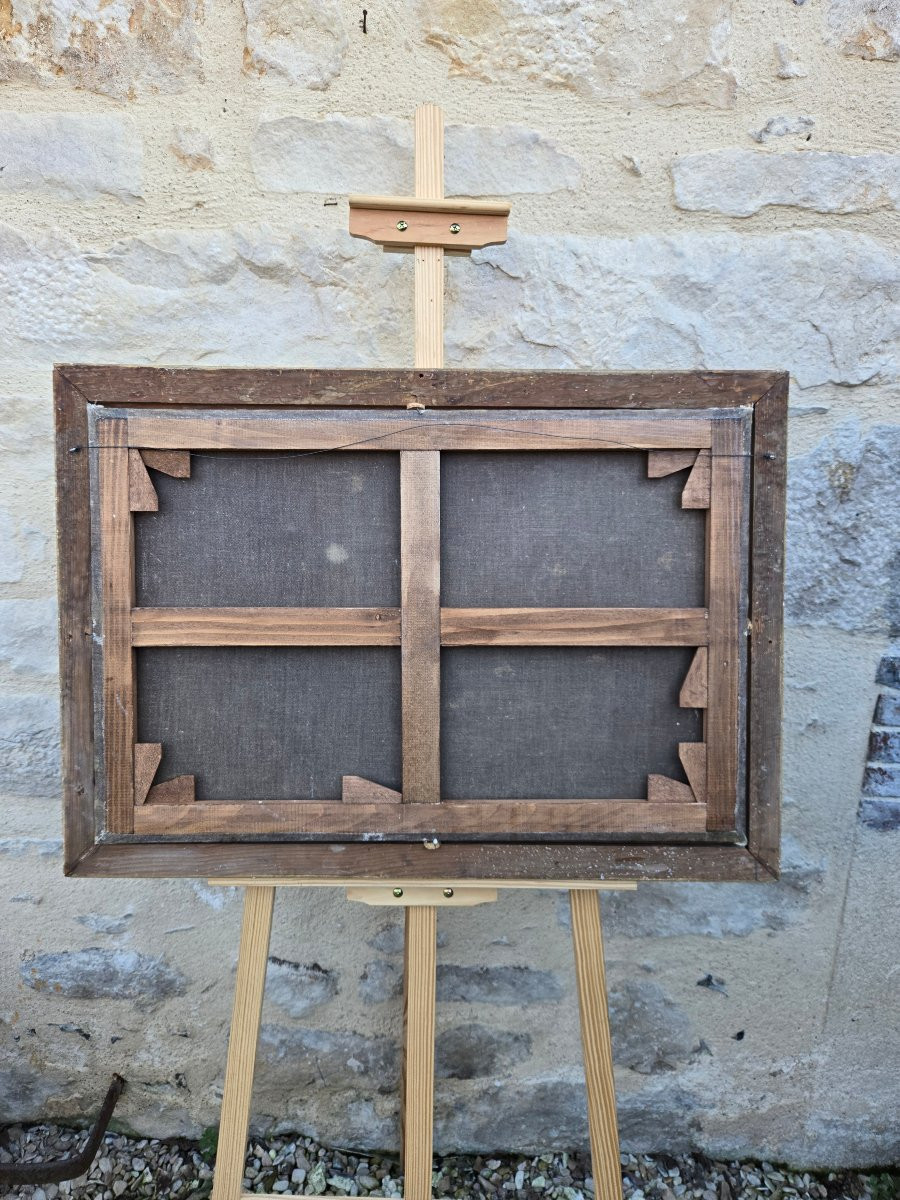
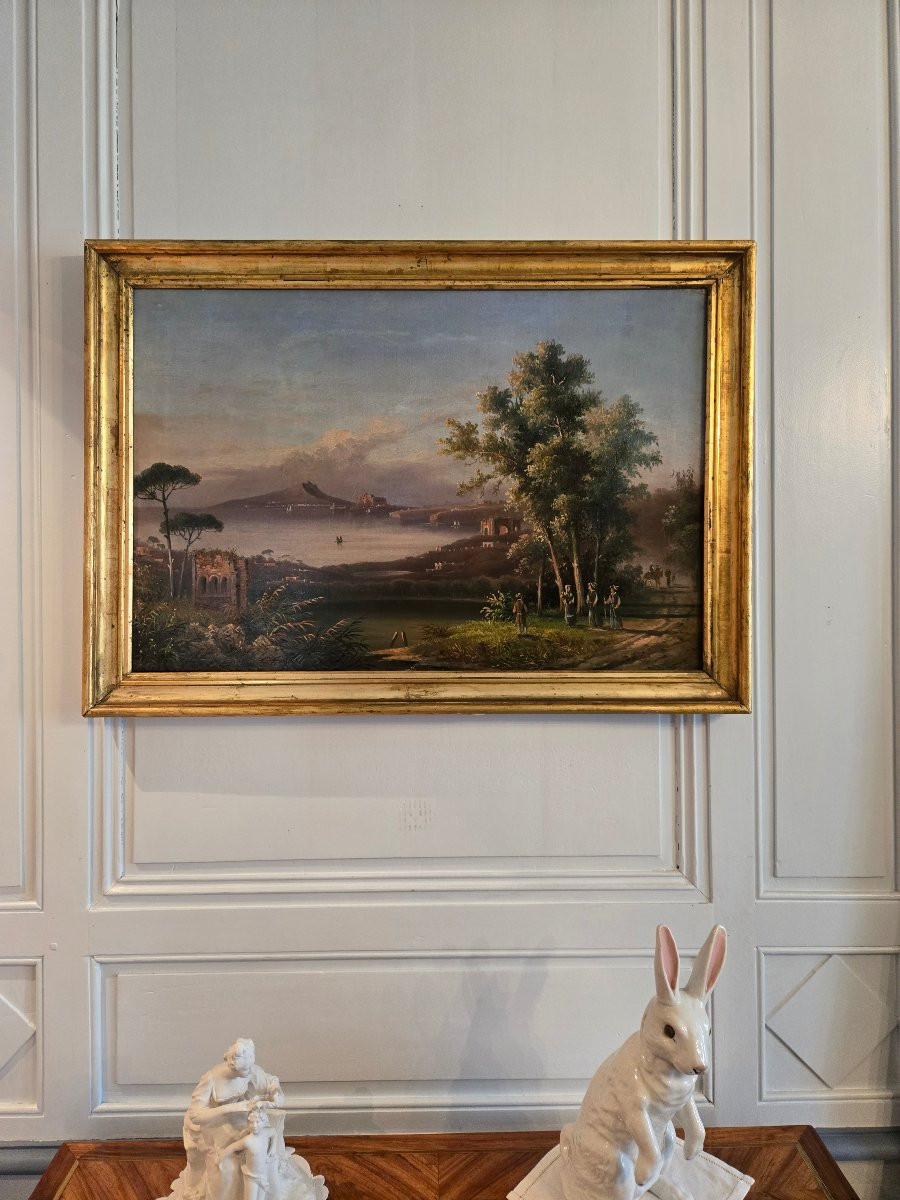
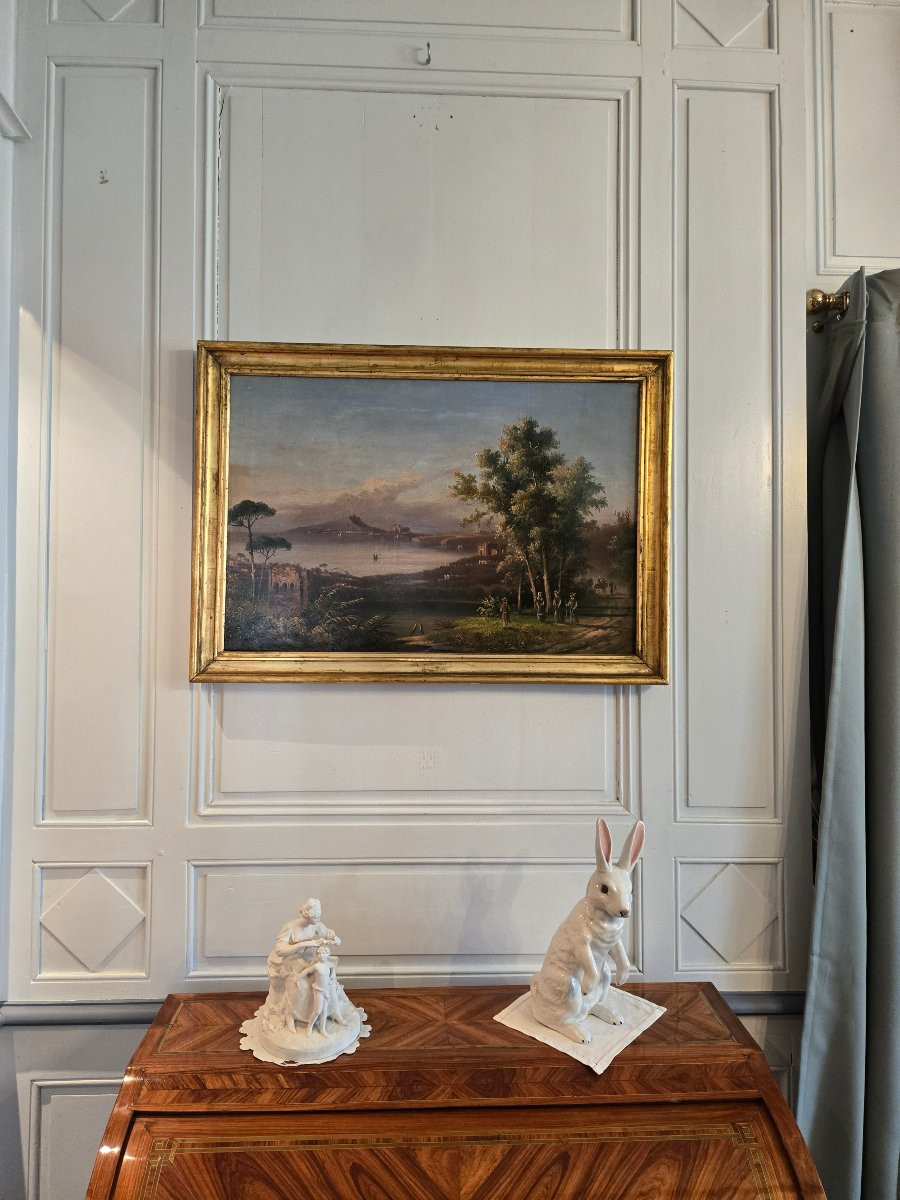
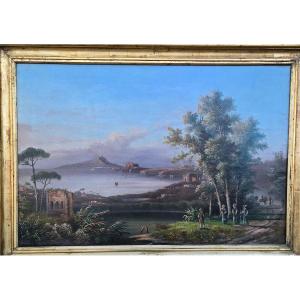


An elegant oil on canvas depicting a view of Mount Vesuvius from the plain near Pompeii and Torre Annunziata, in the southern part of the Bay of Naples. The composition is structured according to a style very characteristic of Italian landscapes painted for travelers on the Grand Tour. A foreground enlivened by strollers and horsemen moving through a verdant landscape leads the eye to an open panorama of the bay. In the background, the majestic silhouette of Vesuvius stands out, its summit emitting a light plume of smoke. The scene evokes the region of Pompeii, whose archaeological excavations, undertaken in the 18th century under the Bourbon dynasty of Naples, attracted numerous European visitors fascinated by the rediscovery of antiquity. The foreground presents picturesque ancient ruins, inspired by the Roman remains that dot the region, particularly those of Pompeii and Herculaneum. These ruins, overgrown with Mediterranean vegetation, contribute to the romantic atmosphere of the landscape and serve as a reminder of the area's exceptional archaeological significance. In the bay, the mouth of the Sarno River is visible, recognizable by the two jetties extending into the sea near Torre Annunziata. This port facility, well-known to 18th-century artists and travelers, provided maritime access to the plain of Pompeii. Nearby stands a coastal fortification, part of the system of towers and defensive works that once protected the coastline of the Kingdom of Naples. These structures dotted the coast between Naples, Torre del Greco, and Torre Annunziata. The bay is enlivened by several lateen-rigged boats, small feluccas typical of Mediterranean navigation, while the figures in the foreground—travelers and horsemen—evoke the many visitors on the Grand Tour who came to admire the landscapes of Vesuvius and the ancient ruins. The composition is organized in successive planes: ruins and vegetation in the foreground, plains and coastline in the middle ground, and then the monumental silhouette of the volcano on the horizon. This panoramic construction, combined with a soft and luminous palette, is fully in keeping with the tradition of Neapolitan vedute, which enjoyed great success at the end of the 18th and beginning of the 19th centuries. The technique, executed in thin layers and delicate glazes, reveals meticulous attention to detail in the rendering of the architecture, figures, and landscape. The work as a whole testifies to the Neapolitan pictorial tradition inherited from the late 18th century, particularly in the wake of the artists active around Jakob Philipp Hackert, court painter in Naples. Through its subject matter, blending volcano, seascape, and ancient ruins, this work perfectly illustrates the European fascination with the landscapes of southern Italy at the turn of the 18th and 19th centuries. Oil on canvas, Italian School, late 18th – early 19th century. The canvas underwent an earlier restoration with relining, and the stretcher was replaced, probably during the 20th century, to ensure better preservation of the work. Dimensions: Image size: 50.5 × 75 cm; Framed: 61.5 × 86.5 cm
Explore similar pieces and discover your ideal find:
Landscapes