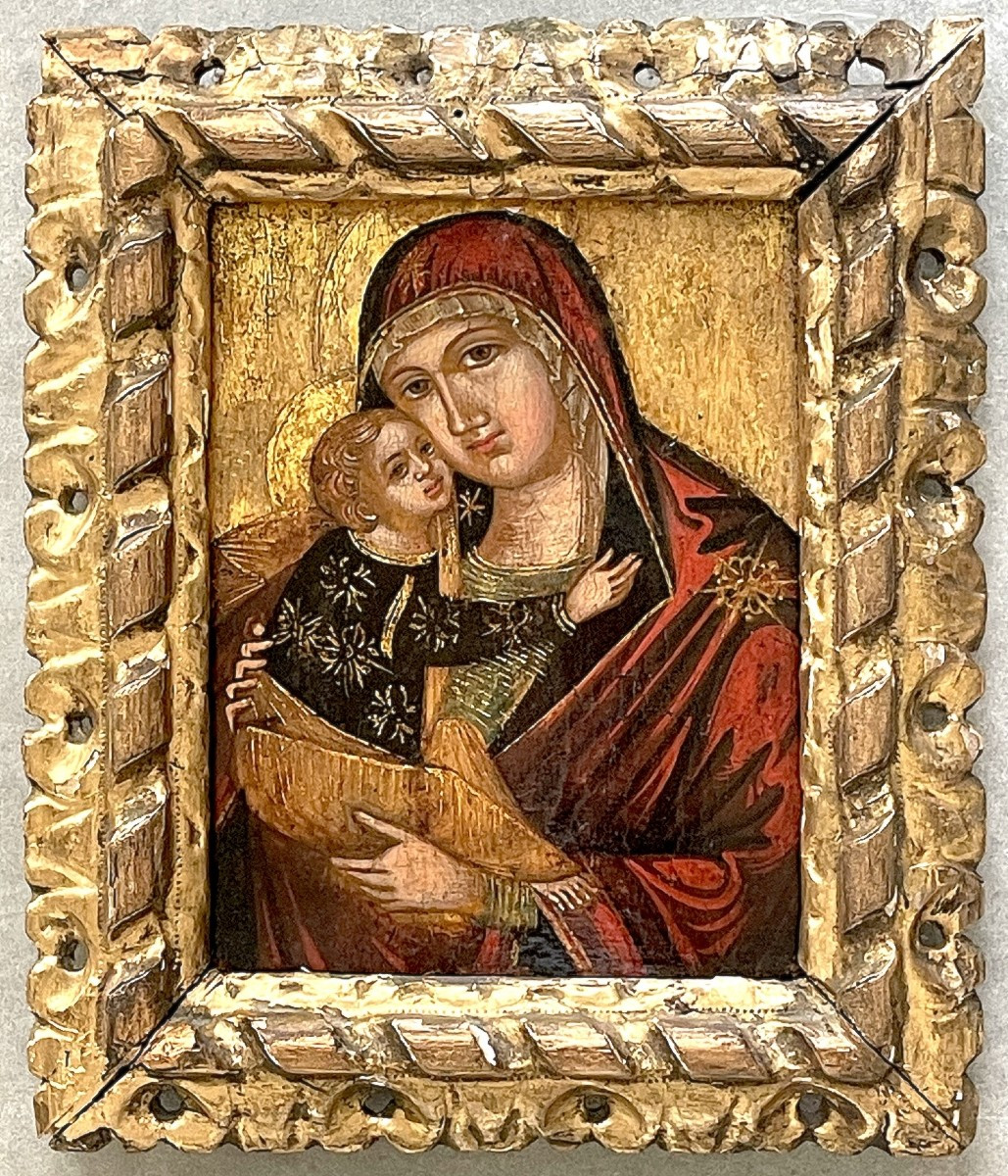
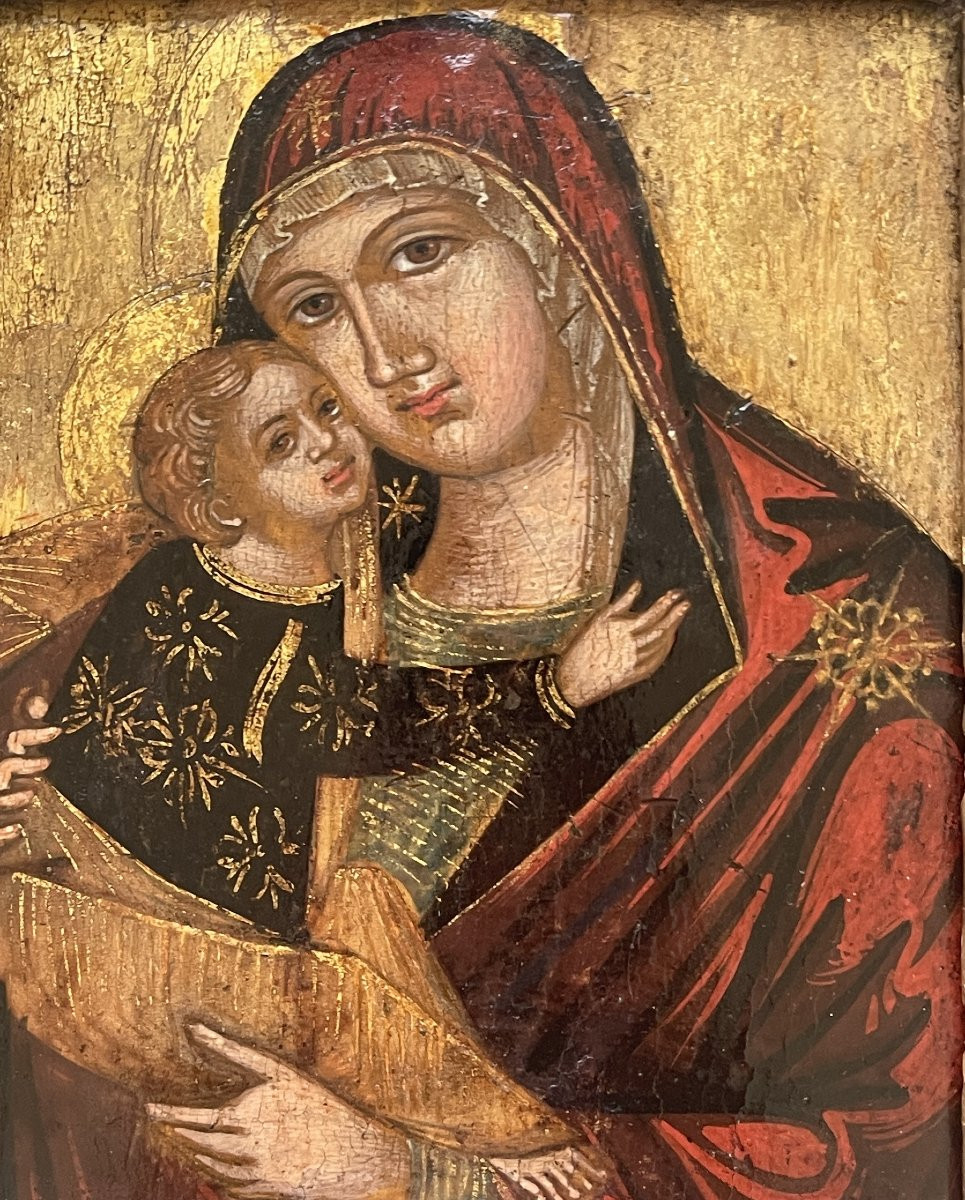
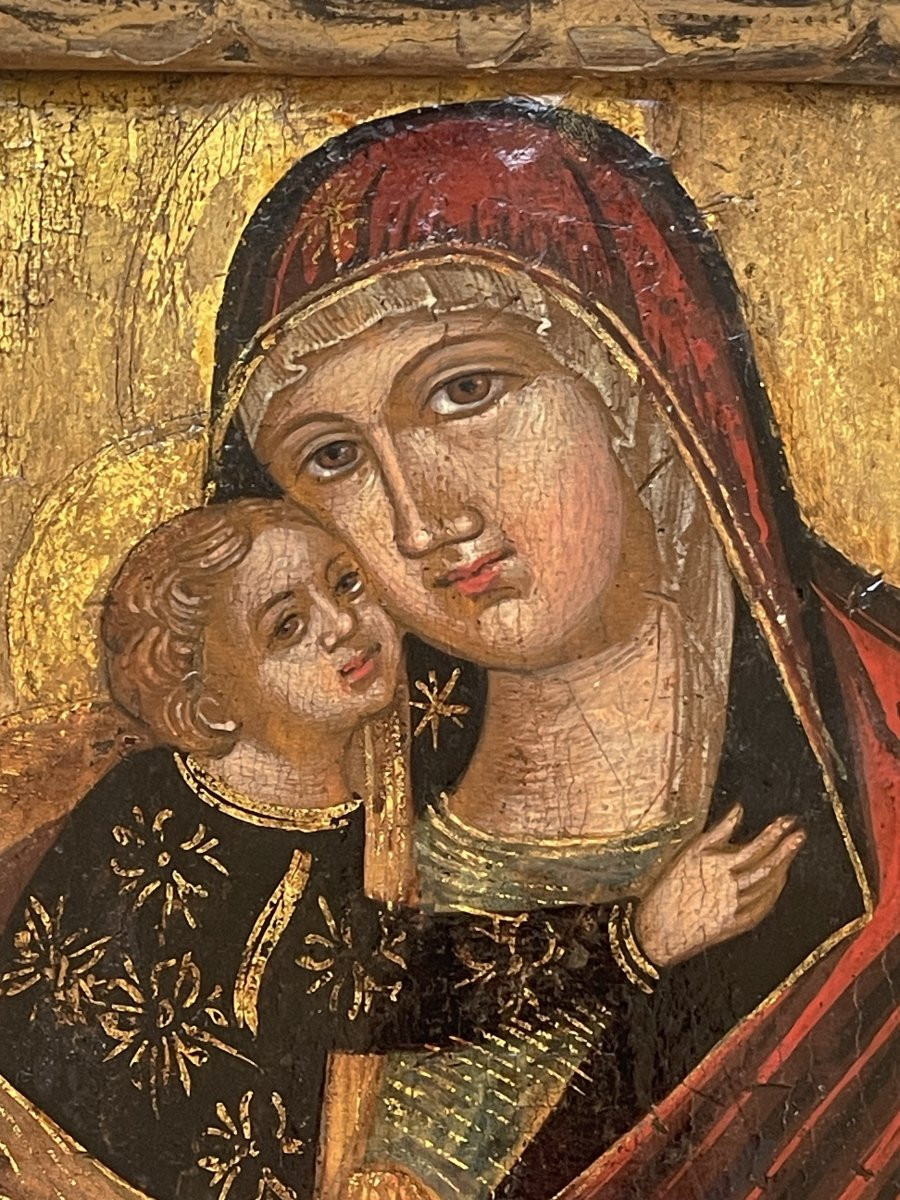



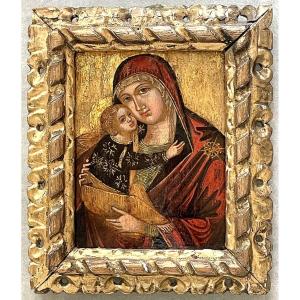


Virgin Of Tenderness - Italo-cretan School, Circa 1480–1500
Egg tempera and gold ground on panel
Panel: 19 x 14,5 cm
Framed: 27 x 22 cm
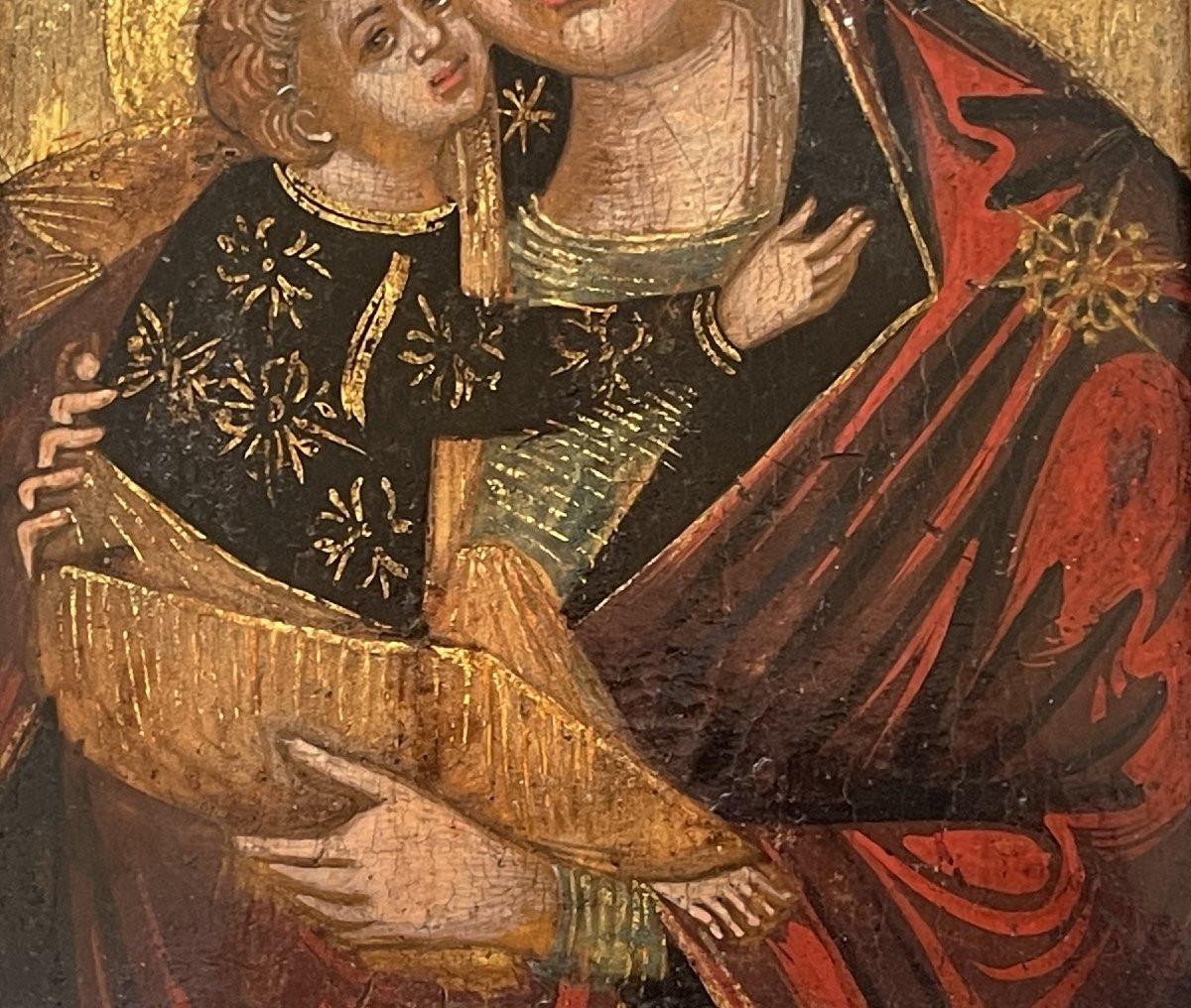
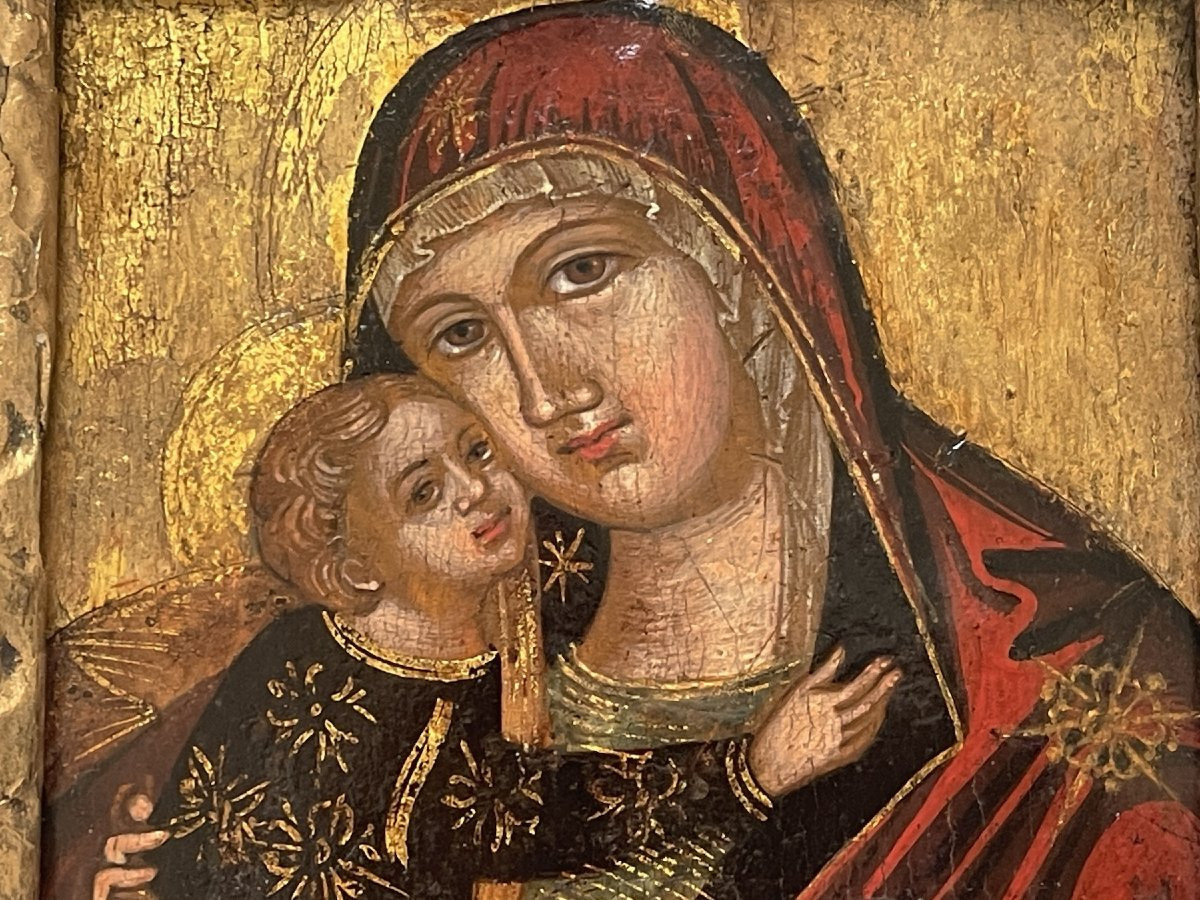
This intimate devotional panel depicts the Virgin and Child in the Eleousa type, one of the most influential Byzantine iconographic models disseminated throughout the Mediterranean from the 13th century onward.
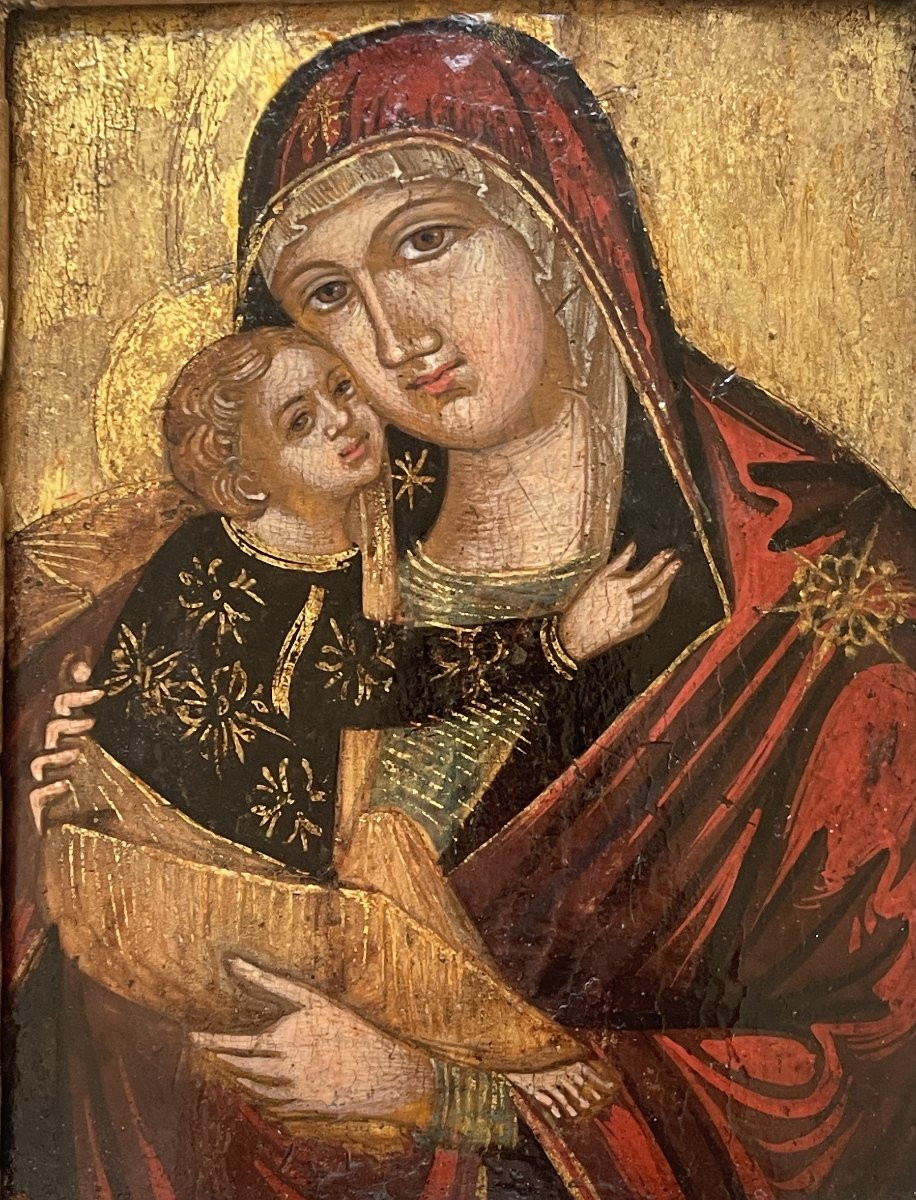
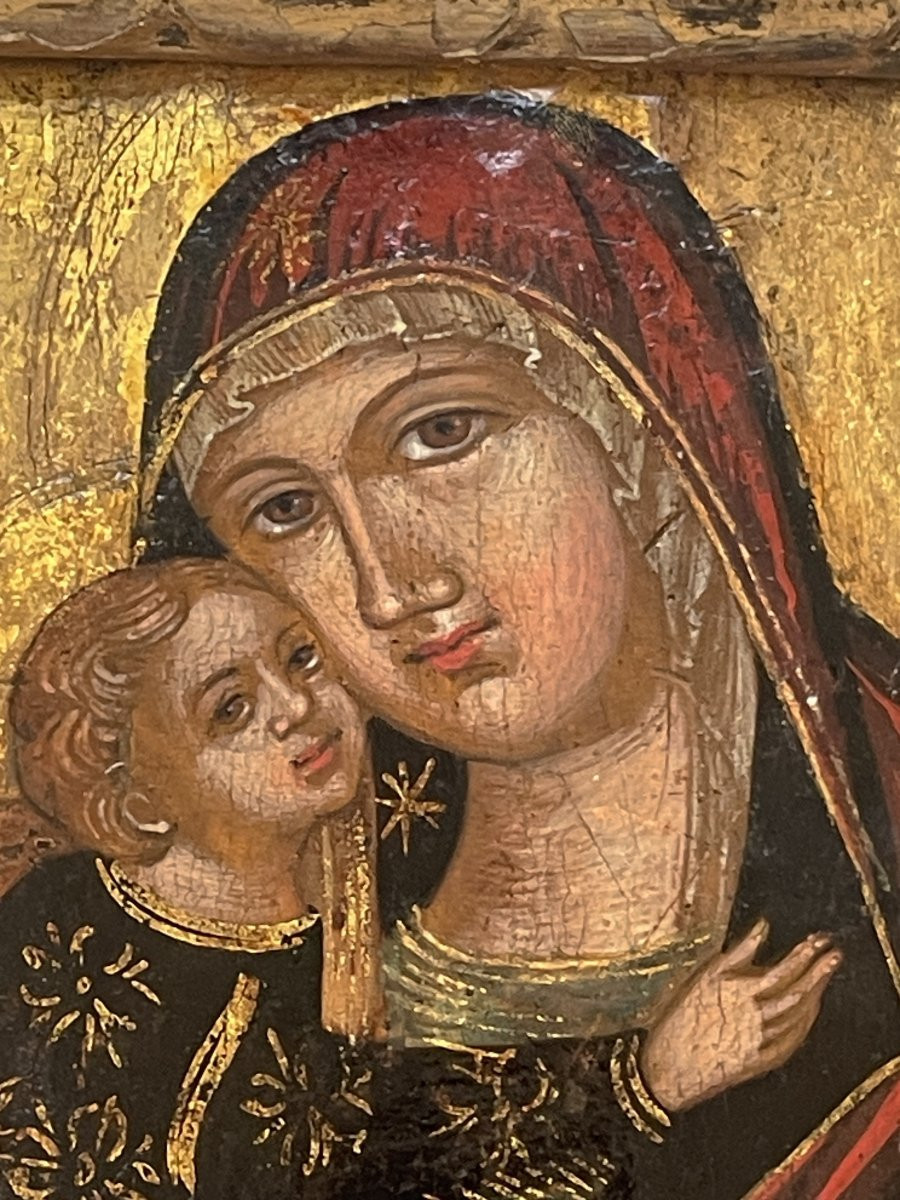
Stylistic features — strong linear drawing, delicate hatching in flesh modeling, deep red mantle with brown-black underlayers, and gold ground laid over red bole — firmly place the work within late 15th-century Cretan production under Venetian rule.
After 1453, Candia (Heraklion) became a major export center supplying Venice and the Adriatic territories. Workshops developed a hybrid language combining Byzantine structural rigor with emerging Western softness.
Museum ComparisonsClose stylistic parallels may be observed with works preserved at:
Byzantine and Christian Museum, inv. ΤΧ 1953
Museo Correr, inv. Cl. I n. 36
Historical Museum of Crete, inv. ΒΧΜ 147
These examples display comparable linear structure, restrained gold backgrounds, and similar flesh modeling characteristic of late Cretan workshops.
Iconographic SignificanceThe cheek-to-cheek gesture conveys maternal tenderness while prefiguring Christ’s Passion.
Despite its small scale, the panel achieves notable monumentality — a hallmark of devotional works intended for private contemplation.
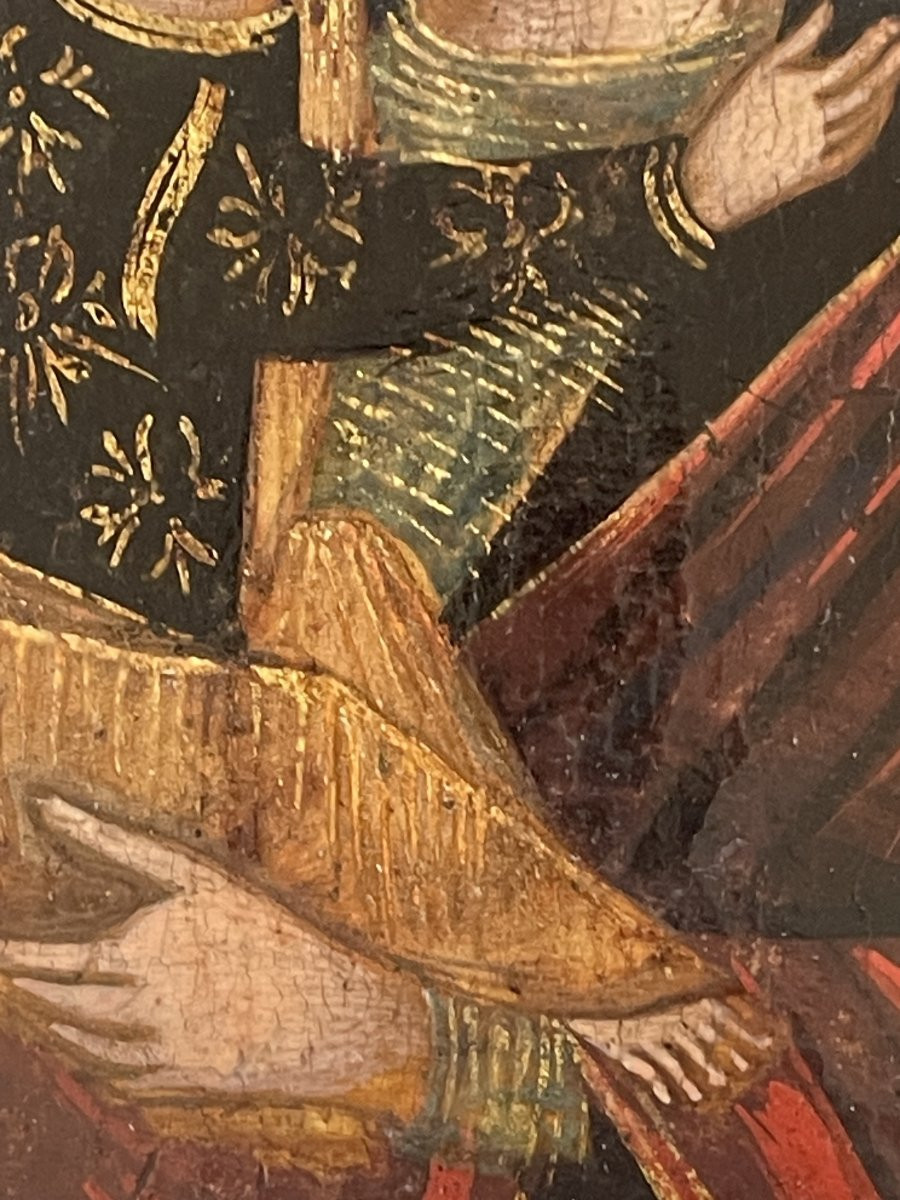
Technique and ConditionEgg tempera on gesso ground
Gold leaf over red bole
Consistent age craquelure
Structurally stable panel
The carved and gilded frame is likely 17th century.
Historical ImportanceLate 15th-century Italo-Cretan production played a decisive role in transmitting Byzantine visual culture to Western Europe.
This panel represents a coherent and authentic example of that artistic dialogue
Packing and Shipping:Packaging is entrusted to MBE Narbonne.
Transport is provided by UPS, FedEx, or GLS.
For values over €4,000, ad valorem insurance is taken out with Trans-Pass.
#AncientIcon #Virgin and Child #Eleousa #ItaloCretanSchool #Quattrocento #ByzantineArt #GoldGround #TemperaOnWood #SacredArt #PrivateDevotion #OldMaster #CretanSchool #MediterraneanArt #InternationalCollector #Proantic #ArtCollection
Period: Before 16th century
Style: Renaissance, Louis 13th
Condition: Good condition
Material: Other
Reference (ID): 1707362
Availability: In stock