THIS OBJECT WAS SOLD
Carved And Lacquered Wooden Maedate Depicting A Chestnut Branch With Its Burr - Edo.
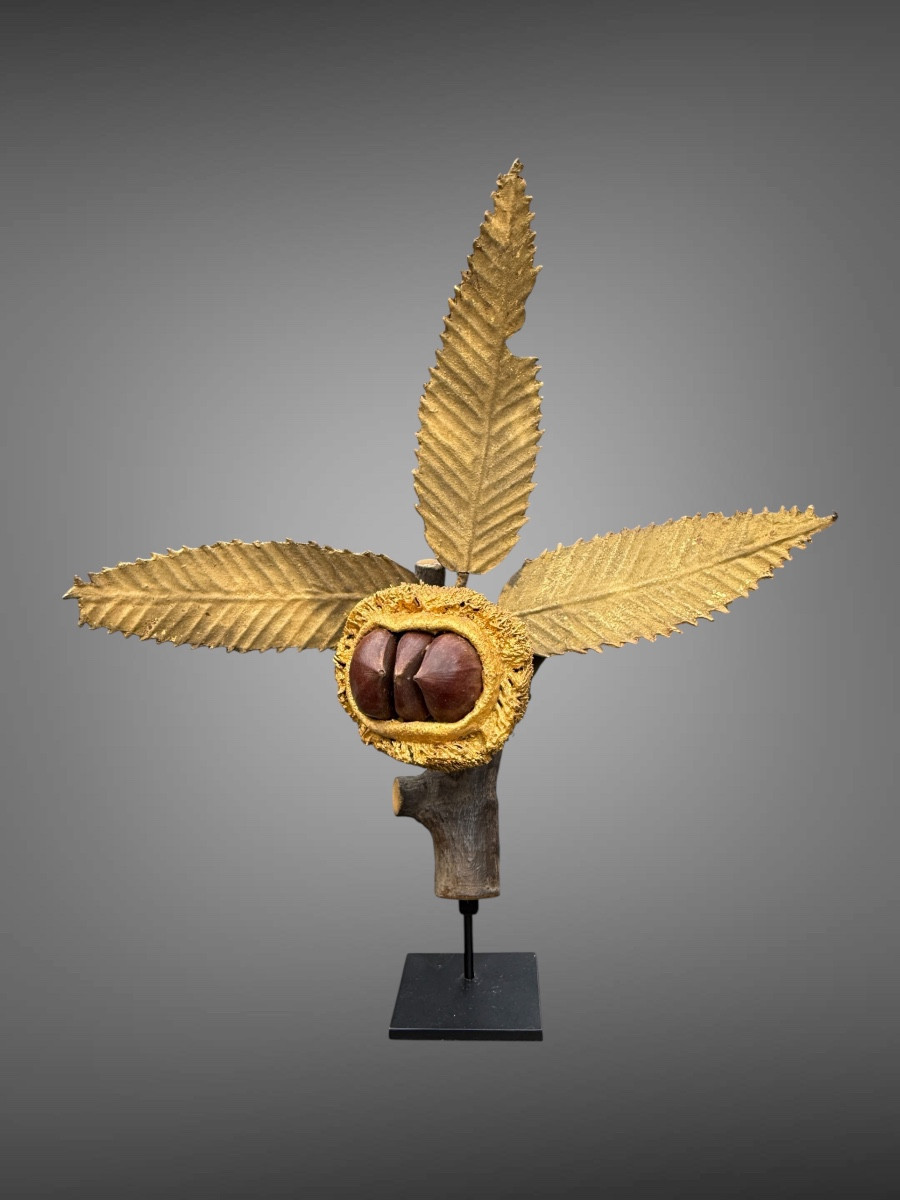

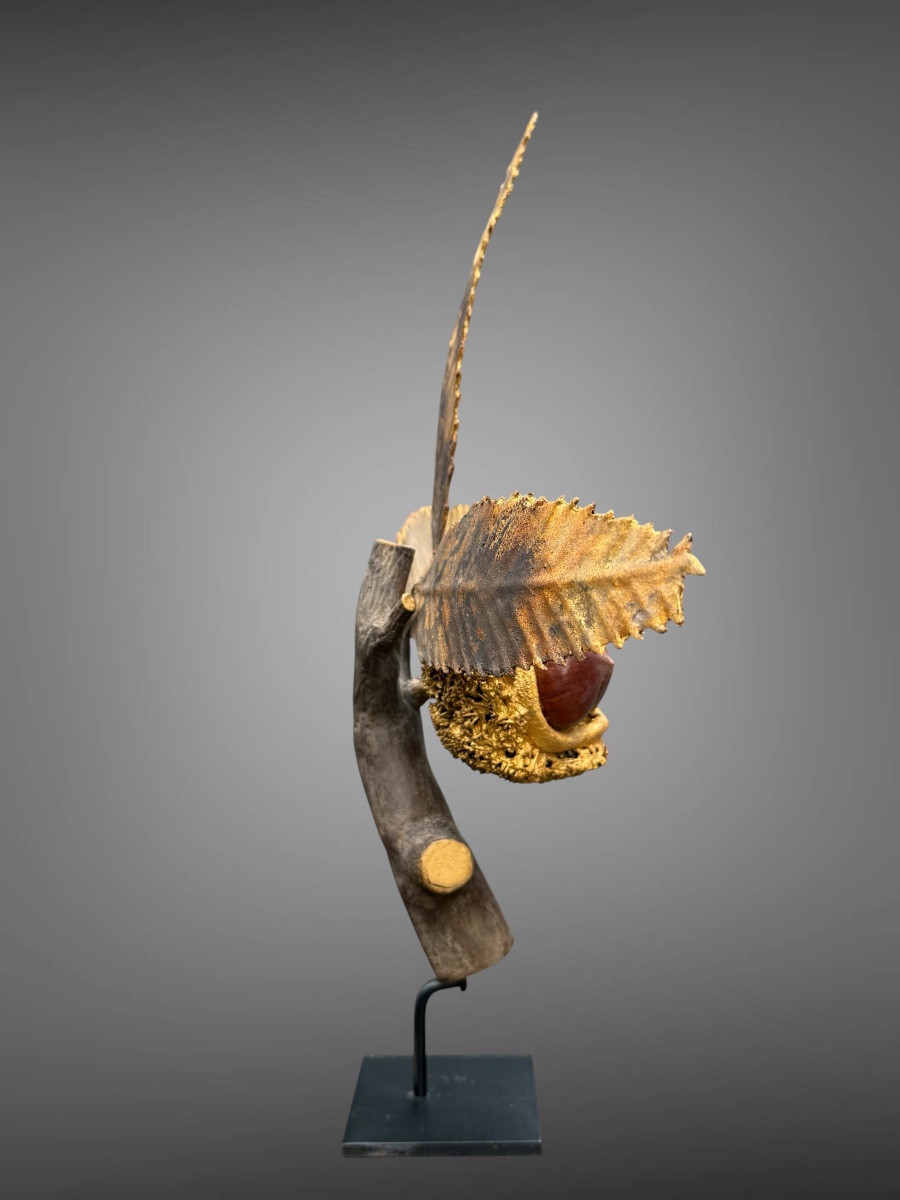
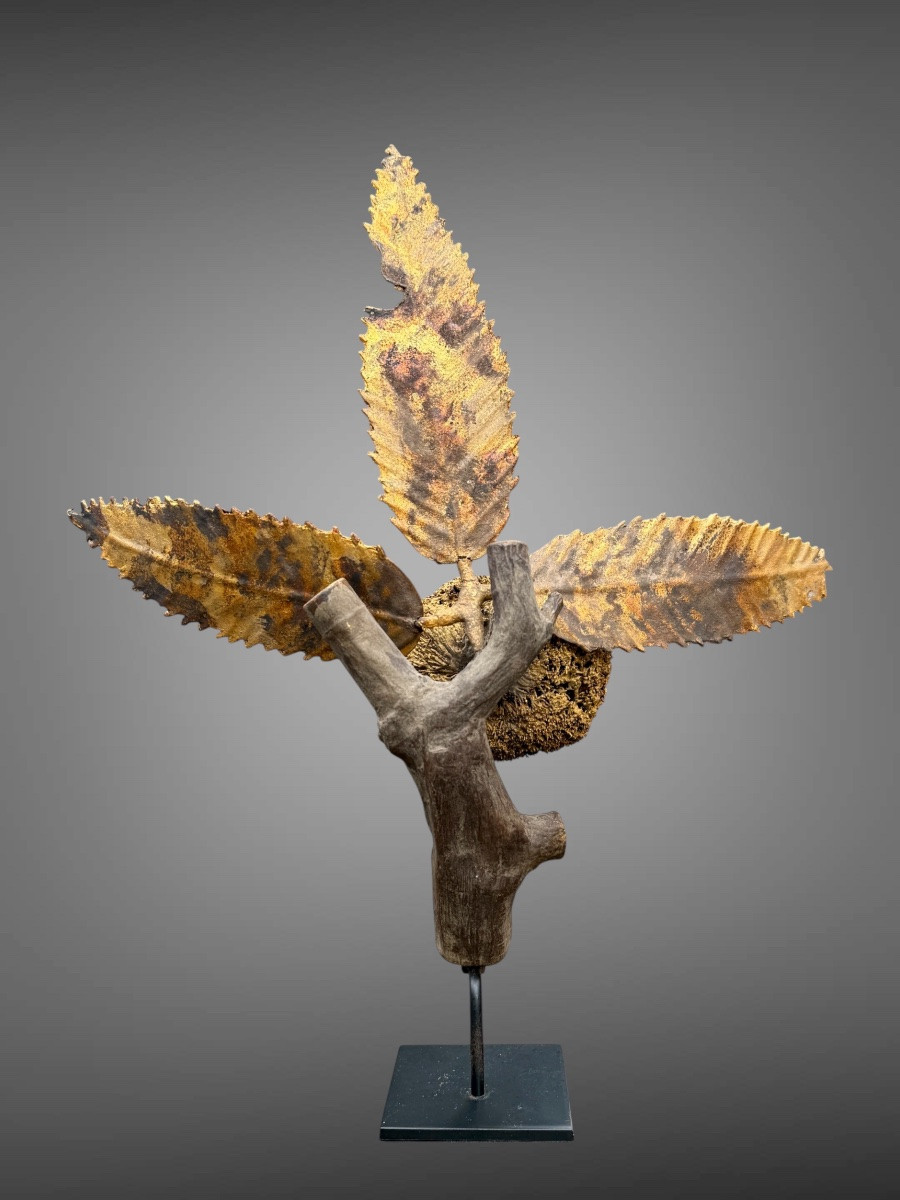


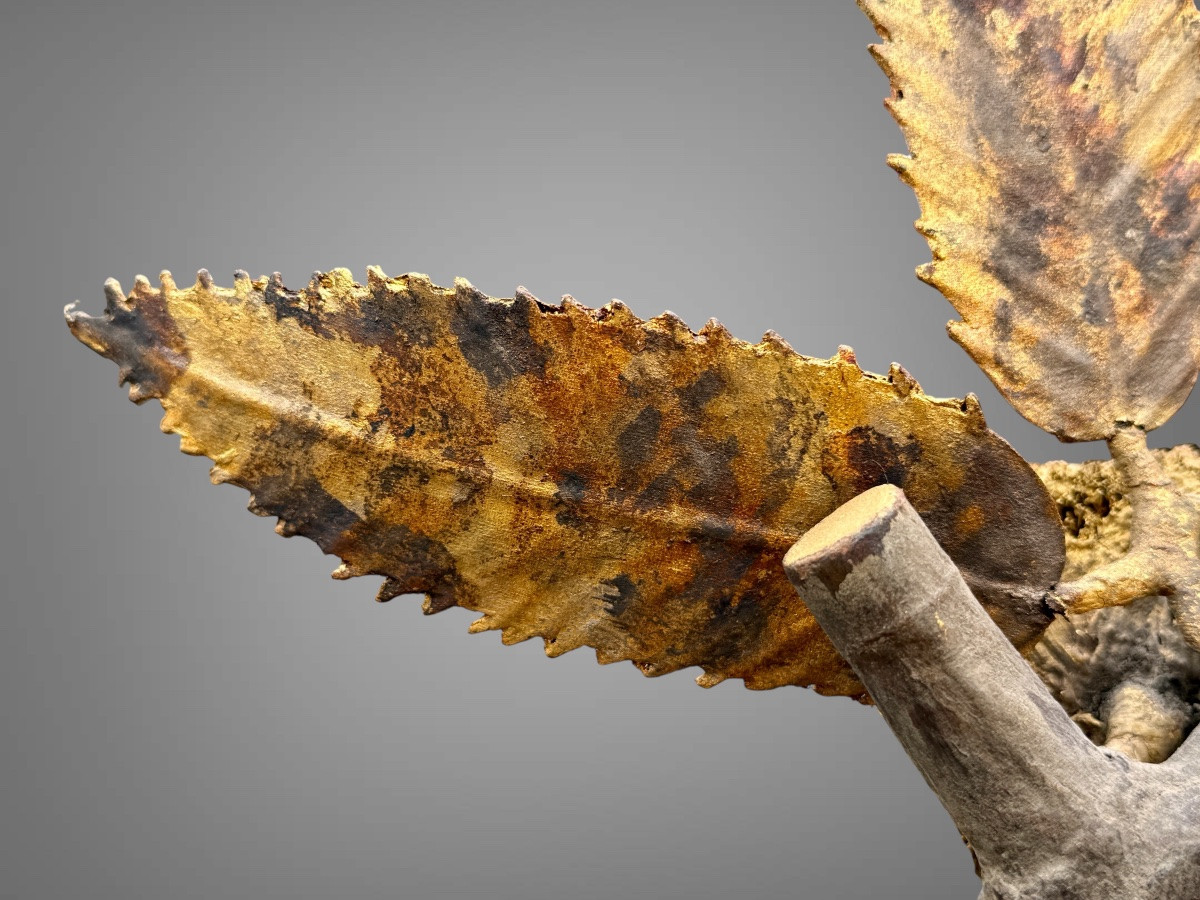
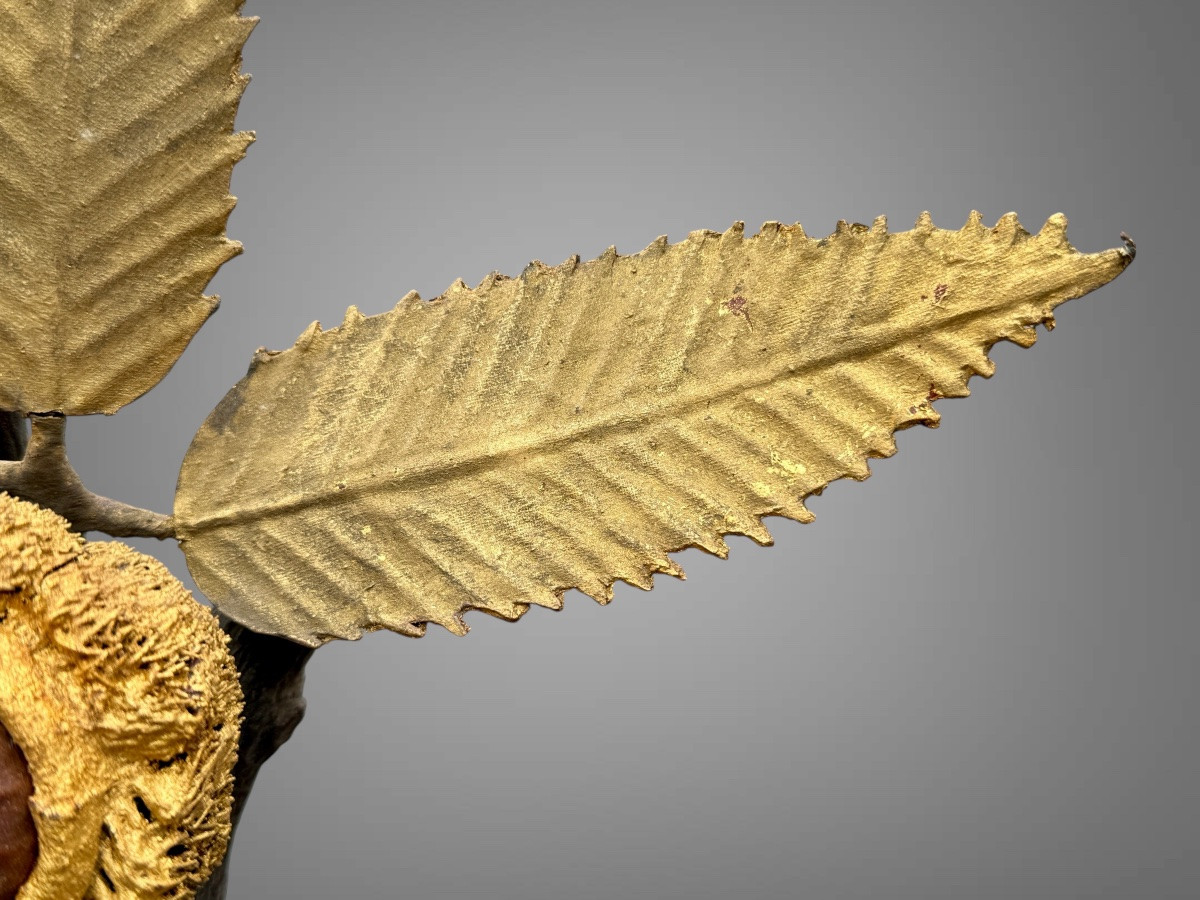
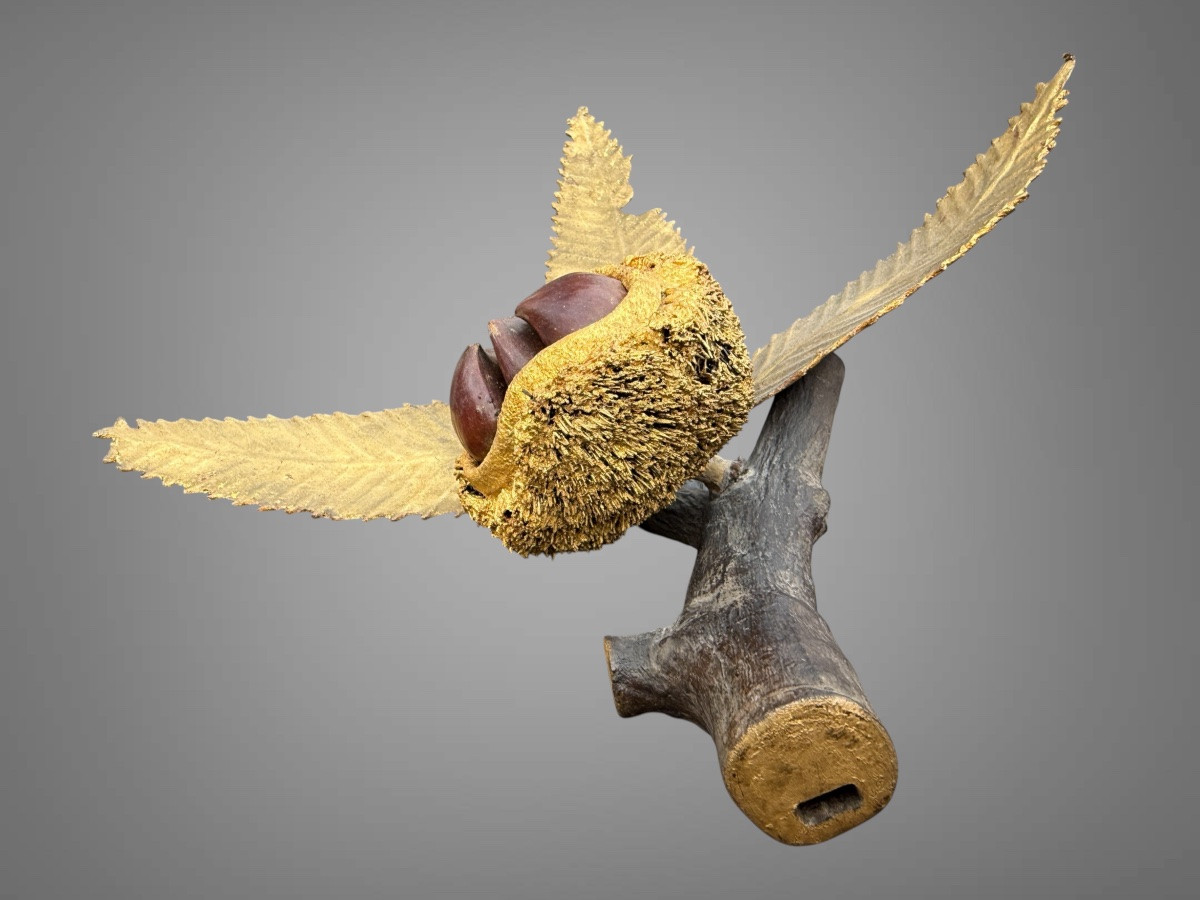
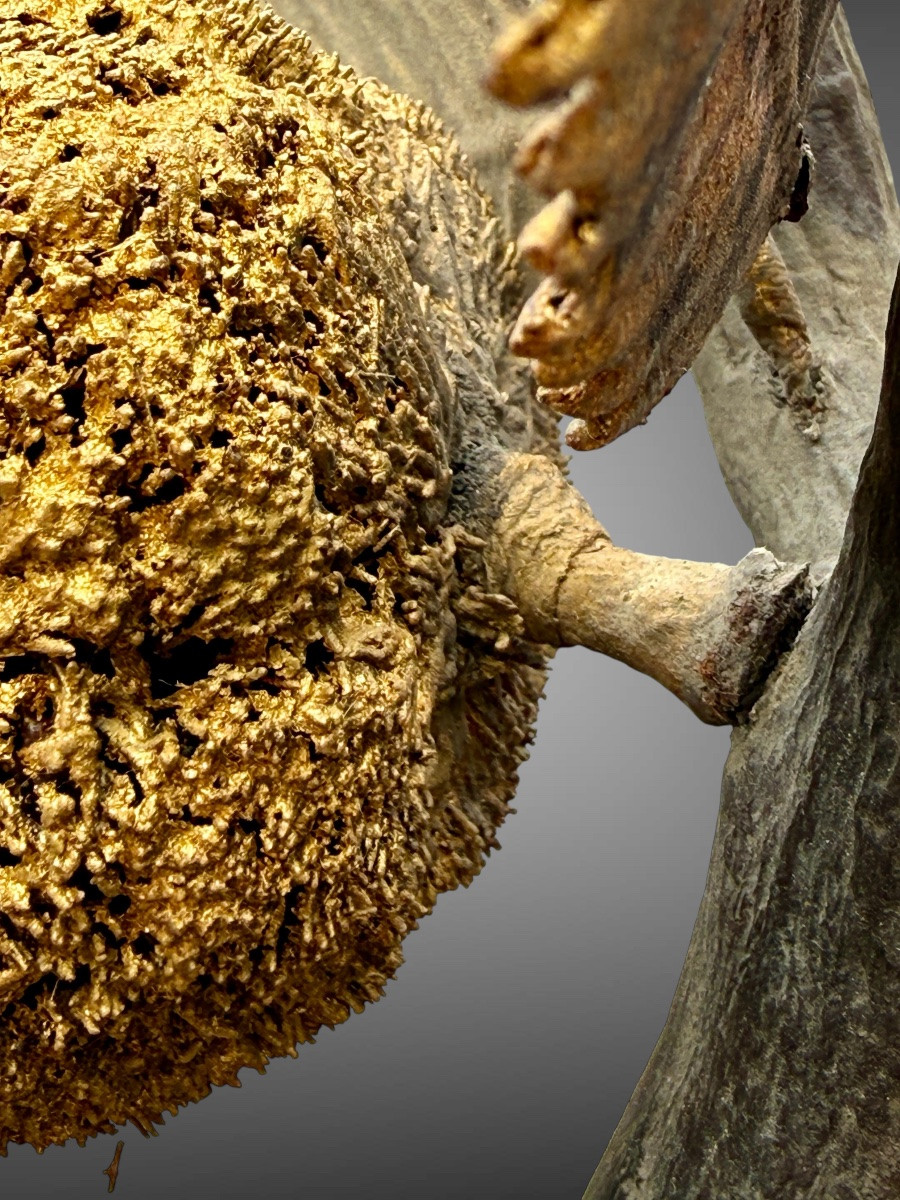

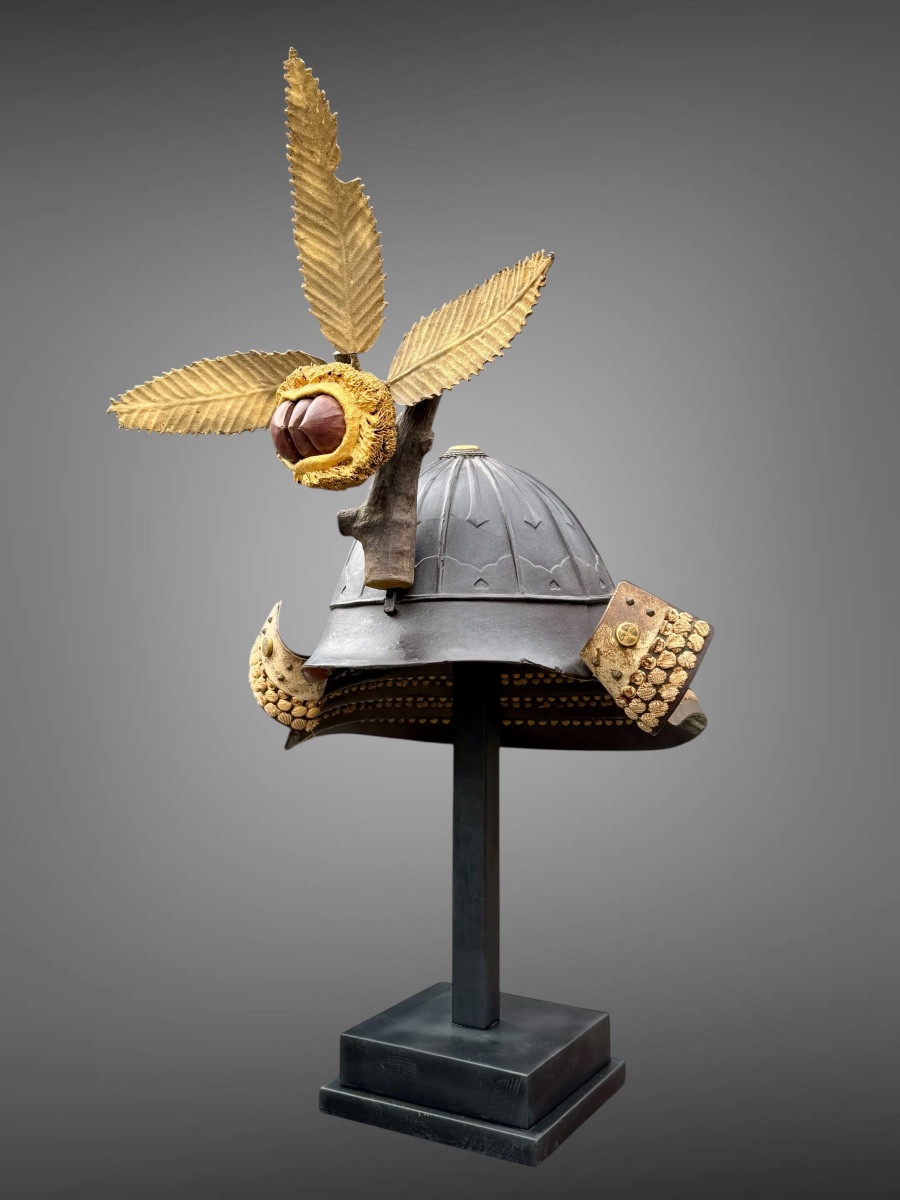


JAPAN - Edo Period (1603-1868). Stunning carved and lacquered wood maedate depicting a chestnut branch centered with an open burr revealing three chestnuts framed by three leaves. Minor losses. Dimensions: 32 x 32 x 9 cm. Sold with its base. Dimensions with base: 38 x 32 x 9 cm. Notes: The chestnut "Kachi-guri" in Japanese is pronounced the same as the word "Kachi" (勝ち): victory. It is therefore conceivable that samurai warriors saw it as an omen of good fortune, a symbol of success in battle. For the samurai, the chestnut was not simply a fruit; the kachi-guri ("victory chestnut") symbolized success achieved through effort and endurance, essential virtues of the warrior. Nourishing and robust, it also evokes the ability to survive hardship. The number three, meanwhile, embodies fundamental harmony: heaven, earth, and humankind united in a single breath. Repeated in rituals and warrior thought, it recalls the balance between strength, discipline, and spirit. This association—the chestnut and the number three—speaks of a just victory, born of inner alignment as much as of struggle.
Explore similar pieces and discover your ideal find:
Uniforms, Armors