THIS OBJECT WAS SOLD
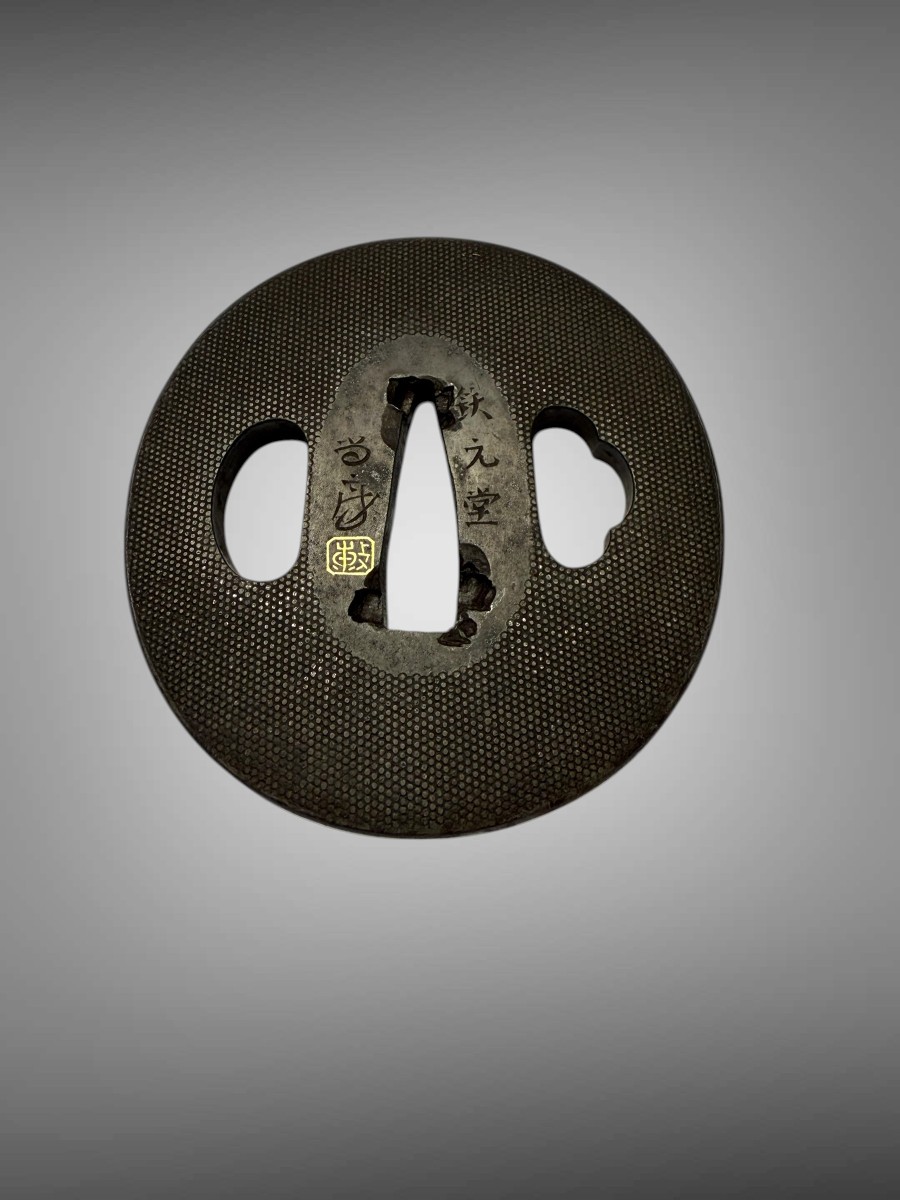
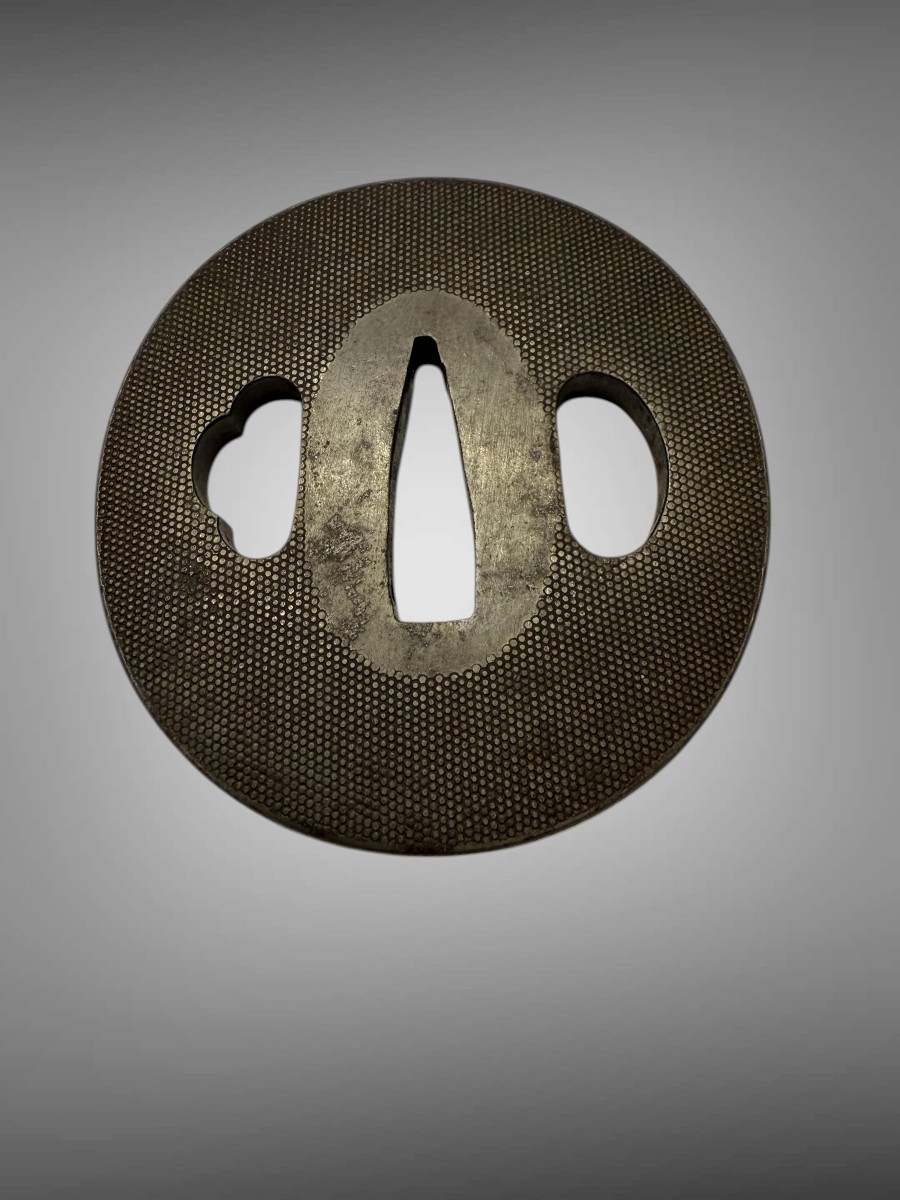
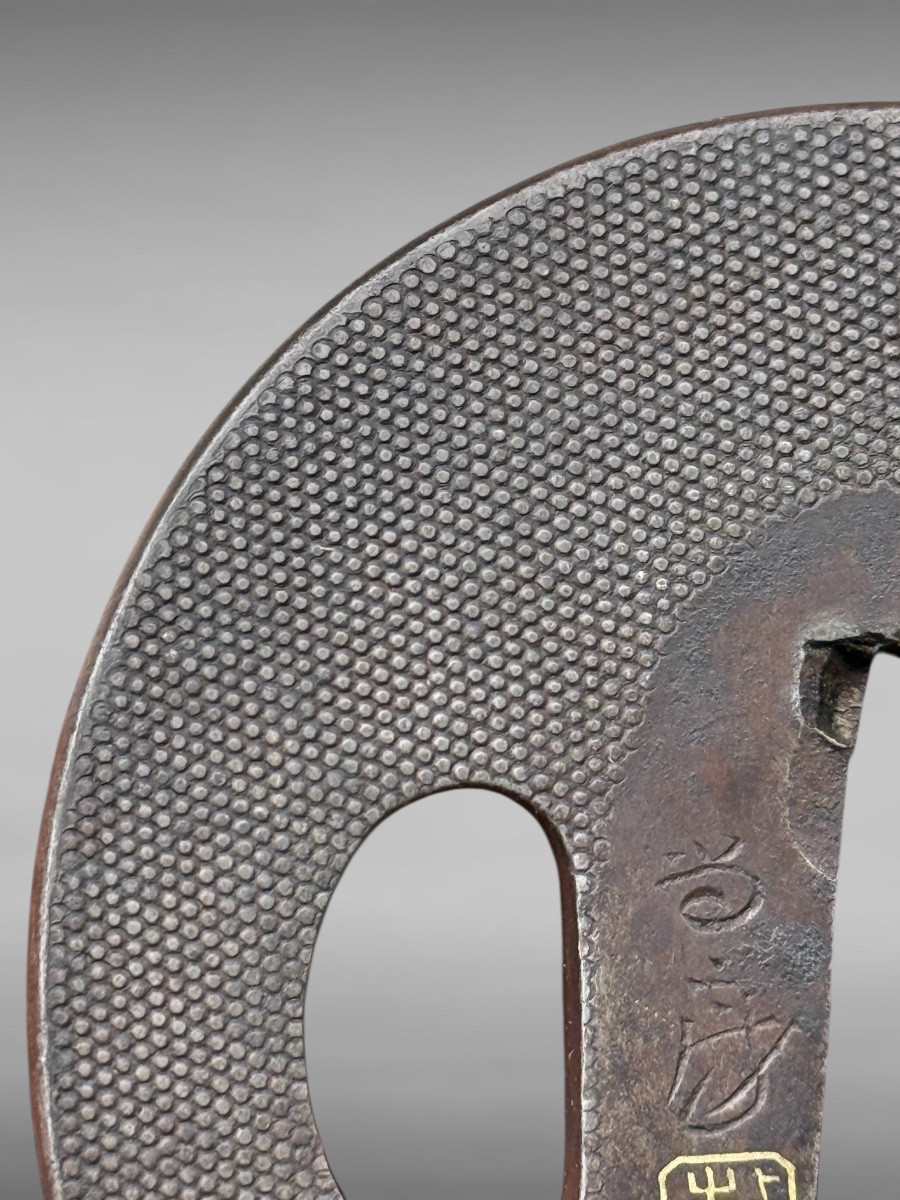
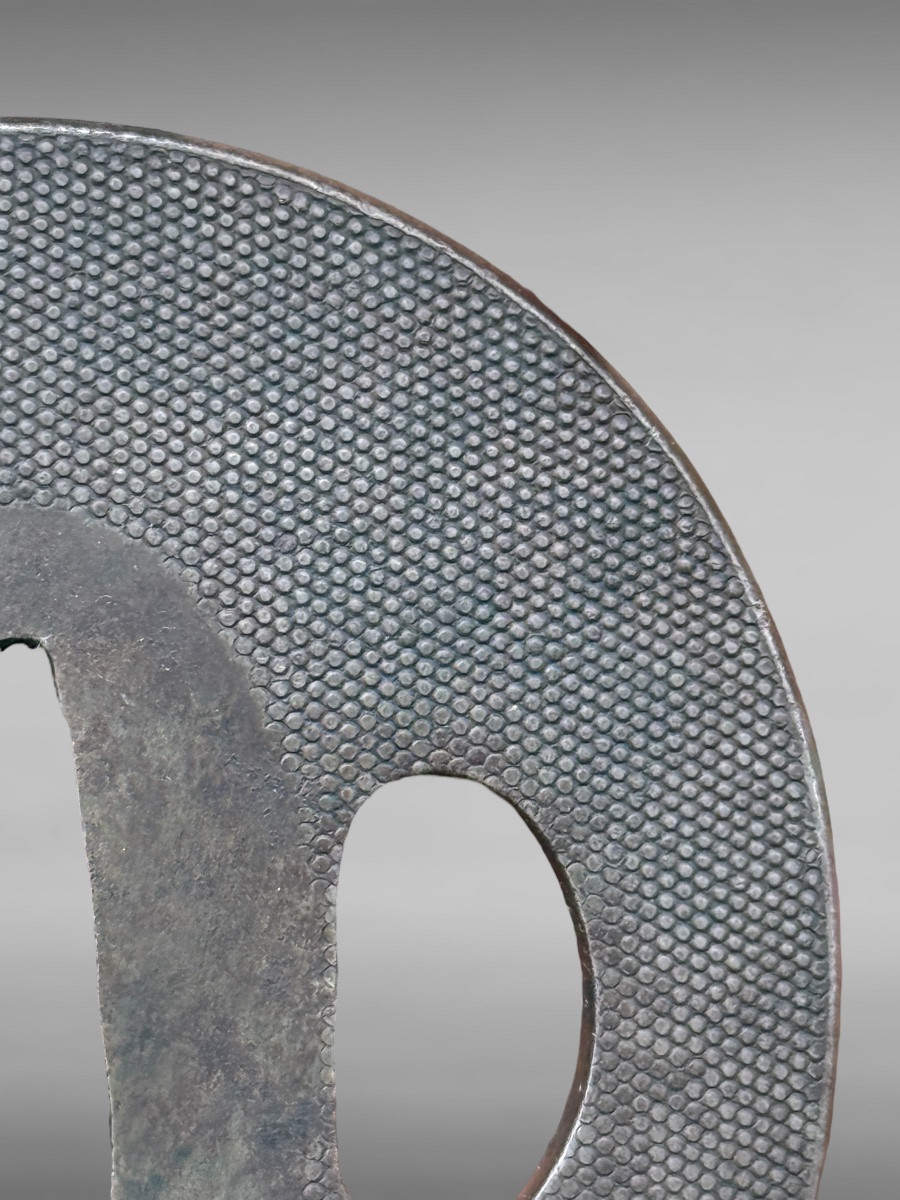
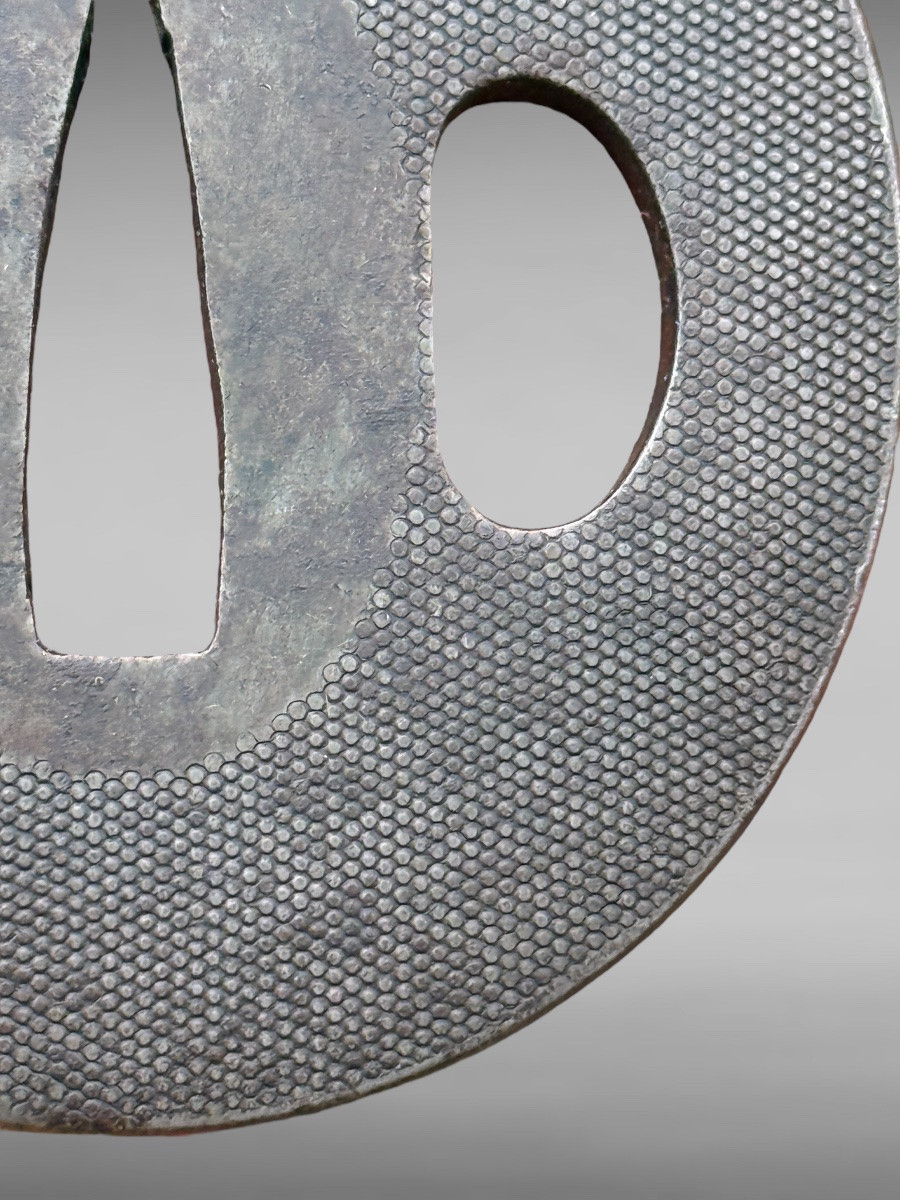
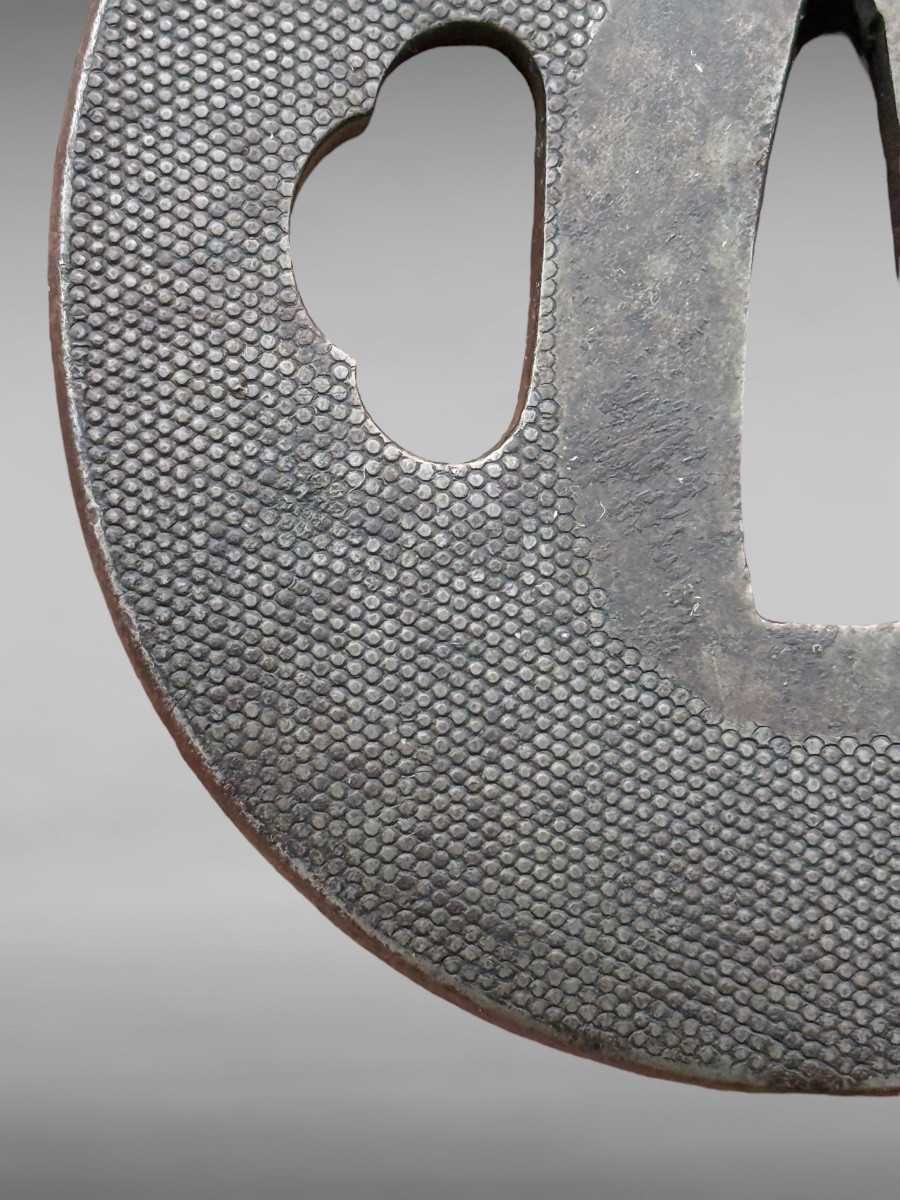
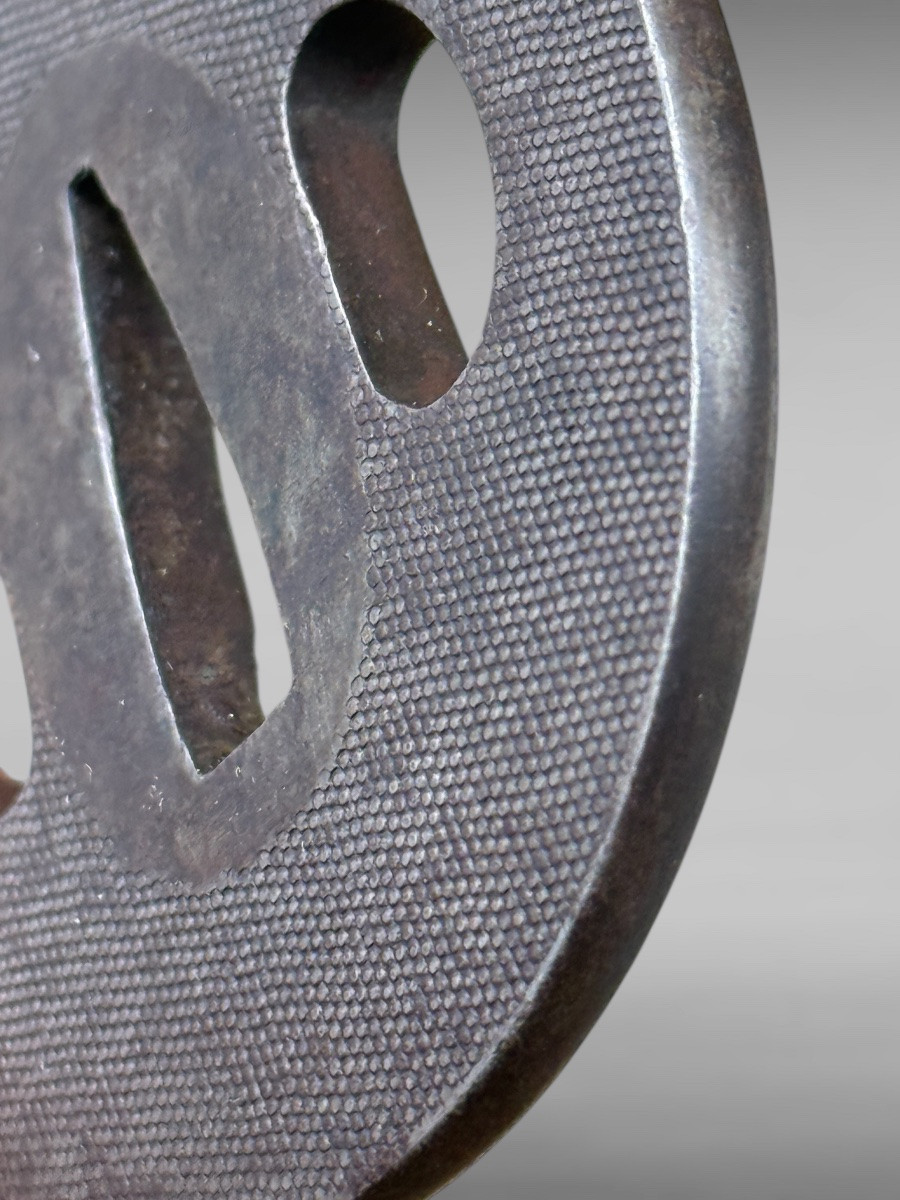
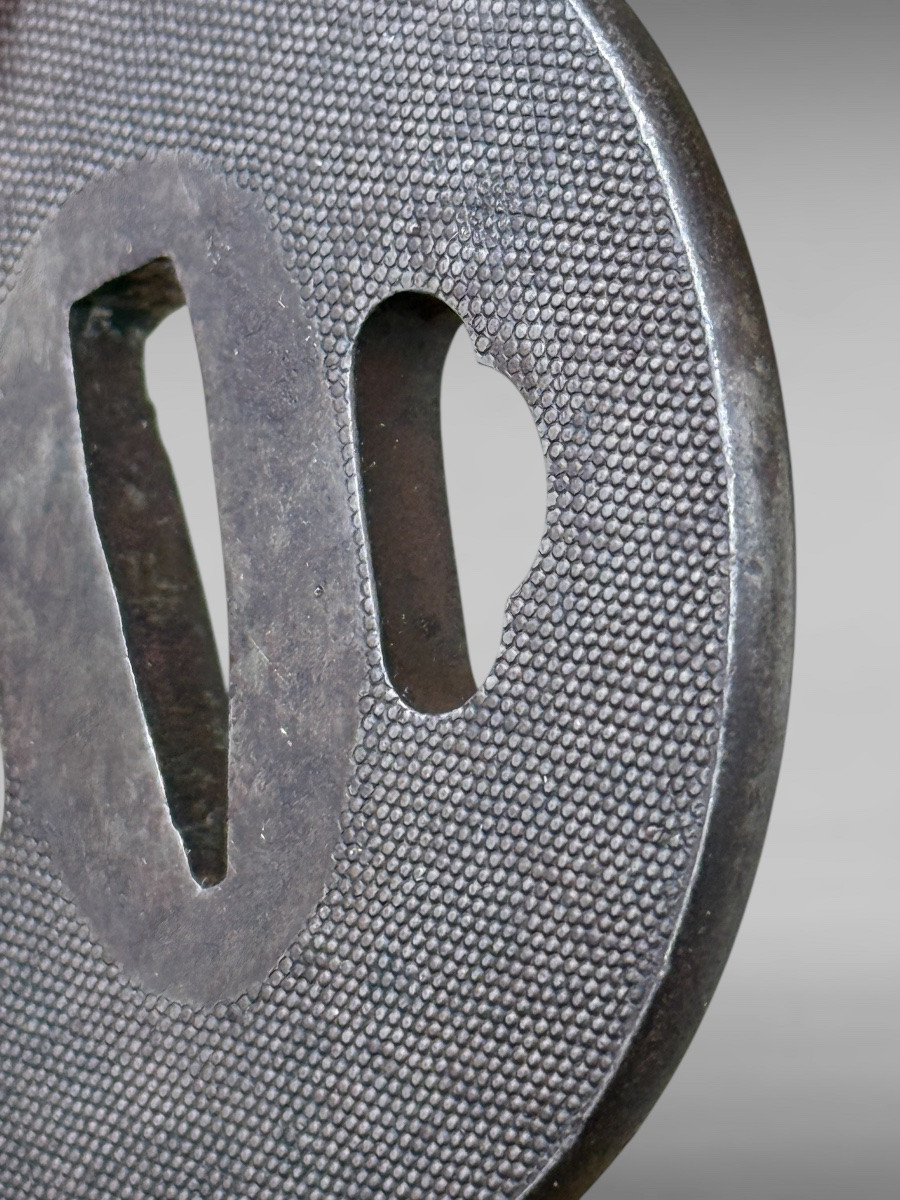
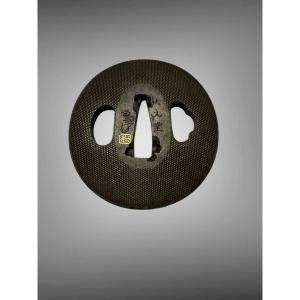
Iron Maru Gata Tsuba With Nanako Base, Signed - Edo Period - D. 6.4 Cm.


Form
: Maru-gata (round)
Dimensions
: 64 mm (H) 60 mm (L) approx. 4 mm (thickness)
Weight
: 91 g
Subject
: Wrought iron (tetsu)
Decor
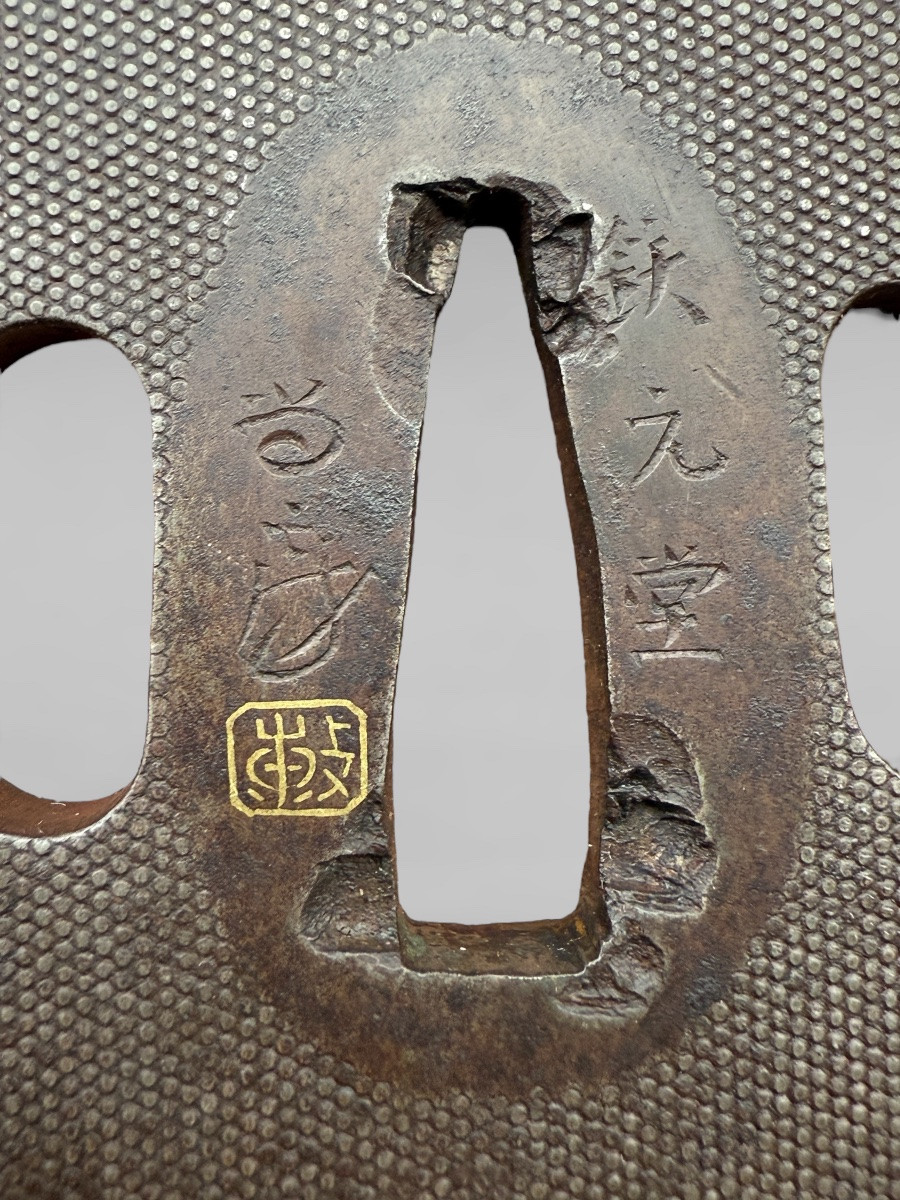
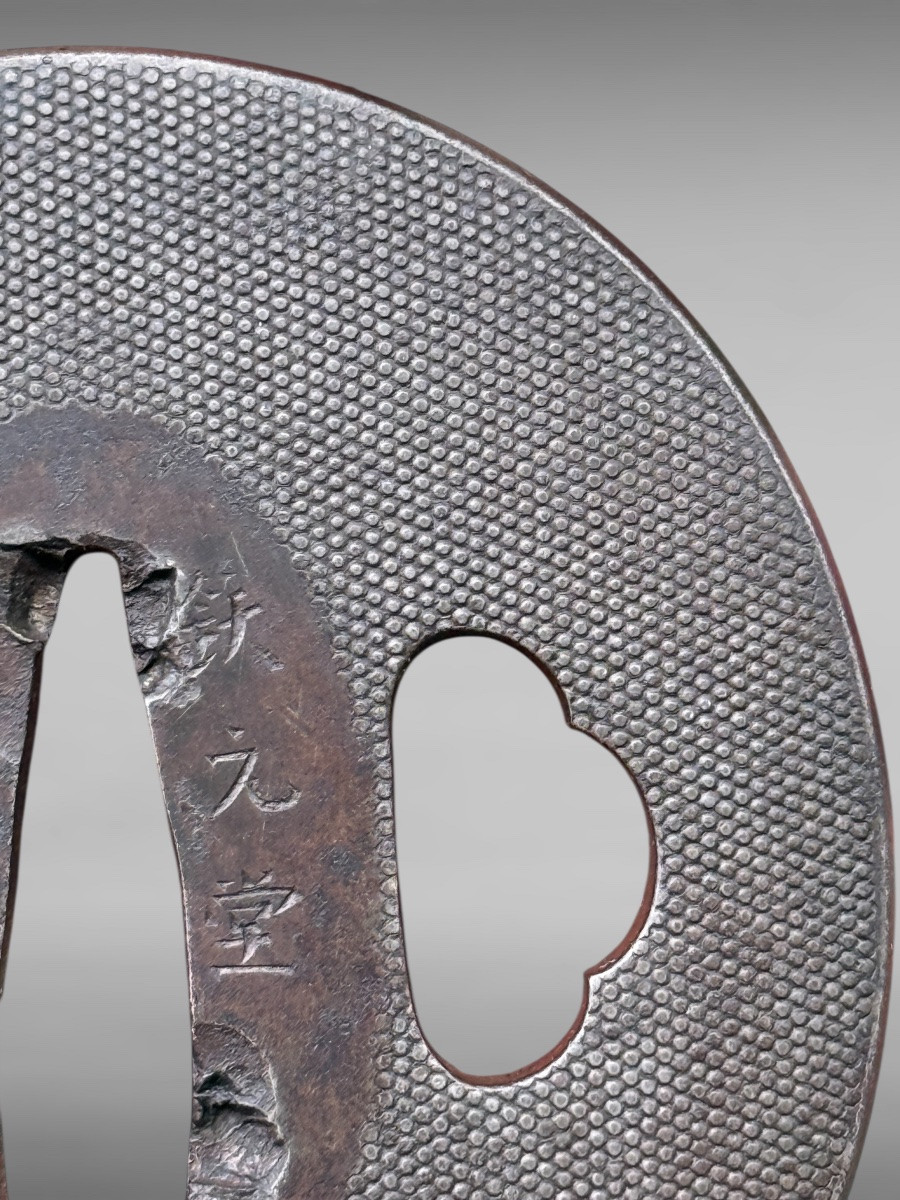
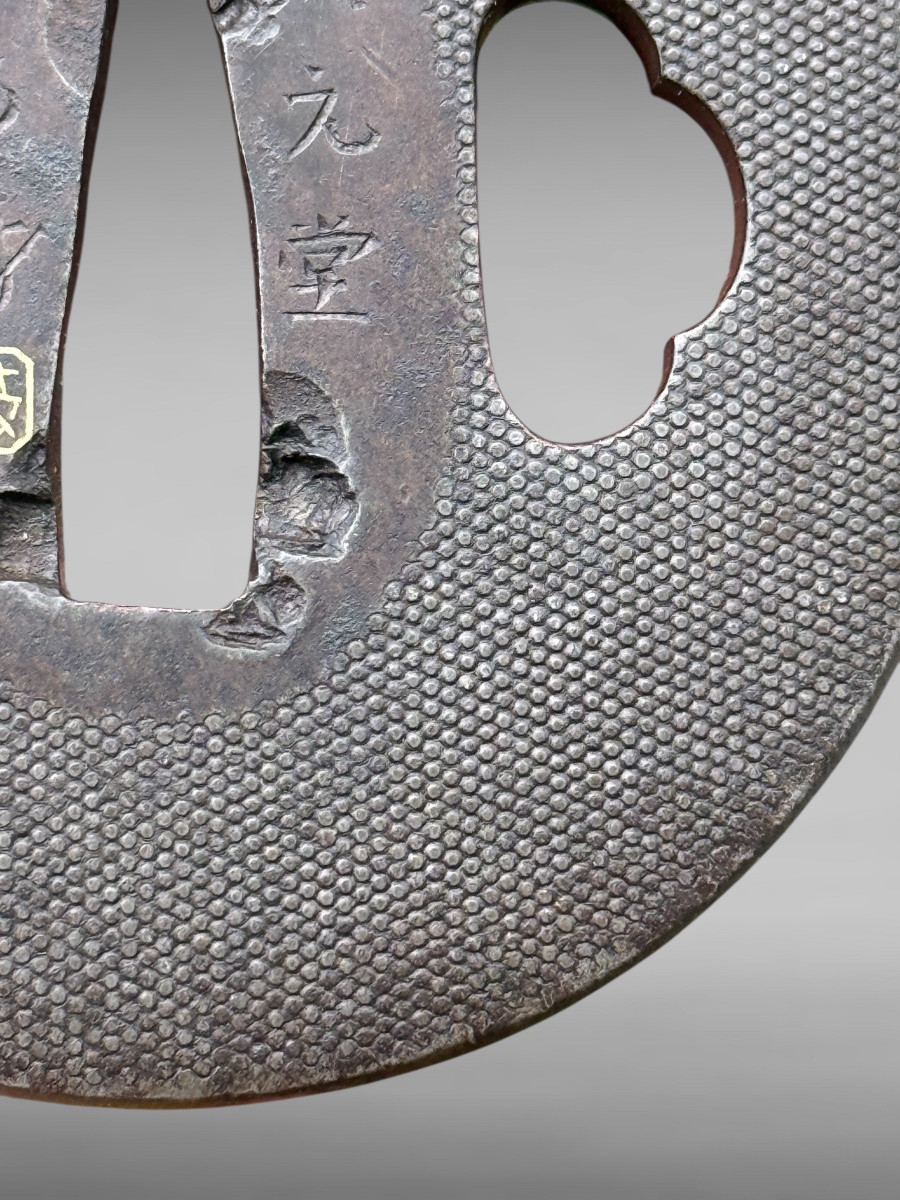
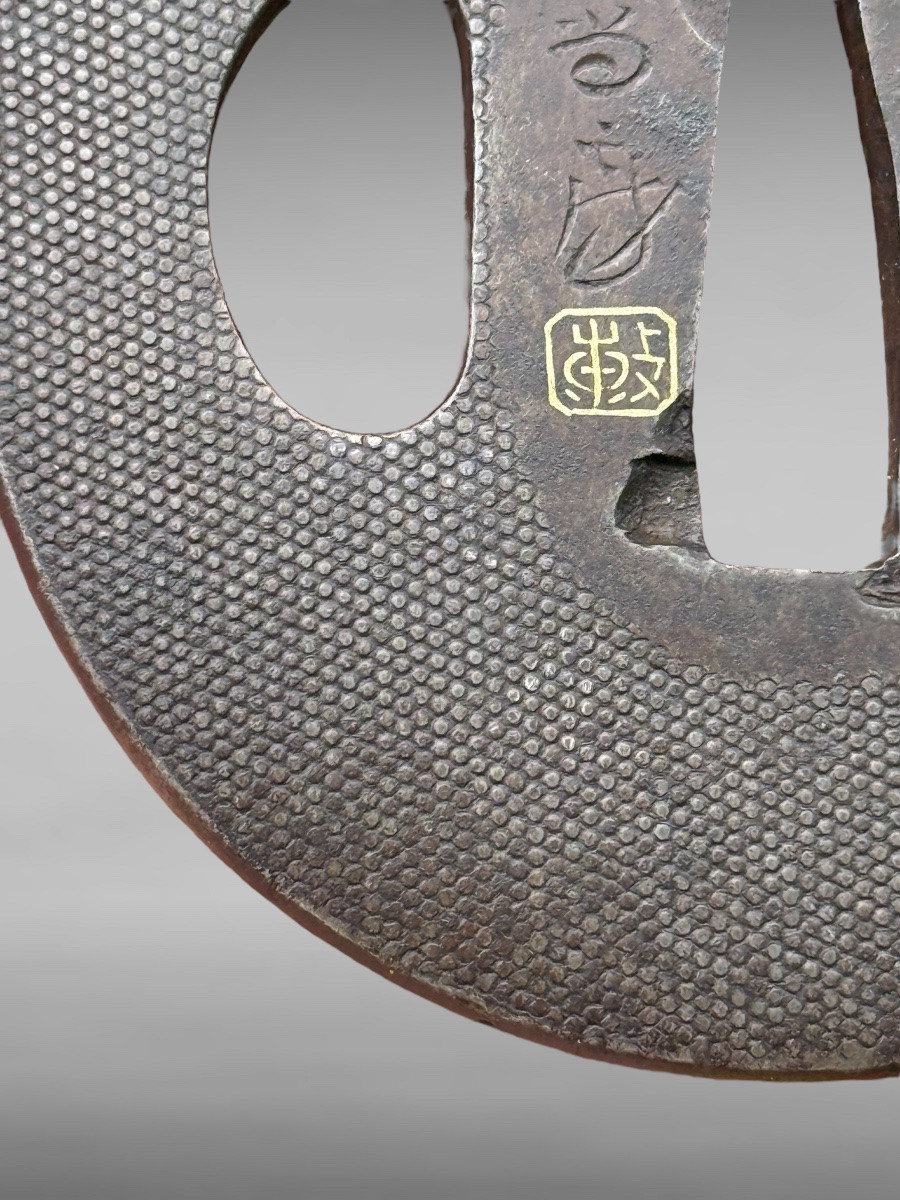
: Nanako-ji background (regular granulation with the punch) on the
two sides
Openings
: Nakago-ana (central hole), lateral kogai-ana and kozuka-ana
Patina
: Brown, homogeneous, old traces of wear
Inscriptions (mei 銘 and kao 花 押)
Engraving on the ura (inner face):
鉄 元 堂 (Tetsugendō)
Small square golden seal (花 押/ kao): stylized signature of the workshop
School: Tetsugendō (鉄 元 堂 派)
Master : Workshop of Tetsugendō Shōraku II (鉄 元 堂 松 楽 二 代)
Production location: Edo (now Tokyo), Japan
Period: End of the Edo era –around 1810
The Tetsugendō school, founded by Tetsugendō Shōraku
(active around 1780–1820), is distinguished by sobriety and technical perfection
of the work of iron.
The tsuba of this school are characterized by:
a nanako surface of extreme regularity,
an almost total absence of figurative decoration,
a Zen aesthetic, centered on the mastery of matter.
These pieces were prized by the samurai
lettrés from the end of Edo and, in the Meiji era, by Western collectors.
Manufacturing process: manual forging of the iron, cutting, filing and
fine chiseling with the punch (nanako-ji).
Finish: black ferruginous patina, inlaid golden seal (kin-in 金 印).
Assembly: no alloy added; decor obtained only by
: Maru-gata (round)
Dimensions
: 64 mm (H) 60 mm (L) approx. 4 mm (thickness)
Weight
: 91 g
Subject
: Wrought iron (tetsu)
Decor
: Nanako-ji background (regular granulation with the punch) on the
two sides
Openings
: Nakago-ana (central hole), lateral kogai-ana and kozuka-ana
Patina
: Brown, homogeneous, old traces of wear
Inscriptions (mei 銘 and kao 花 押)
Engraving on the ura (inner face):
鉄 元 堂 (Tetsugendō)
Small square golden seal (花 押/ kao): stylized signature of the workshop
School: Tetsugendō (鉄 元 堂 派)
Master : Workshop of Tetsugendō Shōraku II (鉄 元 堂 松 楽 二 代)
Production location: Edo (now Tokyo), Japan
Period: End of the Edo era –around 1810
The Tetsugendō school, founded by Tetsugendō Shōraku
(active around 1780–1820), is distinguished by sobriety and technical perfection
of the work of iron.
The tsuba of this school are characterized by:
a nanako surface of extreme regularity,
an almost total absence of figurative decoration,
a Zen aesthetic, centered on the mastery of matter.
These pieces were prized by the samurai
lettrés from the end of Edo and, in the Meiji era, by Western collectors.
Manufacturing process: manual forging of the iron, cutting, filing and
fine chiseling with the punch (nanako-ji).
Finish: black ferruginous patina, inlaid golden seal (kin-in 金 印).
Assembly: no alloy added; decor obtained only by
Explore similar pieces and discover your ideal find:
Edged Weapons