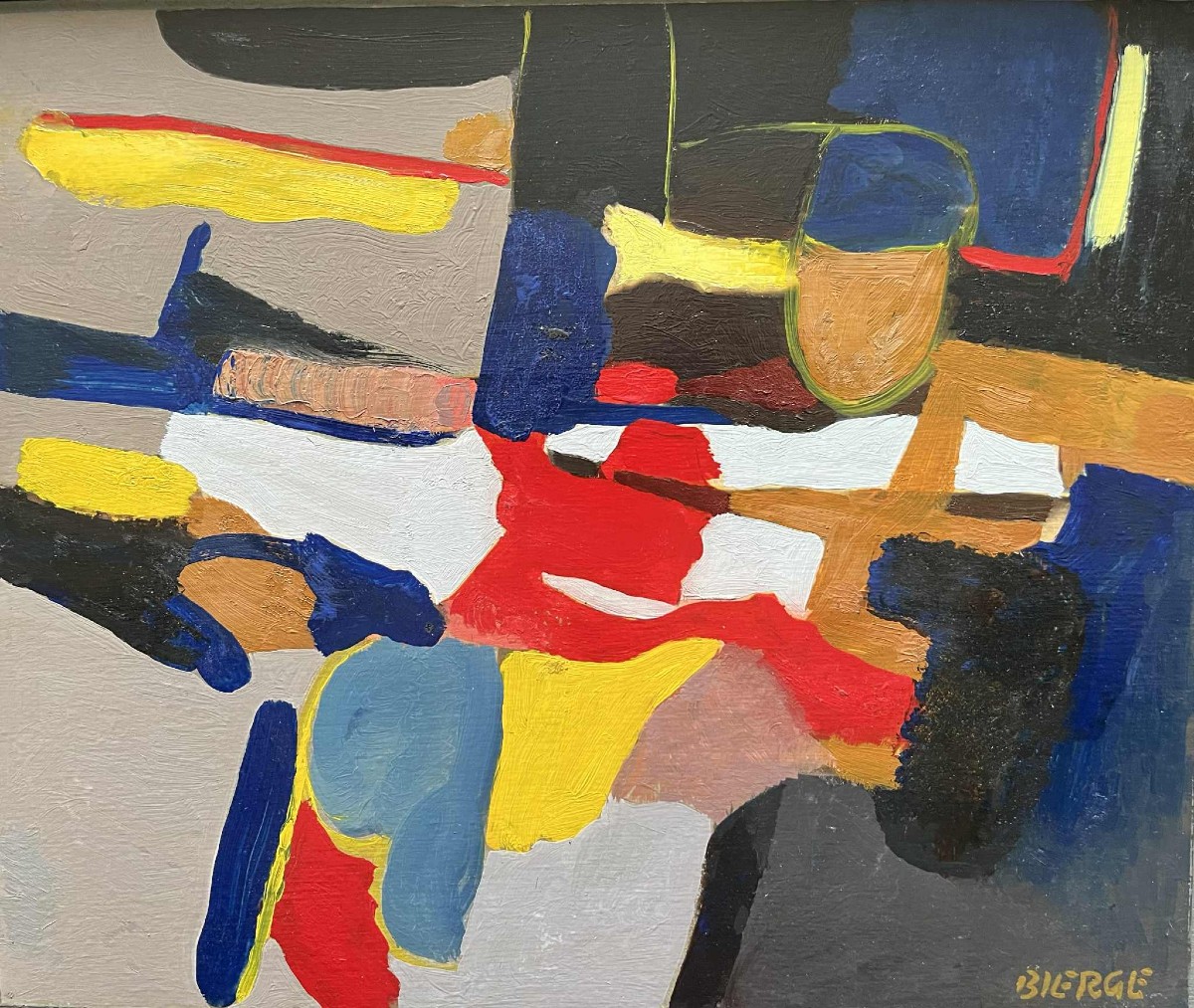
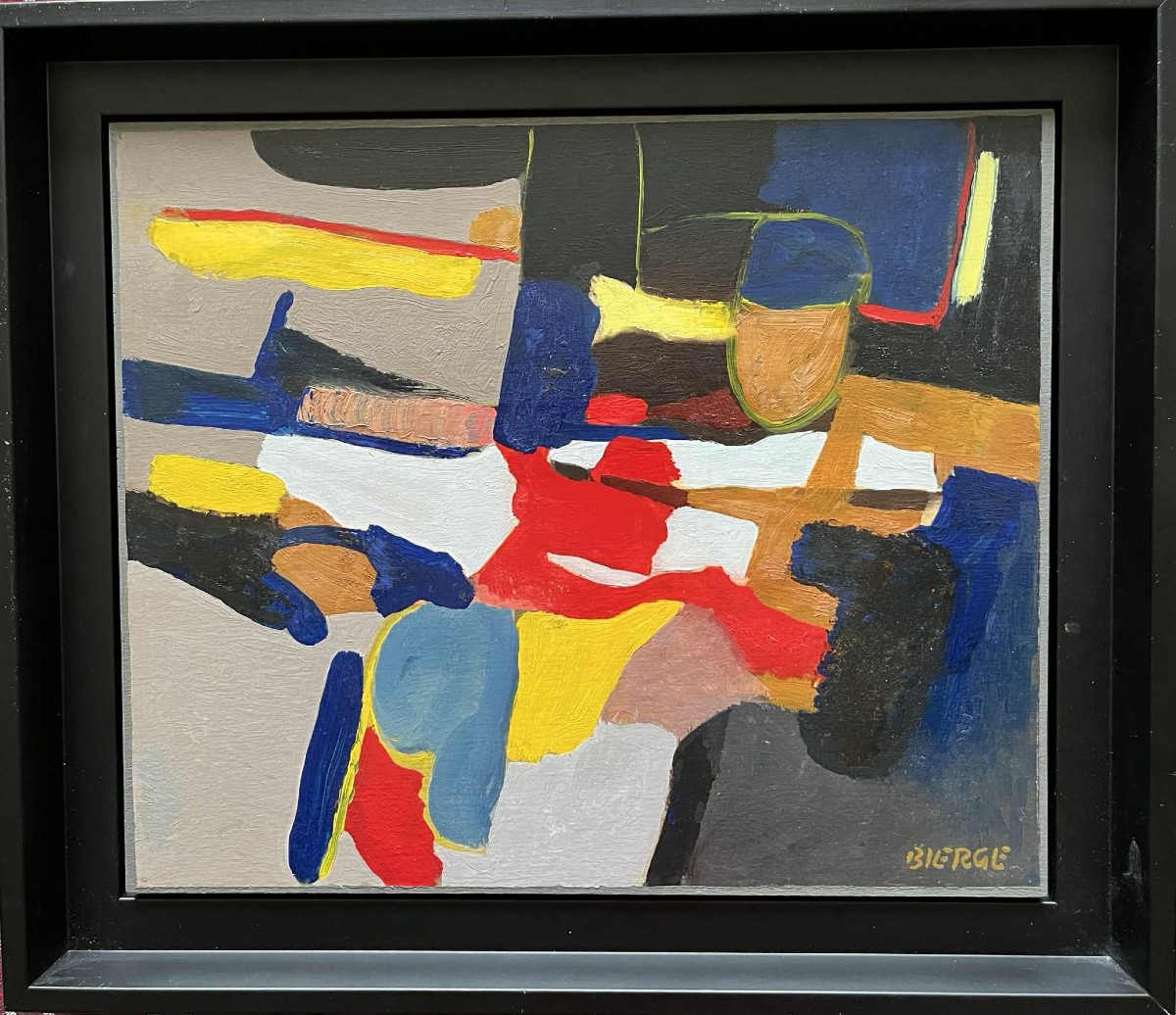


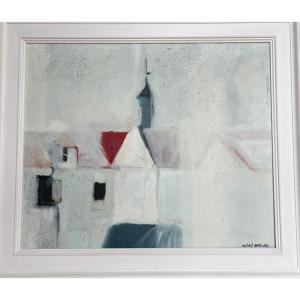
"Roland Bierge (1922 – 1991) - Composition Of March 16, 1976 Oil/paper/panel 27x32 Cm"
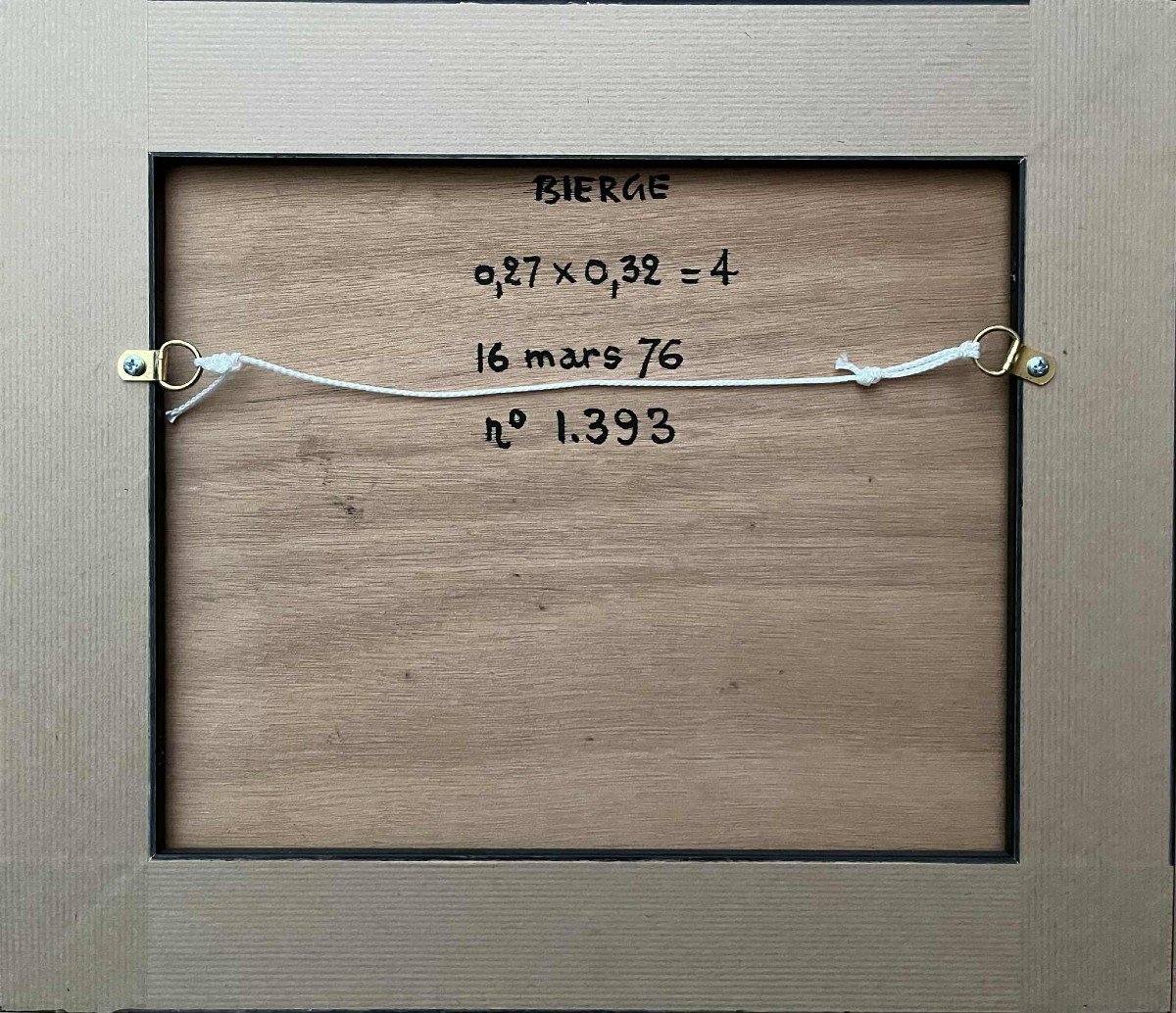
Roland BIERGE (Boucau 1922 – Saint-Antoine 1991) Composition of March 16, 1976 Oil on paper mounted on panel, signed lower right, countersigned on the reverse and dated March 16, 1976 Listed in the catalogue raisonné, page 229 – No. 1393 Dimensions: 27 cm x 32 cm Roland Bierge was born in 1922 in Boucau (Basses-Pyrénées). In 1936, he left his studies to join his father's painting business. From a young age, he dreamed of becoming a painter and attended evening classes at the School of Applied Arts in Bayonne. He then exhibited with a group of painters from Biarritz (Les Saltimbanques). Roland Bierge moved to Paris in 1946, but his beginnings were difficult. He was hired as a set designer at the Comédie-Française. He continued to paint and exhibited a canvas for the first time at the Salon des Indépendants. Three years later (1950), the painting he submitted to the same Salon des Indépendants garnered critical acclaim. He had his first solo exhibition in Paris (Galerie La Boétie) and subsequently participated in group exhibitions alongside Jacques Villon, André Marchand, Antoni Clavé, and Bernard Buffet. Group exhibitions followed in quick succession: Salon d'Automne, Salon des Jeunes Peintres, Salon Comparaisons, Salon de Mai (from 1969 onward), and others. In 1953, the French State purchased one of his paintings ("Yellow Cup and Apple"), followed by the City of Paris the following year. That same year (1954), he exhibited with the "Rencontres" group alongside Édouard Pignon, among others. Roland Bierge exhibited regularly in France and abroad, receiving numerous prizes and honorary awards over the years. Landscapes, portraits, nudes, and still lifes were his preferred subjects. In the 1950s, influenced by the works of Jacques Villon and André Lhote, Roland Bierge initially created in a post-Cubist style, but his style gradually evolved. He moved from drawing to a more minimalist approach and an exaltation of color in the 1960s. The artist then embraced a kind of union between abstraction and figuration. From 1969 onward, Roland Bierge gradually took liberties with drawing, embracing non-figurative art and revealing a vibrant polychromatic palette that characterized his later period. This is the art of balance and harmony of color. Roland Bierge died in 1991 in Saint-Antoine (Gers). His work is associated with what is commonly known as the New School of Paris. “Pure, resonant colors, grand rhythms forcefully contrasting shadow and light: Bierge practices abstraction with the palette of a Fauvist painter. Starting with Roger de La Fresnaye and a softened Cubism, he gradually evolved towards a non-figurative art of pure, compartmentalized colors and geometric interlockings that vaguely recall the art of Maurice Estève.” Gérald Schurr 











 Le Magazine de PROANTIC
 TRÉSORS Magazine
 Rivista Artiquariato