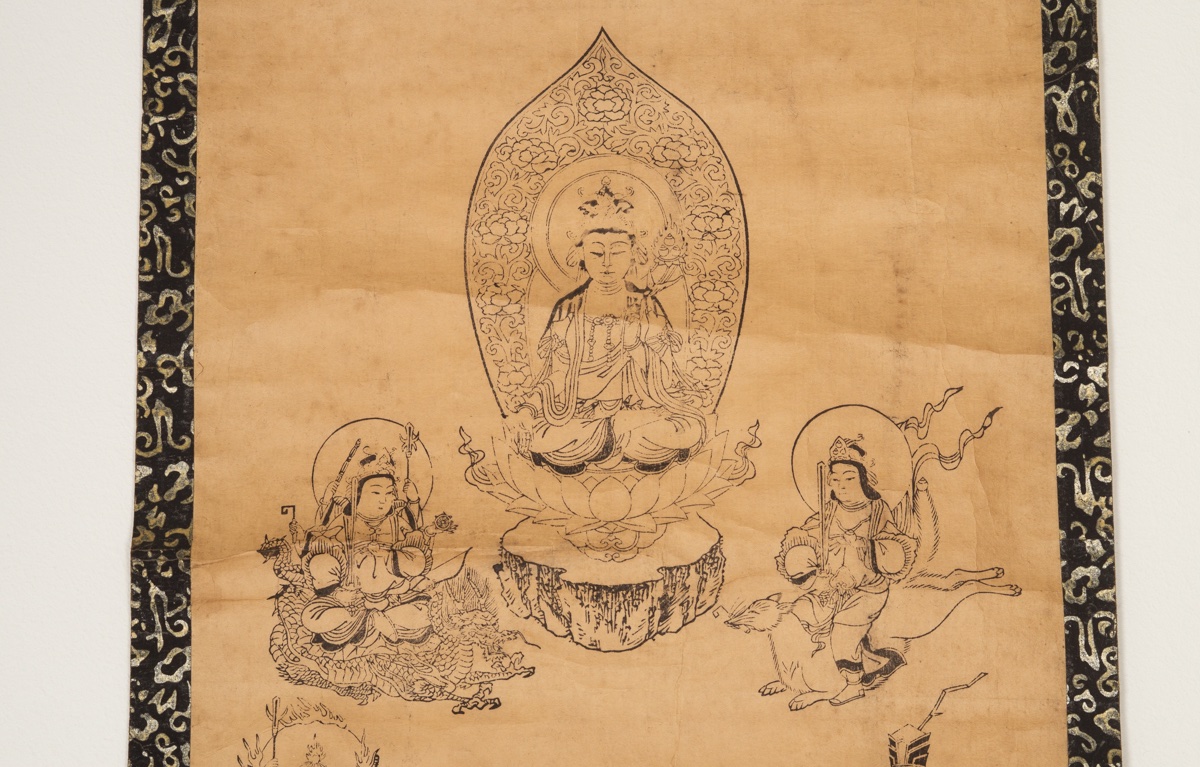
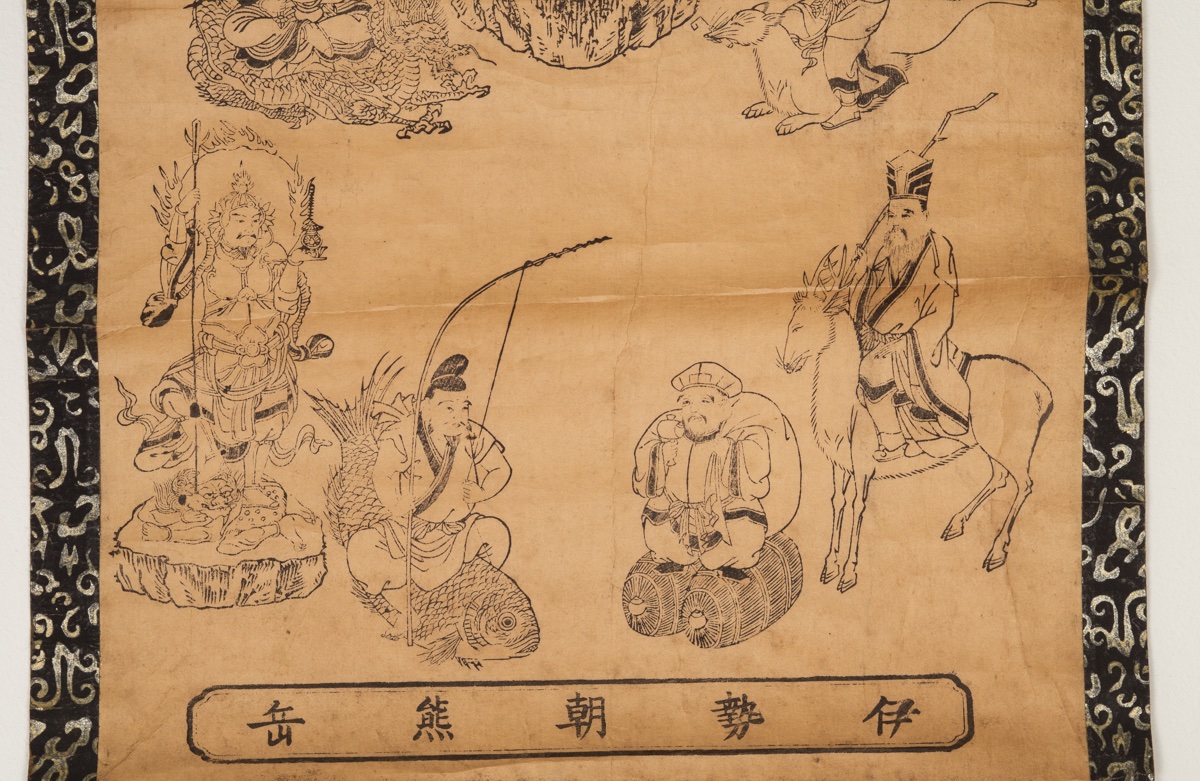
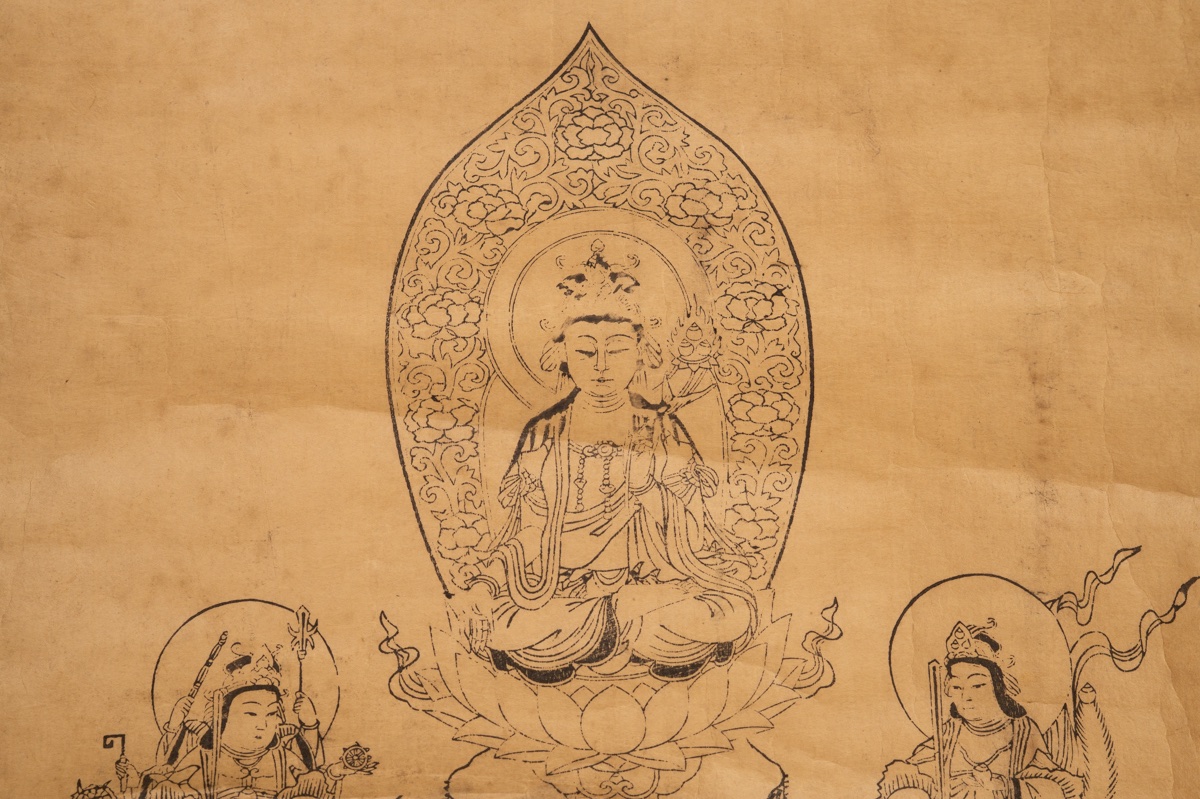
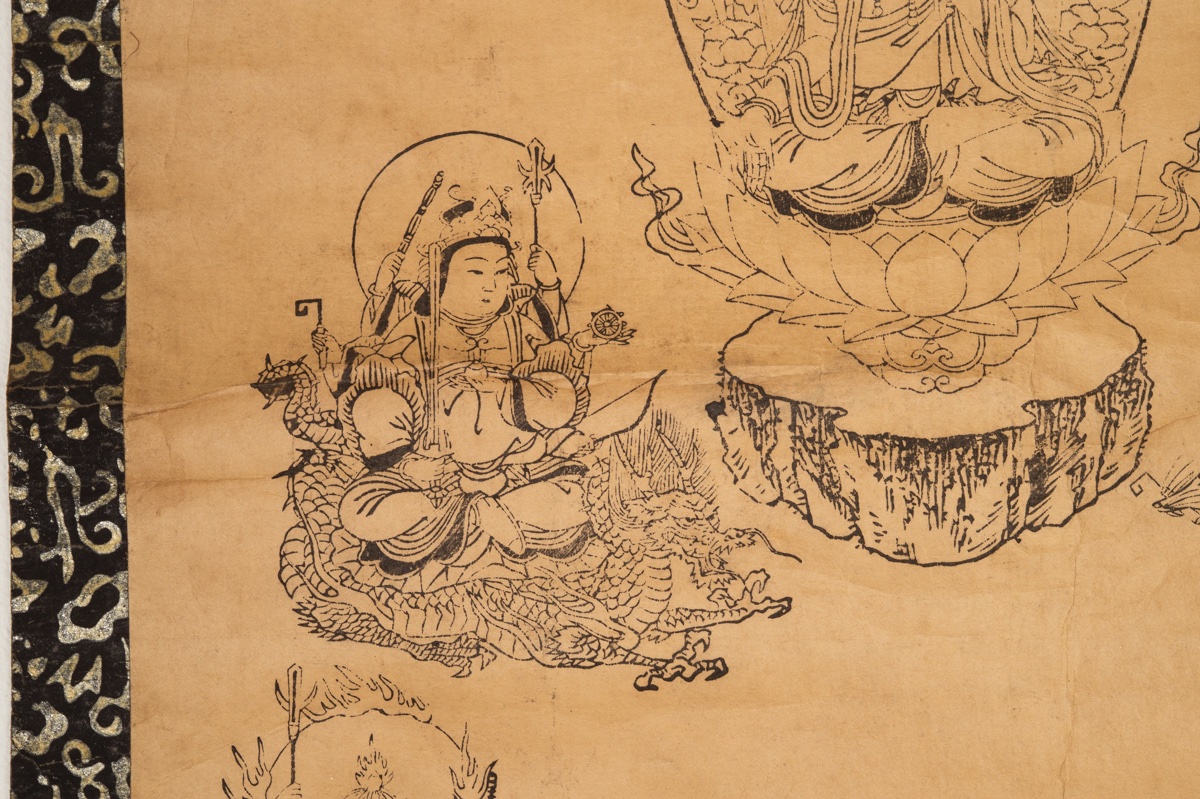
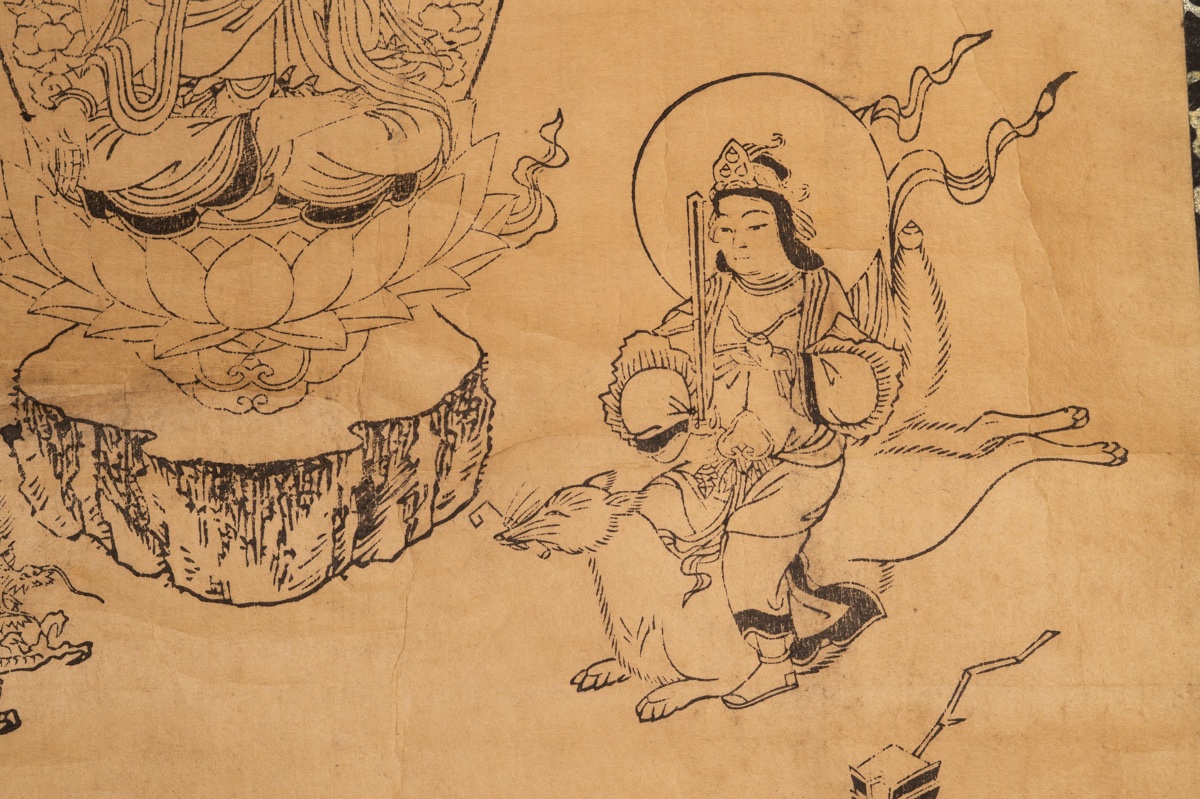
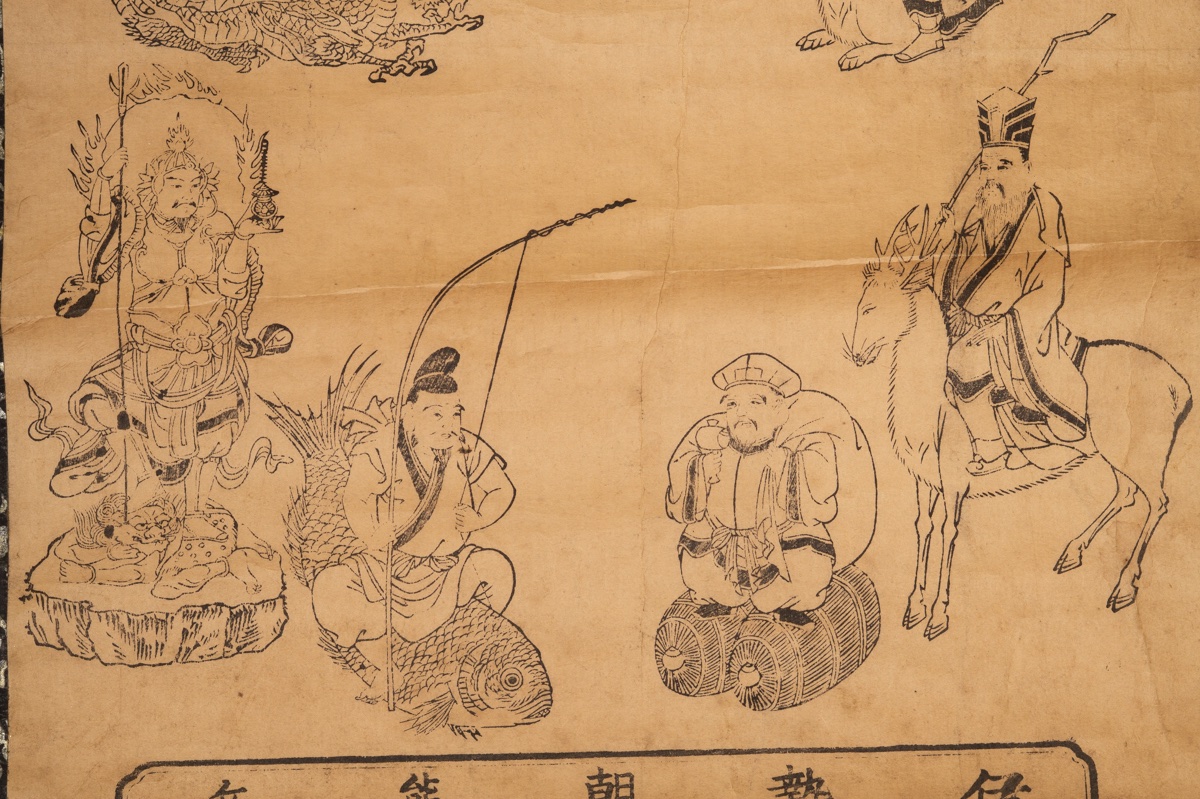
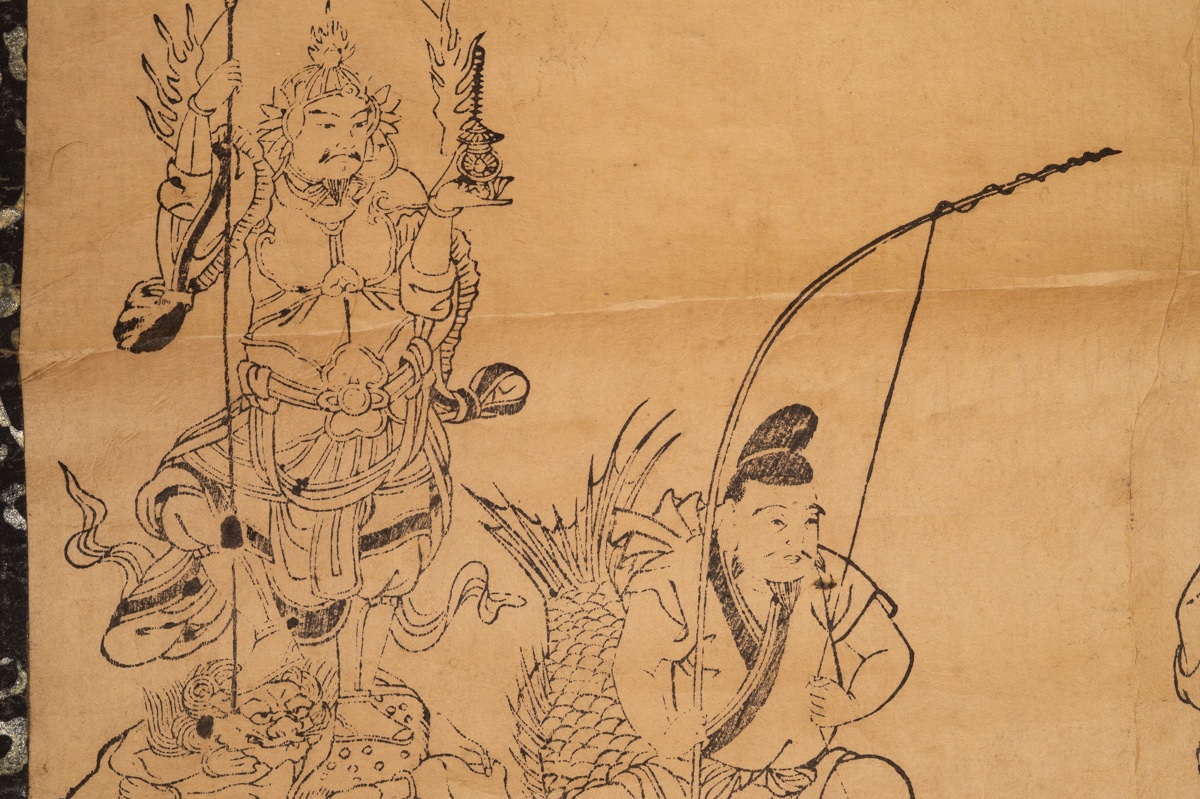
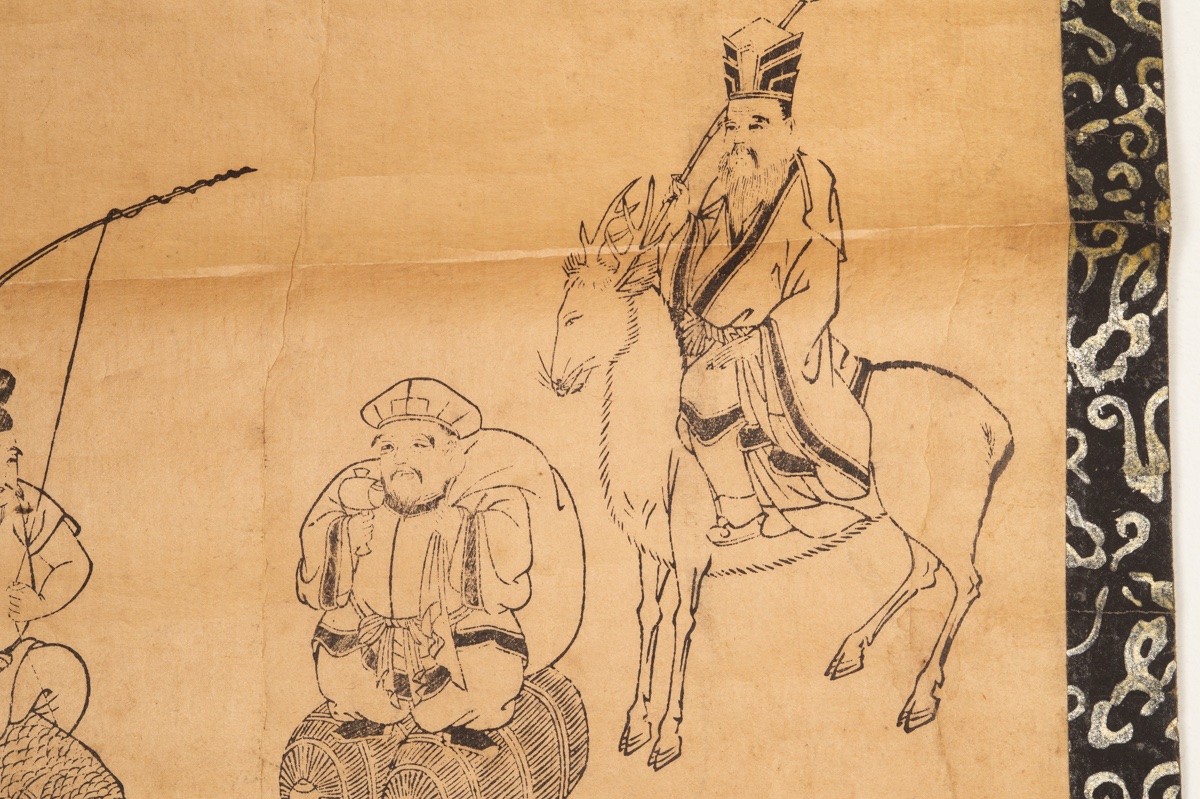


Buddha With Figures, Woodblock Print, Kakemono, Japan, Edo Period, 19th Century.
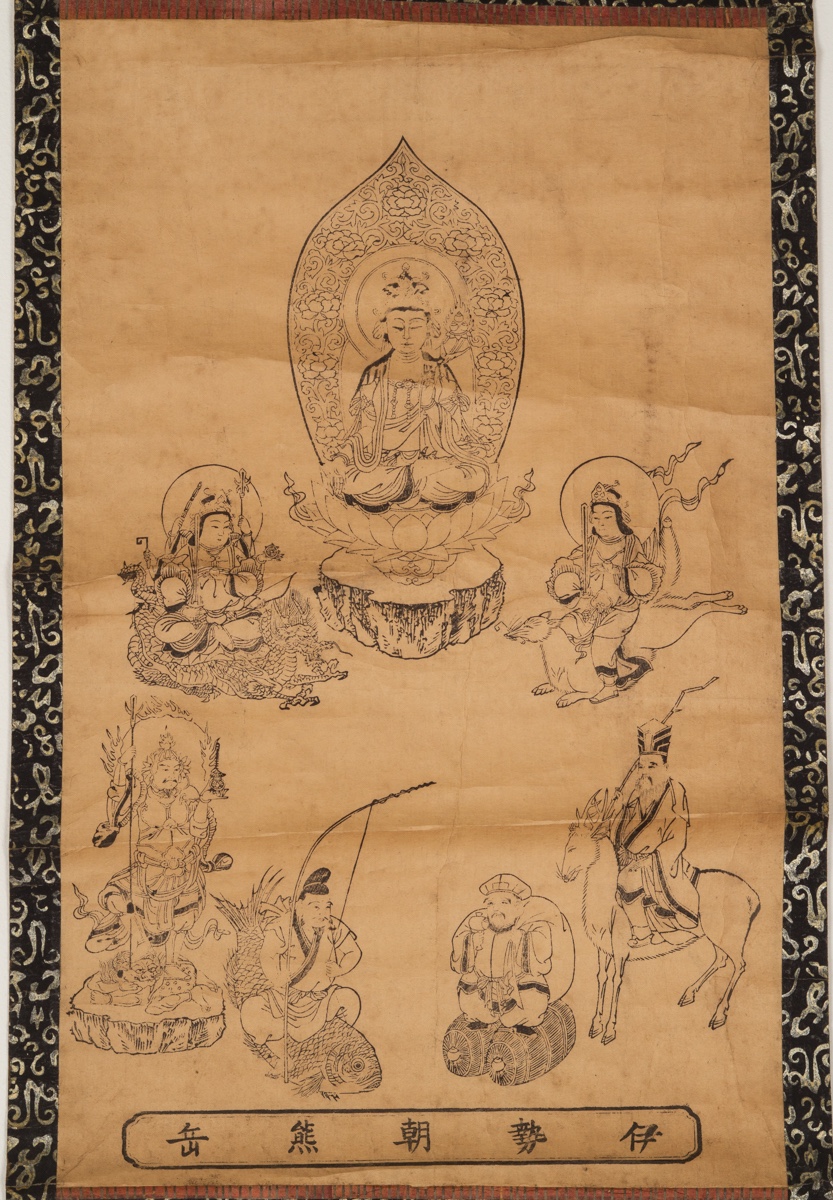
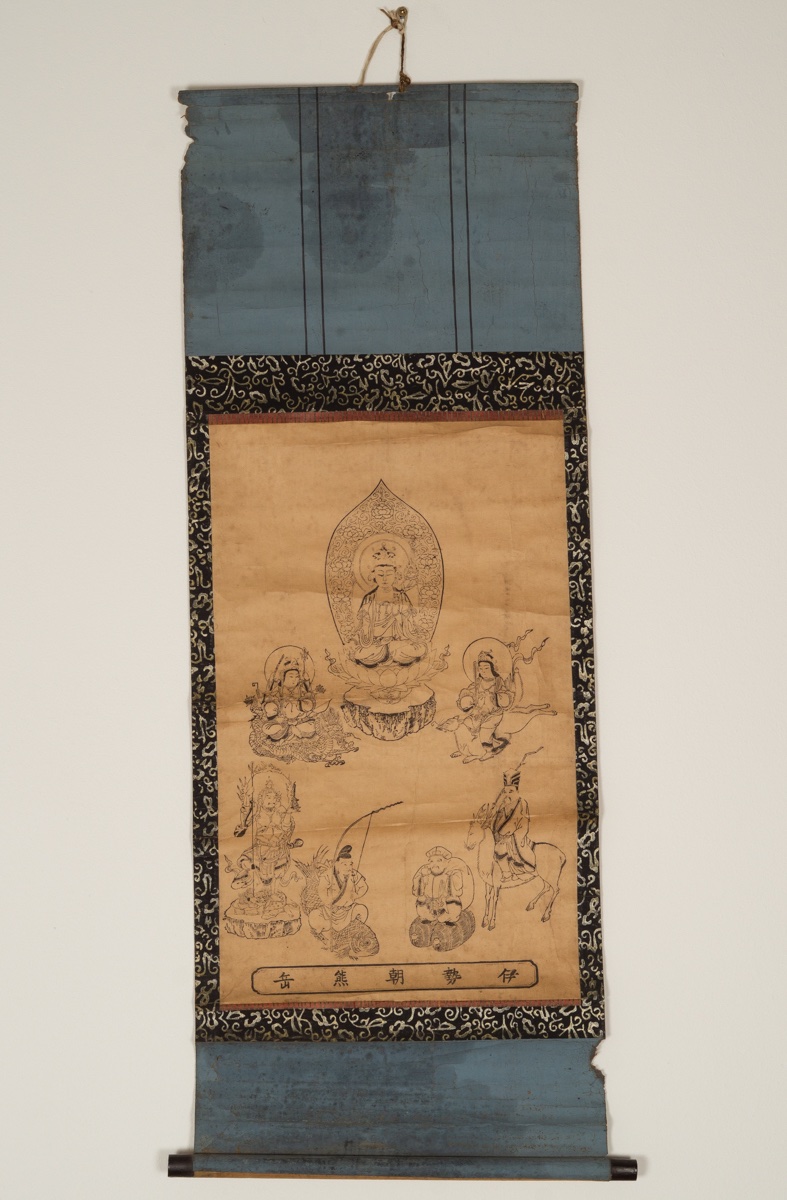
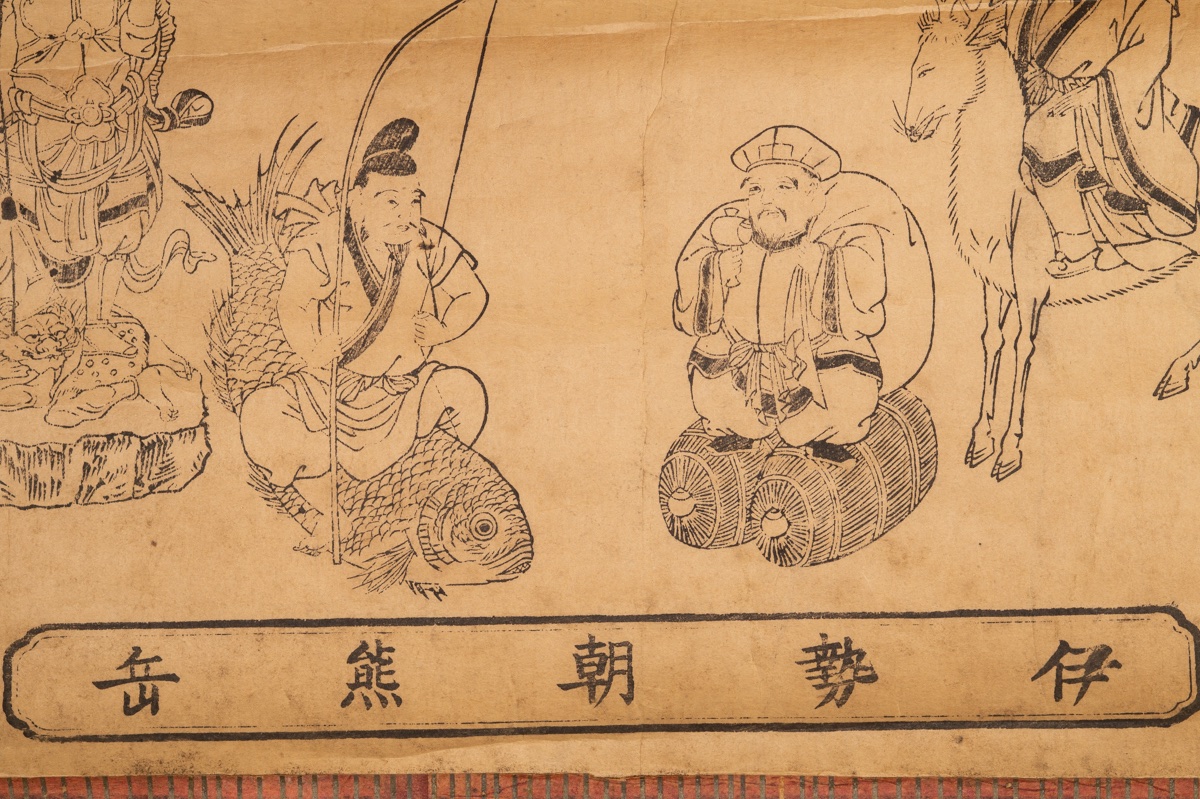
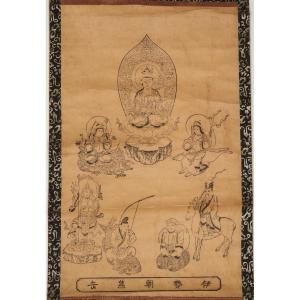
Woodblock print scroll. The text at the bottom reads: 伊勢朝熊岳 (Ise Asama-dake). This indicates that the scroll originates from Mount Asama (Asama-dake) in Mie Prefecture, located near the famous Ise Grand Shrine. It depicts the bodhisattva Kokūzō Bosatsu (symbol of wisdom and memory), the principal deity of the temple on Mount Asama. Among others, Daikokutena (on rice barrels), Ebisu (with a fish), Bishamontena (in armor), and Jurōjina (with a deer) are seen around him.
Wood block print on paper.
Japan, Edo period, 19th century.
Dimensions: 75 x 28.5 cm. Image: 40 x 25 cm. Width including handles: 32 cm.
Fair condition, with visible discoloration, creases, and damage to the frame.
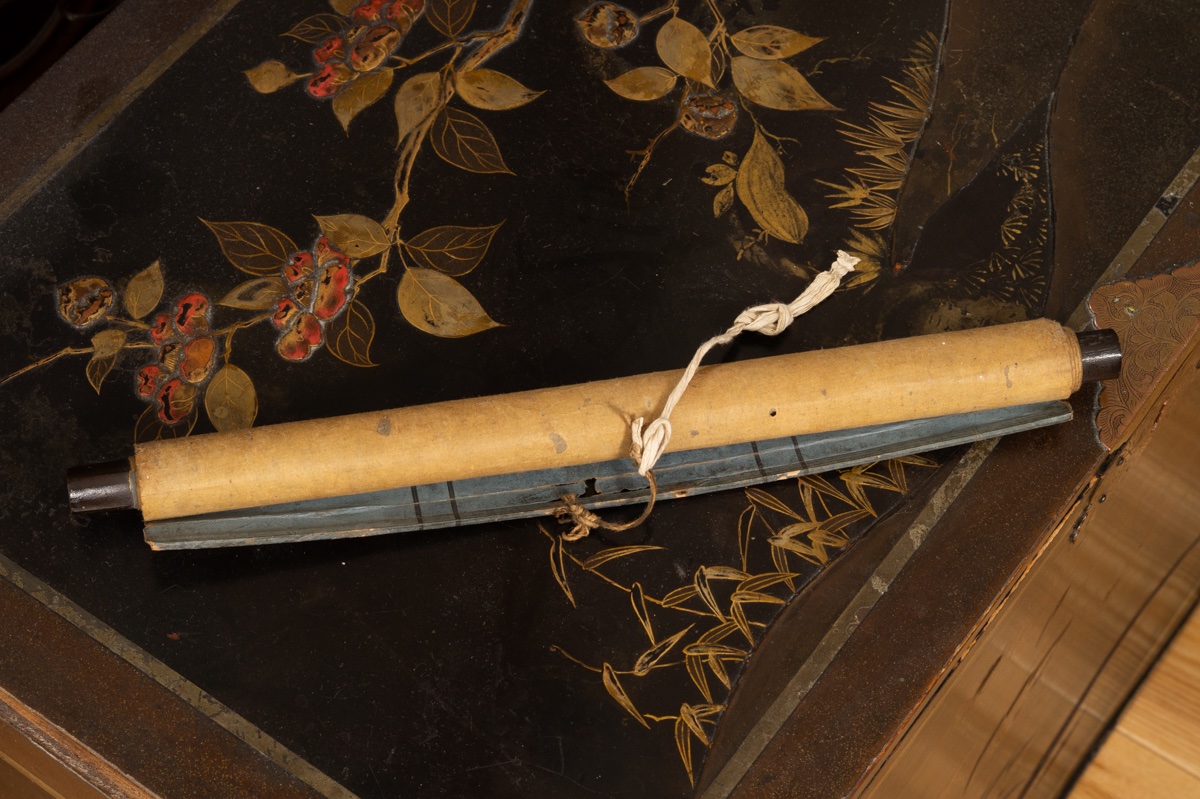
Kakemono (Japanese: 掛け物 kake-mono - "hanging object"; also: 掛軸 kakejiku - "hanging scroll") - a Japanese painting on paper or silk, usually glued to a silk backing, intended to be hung on the wall. The top and bottom edges of the kakemono are attached to wooden bars to facilitate rolling, with the bottom bar (Japanese: ikugi 軸木) also equipped with protruding handles (Japanese: jiku). Kakemono scrolls first appeared in Japan during the Nara period (710-794). In traditional Japanese homes, they are hung in a niche called a tokonoma.
Free shipping within the European Union! I send packages via insured courier (DPD or DHL). All items are very carefully packaged. Payment by international bank transfer. I will provide a certificate of authenticity upon request.
Wood block print on paper.
Japan, Edo period, 19th century.
Dimensions: 75 x 28.5 cm. Image: 40 x 25 cm. Width including handles: 32 cm.
Fair condition, with visible discoloration, creases, and damage to the frame.
Kakemono (Japanese: 掛け物 kake-mono - "hanging object"; also: 掛軸 kakejiku - "hanging scroll") - a Japanese painting on paper or silk, usually glued to a silk backing, intended to be hung on the wall. The top and bottom edges of the kakemono are attached to wooden bars to facilitate rolling, with the bottom bar (Japanese: ikugi 軸木) also equipped with protruding handles (Japanese: jiku). Kakemono scrolls first appeared in Japan during the Nara period (710-794). In traditional Japanese homes, they are hung in a niche called a tokonoma.
Free shipping within the European Union! I send packages via insured courier (DPD or DHL). All items are very carefully packaged. Payment by international bank transfer. I will provide a certificate of authenticity upon request.
170 €
Period: 19th century
Style: Asian art
Condition: Condition of use
Material: Paper
Length: 75
Width: 28,5
Reference (ID): 1696004
Availability: In stock
Print