



Ceramic Pan
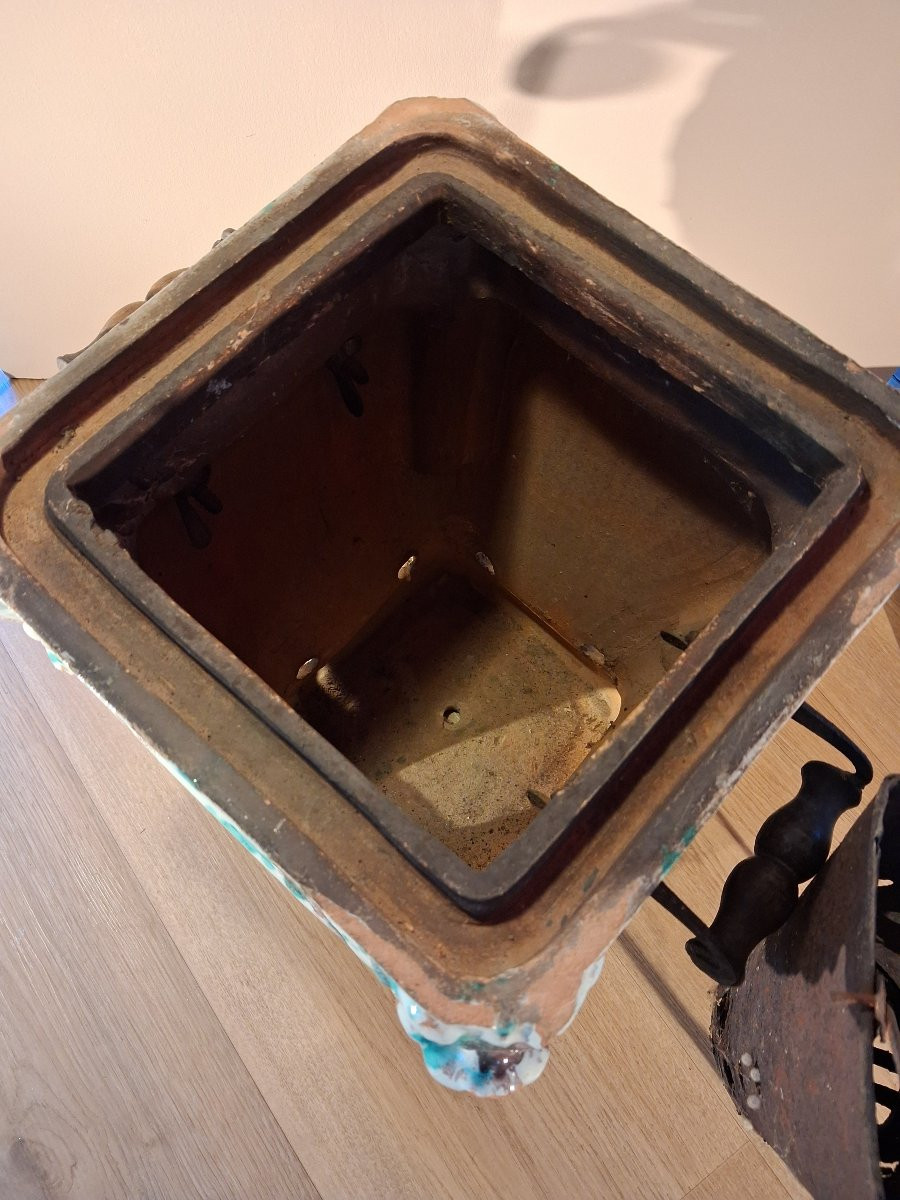
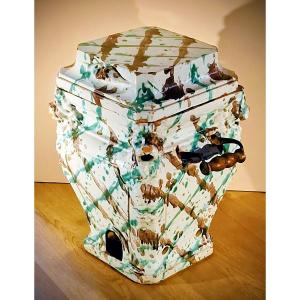
A curved, polychrome earthenware stove decorated with a green and manganese trellis pattern on a white background, with recessed moldings forming reserves, chamfered corners adorned with lion heads. The flat lid forms a base decorated with two handles in the shape of leaves (the inscription "n°2" is on the reverse). The turned wooden handles are in opposing baluster shapes, with iron fittings. It comes with its ember bucket resting on three feet (oxidation, one foot detached). Likely a piece from eastern France (Lorraine?), 18th century. Height: 48.5 cm / overall width (diagonal): 41.5 cm (+15 cm, i.e., 2 x 7.5 cm on each side, including the handles). Minor chips and glaze imperfections (no cracks or breaks). With the brazier as its "ancestor," it was in the 17th century that the manufacture and use of stoves developed significantly, and their size, depending on their intended use, decreased. Numerous earthenware factories produced them throughout Europe. Not without danger due to the emission of toxic gases from burning coal, many accounts found in ancient texts mention the deaths of a large number of people by asphyxiation in their sleep. It was crucial to remember "to place on the stove where the coal is burning, a vessel filled with water, whose vapors, by dissolving those of the combustible material, prevent them from being harmful" (Havard, "Stove - Heating Appliance"). This is undoubtedly the reason why many models have a flat lid. Finally, we must distinguish two categories of manufacturers: "those who manufactured and sold metal stoves were grouped corporatistically with the coppersmiths; those who manufactured and sold earthenware stoves, with the manufacturers and merchants of earthenware" (Havard, "Stove Maker").
1 280 €
Period: 18th century
Style: Louis 14th, Regency
Condition: Good condition
Material: Earthenware
Reference (ID): 1689690
Availability: In stock
Print