THIS OBJECT WAS SOLD
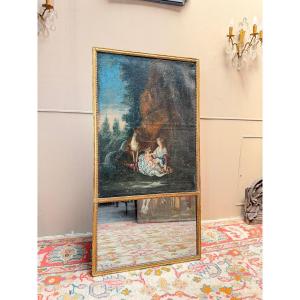
Narrow Pier Glass With Painted Decoration, Regional Work From The 18th Century.
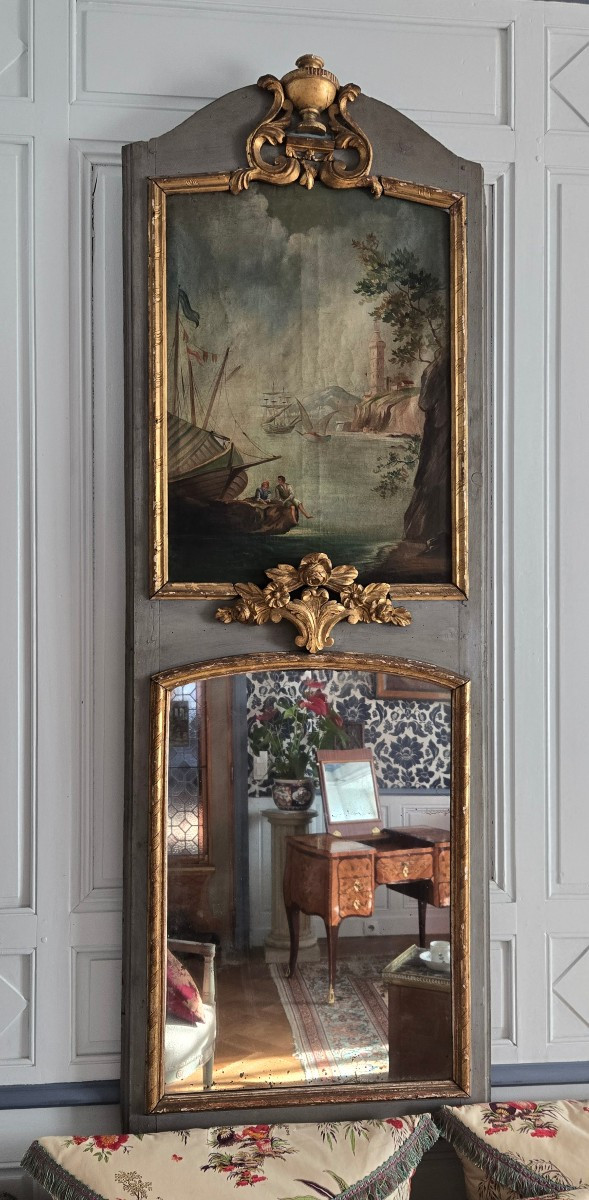

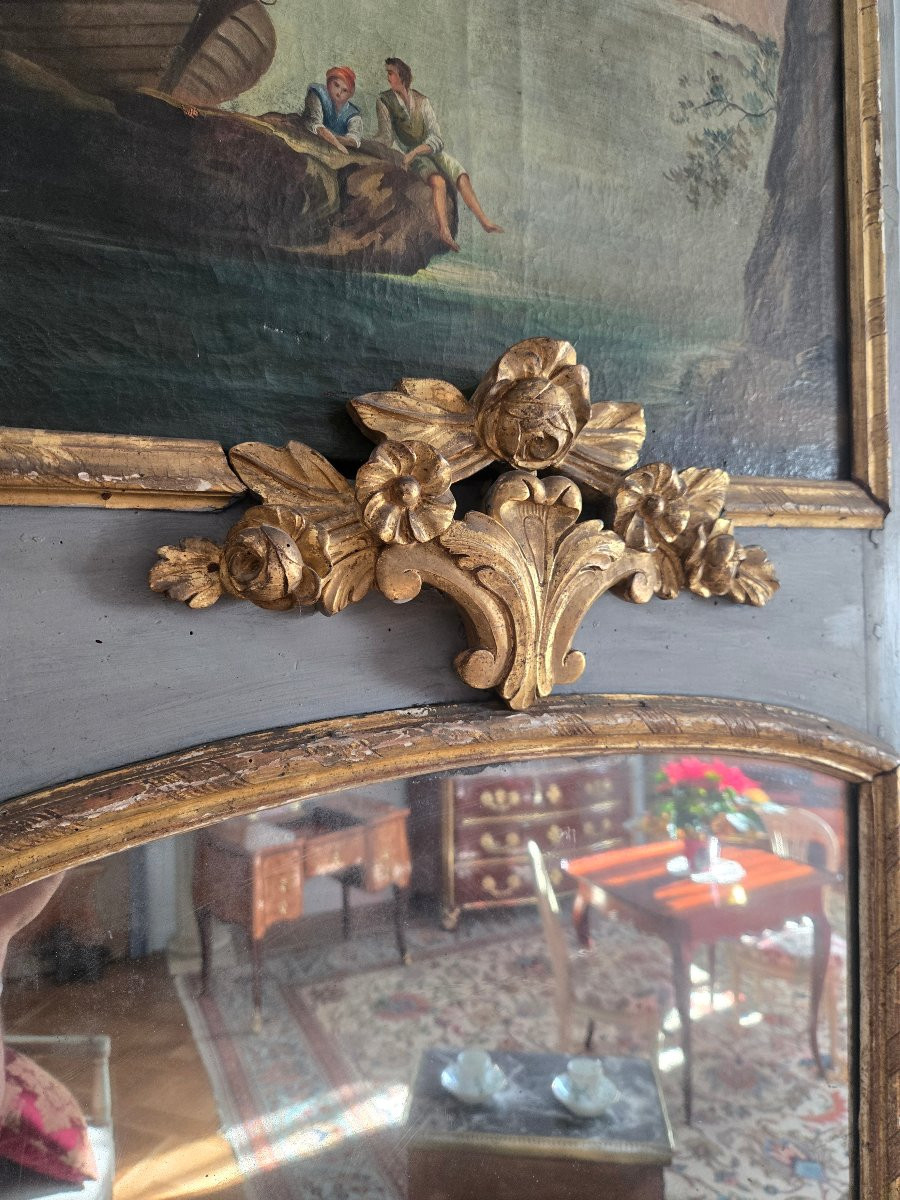
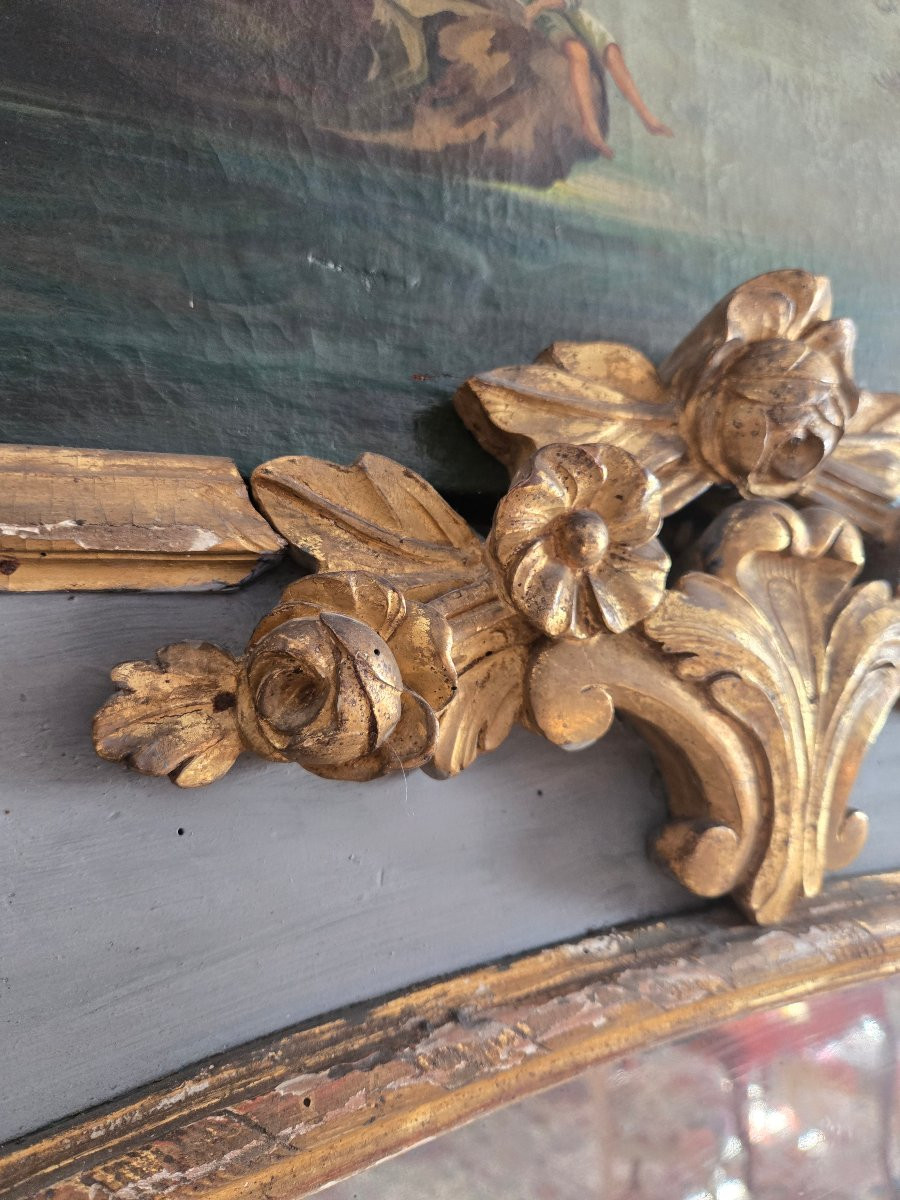
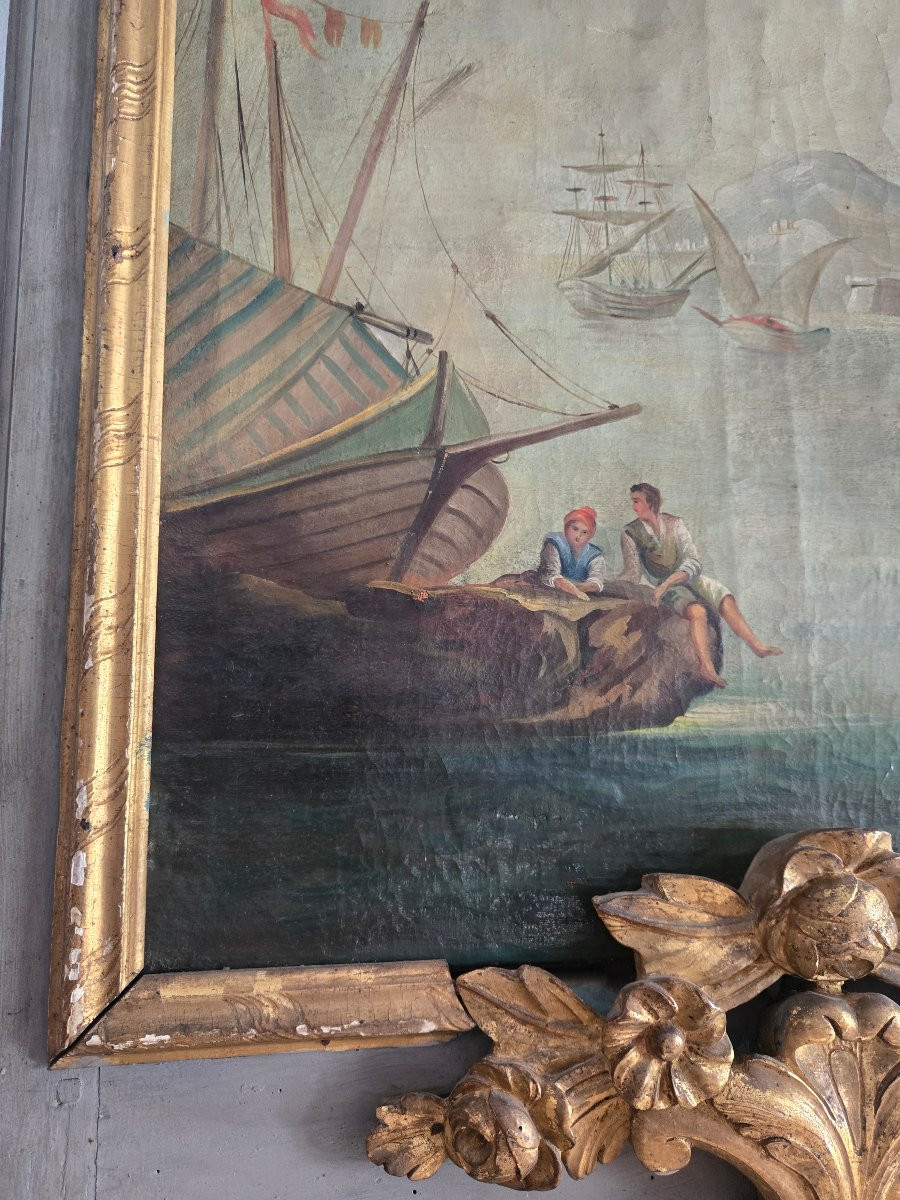

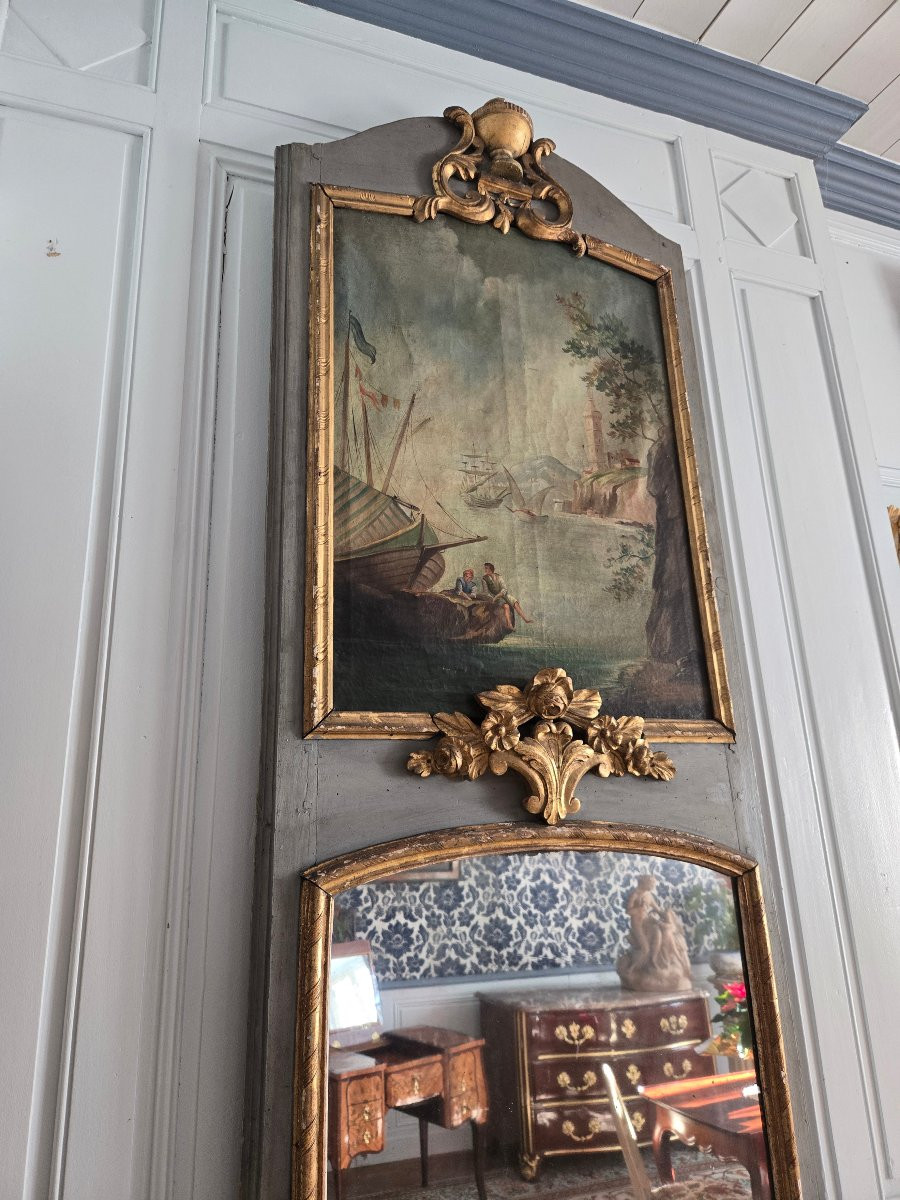
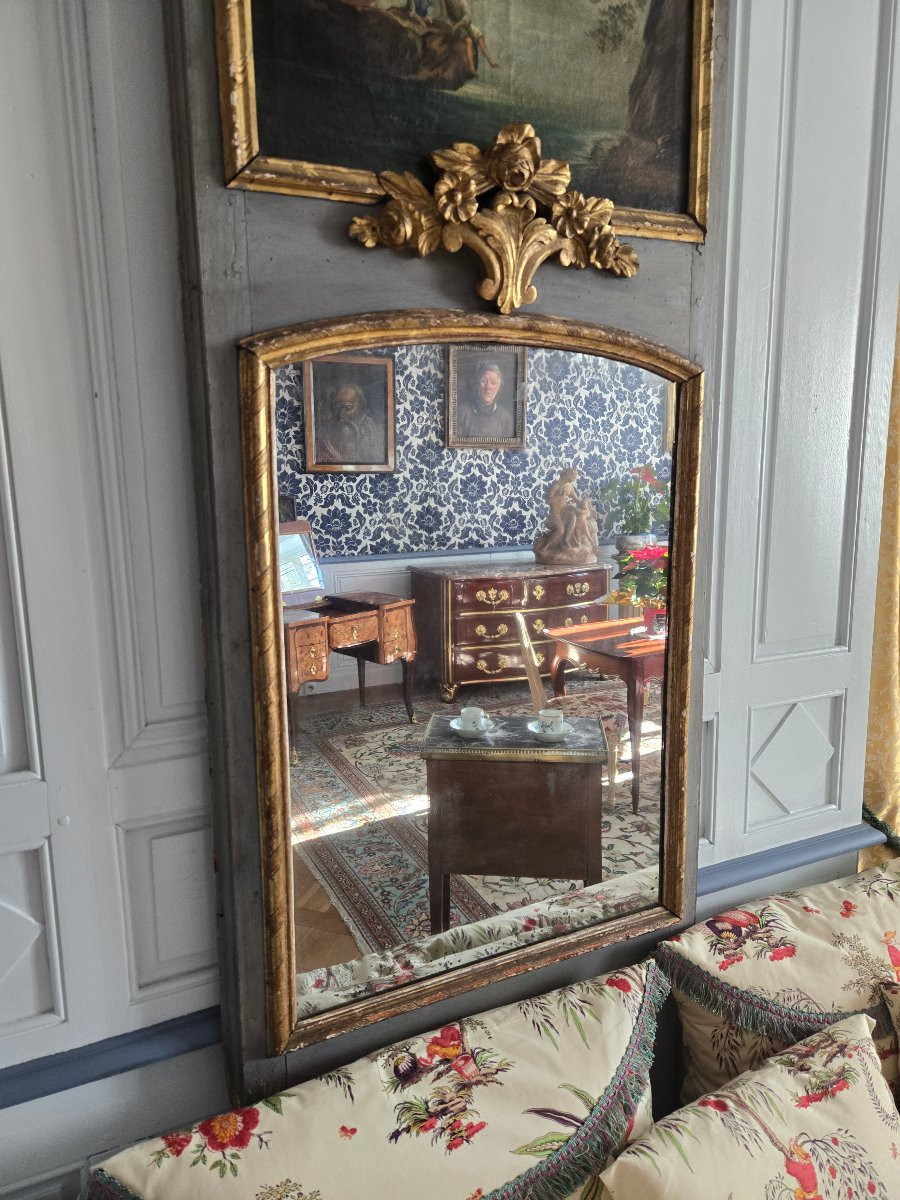
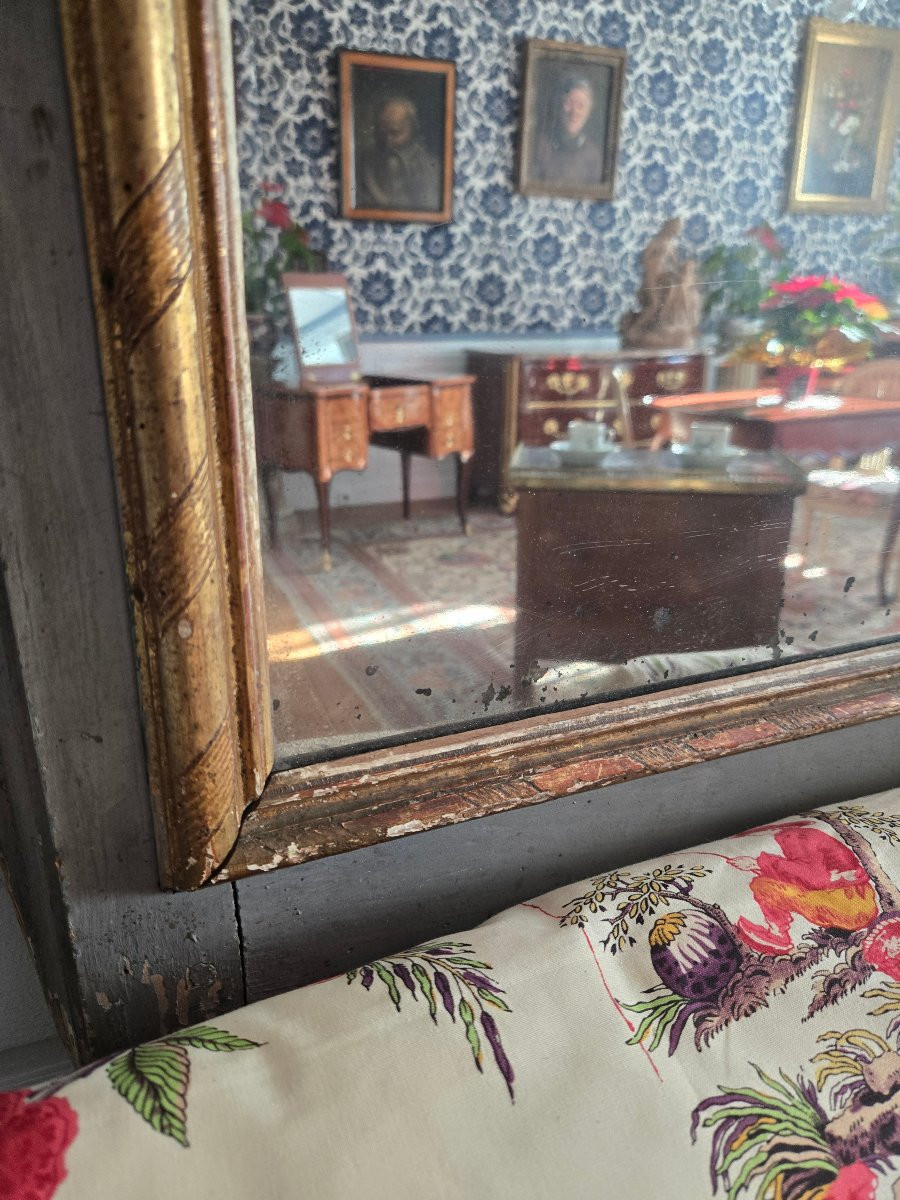


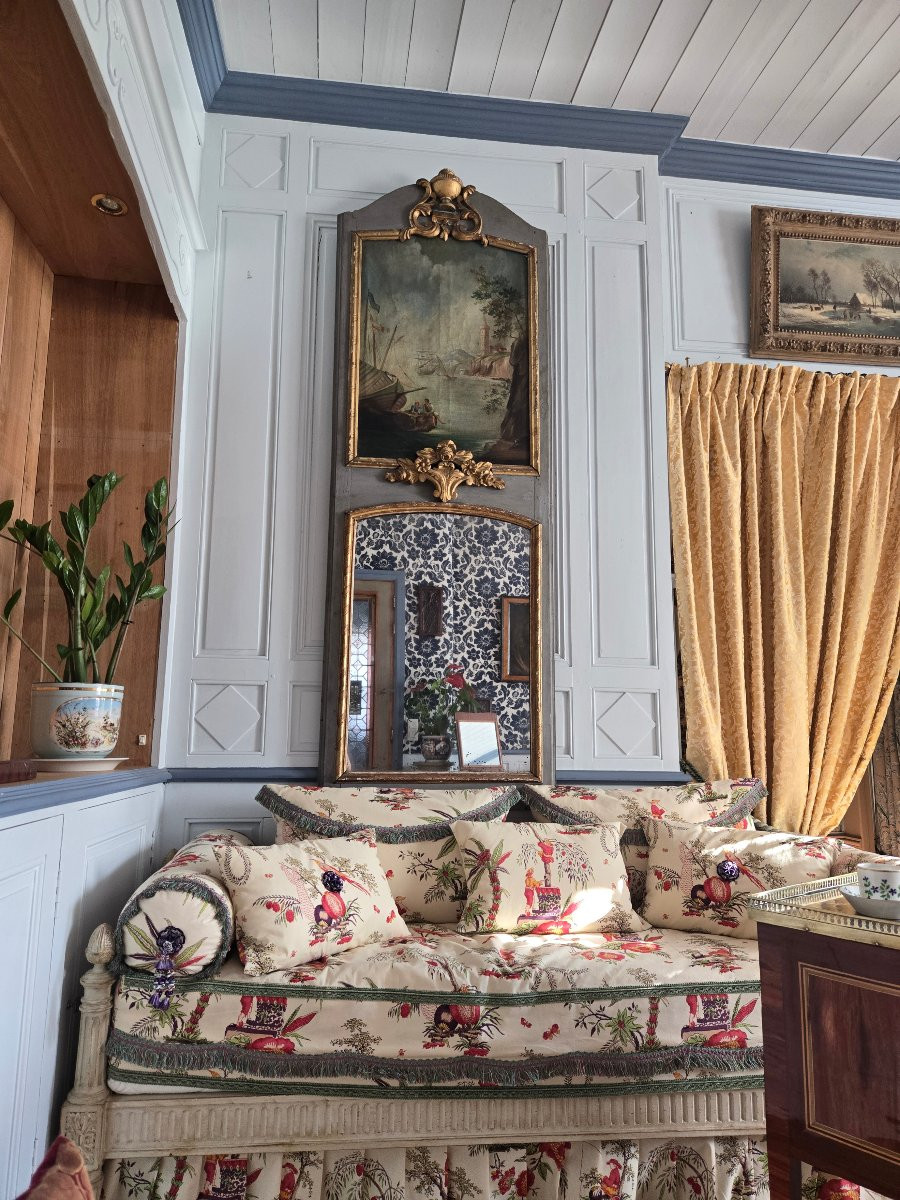


A carved and gilded wooden trumeau, dating from the second half of the 18th century, preserved in a remarkable state of authenticity. Its upper section comprises an original oil painting on canvas mounted on its original stretcher, and its lower section an original mercury mirror, the whole remaining attached to its original frame. The upper painting, executed in oil on canvas, is presented on its period stretcher, still nailed to the wood of the trumeau with wrought iron nails, unambiguously attesting that it is the original painting created for this decoration, and not a later addition or embellishment. The canvas, slightly loosened by time, displays a network of craquelure and natural signs of age, contributing significantly to the charm and authenticity of the piece. The composition depicts a lively harbor scene: in the foreground, two figures sit on a rock at the water's edge, near a beached boat; in the middle ground, several sailing ships move about in a calm harbor; in the background, a coastal tower erected on a rocky promontory, evoking a lighthouse or watchtower, structures a coastal landscape with a southern feel. Stylistically, this painting belongs to the decorative current of southern harbor views in the 18th century, in a spirit akin to the seascapes of Lacroix de Marseille, without being able or necessary to attribute it to him. The treatment is deliberately simple, direct, almost naive, fully embracing its decorative function: this is not an easel painting, but rather an ornamental work integrated into the interior architecture, designed to interact with the overmantel mirror and the woodwork. The carved and gilded wooden frame features elegant and balanced ornamentation: a curved pediment surmounted by an antique vase framed by foliate scrolls; a large carved floral motif separating the painting from the mirror; and gilded moldings highlighting the two sections. The gilding is original and untouched, with wear, rubbing, and minor losses perfectly consistent with age and use. The lower section is closed by its original mercury mirror, which shows slight pitting and natural imperfections, but no major damage. Given its slender dimensions and narrow width (68 cm), this trumeau was most likely designed to be placed between two windows, a common arrangement in 18th-century interiors, where such elements punctuated the elevations while adding light and depth. It is a fine example of regional craftsmanship, probably made to furnish a stately home, manor house, or château, and has remained remarkably intact. The authenticity, the patina, the wear and tear of time, the deliberate minor imperfections, and the unrestored paintwork create the rare impression of a trumeau mirror that has never been restored or retouched, preserved in its original state. This sincerity lends the piece a powerful charm, immediately evocative of old houses, castles, and country manor houses, where the decor acquires a patina over generations without losing its soul. Period: Second half of the 18th century (circa 1760–1780) Materials: Carved and gilded softwood, oil paint on canvas mounted on the original stretcher, wrought iron nails, original mercury mirror Dimensions: Height: 195 cm Width: 68 cm
Explore similar pieces and discover your ideal find:
Trumeau Mirrors