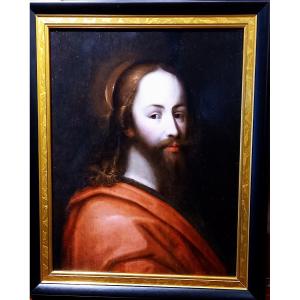
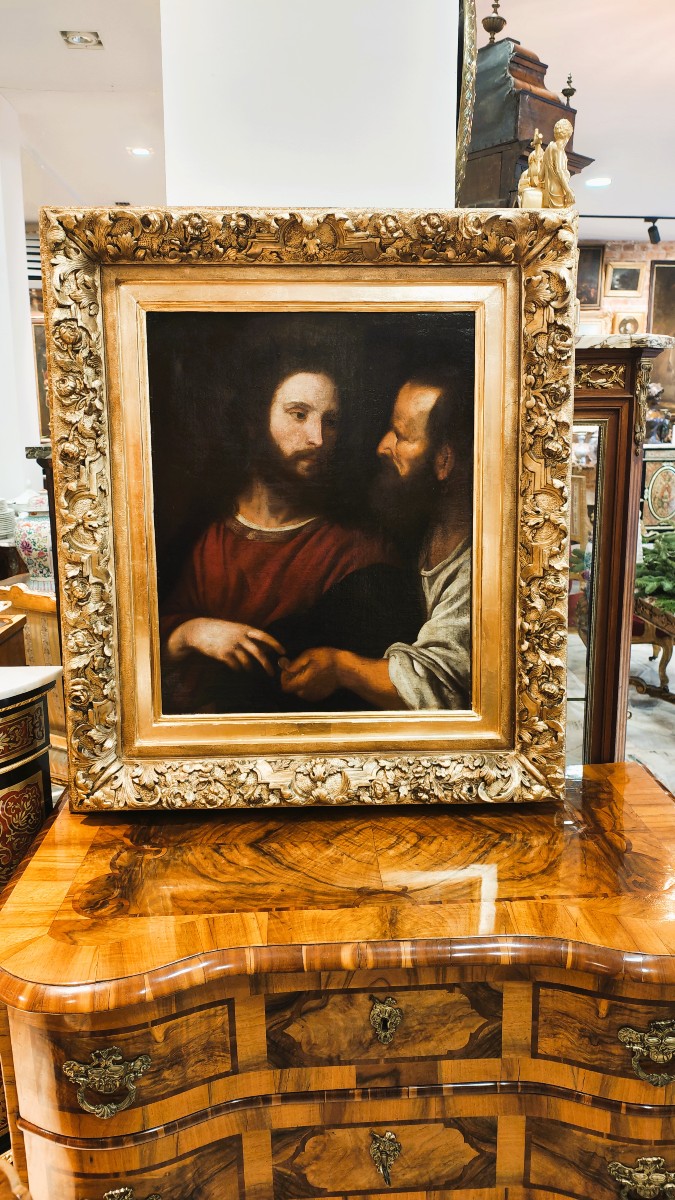
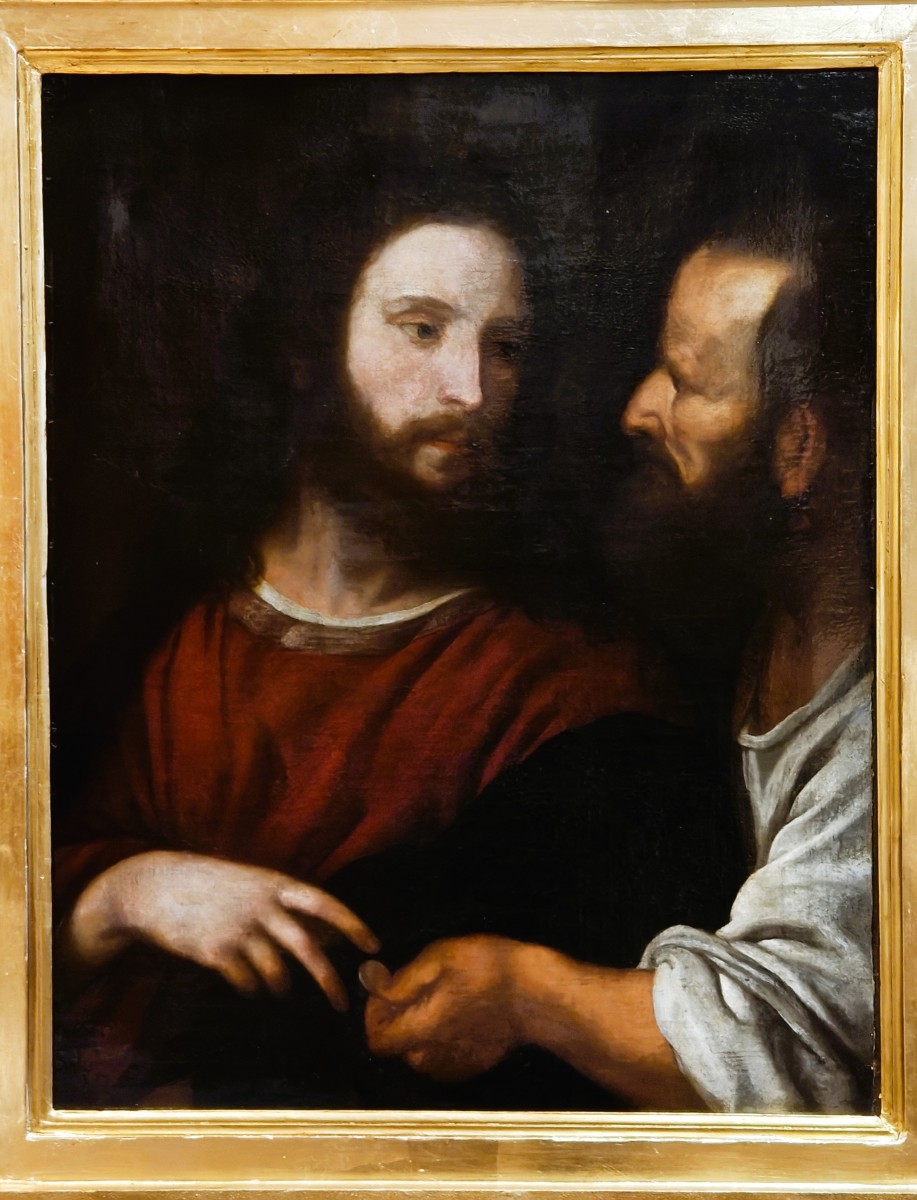
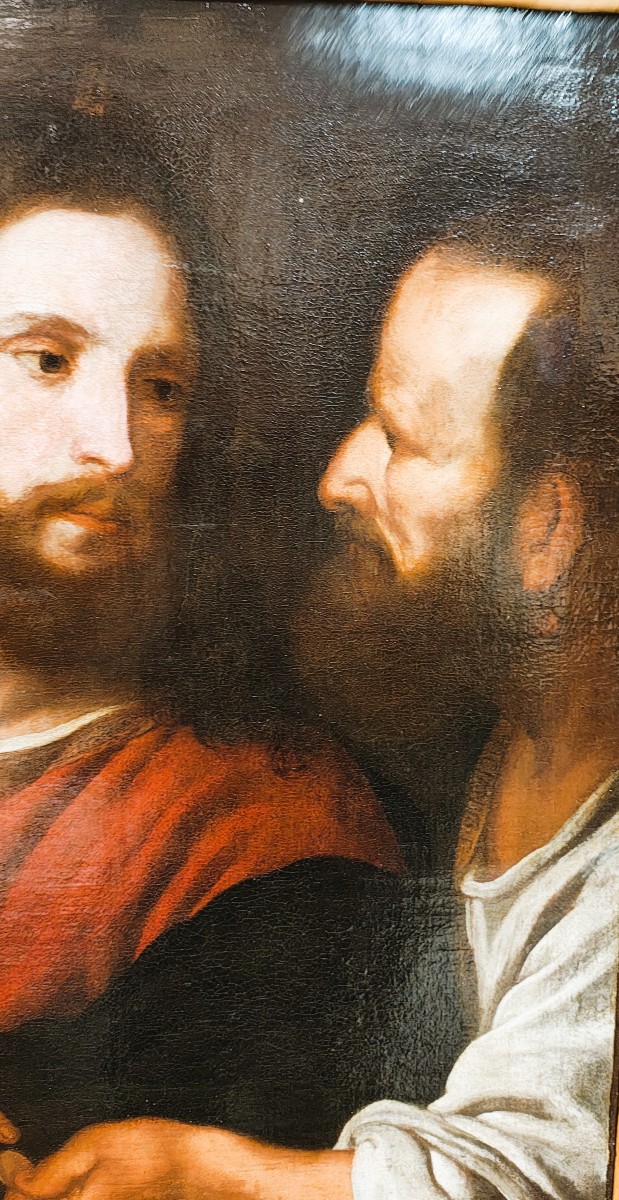


Christ Of The Mint (the Return From The Temple) – A Painting By The Italian Renaissance Painter
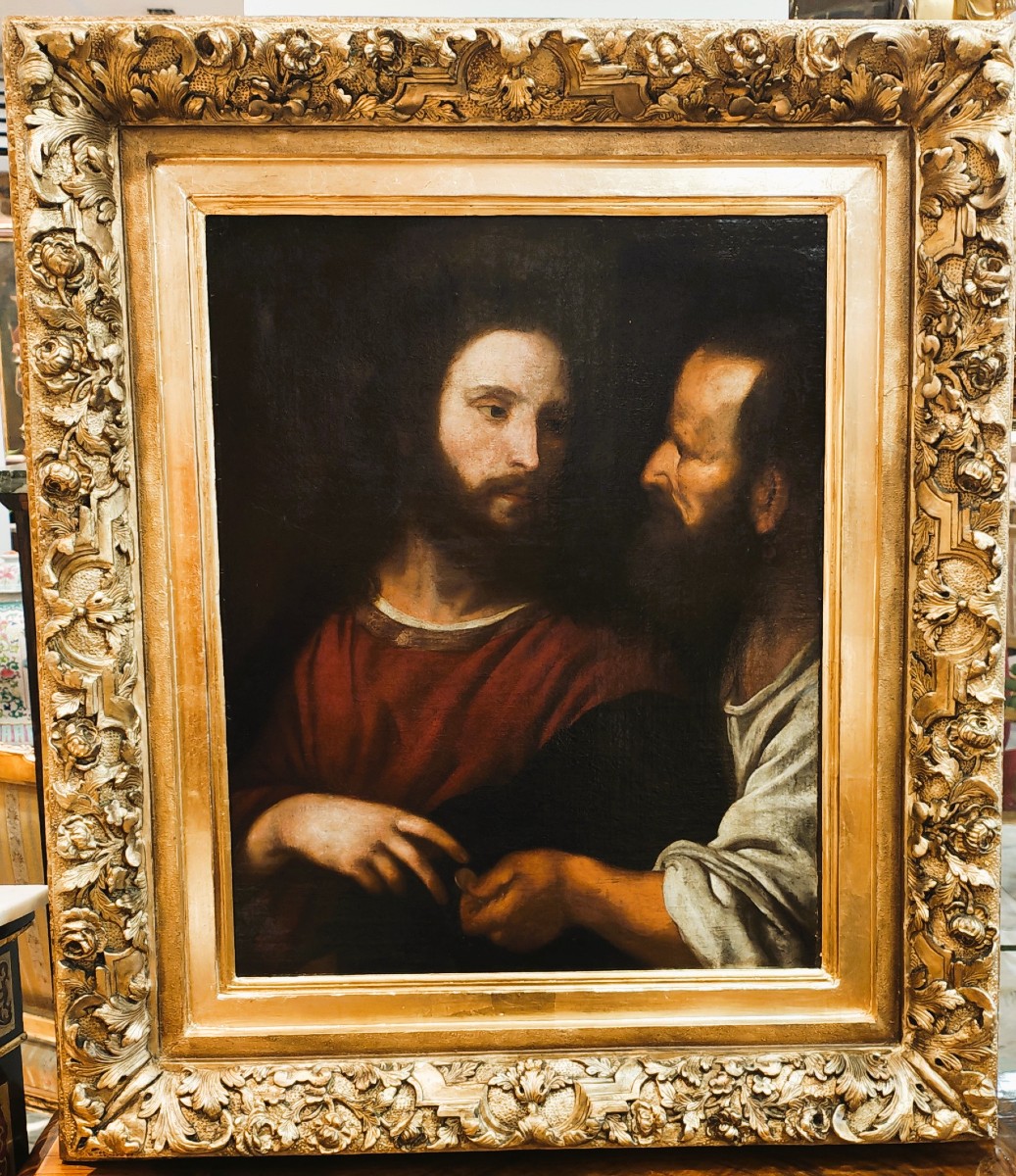
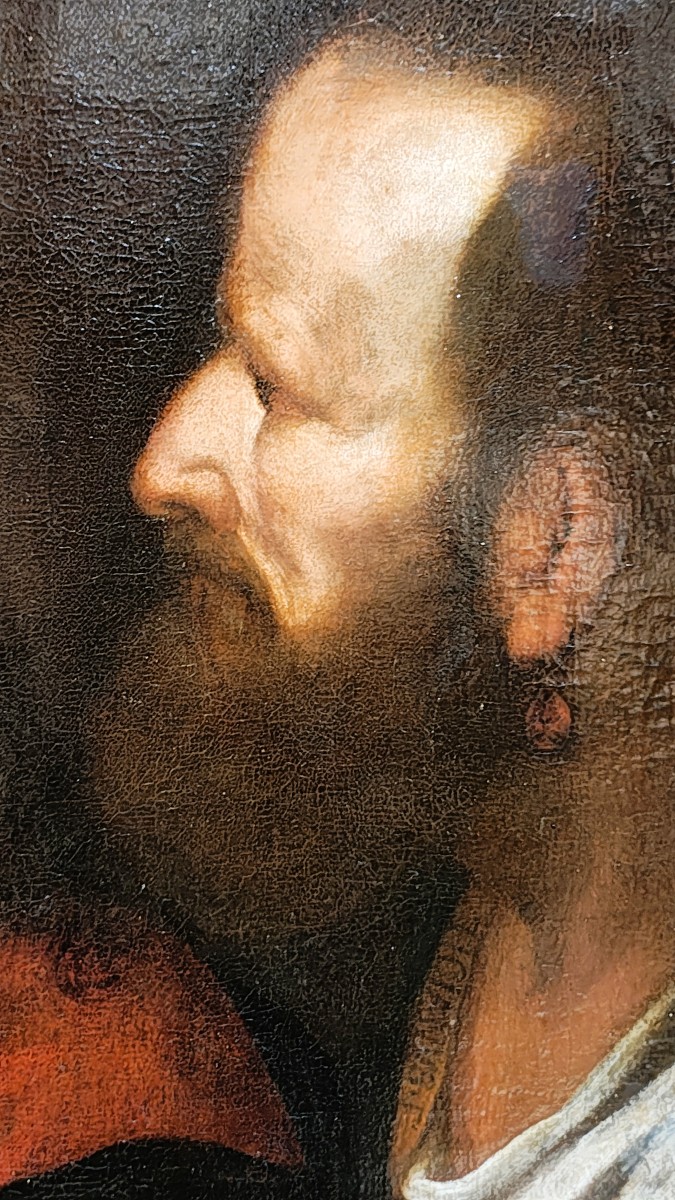
Artist: Une Inscription Figure Sur La Chemise Du Pharisien ; Il S'agit Probablement De La Signature De L'artiste. à L'origine, Un Motif De Ruban Devait Y Figurer. Ce Tableau Est Une Excellente Copie Ancienne, Réalisée D'après Titien.
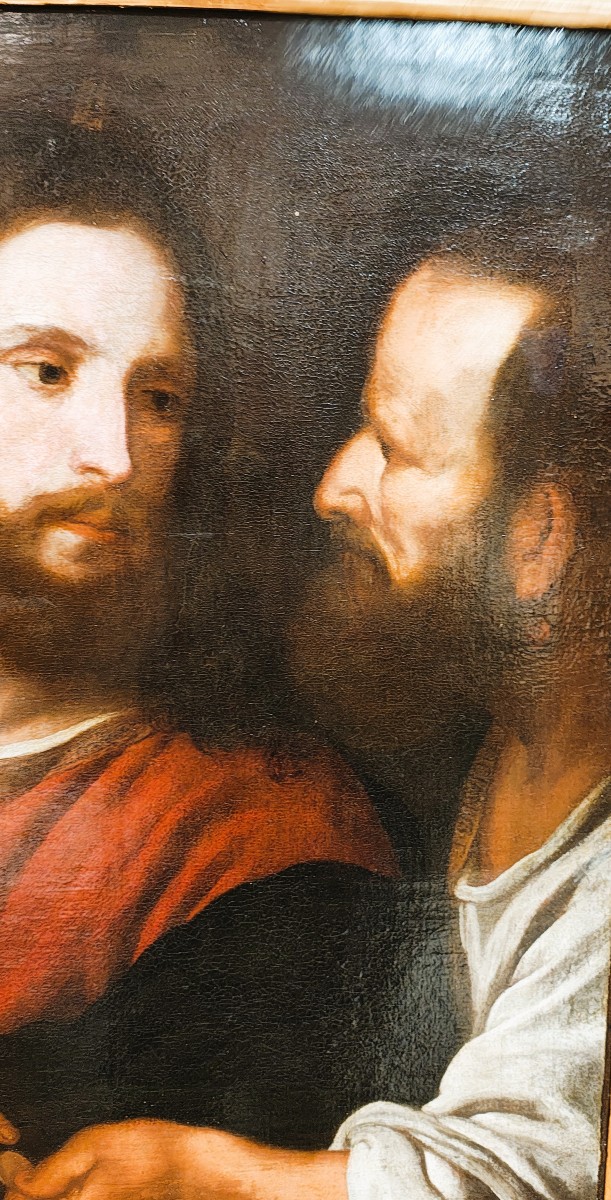
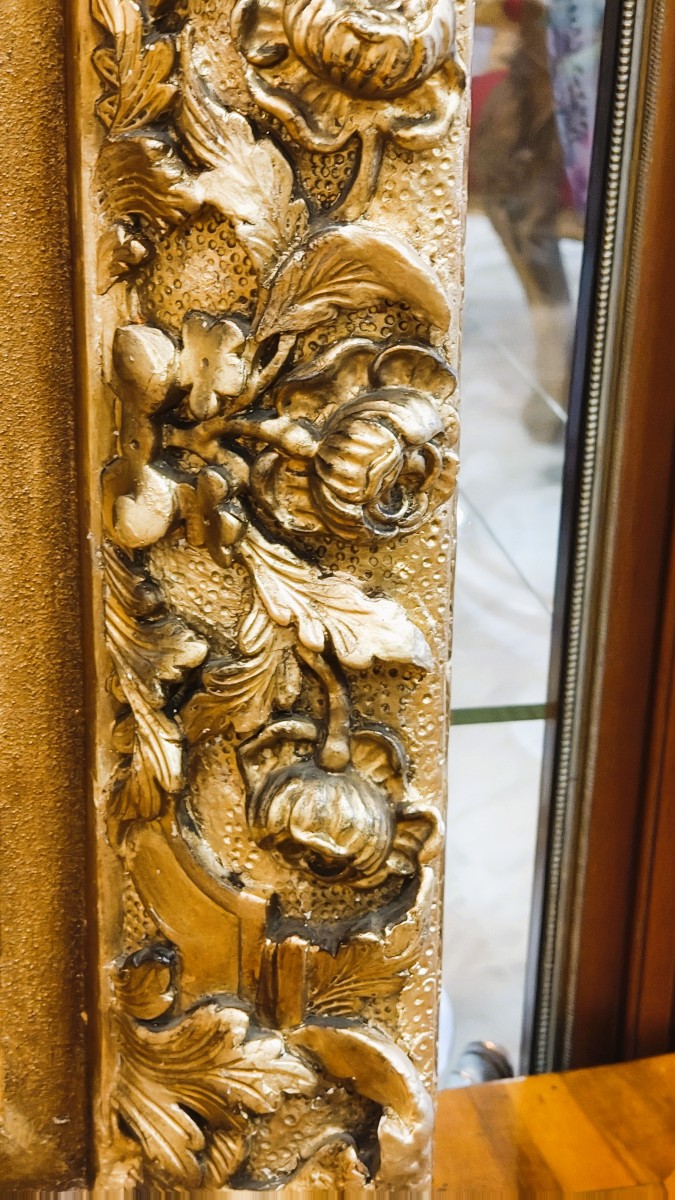
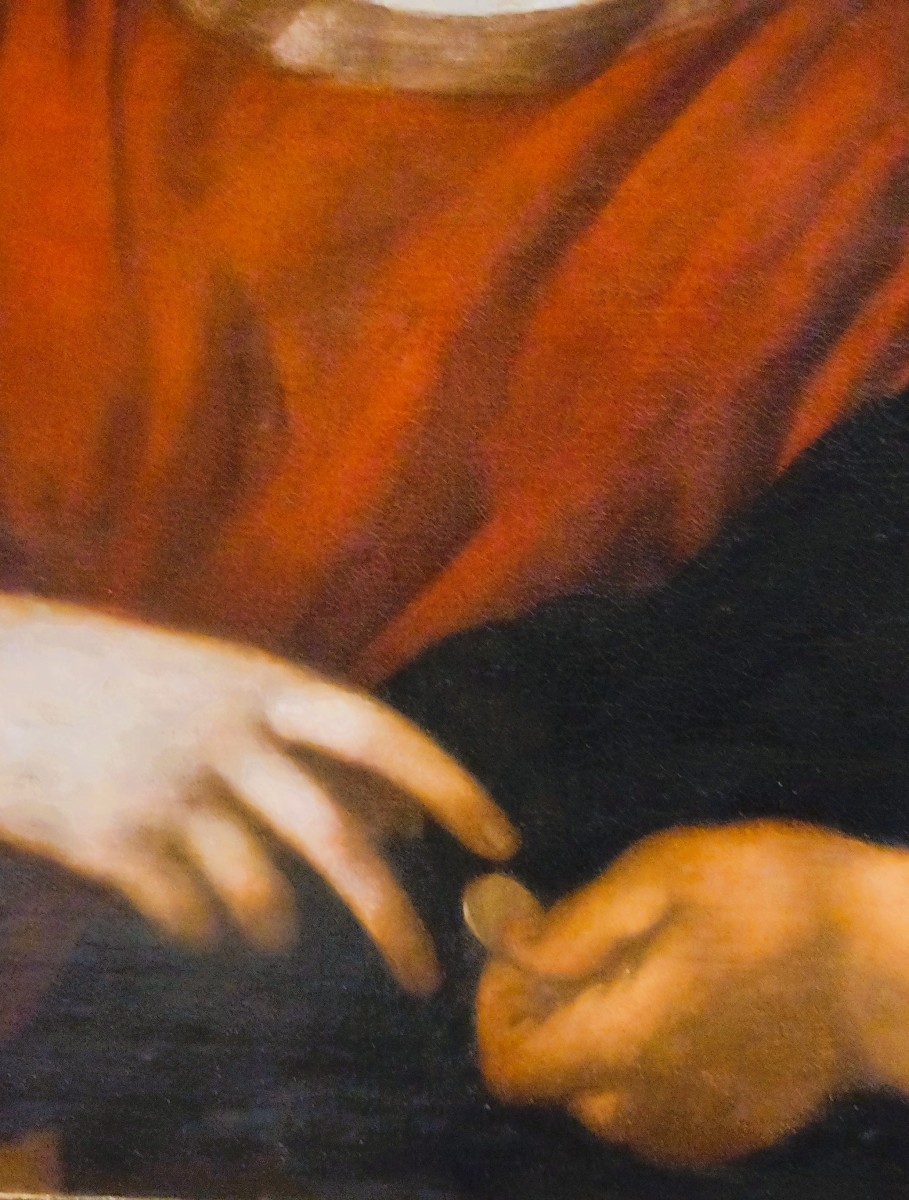
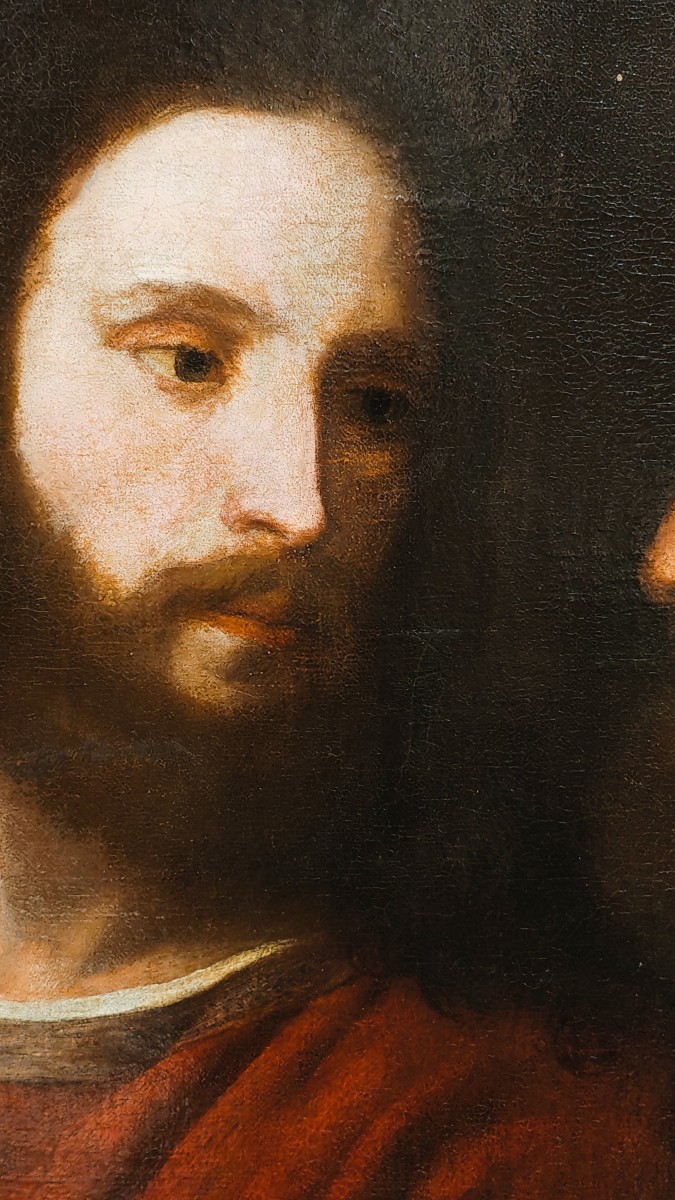
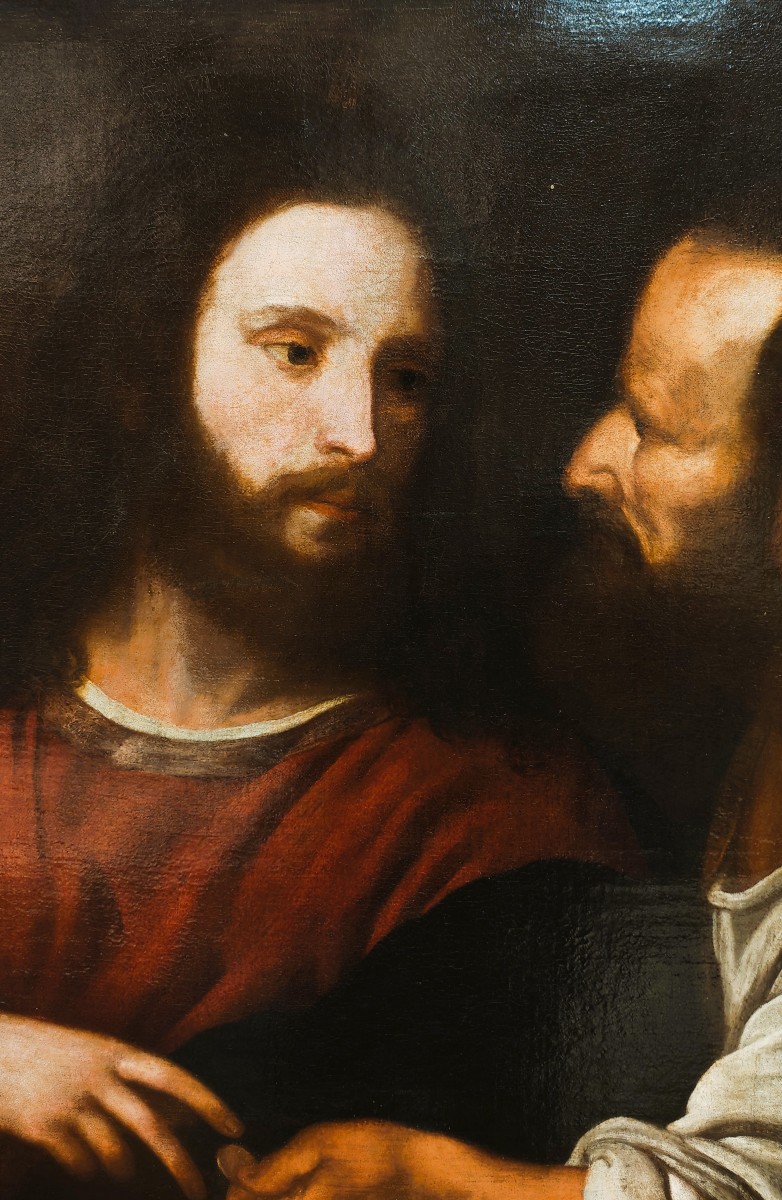
Christ of the Coin (The Temple Revenue) – a painting by the Italian Renaissance painter Titian, dating from the 17th/18th century. This painting was commissioned by Duke Alfonso I d'Este.[1] Originally located in Ferrara Castle, it is now in the Gemäldegalerie in Dresden. The work explores a New Testament motif illustrating the Pharisees' attempt to find fault with the teachings of Jesus. This story is found in both Synoptic Gospels. Matthew the Evangelist recounts two anecdotes related to the Temple revenue. The first concerns the Apostle Peter, who wanted to know whether he should pay the Temple tax and, if so, in what form. Jesus advised him to catch a fish in which he would find the necessary coin. This theme was notably taken up by the Italian painter Masaccio in his work Christ of the Mint. The second anecdote concerns the Pharisees, who sought Jesus' opinion on taxes. He then ordered the separation of material and spiritual life, uttering a phrase quoted unchanged in all the Gospels: "Render therefore unto Caesar the things that are Caesar's, and unto God the things that are God's." [2] Interpretation of the painting: Titian masterfully deepened the psychological characterization of the figures. He contrasted two different figures: Christ and the Pharisee. Their proximity is striking. Jesus is depicted frontally, while the Pharisee is shown from the waist up. The first contrast lies in their faces. Christ has a gentle, pale face, and his gaze is penetrating. The Pharisee's face is ugly, almost caricatured, rendered in dark tones. The second contrast is that of the hands visible in the foreground. Christ's hands are white and smooth, with slender fingers pointing towards a coin held by the Pharisee's dark, nervous, and twisted hand. Titian's use of color also contrasts: the Pharisee wears a white robe, while Jesus wears a red robe and a blue cloak. Christ's red blends into golden tones that spread throughout the canvas. According to one interpretation, the painting is inspired by Leonardo da Vinci's The Last Supper. Bibliography: R. Bergerhoff, Titian, Warsaw: Arkady, 1979. HPS, 2007, ISBN 978-83-60688-47-2. W. Mole, Titian, Warsaw: Arkady, 1958. References: Giorgio Vasari, Lives of the Most Eminent Painters, Sculptors, and Architects, ed. PIW Krakow, 1980, p. 554. 22, 21 Technique: Oil on canvas Condition: Very good Signature: An inscription appears on the Pharisee's shirt; this is probably the artist's signature. Originally, a ribbon motif was to be featured. This painting is an excellent early copy after Titian. Dimensions: Canvas 58 cm x 72 cm, with frame approximately 90 cm x 105 cm. Provenance: Private collection. The gallery provides a certificate of authenticity for each work.
5 600 €
Period: 17th century
Style: Other Style
Condition: Good condition
Material: Oil painting
Length: 58
Height: 72
Reference (ID): 1683373
Availability: In stock
Print