





Sculpture - Tiger Surprising An Antelope , Antoine-louis Barye , F. Barbedienne - Bronze
Artist: Antoine - Louis Barye (1795-1875)
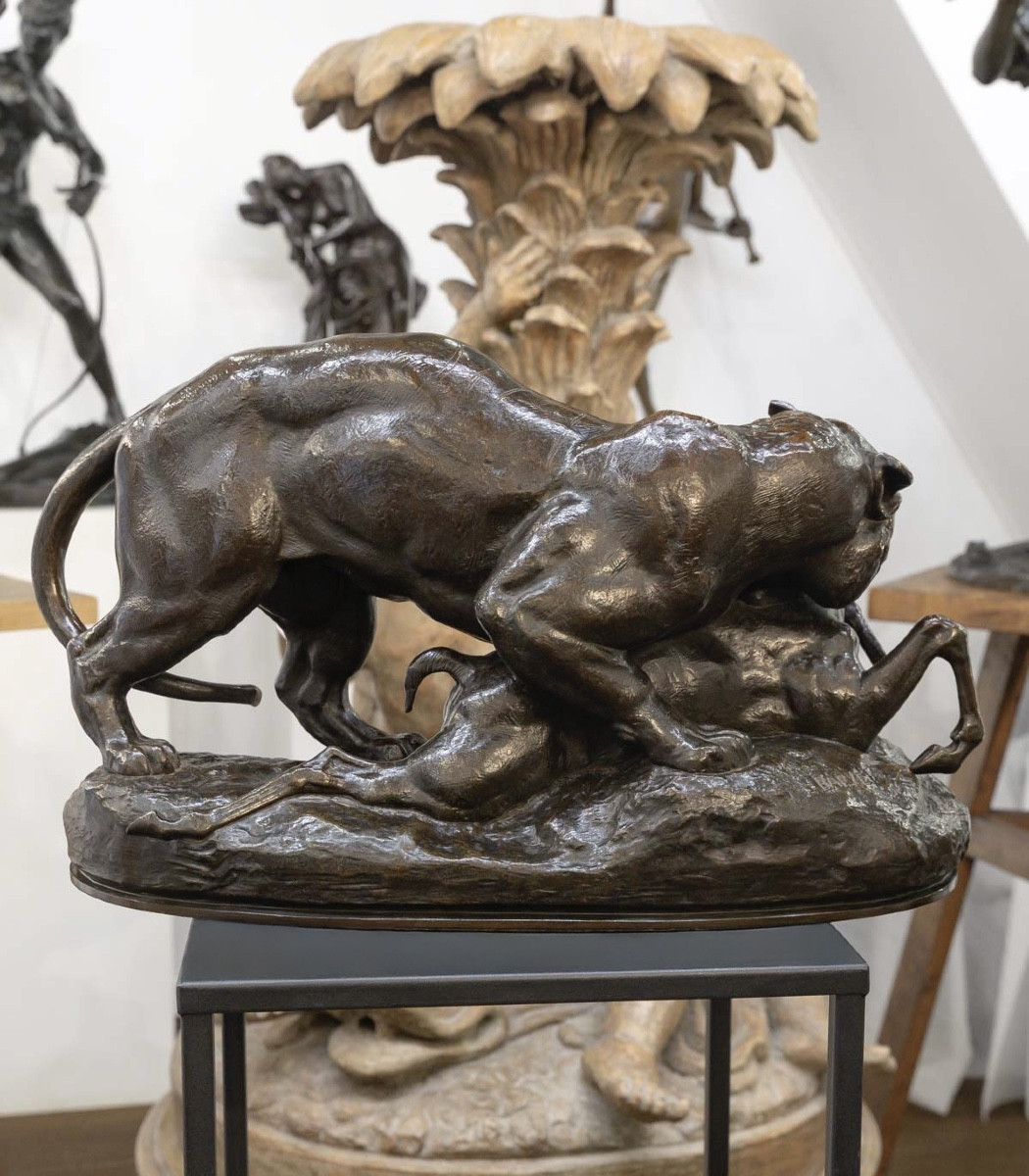
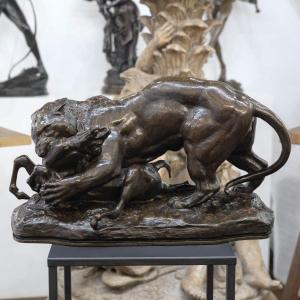
An important bronze group , with a nuanced brown patina , depicting a tiger surprising an antelope , by the sculptor Antoine-Louis Barye (1795-1875), cast by the art foundry Ferdinand Barbedienne .
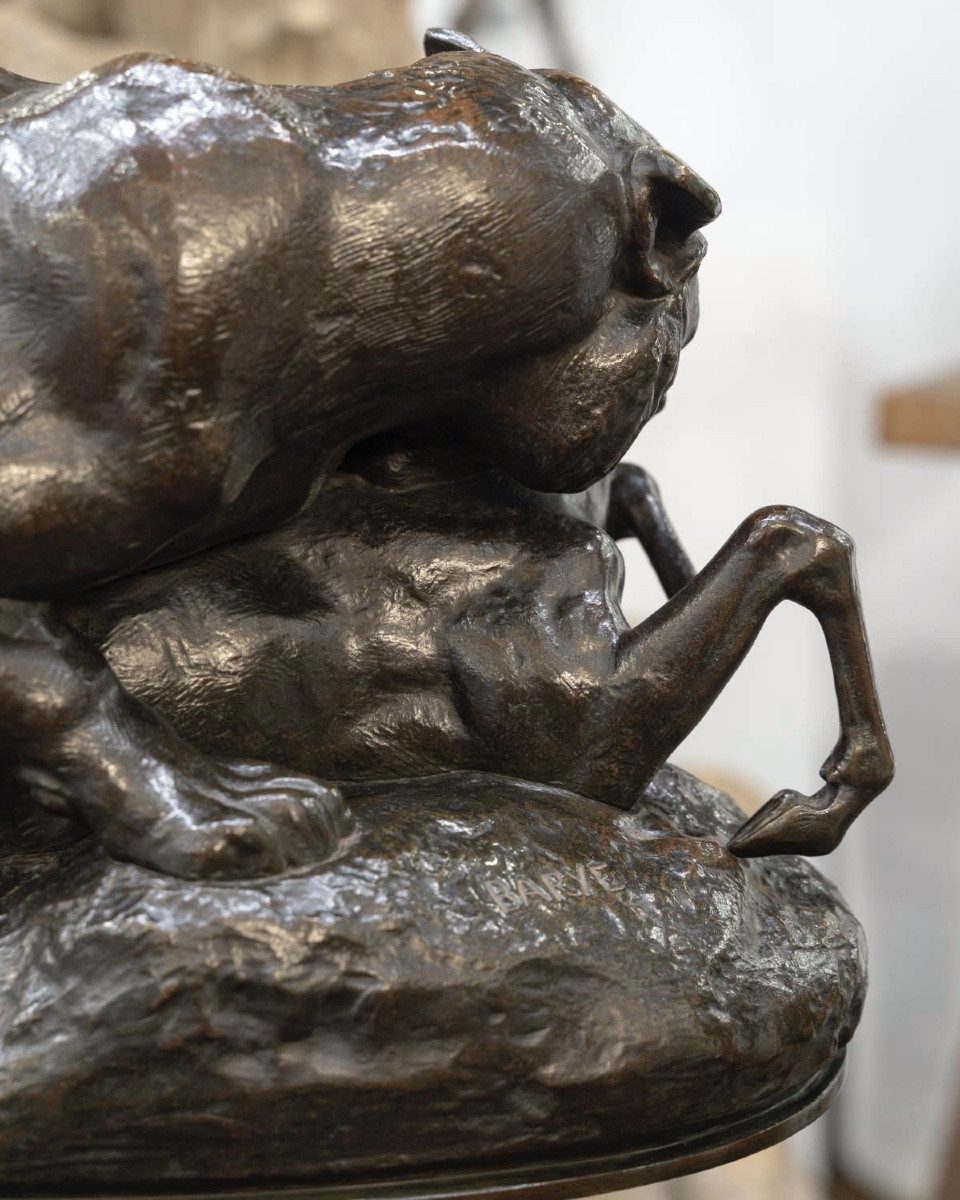
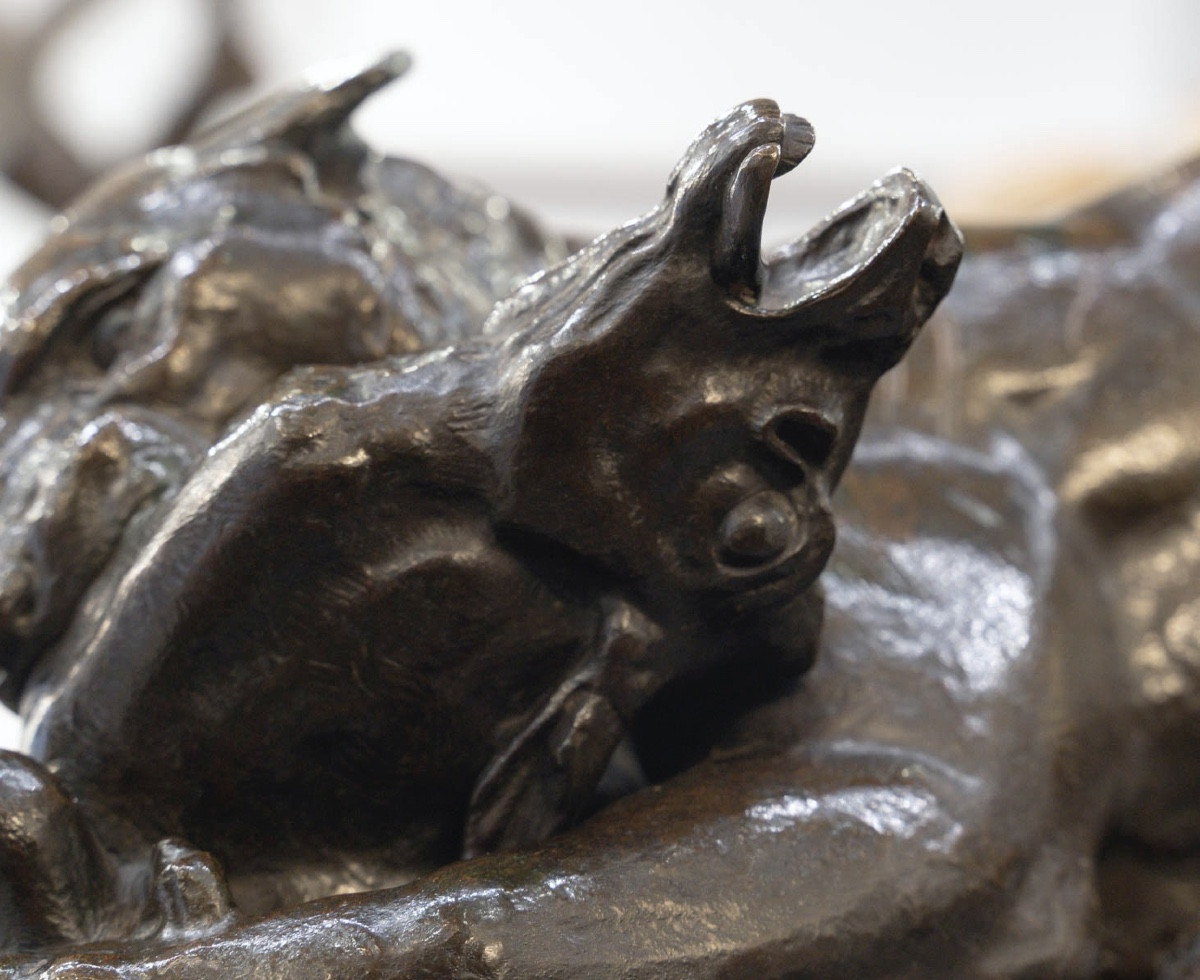
The work evokes the most tragic moment of an animal fight , that in which the predator devours its prey , which still defends itself in a final instinct for survival .
The majestic character of the animal is emphasized here , its muscles are powerful , taut with the effort that sustains the antelope.
The 19th century constitutes the golden age of animal bronze sculpture .
The Romantic movement , which rejected the order established by the Academy , found in animal representation an illustration of its rebellion .
Antoine-Louis Barye , a sculptor specializing in the depiction of animal combat , belongs to this movement .
The animal is elevated to the status of subject and no longer relegated to a mere decorative element .
This vision of the subject allowed Antoine-Louis Barye to create unique works , imbued with elegance and naturalism .
Bronze group signed "BARYE" in relief on the naturalistic base , on the back of the sculpture .
Foundry mark "F. BARBEDIENNE FONDEUR" on the edge of the base , at the front of the group .
Early edition sculpture , second half of the 19th century .
Perfect condition of preservation and patina .
Dimensions : 33 cm x 54 cm x 25 cm
Antoine-Louis Barye (1795-1875)
Famous for his animal sculptures , Antoine-Louis Barye is a silversmith's son , who is trained in metalwork with a military equipment manufacturer and Jacques - Henri Fauconnier.
In 1818 , he entered the Paris School of Fine Arts and apprenticed in the studio of sculptor François Joseph Bosioandpainter Jean-Antoine Gros .
After several failures at theThe Grand Prix of Rome , Antoine-Louis Barye slammed the door of the Fine Arts in 1825 .
He then turned to animal sculpture which he would bring back up to date .
With his friend Delacroix , he goes regularly to the menagerie of the Natural History Museum to study and observe animals .
It was in 1831 that Barye made himself known to the general public by exhibiting "The Tiger Devouring a Gavial" (Louvre) at the Salon , a work staging a violent fight "of impressive virtuosity".
Two years later , he triumphed with "The Lion and the Snake" (plaster) , which was also successfully exhibited in its bronze version at the Salon of 1836 .
Preferring bronze to marble considered too cold , the artist multiplied statuettes and small groups animals,that he melts and chisels himself .
Antoine - Louis Barye died at the age of 80 , leaving behind an important production of drawings , watercolors and paintings as well as sculptures , pieces of goldsmith's work .
His works can be seen at the Louvre and Orsay Museums .
The work evokes the most tragic moment of an animal fight , that in which the predator devours its prey , which still defends itself in a final instinct for survival .
The majestic character of the animal is emphasized here , its muscles are powerful , taut with the effort that sustains the antelope.
The 19th century constitutes the golden age of animal bronze sculpture .
The Romantic movement , which rejected the order established by the Academy , found in animal representation an illustration of its rebellion .
Antoine-Louis Barye , a sculptor specializing in the depiction of animal combat , belongs to this movement .
The animal is elevated to the status of subject and no longer relegated to a mere decorative element .
This vision of the subject allowed Antoine-Louis Barye to create unique works , imbued with elegance and naturalism .
Bronze group signed "BARYE" in relief on the naturalistic base , on the back of the sculpture .
Foundry mark "F. BARBEDIENNE FONDEUR" on the edge of the base , at the front of the group .
Early edition sculpture , second half of the 19th century .
Perfect condition of preservation and patina .
Dimensions : 33 cm x 54 cm x 25 cm
Antoine-Louis Barye (1795-1875)
Famous for his animal sculptures , Antoine-Louis Barye is a silversmith's son , who is trained in metalwork with a military equipment manufacturer and Jacques - Henri Fauconnier.
In 1818 , he entered the Paris School of Fine Arts and apprenticed in the studio of sculptor François Joseph Bosioandpainter Jean-Antoine Gros .
After several failures at theThe Grand Prix of Rome , Antoine-Louis Barye slammed the door of the Fine Arts in 1825 .
He then turned to animal sculpture which he would bring back up to date .
With his friend Delacroix , he goes regularly to the menagerie of the Natural History Museum to study and observe animals .
It was in 1831 that Barye made himself known to the general public by exhibiting "The Tiger Devouring a Gavial" (Louvre) at the Salon , a work staging a violent fight "of impressive virtuosity".
Two years later , he triumphed with "The Lion and the Snake" (plaster) , which was also successfully exhibited in its bronze version at the Salon of 1836 .
Preferring bronze to marble considered too cold , the artist multiplied statuettes and small groups animals,that he melts and chisels himself .
Antoine - Louis Barye died at the age of 80 , leaving behind an important production of drawings , watercolors and paintings as well as sculptures , pieces of goldsmith's work .
His works can be seen at the Louvre and Orsay Museums .
6 400 €
Period: 19th century
Style: Orientalism
Condition: Perfect condition
Material: Bronze
Length: 54 cm
Height: 33 cm
Depth: 25 cm
Reference (ID): 1680077
Availability: In stock
Print