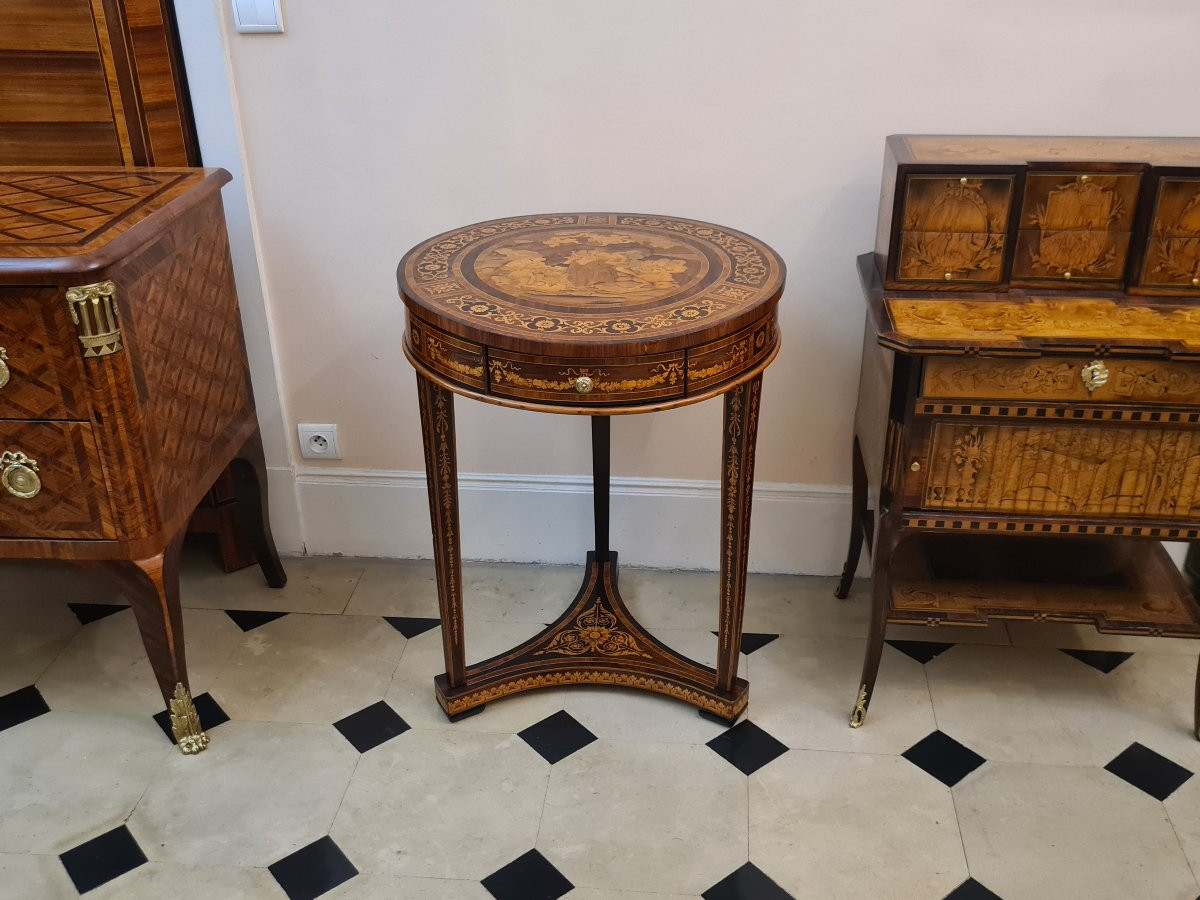


A Tripod Pedestal Table In Marquetry , Follower Of Giuseppe Maggiolini (1738-1814) . Italy 19th
Artist: Giuseppe Maggiolini (1738–1814)
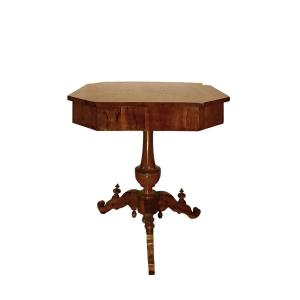
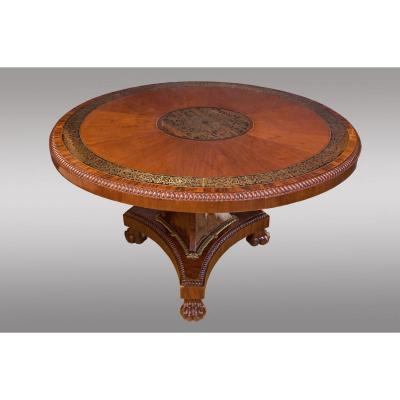
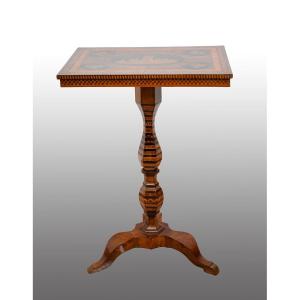
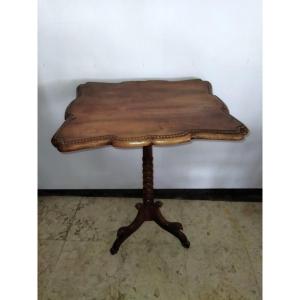
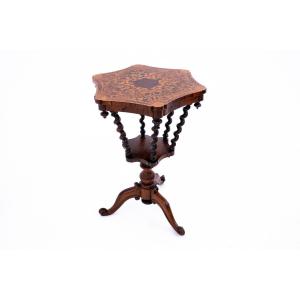
A tripod pedestal table in marquetry decorated with foliate scrolls, the circular top is adorned with a mythological scene. The circular top and the frieze with a central drawer, supported by three legs connected by an arched stretcher, are typical of the late Italian Neoclassical style. The style of the tabletop strongly recalls Neoclassical compositions inspired by Renaissance painting or Italian Mannerism, particularly those of Raphael, Guido Reni, or Domenichino, frequently reproduced in Lombard and Tuscan marquetry of the late 18th century. This pedestal table strongly evokes the works of Giuseppe Maggiolini (1738–1814), famous for his intricate marquetry and scenes borrowed from classical painting. The design of the tabletop (a composition of figures within a floral frame) is very close to the models disseminated by engravings by Bartolozzi or Giulio Campi, frequently reproduced by Maggiolini and his followers. The marquetry motifs on the tabletop, particularly the central figurative scene of mythological inspiration and the surrounding floral friezes, are characteristic of the Italian school of marquetry, especially that of Milan, from the late 18th century until 1880. These workshops often drew inspiration from Neoclassical engravings and created stained wood compositions with exceptional refinement. It is therefore highly probable that the marquetry scene on this pedestal table was inspired by (or even directly copied from) an engraving by the Cipriani/Bartolozzi workshop depicting a "Virtue" or a similar allegory. This corresponds perfectly to the practice of Maggiolini and his contemporaries, or even followers, of taking a popular allegorical engraving and transposing it into marquetry for high-end furniture. Northern Italy, second half of the 19th century. H x W = 78 x 78 cm decorated with foliate scrolls, the circular top is adorned with a mythological scene. The circular top and the frieze with a central drawer, supported by three legs connected by an arched stretcher, are typical of the late Italian Neoclassical style. The style of the tabletop strongly recalls Neoclassical compositions inspired by Renaissance painting or Italian Mannerism, particularly those of Raphael, Guido Reni, or Domenichino, frequently reproduced in Lombard and Tuscan marquetry of the late 18th century.
This pedestal table strongly evokes the works of Giuseppe Maggiolini (1738–1814), famous for his intricate marquetry and scenes borrowed from classical painting. The design of the tabletop (a composition of figures within a floral frame) is very close to the models disseminated by engravings by Bartolozzi or Giulio Campi, frequently reproduced by Maggiolini and his followers. The marquetry motifs on the tabletop, particularly the central figurative scene of mythological inspiration and the surrounding floral friezes, are characteristic of the Italian school of marquetry, especially that of Milan, from the late 18th century until 1880.
These workshops often drew inspiration from Neoclassical engravings and created stained wood compositions with exceptional refinement. It is therefore highly probable that the marquetry scene on this pedestal table was inspired by (or even directly copied from) an engraving by the Cipriani/Bartolozzi workshop depicting a "Virtue" or a similar allegory. This corresponds perfectly to the practice of Maggiolini and his contemporaries, or even followers, of taking a popular allegorical engraving and transposing it into marquetry for high-end furniture.
Northern Italy, second half of the 19th century.
H x W = 78 x 78 cm
This pedestal table strongly evokes the works of Giuseppe Maggiolini (1738–1814), famous for his intricate marquetry and scenes borrowed from classical painting. The design of the tabletop (a composition of figures within a floral frame) is very close to the models disseminated by engravings by Bartolozzi or Giulio Campi, frequently reproduced by Maggiolini and his followers. The marquetry motifs on the tabletop, particularly the central figurative scene of mythological inspiration and the surrounding floral friezes, are characteristic of the Italian school of marquetry, especially that of Milan, from the late 18th century until 1880.
These workshops often drew inspiration from Neoclassical engravings and created stained wood compositions with exceptional refinement. It is therefore highly probable that the marquetry scene on this pedestal table was inspired by (or even directly copied from) an engraving by the Cipriani/Bartolozzi workshop depicting a "Virtue" or a similar allegory. This corresponds perfectly to the practice of Maggiolini and his contemporaries, or even followers, of taking a popular allegorical engraving and transposing it into marquetry for high-end furniture.
Northern Italy, second half of the 19th century.
H x W = 78 x 78 cm
1 600 €
Period: 19th century
Style: Other Style
Condition: Perfect condition
Material: Wood marquetry
Width: 62
Height: 80
Reference (ID): 1671638
Availability: In stock
Print