


Oil On Canvas After Franquelin, Paris, France, 1849, Alphonse Giroux, 19th Century Romanticism
Oil on Canvas “The Willow Leaves”, after Franquelin, 1849 — Alphonse Giroux, Paris stamp — 19th century — Romanticism — Young Woman — Amable Tastu
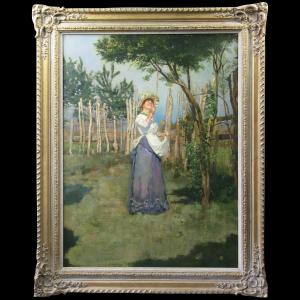
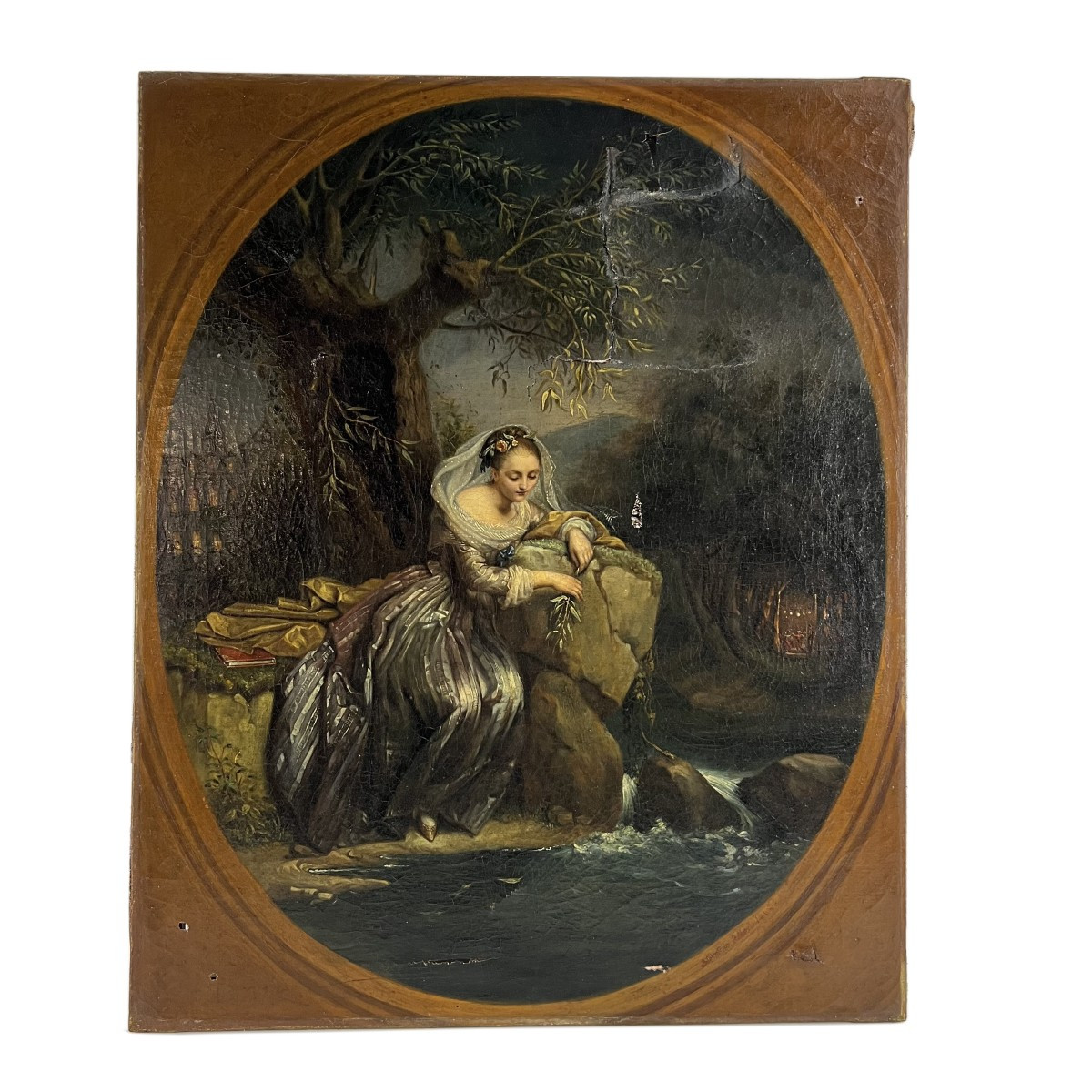
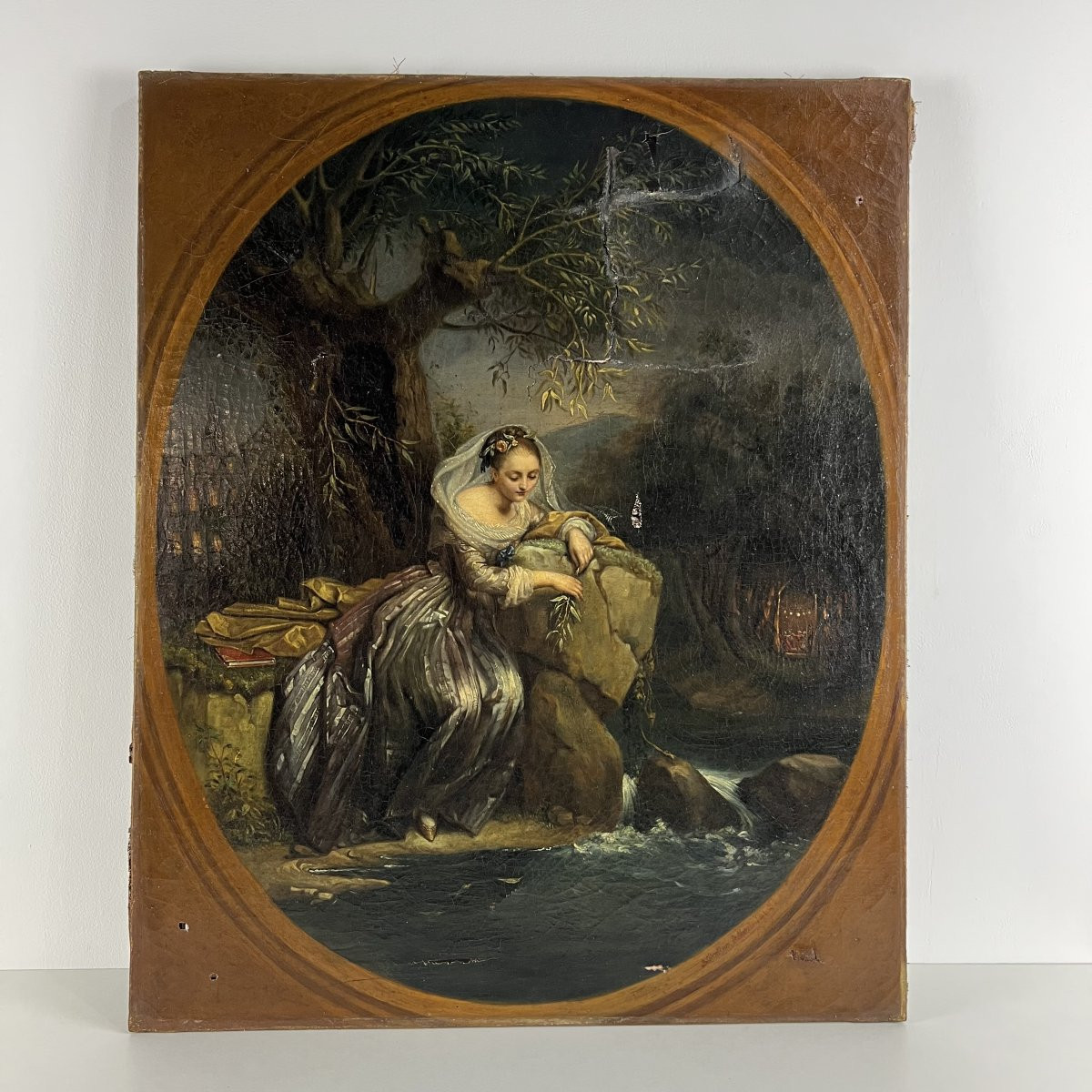
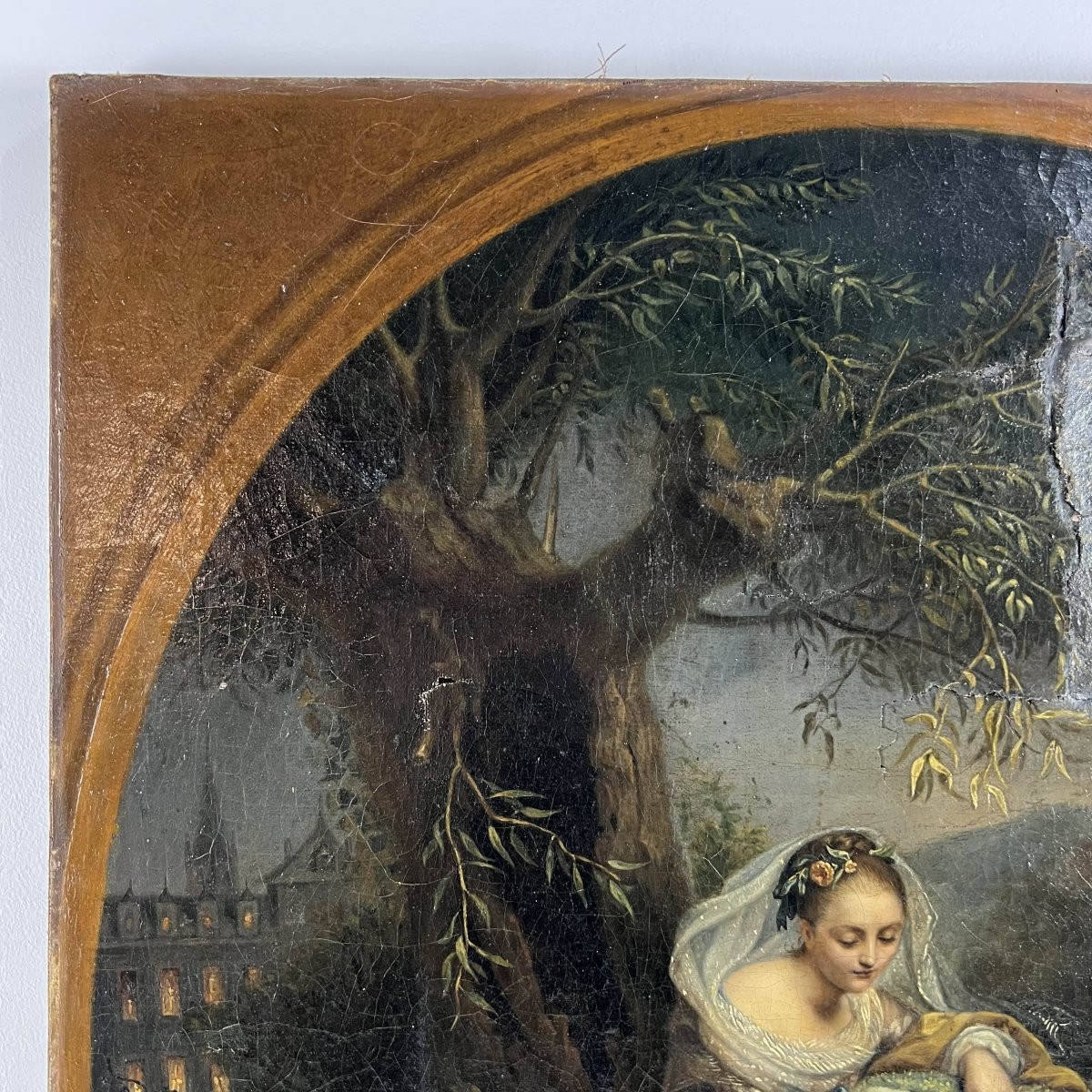
Original oil on canvas, dated 1849. A reprise of the celebrated composition by Jean-Augustin FRANQUELIN (1798–1839) entitled “Les Feuilles de Saule” (The Willow Leaves), exhibited at the Paris Salon of 1834.
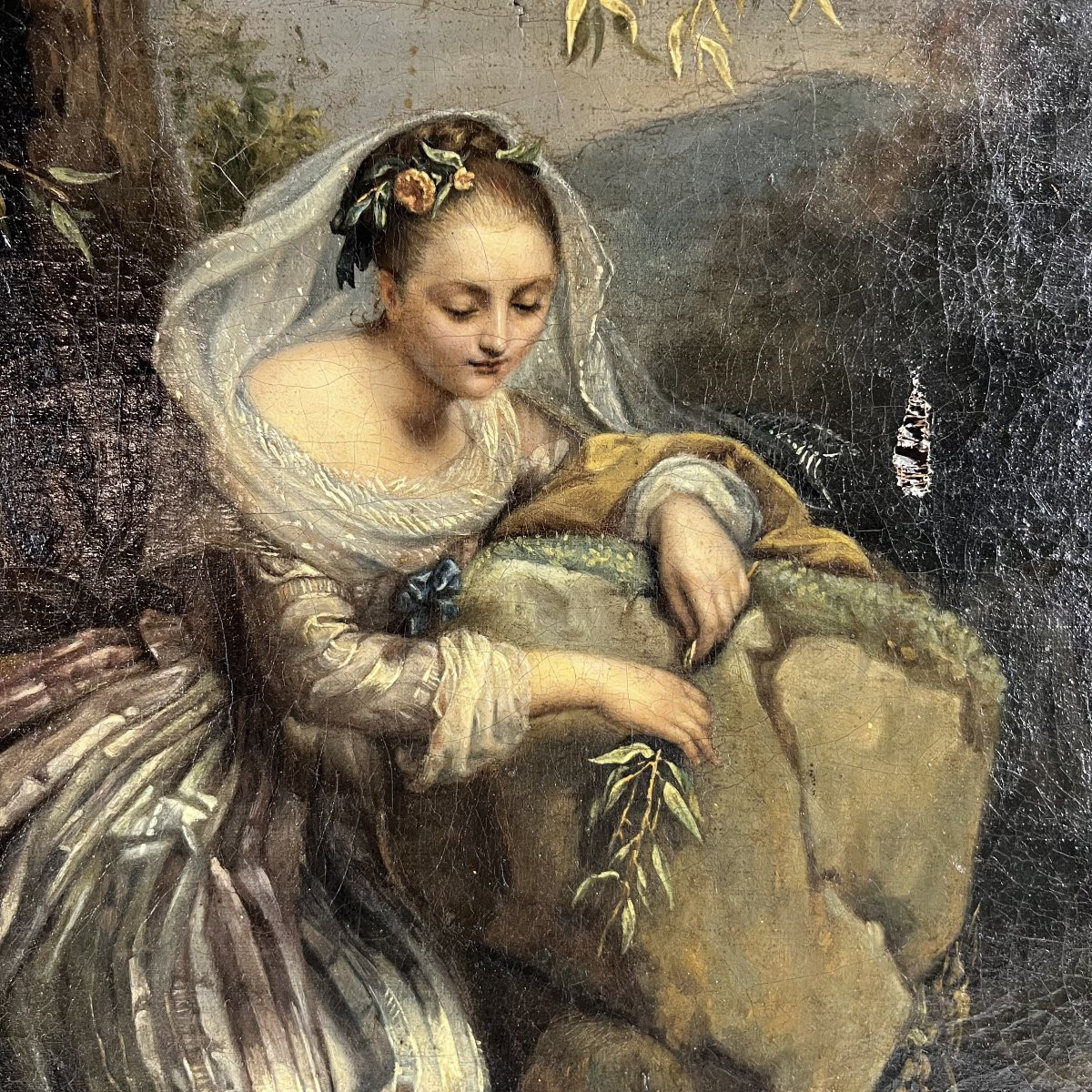
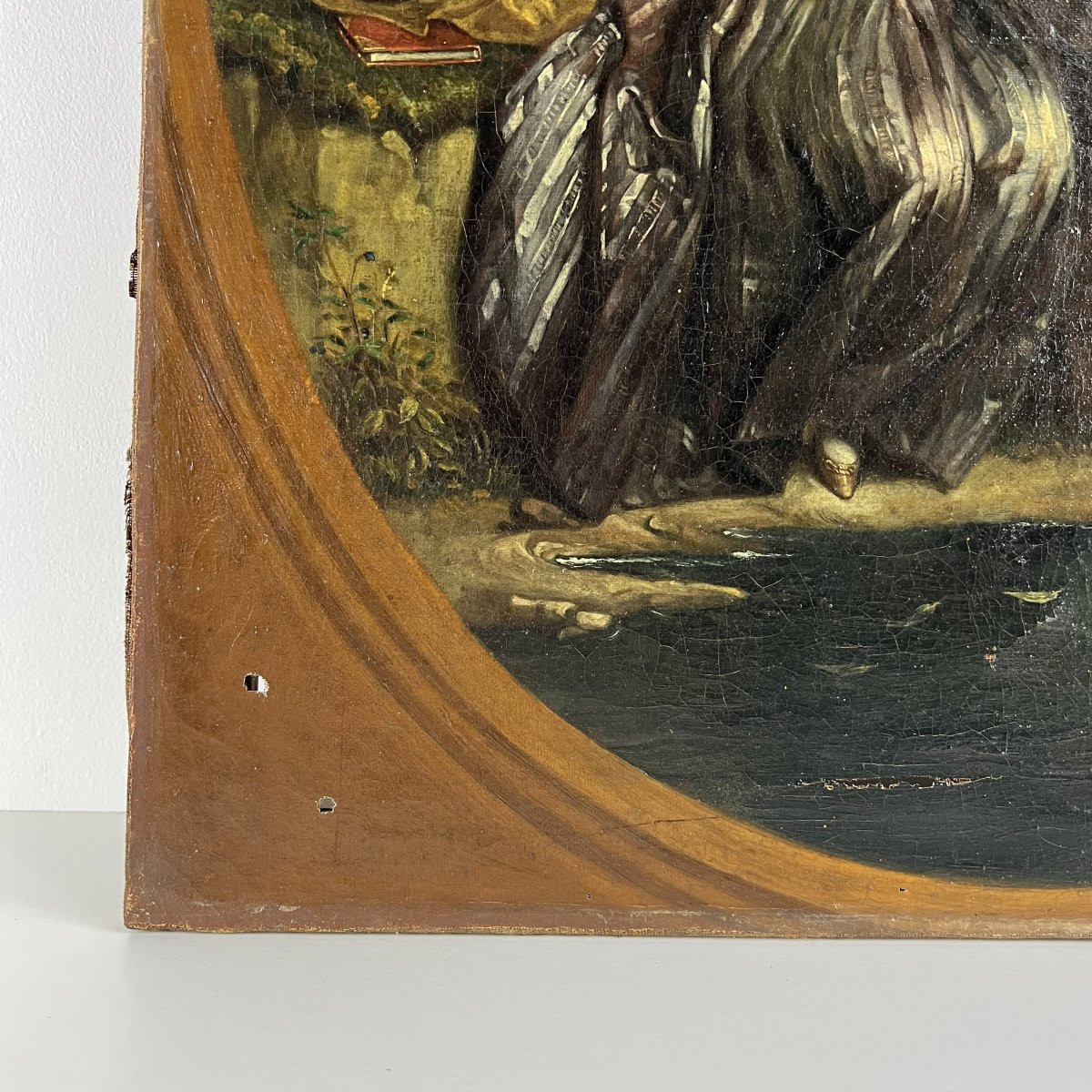
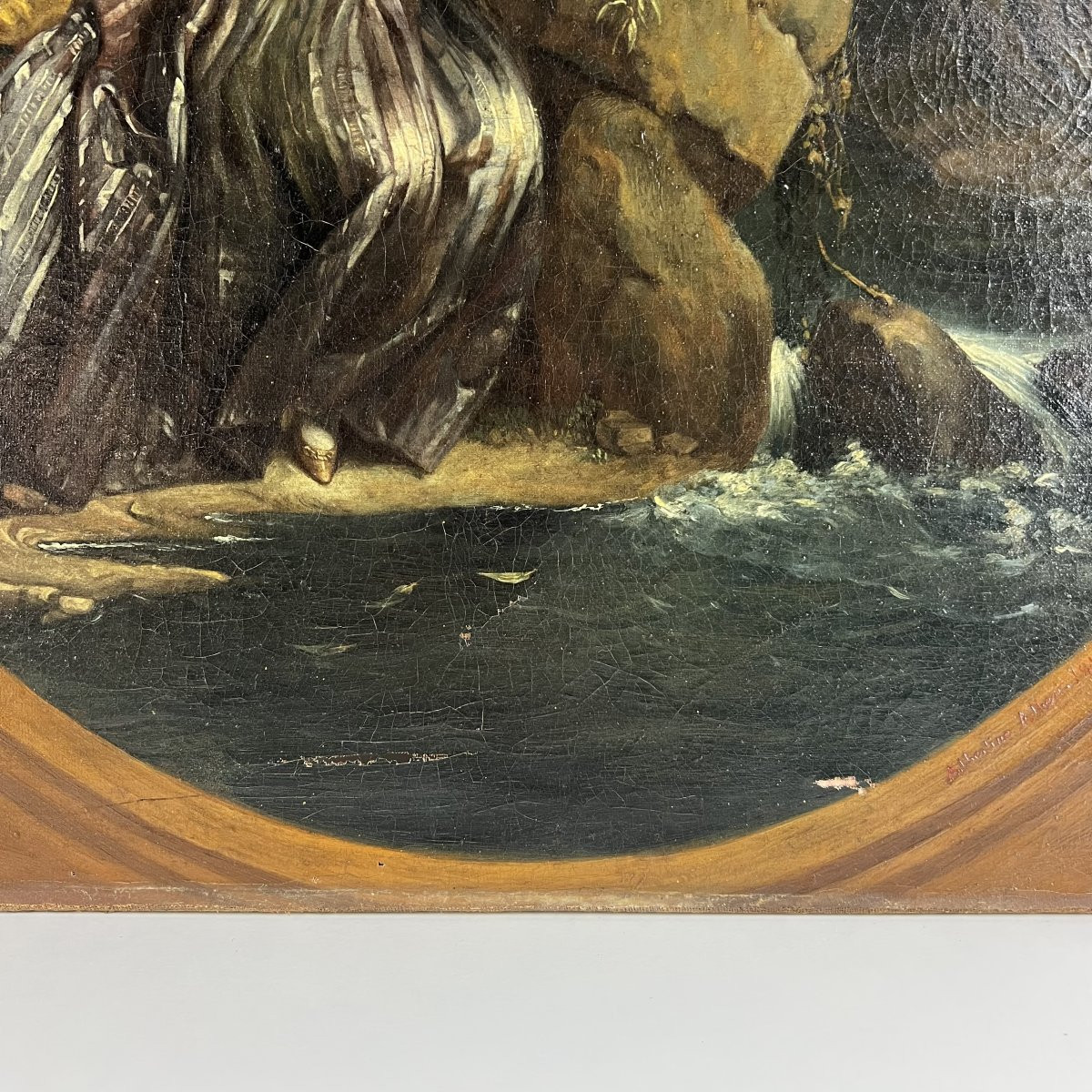
The work illustrates the eponymous poem by Amable Tastu (1826), a major figure of literary Romanticism. The scene depicts a melancholic young woman seated at the foot of a tree, plucking the leaves from a willow branch into a stream—an allegory of time passing and lost love. The composition is set within an oval trompe-l’œil painted directly onto the canvas (a simulated view).
High quality of execution, notably the virtuosity in the rendering of materials (the shimmering satin of the dress, the transparency of the veil), the delicacy of the flesh tones, and the subtle handling of chiaroscuro. These elements point to the hand of a trained professional painter.
Composition and signature:
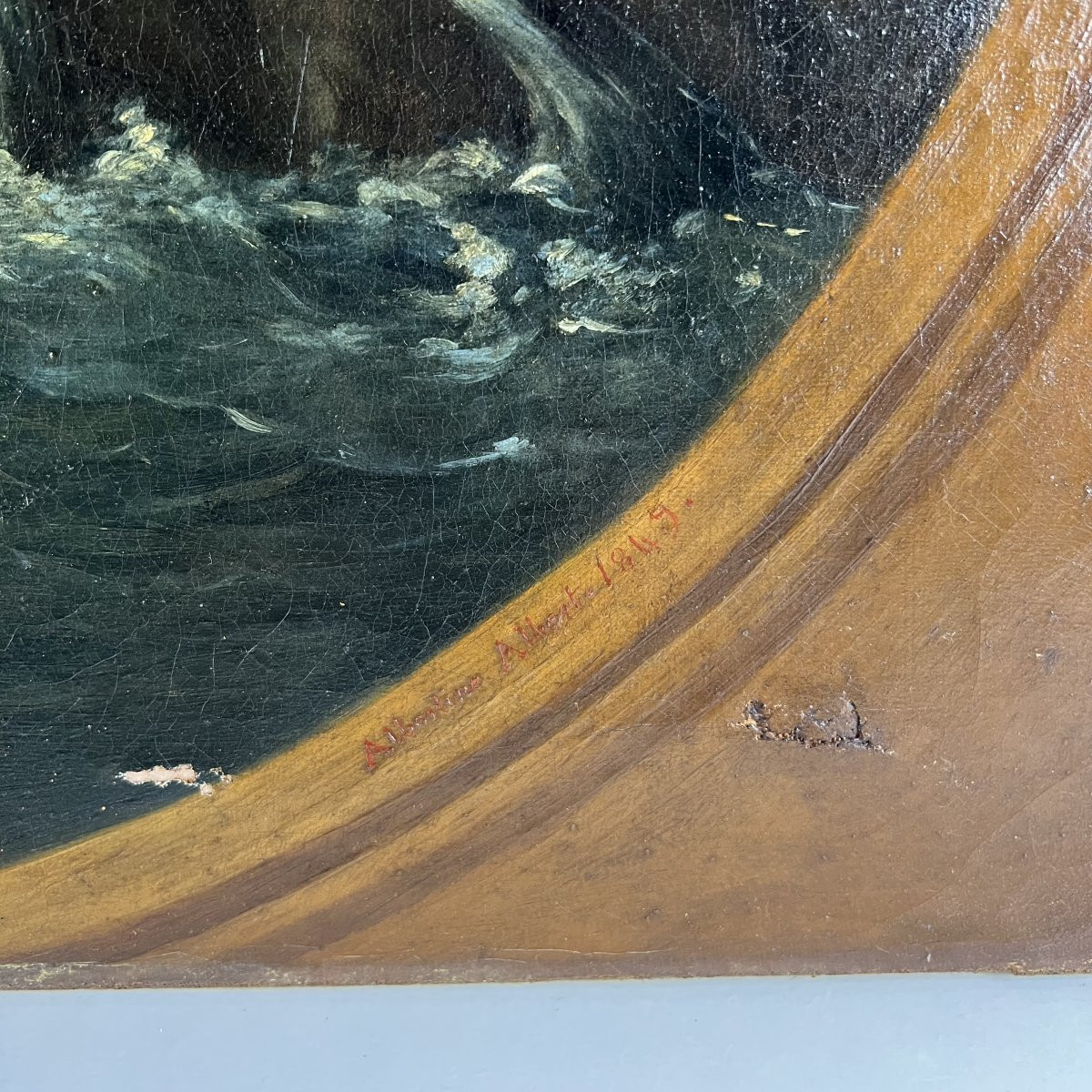
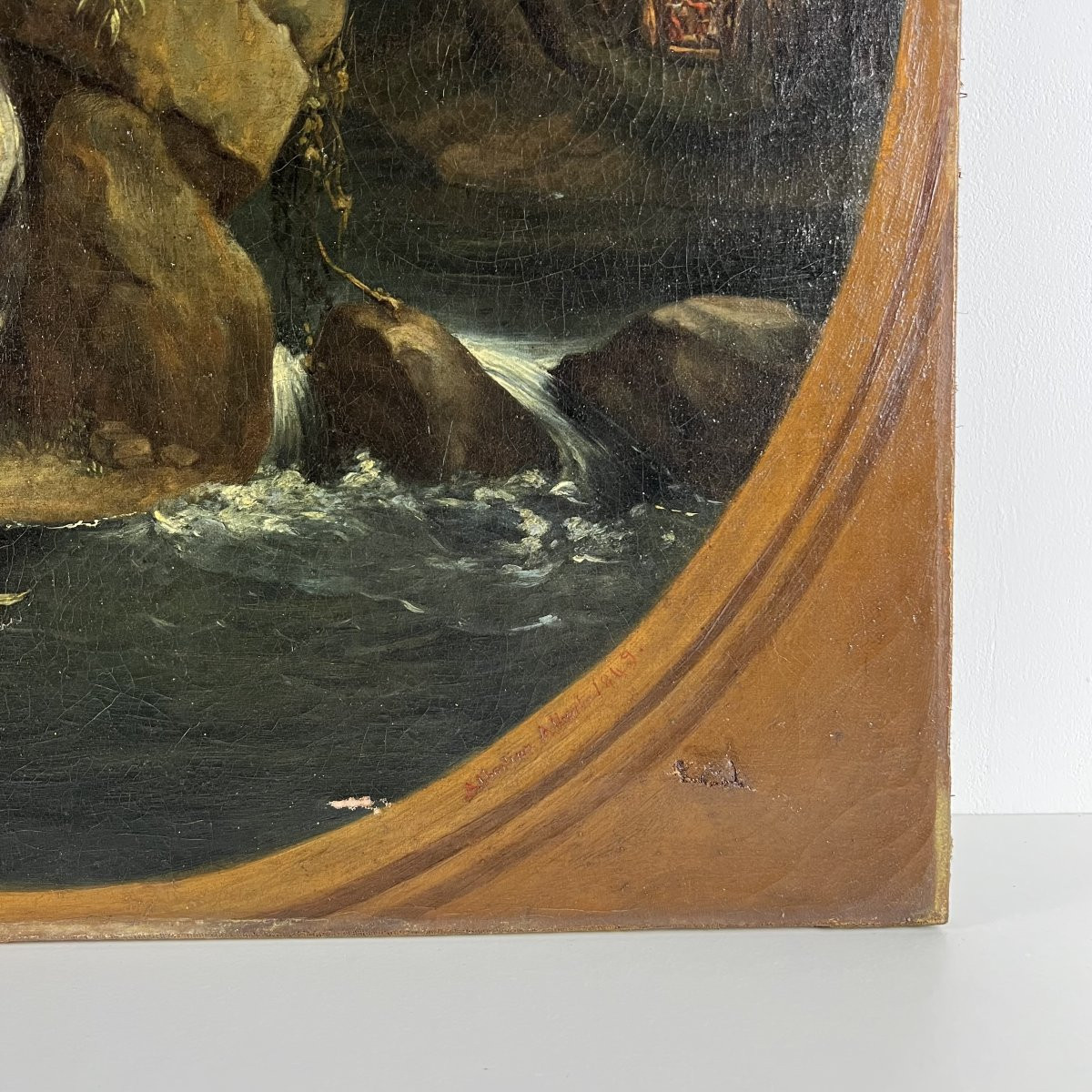
The scene is set within an oval trompe-l’œil (a faux wood-grained painted frame). A signature, “Albertine Albert 1849,” appears on this painted border. It is likely that the central painted scene is slightly earlier than this date, and that the signature corresponds to the hand that later executed the trompe-l’œil “framing” (to fill the spandrels of a canvas originally intended for a physical oval frame).
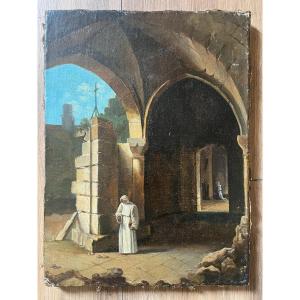
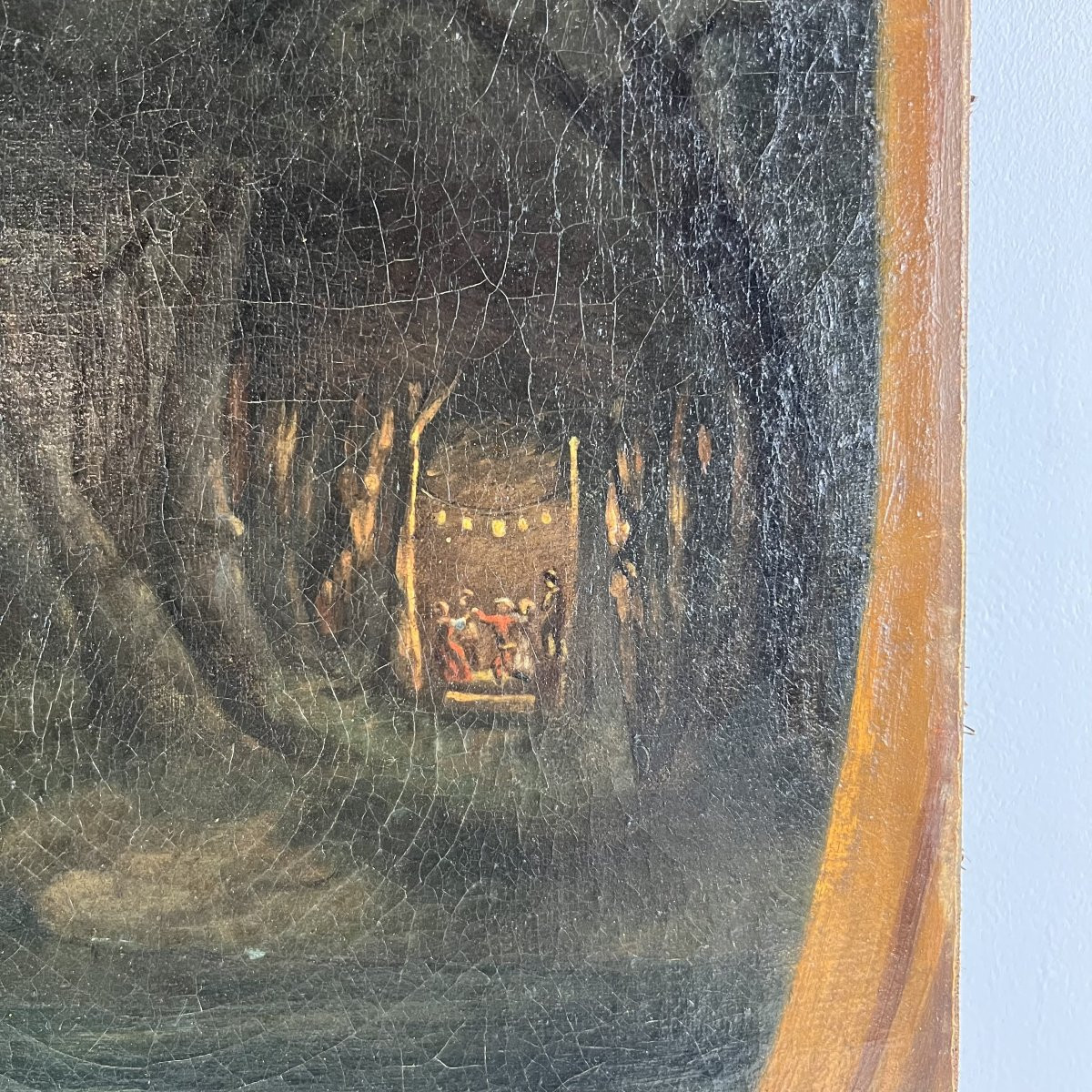
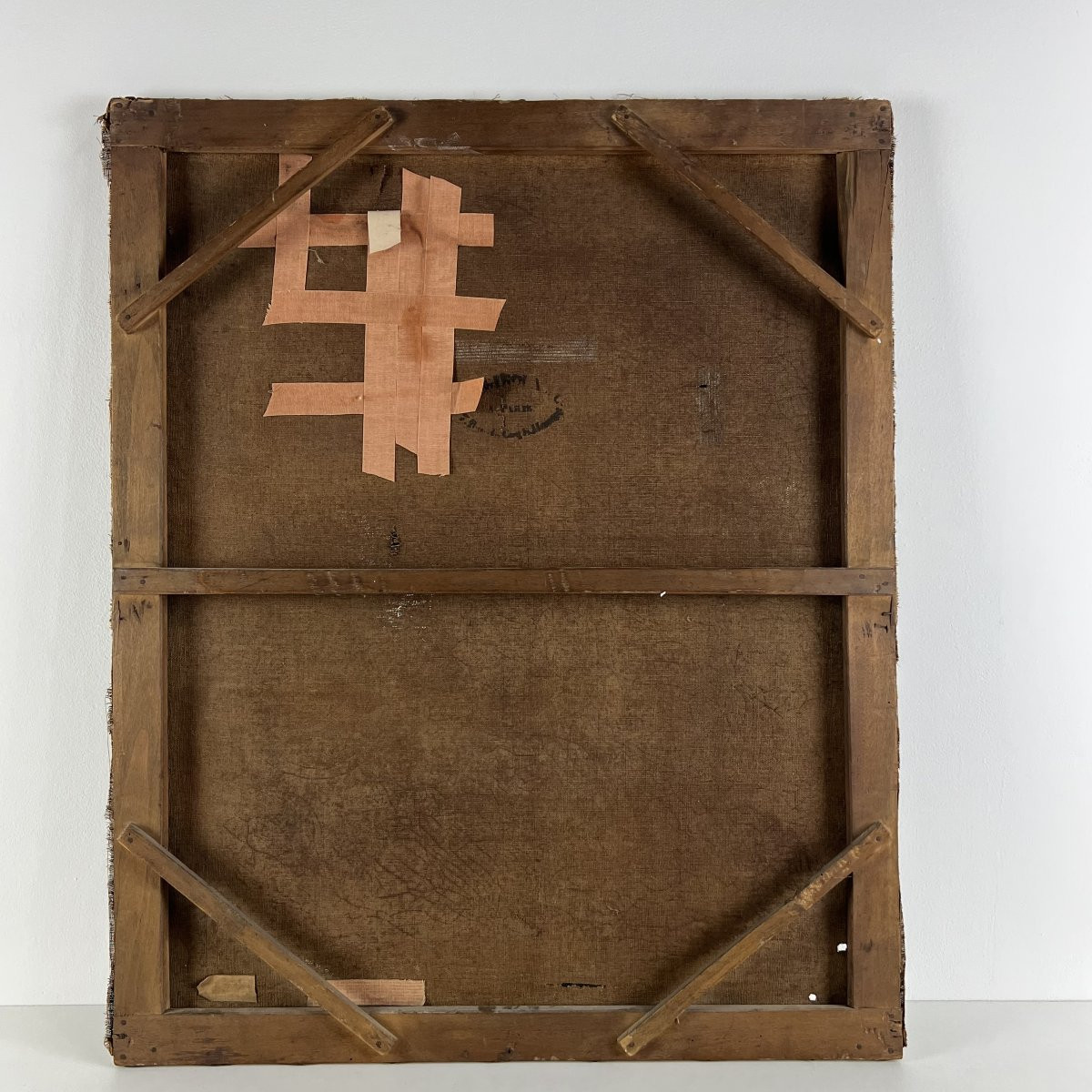
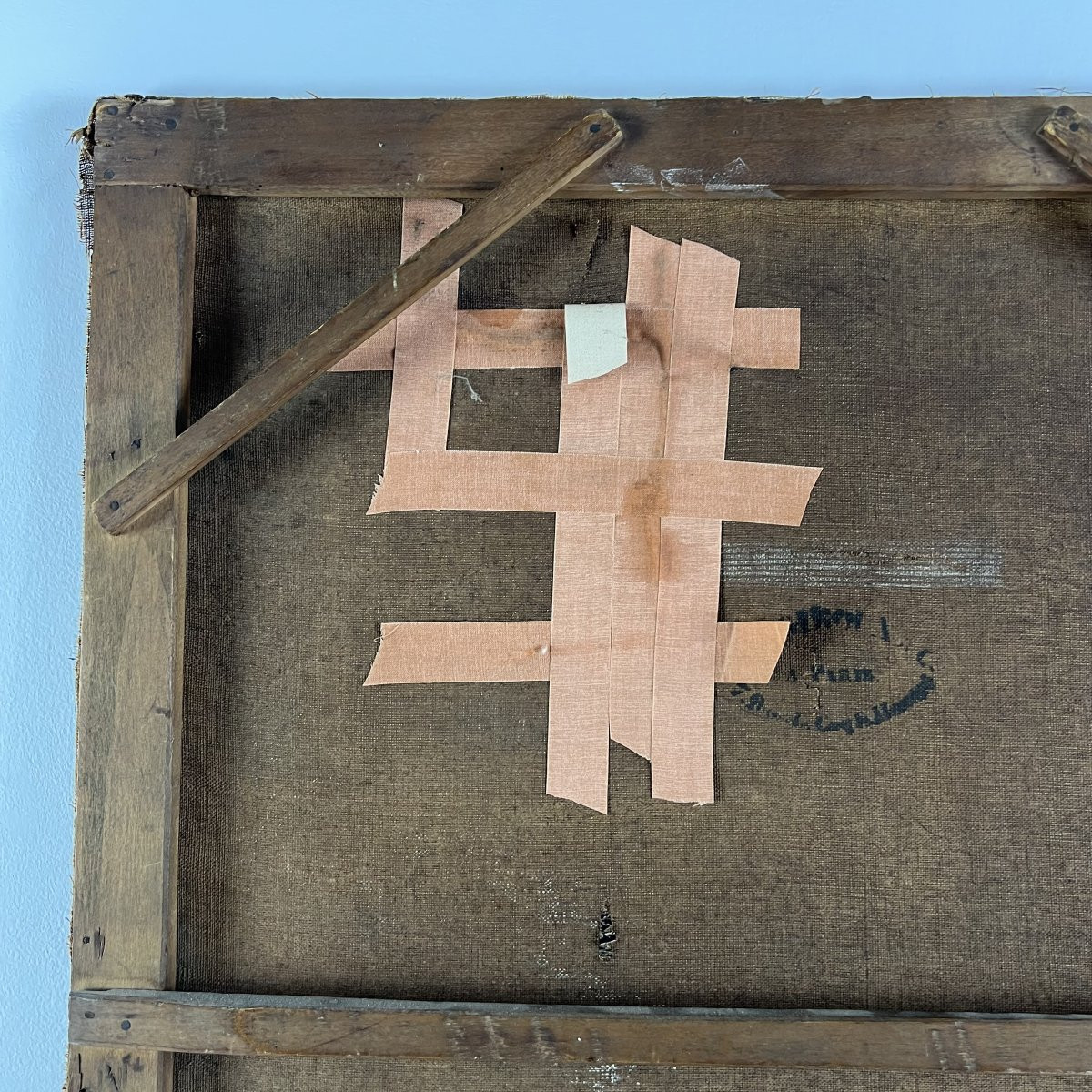
Canvas sold as is. Visible damage, including tears and older restorations (see detailed photos).
Dimensions:
• Height: 73 cm
• Width: 59.5 cm
The reverse bears a stencil mark from the firm “ALPHONSE GIROUX et Cie, Paris.”
Historical note: Maison Alphonse Giroux et Cie
Maison Alphonse Giroux et Cie, a dealer in tabletterie, cabinetry and “curiosity” objects, was founded around 1799 by François-Simon Alphonse Giroux (1776–1848) at 7, rue du Coq-Saint-Honoré, Paris. Renowned for luxury novelty goods, fine stationery, and artists’ supplies (as well as the daguerreotype), the firm became “Alphonse Giroux et Cie” in 1838 when the founder’s sons, Alphonse-Gustave and André, took over. The company moved to Boulevard des Capucines in 1857, was sold to Duvinage in 1867, and disappeared in 1885. (Ref.: Durand, 2015, Vol. 1 — De l’image fixe à l’image animée : actes des notaires de Paris.)
Reference work and literary context:
The model:
This painting reprises the composition by Jean-Augustin FRANQUELIN (1798–1839), Les Feuilles de Saule, shown at the Paris Salon of 1834 (no. 777) and posthumously at the Salon of 1839 (no. 800). The success of the work was ensured by its circulation as a lithograph by Adolphe Midy as early as 1834.
The artist:
A pupil of Baron Regnault, Jean-Augustin Franquelin (Paris, 1798–1839) is a notable figure in genre painting under the Restoration and the July Monarchy. A regular Salon exhibitor from 1819 to 1839, he received a gold medal in 1827. His works—known for firm draftsmanship and a refined finish—are now held in public collections (Louvre Museum; Royal Monastery of Brou; museums of Amiens and Grenoble).
The literary subject:
The scene illustrates a poem by Amable Tastu (1798–1885), a major voice of female Romanticism, compared by Sainte-Beuve to Marceline Desbordes-Valmore. From the collection Poésies (1826), the text describes the melancholy of a young woman entrusting her sorrows to the flow of water.
Safe and secure shipping:
• France: 48 €
• Europe (Shenghen area): 88 €
• Rest of the world: 188 €
• Does this item pique your interest or curiosity? Feel free to contact us, we would be delighted to discuss it with you. We are available from Monday to Saturday, from 8 a.m. to 7 p.m., at +33 652 43 97 82
We are fluent in English and have been shipping a wide variety of items internationally for many years. Please feel free to contact us with any questions you may have. Excellent customer service, we accept returns up to 14 days, 100% positive customer reviews.
Visit our store to check all our amazing products
550 €
Period: 19th century
Style: Other Style
Condition: En l'etat
Material: Oil painting
Width: 59,9 cm
Height: 73 cm
Reference (ID): 1671213
Availability: In stock
Print