

Ary Scheffer (1795-1858), Oil On Canvas, Jesus Of Nazareth, Portrait Of Christ From The Early 19th Century
Artist: Ary Scheffer (1795-1858)
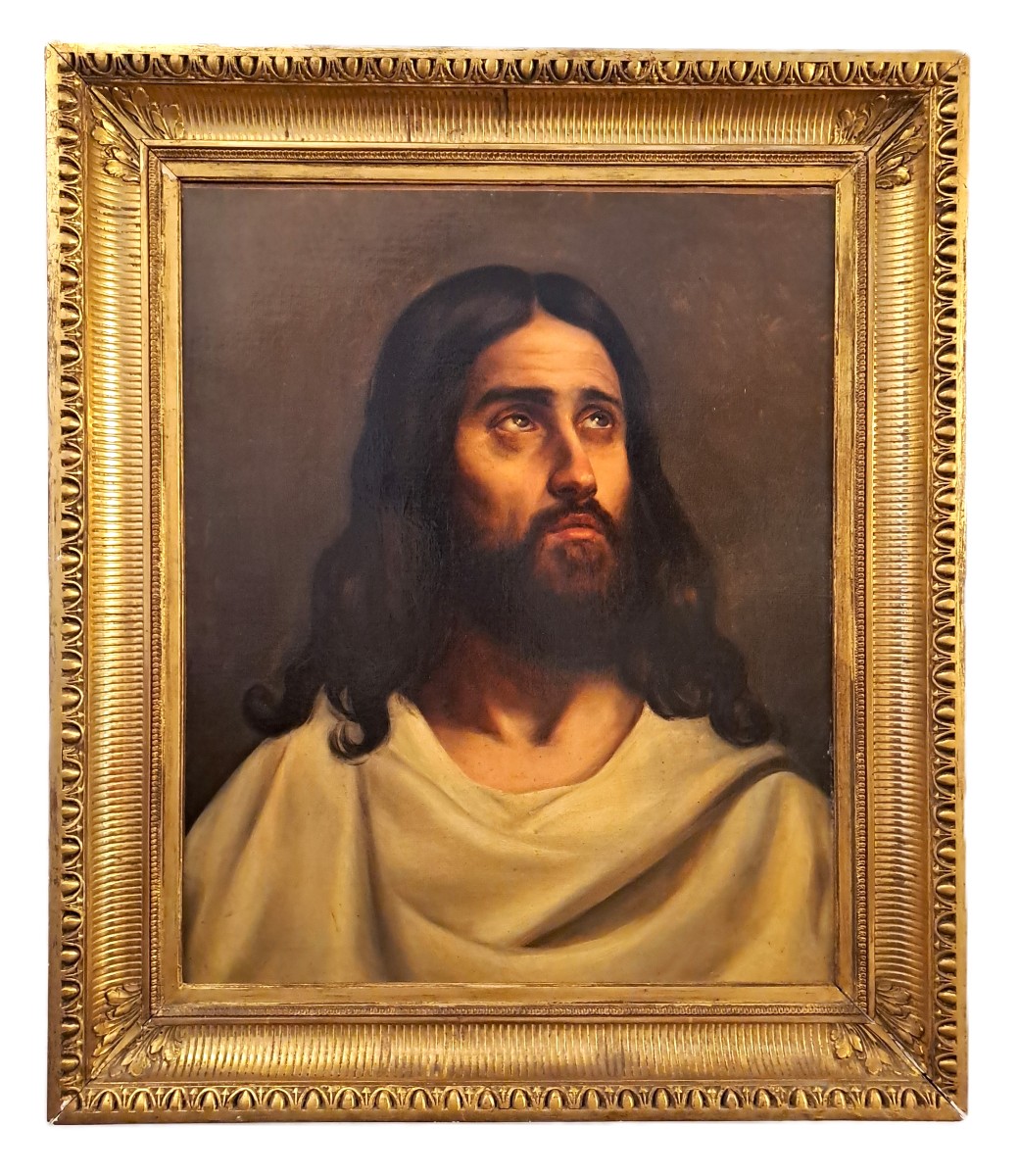
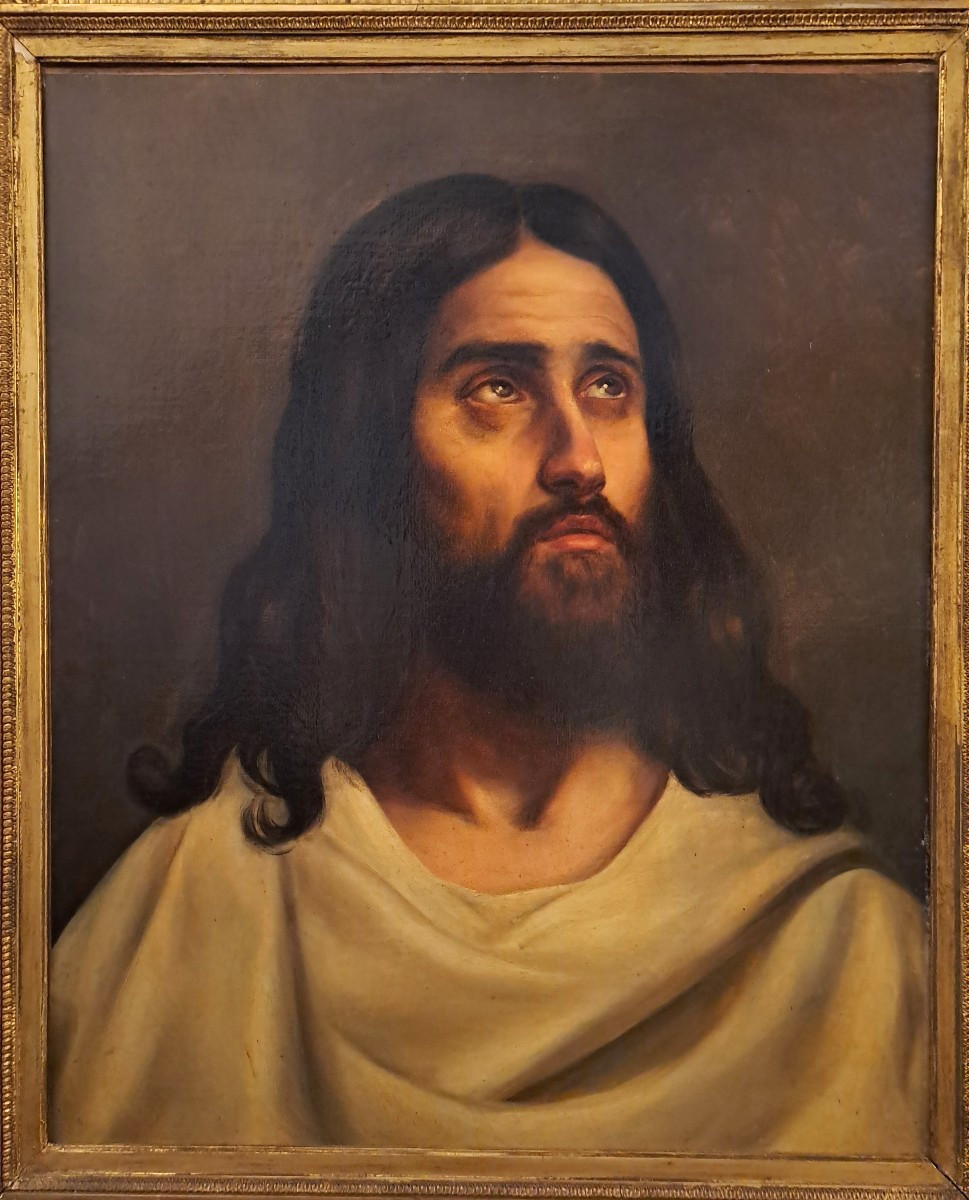
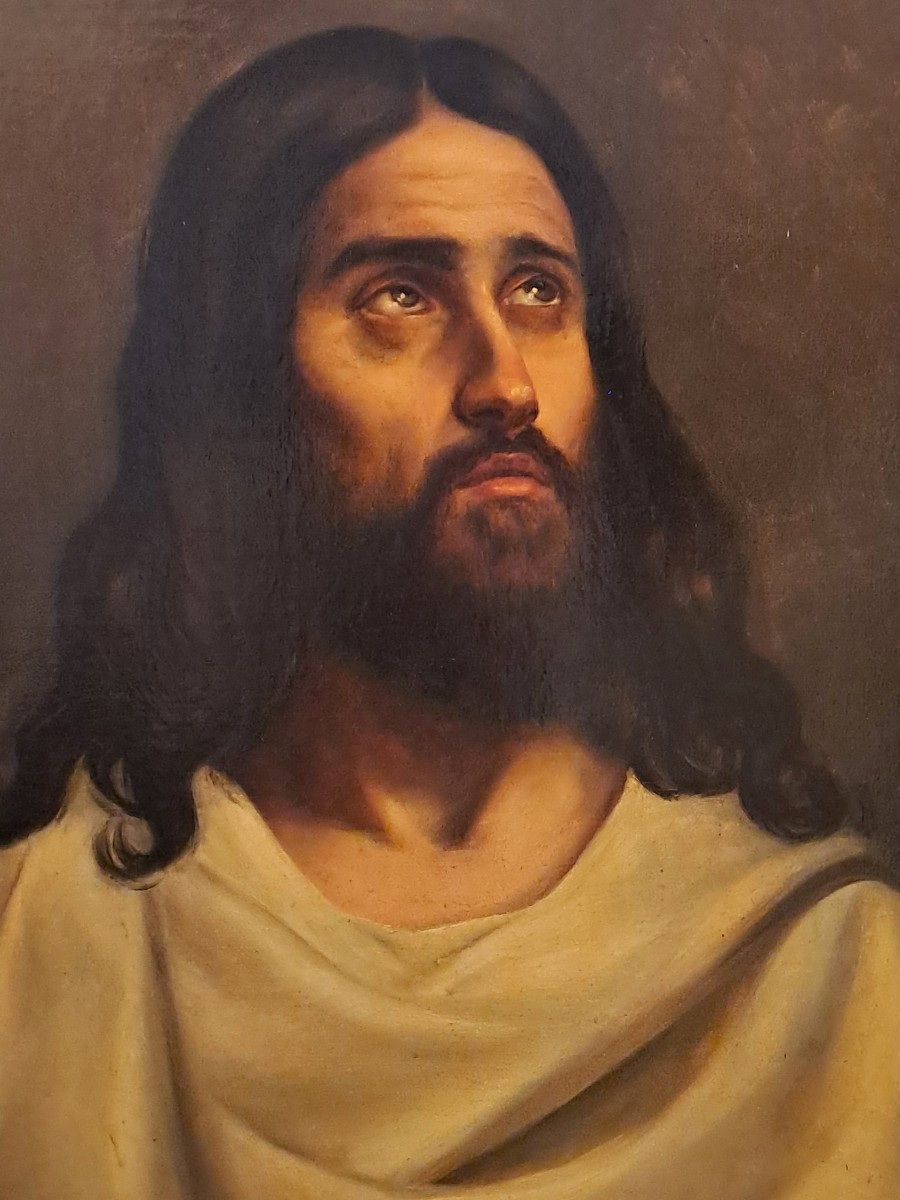
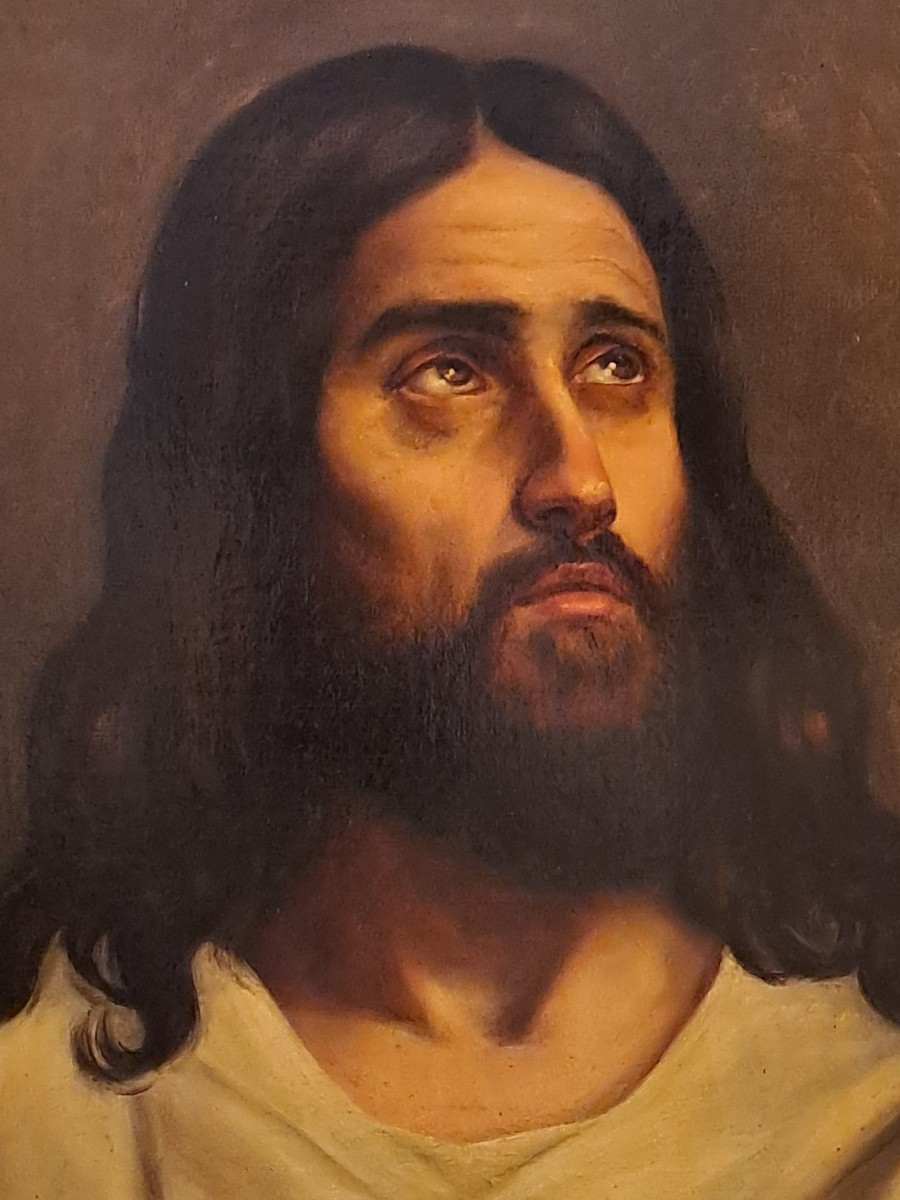
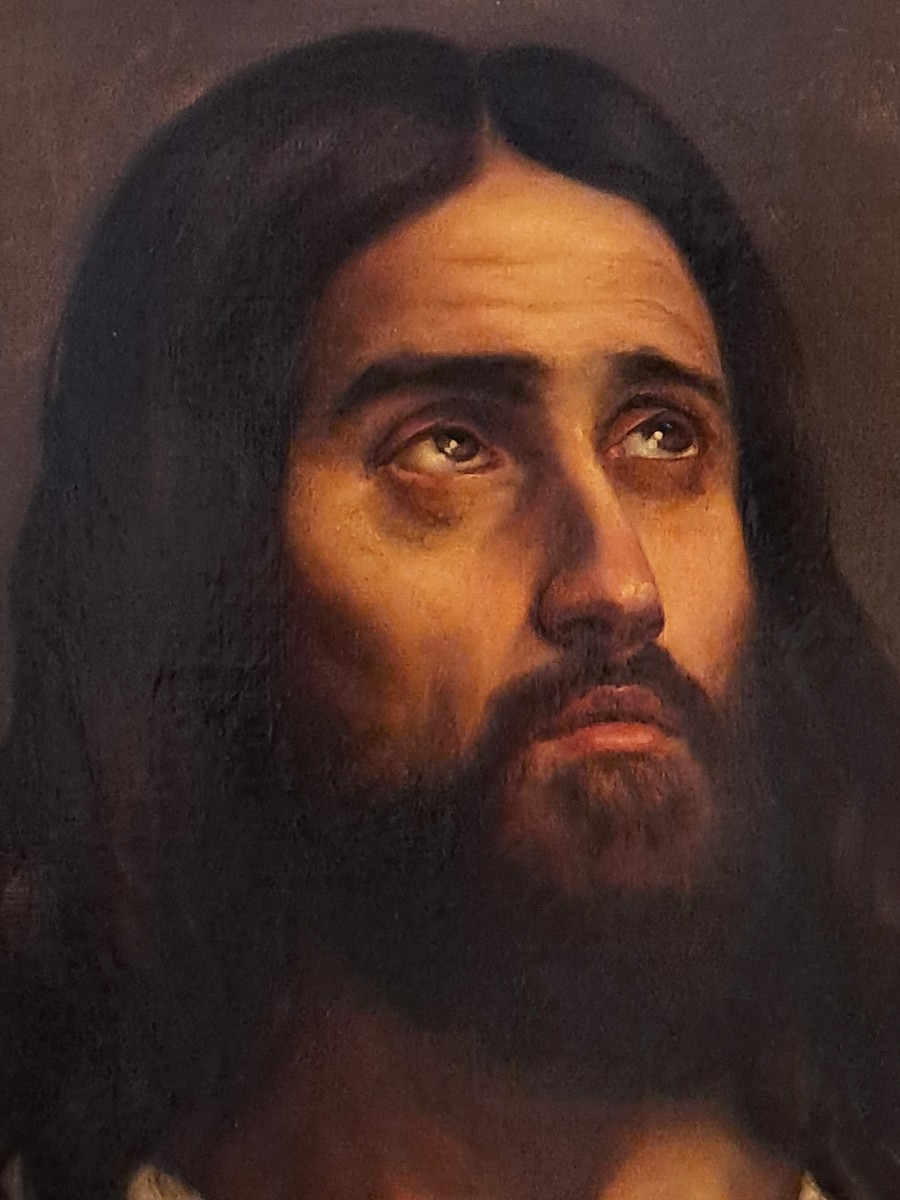
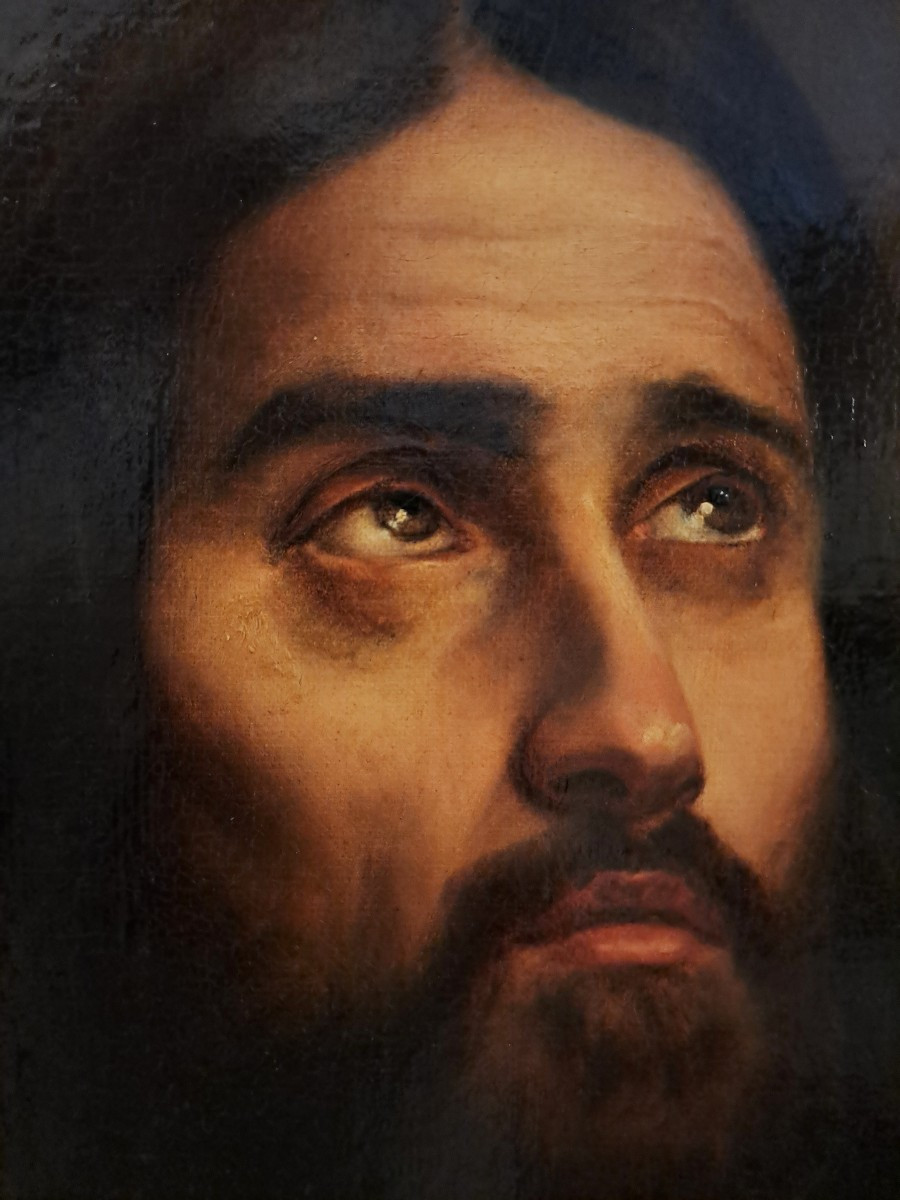
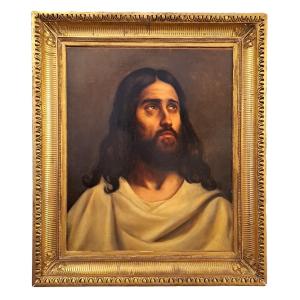
A magnificent oil on canvas depicting a bust portrait of Jesus of Nazareth at the height of his ministry as a preacher in Galilee.
Dressed in a simple tunic, Jesus turns his face, framed by long, flowing hair, slightly, and inclines his gaze towards heaven, the source of divine inspiration.
The figure and clothing are bathed in light, creating a beautiful chiaroscuro effect with the dark background of the canvas and the brown color of the hair and beard.
The serene features and gentle gaze lend the entire composition an impression of serenity and mysticism, awakening faith.
The simplicity of the subject, depicted without any attributes and highlighting only the meditative expression of the face, reflects the values of simplicity and spirituality preached by Christ.
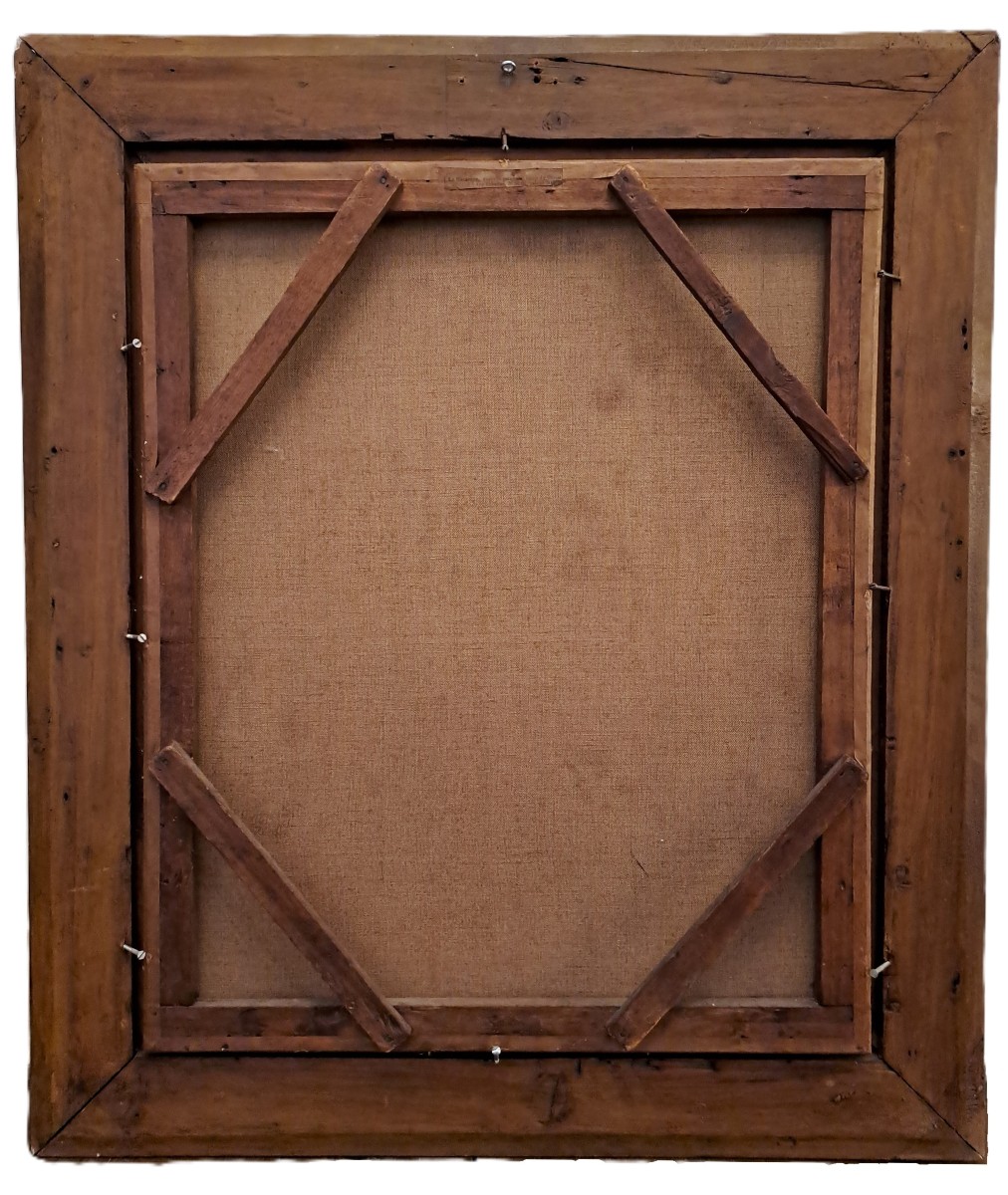
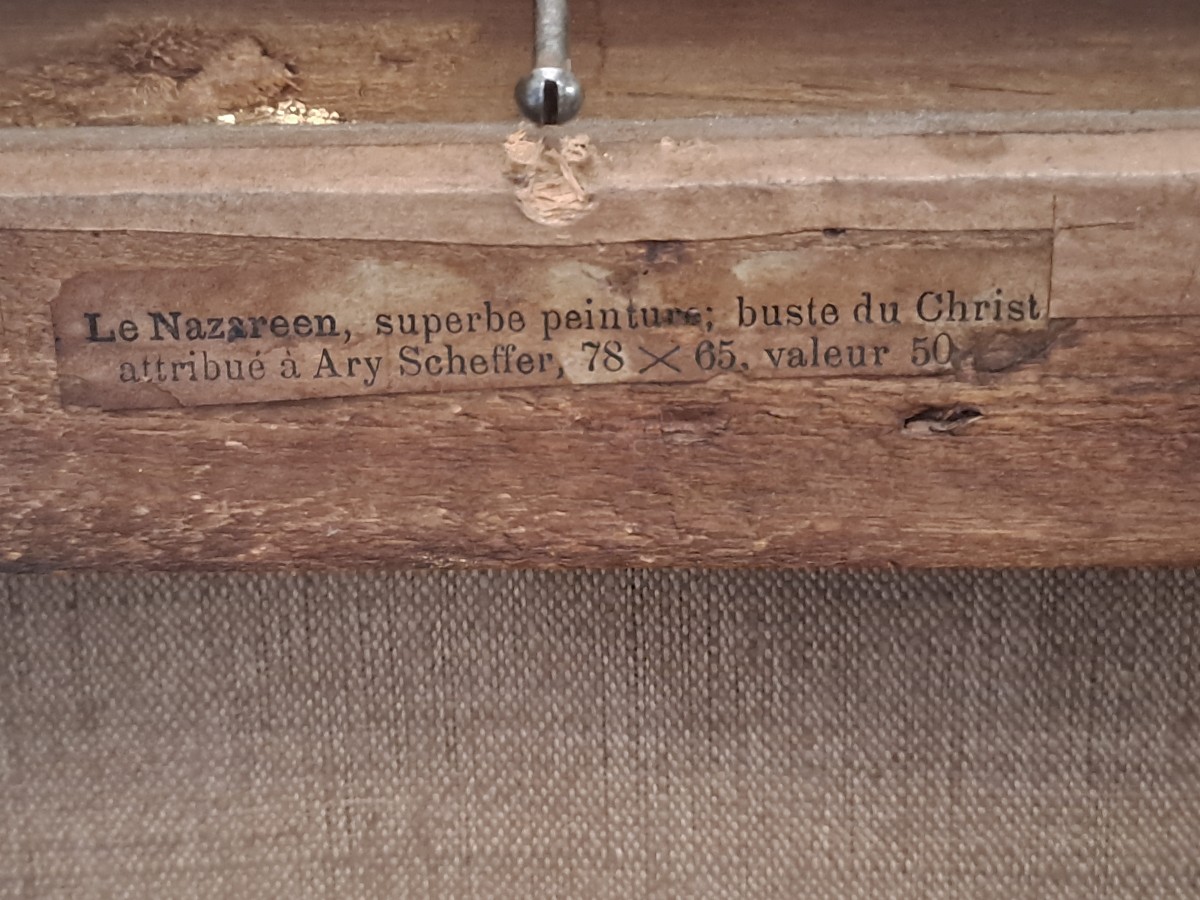
The oil on canvas bears an old label on the back of the frame, mentioning the title "The Nazarene" and attributing the painting to Ary Scheffer.
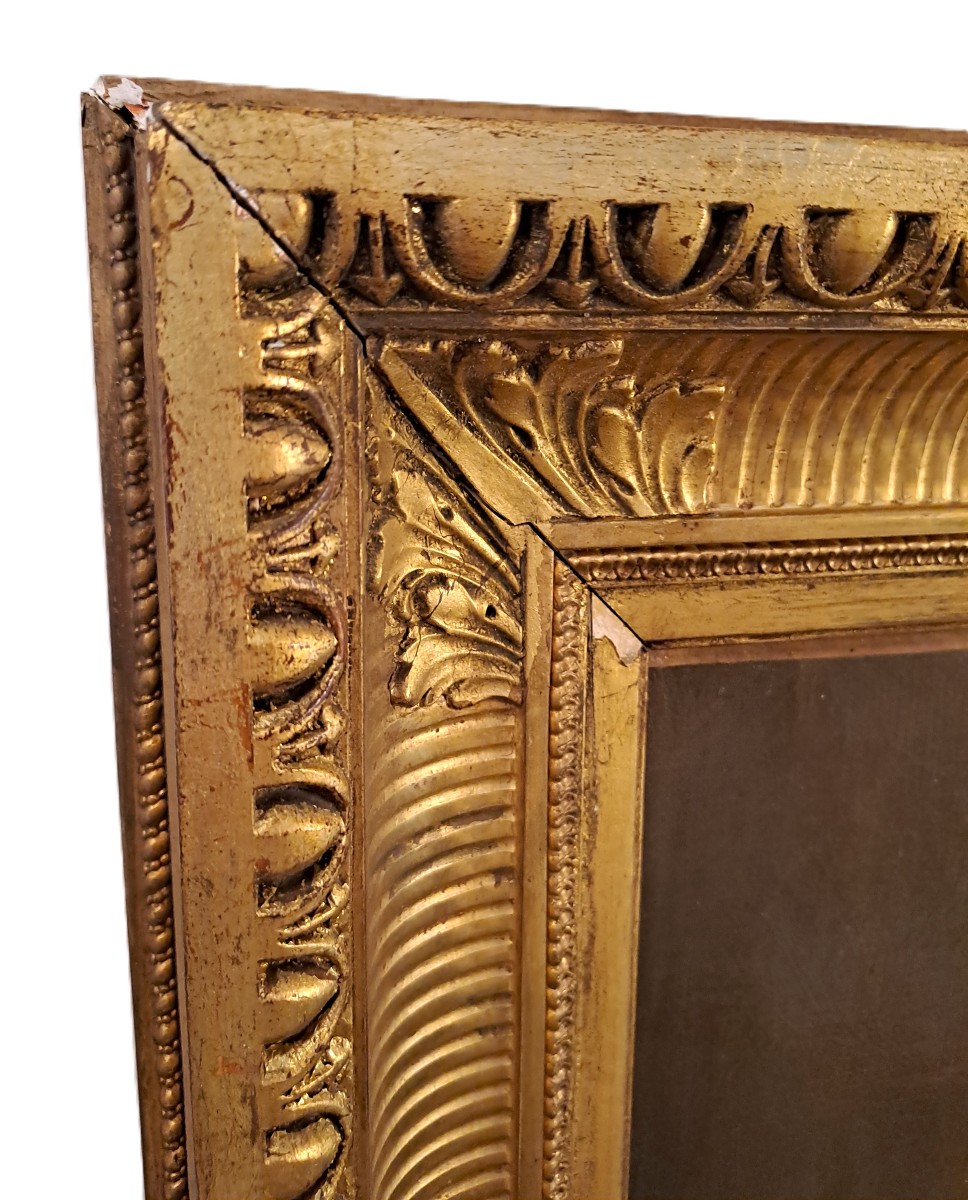
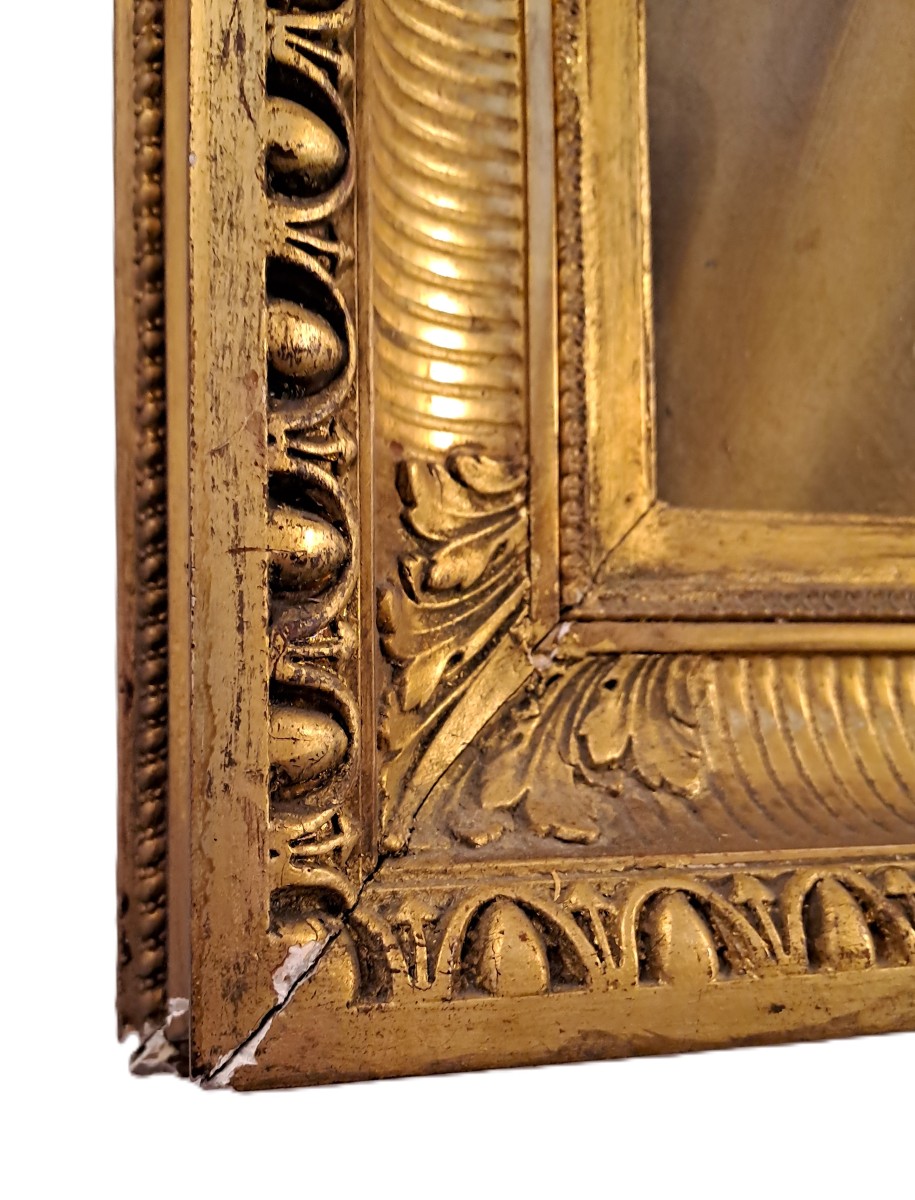
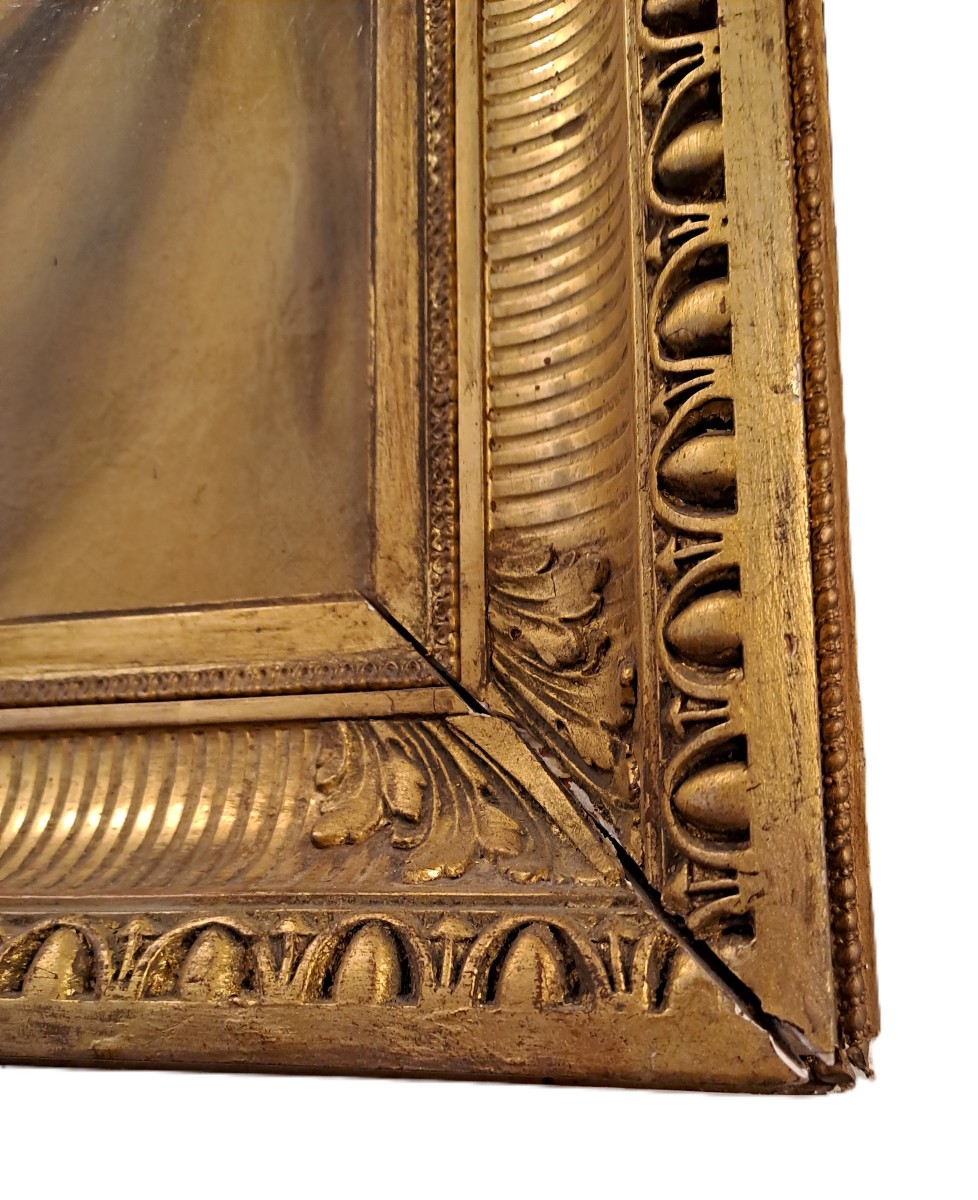
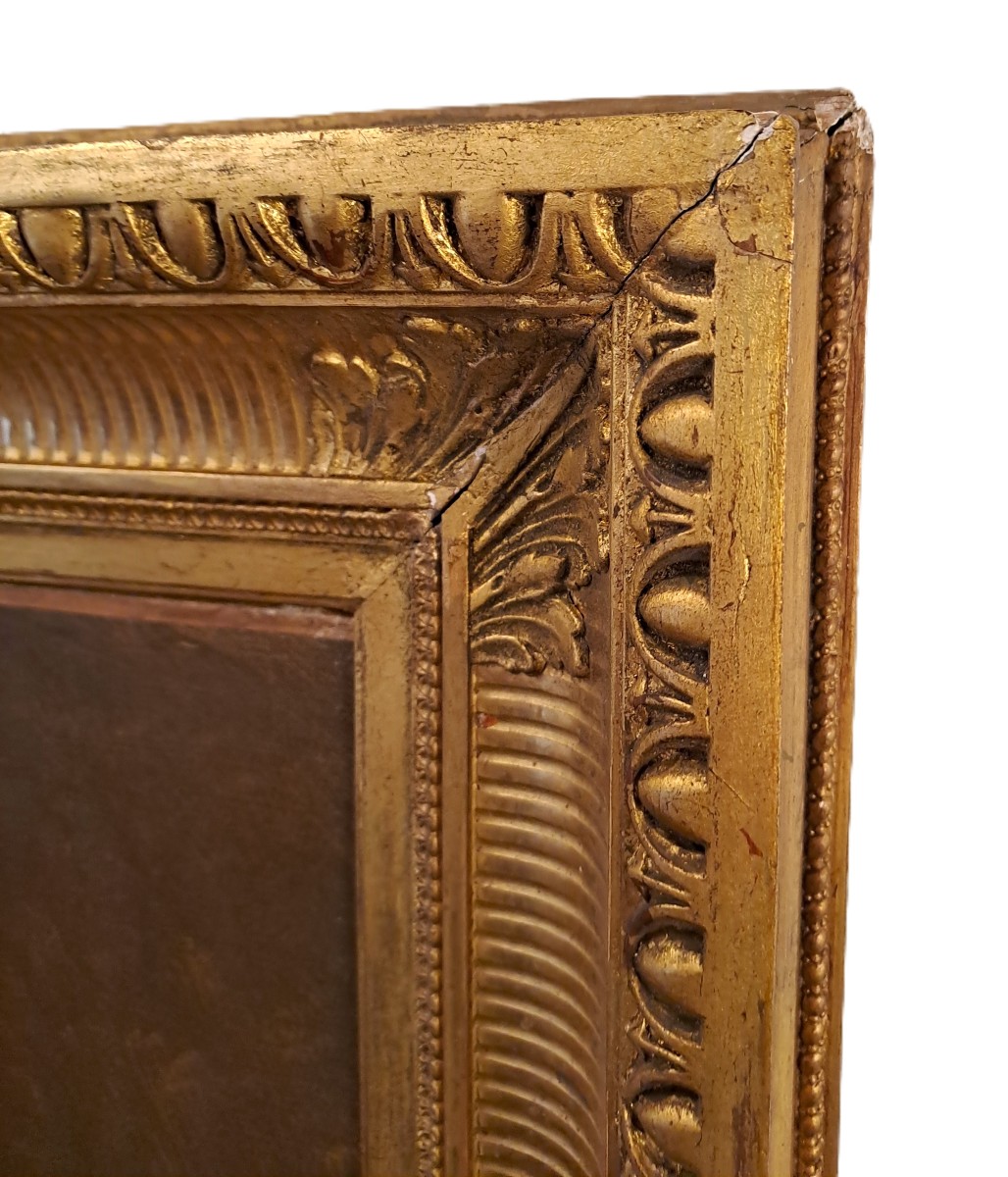
Attractive rectangular frame in gilded stuccoed wood, decorated with fluting and palmettes in the corners. Note a few small chips in the stucco at the corners of the frame (see photos).
Ary Scheffer, born February 10, 1795, in Dordrecht and died June 15, 1858, in Argenteuil, was a French painter of Dutch origin and Protestant faith.
Upon arriving in Paris in 1811, he entered the École des Beaux-Arts, where he joined the studio of the painter Pierre Guérin. He became friends with Géricault and made his debut at the Salon des Artistes in 1812.
He quickly demonstrated a wide range of talents, allowing him to explore all genres: landscapes painted en plein air, historical scenes, and religious paintings. His compositions reveal a mystical and dreamy inspiration.
The Salons of 1824 and 1827 established him in the public eye as one of the leading figures of Romanticism.
A talented portraitist, he became the drawing teacher of the children of the Duke of Orléans, the future Louis-Philippe, whose portrait he painted (now exhibited at the Musée Condé in Chantilly). This led to his growing fame during the July Monarchy, thanks to commissions from the royal family.
This renown also led him to paint portraits of numerous politicians such as Talleyrand and Lafayette, writers like Lamartine and Dickens, and musicians like Liszt and Chopin.
His studio, located on Rue Chaptal in Paris, now houses the Musée de la Vie Romantique (Museum of Romantic Life).
Dressed in a simple tunic, Jesus turns his face, framed by long, flowing hair, slightly, and inclines his gaze towards heaven, the source of divine inspiration.
The figure and clothing are bathed in light, creating a beautiful chiaroscuro effect with the dark background of the canvas and the brown color of the hair and beard.
The serene features and gentle gaze lend the entire composition an impression of serenity and mysticism, awakening faith.
The simplicity of the subject, depicted without any attributes and highlighting only the meditative expression of the face, reflects the values of simplicity and spirituality preached by Christ.
The oil on canvas bears an old label on the back of the frame, mentioning the title "The Nazarene" and attributing the painting to Ary Scheffer.
Attractive rectangular frame in gilded stuccoed wood, decorated with fluting and palmettes in the corners. Note a few small chips in the stucco at the corners of the frame (see photos).
Ary Scheffer, born February 10, 1795, in Dordrecht and died June 15, 1858, in Argenteuil, was a French painter of Dutch origin and Protestant faith.
Upon arriving in Paris in 1811, he entered the École des Beaux-Arts, where he joined the studio of the painter Pierre Guérin. He became friends with Géricault and made his debut at the Salon des Artistes in 1812.
He quickly demonstrated a wide range of talents, allowing him to explore all genres: landscapes painted en plein air, historical scenes, and religious paintings. His compositions reveal a mystical and dreamy inspiration.
The Salons of 1824 and 1827 established him in the public eye as one of the leading figures of Romanticism.
A talented portraitist, he became the drawing teacher of the children of the Duke of Orléans, the future Louis-Philippe, whose portrait he painted (now exhibited at the Musée Condé in Chantilly). This led to his growing fame during the July Monarchy, thanks to commissions from the royal family.
This renown also led him to paint portraits of numerous politicians such as Talleyrand and Lafayette, writers like Lamartine and Dickens, and musicians like Liszt and Chopin.
His studio, located on Rue Chaptal in Paris, now houses the Musée de la Vie Romantique (Museum of Romantic Life).
3 900 €
Period: 19th century
Style: Louis Philippe, Charles 10th
Condition: Good condition
Material: Oil painting
Width: toile : 50 cm / cadre : 67 cm
Height: toile : 61 cm / cadre : 78 cm
Reference (ID): 1666823
Availability: In stock
Print