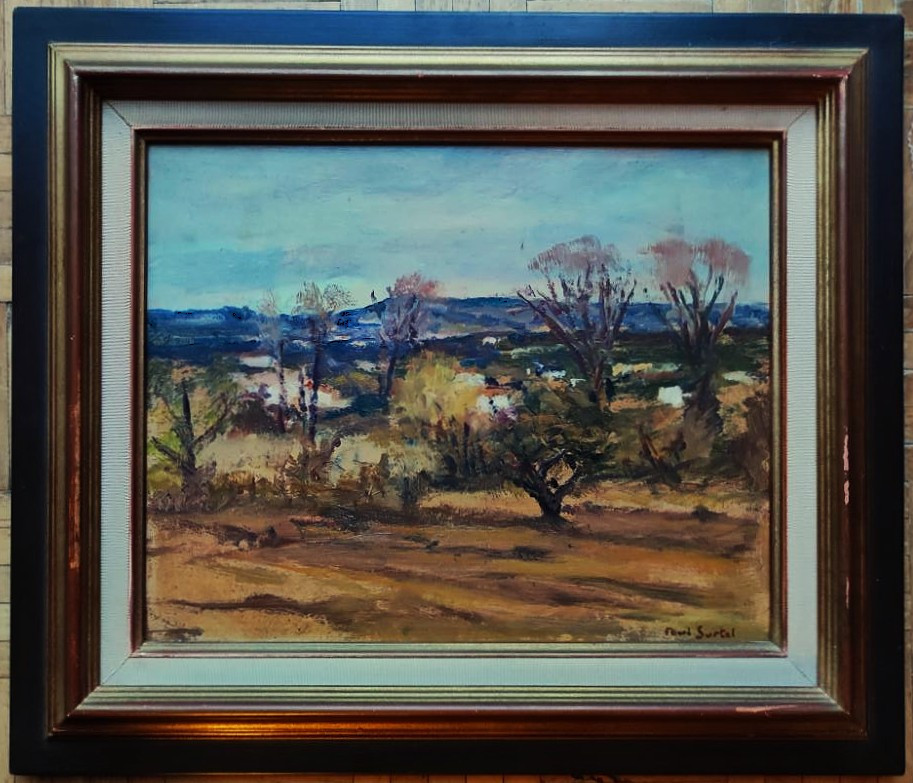
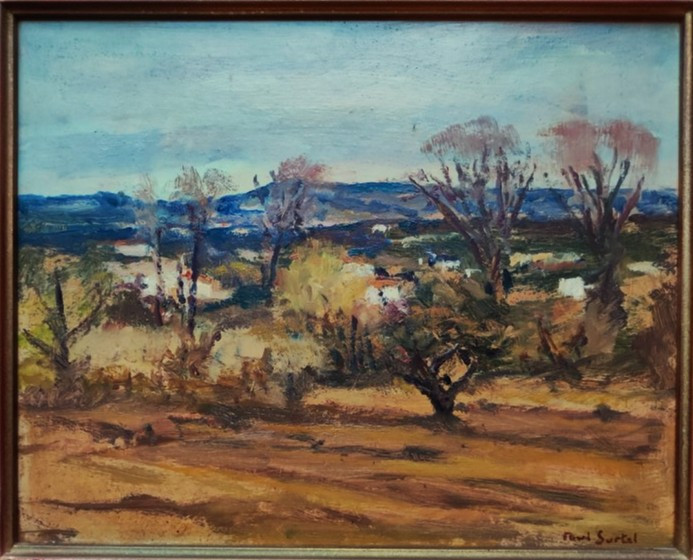
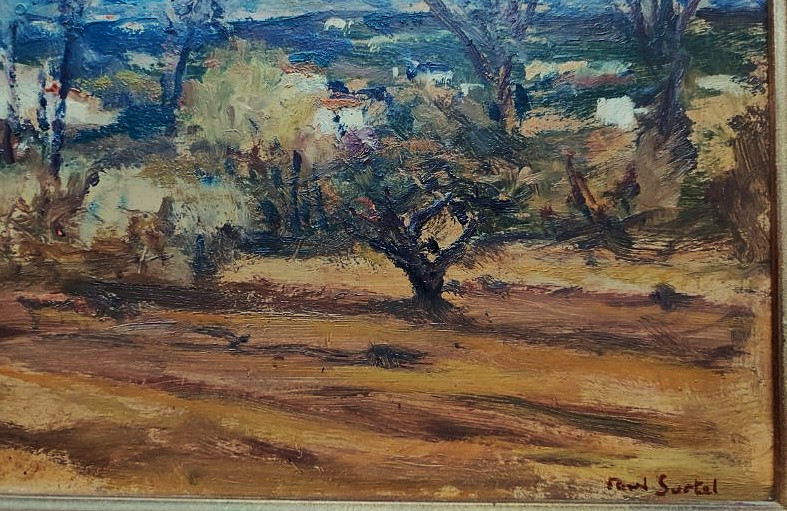
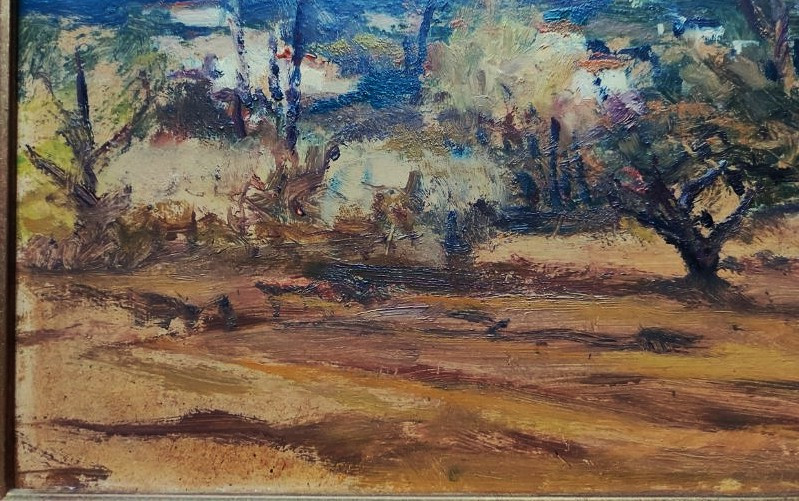
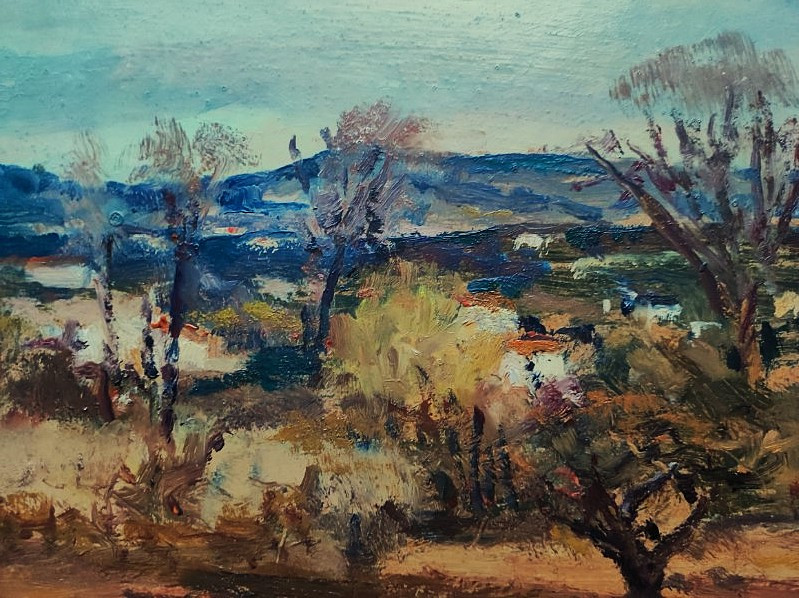
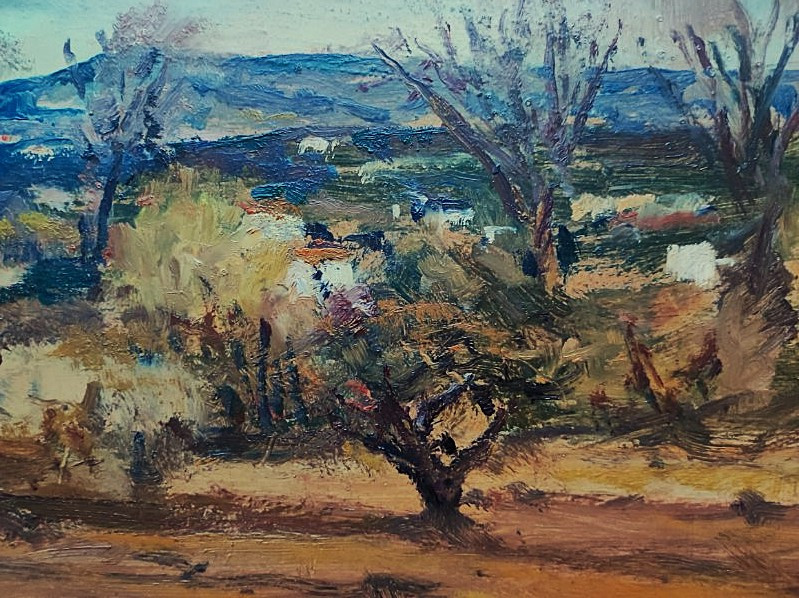


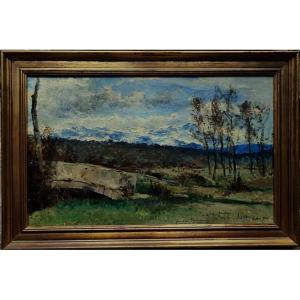
"Paul Surtel (1893-1985) Provençal Landscape. Carpentras, Crozant School, Maillaud, Berry, Rue.."
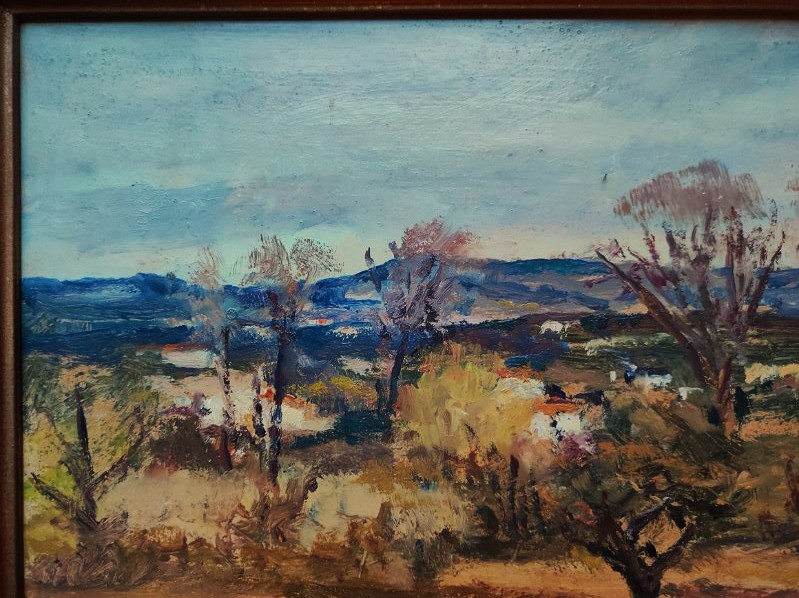
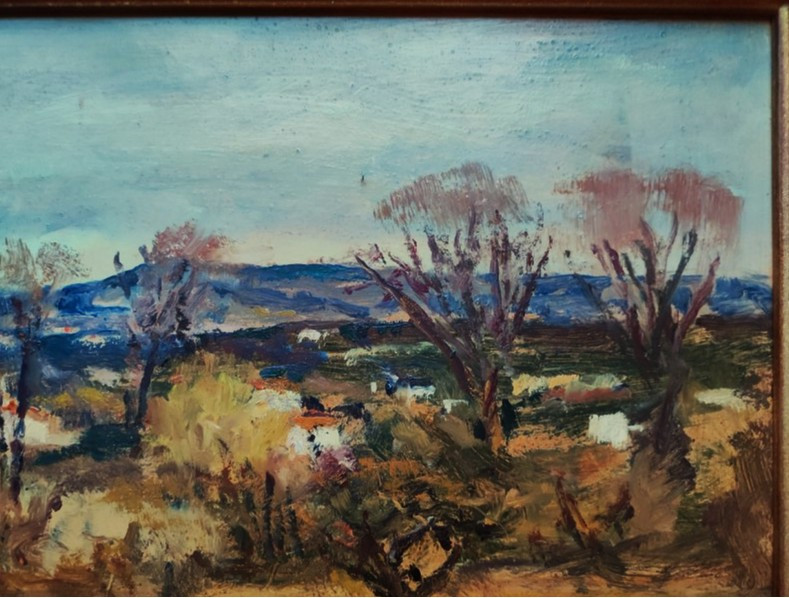
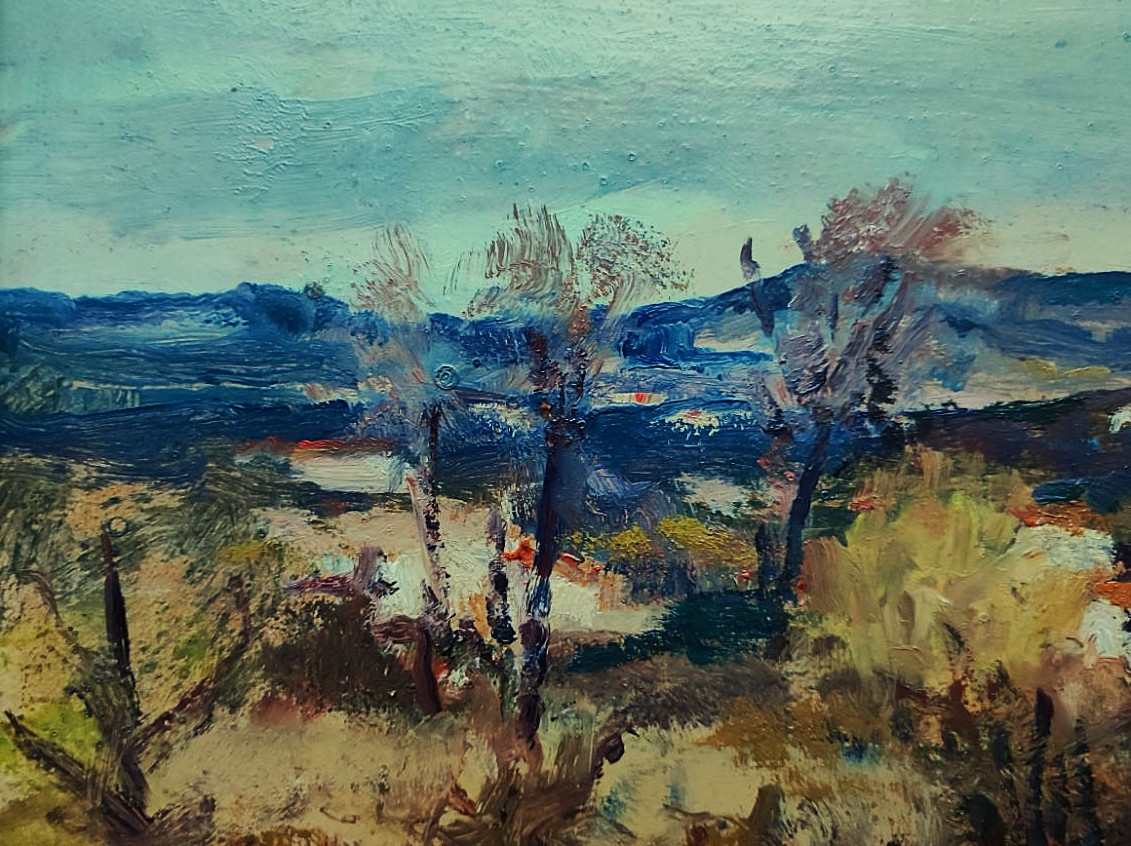
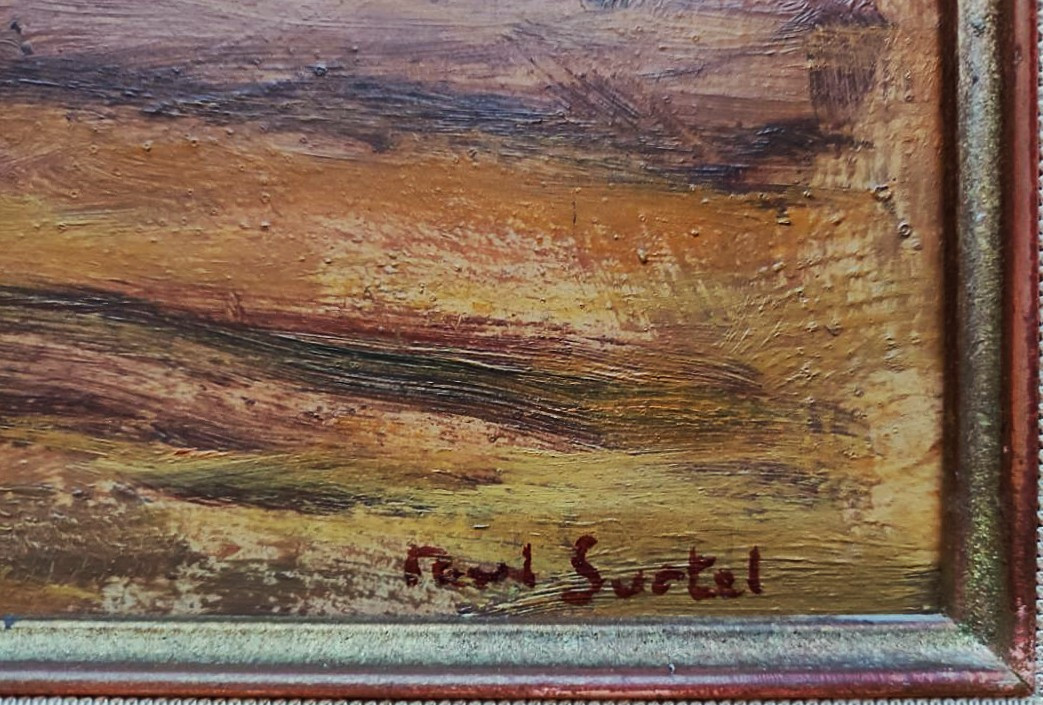
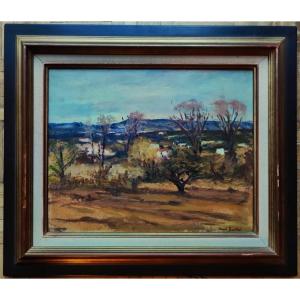
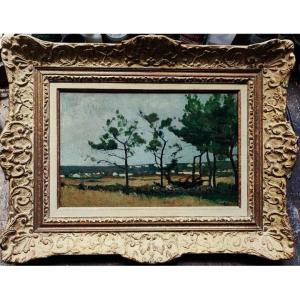
A new work by Paul Surtel, this time a beautiful oil on hardboard depicting a Provençal landscape, signed lower right. The painting measures 38x46cm (excluding the frame) or 48x55cm (including the frame). This is a new painting by Paul Surtel representing a Provençal landscape, perhaps near Carpentras, or in the Luberon where he spent most of his time. At this time, Surtel employed a powerful brushstroke, still very much influenced by his teacher, Fernand Maillaud, and his palette consisted of a range of browns, greens, ochres, and caramels, as well as deep blues and touches of orange. Paul Surtel, a leading painter of the Crozant and Provençal schools, needs no introduction. He was a student and close friend of Fernand Maillaud, whom he met through his father, also a painter in his early career and later an innkeeper. Paul would become a painter and a winemaker... proving that influences endure. Paul Surtel was born in Reuilly on September 20, 1893, in the house where his father ran the café inherited from his grandfather. His parents later settled as millers at the Moulin de la Cour. During his childhood, he was accompanied by Fernand Maillaud, a landscape painter and friend of his father. After the village school, he attended the college in Issoudun, and from 1904, the Lycée Charlemagne in Paris, the École des Arts Décoratifs, and above all, playing truant, visiting museums and exhibitions in Parisian galleries. He fell in love with Rembrandt, Corot, and the Impressionists. Then came the First World War. The family left Paris and settled in Dampmart (Seine-et-Marne). Exempted from military service until 1916, Paul Surtel sculpted a little (five or six busts of women). Deemed fit for military service, he completed his basic training at Fort Lamotte in Lyon in 1916. He became friends with Henri Focillon. He went to war as an artilleryman in early 1917. From Seine-et-Marne to Lorraine, Belgium, and the Somme, he moved from offensives to cantonments. During this time, he allowed himself to be drawn back to nature, sketching according to the advice of Fernand Maillaud, who encouraged him not to be concerned with technique, to let emotion guide his hand, the skill acquiring itself through attention and work. At the front, he met the writer Raymond Payelle (Philippe Hériat), who would remain his friend until his death. Demobilized in Hyères, where his parents had moved, Paul Surtel found work as a forestry foreman in the Var forests and discovered the Provençal countryside, which would become the source of his work. He married Dorothy Bonarjee in 1921. In 1922, he acquired a vineyard near Gonfaron. Until 1936, he cultivated the vines and continued to draw. Then, at the age of 33, encouraged by Fernand Maillaud and Raymond Christoflour, he finally began to paint. He separated from Dorothy Bonarjee in 1936. In 1937, Paul Surtel met Elia Duc, then a young literature professor in Mostaganem, Algeria, at one of his first exhibitions in Oran. They married in 1939, and the artist entered what he called "the sunny side of my life." Forty-eight years of creative work followed, initially in Peipin (Alpes-de-Haute-Provence) until 1946. The paintings from this period are characterized by their tenderness, lightness, and effusion. After two years in Quercy, then three in Orange, the family settled in 1951 in Carpentras in the Vaucluse region, where Elia was appointed teacher. It was a large household of seven: two young children, François and Pierre – a third, Jean, would be born later – and three grandparents. From the 1960s onward, he added still lifes and portraits to his landscapes. Two young painters whom he encouraged and admired, Ibrahim Shahda and Dominique Barrot, shared his tastes and enthusiasms. Throughout his life, Paul Surtel demonstrated another talent: writing. He left behind an impressive correspondence with relatives and friends, painters and writers alike. The Maison de Reuilly in Paul Surtel's birthplace (on the site of the former tourist office) exhibits around thirty of his works. Painting in perfect condition, delivered in a very attractive modern Delft frame. Artwork guaranteed authentic. 










 Le Magazine de PROANTIC
 TRÉSORS Magazine
 Rivista Artiquariato