THIS OBJECT WAS SOLD
Egyptian Flask With Baker’s Oven “panat” — With Certificate Of Authenticity
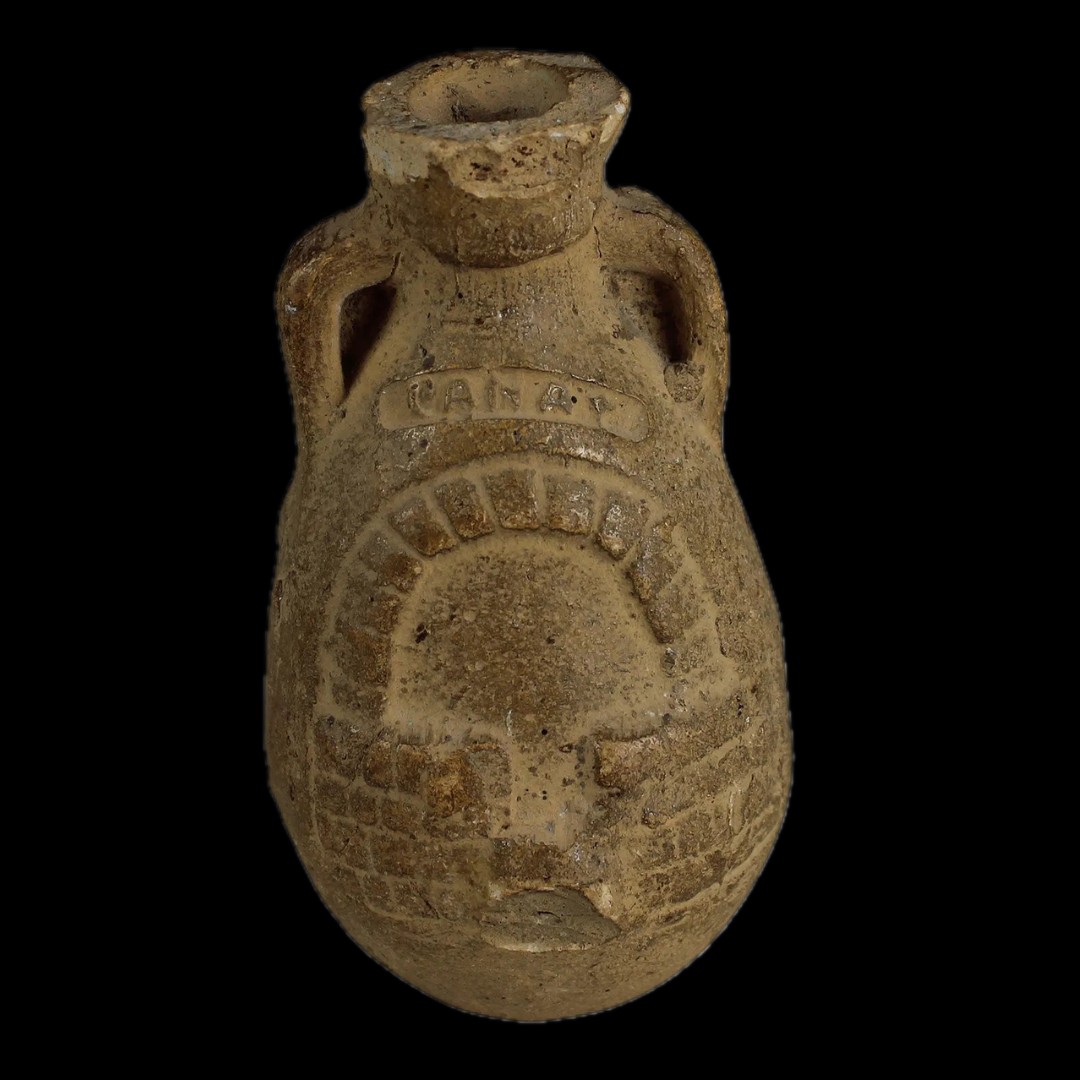
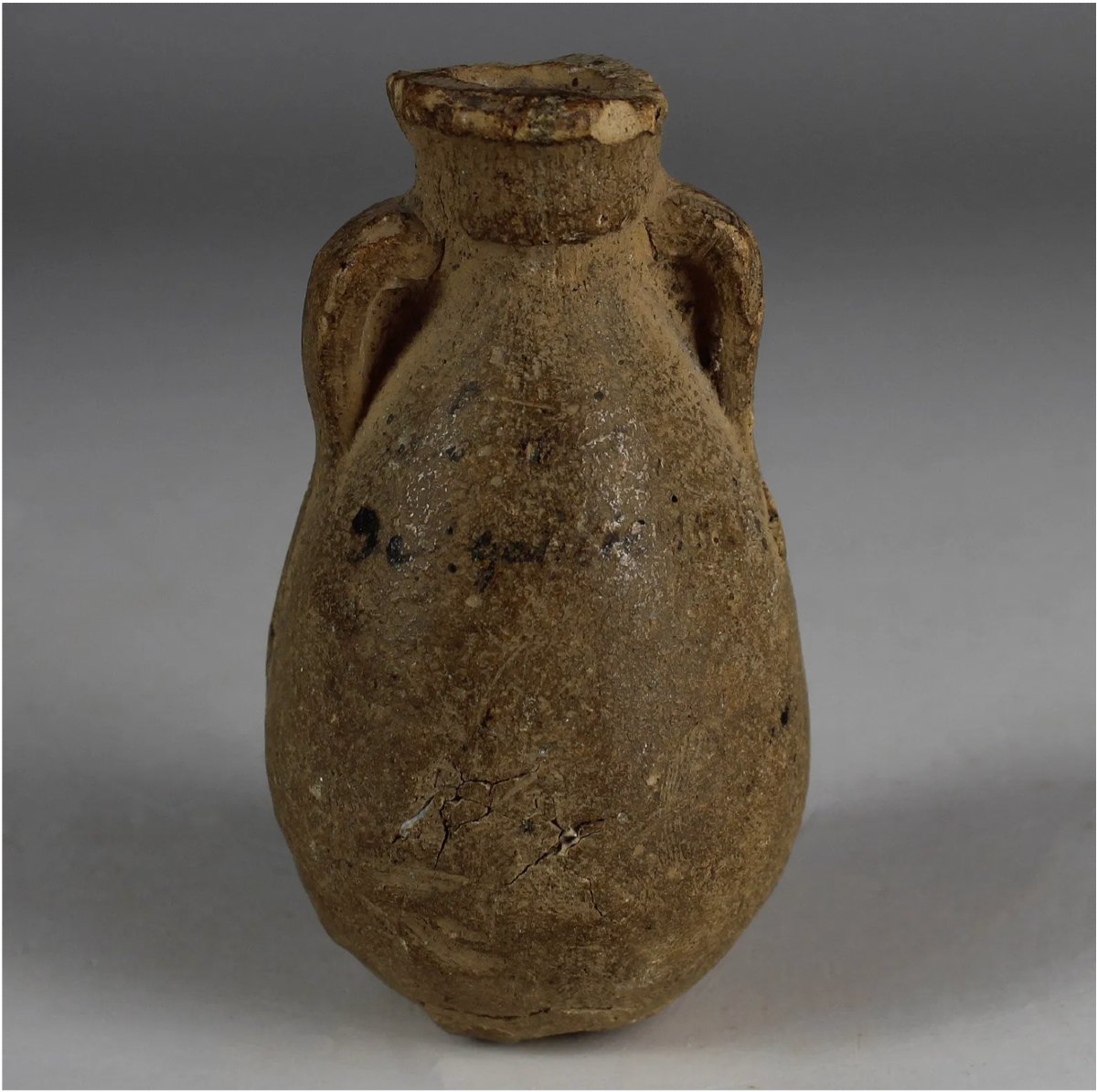
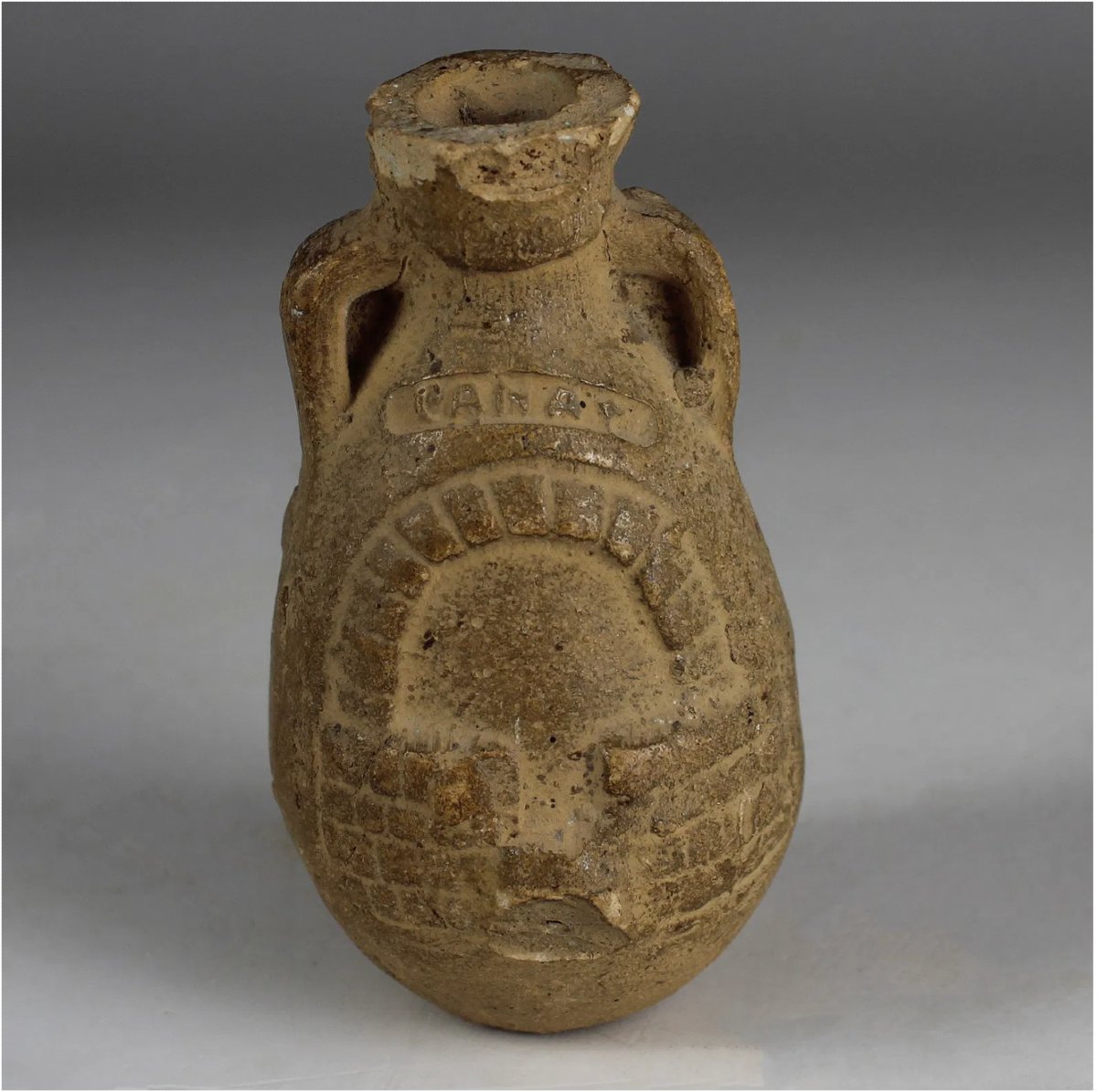


Votive ceramic flask from the late Ptolemaic period (2nd–1st century BC), decorated in high relief with a baker’s oven on the body and bearing the inscription “PANAT”. This miniature belongs to the artisanal and ritual productions of Hellenistic Egypt, where everyday objects acquired symbolic value related to subsistence and prosperity.
The surface shows all features consistent with an authentically ancient ceramic: matte patina, natural micro-wear, stabilized age cracks, low-temperature firing, and homogeneous clay fabric—clearly distinct from modern reproductions or artificially aged pieces.
CharacteristicsObject: Votive flask depicting a baker’s oven, inscription “PANAT”
Culture: Egyptian
Period: Ptolemaic, 2nd–1st century BC
Material: Ceramic
Dimensions: 69 mm × 37 mm
Condition: Good condition — old cracks on the back, slightly worn neck, attractive burial patina
Provenance: Former American gallery; former American private collection assembled before the 2000s
Certificate: Provided with certificate of authenticity
During the Ptolemaic period, Egypt experienced a unique blend of Greek artistic forms and traditional Egyptian iconography. Small votive flasks—perfume vessels, ex-votos, and miniature depictions of workshops or everyday activities—became symbolic objects linked to prosperity and domestic stability.
The baker’s oven refers to the most essential element of ancient alimentation: bread. Depositing such a flask served as an invocation for subsistence, household stability, or the success of an artisan’s workshop.
The inscription “PANAT”, uncommon on such miniatures, may correspond to a workshop name, an owner, or a label connected to the motif, giving this piece an individualized and particularly desirable character.
Formal AnalysisPiriform body typical of late Egyptian votive productions
Two vertical handles with natural wear
Deep relief depicting a rounded oven: bricks, opening, and base clearly modelled
“PANAT” inscription in a rectangular cartouche, written in a style consistent with local production
Beige-grey patina, slightly granular surface, ancient earthen deposits
Old burial cracks on the reverse
No visible restoration — a highly desirable feature for collectors
A piece whose material presence (weight, texture, surface) immediately conveys its genuine archaeological origin.
Expert ReportThis flask belongs to the most expressive group of Ptolemaic votive miniatures. The clarity of the relief, the fully readable depiction of the oven, and the presence of an inscription give this example a higher value than anonymous counterparts.
Objects linked to food production—especially baking—are highly prized, as they reflect real scenes of ancient daily life. The motif is not abstract: it illustrates a craft, a workshop, and a silent prayer for prosperity.
Compared with museum series (Alexandria, Cairo, British Museum, major American collections), this piece stands out for:
• its clear iconography,
• the rare presence of an inscription,
• a perfectly coherent ancient patina,
• the absence of restoration,
• a long-held, well-documented American provenance.
An ideal acquisition for a collection centred on Hellenistic Egypt, ancient crafts, or votive miniatures.
Cultural ValueThis flask encapsulates a complete vision of the ancient world: an artisan, an oven, the act of bread-making, and the votive gesture invoking sustenance. A humble yet deeply evocative object, rooted in the economic and spiritual rhythms of everyday life.
Miniatures bearing inscriptions are particularly sought after, as they reflect personalized craftsmanship rather than anonymous mass production.
Provenance & GuaranteesLong-standing provenance, preserved in an American private collection for several decades.
Supplied with certificate of authenticity.
Explore similar pieces and discover your ideal find:
archeology