THIS OBJECT WAS SOLD
Augsburg 1690-1710, “doppeleierbecher” Egg Cup In Solid Silver And Vermeil, Johann Schmidt
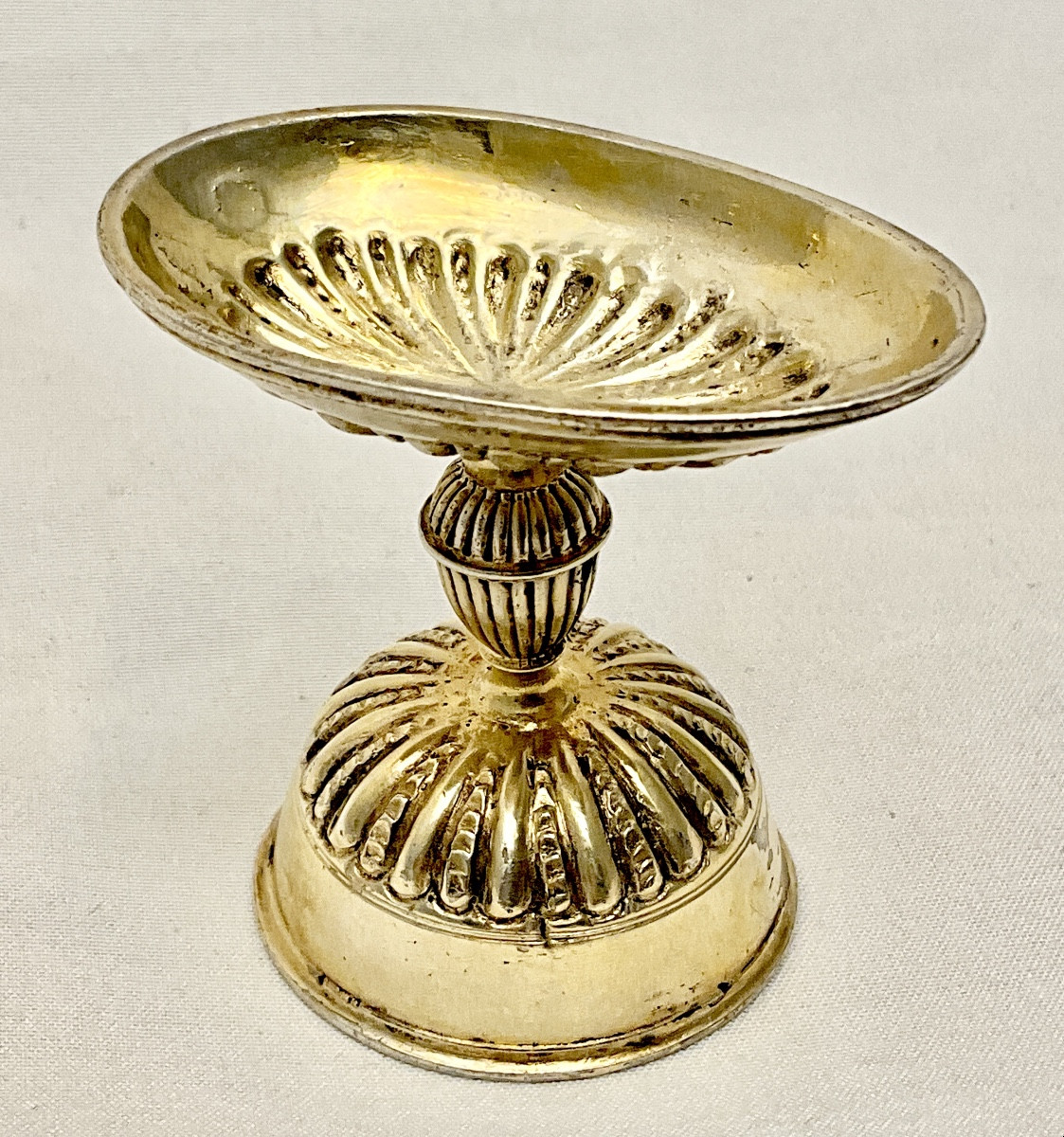
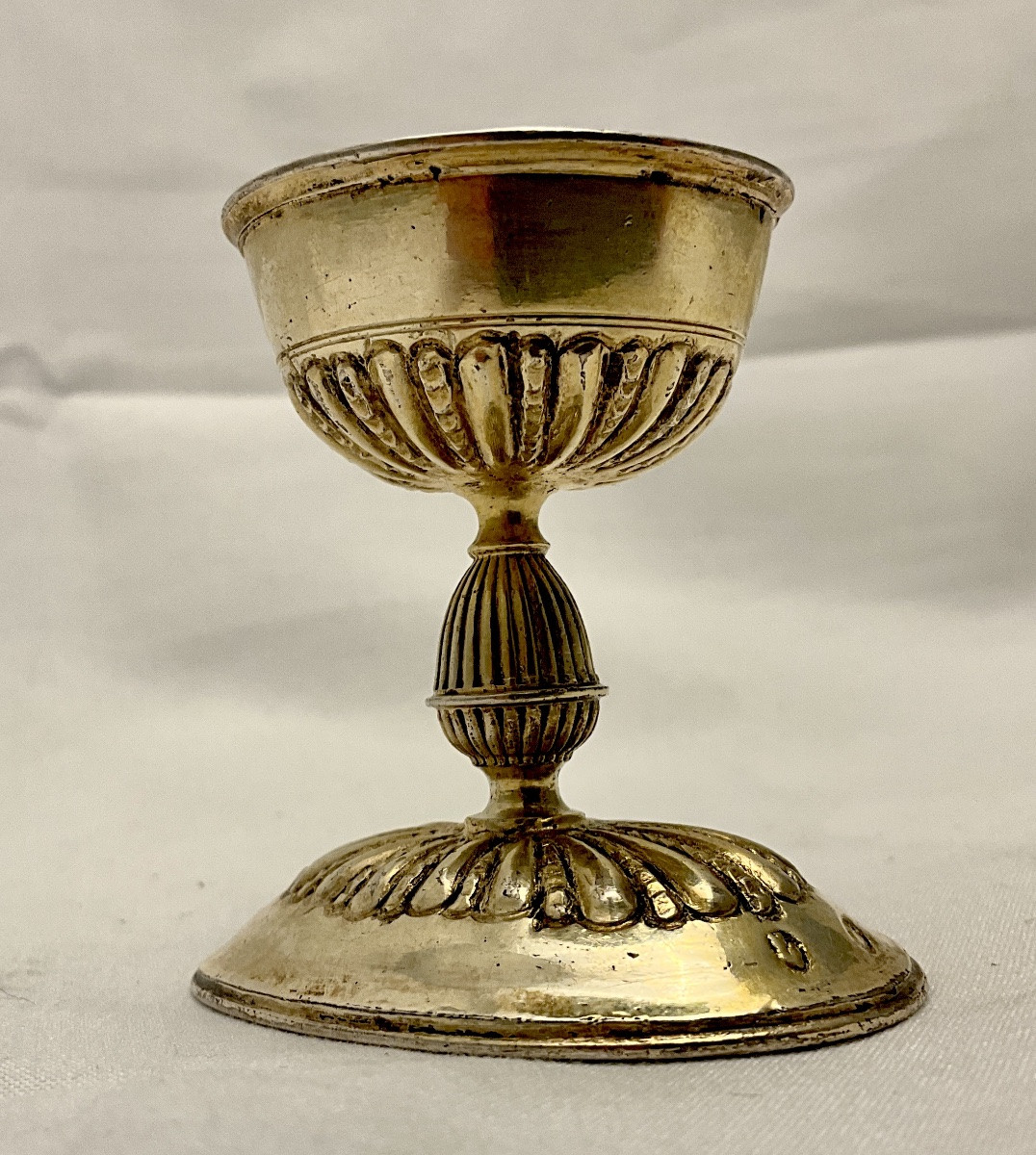


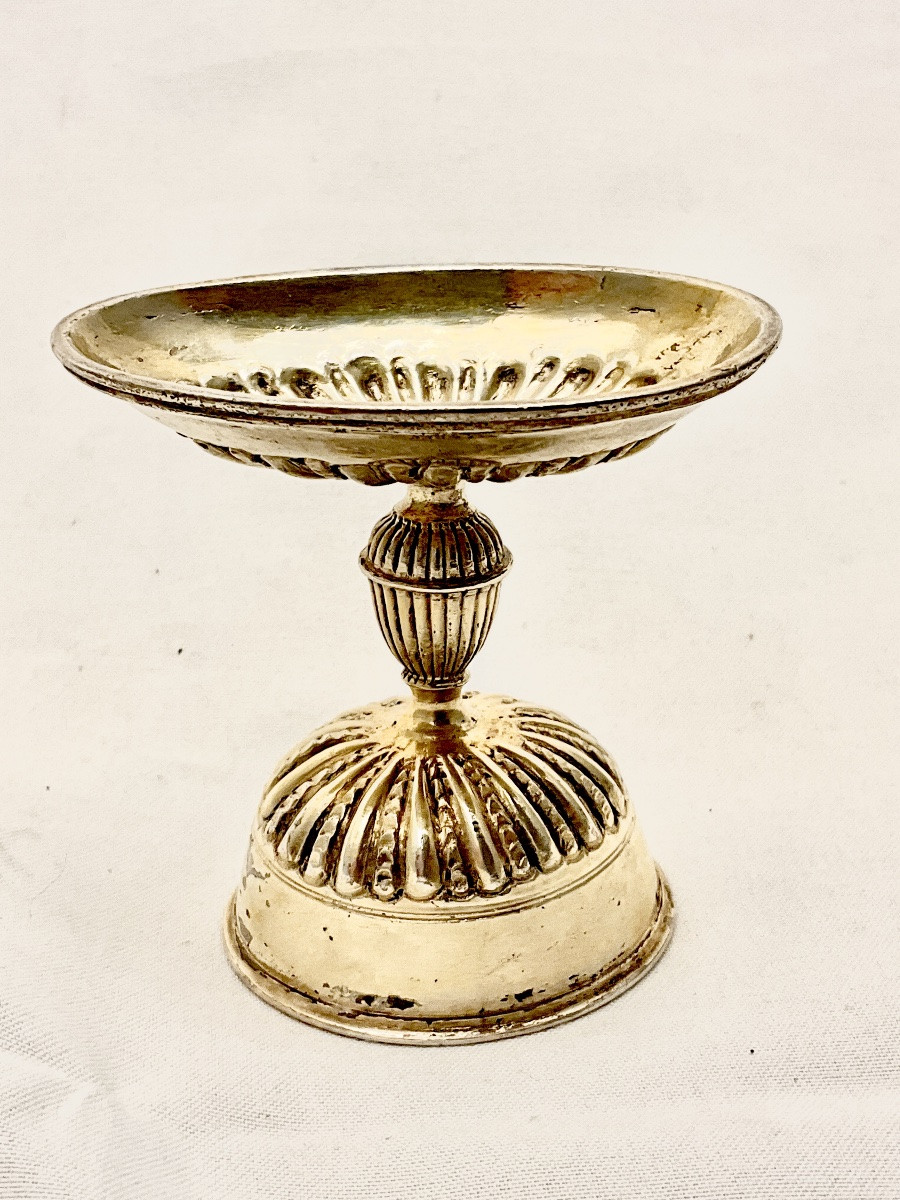

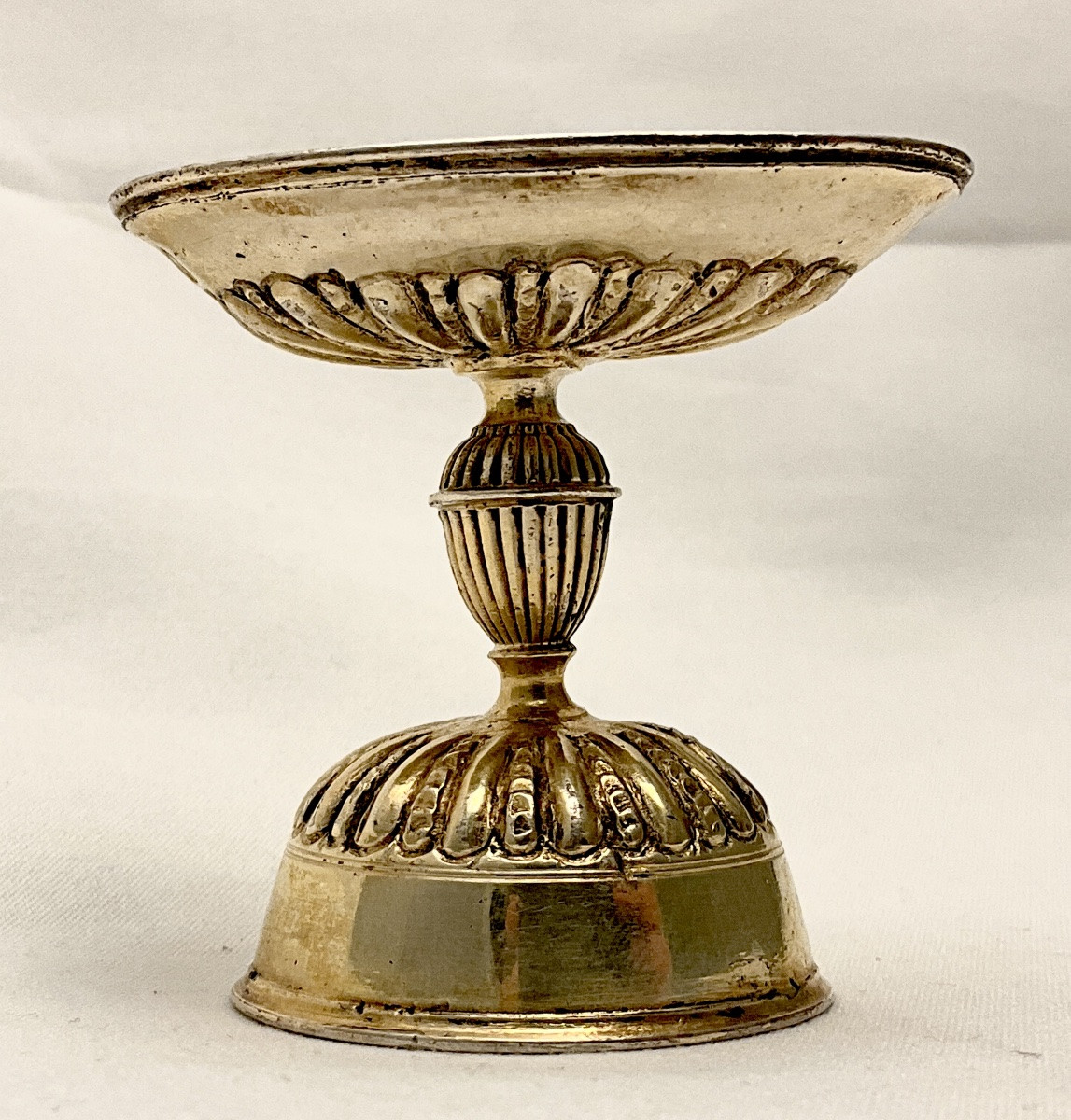
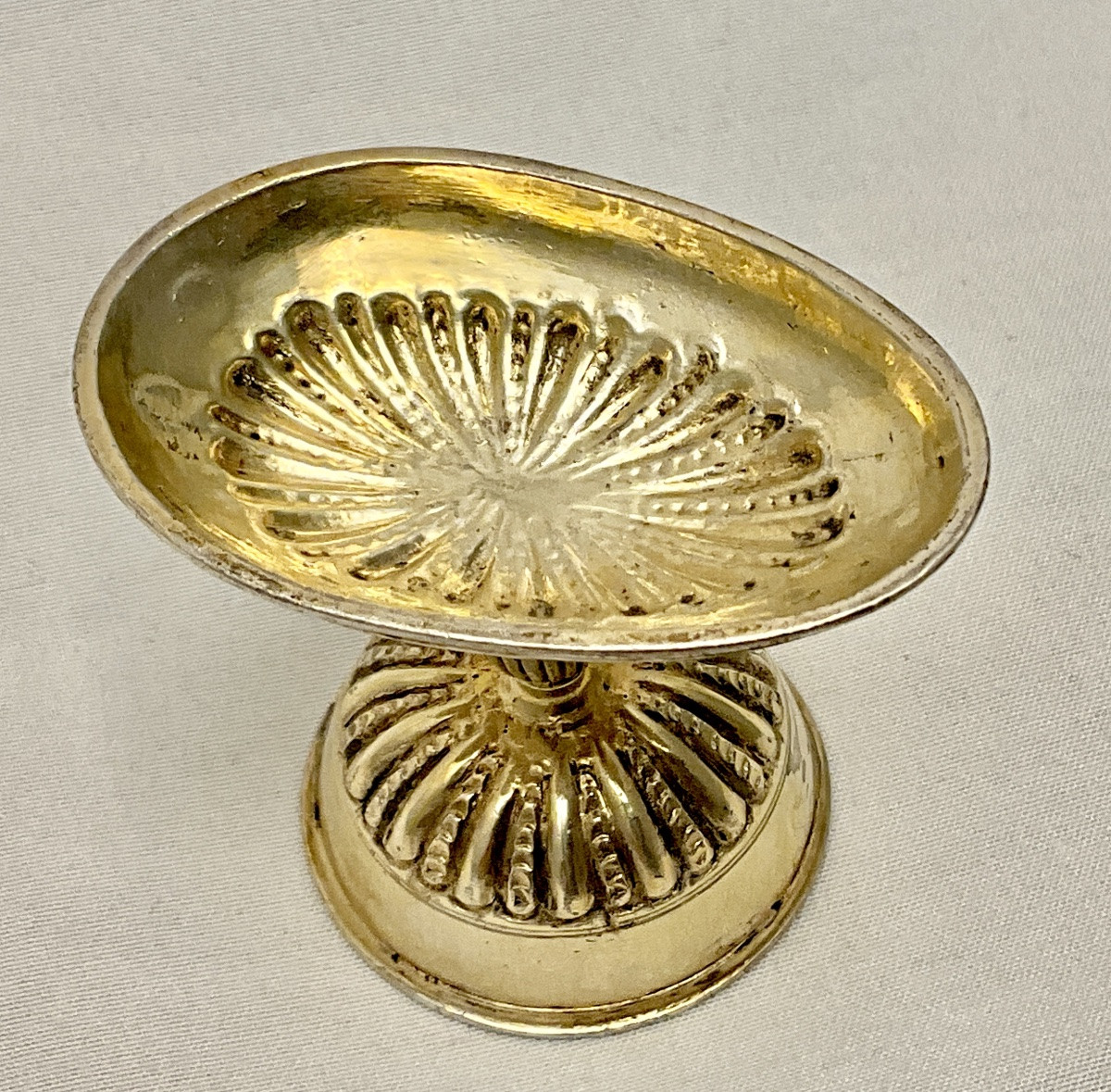
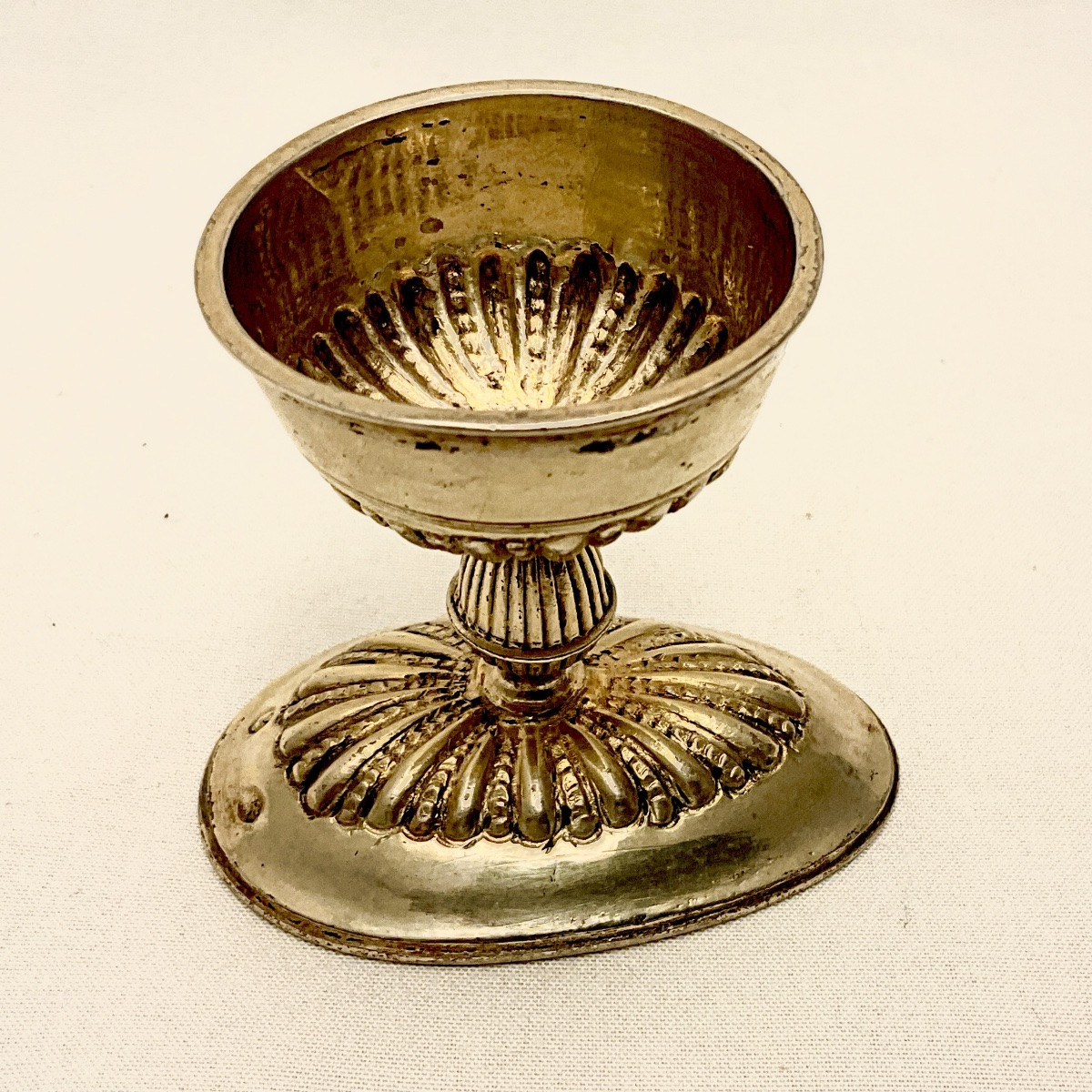
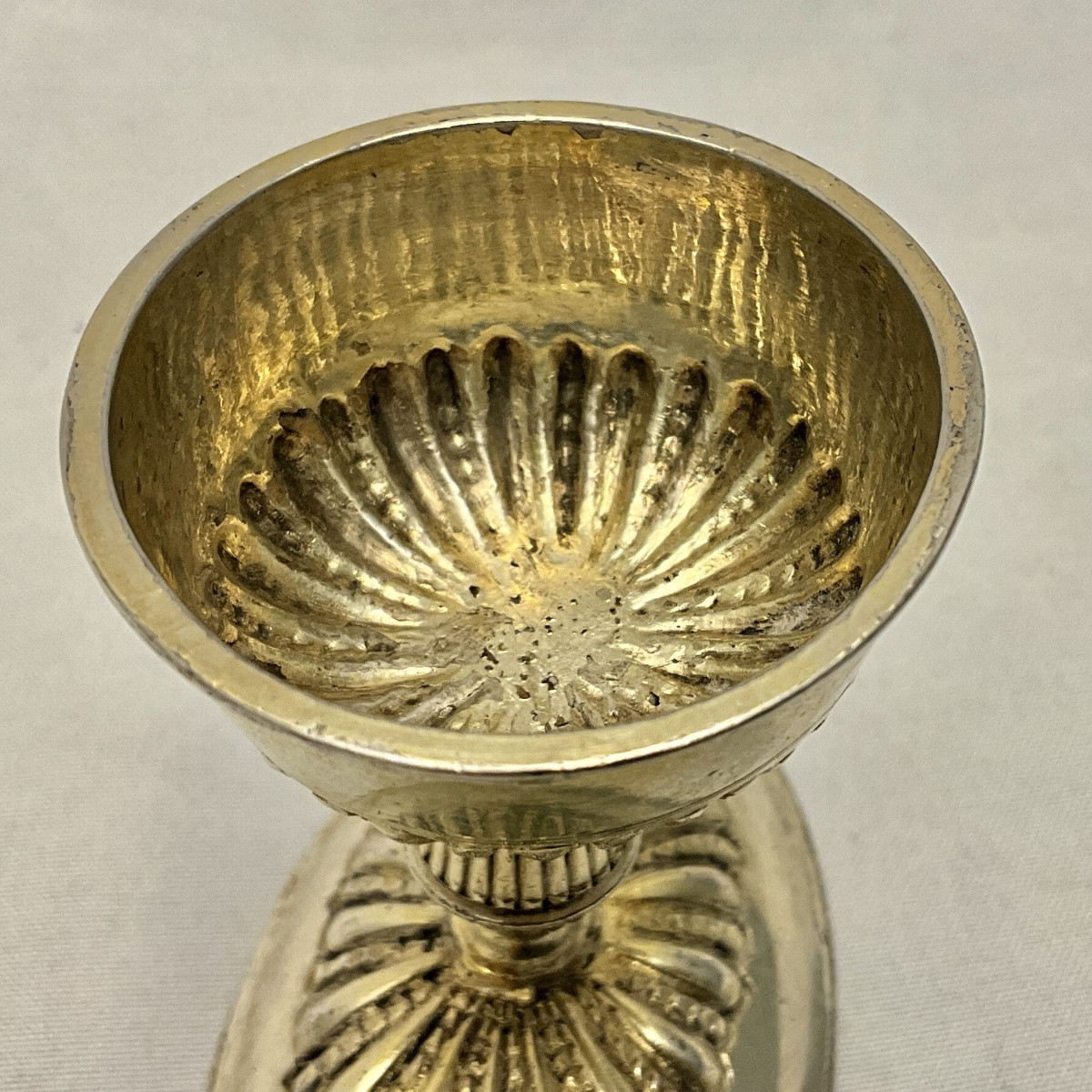
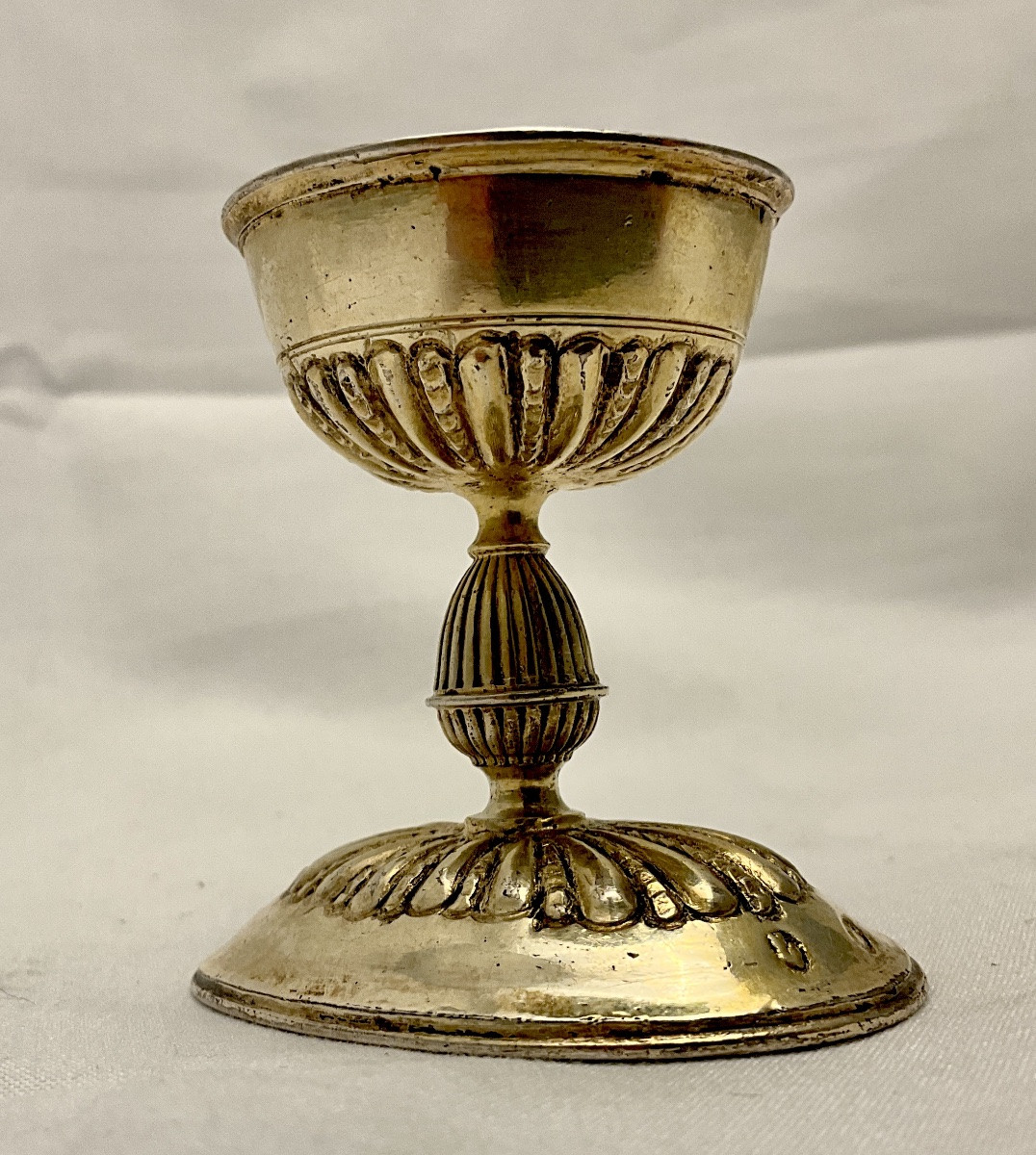
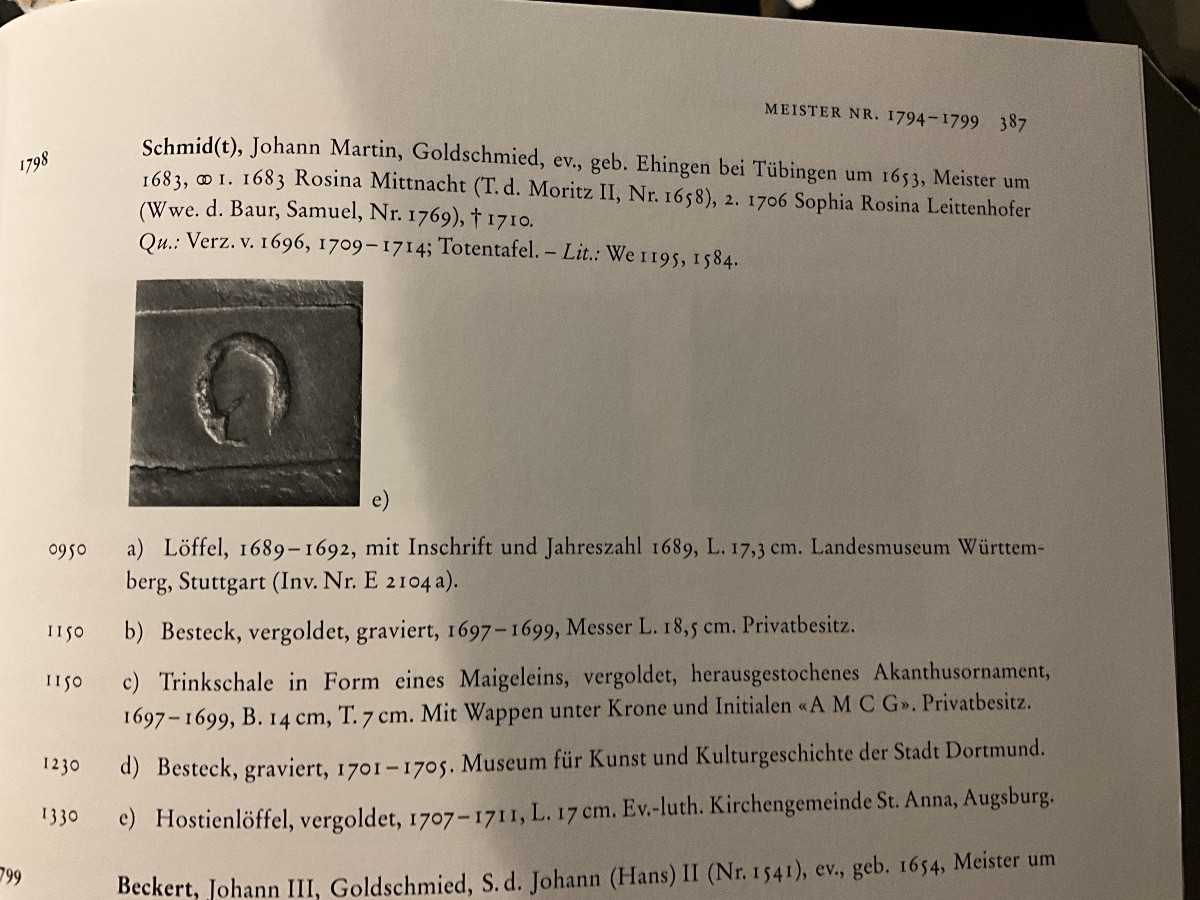


An extremely rare double egg cup, or "doppeleierbecher," in solid gilt silver (vermeil), bearing the hallmark of the city of Augsburg in Bavaria and the maker's mark of Johann Schmidt, born near Tübingen in 1653 and admitted to the guild in Augsburg in 1683, where he died in 1710. Several vermeil travel sets containing cutlery and egg cups are known. This was probably a specialty of this silversmith. Double egg cups are generally made of silver or gold and are intended for serving soft-boiled eggs according to regional preferences. They consist of two opposing cups that can hold an egg upright or horizontally. The unused cup serves as a base. Double egg cups, stored in a leather-covered travel case lined with velvet, were often part of the sophisticated travel kits of princes, nobles, and other high-ranking individuals from the 17th to the 19th centuries. Since the 16th century, two regional preferences for eating boiled eggs have coexisted in European culinary culture. In 1645, the German Baroque poet Georg Philipp Harsdörffer wrote in the fourth volume of his work Frauenzimmer Gesprechspiele (Women's Conversations): "An egg, cooked in its shell, is opened in three different ways: the Jews open the egg from the end (...) the French open the egg from the top, and we Germans from the sides." The publication does not explain the difference between the methods. The "German" way of eating eggs, which involves dipping pieces of bread into the side, is no longer common today. It has, however, been passed down through countless still lifes. Our egg cup is in very good condition. The gilding has worn away in places. Its decoration and style link it to Renaissance-style libation cups from the late sixteenth and early seventeenth centuries. It's a true little gem...weighing 43 gramm.
Explore similar pieces and discover your ideal find:
Serveware