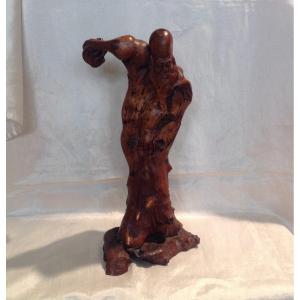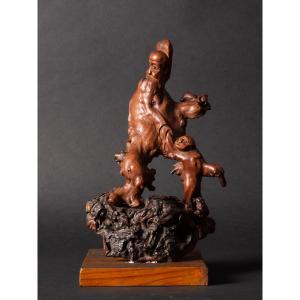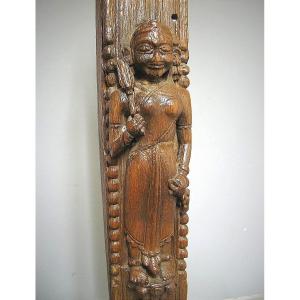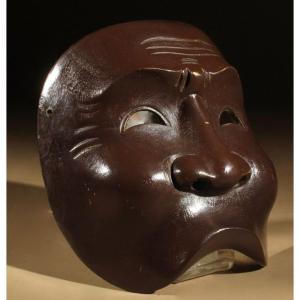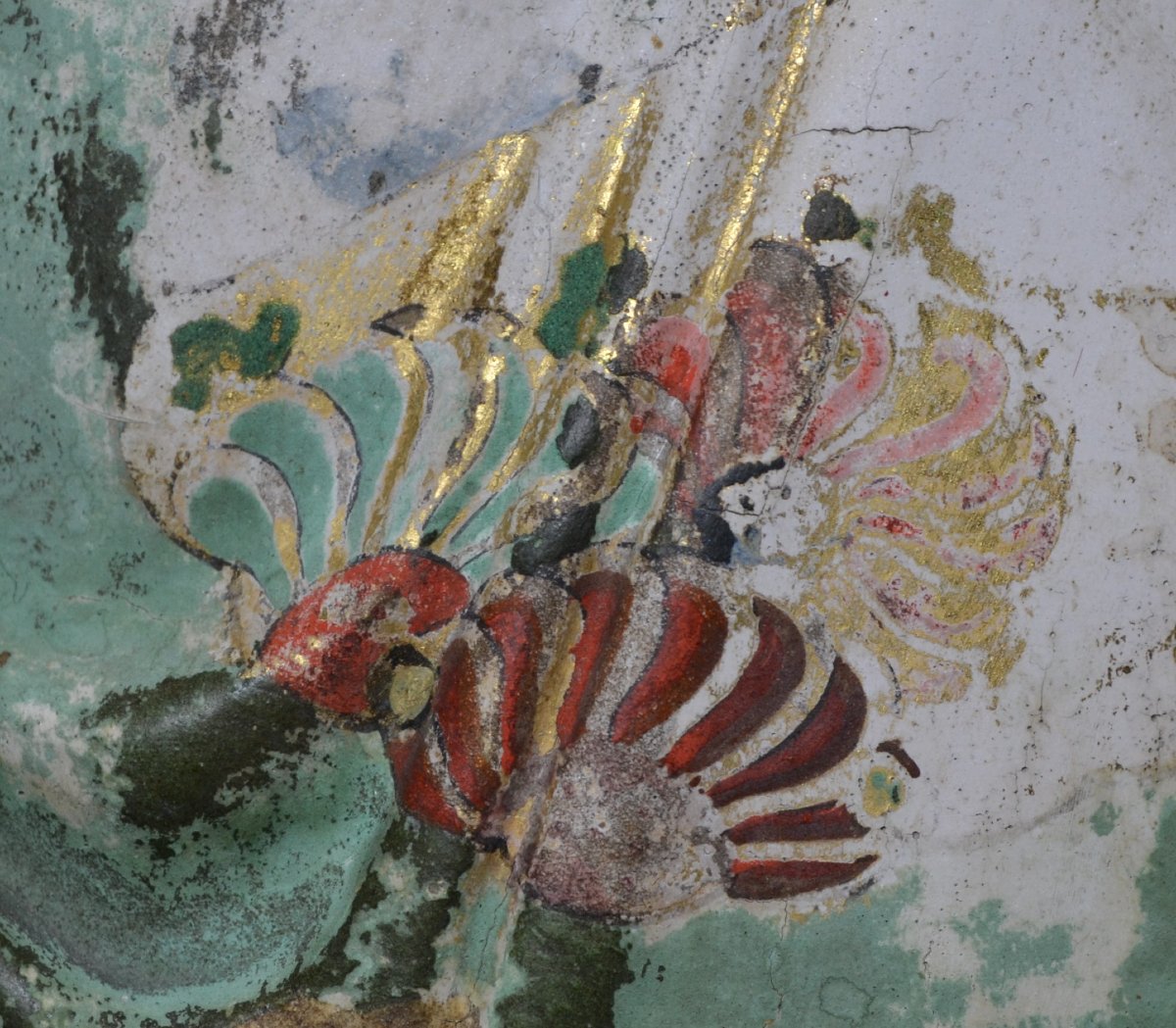





Wooden Statue Depicting A Noh Actor. Japan, 17th Century.
Artist: Genroku
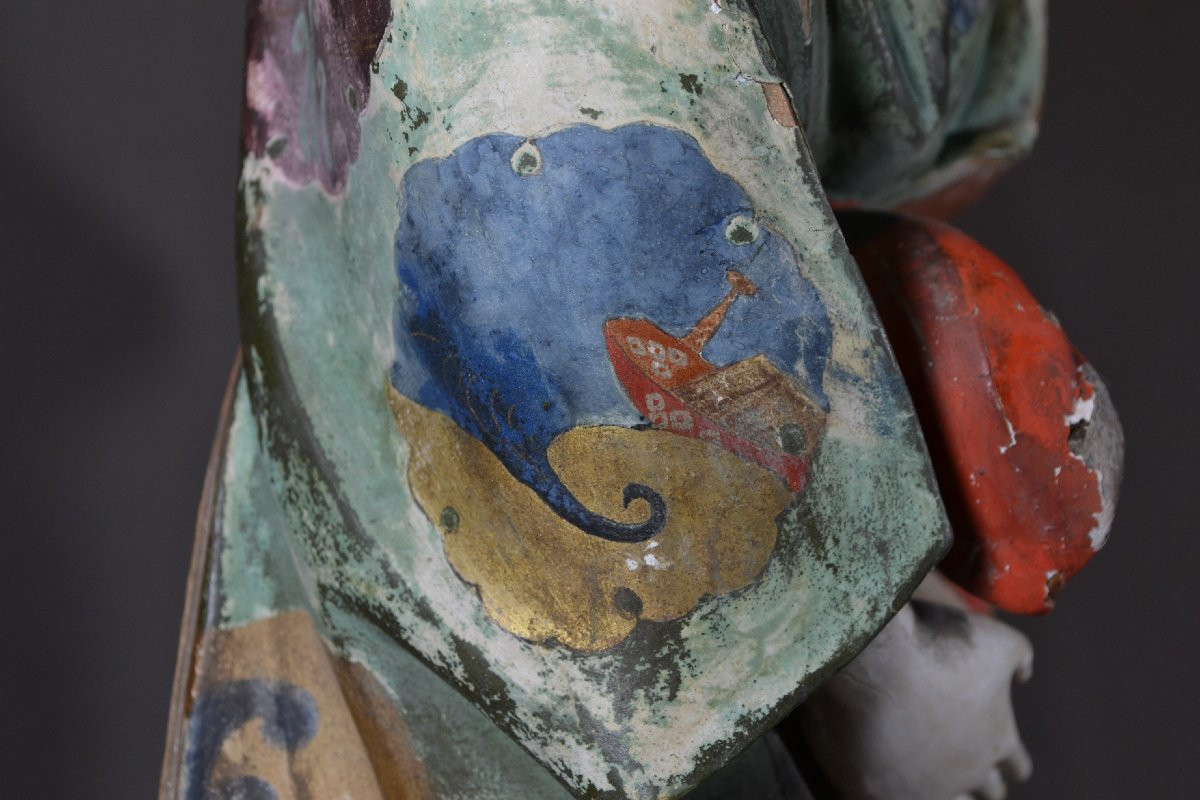
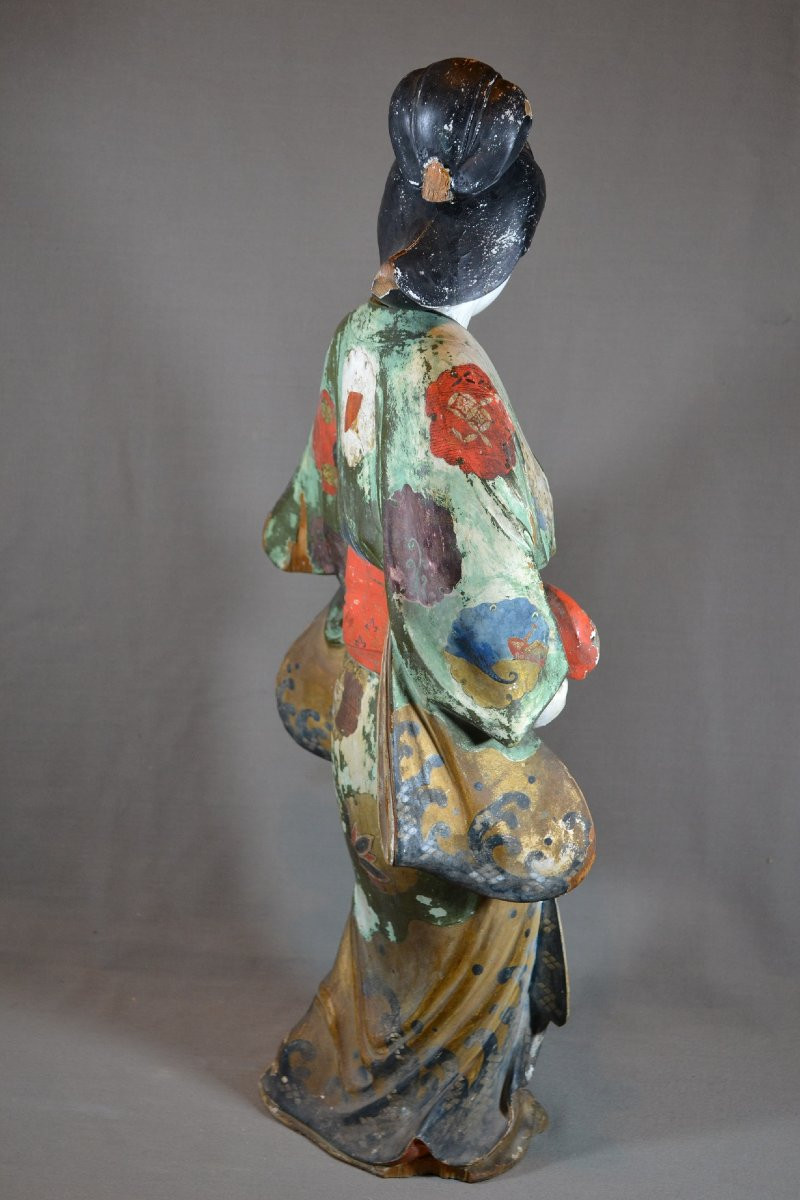
The statue is carved and painted wood, depicting a Bijin (beautiful woman) dressed in a richly decorated winter kimono. Her face and hands are painted white, as was the fashion during the Edo period; indeed, Bijin powdered their faces and hands white. The sculpture is of very high quality; the movement of the kimono is ample and elegant, despite the thick fabric of this winter kimono. The Bijin's hairstyle is typical of the late 17th century. The style is that of Kaigetsudo, the early woodblock prints. The face is striking; indeed, it is not delicately feminine, it would even be considered a "failure" according to the aesthetic standards of the time. This is unthinkable for a sculpture of this high caliber. In fact, the artist has depicted a male Noh actor dressed as a woman (Onnagata). It is worth remembering that only men were actors, and female roles were also played by them. The artist showed no weakness; on the contrary, like Sharaku, he dared and succeeded in revealing the masculinity of his cross-dressing character, making this sculpture an exceptionally rare piece, as no other representation of it is known. It is certain that the actor depicted was one of the most famous of his time, and it is likely that a specialist in Noh theater or prints would be able to identify him. Perhaps the designs of the kimono are significant and could allow for identification. Height: 535 mm. Some damage. Flaking paint and wood chips. Japan, late 17th century.
8 500 €
Period: 17th century
Style: Asian art
Condition: En l'etat
Material: Painted wood
Height: 535mm
Reference (ID): 1647700
Availability: In stock
Print