

A Mughal Ivory-inlaid Wood Cabine - North West India 17th Century
A Mughal Ivory-Inlaid Wood Cabinet
North-West India, 17th century
27 × 40.2 × 30 cm
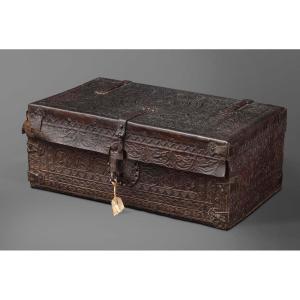
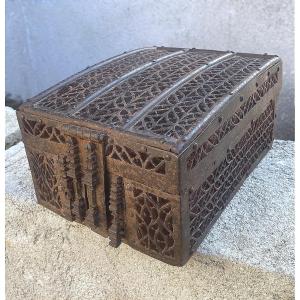
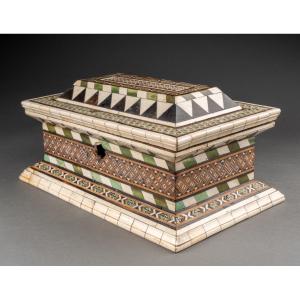
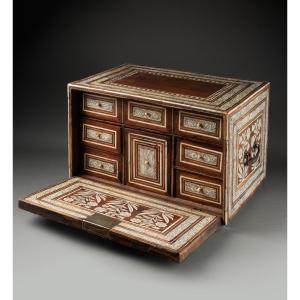
Rectangular in form, this fall-front cabinet is richly decorated with ivory inlay. The sides feature panels of large floral motifs framed by engraved borders, while the front, adorned with three floral sprays, opens down to reveal eight drawers. Serving both as a small writing desk and as a coffer for precious objects, the piece exemplifies the refinement of Mughal craftsmanship.
Produced in northern India under the Mughal Empire, such cabinets reflect the interaction between European forms and Indian decorative traditions. European settlers commissioned local artisans to create furniture suited to their domestic habits, encouraging inventive adaptations that combined Western structures with indigenous materials and techniques.
The profusion of floral ornament on this cabinet embodies the Mughal fascination with naturalistic motifs, particularly under Emperor Shah Jahan (r. 1628–1658). Similar designs appear in imperial architecture, such as the Saman Burj at Agra Fort and the Diwan-i ‘Amm in Ajmer, as well as in other luxury objects of the period.
A testament to cultural exchange and artistic synthesis, this cabinet illustrates the Mughal court’s openness to foreign influences and its role in fostering a distinctive Indo-European aesthetic admired across both continents.
Selected bibliography:
- Milo Cleveland Beach & Ebba Koch, King of the World. The Padshahnama, London, 1997
- Basil Gray (ed.), The Arts of India, Oxford, 1981
- Amin Jaffer, Luxury Goods from India: The Art of the Indian Cabinet-Maker, Victoria and Albert Museum, 2002
- Brend, in Arts of Mughal India: Studies in Honour of Robert Skelton, London, 2004
Period: 17th century
Style: Renaissance, Louis 13th
Condition: Good condition
Material: Wood marquetry
Width: 40,2
Height: 27
Depth: 30
Reference (ID): 1640061
Availability: In stock