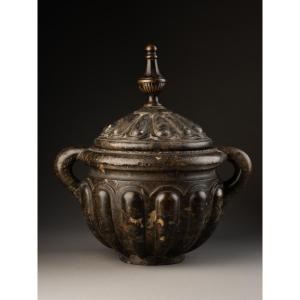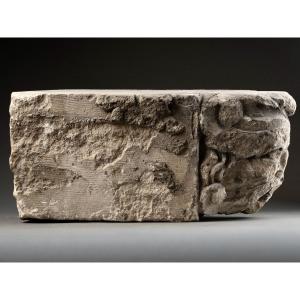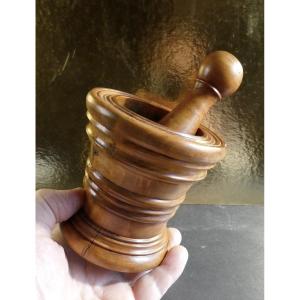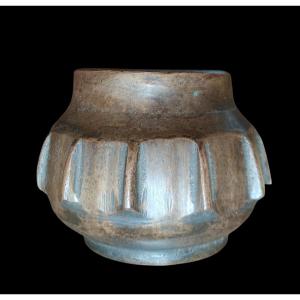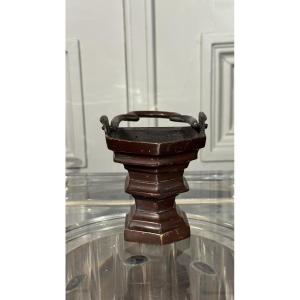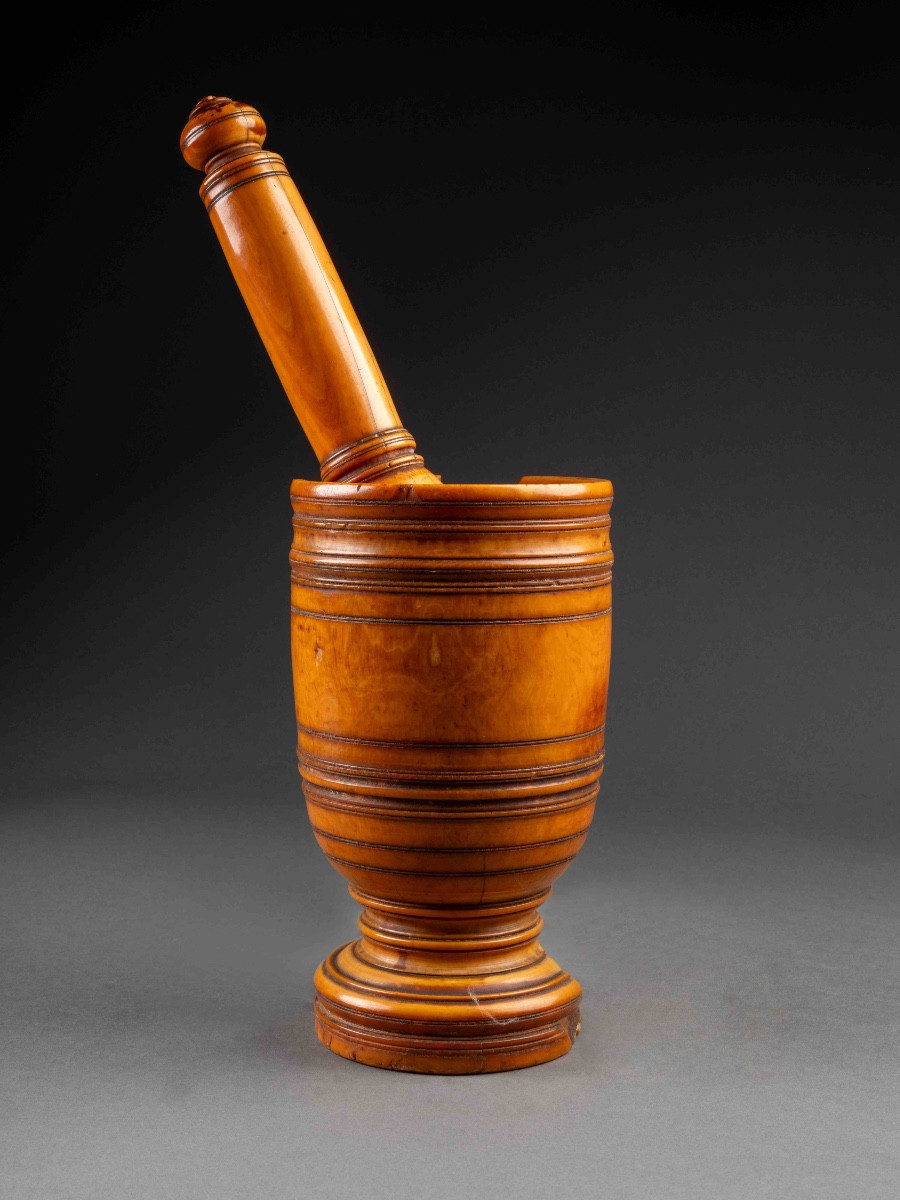
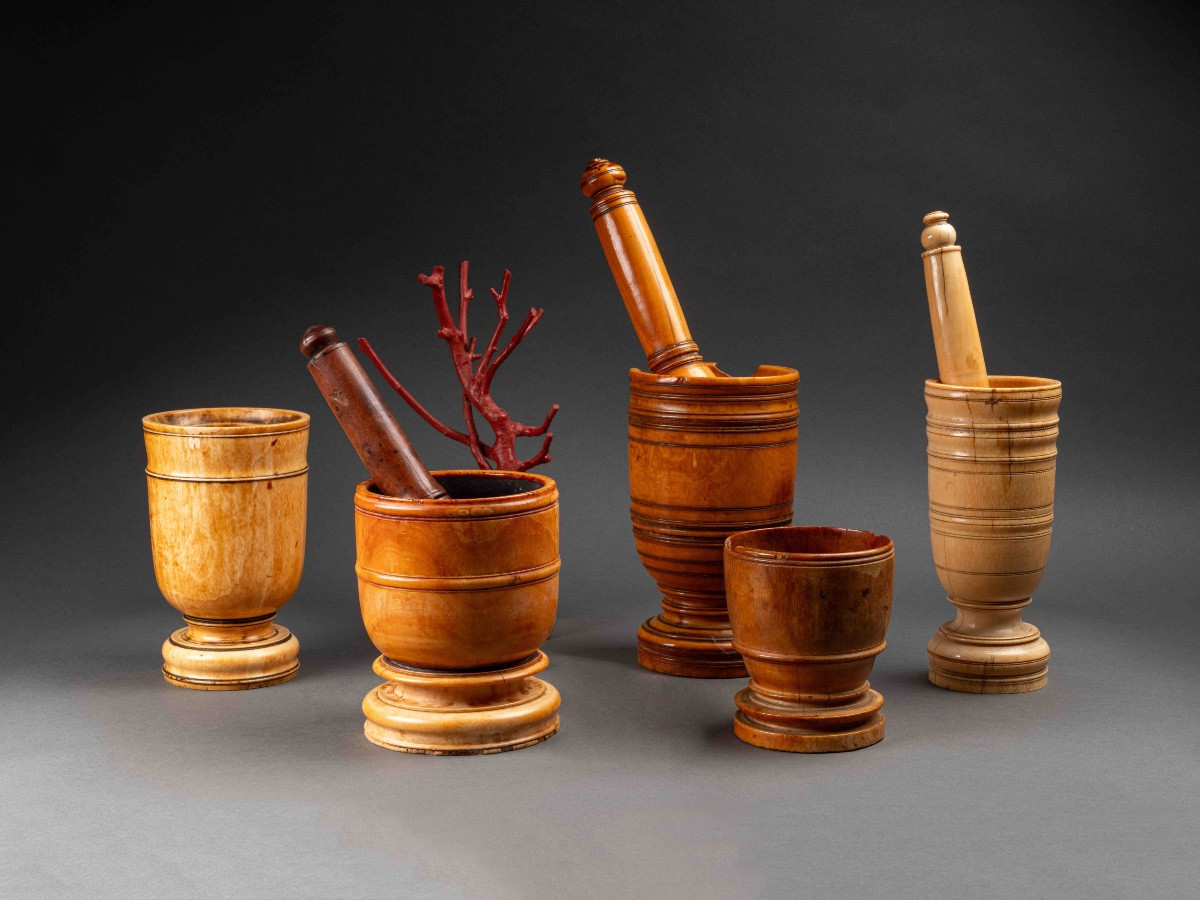
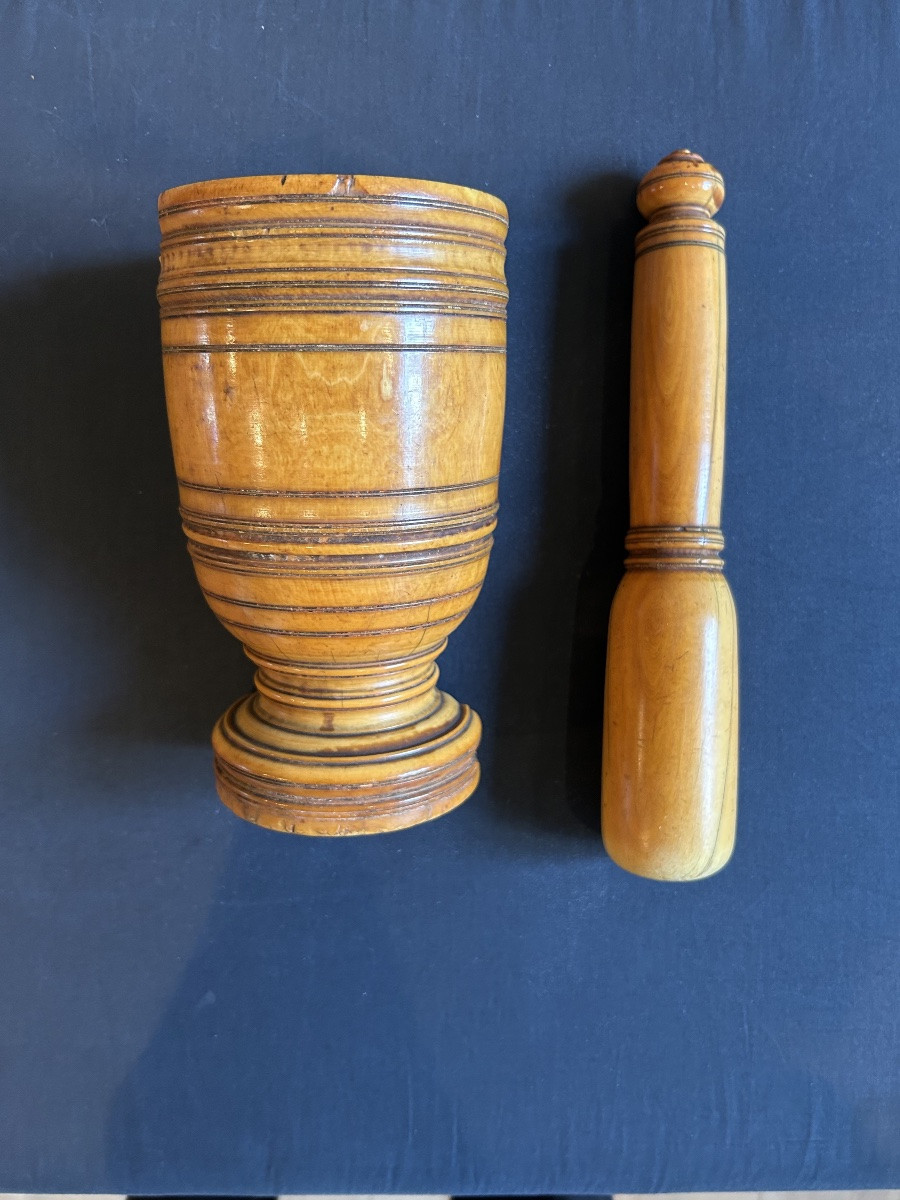
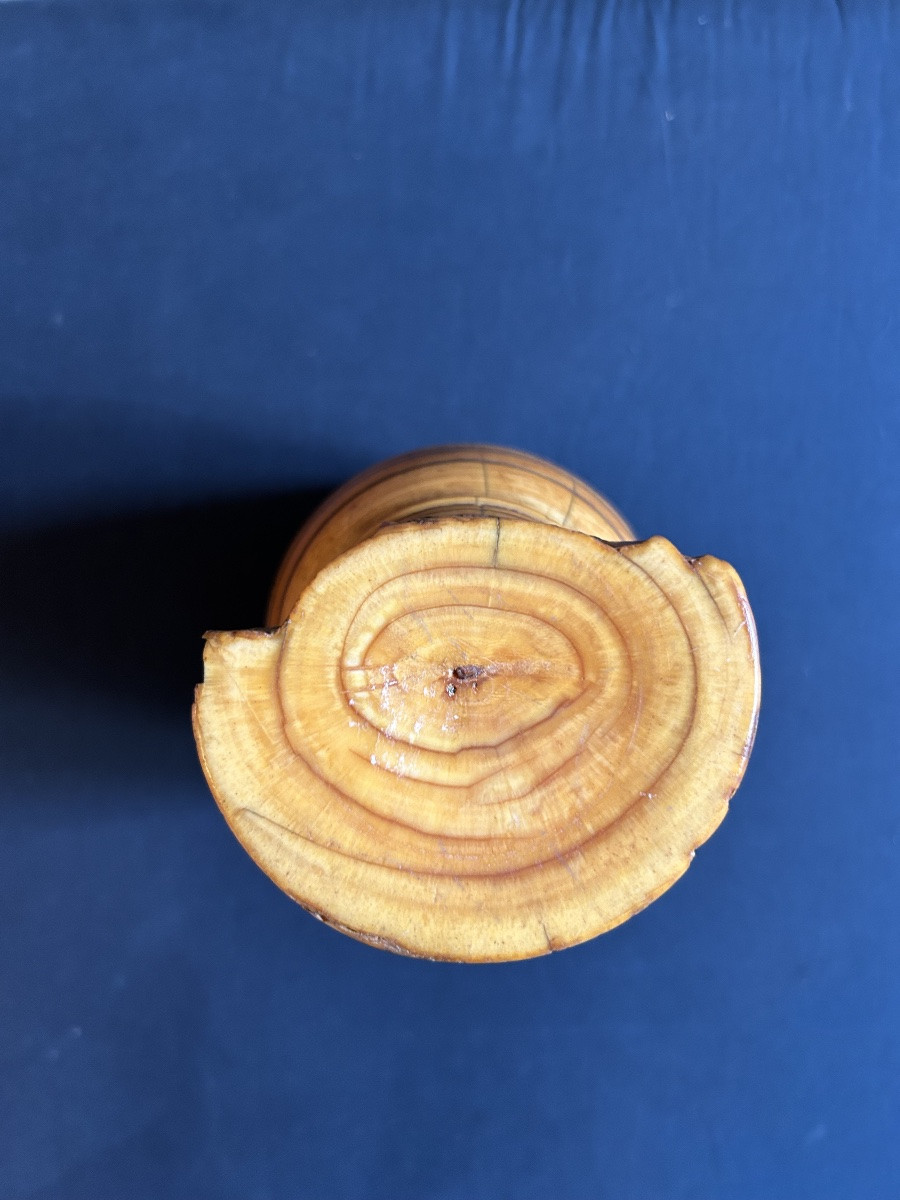



Apothecary's Mortar With Pestle - Indo-portuguese, Probably Goan, 17th Century
Large apothecary's ivory mortar and pestle
Indo-Portuguese
17th century
Cites certificate number IT/CE/3023/MI/01112
19,5 x 11 cm ; pestle 26 cm
The mortar's origins are lost in the mists of antiquity. A visit to museums in several countries, in Europe and Asia, reveals mortars made of stone, iron, wood, glass, and ivory. With the Portuguese conquest in 1510, the Goan region became an important commercial hub, a vital center of communication between southern and northern India, also linked to Persia via Hormuz, and to China and the vast Southeast Asia via Malacca. From the mid-16th century onward, Goan controlled the main trade routes for luxury Asian goods. Between the end of the century and the beginning of the next, this territory established itself as a major artistic center. Unlike the Spanish colonial empire, Portugal encouraged mixed marriages, particularly in Goa. The city thus became the cradle of a specific art form: Indo-Portuguese art. The Portuguese initially benefited from the talent of local artisans, but very quickly, merchants and craftsmen from various cultures, from Europe to the Far East, settled in the region. Beyond the enormous variety of Indo-Portuguese religious imagery in Goa, numerous objects and utensils, including mortars, were crafted from this precious material. This elephant ivory comes from southern Africa, and more specifically from other Portuguese colonies on that continent (Mozambique) and the Zanzibar archipelago. African tusks are larger, and the elephant is a sacred animal in India. The Indo-Portuguese ivory mortar is an object of great artistic and historical importance, bearing witness to the cultural exchanges between India and Portugal during a crucial period in history. In conclusion, the Indo-Portuguese ivory mortar stands as a unique and fascinating object, a testament to a bygone era when Indian and Portuguese cultures met and influenced one another.
8 500 €
Period: 17th century
Style: Renaissance, Louis 13th
Condition: Good condition
Material: Ivory
Length: pilon 26 cm
Diameter: 11
Height: 19,5 cm
Reference (ID): 1689485
Availability: In stock
Print