





"Shroud Of Besançon, Religious Embroidery Circa 1700"
The Shroud of Besançon, after Jean de Loisy (1603 – 1670)France, circa 1700
Embroidery and painting on silk, original frame in carved and gilded wood
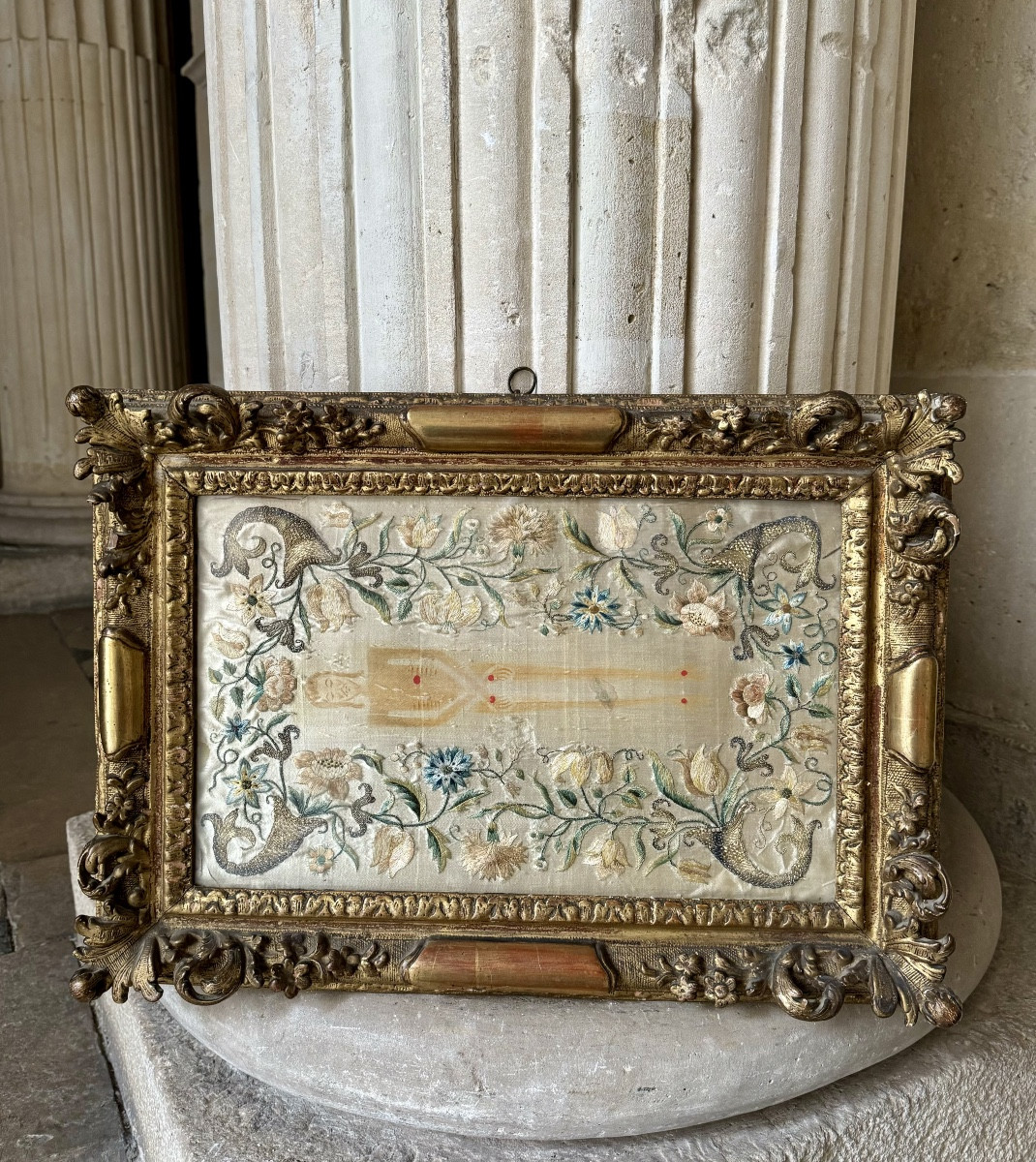
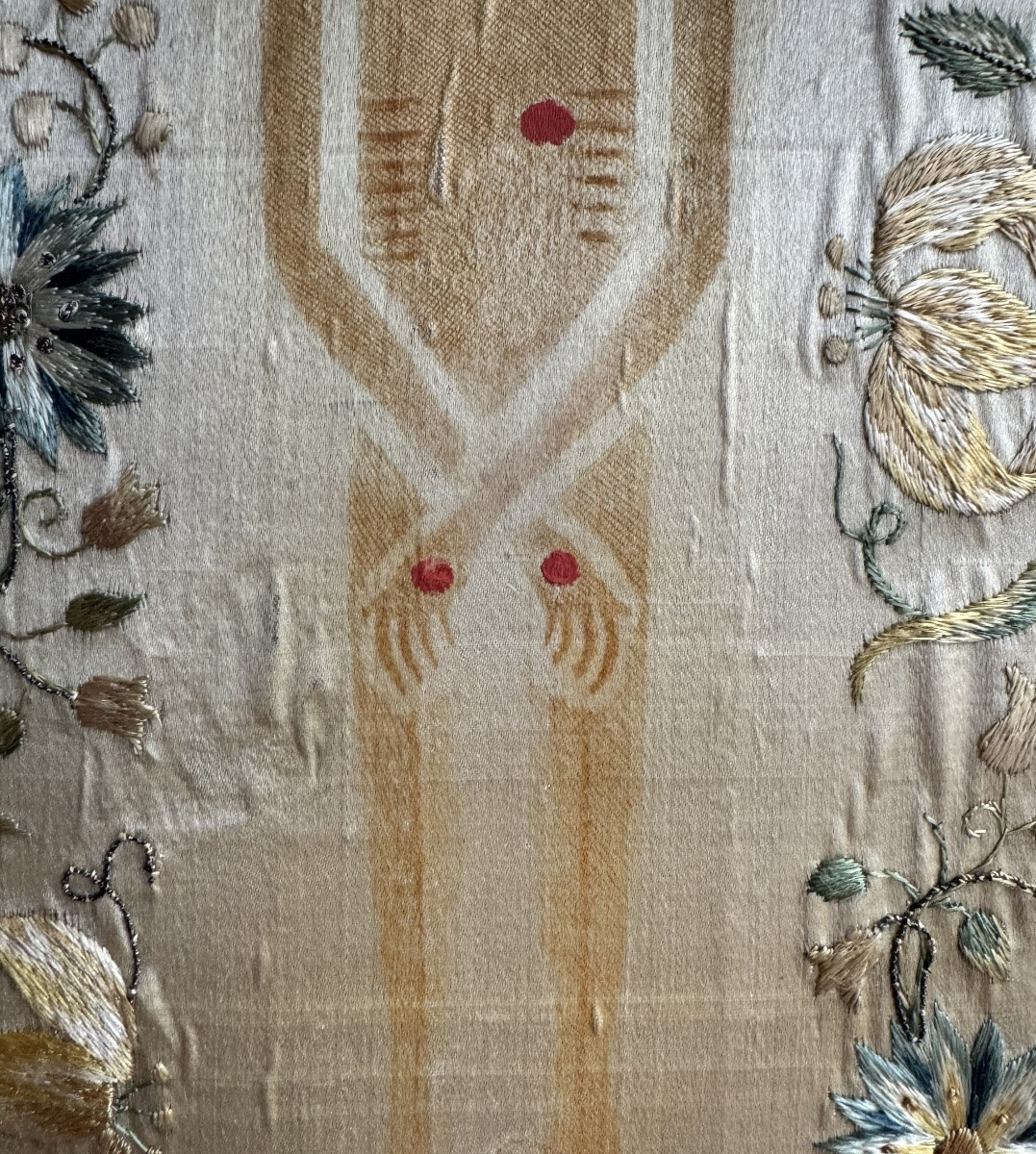
Religious embroidery on ivory silk representing the Shroud of Besançon, after the copper engraving by Jean de Loisy circa 1634. The silhouette of Christ, marked by the stigmata, is painted in sepia on the silk, the wounds enhanced with small touches of red. It is surrounded by a border embroidered with polychrome silk threads and gold and silver threads, depicting a luxuriant decoration of flowers, foliage and cornucopias from which spring lilies, tulips and roses symbolizing the Resurrection. The raised embroidery at the corners uses a twisted silver thread (Lahn) typical of the late 17th century.
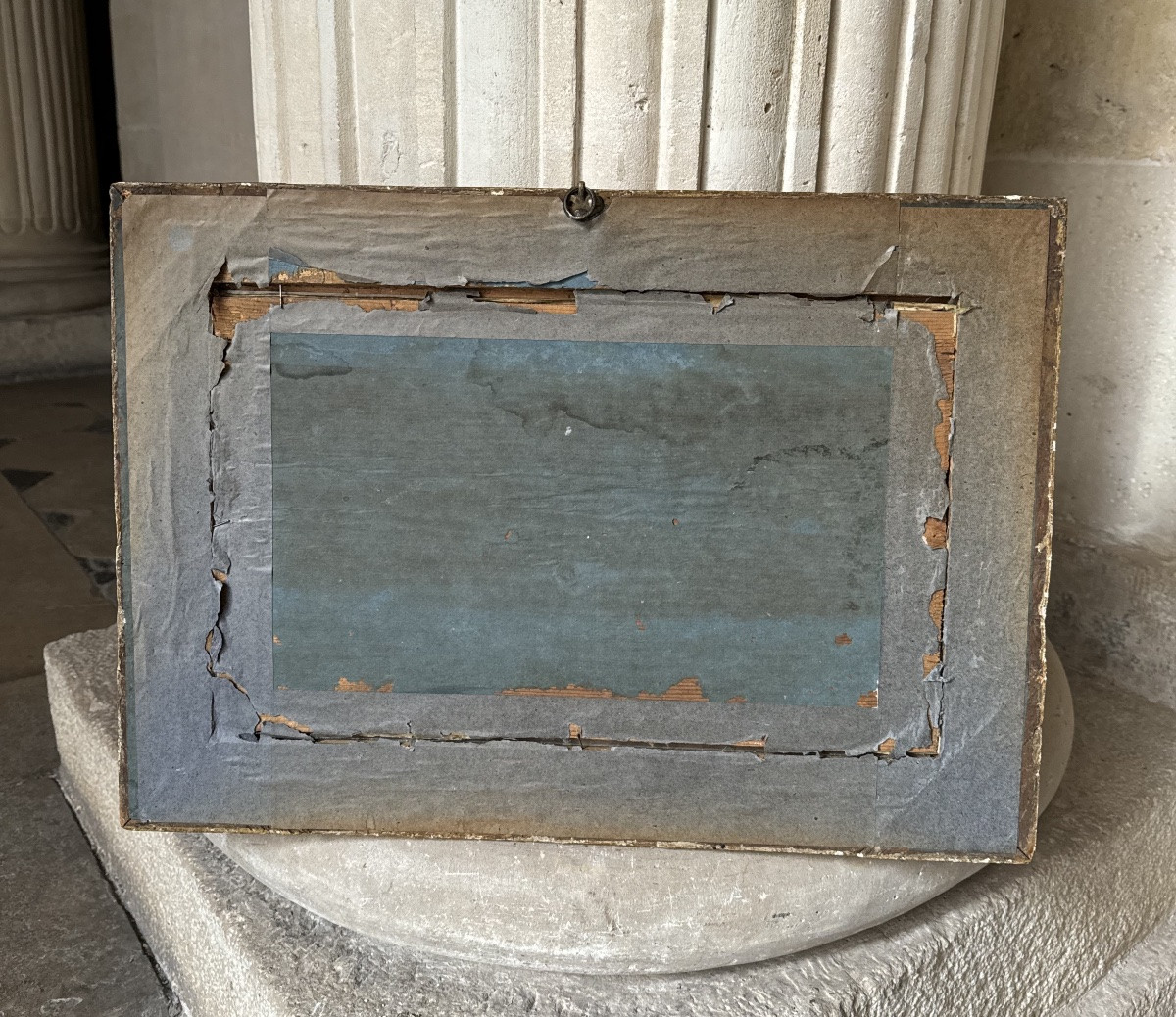
It is mounted on a wooden background and preserved in its carved and gilded wooden frame, decorated with acanthus and polished reserves. The Shroud of Besançon, venerated in the Saint-Jean Cathedral until the Revolution, was considered a miraculous imprint of the body of Christ, related to the Holy Shroud of Turin. It was destroyed during the revolution.
The engraving by Jean de Loisy, dated 1634, ensured its diffusion: it shows two angels revealing the figure of Christ printed vertically on the fabric.
The examples embroidered on silk, like this one, were probably made in religious workshops or women's communities in Franche-Comté, serving as private devotional pictures.
French work, probably Besançon or Franche-Comté region, around 1700.
Original carved and gilded wooden frame.
Frame 55x38 cm
Small alterations to the silk, wear from use, but very good general preservation of the frame and metal threads.













 Le Magazine de PROANTIC
 TRÉSORS Magazine
 Rivista Artiquariato