






Pierre-eugène Clairin – Animated Landscape With A Bridge – Oil On Canvas - Signed
Artist: Clairin Pierre-eugène (1897 – 1980, France)
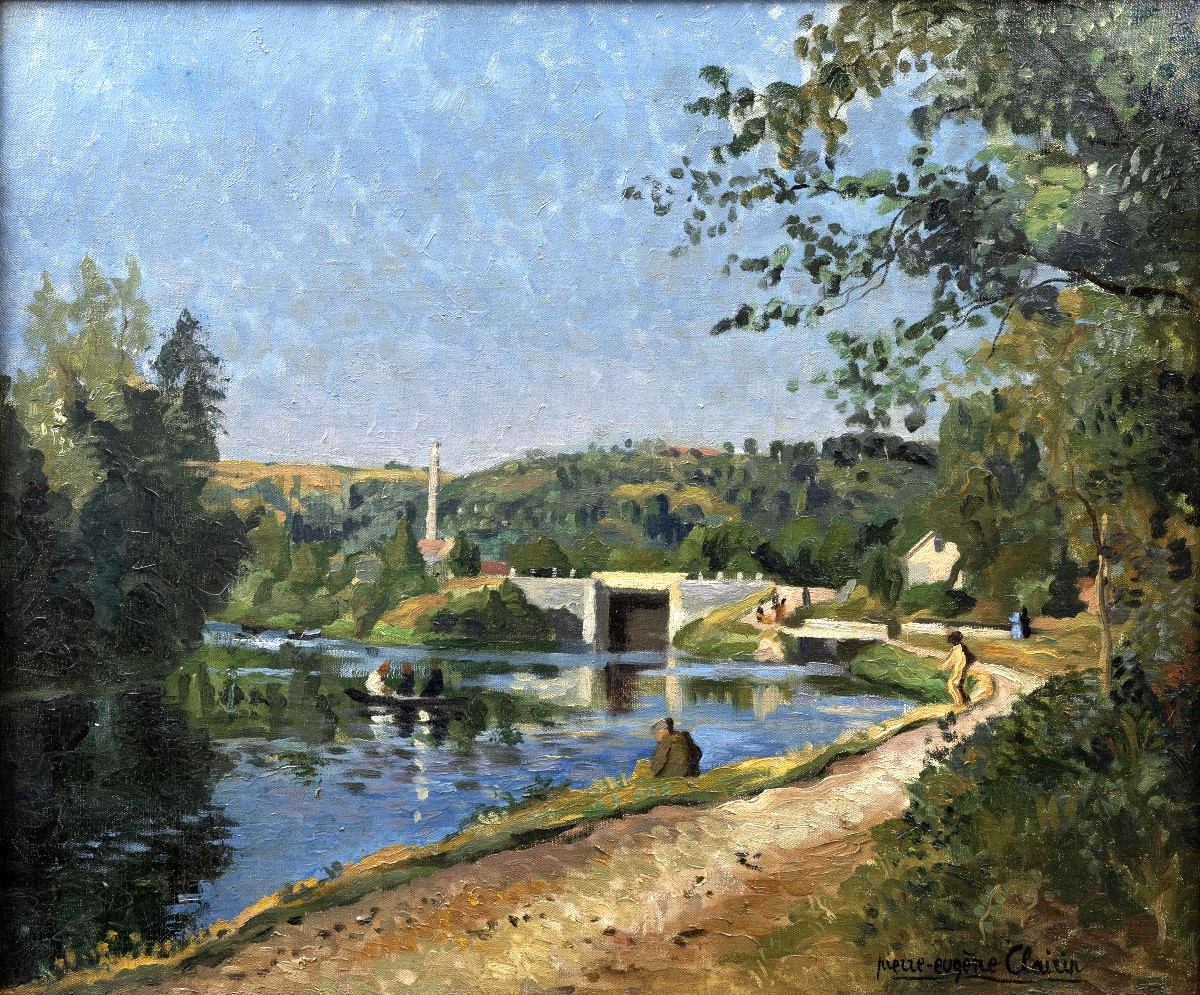
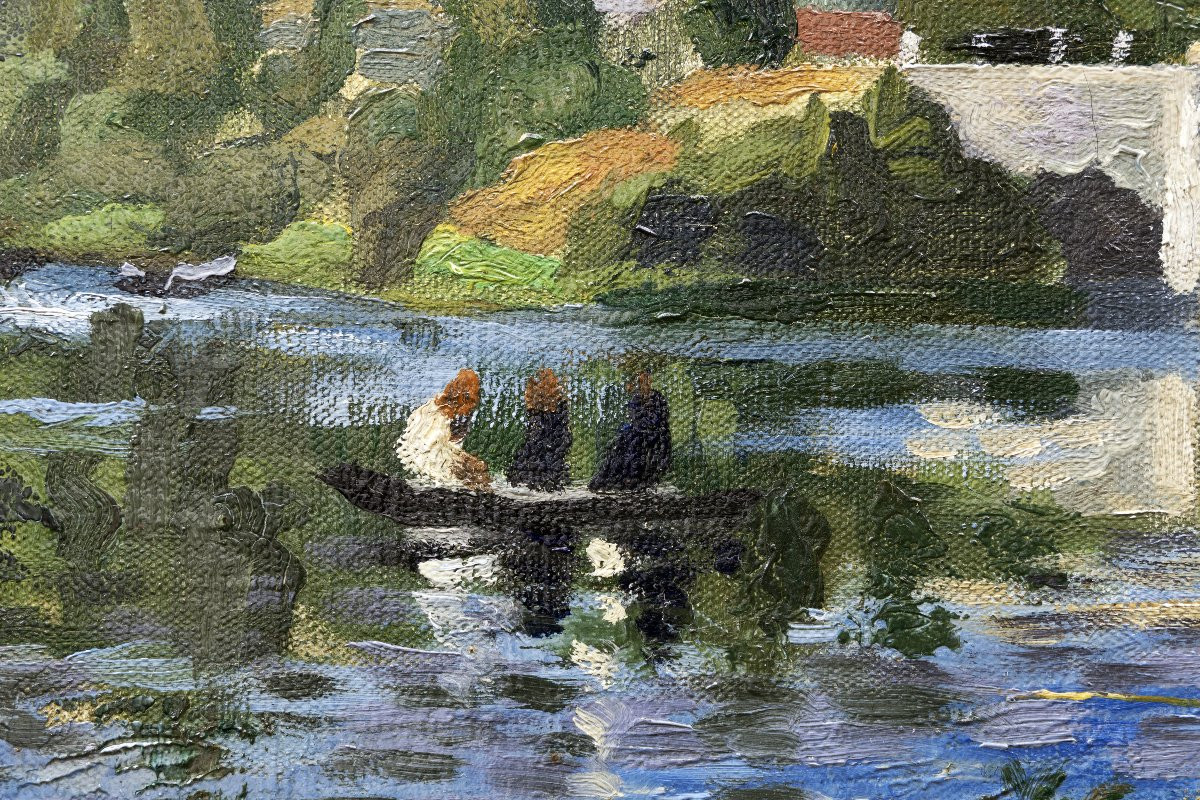
A good-sized oil on canvas in the Post-Impressionist style. It depicts a peaceful landscape in which a river plays the leading role. A boat carrying 3 figures sails on its shimmering waters. The center of the painting is occupied by a bridge, the only element that suggests that the scene was captured in a fairly recent period, probably around 1960.
The river is bordered by a dirt road. On the bank we see a man wearing a cap, and a bather. Other figures are seen further away. Hills and an old factory chimney occupy the background, against a wide blue sky.
The colors are vivid, and the light and rapid brushstrokes clearly show the influences of late 19th-century painting.
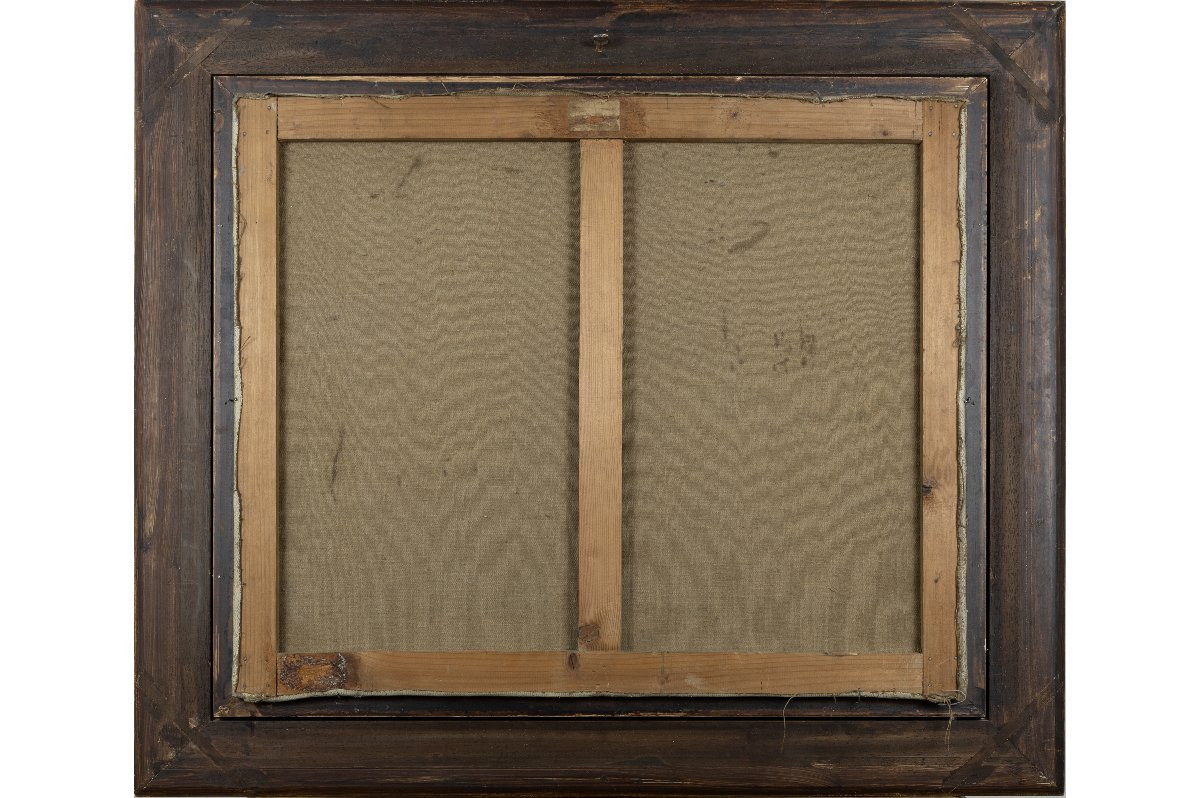
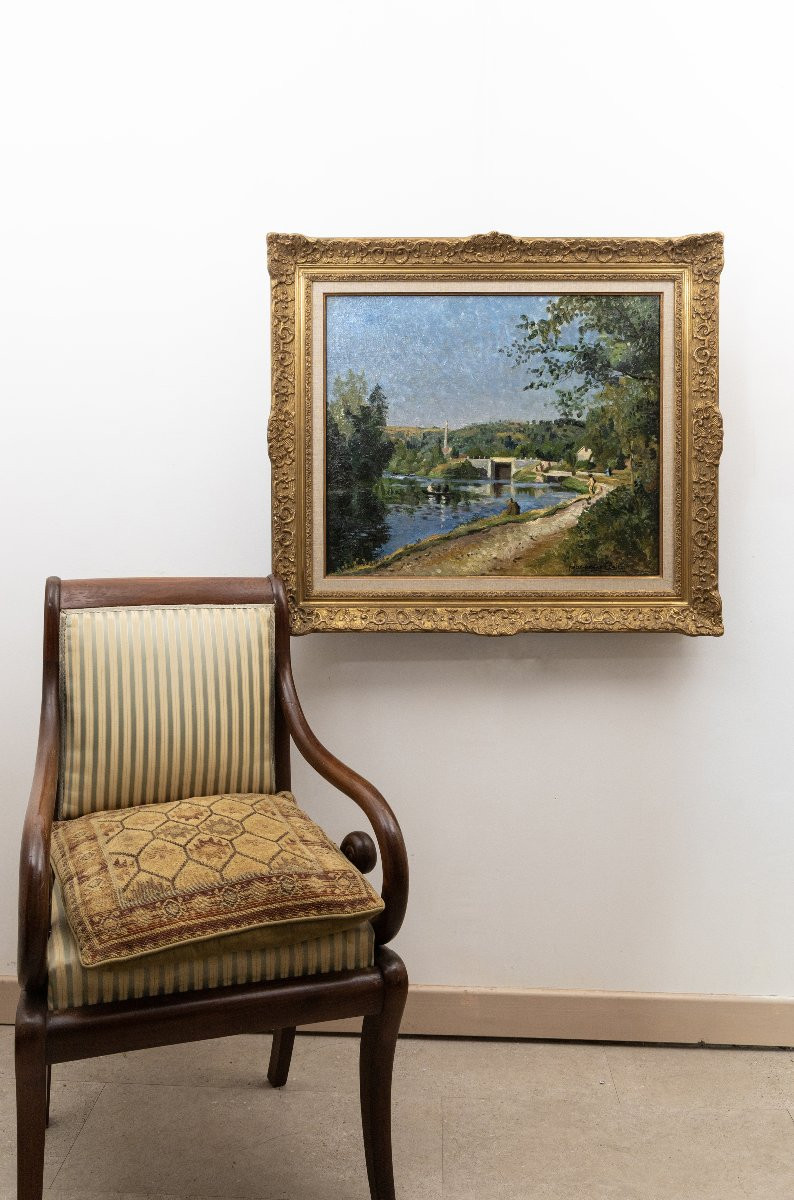
The work is signed lower right. It is in very good condition. It is offered in a beautiful modern antique-style frame, in stuccoed and gilded wood, also in very good condition.
The artist
Pierre-Eugène Clairin (1897–1980) was a French painter, illustrator, engraver, and resistance fighter whose extraordinary life forged a dual-faceted body of work: deeply rooted in French landscapes on the one hand, and orientalist on the other.
Born in Cambrai on March 14, 1897, the son of an officer and a mother of Anglo-American descent, he received his early studies in England before joining Fernand Cormon's studio at the École des Beaux-Arts in Paris in 1913.
The First World War interrupted his studies: enlisting in the cavalry and then in the Air Force from 1915, he became a war pilot and was decorated with the Croix de Guerre, the Médaille Militaire, and the Légion d'honneur.
Demobilized in 1919, he joined Paul Sérusier's studio at the Académie Ranson, where he met Maurice Denis and Édouard Vuillard, who introduced him to engraving and lithography.
Clairin discovered Brittany, more precisely Pont-Aven, in 1919, staying in Gauguin's studio in Lezaven thanks to Sérusier. He exhibited Breton landscapes from the Salon d'Automne in 1921 at the Galerie Druet.
In 1929, he won the prestigious Prix Abd-el-Tif, integrating North African painting from the Algiers school. This award allowed him to stay two years at the Villa Abd-el-Tif, extending his travels to Morocco and southern Algeria until 1934.
Upon his return to France, he settled in Saint-Loup-de-Naud in Seine-et-Marne. He notably created decorations for the pavilions of the Île-de-France and the Vatican for the 1937 World's Fair, as well as for the National Conservatory of Music, which earned him a gold medal.
Mobilized in 1939, demobilized in 1940, he actively participated in the Resistance, organizing a network in Brie.
After the war, he pursued an international career, notably in the United States in 1946 where he gave lectures and collaborated with Albert Camus—whom he had met in Algiers in 1929. He illustrated several works by Camus and Henry de Montherlant in 1950. He received the Grand Prix de l'Île-de-France in 1957. From the 1960s, he devoted himself mainly to painting in Île-de-France and Pont-Aven. Elected to the Académie des Beaux-Arts in 1967 and president of the Société des Peintres-Gravers Français in 1970, he ended his life upon returning from an exhibition in Pont-Aven in the summer of 1980.
Clairin developed an aesthetic blending the Nabi heritage, Pont-Avenism, and a Japanese sensibility. Paul Sérusier considered him his spiritual successor, praising in him the orderly continuation of an inherited artistic tradition.
His French works—landscapes of Brittany, domestic scenes, landscapes of Île-de-France—combine a lyrical perception of nature with technical precision. His oils on canvas offer peaceful atmospheres of hilly landscapes of Brittany or Normandy, testifying to his talent for capturing the intimacy of French places.
Work visible at the gallery (07240)
Shipping: contact us for shipping costs in France and abroad.
The river is bordered by a dirt road. On the bank we see a man wearing a cap, and a bather. Other figures are seen further away. Hills and an old factory chimney occupy the background, against a wide blue sky.
The colors are vivid, and the light and rapid brushstrokes clearly show the influences of late 19th-century painting.
The work is signed lower right. It is in very good condition. It is offered in a beautiful modern antique-style frame, in stuccoed and gilded wood, also in very good condition.
The artist
Pierre-Eugène Clairin (1897–1980) was a French painter, illustrator, engraver, and resistance fighter whose extraordinary life forged a dual-faceted body of work: deeply rooted in French landscapes on the one hand, and orientalist on the other.
Born in Cambrai on March 14, 1897, the son of an officer and a mother of Anglo-American descent, he received his early studies in England before joining Fernand Cormon's studio at the École des Beaux-Arts in Paris in 1913.
The First World War interrupted his studies: enlisting in the cavalry and then in the Air Force from 1915, he became a war pilot and was decorated with the Croix de Guerre, the Médaille Militaire, and the Légion d'honneur.
Demobilized in 1919, he joined Paul Sérusier's studio at the Académie Ranson, where he met Maurice Denis and Édouard Vuillard, who introduced him to engraving and lithography.
Clairin discovered Brittany, more precisely Pont-Aven, in 1919, staying in Gauguin's studio in Lezaven thanks to Sérusier. He exhibited Breton landscapes from the Salon d'Automne in 1921 at the Galerie Druet.
In 1929, he won the prestigious Prix Abd-el-Tif, integrating North African painting from the Algiers school. This award allowed him to stay two years at the Villa Abd-el-Tif, extending his travels to Morocco and southern Algeria until 1934.
Upon his return to France, he settled in Saint-Loup-de-Naud in Seine-et-Marne. He notably created decorations for the pavilions of the Île-de-France and the Vatican for the 1937 World's Fair, as well as for the National Conservatory of Music, which earned him a gold medal.
Mobilized in 1939, demobilized in 1940, he actively participated in the Resistance, organizing a network in Brie.
After the war, he pursued an international career, notably in the United States in 1946 where he gave lectures and collaborated with Albert Camus—whom he had met in Algiers in 1929. He illustrated several works by Camus and Henry de Montherlant in 1950. He received the Grand Prix de l'Île-de-France in 1957. From the 1960s, he devoted himself mainly to painting in Île-de-France and Pont-Aven. Elected to the Académie des Beaux-Arts in 1967 and president of the Société des Peintres-Gravers Français in 1970, he ended his life upon returning from an exhibition in Pont-Aven in the summer of 1980.
Clairin developed an aesthetic blending the Nabi heritage, Pont-Avenism, and a Japanese sensibility. Paul Sérusier considered him his spiritual successor, praising in him the orderly continuation of an inherited artistic tradition.
His French works—landscapes of Brittany, domestic scenes, landscapes of Île-de-France—combine a lyrical perception of nature with technical precision. His oils on canvas offer peaceful atmospheres of hilly landscapes of Brittany or Normandy, testifying to his talent for capturing the intimacy of French places.
Work visible at the gallery (07240)
Shipping: contact us for shipping costs in France and abroad.
700 €
Period: 20th century
Style: Modern Art
Condition: Excellent condition
Material: Oil painting
Width: 65 cm / 84 cm encadré
Height: 54,5 cm / 73 cm encadré
Reference (ID): 1600768
Availability: In stock
Print