
"Jean Baptiste Pillement, (1728-1808) Attributed"
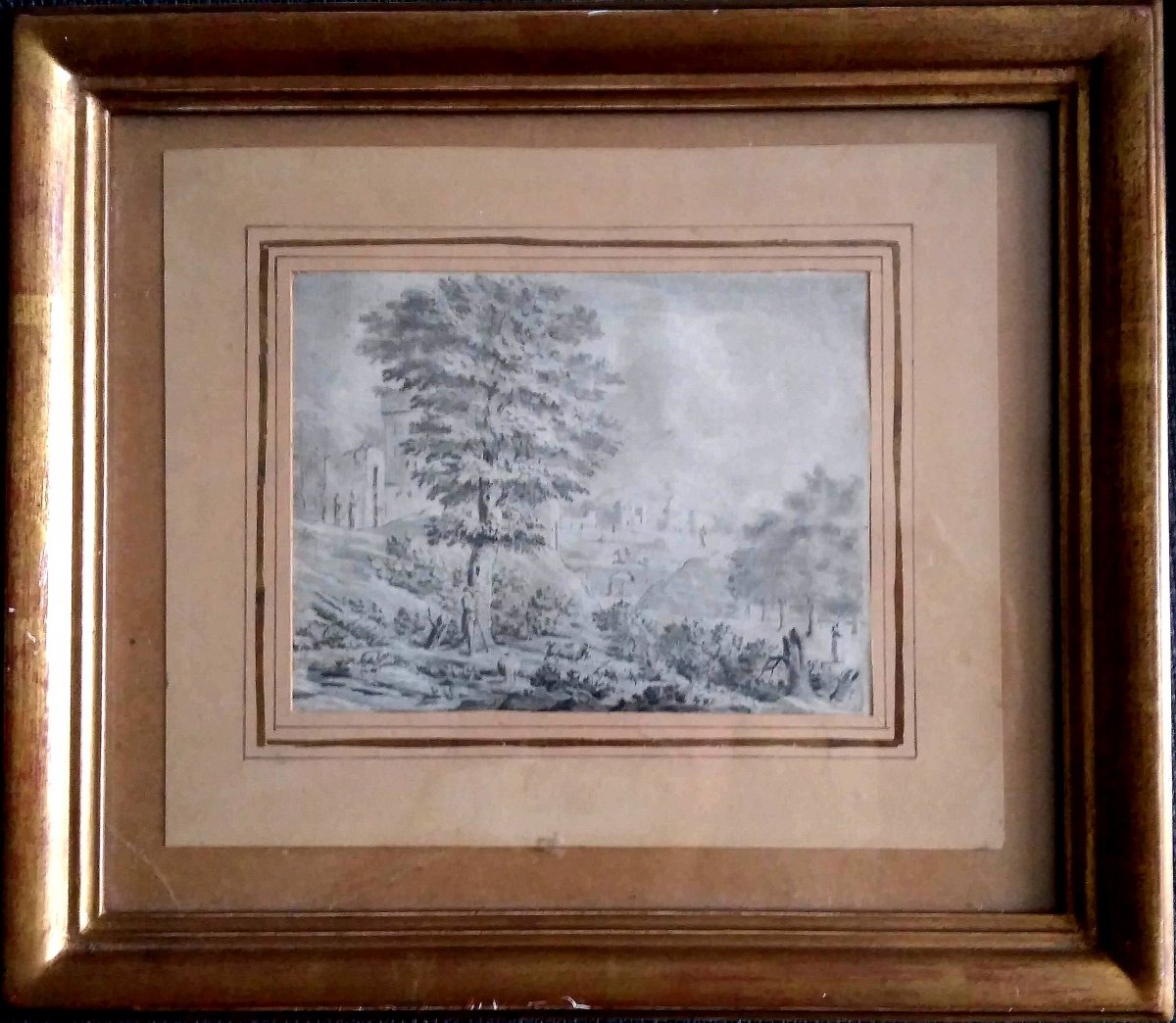
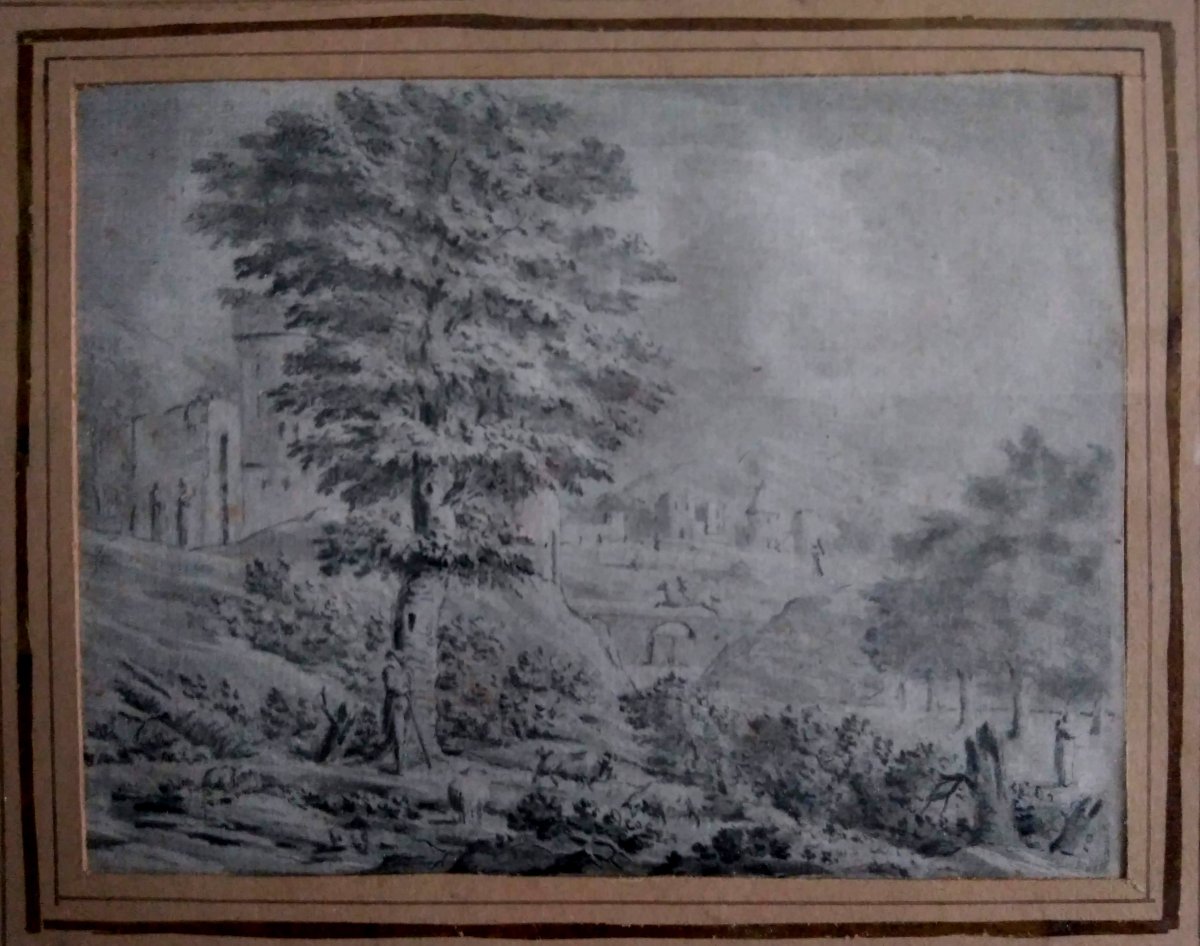
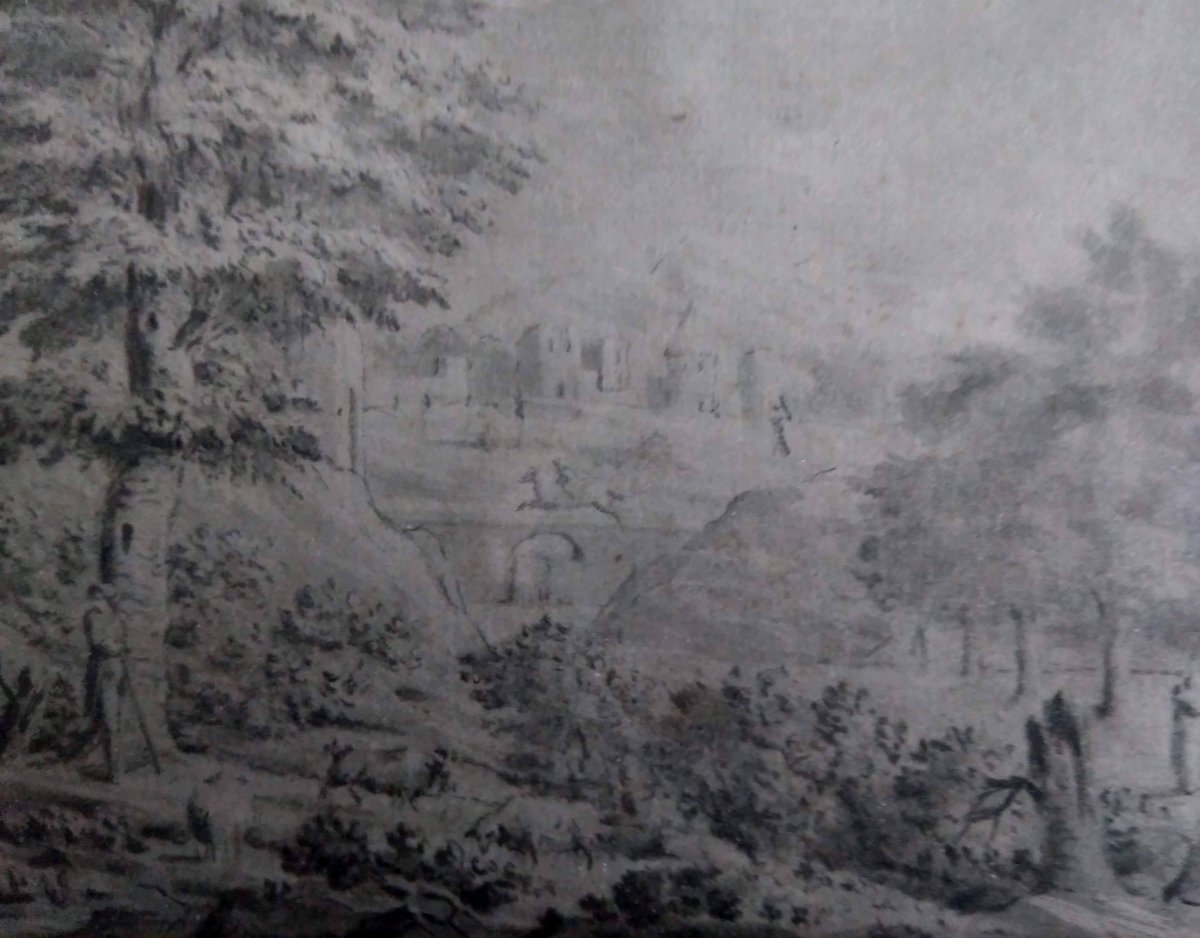
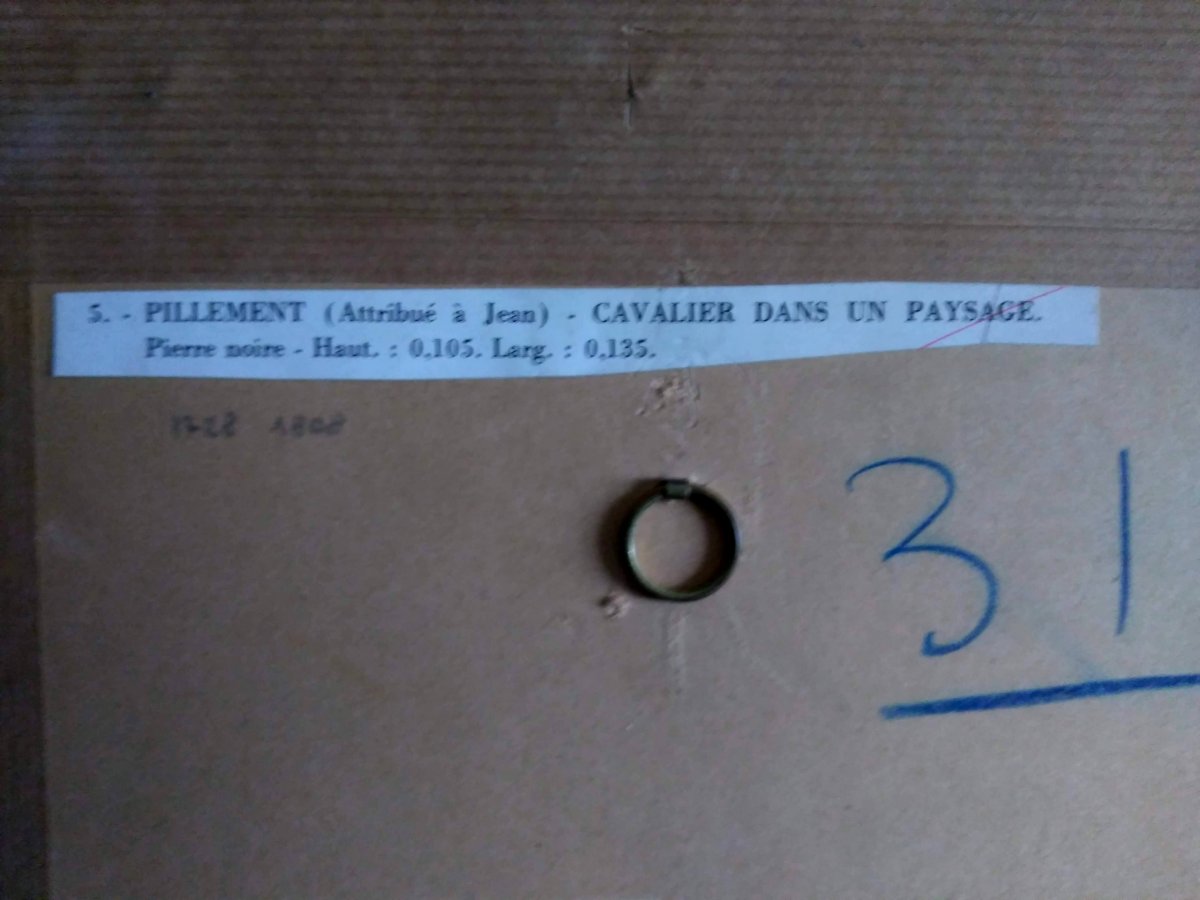
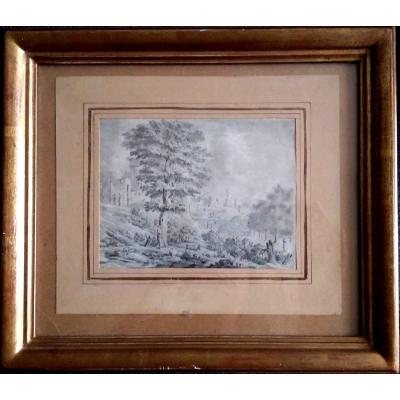
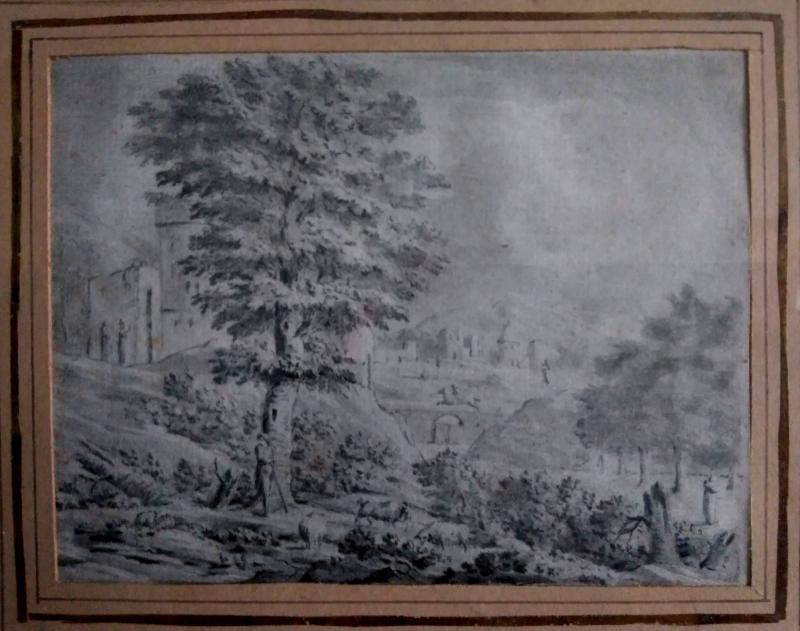
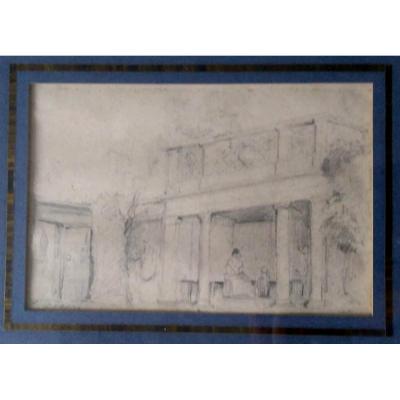
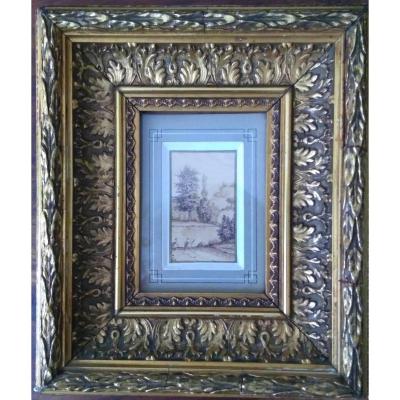
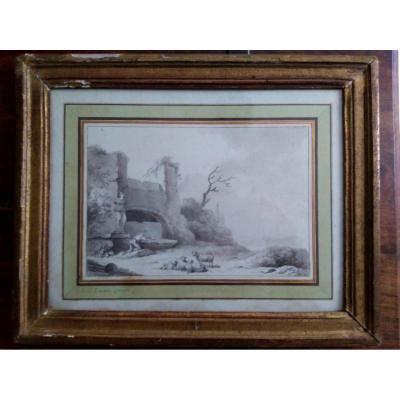
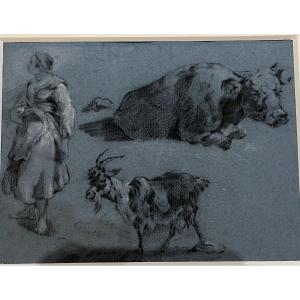
"Animated Landscape"Attributed to Jean PILLEMENT (Lyon 1728 - Id 1808).
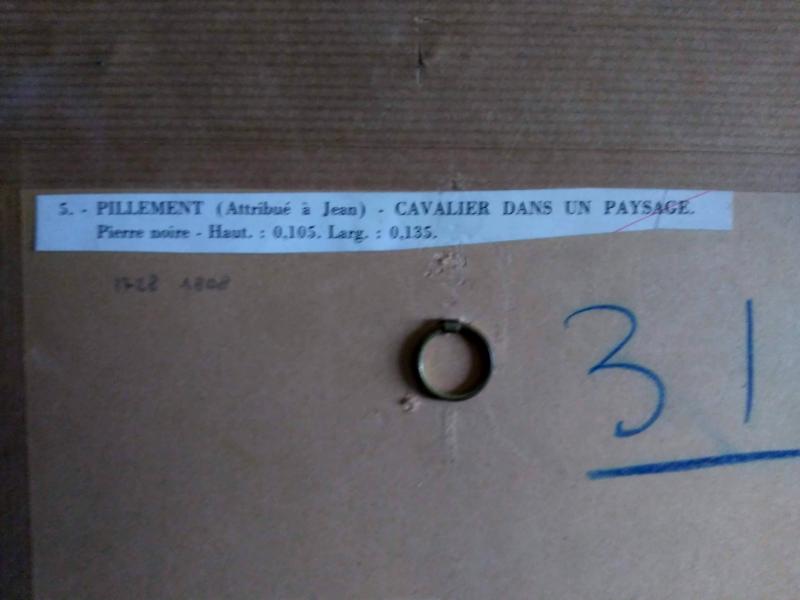
Black chalk drawing
Dimensions: H10.50 x W 14 cm
Framed under glass
Gilt frame: 23.50 x 26.50 cm
Jean-Baptiste Pillement, born in 1728 in a family of artists settled in Lyon since the late seventeenth century.After an apprenticeship with the painter Daniel Sarrabat (1666-1748), he arrived in Paris in 1743 to complete his training as a draftsman. he began a series of travels throughout Europe, traveling to Spain, Portugal, England, Austria where he worked for Prince Joseph Wenzel of Liechtenstein (1696-1772) and in Poland where he became the painter King Stanislas Augustus (1732-1798), who returned to France in 1778 as a painter of Marie-Antoinette (1755-1793), appreciated for his qualities as a watercolourist and landscape painter. as a gentleman who finds favor in the eyes of his contemporaries. flowers and its chinoiseries, are reproduced by many engravers among whom François-Antoine Aveline (1718-178?), Jean-Jacques Avril (1744-1831), Pierre-Charles Canot (1710-1777) or Gautier-Dagoty. His compositions serve as models for all trades: wallpapers, upholstery, furniture pieces, porcelain ..., his motifs are reproduced by famous manufactures like that of Gobelins tapestries or that of printed toile de Jouy -en-Josas. His paintings, gouaches and pastels depict an ideal and poetic nature, the trees are twisted, the torrents fiery, the rocks tormented. Pillement varies its subjects with a marked attraction for the rivers and the sea but also for the animals since it is not rare that a flock comes to enliven the landscape. He also pays particular attention to lighting, to the effects produced from dawn to dusk, from the rising sun to the setting sun. Pillement is not on a quest for a faithful representation of nature and his hand of ornamentalist expresses himself in the forms of rocks, plants or clouds.






 Le Magazine de PROANTIC
 TRÉSORS Magazine
 Rivista Artiquariato