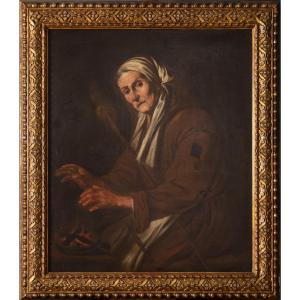


Circle Of Pietro Bellotti, The Spinner As An Allegory Of Vanitas, Oil On Canvas, 17th Century
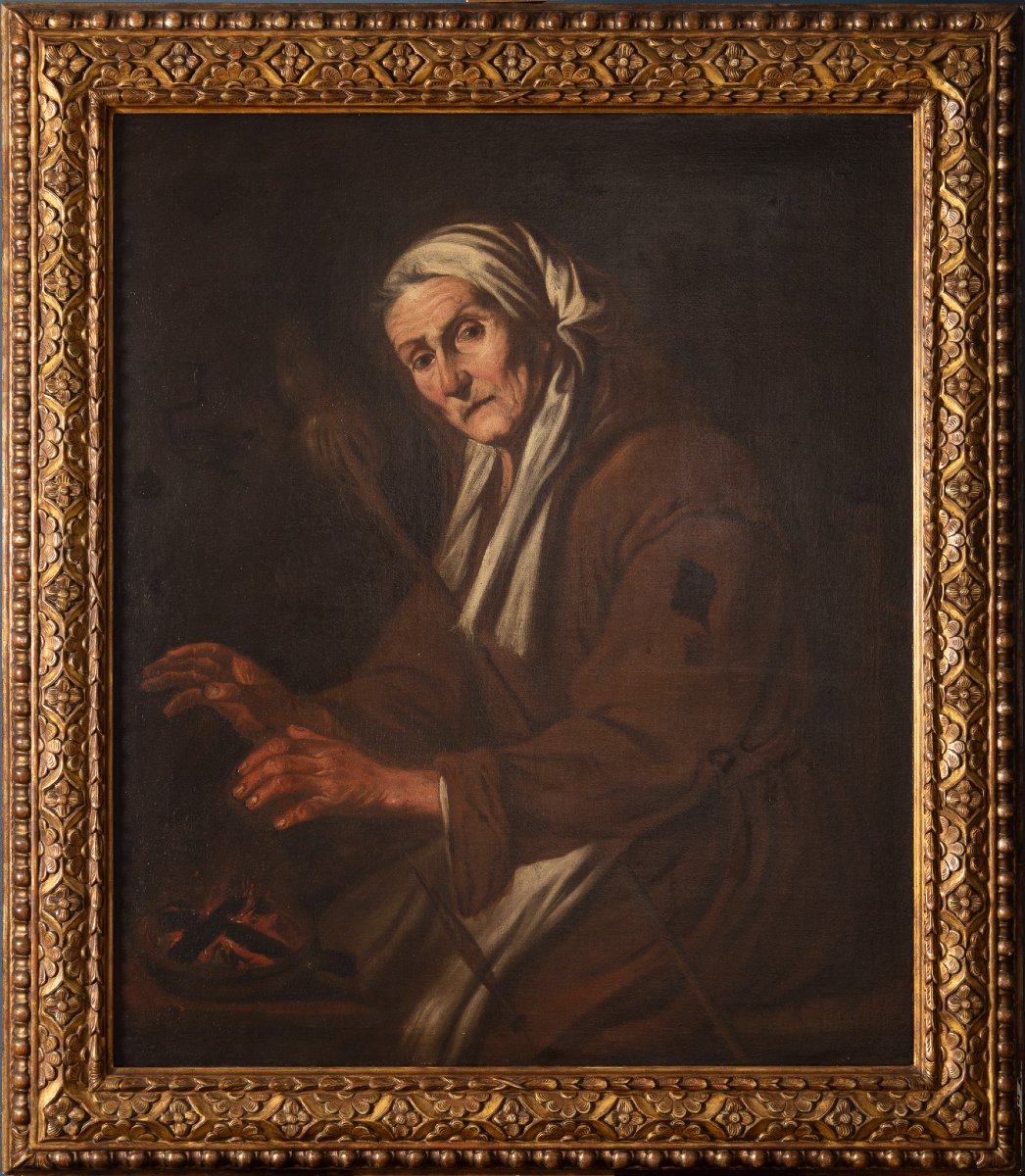
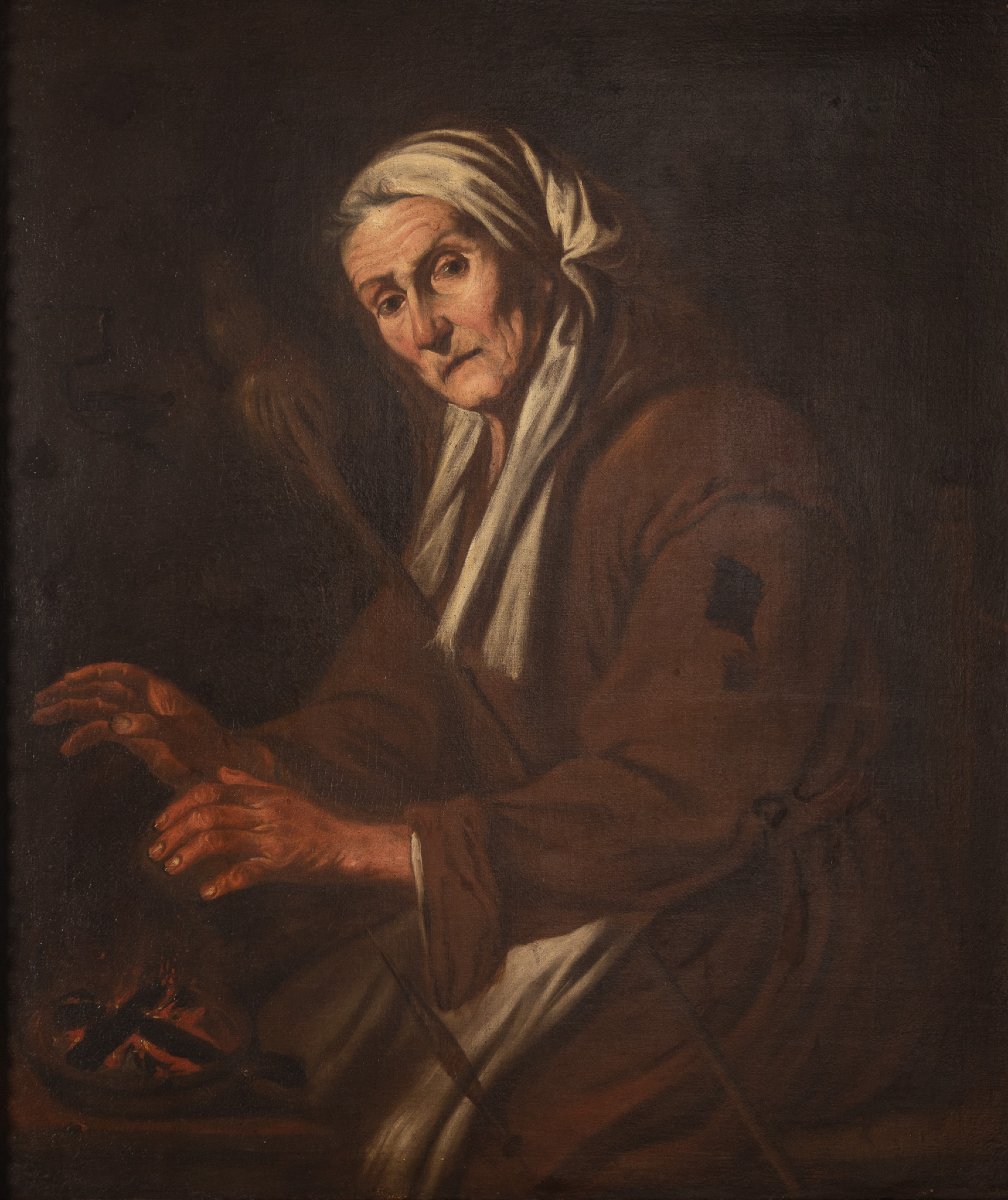
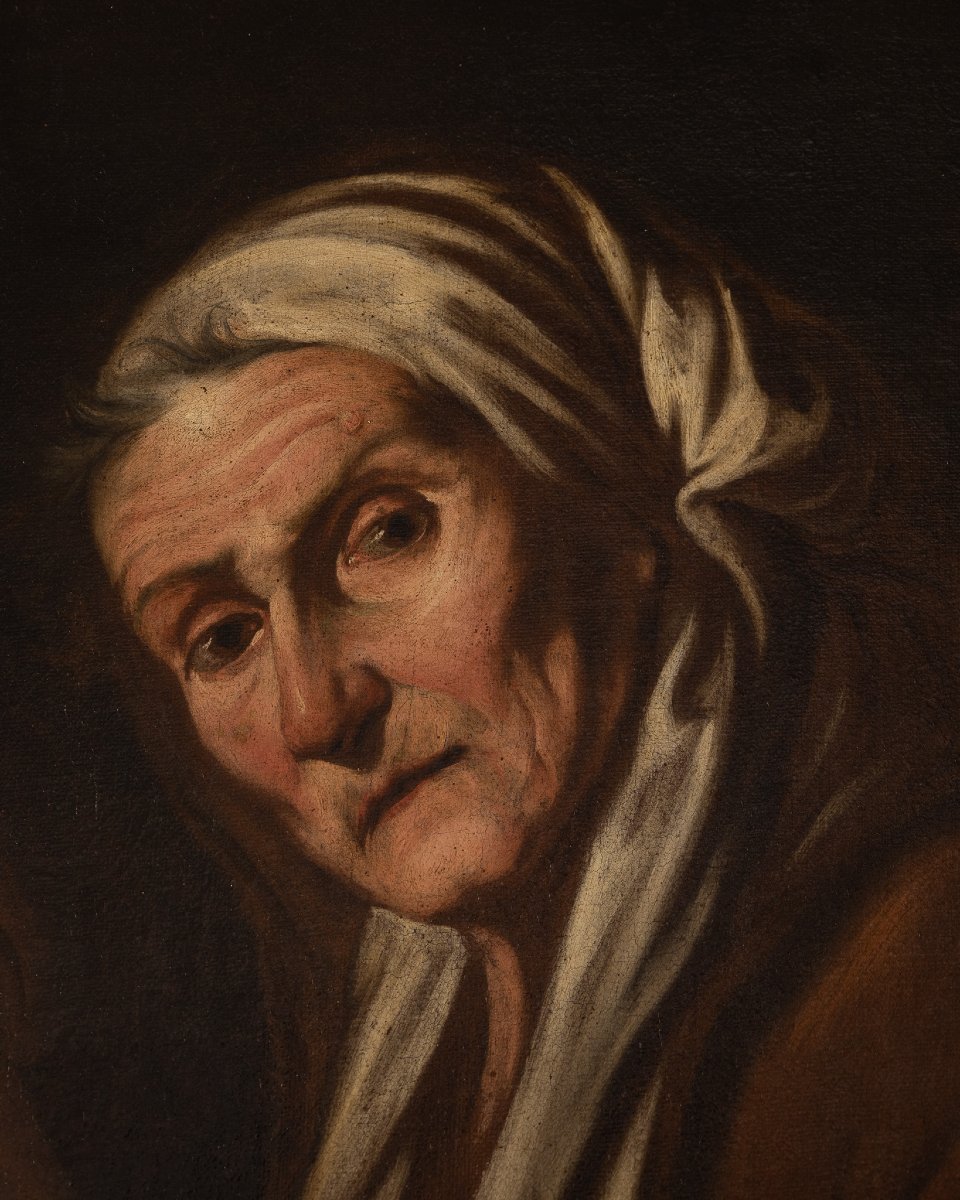
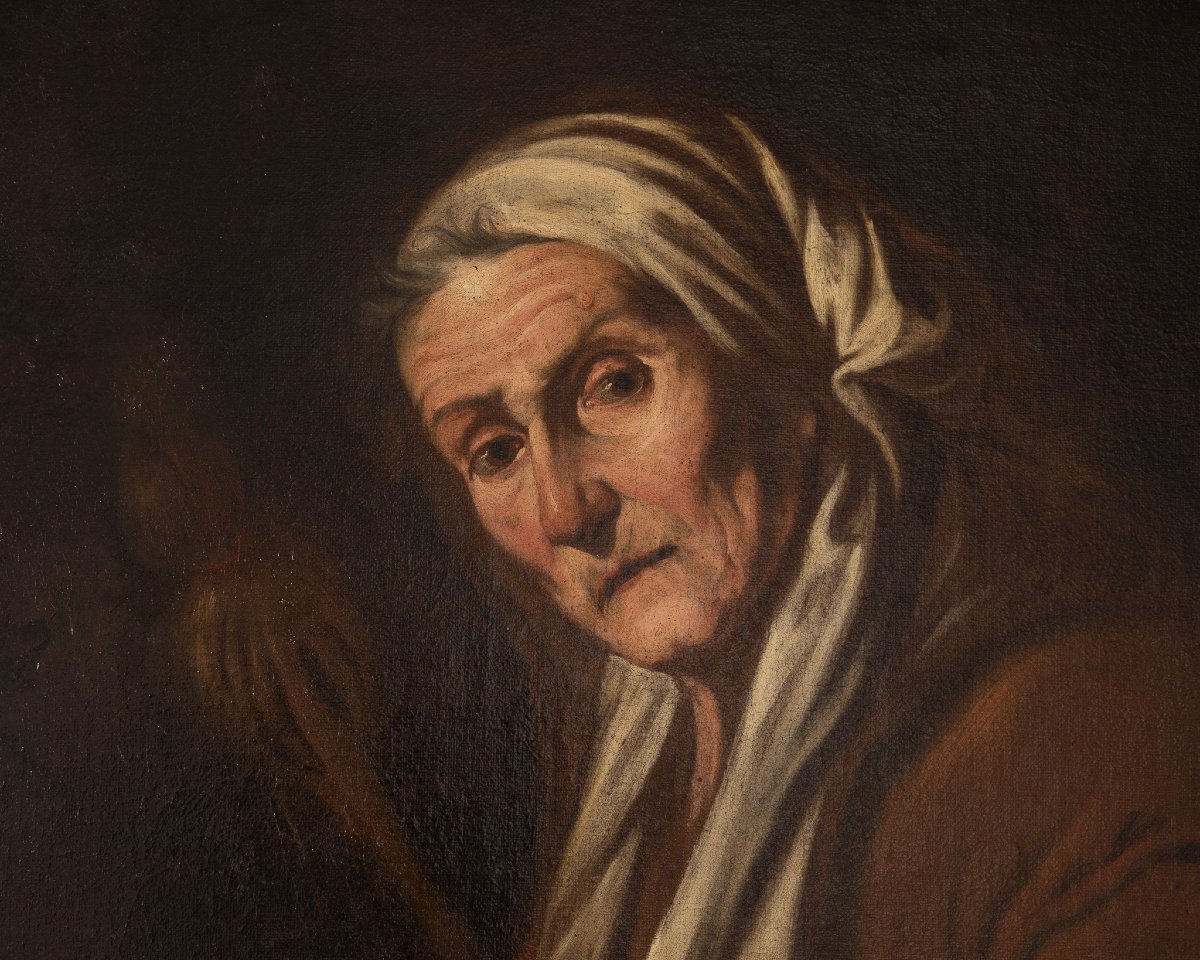
Oil painting on canvas depicting an elderly female spinner, engaged in drawing thread from her spindle and turned towards the viewer with an intense, penetrating gaze. The figure, dressed in a loose brown garment with her head covered by a pristine white cloth, emerges from a dark background through a skilful orchestration of light and shadow.
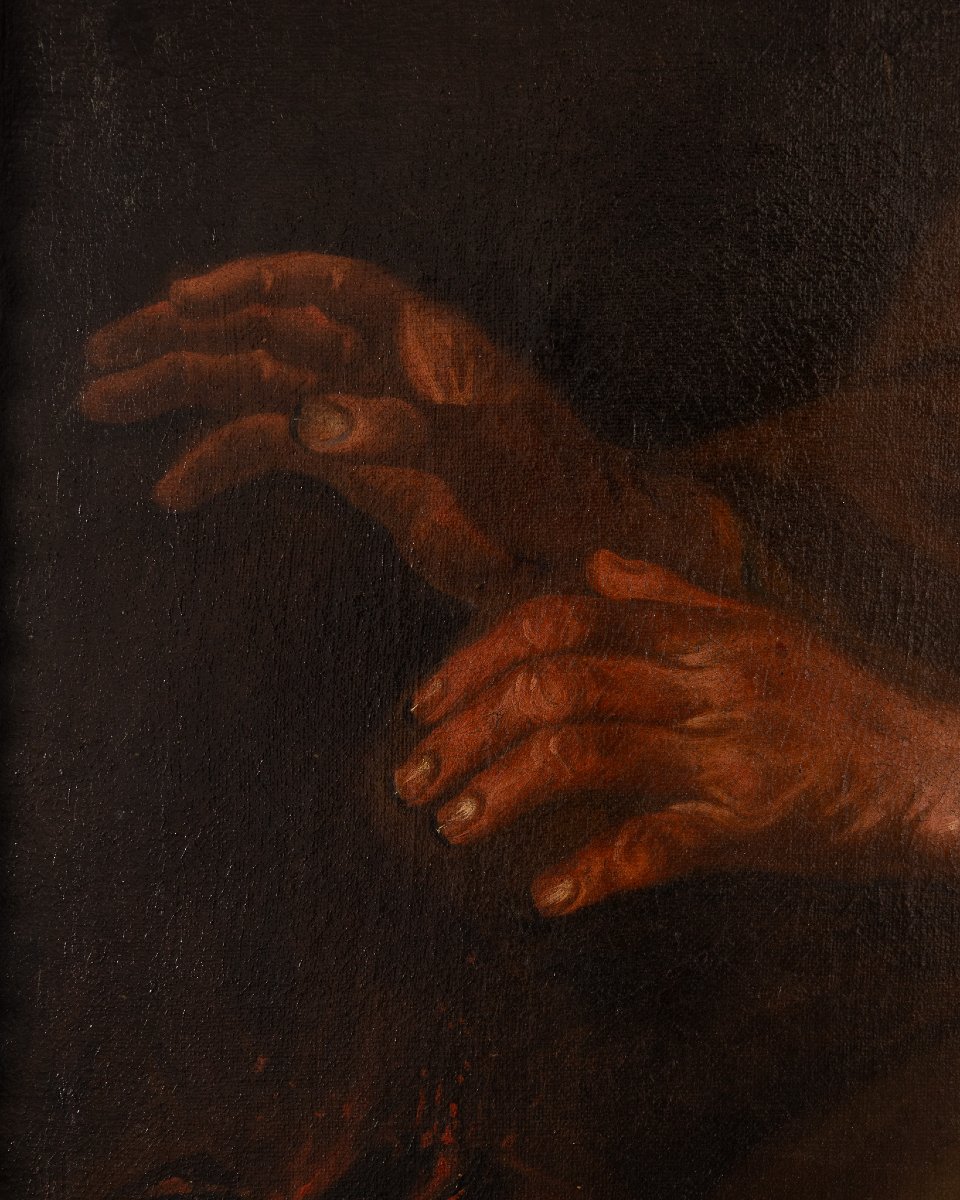
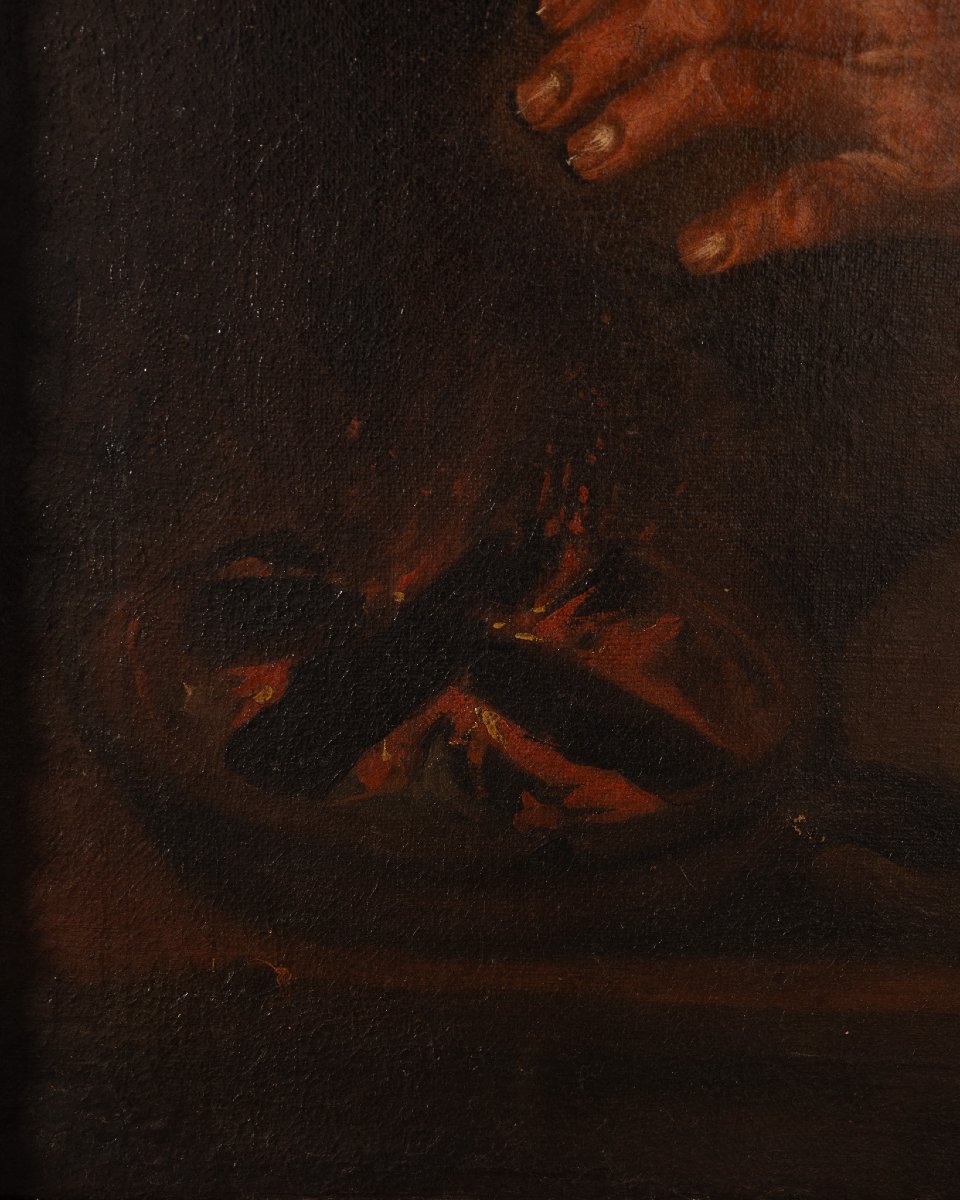
The woman extends her hands towards the spindle, while in the background one can discern an extinguished oil lamp and, on a low table, a lit brazier, against which a cross stands out. On the wall behind the figure appears the inscription “WQ”, interpreted as a reference to Vanitas Vanitatum and the biblical Book of Qoheleth, or Ecclesiastes.
Beyond its apparent classification as a genre scene, the composition suggests a potentially more complex allegorical dimension. The elderly spinner may be interpreted as a personification of Lachesis, one of the three Fates in classical mythology, responsible for measuring the thread of human life and, symbolically, determining its length. The spindle and thread thus acquire a metaphorical significance associated with the transience of existence and the inevitability of fate. In contrast with the sombre background and the presence of the lamp, the fire of the brazier and the cross suggest a possible Christian interpretation, in which faith offers comfort and hope in the face of the precariousness of earthly existence.
The painting belongs to the seventeenth-century tradition of pitocchi painting, depicting beggars and humble figures, and to the broader current known as “painting of reality”. This genre was particularly significant in northern Italy, where the representation of ordinary people could convey sophisticated moral, philosophical and allegorical meanings. Within this context, the artistic practice of Pietro Bellotti (c. 1625–1700), a Venetian painter known for his naturalistic sensibility, acute characterisation of facial features and dramatic chiaroscuro, lends itself to consideration. His use of light and shadow gives his figures a compelling human presence.
The stylistic and compositional affinities with the Allegory of Winter, held at the Museu Nacional de Belas Artes in Rio de Janeiro, provide an interesting point of comparison for the study of this painting, particularly with regard to the figure’s pose and the treatment of the hands.
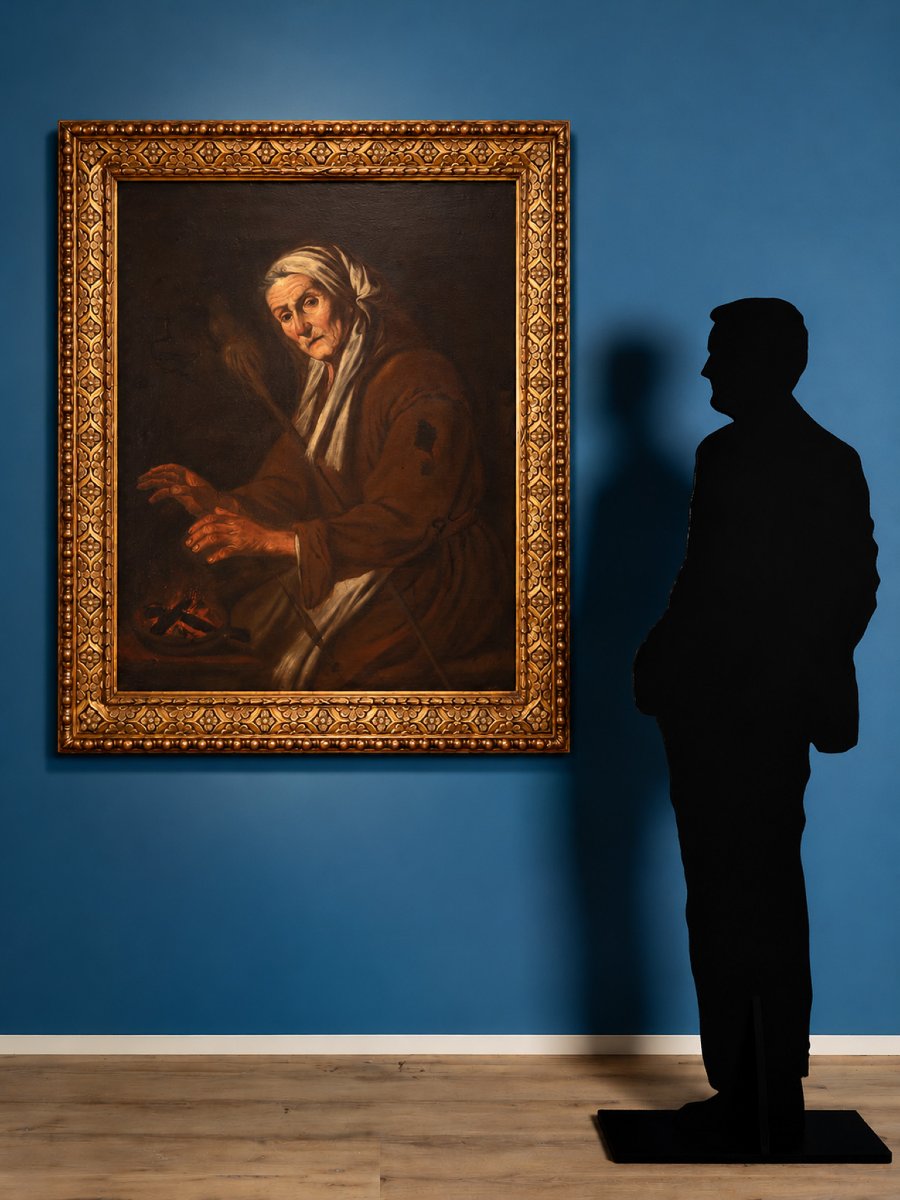
Dimensions:
116 × 98.5 cm (unframed)
143 × 124 cm (framed)
ADDITIONAL INFORMATION:
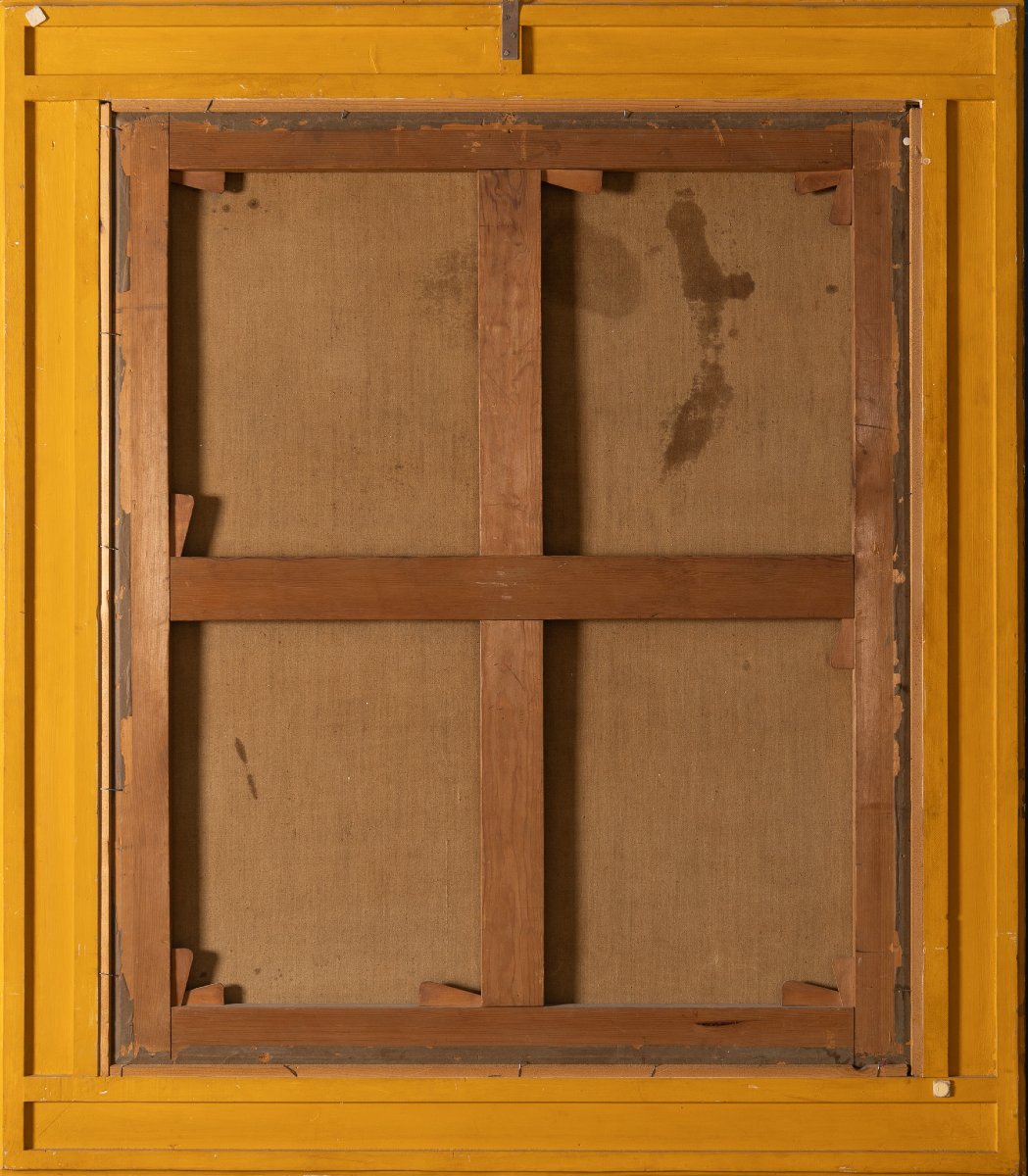
The artwork is sold with a
certificate of authenticity and guarantee.
We take care of and organize the
shipping of purchased artworks, both within Italy and internationally, through
professional and insured couriers.
No additional costs will be
charged if the artwork is collected directly by the buyer at our gallery.
For shipments outside Italy,
delivery times are estimated at a minimum of 15 days, which may vary depending
on the export permit procedures.
The artwork can be viewed at our
gallery in Orzinuovi (BS), where we will be pleased to welcome you and present
our collections.
We remain at your complete
disposal, also by phone, at the following numbers:
+39 347 062 3784
+39 340 241 7919
FOLLOW US ON INSTAGRAM: https://www.instagram.com/barbierifineart/
Period: 17th century
Style: Other Style
Condition: Good condition
Material: Oil painting
Width: 98,5
Height: 116
Reference (ID): 1847503
Availability: In stock