

Carved Ivory Figure Of Christ – Indo-portuguese Work, Probably From Goa – Late 16th / Early 17th Century
Carved ivory Christ figure – Indo-Portuguese work, likely from Goa – Late 16th / early 17th century
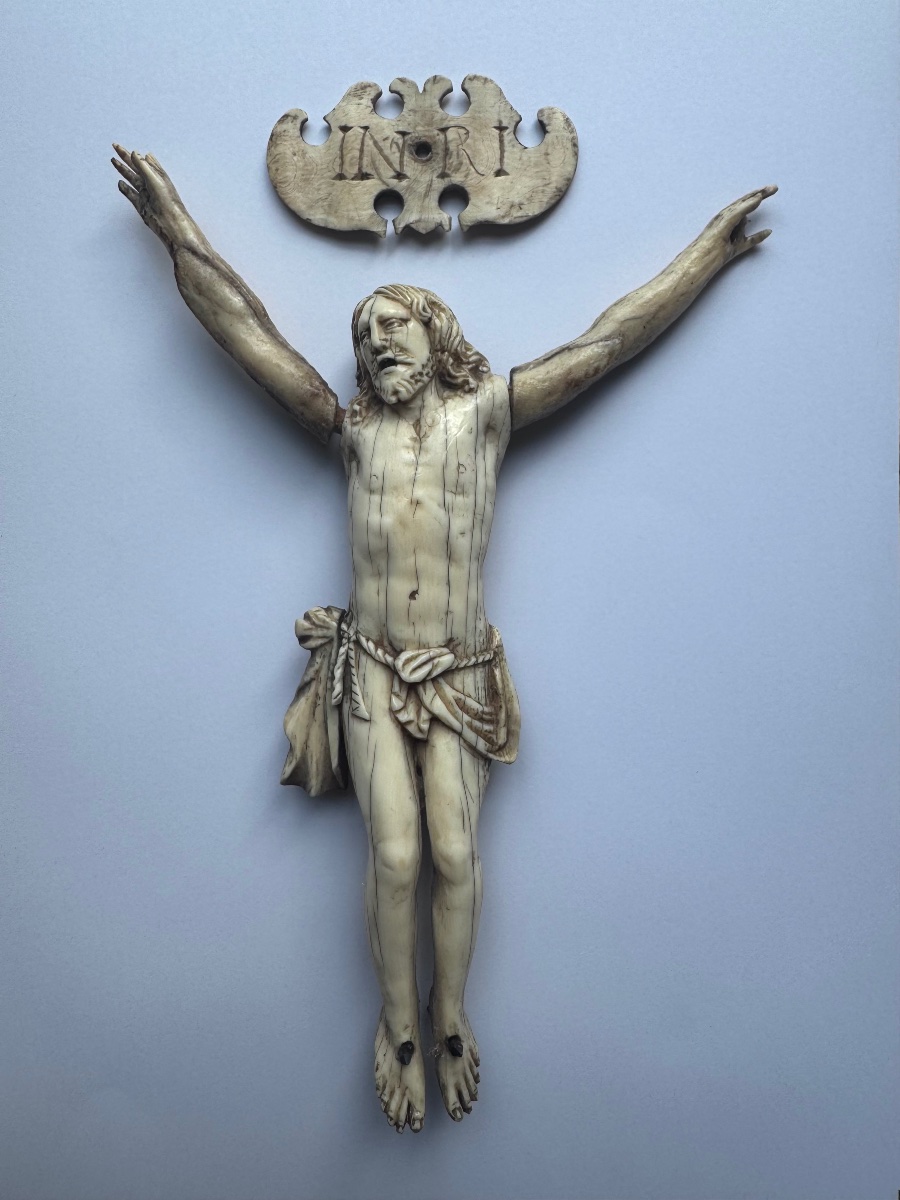
Important carved ivory figure of Christ, an Indo-Portuguese work likely created in Goa between the late 16th and early 17th centuries.
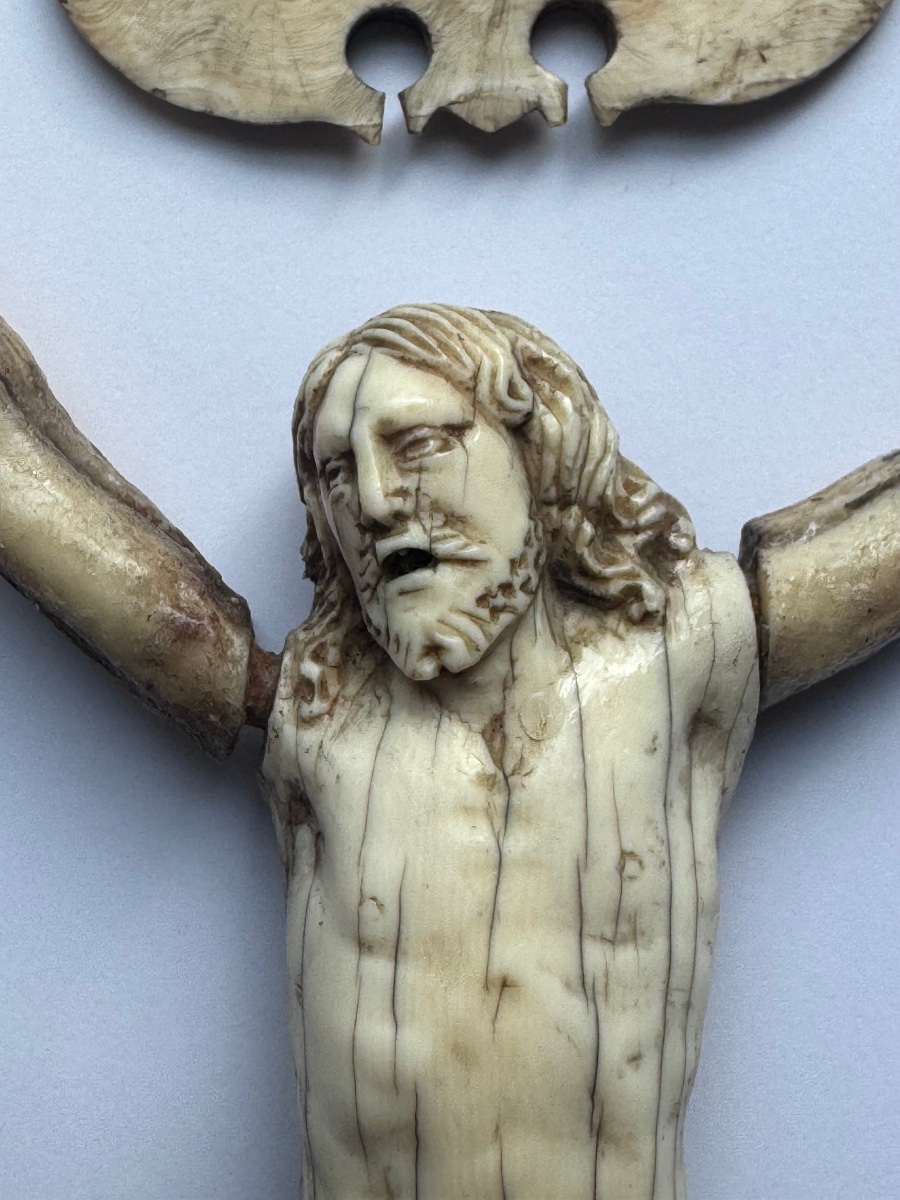
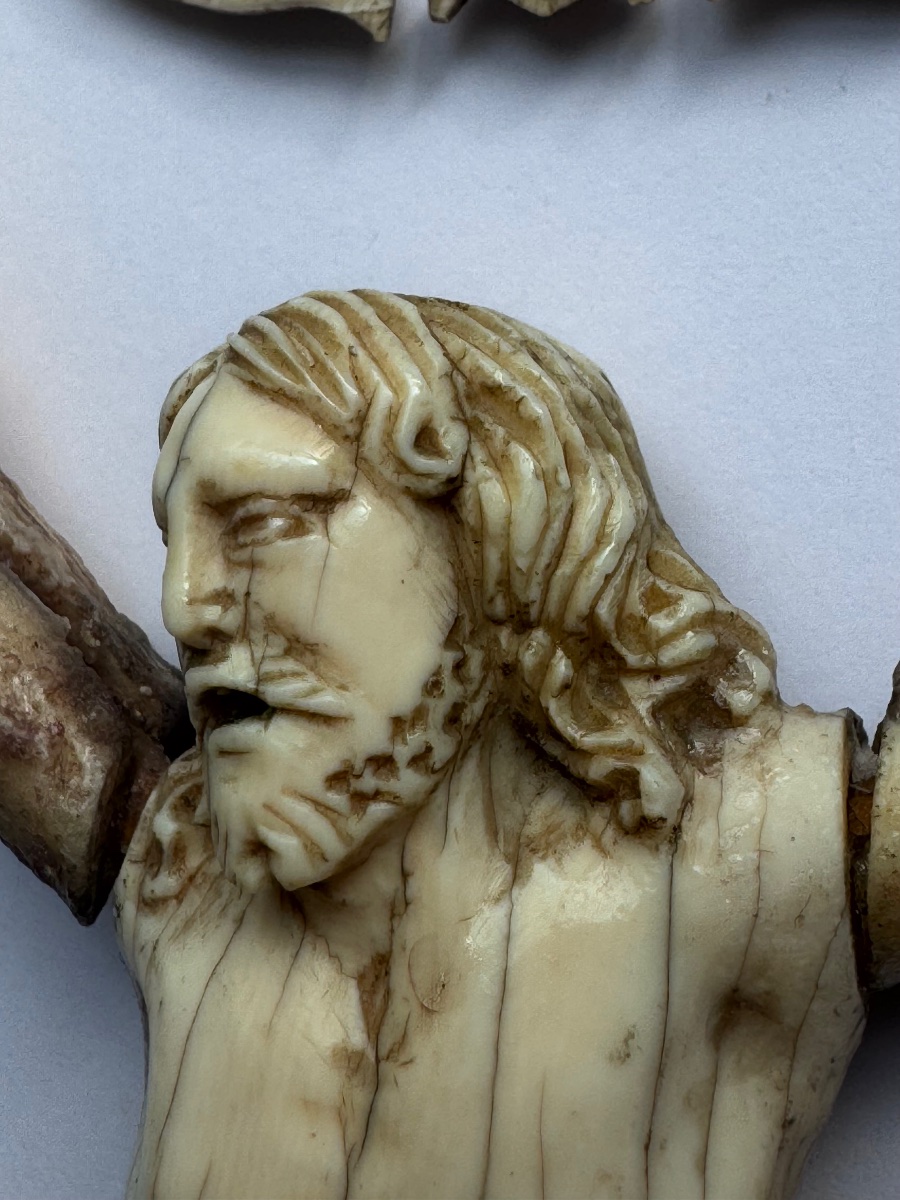
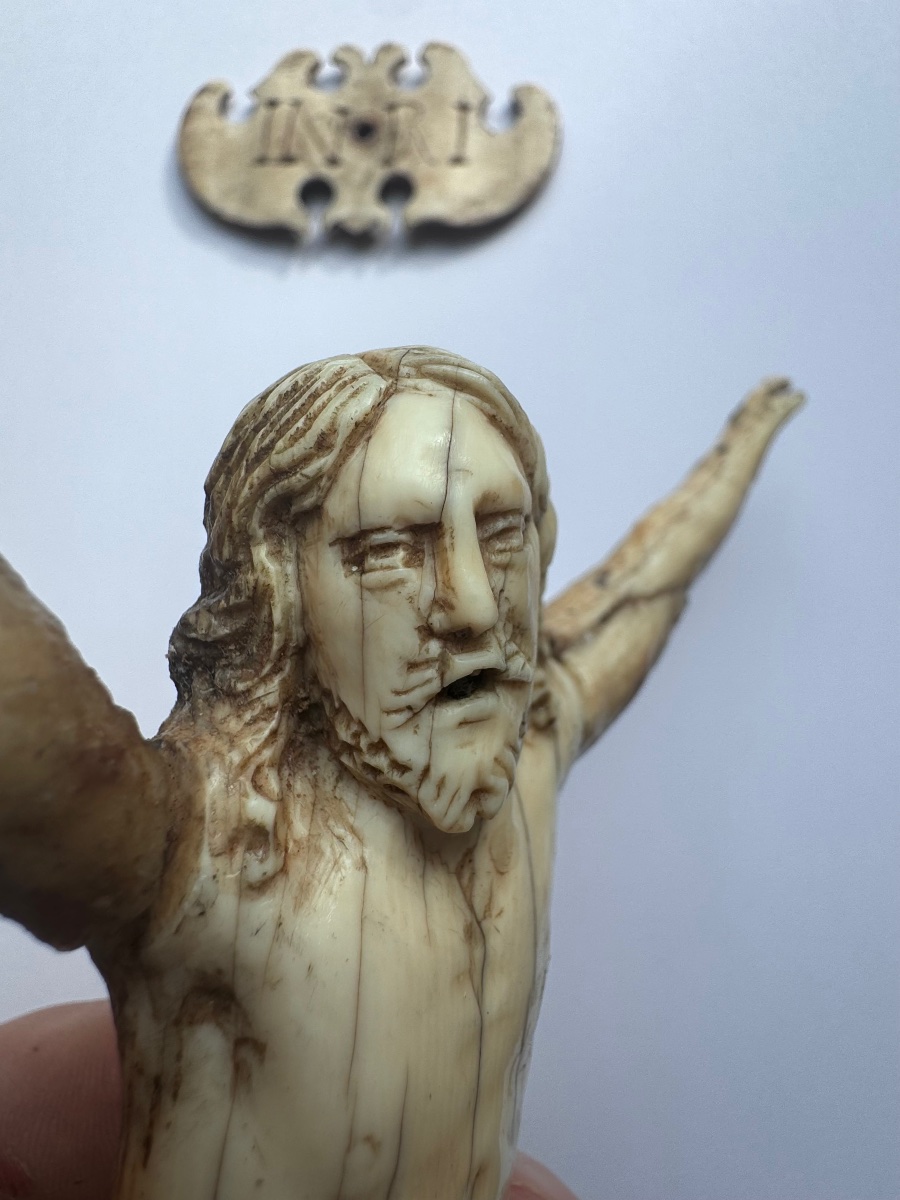
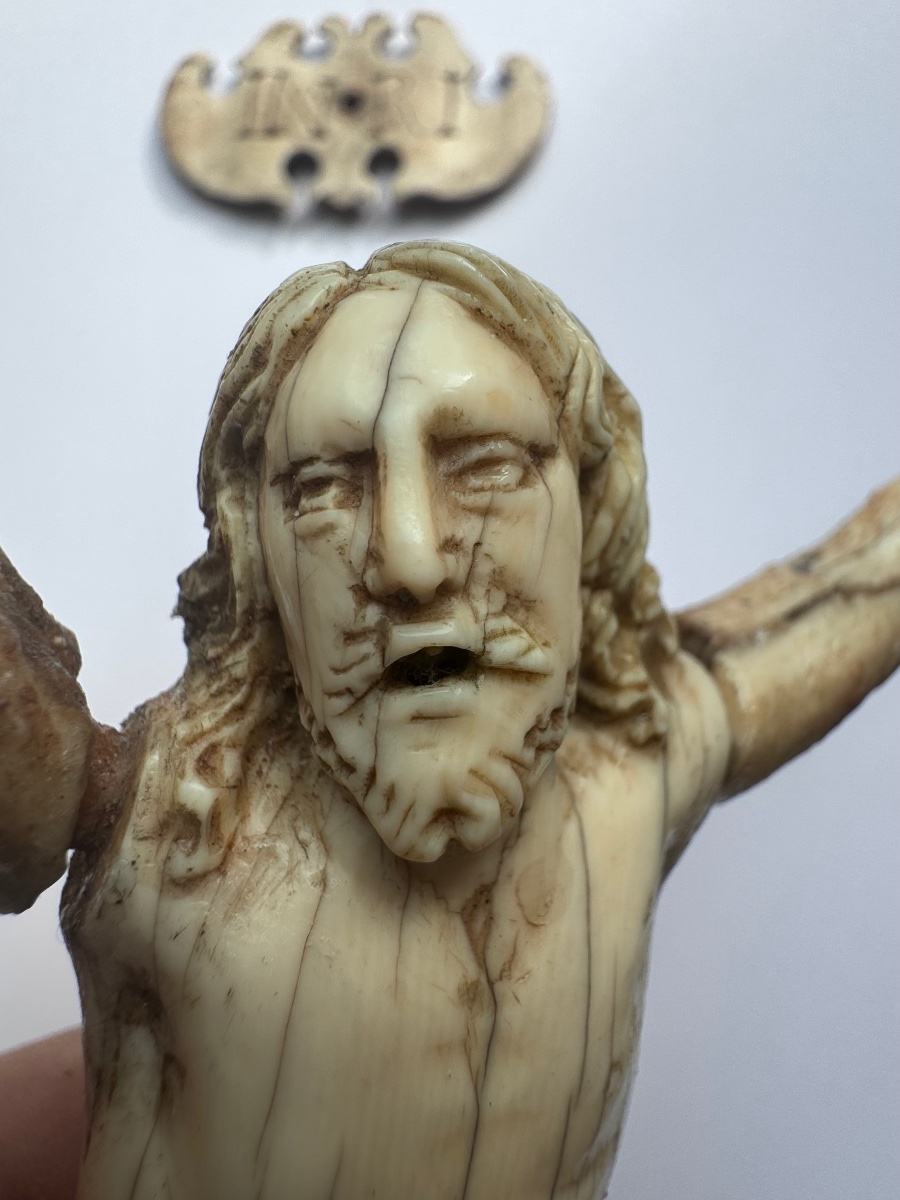
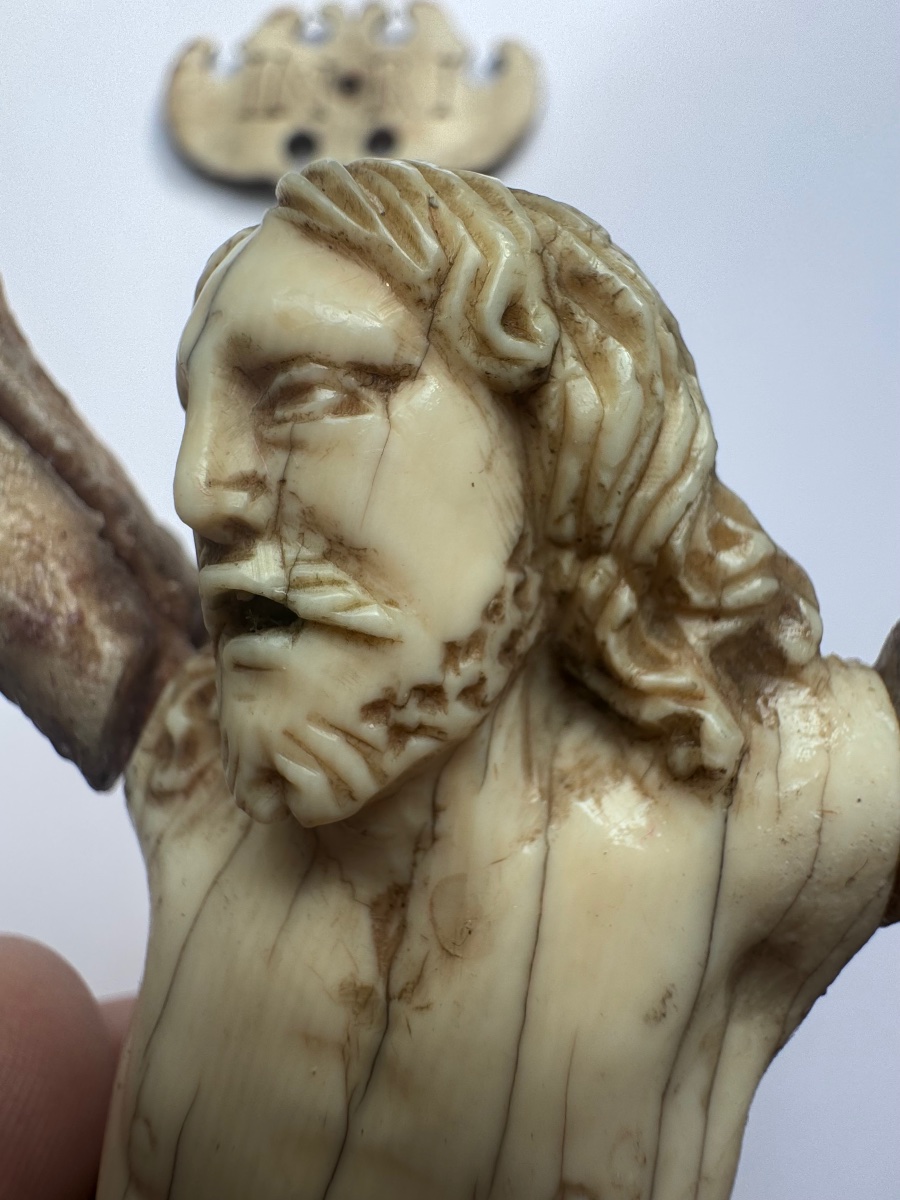
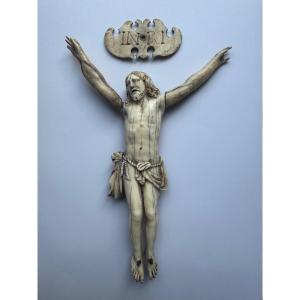
This depiction of Christ exhibits several stylistic characteristics found in Christian ivory carvings produced in Indo-Portuguese workshops: a particularly expressive, elongated face, almond-shaped eyes, a straight and prominent nose, a slightly parted mouth, a finely rendered mustache and beard, and long hair rendered in deeply incised strands.
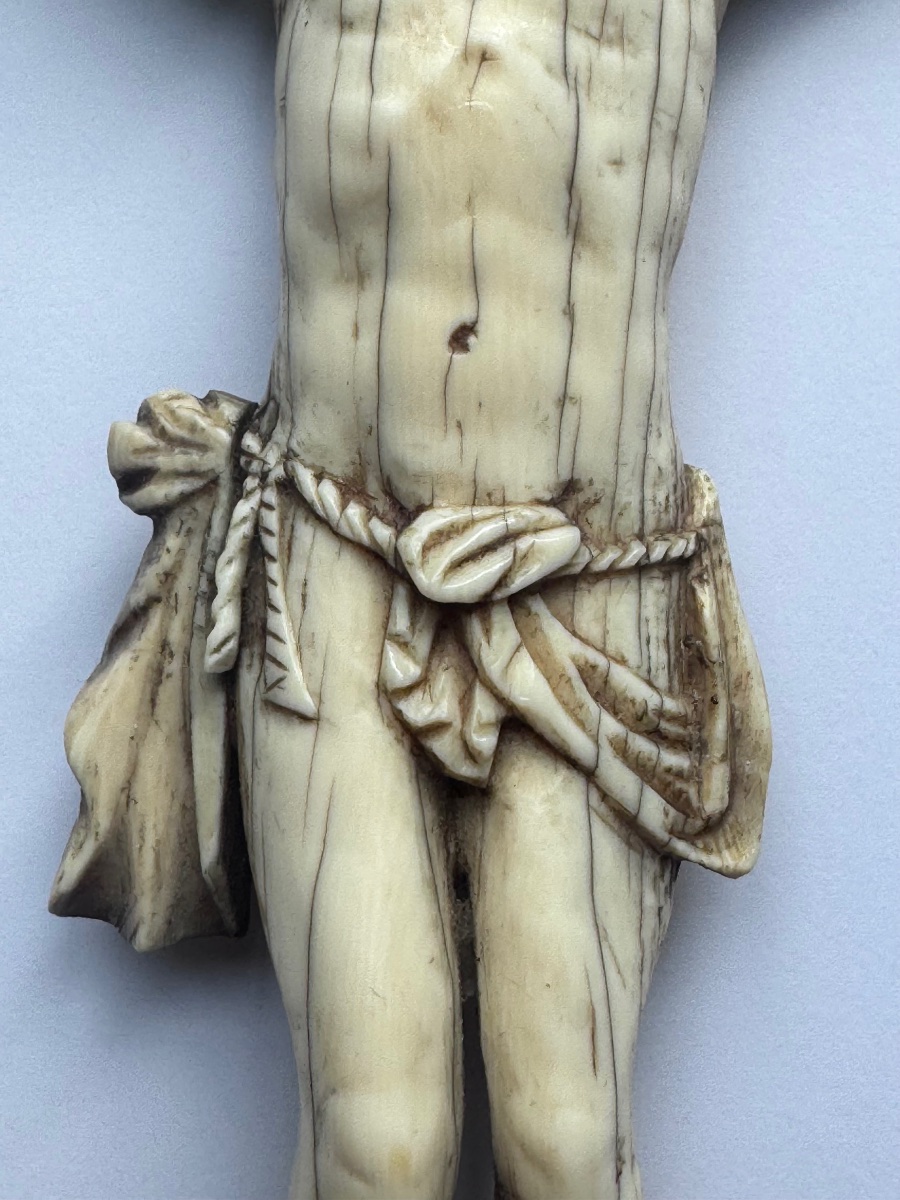
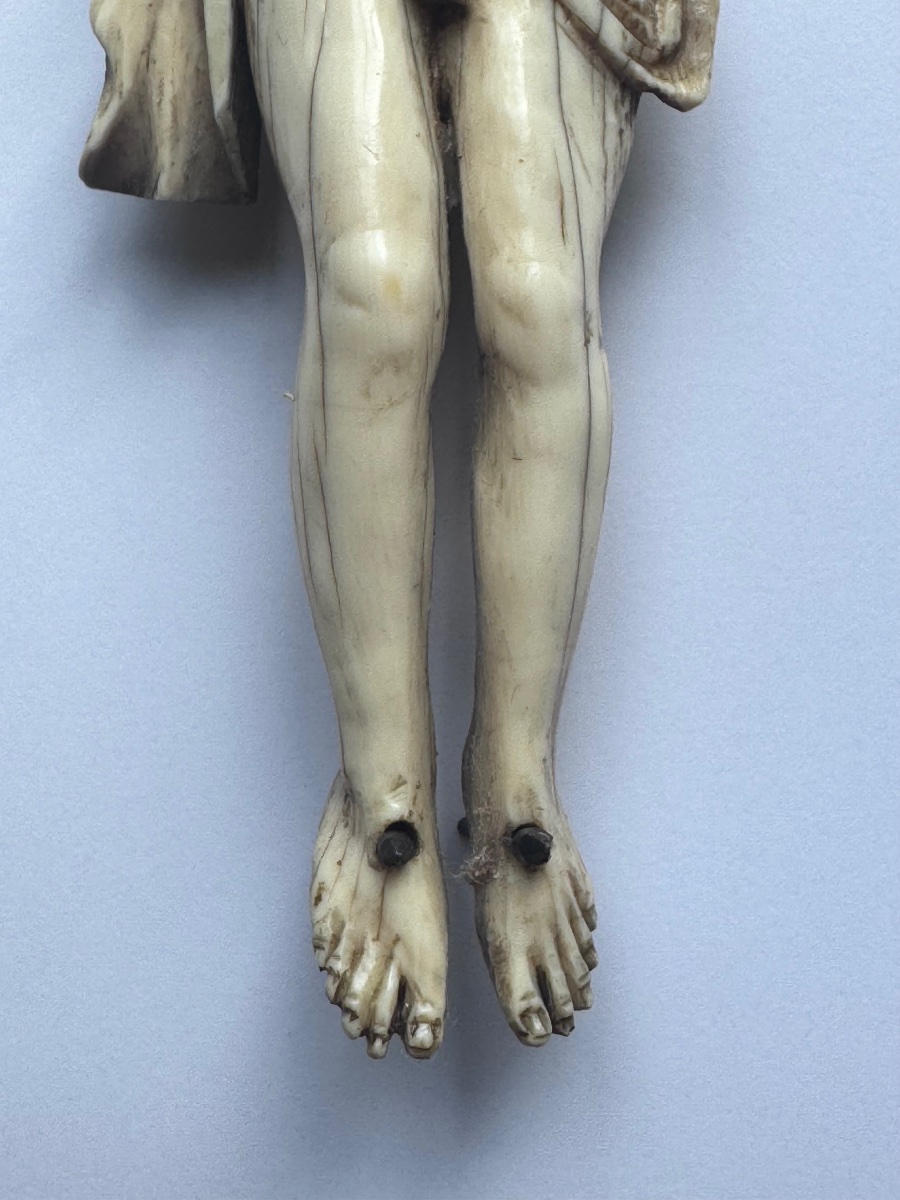
The very slender body features a deliberately stylized anatomy. The arms, raised high, originally framed the cross, which is now missing.
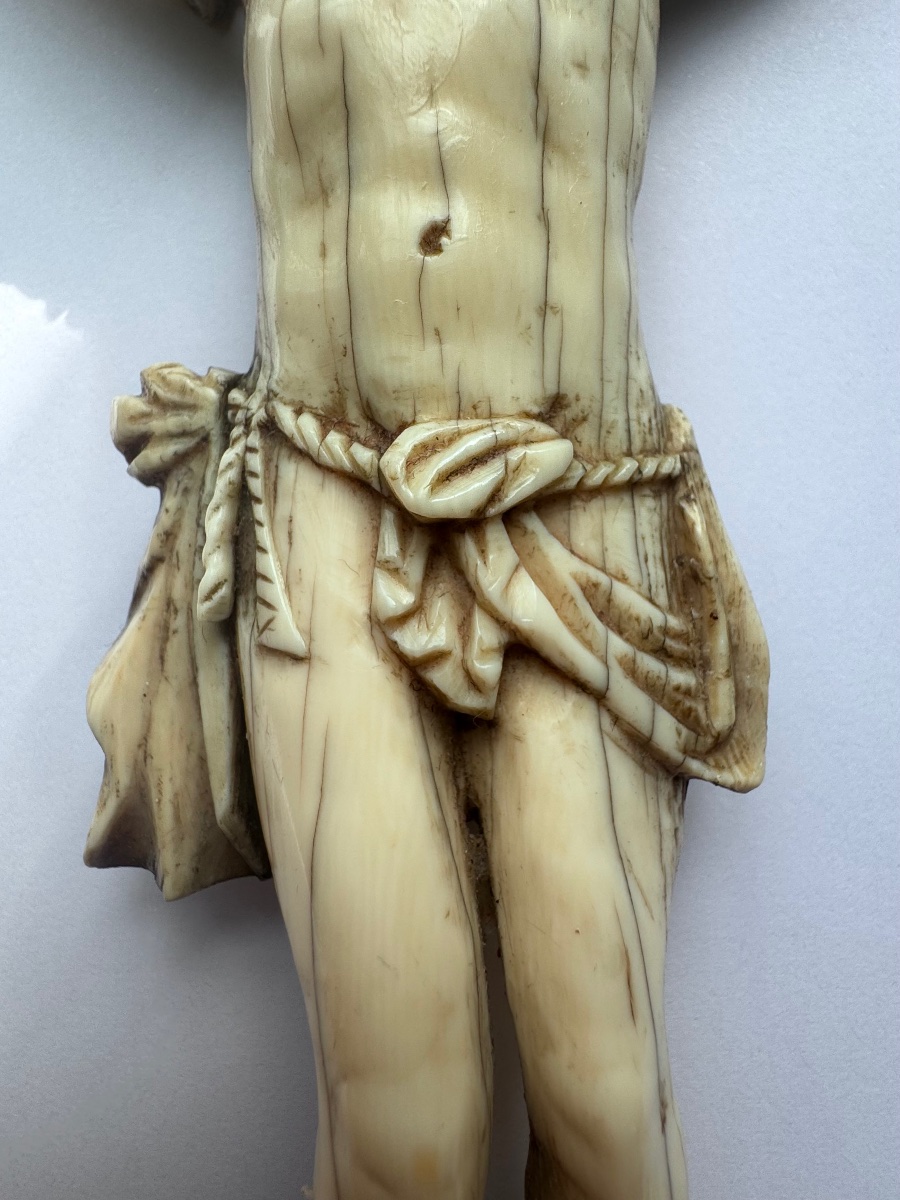
The perizonium is also a remarkable feature of the sculpture. It is held in place around the hips by a twisted cord carved from ivory, forming a prominent central knot, while the panels of fabric fall to the sides in deeply carved folds.
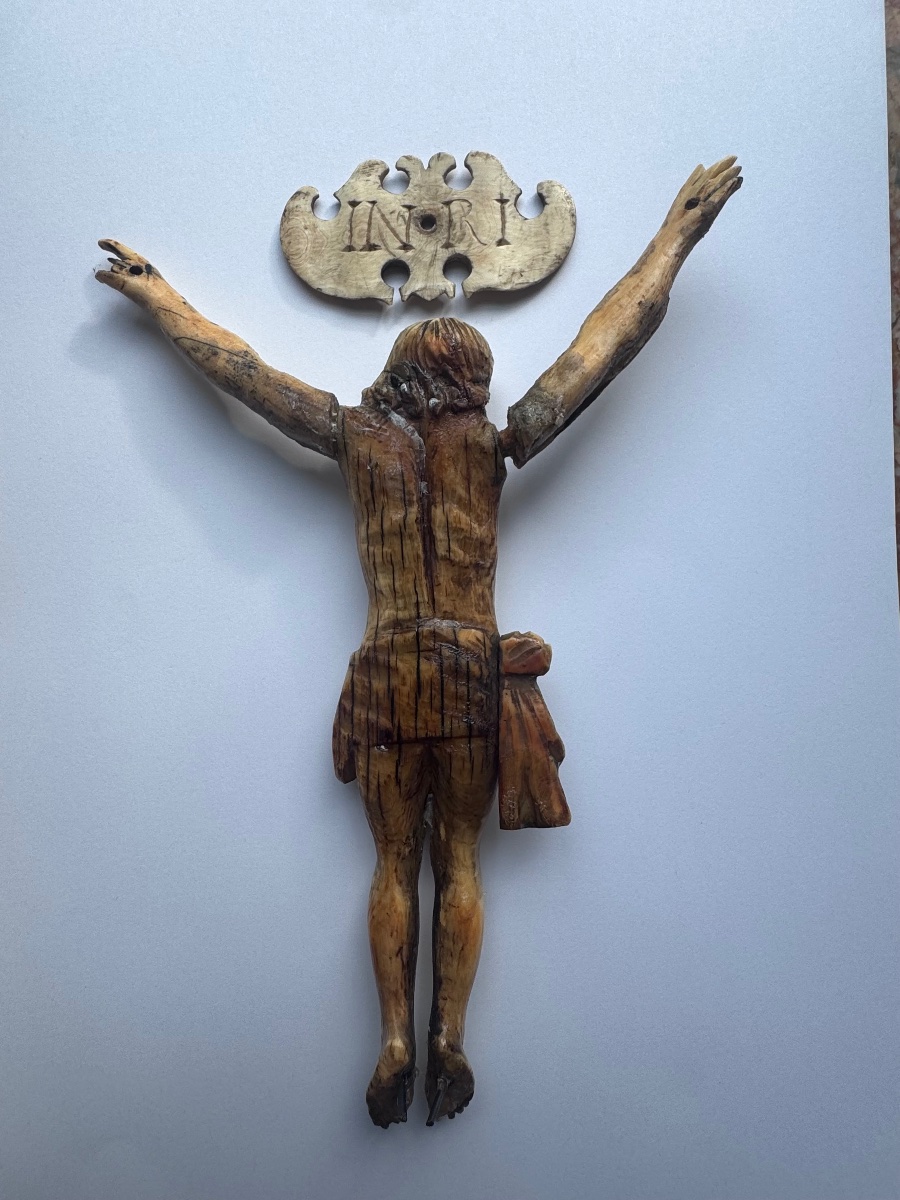
The reverse side reveals the sculpture’s original construction as well as the joints where the arms were attached.
The production of Christian ivory objects flourished particularly in the Portuguese territories of Asia beginning in the 16th century. Goa then became one of the main centers for the production of these devotional objects, intended both for local Christian communities and for export to Europe. Asian sculptors there interpreted Western religious models according to a distinctive aesthetic, now characteristic of Indo-Portuguese art.
Condition:
This sculpture is intentionally presented in its original condition, without recent restoration.
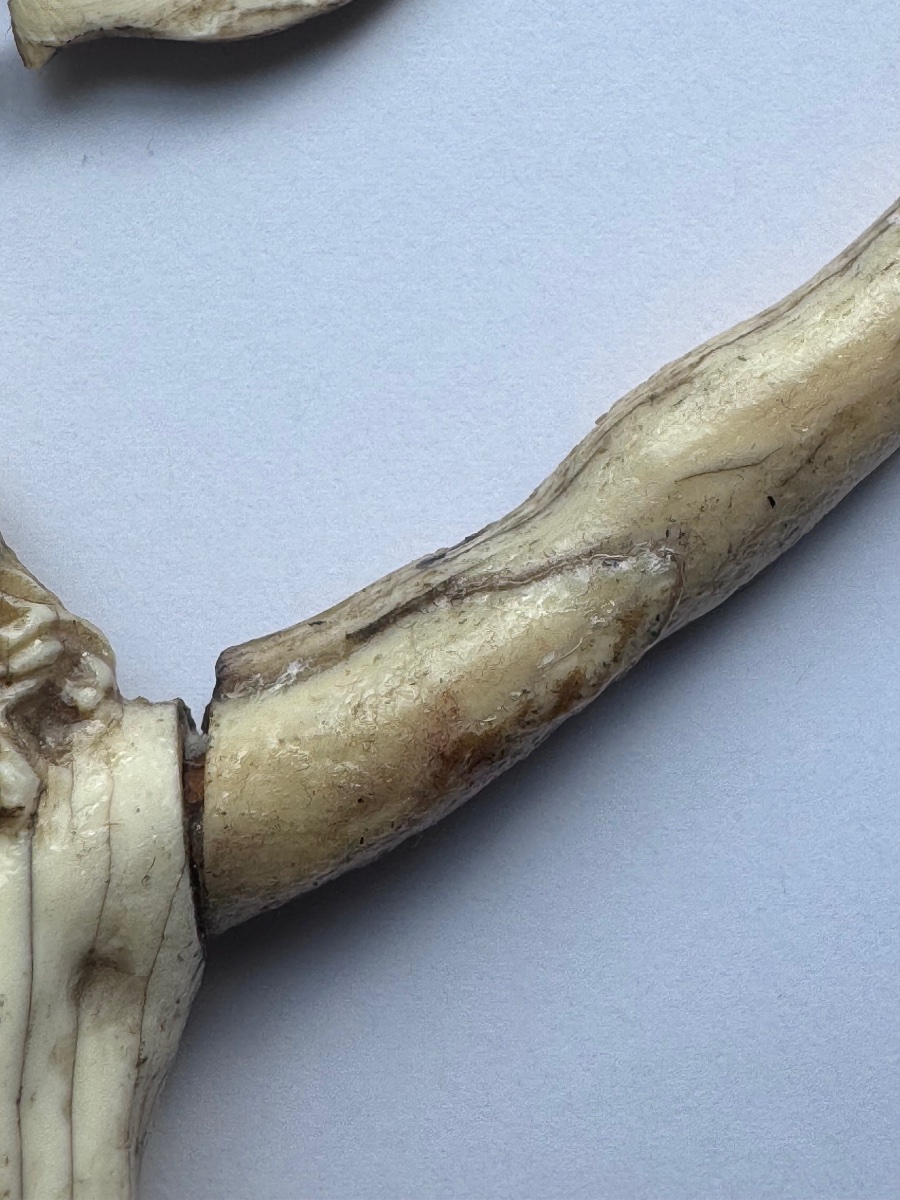
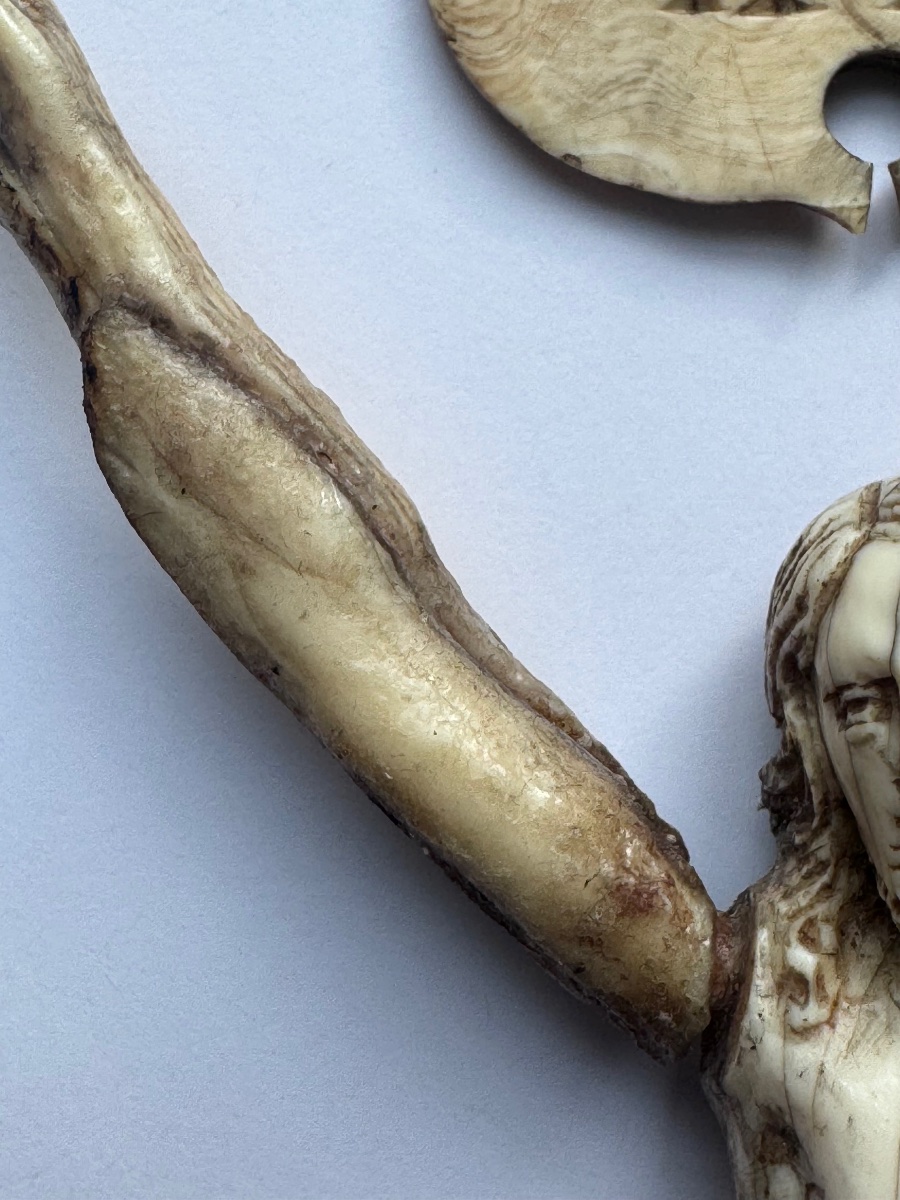
It exhibits old cracks and lifting of the ivory, as well as various traces of previous restorations and repairs.
The arms, in particular, have undergone previous interventions and show traces of glue and repairs at the shoulder joints. Restoration of the arms is recommended to consolidate and neatly repair these joints.
A few chips and missing pieces are also visible on the fingers.
The original cross is no longer present.
The piece is sold strictly in its current condition, which is clearly visible in the numerous detailed photographs accompanying this listing.
The piece comes from a prestigious collection and has been deliberately preserved in this condition, without any further intervention. It may thus be acquired as-is by a collector, a connoisseur of Indo-Portuguese art, or an institution wishing to decide for itself the extent and approach of any restoration to be undertaken.
Despite these historical damages, the sculpture retains a remarkable presence, particularly due to the quality and expression of the face, the rendering of the hair, and the particularly distinctive carving of the perizonium.
Indo-Portuguese work, probably from Goa.
Late 16th–early 17th century.
Total height, arms raised: 21 cm.
Sold as is, with previous restorations, damage, cracks, lifting, traces of glue, and missing sections visible in the photographs.
Period: 16th century
Style: Renaissance, Louis 13th
Condition: Condition of use
Material: Ivory
Reference (ID): 1844860
Availability: In stock