

Oil On Panel – Virgin And Child In A Landscape – French School – High Middle Ages
Late 16th century
French School – Regional production, outside the major artistic centres
Provenance: Former private collection in the Puy-de-Dôme department, from a family originally from the Bourbonnais region, France.
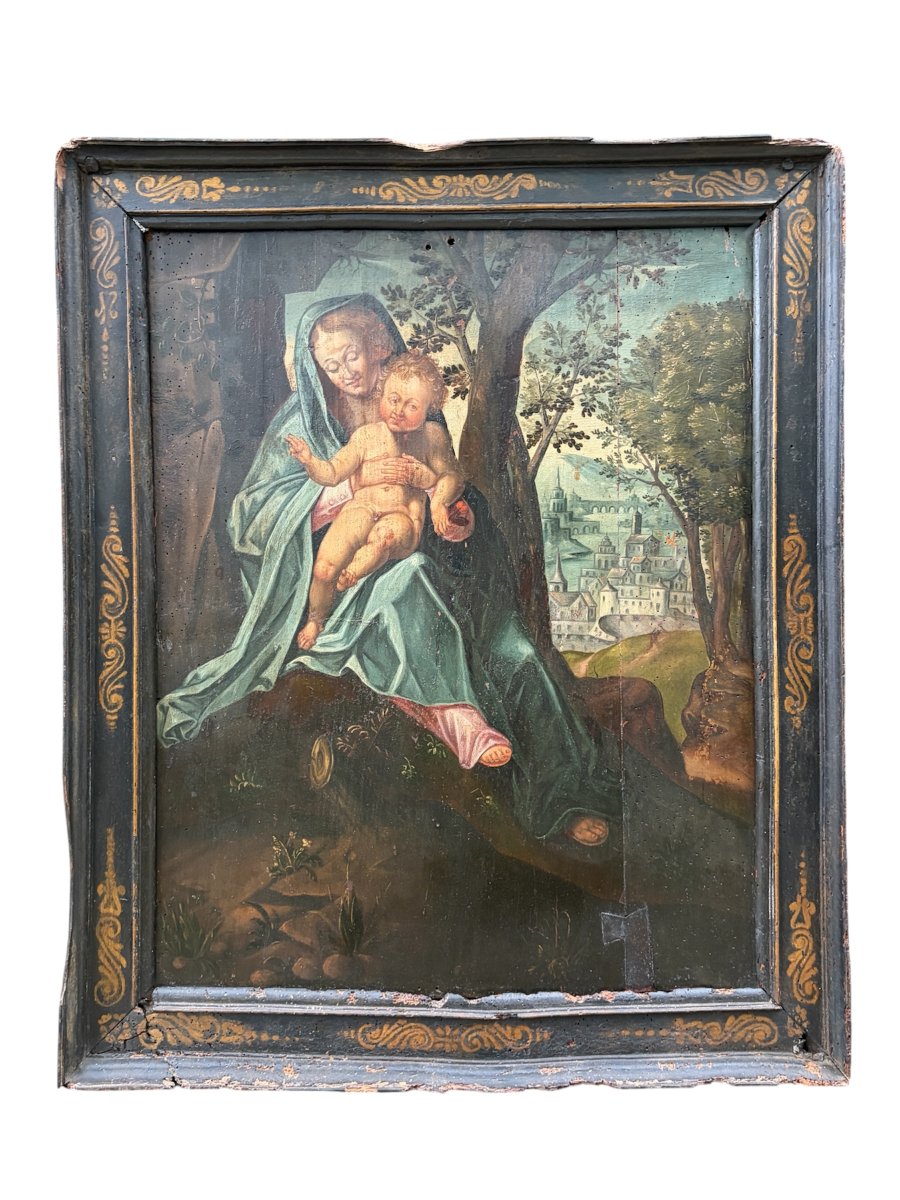
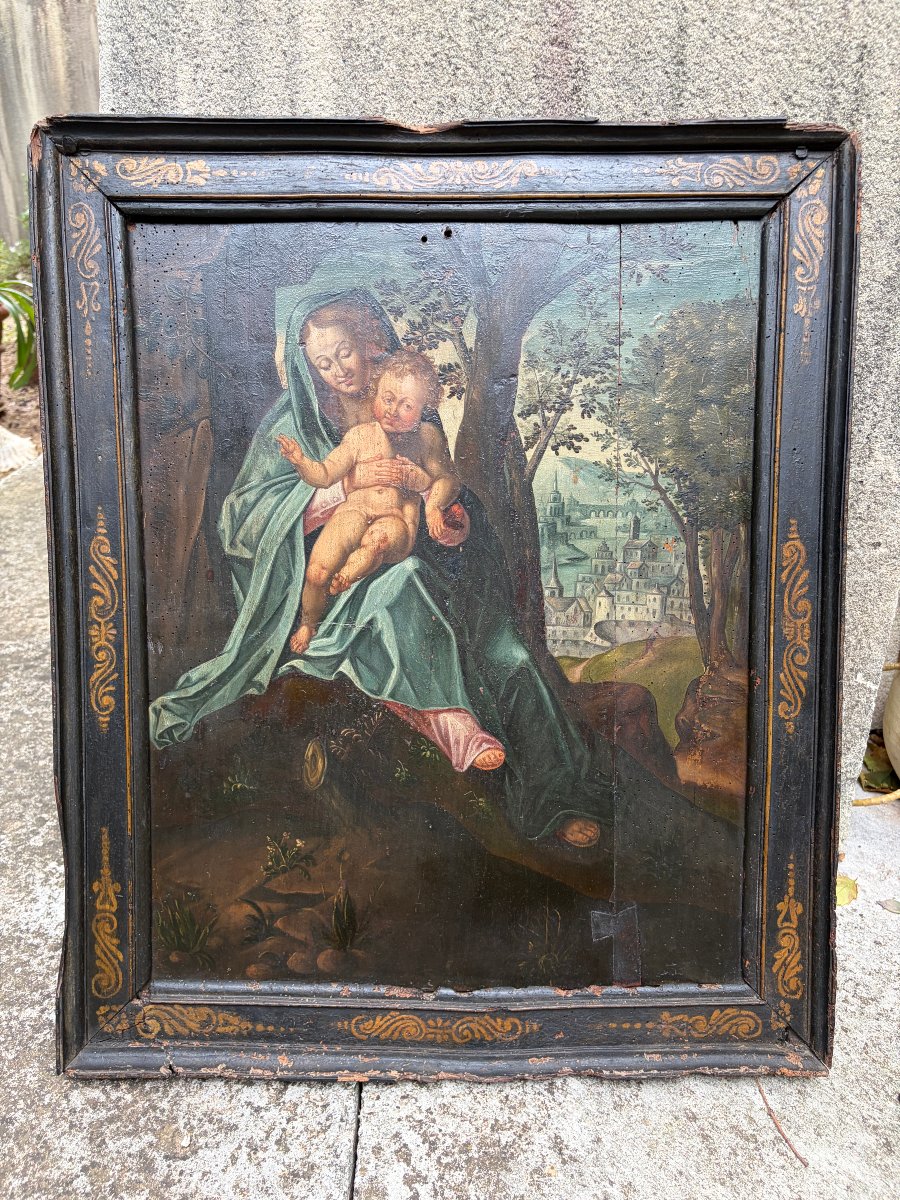
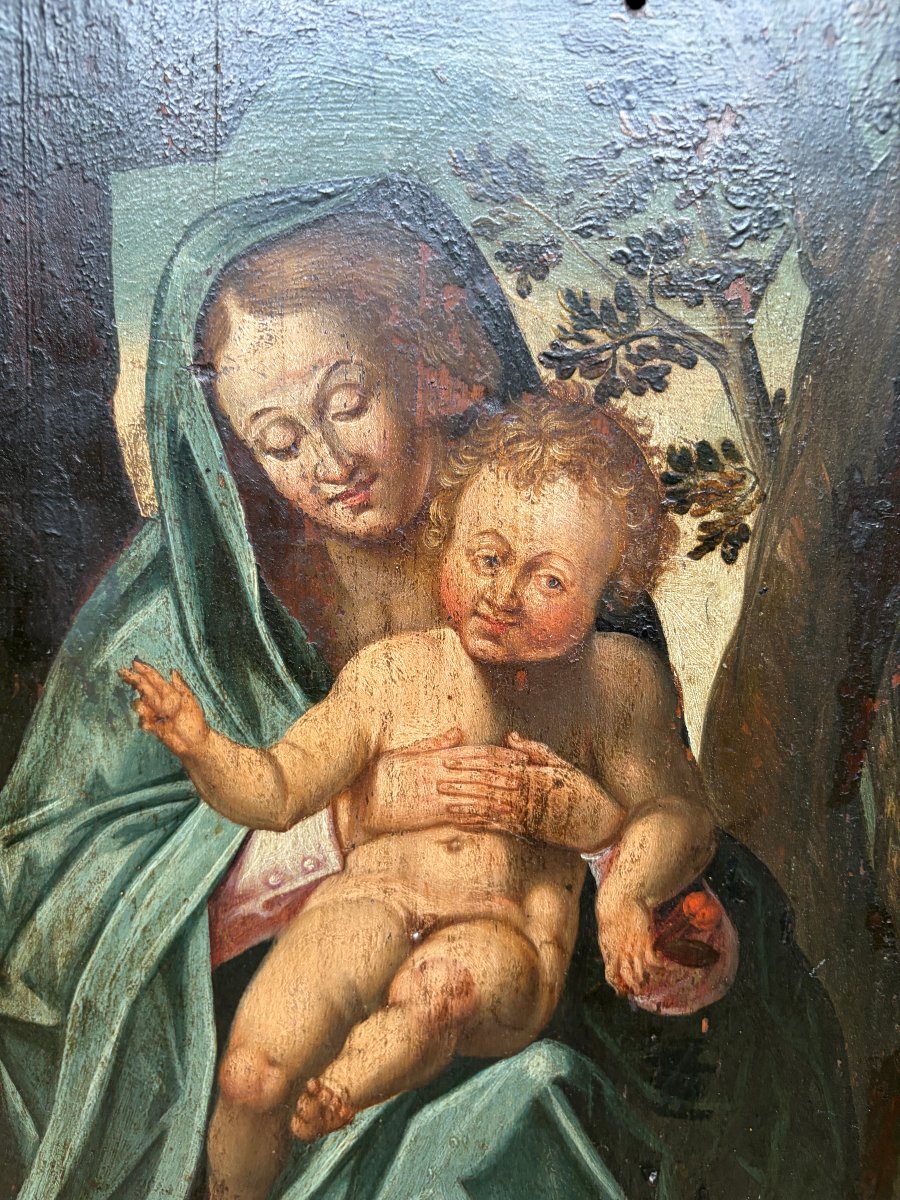
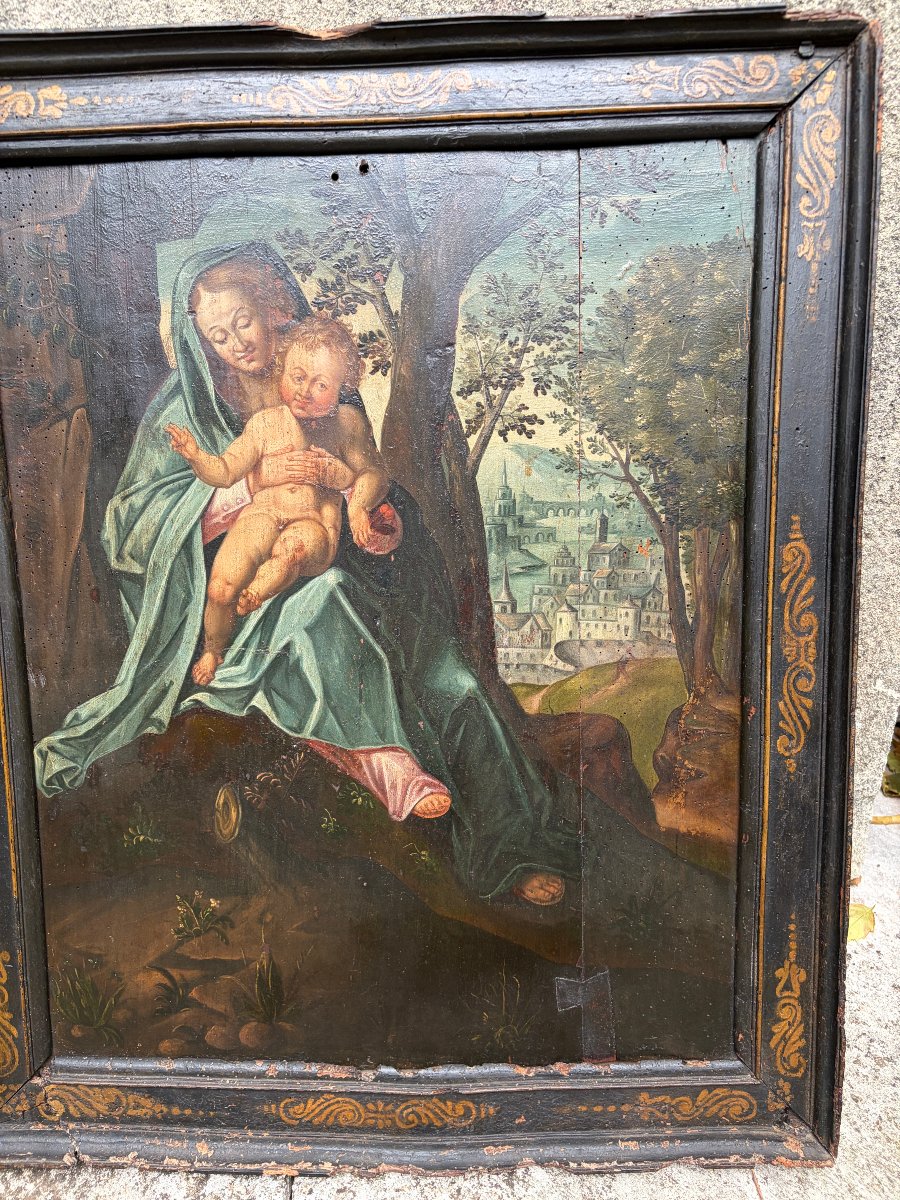
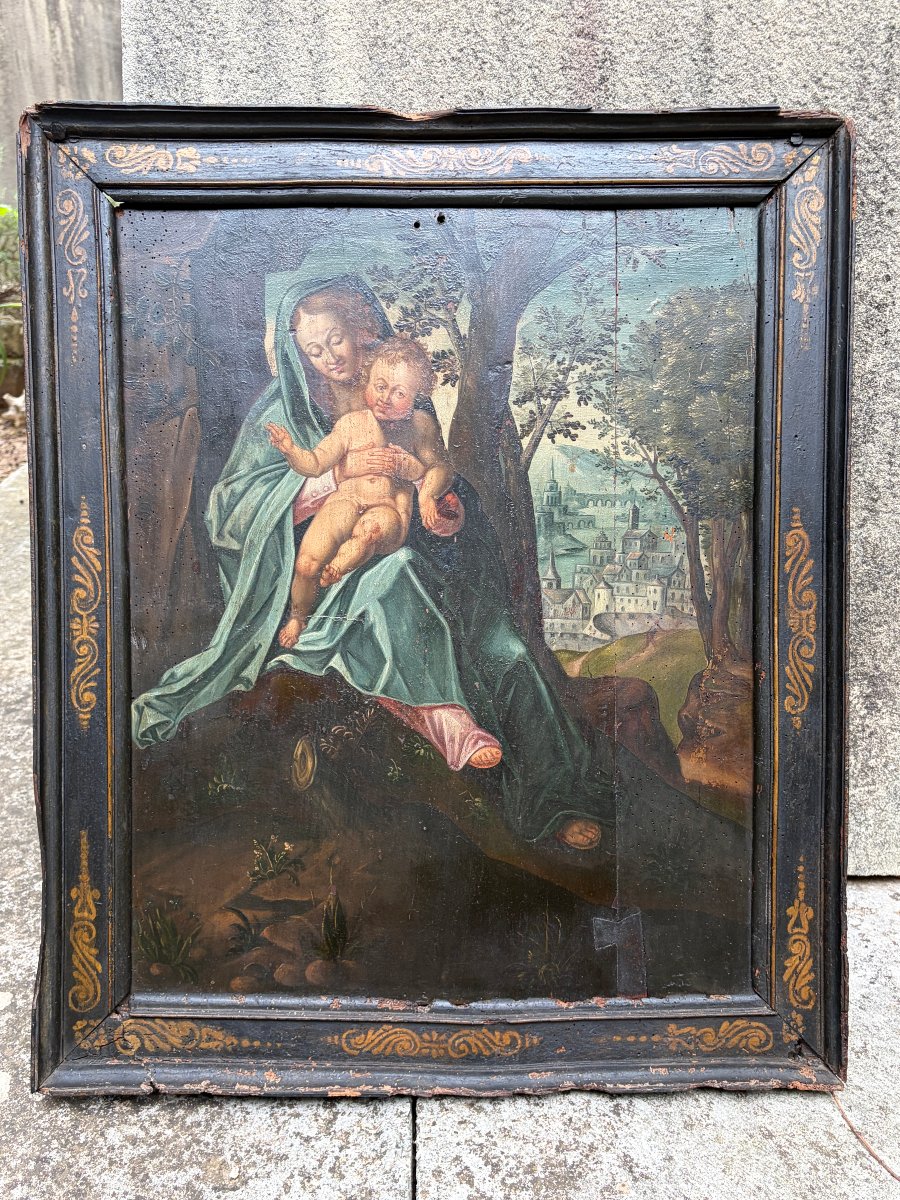
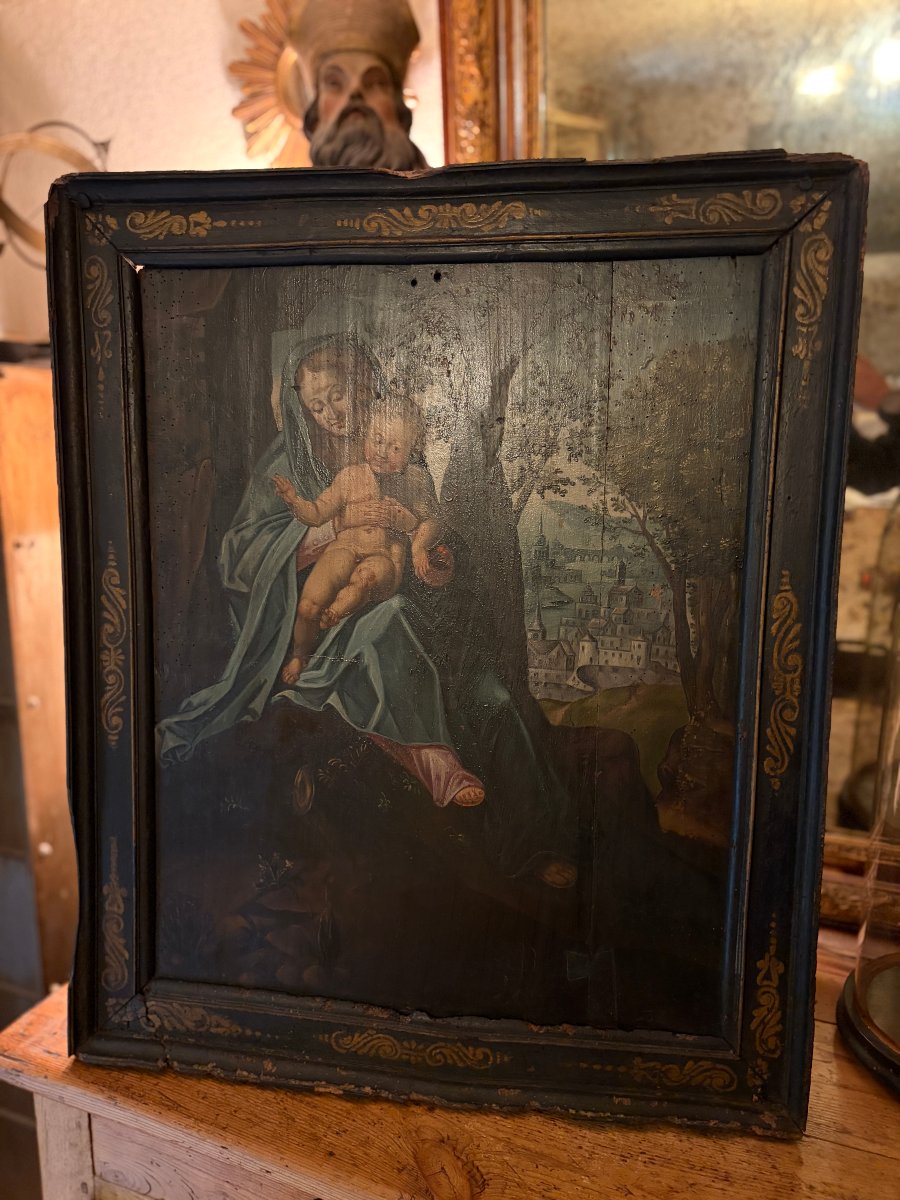
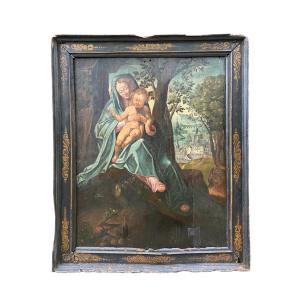
A highly interesting and distinctive oil painting on wooden panel depicting the Virgin and Child within an extensive architectural landscape, attributable to a regional French production of the late 16th century, possibly originating from an Auvergne workshop situated outside the major artistic centres of the Renaissance.
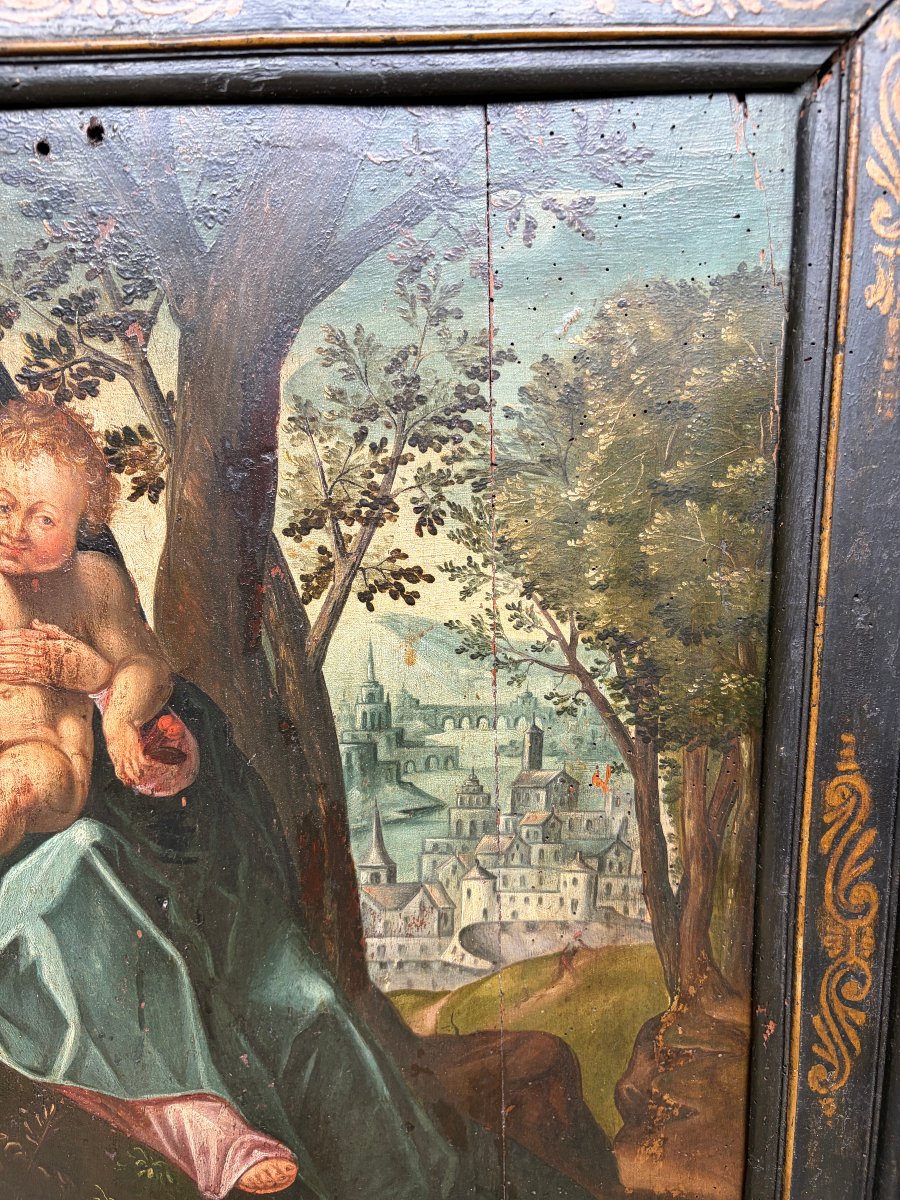
This devotional painting presents a particularly original composition in which the Virgin and Child, deliberately positioned off-centre, occupy a setting dominated by an expansive landscape combining abundant vegetation, rocky formations and a substantial fortified city in the background.
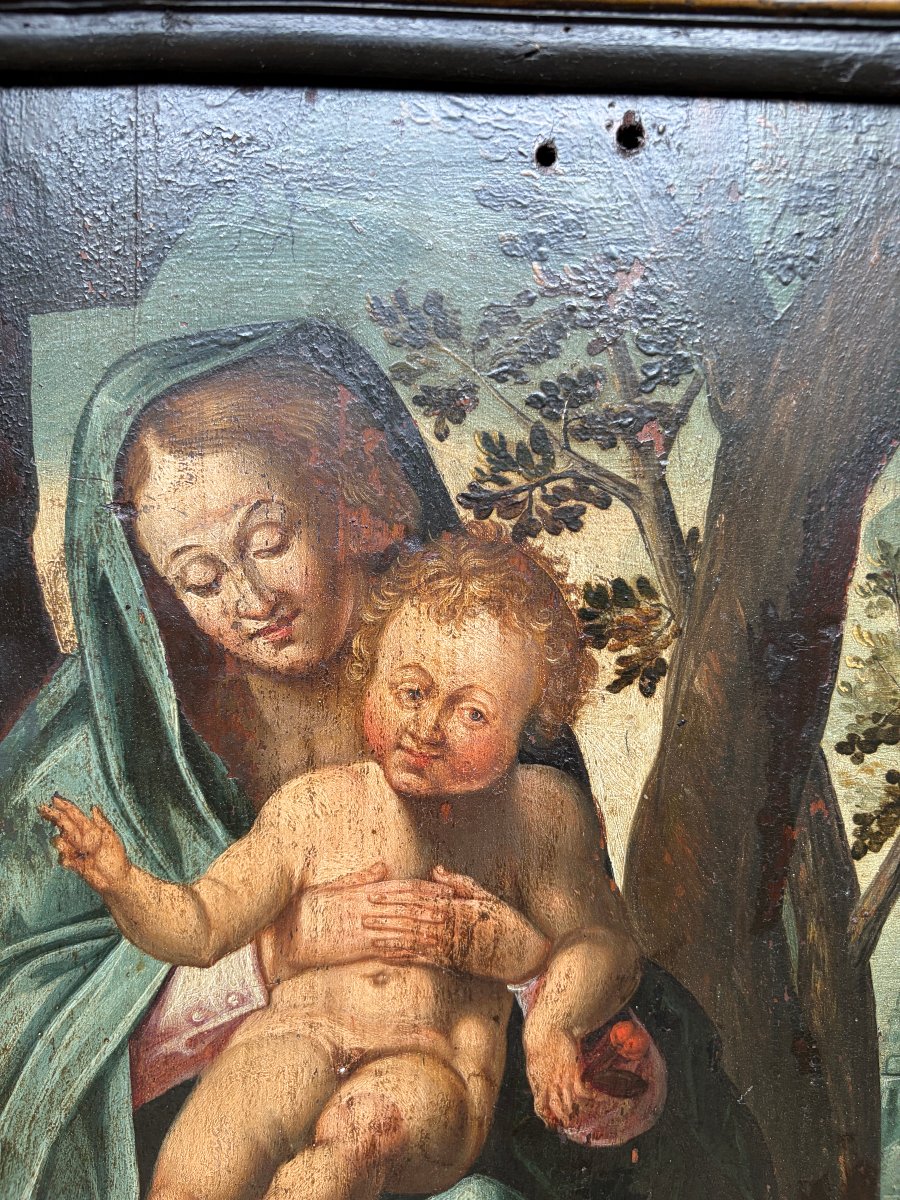
The Virgin, seated and dressed in a red gown beneath a voluminous blue-green mantle, has a gently inclined face, with delicate features and a contemplative expression. Resting upon her lap is the Christ Child, depicted nude, with a rounded face and rosy cheeks, holding a small red fruit, most probably an apple, symbolising Original Sin and prefiguring the Redemption.
The composition as a whole reveals a remarkably free interpretation of Renaissance iconographic models, whose fundamental principles the painter appears to have adopted while developing a distinctly personal pictorial language.
The rendering of flesh tones, the unusual proportions of the Christ Child, the construction of the drapery and the almost narrative treatment of the landscape display characteristics suggestive of a regional artistic production, removed from the academic conventions of the principal artistic centres.
Far from diminishing the significance of the work, this freedom of execution lends it a genuine individuality, situated at the intersection of established religious painting and popular artistic expression.
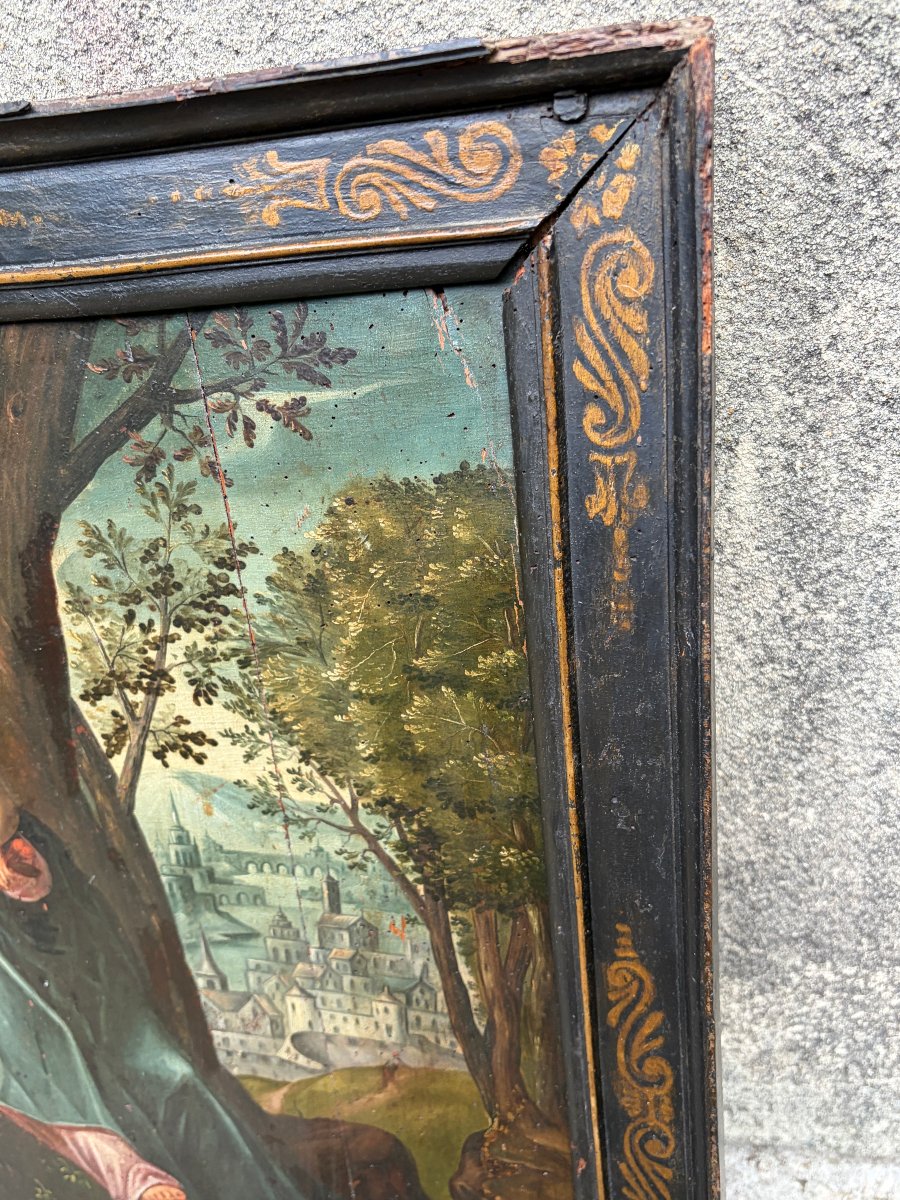
The prominence given to the landscape is also one of the most remarkable features of the composition. The fortified city, with its towers and varied architectural structures, may evoke an idealised representation of Jerusalem, following an iconographic tradition widely disseminated in Renaissance religious painting.
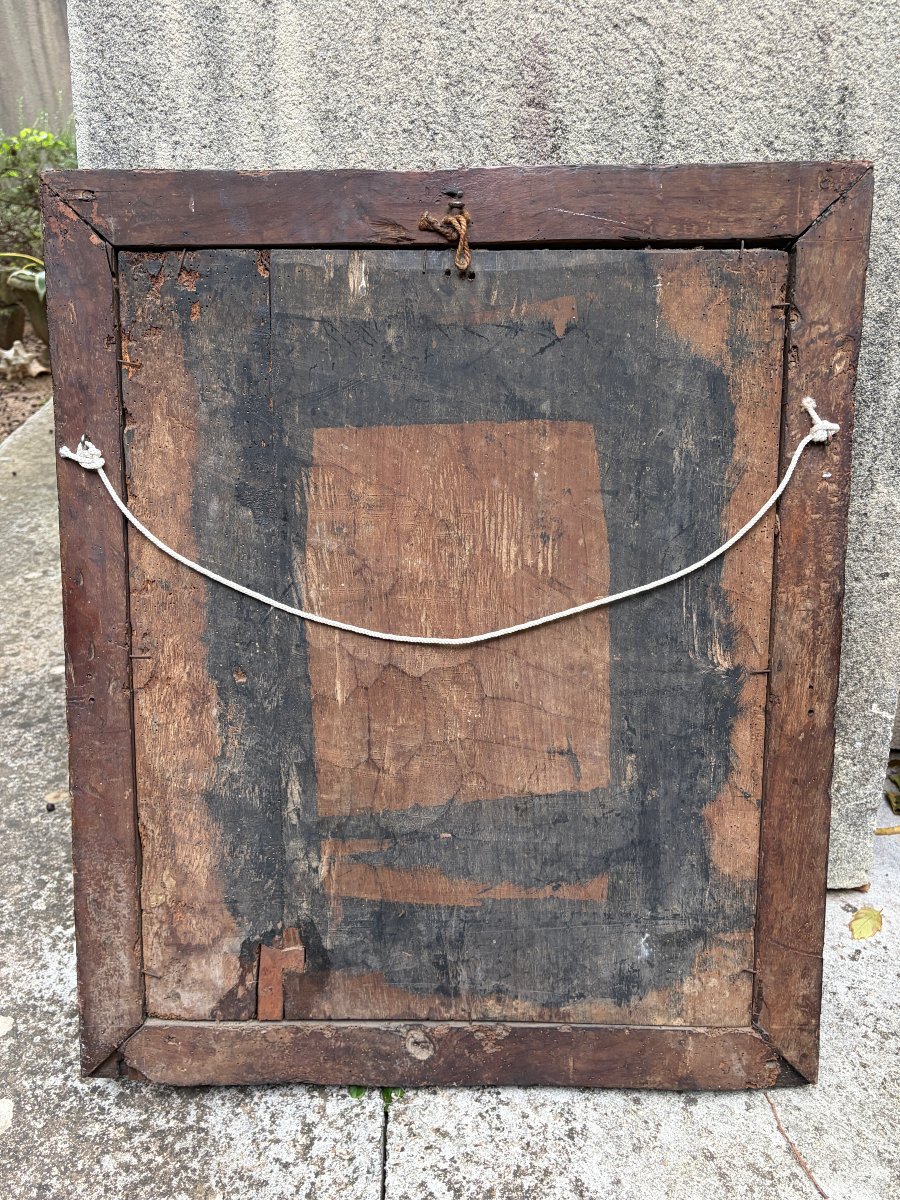
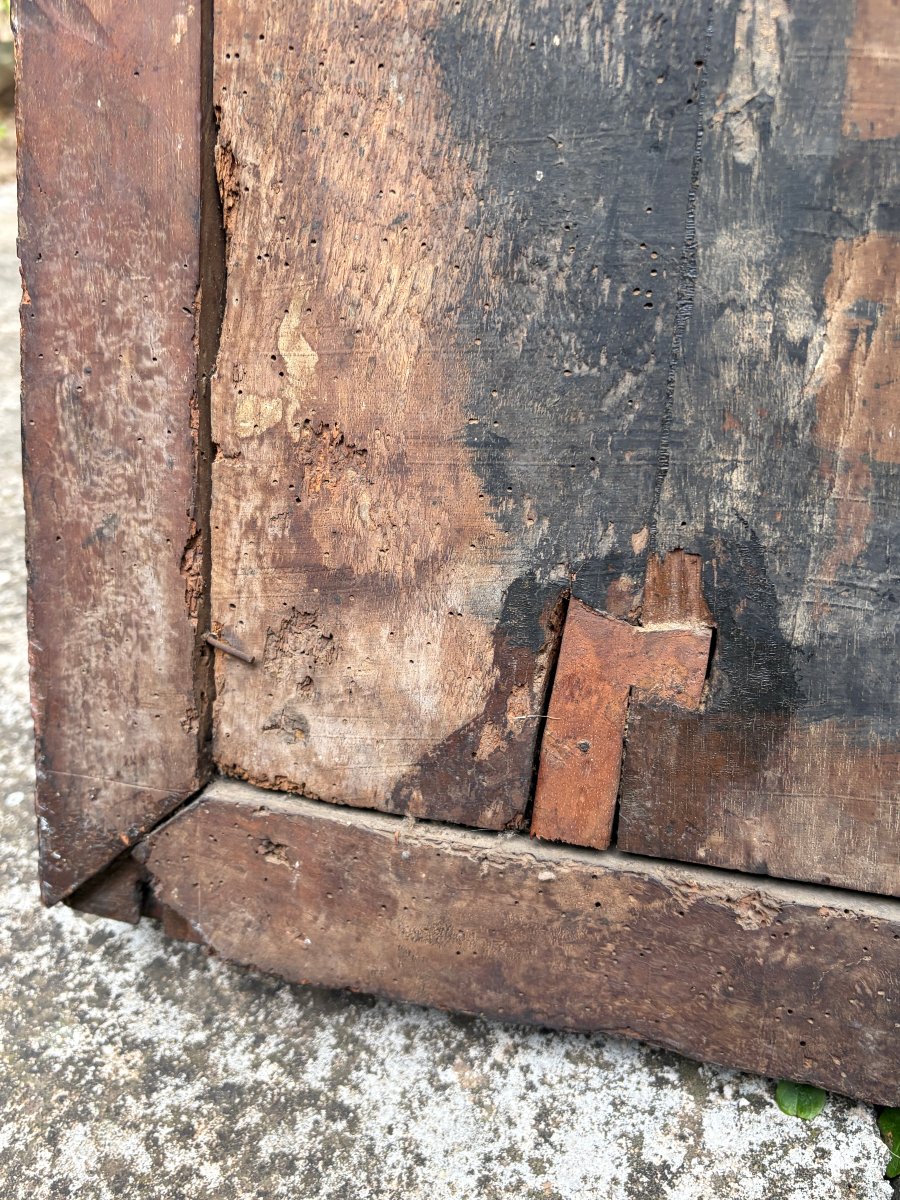
The painting is executed on a single-piece wooden panel, the reverse of which retains traces of its original preparation and working. An old split in the support has been reinforced by an additional piece of wood attached to the lower section of the reverse.
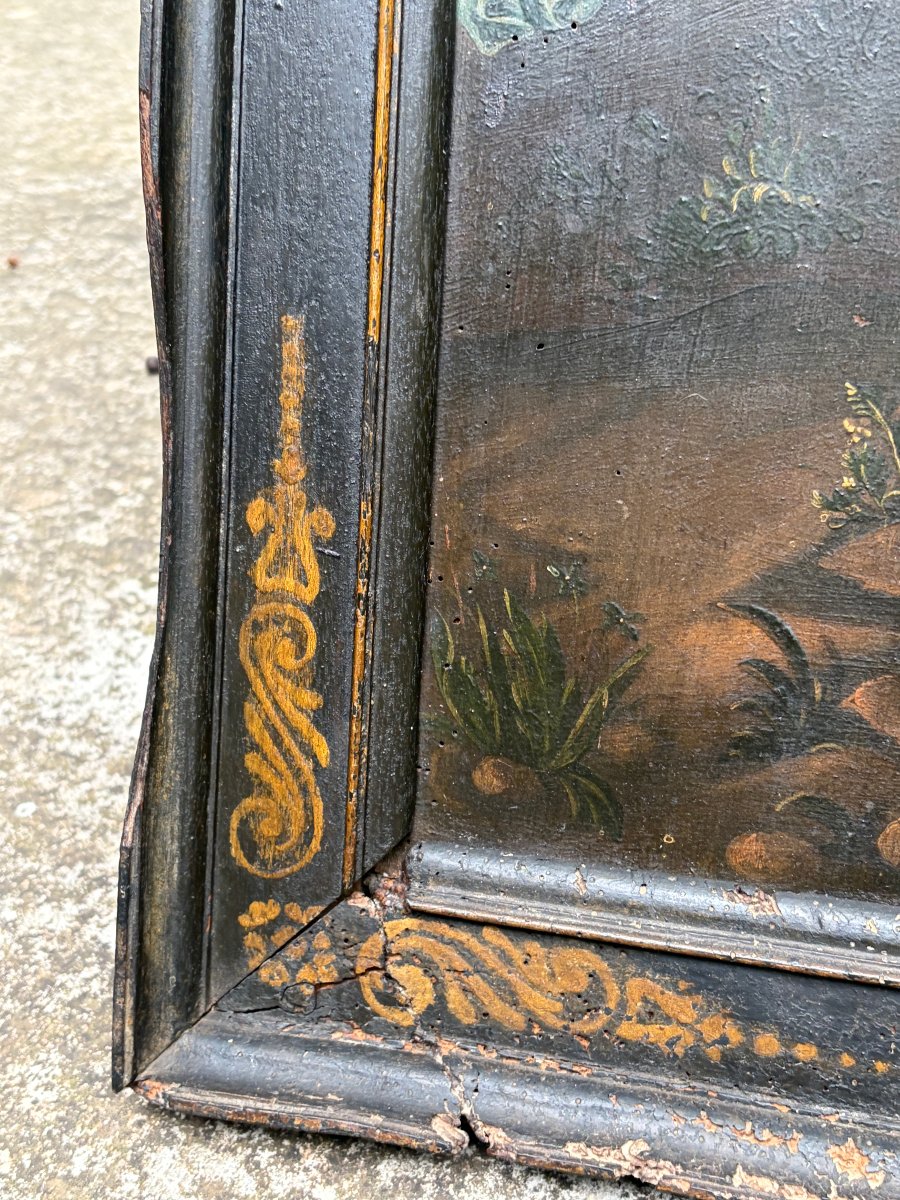
The work is presented in an antique moulded wooden frame, painted black and embellished with gilded vegetal ornamentation, particularly harmonious with the character of the painting.
This regional provenance, combined with the stylistic particularities of the work, suggests a French provincial production, possibly from Auvergne, dating from the late 16th or early 17th century.
A particularly appealing example of regional French religious painting from the early modern period, distinguished by its unusual composition, stylistic freedom and profoundly devotional character.
Documentary References and Comparisons1. Virgin and Child with Saint John the Baptist – Burgundy, 1531
Musée du Pays Châtillonnais, Châtillon-sur-Seine, Côte-d’Or, France.
Oil on oak panel, 62 × 49 cm.
This Burgundian painting from the first half of the 16th century presents a religious composition set within an extensive landscape, notably featuring a fortified city traditionally interpreted as a possible evocation of Jerusalem.
Its dimensions, particularly close to those of the present panel, together with the importance given to the architectural landscape, provide interesting points of comparison for examining the persistence of Renaissance pictorial models within regional French artistic production.
Reference: French Ministry of Culture, Palissy Database, record PM21000561.
2. The Mystic Marriage of Saint Catherine of Alexandria – French School, Mid-17th Century
Church of the Assumption, Rozoy-sur-Serre, Aisne, France.
Oil on canvas.
This work, studied by Xavier-Philippe Guiochon as part of the General Inventory of Cultural Heritage, is considered a probably original creation by a provincial French painter of the 17th century.
The study notably highlights the persistence of archaic stylistic features, certain anatomical peculiarities and a relatively mechanical treatment of the drapery, combined with genuine inventiveness in the organisation of the composition.
This painting offers an interesting parallel for understanding the stylistic and iconographic liberties adopted by certain regional French workshops, independently of the major centres of artistic production.
Reference: French Ministry of Culture, General Inventory of Cultural Heritage, record IM02002409.
These comparisons, primarily iconographic and methodological in nature, do not constitute direct attributions. Nevertheless, they help situate the present Virgin and Child within the broader context of French regional pictorial traditions, characterised by the transmission and reinterpretation of Renaissance models.
Condition and DimensionsCondition: Good overall state of preservation considering the age of the work. An old split in the wooden panel has been reinforced on the reverse with an additional piece of wood. A few minor areas of paint loss and localised lifting of the paint layer, currently stabilised. Surface wear and accumulated age-related grime; light cleaning has been carried out. The painting is preserved in its present state of presentation.
Dimensions:
- Painting: 63 × 51 cm.
- Including frame: 74 × 62 cm.
Shipping: ALL SHIPMENTS ARE CARRIED OUT EXCLUSIVELY VIA DHL EXPRESS (QUOTATION UPON REQUEST).
Period: 16th century
Style: Renaissance, Louis 13th
Condition: En l'etat
Material: Oil painting on wood
Reference (ID): 1842605
Availability: In stock