



Tommaso Realfonzo, Known As Masillo (1677–1743) Still Lifes Of Fruit And Flowers Outdoors
Tommaso Realfonzo, known as Masillo (Naples, c. 1677 – 1743)
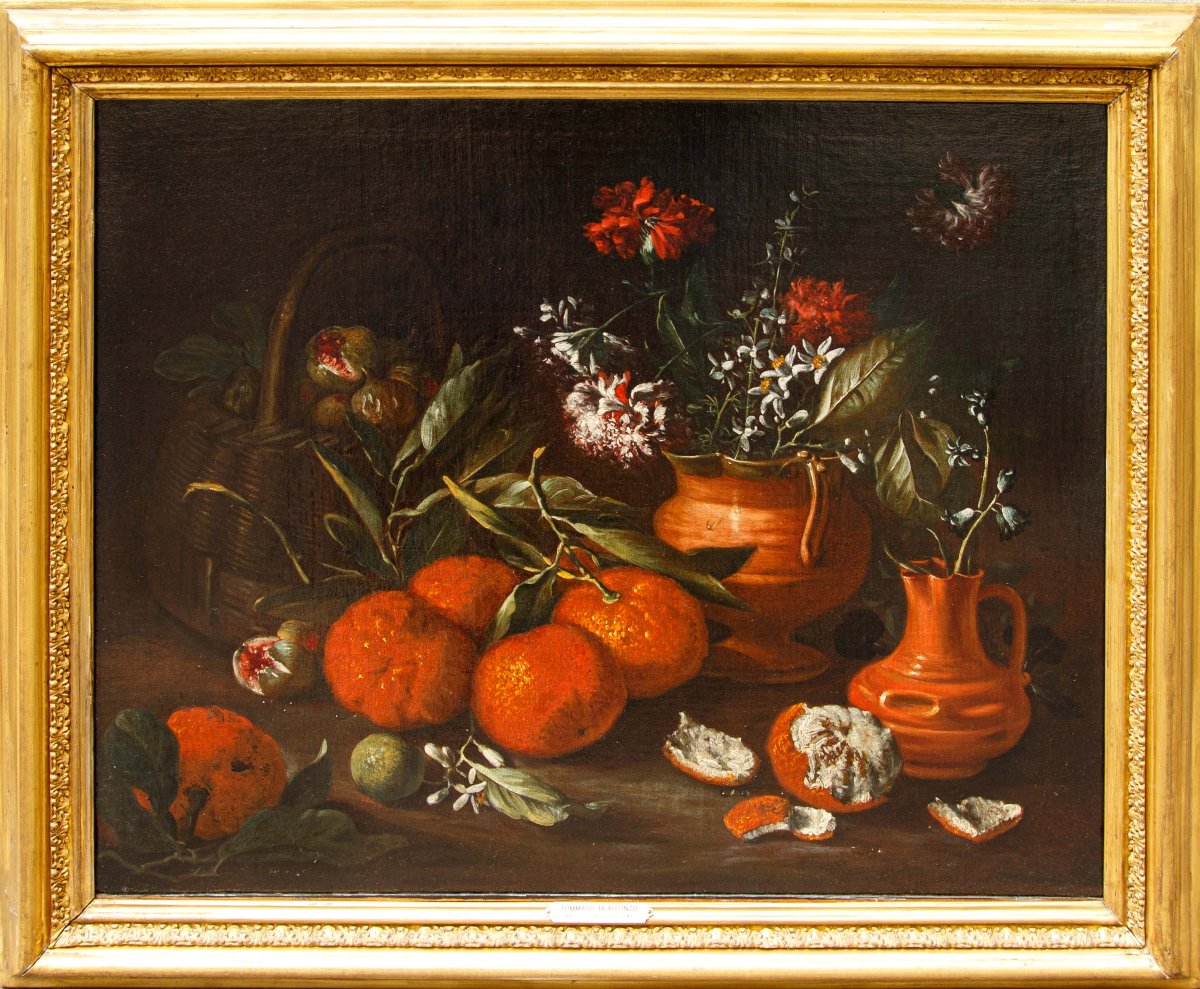
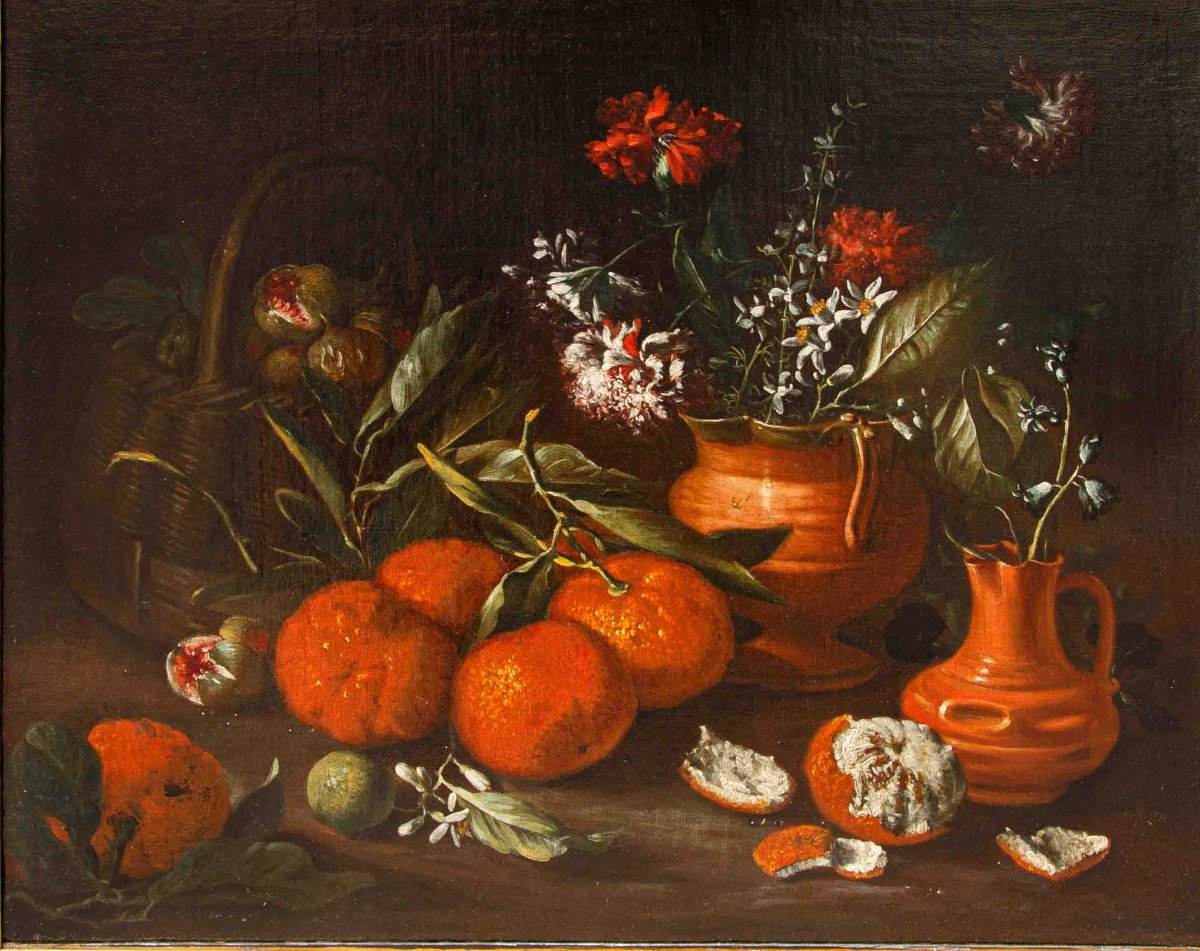
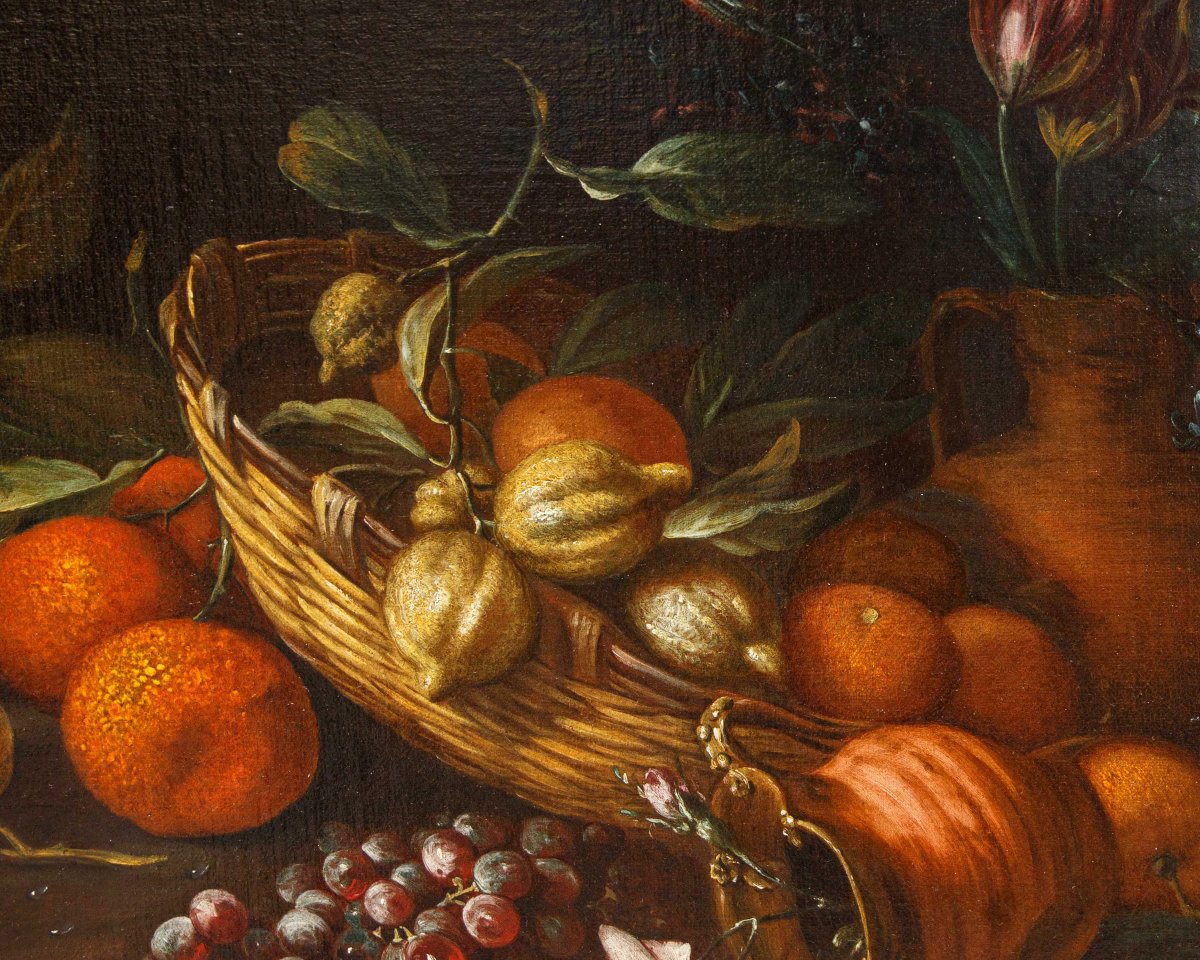
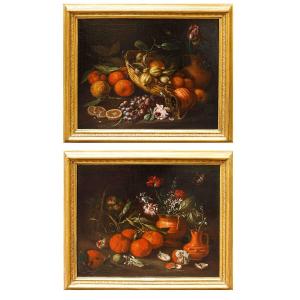
Still lifes of fruit and flowers outdoors
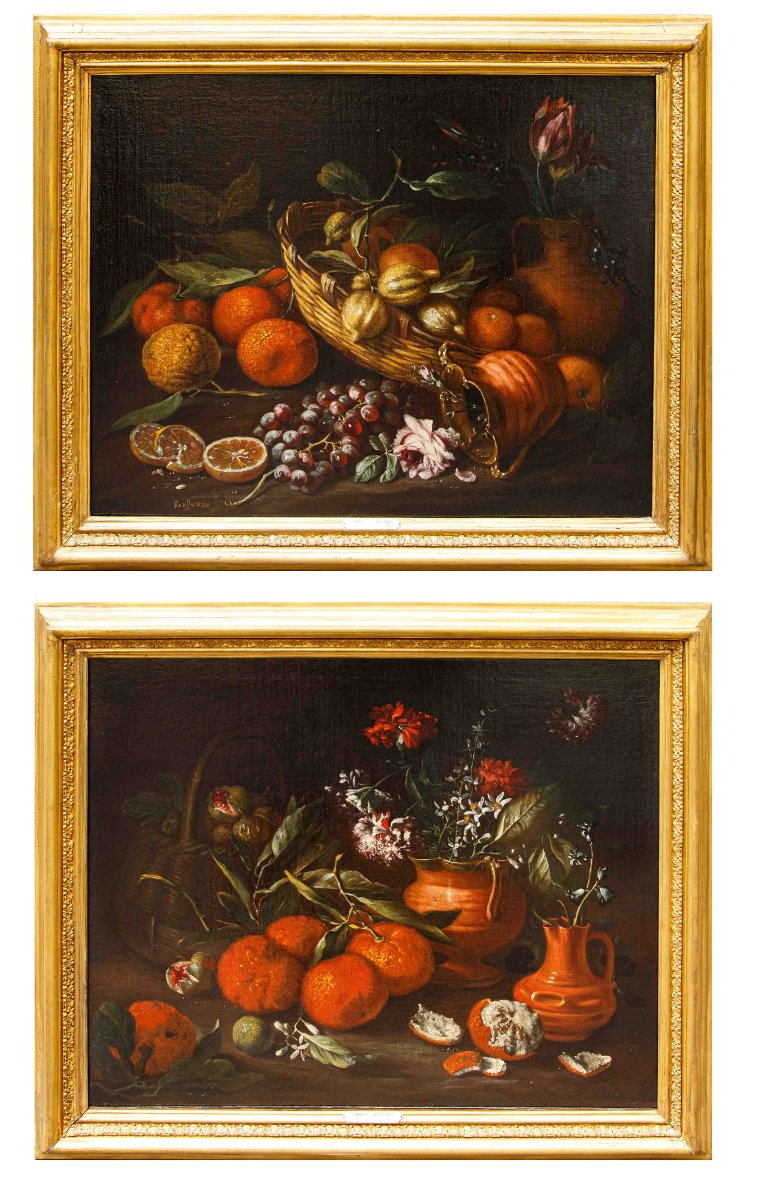
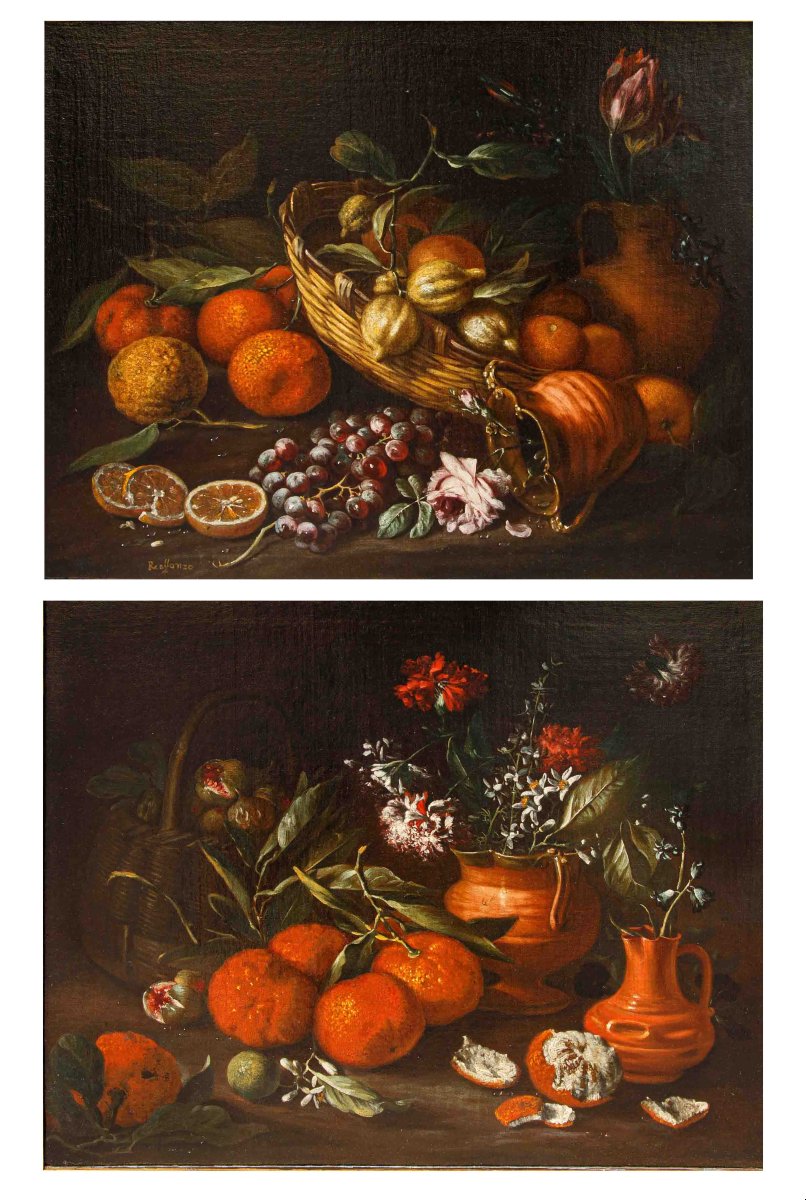
Oil on canvas, each 63 x 76 – framed, 80 x 91 cm
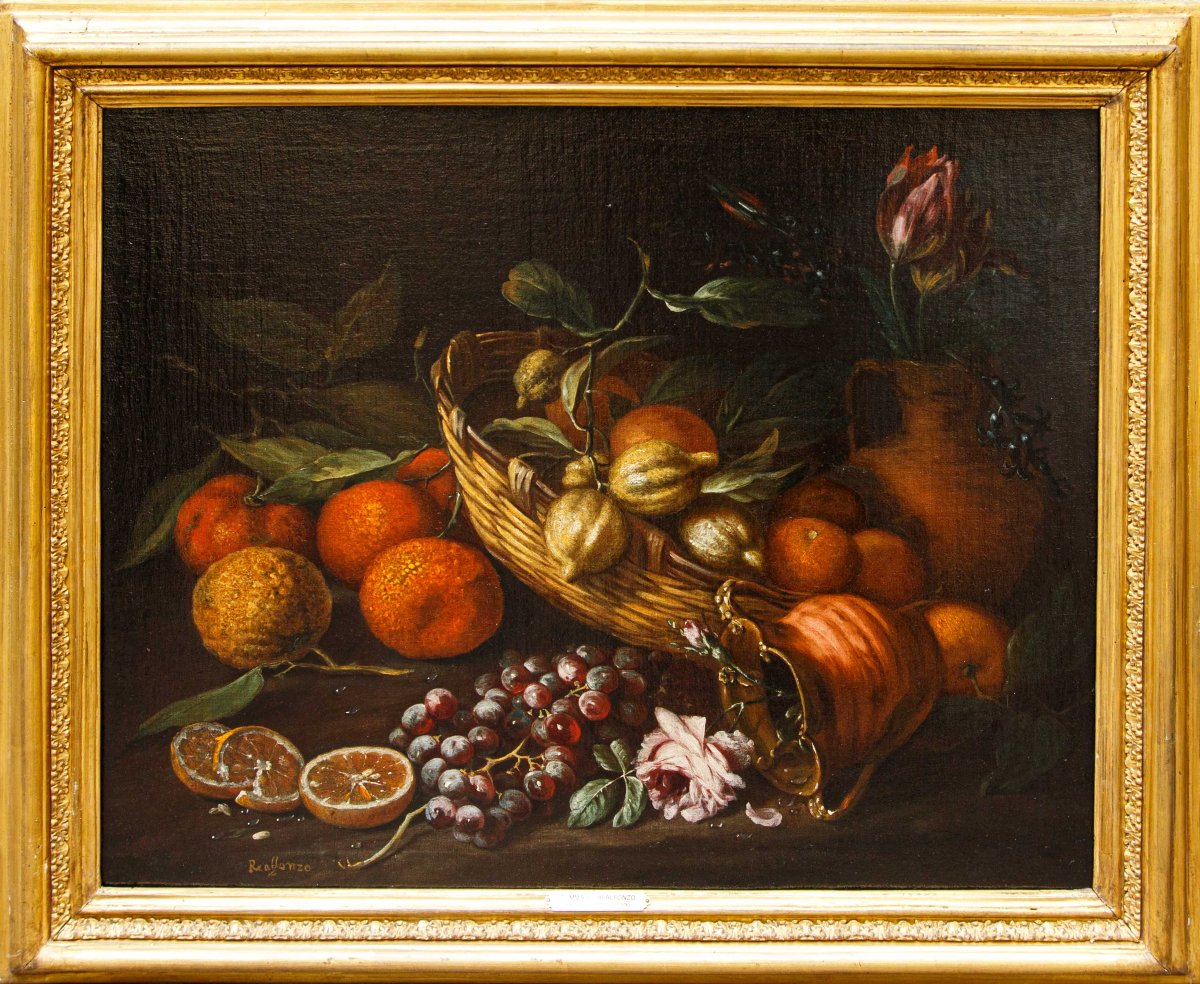
The second is signed “Realfonzo” in the lower left corner
Critical essay by Prof. Alberto Cottino
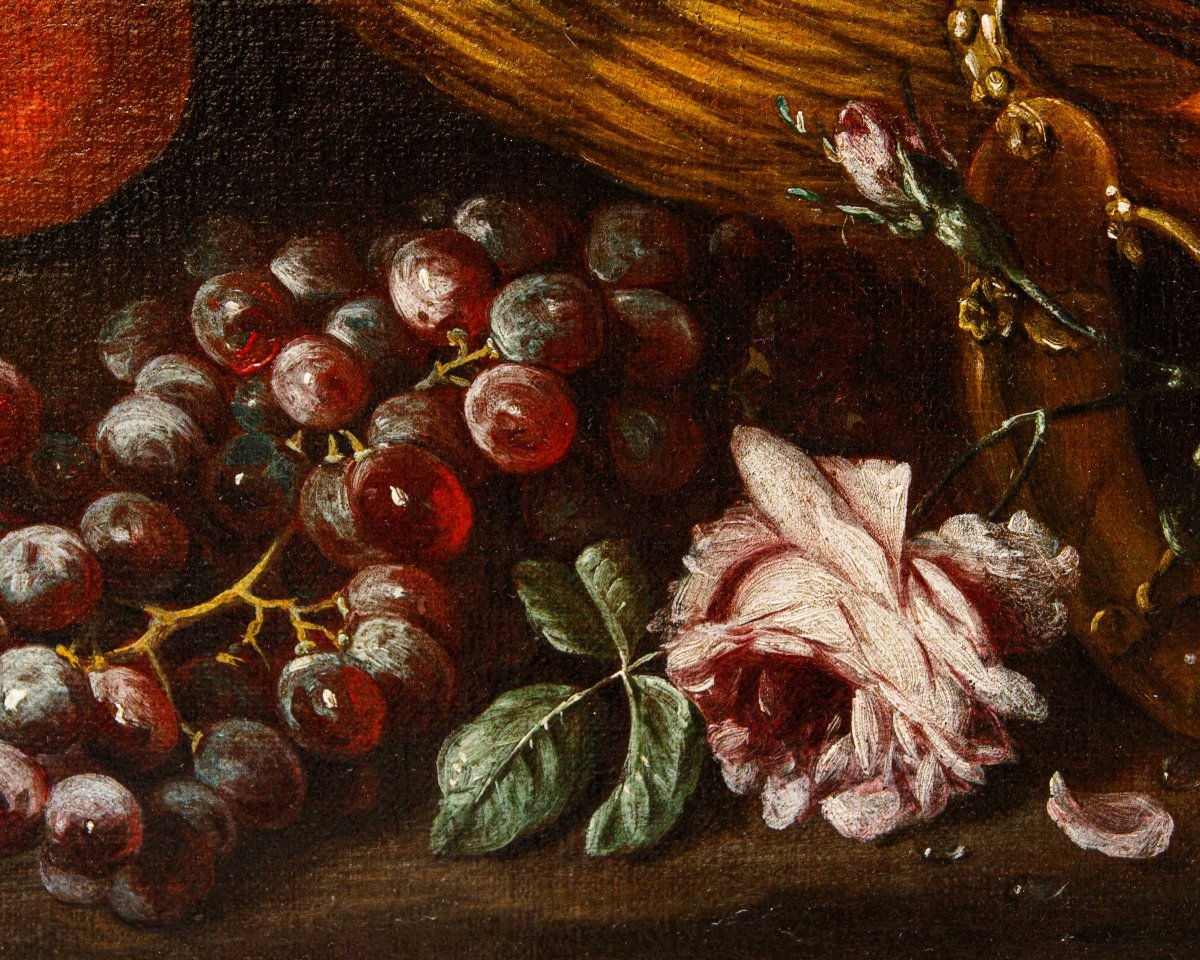
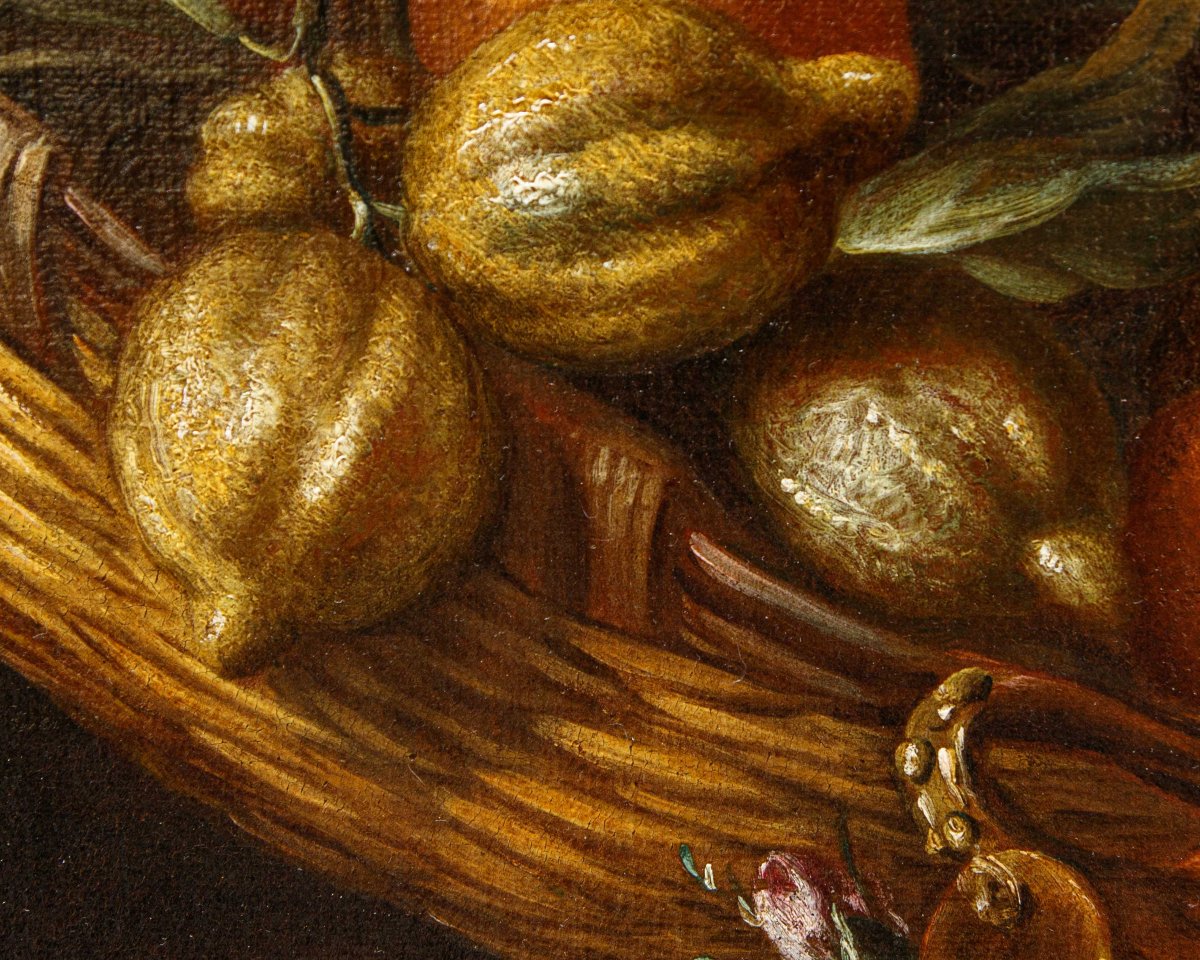
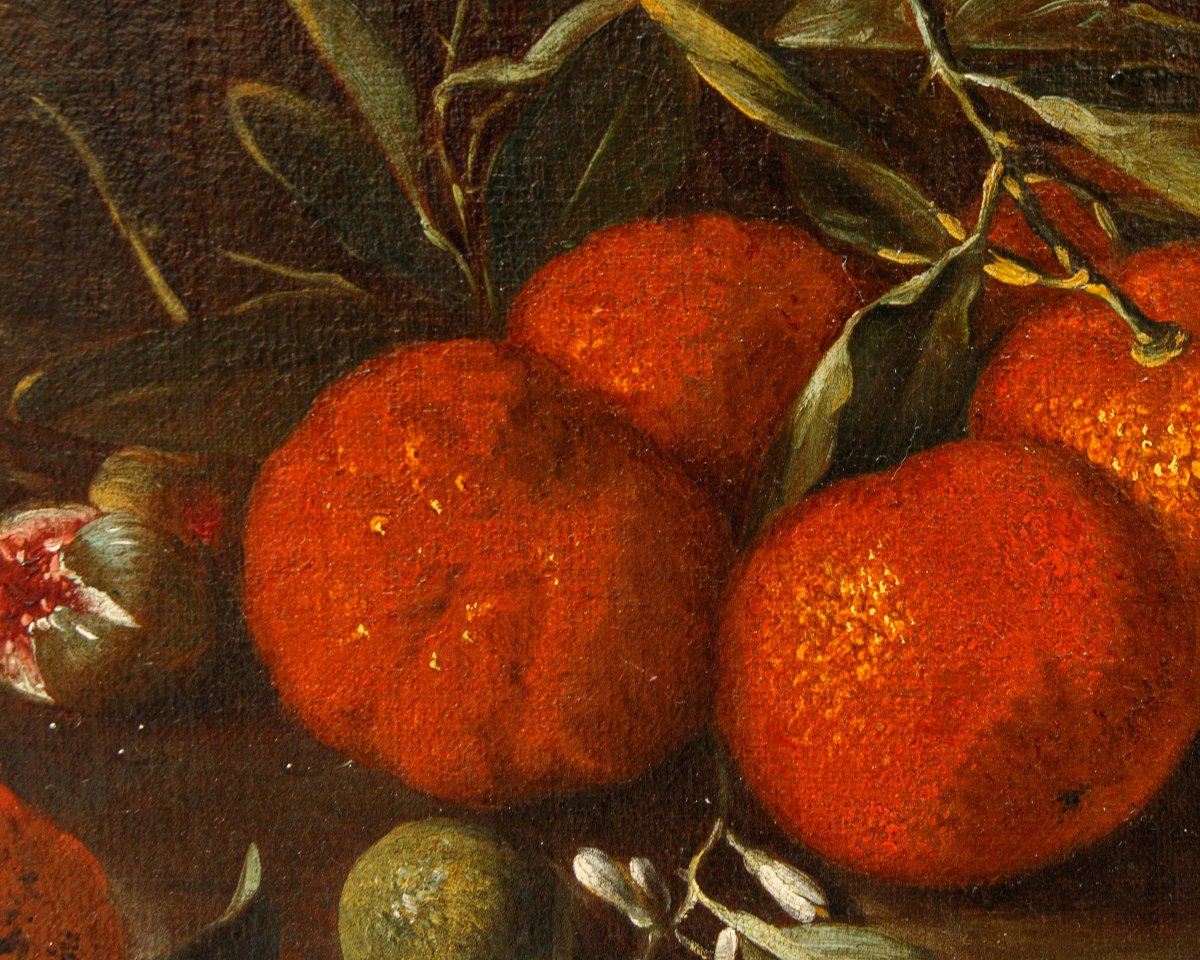
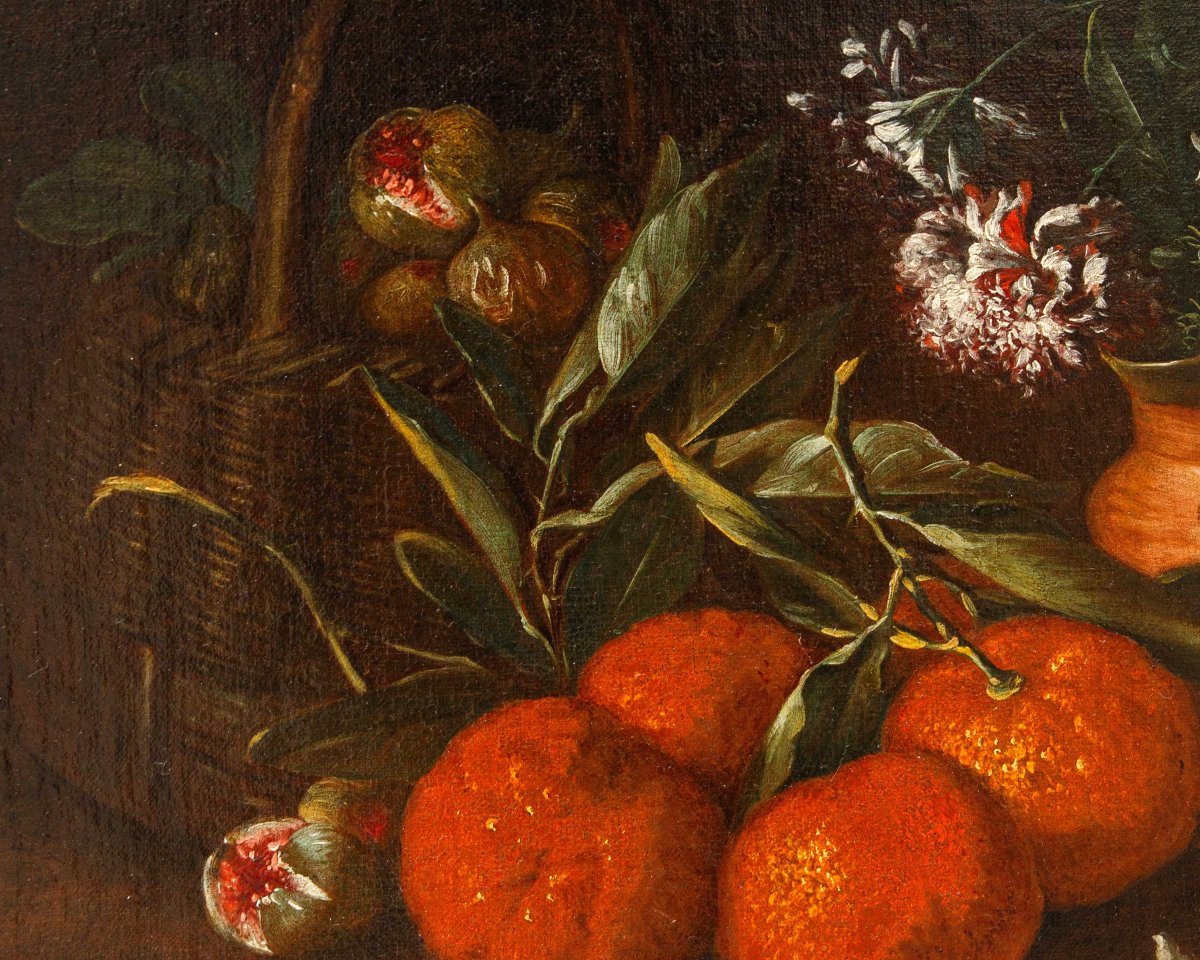
The pair of still lifes presented here depicts, in a close-up view and within an evocative nocturnal setting, whole and sliced citrus fruits, figs, olives, apricots, and terracotta vases brimming with flowers, arranged directly on the barren ground, without any theatrical artifice. One of the two paintings bears a perfectly legible signature, confirming what the style already suggests: it is a work by Tommaso Realfonzo, known as Masillo, a Neapolitan painter at the height of his career and in a particularly expressive phase. The painterly style is naturalistic, almost neo-Caravaggesque, tempered by a softer, more enveloping light that does not detract from the enchantment of an atmosphere that remains fully contemplative. The consistently high quality of these canvases, in line with the artist’s other confirmed works, reaffirms his importance: in the height of the 18th century, Realfonzo continued the great tradition of the golden age of Neapolitan still life in an original, non-imitative manner.
A student of Andrea Belvedere, as Bernardo De Dominici recalls in his famous 18th-century biography, Realfonzo was not, however, merely a follower: while drawing on his master’s teachings, he developed an archaizing and naturalistic sensibility that places him in the tradition of Giovan Battista Ruoppolo and Giovan Battista Recco, favoring the objective depiction of objects over the compositional exuberance typical of the Rococo style. This choice, identified years ago by Ferdinando Bologna as an 18th-century revival of 17th-century naturalism, places Realfonzo in a position that is, in some respects, anomalous and, for this reason, all the more interesting in relation to the developments in Neapolitan still life of his century: while painters such as Gaspar Lopez catered to a more graceful decorative taste, Realfonzo, like Gaspare Traversi in the figurative realm, chose an anti-Baroque path. The pair examined here fully confirms this: the fruits are humbly arranged on the ground, in a nocturnal setting, depicted with an intensity that recalls the early, austere still lifes of Luca Forte and Giovan Battista Recco from nearly a century earlier. This archaizing vein and his mastery of every subgenre of still life—from flowers to game—are also evident in a series of tondi featuring fruit and game now preserved in the storage facilities of the Capodimonte Museum in Naples.
Biographical information about the painter remains uncertain. According to Ulisse Prota-Giurleo, Realfonzo was born in Naples around 1677; on December 26, 1717, he married Vittoria Giobbe in his third marriage, with whom he had three children: Anna, Maria, and Giacomo, the latter of whom was baptized in 1723 in the presence of the jurist Domenico Caravita. He was a student of Andrea Belvedere, but soon diverged from his style: Raffaello Causa has highlighted his deliberate archaizing and neo-Caravaggesque sensibility, while Nicola Spinosa has dated this process of his—the recovery of materiality and natural realism—to as early as the fourth decade of the century, anticipating in a different way the neo-Baroque revival of the elder Solimena and the Caravaggesque revival that Traversi would lead in figure painting beginning in the mid-1740s. His influence would extend as far as the young Luis Meléndez, who spent his formative years in Naples.
Period: 17th century
Style: Other Style
Condition: Good condition
Material: Oil painting
Width: 76
Height: 63
Reference (ID): 1842192
Availability: In stock