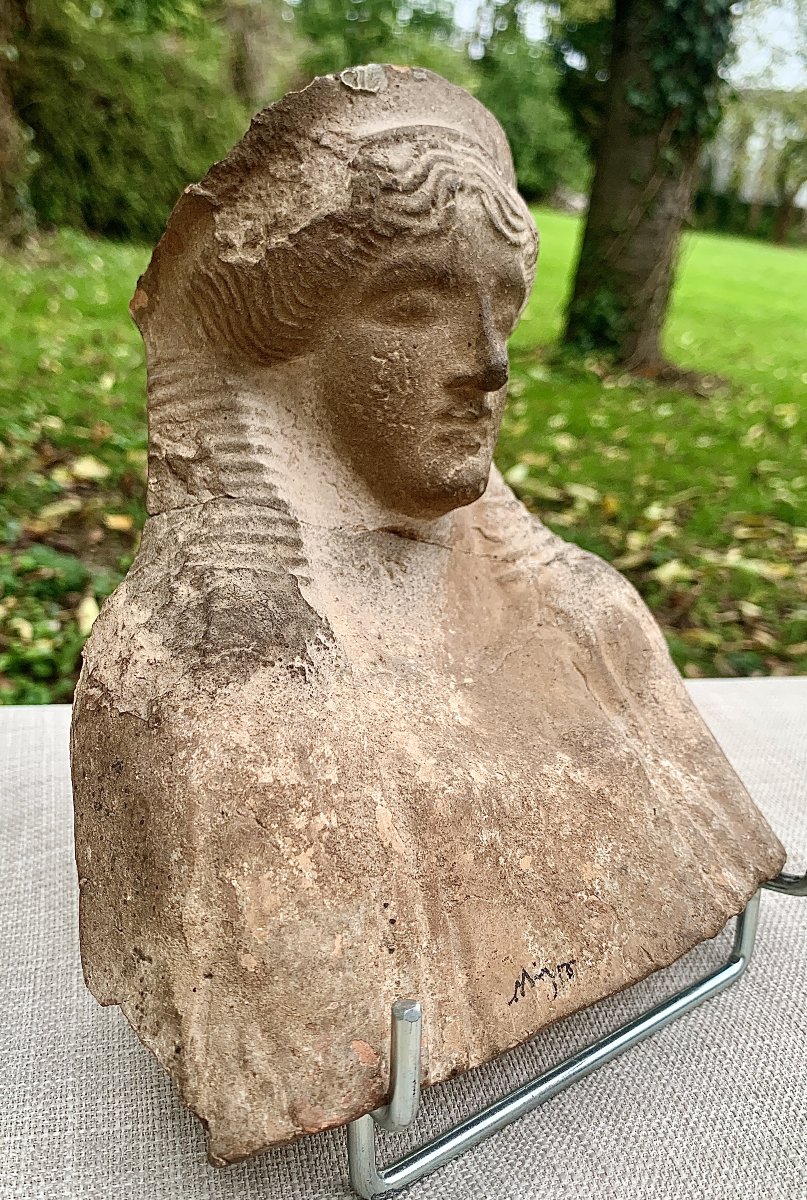
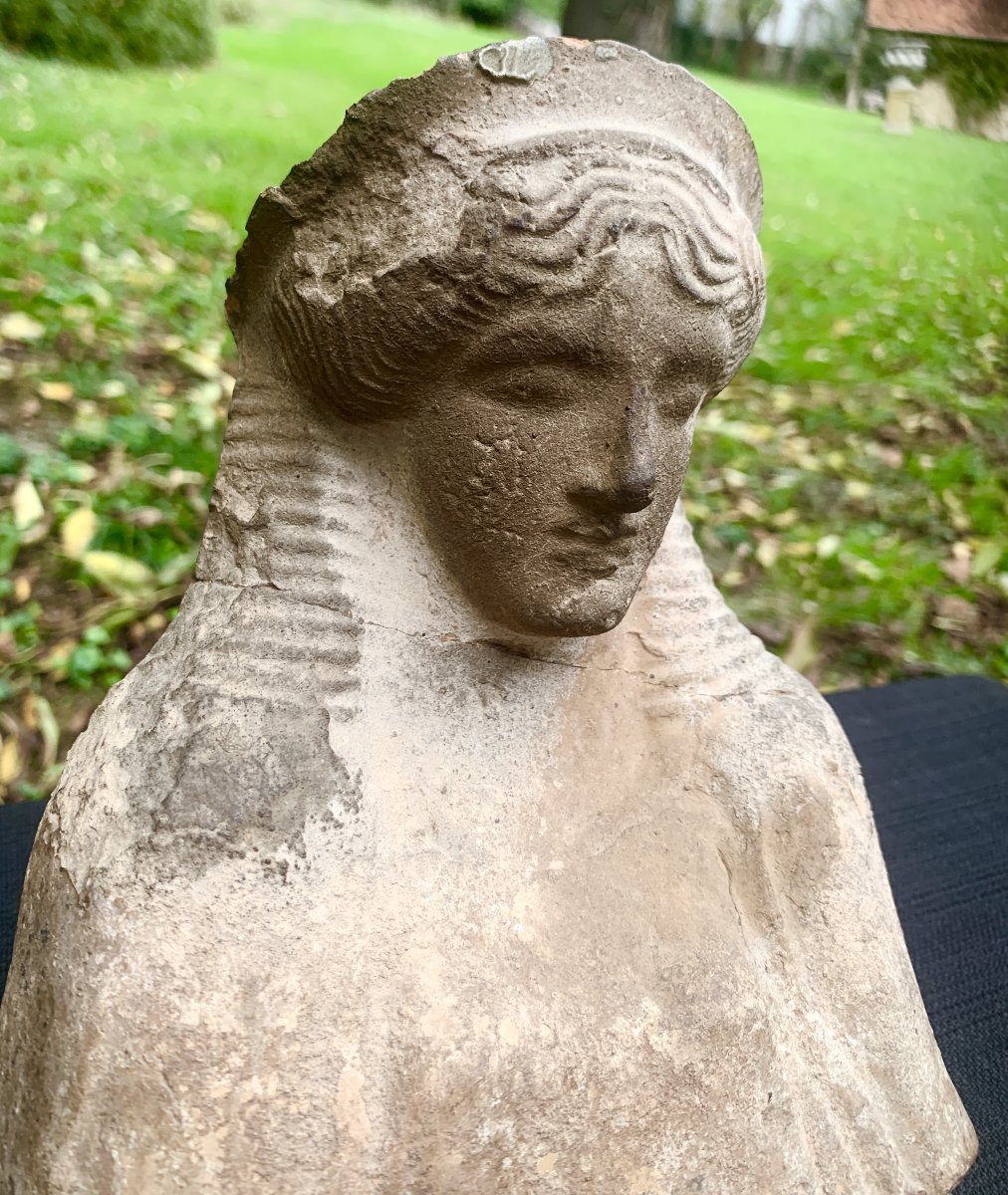
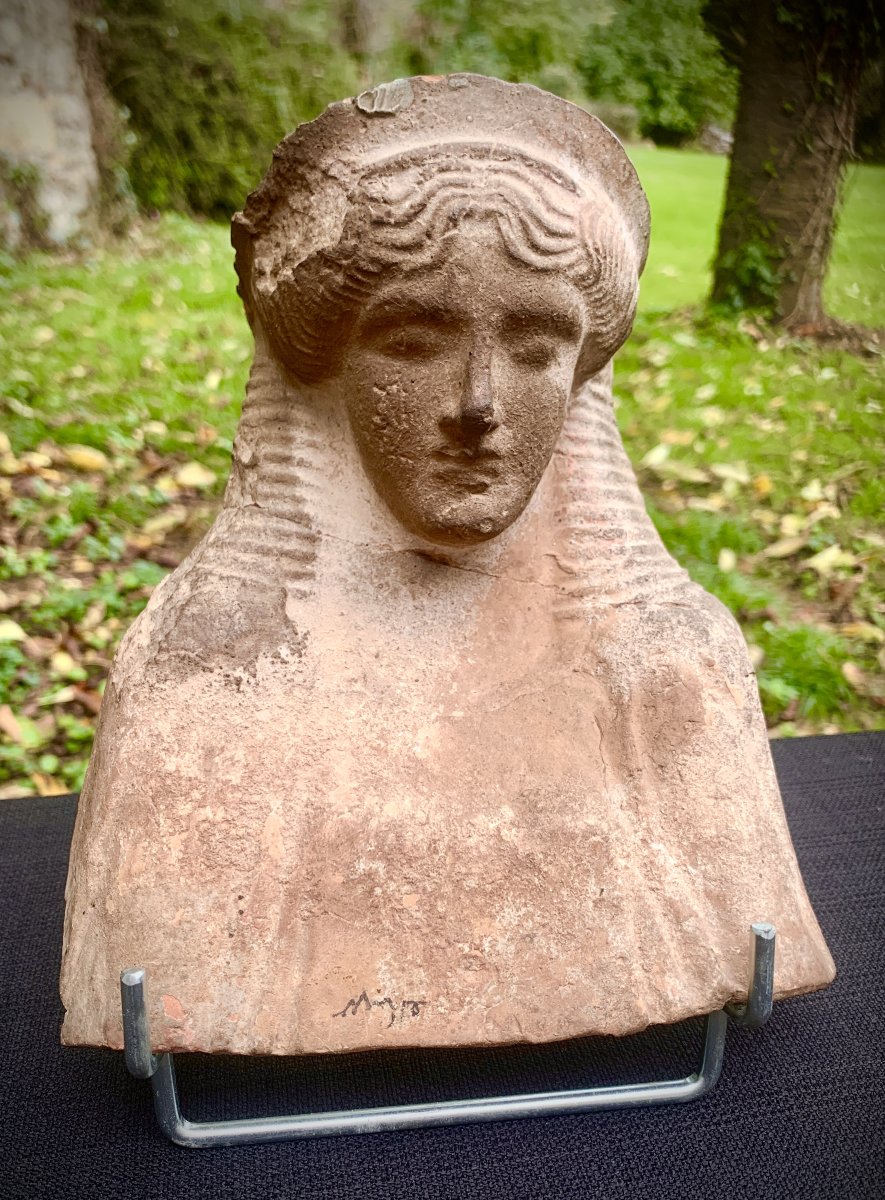


Archaic Greece, Protomea Female Terracotta Bust, 5th Cty Bce, Demeter?
ARCHAEOLOGY
Archaic Greece
Circa 650–480 BC
A protome traditionally associated with the goddess Demeter (or to her daughter Persephone?)
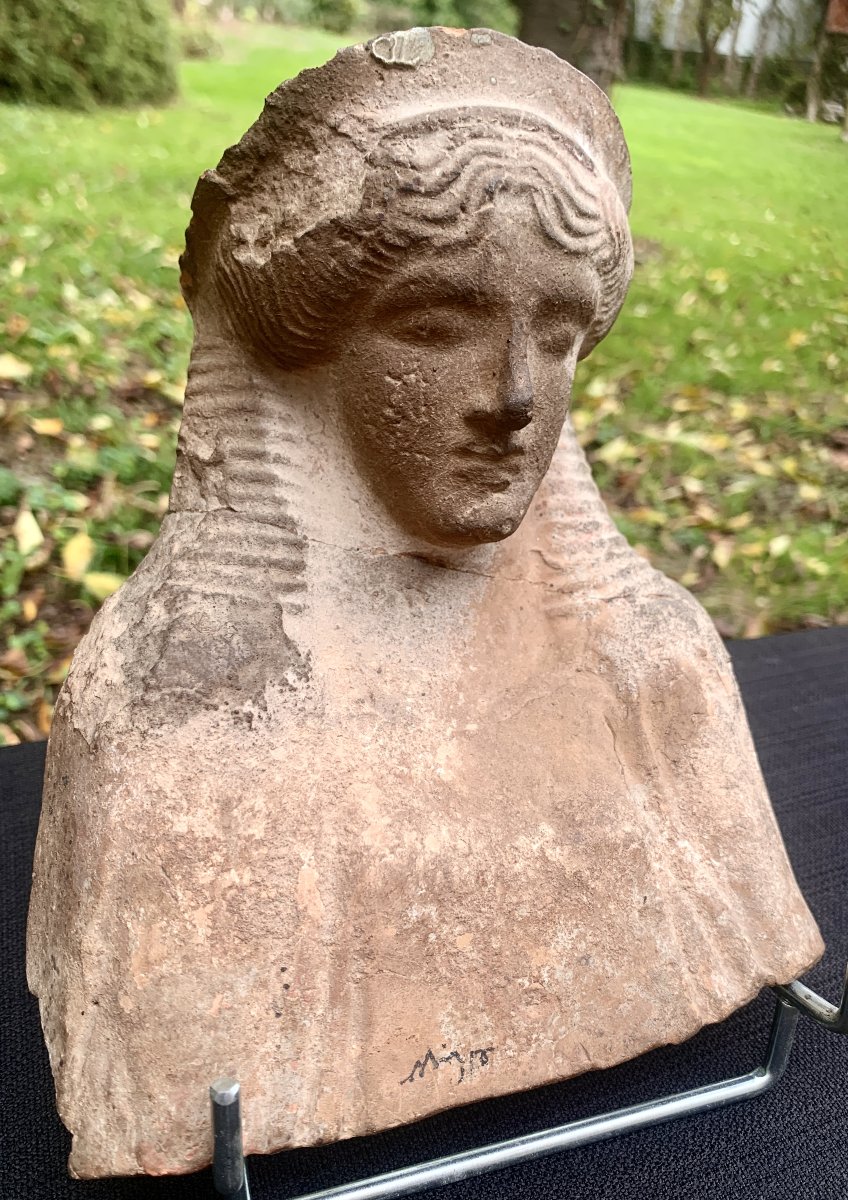
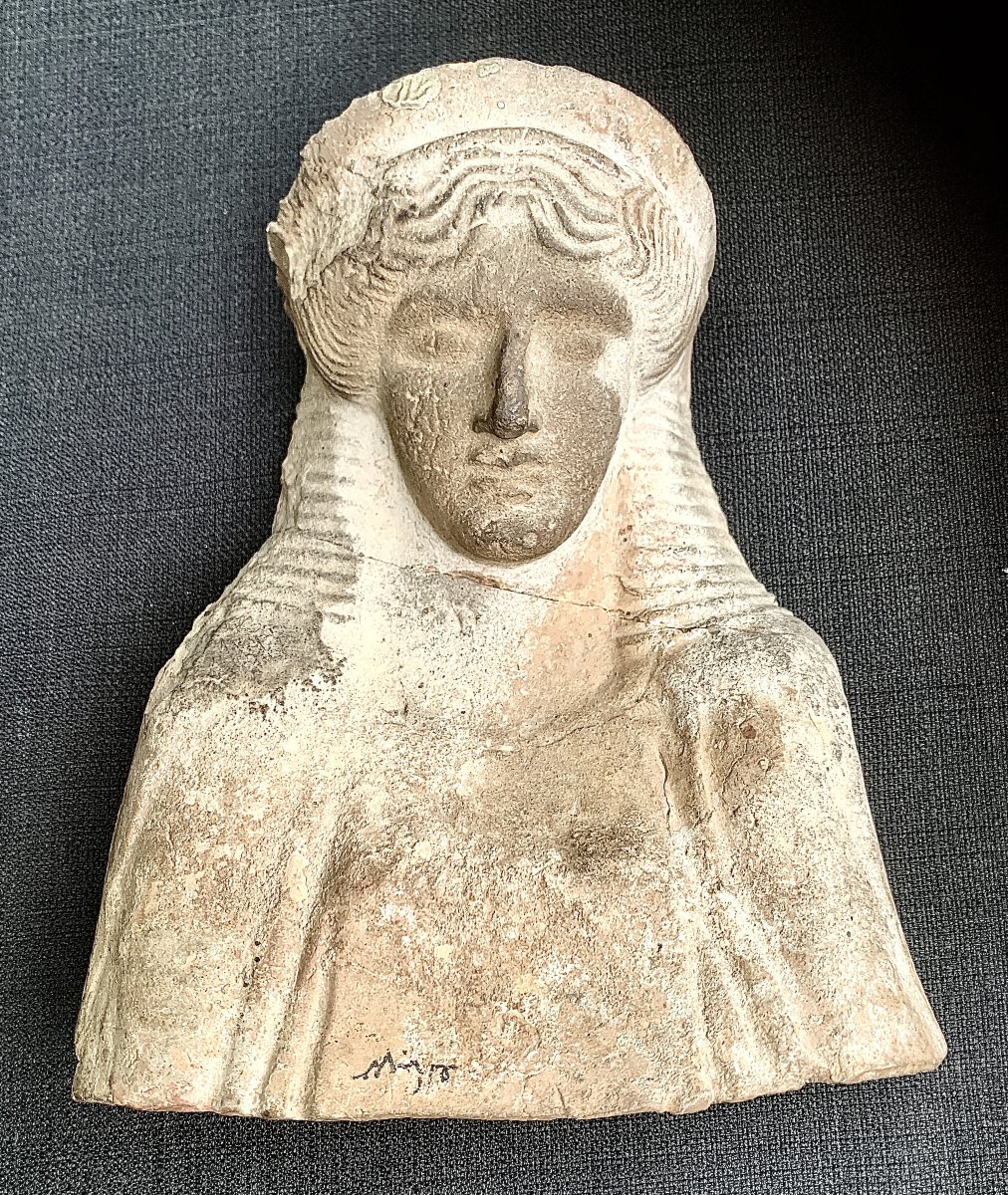
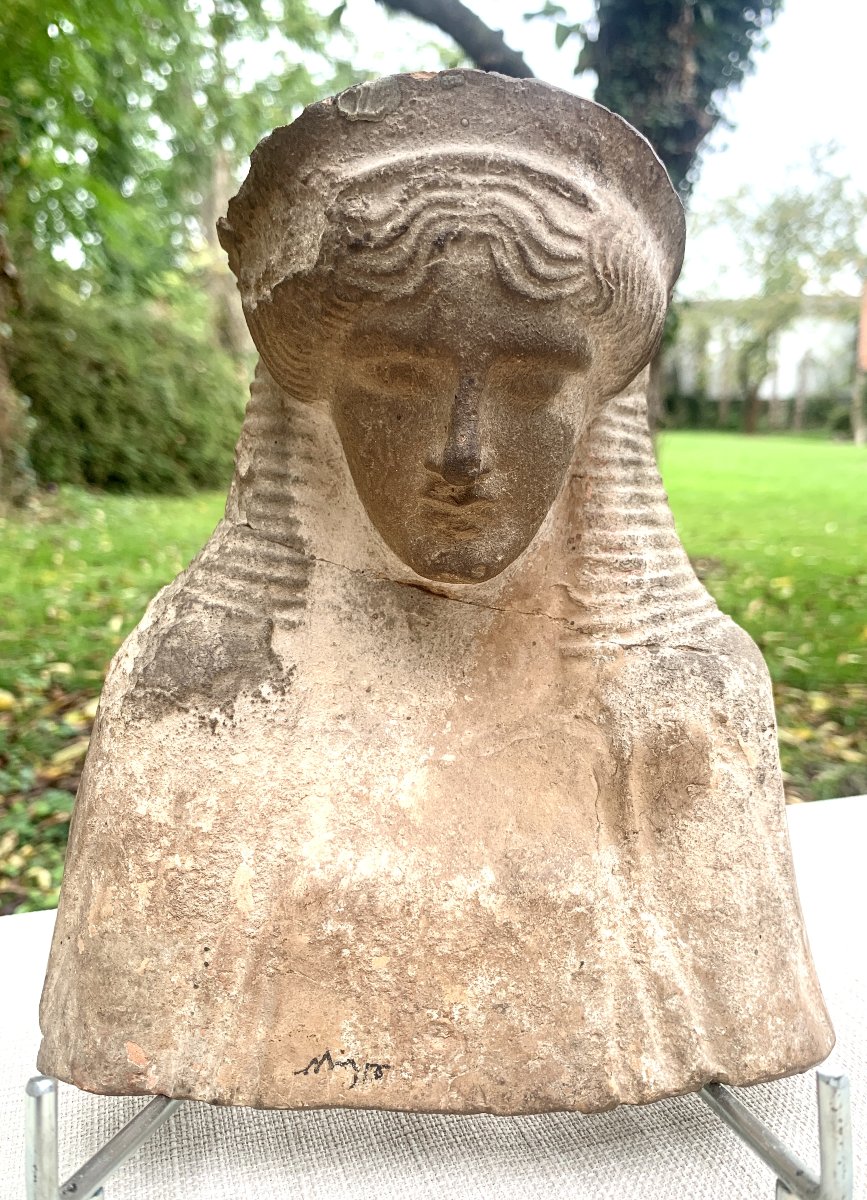
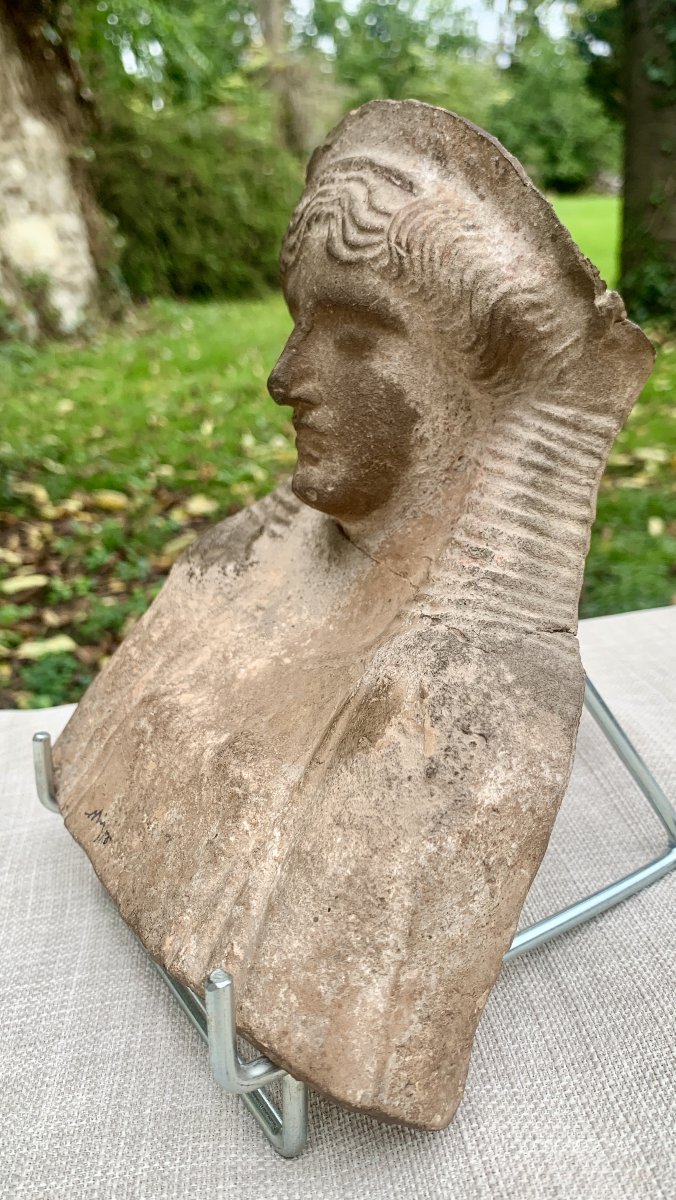
A superb freestanding statue depicting a stunning relief bust of a woman in the classical style, with wavy hair topped by a stephane, an ancient crown or diadem.
The woman wears a drape falling delicately over her shoulders.
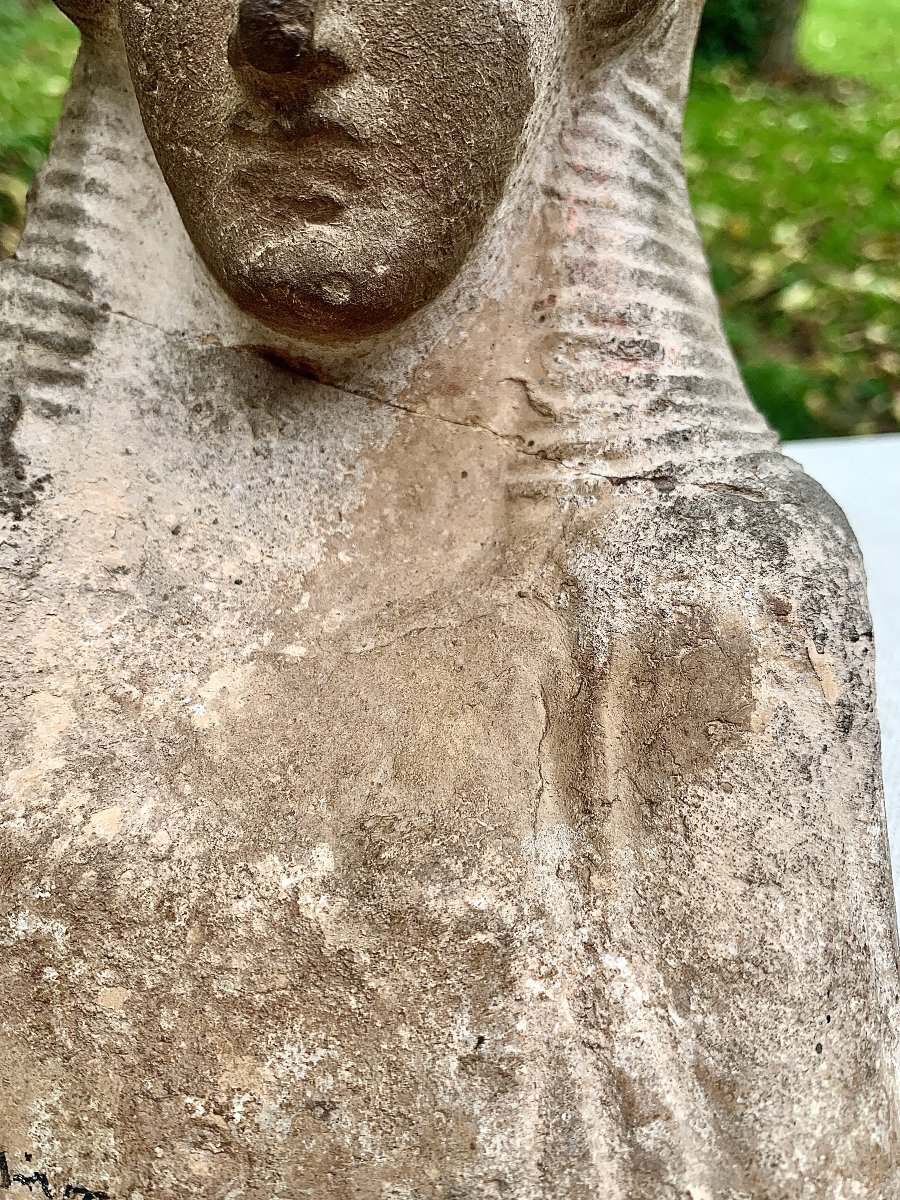
The lovelyface exudes an impressive hieratic strength, with open almond-shaped eyes and eyelids, a natural nose, well-defined cheeks, a rounded chin, and that famous subtle archaic smile.
"Although the exact meaning of this smile is unknown,researchers suggest that it indicated good health and well-being—that the woman depicted was alive. The bust is also characterized by asubtly modeled chest and a long neck.”
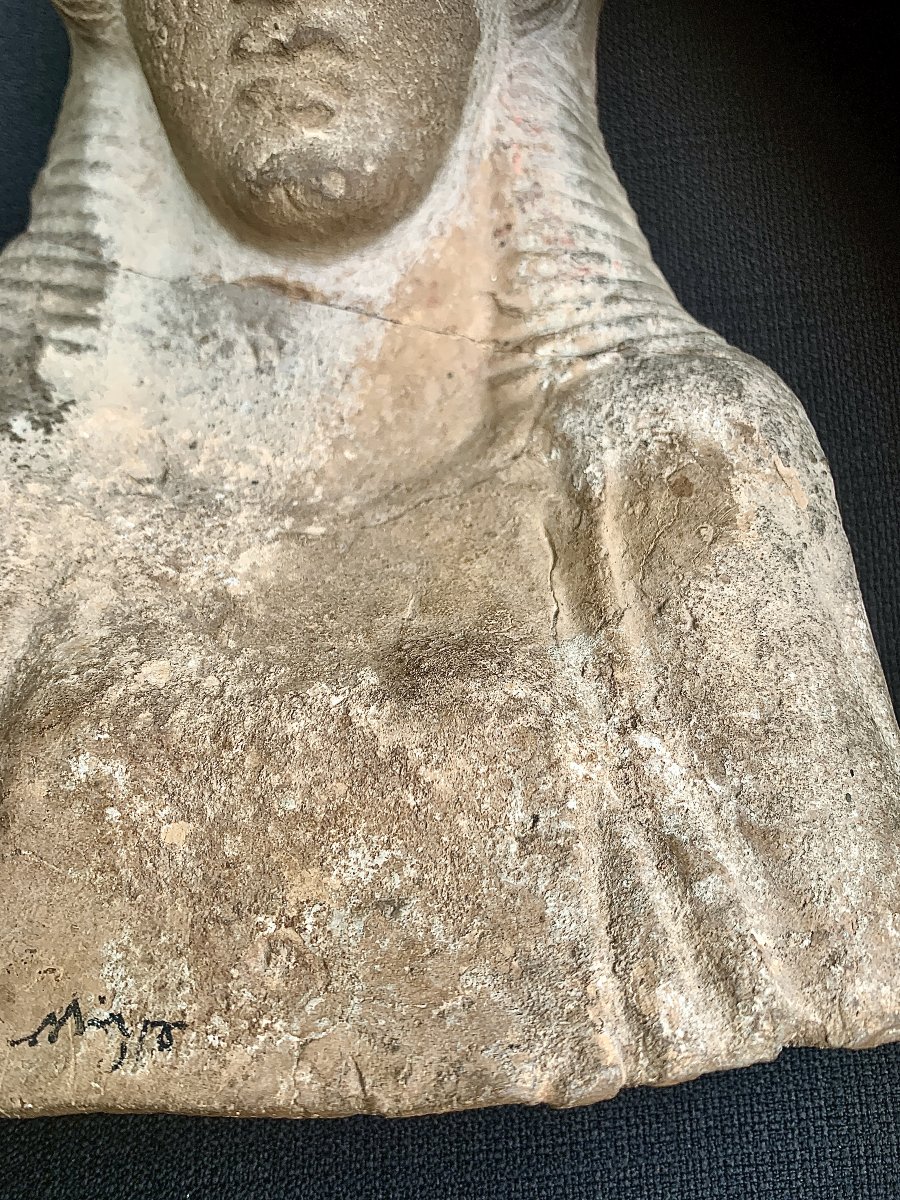
Extensive traces of pink (subtle flesh-tone) and white pigments remain on the surface, while the terracotta itself is much darker.
These busts were not merely decorative objects—they served a clear religious purpose as sacred offerings. During 5th and 6th centuries B.C., such sculptures were commonly offered in sanctuaries and tombs. They were gifts to the gods, signs of devotion, and even protective symbols for the dead.
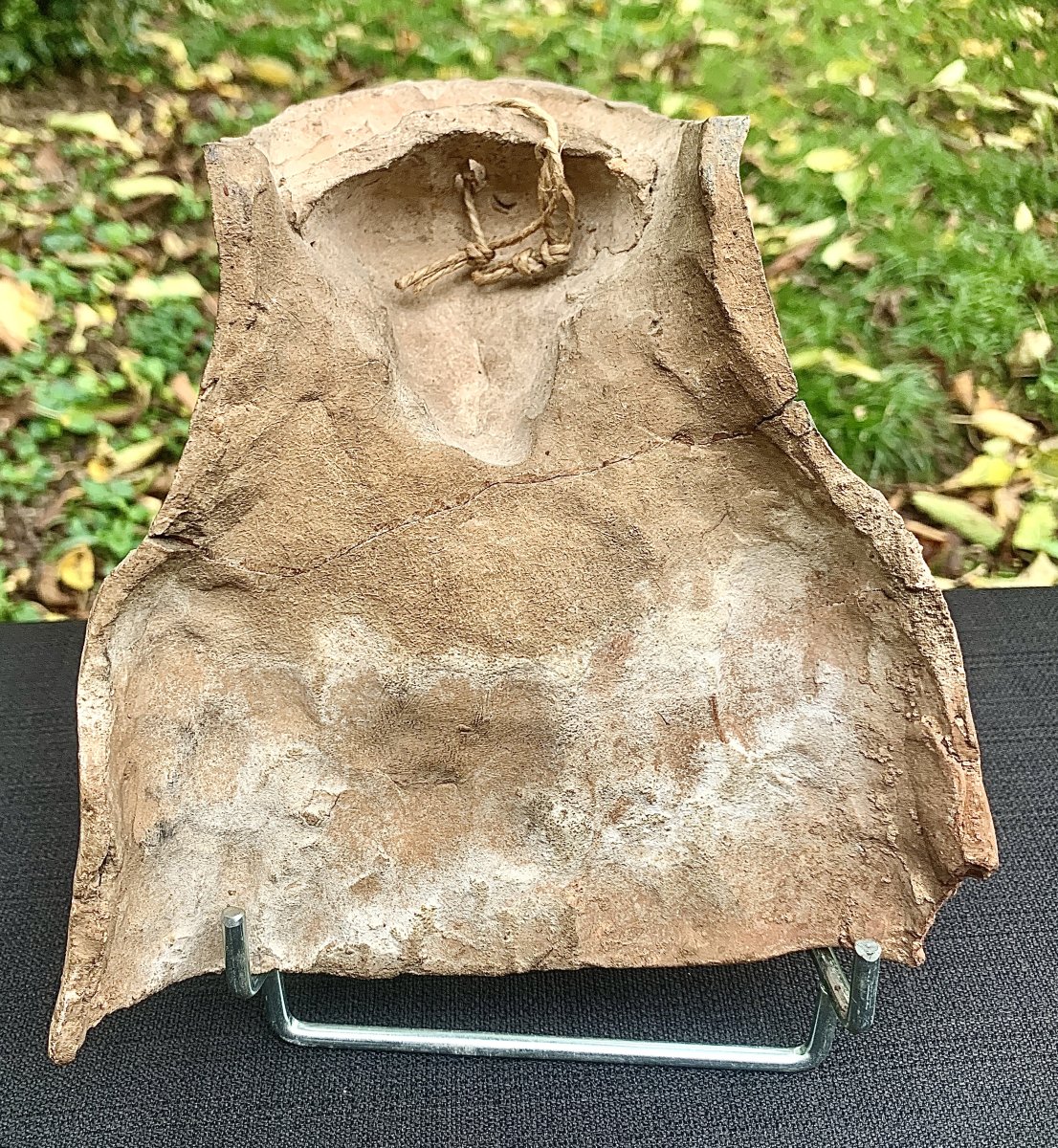
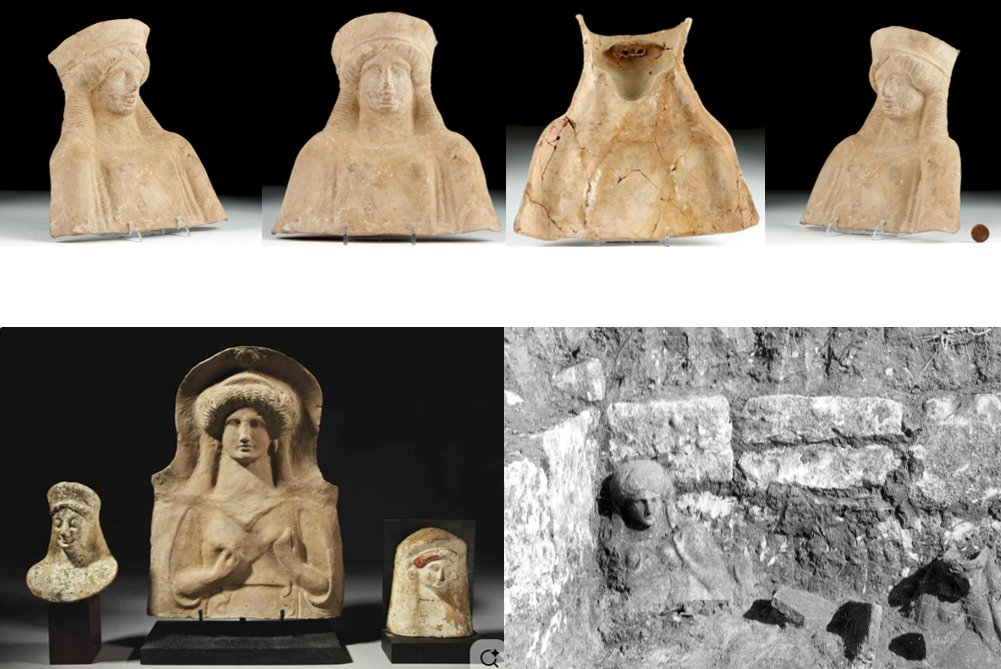
The concave, hollow reverse is typical of ancient terracotta cast pieces. The hollowed-out interior served to lighten the sculpture, ensure even firing of the clay without it cracking, and conserve raw materials.
The attachment hole at the top (through which a string was threaded) is also a classic feature of protomes. These objects were not round-relief busts intended to be placed on a surface but reliefs designed to be hung on temple walls, on trees in sacred groves, or placed against the altars of sanctuaries.
"Unlike the large marble sculptures that dominate museums today, terracotta busts like this one were more accessible. Clay was abundant and easy to work with, allowing artists to create detailed and expressive figures without the labor-intensive work of carving stone. These sculptures were often painted, bringing them to life in a way that is difficult to imagine today.
This bust is more than just an archaeological artifact—it is a link to the way ancient people perceived, worshipped, and understood their world. It reminds us that art was not merely a matter of aesthetics; it was deeply spiritual, intertwined with daily life, agriculture, the seasons, and even the afterlife. Standing before this piece, one can almost feel that connection.
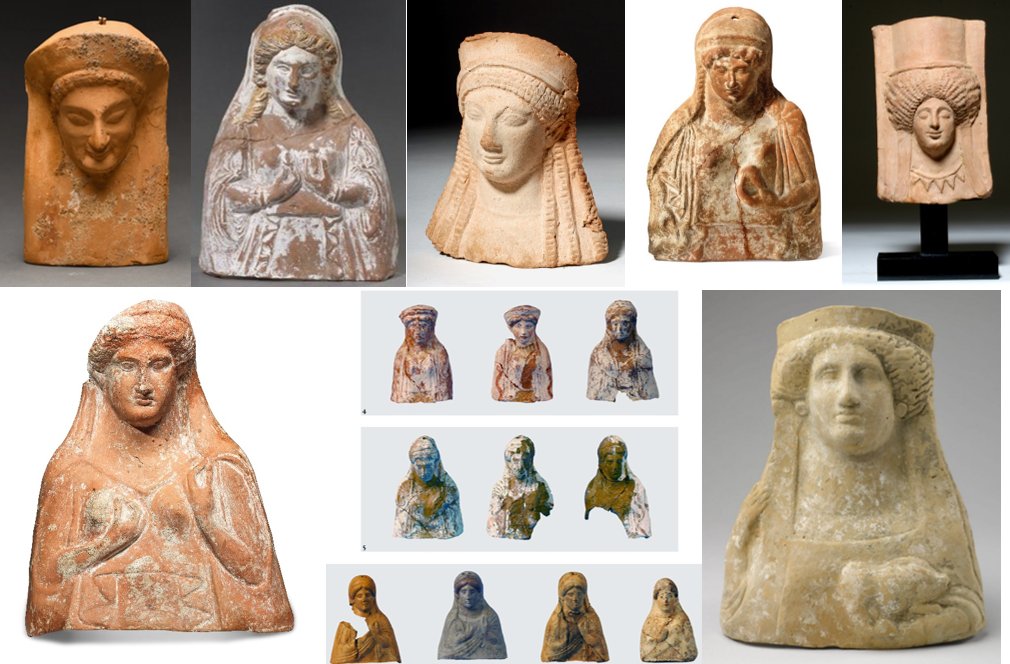
The iconography of Demeter is widespread throughout the classical Greek world, particularly in Magna Graecia and Sicily, as well as within the Etruscan sphere of influence. These veiled female faces, adorned with a diadem, were mass-produced; they embodied the deities associated with the fertility of the earth, agriculture, and the mysteries of the afterlife.
Dimensions:
20 cm high
17.5 cm wide
and approximately 7 cm deep
Condition:
The statuette has two fracture lines, one diagonal beneath the neck and one along its left arm; the previous restoration leaves them partially visible without impeding the viewing of the work.
An inscription painted in black, which I was unable to read (an inventory or collection mark, or from a local excavation?), covers the original pigments and patina—and is therefore apocryphal, but not the white traces of limestone—and is therefore nonetheless relatively old.
The original hole on top of the statue’s head indicates that these protomes were intended to be hung as votive offerings in sanctuaries.
1 600 €
Period: Before 16th century
Style: Rome and Antic Greece
Condition: Good condition
Material: Terracotta
Width: 17,5 cm
Height: 20 cm
Depth: 7 cm
Reference (ID): 1841458
Availability: In stock
Print