

Austrian Biedermeier Miniature Portrait, Gentleman, C. 1840, Original Gilt Easel Frame
Artist: école Autrichienne, Vers 1840
AUSTRIAN SCHOOL, CIRCA 1840
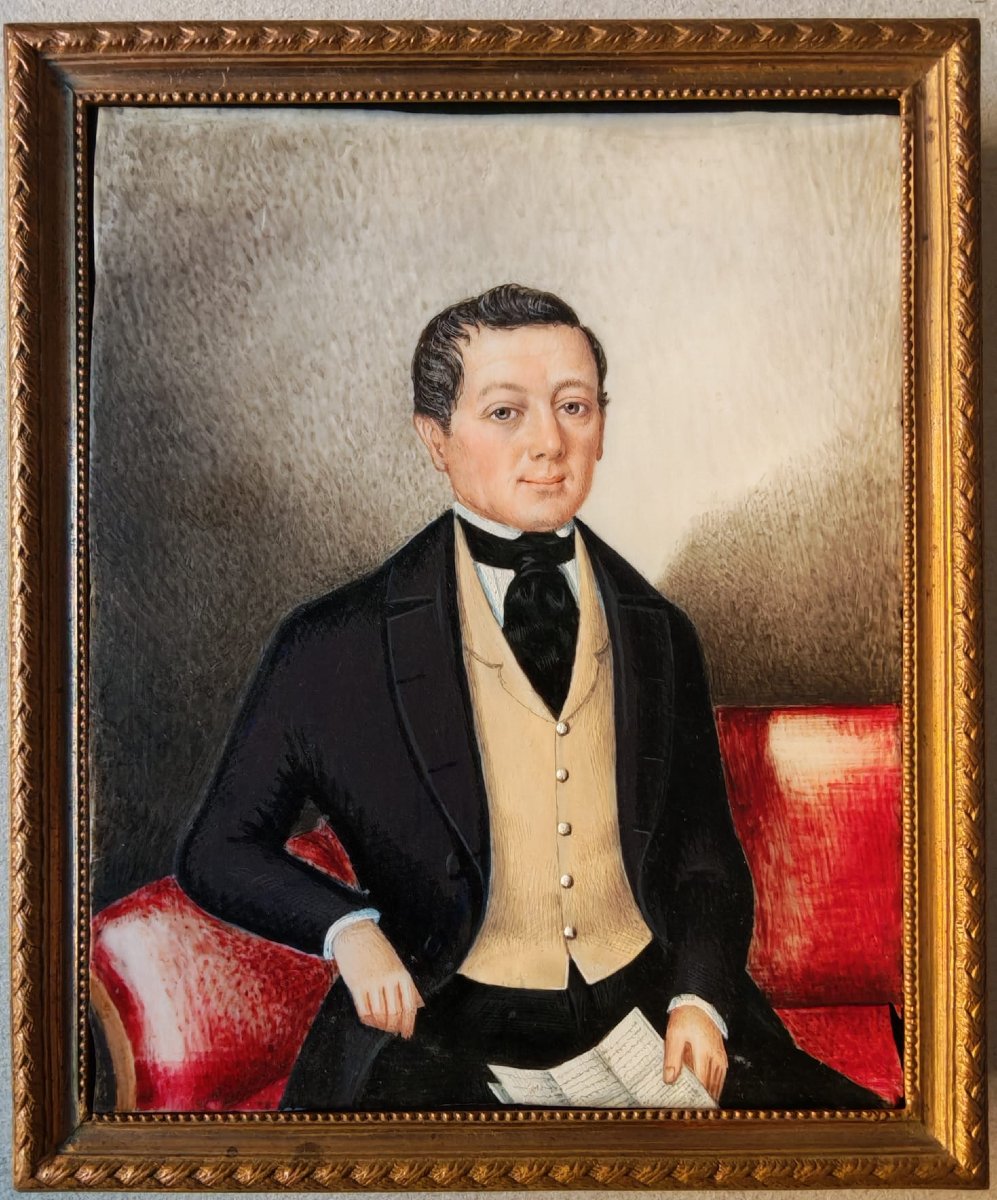
Portrait of a Gentleman in the Biedermeier Period
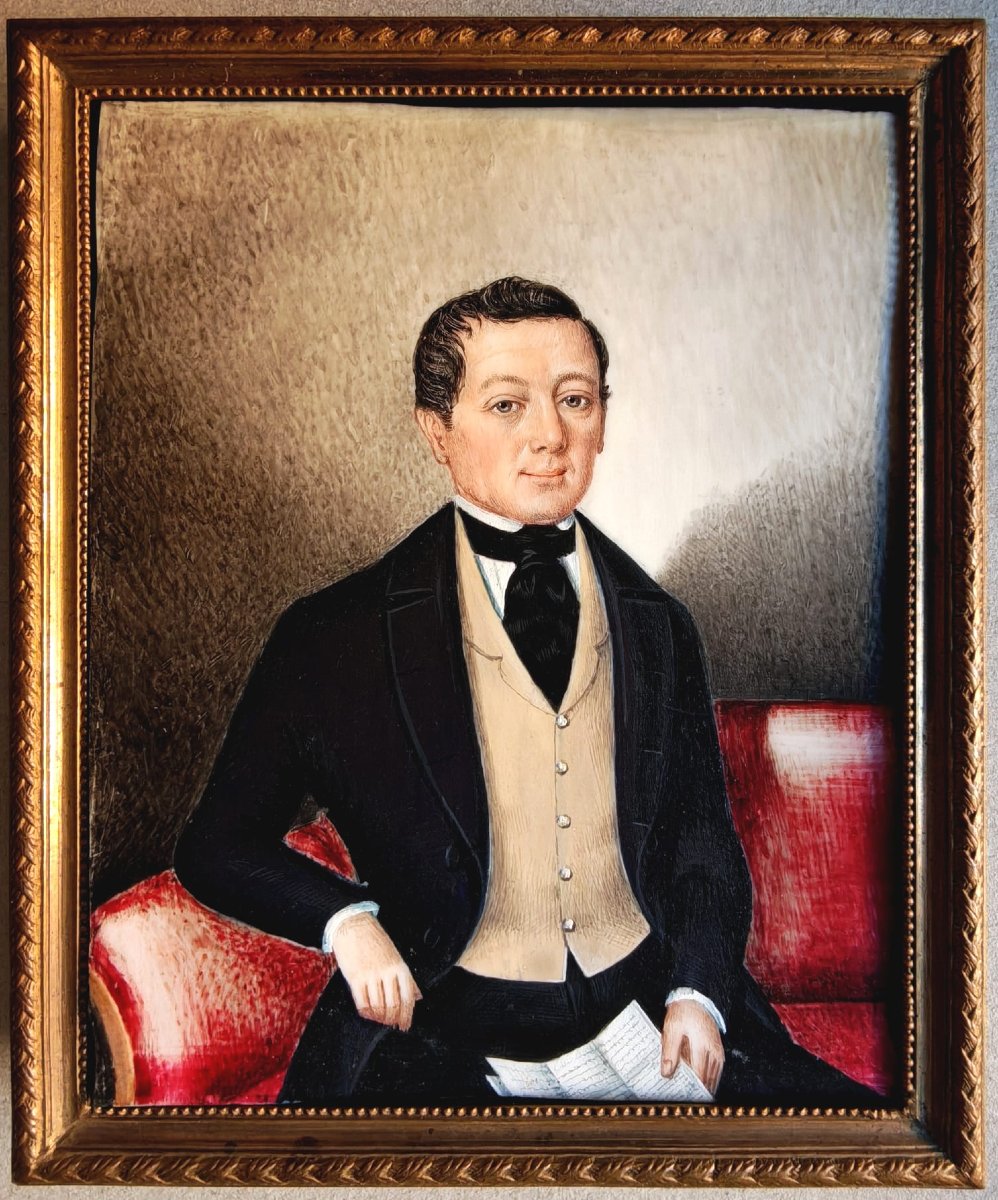
Watercolour miniature under flat glass
Miniature dimensions: 101 × 81 mm
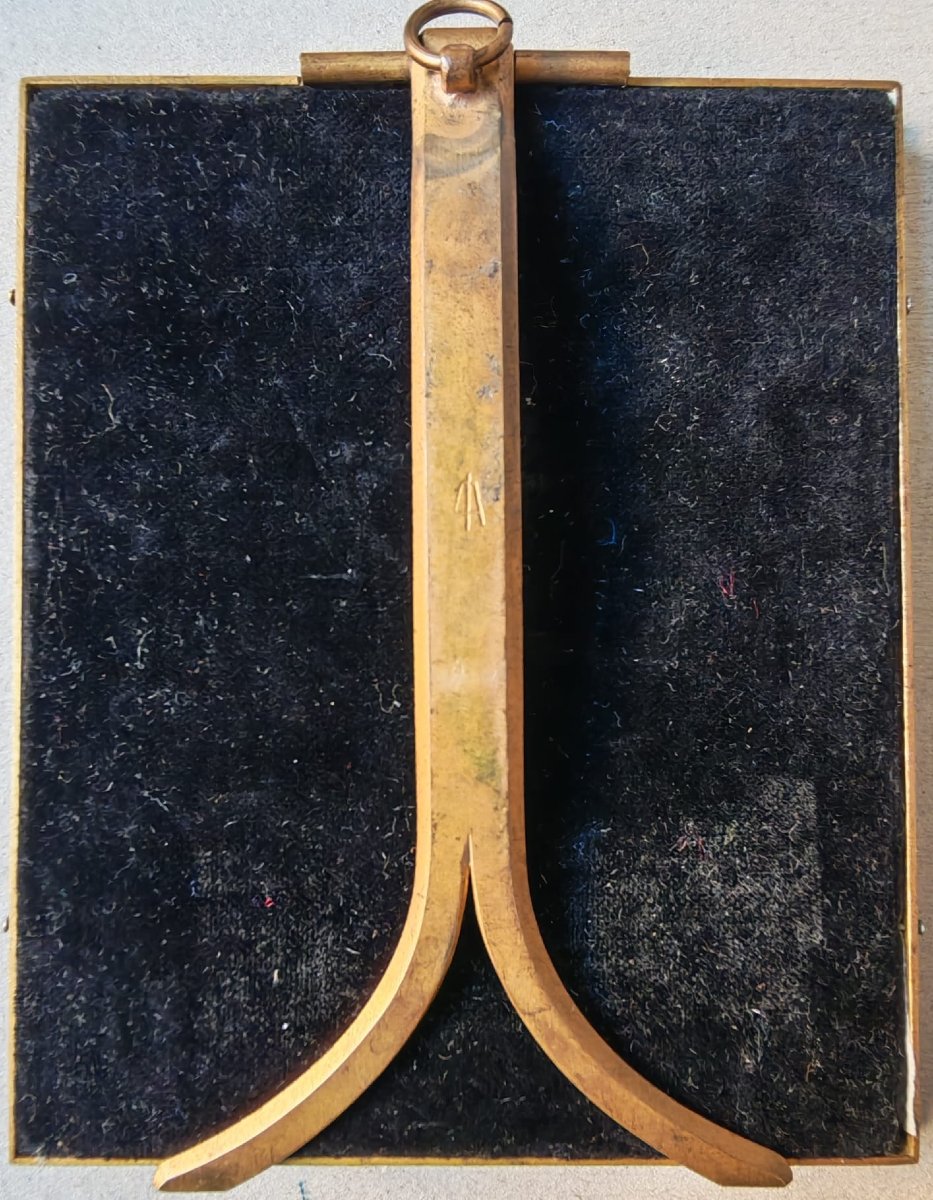
Gilt-metal easel frame with black velvet backing
The Art of Living in the Biedermeier Period
Romanticism transformed not only art and literature, but also everyday life, creating a world of beauty, intimacy and personal memories.
In Europe during the first half of the nineteenth century, particularly in the lands of the Austrian Empire, Biedermeier culture brought a new appreciation of domestic life. The bourgeois interior became a space of comfort, refinement and personal expression, where every object could contribute to the harmony of everyday living.
The art of miniature painting was very much part of this transformation. Once associated with aristocratic portraiture and precious objects made for royal courts, it found a new place in private interiors, displayed on desks, chests of drawers and shelves, among books, keepsakes and decorative objects.
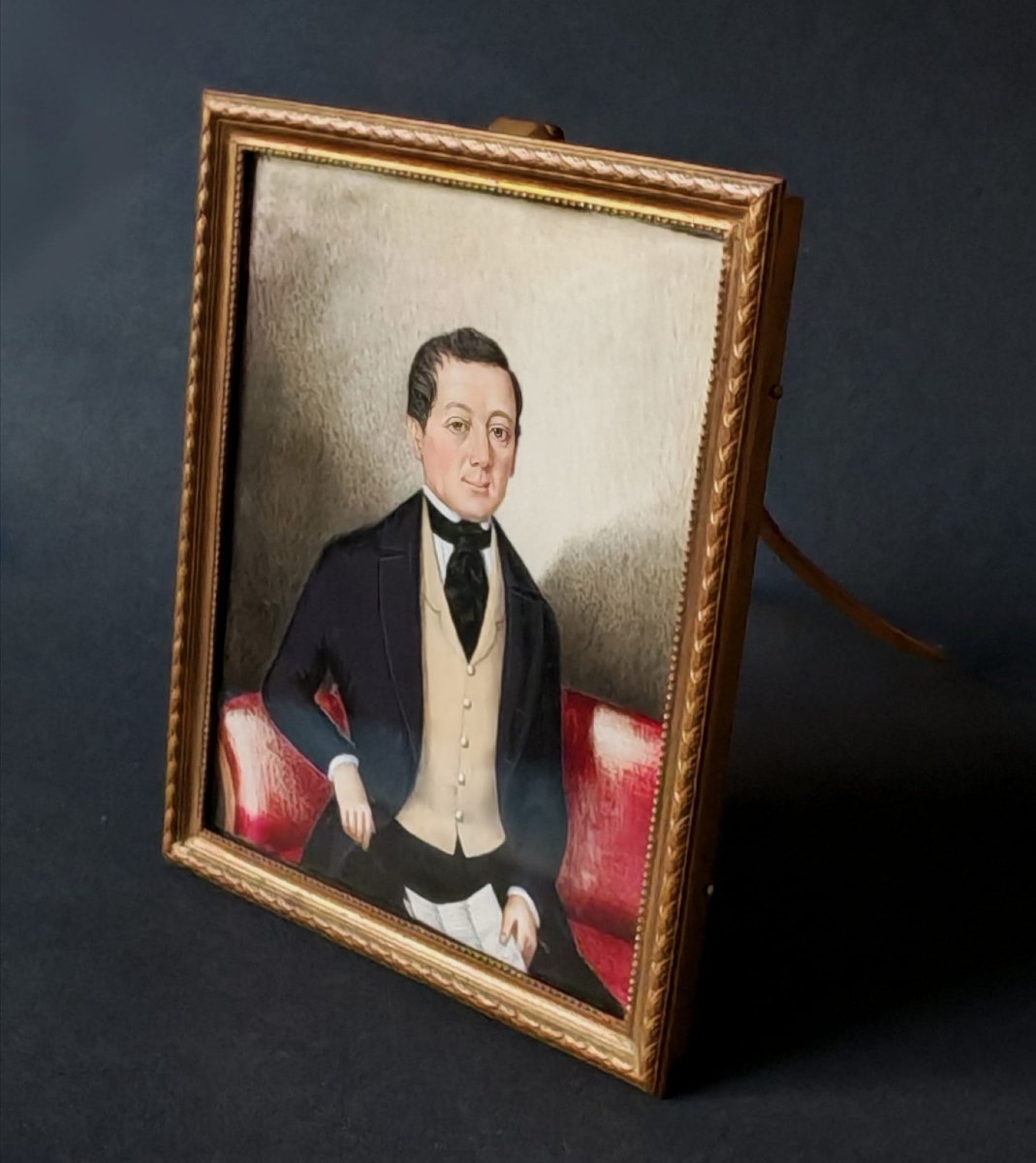
This charming portrait of a gentleman, painted around 1840 in the provinces of the Austrian Empire, perfectly illustrates this sensibility. Seated on a red sofa, dressed in a black coat and an elegant light-coloured waistcoat, the sitter holds several documents in his hand. His pose, both dignified and informal, reflects the Biedermeier taste for intimate and unpretentious representations of the individual.
The miniature is preserved in its elegant gilt-metal easel frame, with a reverse covered in black velvet. Designed to stand on a piece of furniture, this ensemble is a fine example of objects in which the art of portraiture meets the art of interior decoration.
Created at the dawn of the photographic age, this work also reflects a moment of transition in the history of portraiture. With its intimate format and presentation intended for the domestic interior, it anticipates the framed photographic portraits that would soon find their place in European homes.
A fine example of the Biedermeier art of living, in which the portrait miniature becomes at once a work of art, a decorative object and a personal keepsake.
300 €
Period: 19th century
Style: Louis Philippe, Charles 10th
Condition: Good condition
Material: Water color
Length: 8 cm
Height: 10 cm
Reference (ID): 1840021
Availability: In stock
Print