



Giacinto Massola, Scene Of The Funeral Of Archdukus Rainier Joseph Of Austria In Bolzano
Artist: Giacinto Massola
GIACINTO MASSOLA
SCENE OF THE FUNERAL OF ARCHDUKE RAINER JOSEPH OF AUSTRIA IN BOLZANO
GIACINTO MASSOLA
Sarzana, 1820 – Genoa, 1865
Pencil, grey wash and white heightening on toned paper
16 × 20.5 cm
With margins: 24.5 × 31.5 cm
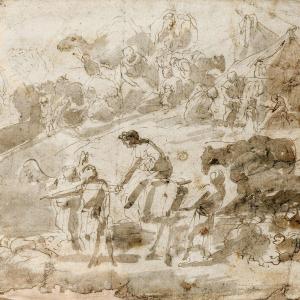
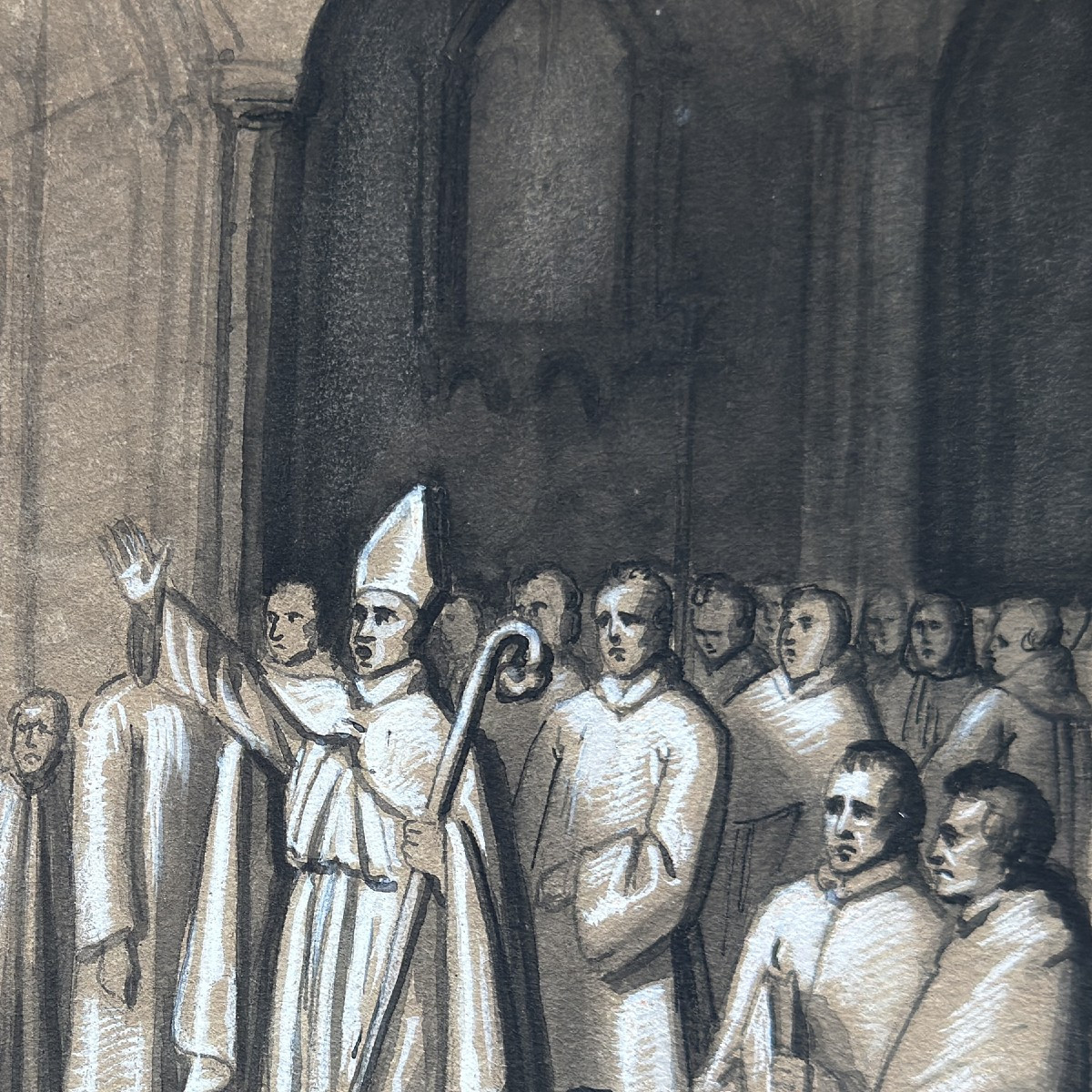
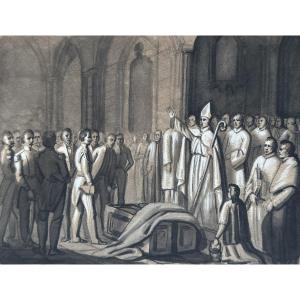
This evocative drawing by Giacinto Massola depicts a solemn funeral ceremony, the subject of which can be identified with considerable confidence through its iconographic details. The scene unfolds within the interior of Dom Maria Himmelfahrt in Bolzano and brings together a large assembly of participants, including clergy, civic figures, and members of the military dressed in the distinctive white uniforms of the Austrian army.
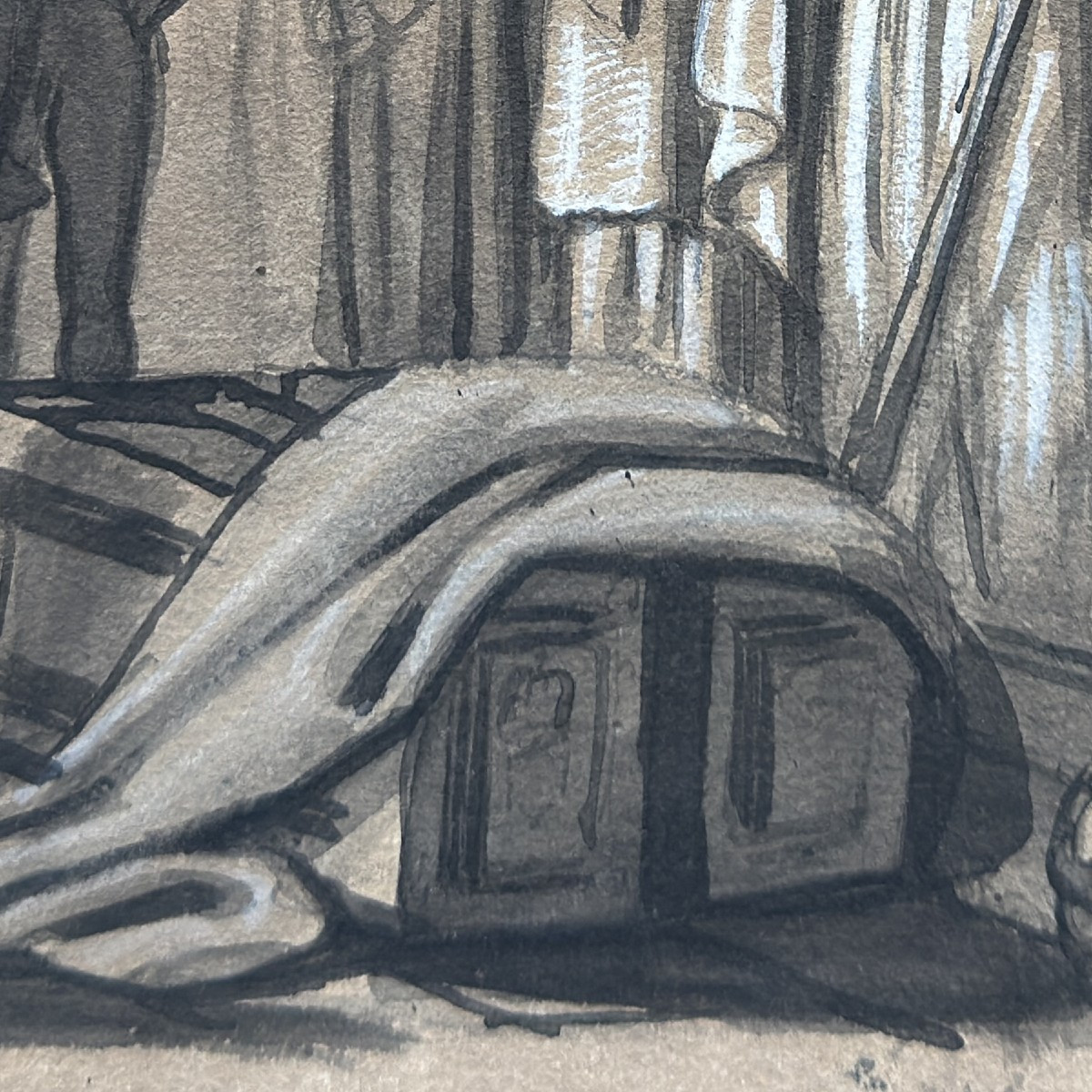
At the centre of the composition stands the coffin, draped in mourning cloth. On its end is clearly visible the imperial coat of arms, immediately indicating that the deceased belonged to the House of Habsburg. Given the probable date of the drawing and the historical context, the range of possible figures is extremely limited. The only Austrian archduke who died in the mid-nineteenth century and was buried outside Vienna, specifically in Bolzano, was Archduke Rainer Joseph of Austria, who passed away in 1853.
Archduke Rainer Joseph of Austria (1783–1853), born in Pisa, served as Viceroy of the Kingdom of Lombardy–Venetia from 1818 until 1848. His figure was deeply controversial within nineteenth-century Italy. On the one hand, he embodied Austrian rule, increasingly perceived as oppressive amid the rise of national consciousness; on the other, during his tenure Milan remained a major political and cultural centre, while his role as viceroy was largely representative in nature. Following the revolutionary events of 1848, Rainer left Milan and spent the final years of his life away from the Lombard capital.
It is precisely this historical background that makes the presence of such a subject within Massola’s oeuvre particularly striking. The artist’s engagement with a politically charged and sensitive theme suggests that the drawing may have been connected to a significant official or semi-official commission, intended for a context in which the memory of the viceroy retained importance despite the rapidly shifting political climate.
From a compositional standpoint, Massola structures the scene as a restrained and almost procedural act. He avoids overt dramatic emphasis, instead focusing on the measured rhythm of the figures, the balance between light and dark masses, and the solemn clarity of gestures. The use of white heightening to articulate the vestments of the clergy and the principal figures in the foreground reinforces the ceremonial gravity of the event and underscores the hierarchical order within the sacred space.
This drawing occupies a distinctive position within Massola’s body of work. It demonstrates his interest not only in religious and literary subjects, but also in contemporary history, approached with distance and formal discipline. The sheet stands as a rare document of how a mid-nineteenth-century artist could translate recent political events into the visual language of academic drawing and historical composition.
The author wishes to express his gratitude to Simone Ferraro for his assistance in identifying the subject of the drawing.
SCENE OF THE FUNERAL OF ARCHDUKE RAINER JOSEPH OF AUSTRIA IN BOLZANO
GIACINTO MASSOLA
Sarzana, 1820 – Genoa, 1865
Pencil, grey wash and white heightening on toned paper
16 × 20.5 cm
With margins: 24.5 × 31.5 cm
This evocative drawing by Giacinto Massola depicts a solemn funeral ceremony, the subject of which can be identified with considerable confidence through its iconographic details. The scene unfolds within the interior of Dom Maria Himmelfahrt in Bolzano and brings together a large assembly of participants, including clergy, civic figures, and members of the military dressed in the distinctive white uniforms of the Austrian army.
At the centre of the composition stands the coffin, draped in mourning cloth. On its end is clearly visible the imperial coat of arms, immediately indicating that the deceased belonged to the House of Habsburg. Given the probable date of the drawing and the historical context, the range of possible figures is extremely limited. The only Austrian archduke who died in the mid-nineteenth century and was buried outside Vienna, specifically in Bolzano, was Archduke Rainer Joseph of Austria, who passed away in 1853.
Archduke Rainer Joseph of Austria (1783–1853), born in Pisa, served as Viceroy of the Kingdom of Lombardy–Venetia from 1818 until 1848. His figure was deeply controversial within nineteenth-century Italy. On the one hand, he embodied Austrian rule, increasingly perceived as oppressive amid the rise of national consciousness; on the other, during his tenure Milan remained a major political and cultural centre, while his role as viceroy was largely representative in nature. Following the revolutionary events of 1848, Rainer left Milan and spent the final years of his life away from the Lombard capital.
It is precisely this historical background that makes the presence of such a subject within Massola’s oeuvre particularly striking. The artist’s engagement with a politically charged and sensitive theme suggests that the drawing may have been connected to a significant official or semi-official commission, intended for a context in which the memory of the viceroy retained importance despite the rapidly shifting political climate.
From a compositional standpoint, Massola structures the scene as a restrained and almost procedural act. He avoids overt dramatic emphasis, instead focusing on the measured rhythm of the figures, the balance between light and dark masses, and the solemn clarity of gestures. The use of white heightening to articulate the vestments of the clergy and the principal figures in the foreground reinforces the ceremonial gravity of the event and underscores the hierarchical order within the sacred space.
This drawing occupies a distinctive position within Massola’s body of work. It demonstrates his interest not only in religious and literary subjects, but also in contemporary history, approached with distance and formal discipline. The sheet stands as a rare document of how a mid-nineteenth-century artist could translate recent political events into the visual language of academic drawing and historical composition.
The author wishes to express his gratitude to Simone Ferraro for his assistance in identifying the subject of the drawing.
170 €
Period: 19th century
Style: Louis Philippe, Charles 10th
Condition: Good condition
Material: Paper
Length: 20,5 cm
Height: 16 cm
Reference (ID): 1695220
Availability: In stock
Print