

Russian Crystal Planter From The Imperial Glass Manufactory, Russia, Saint Petersburg.
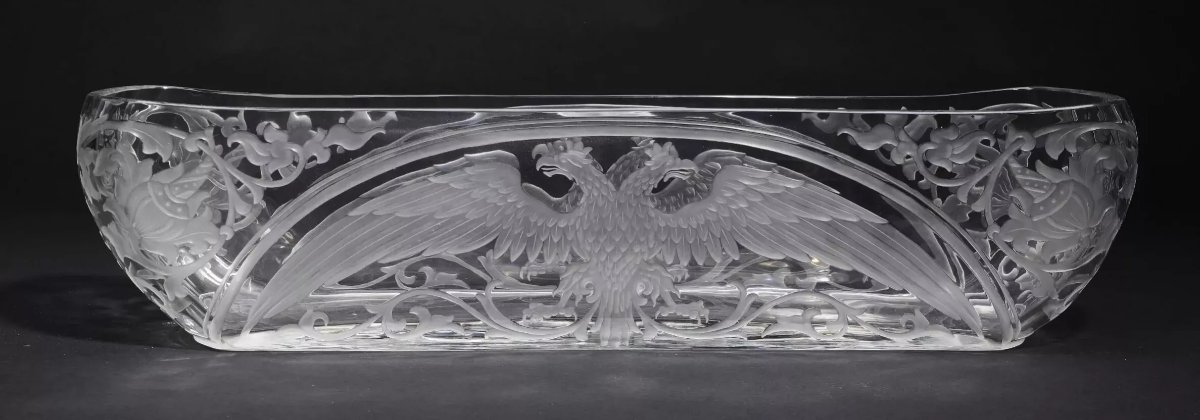
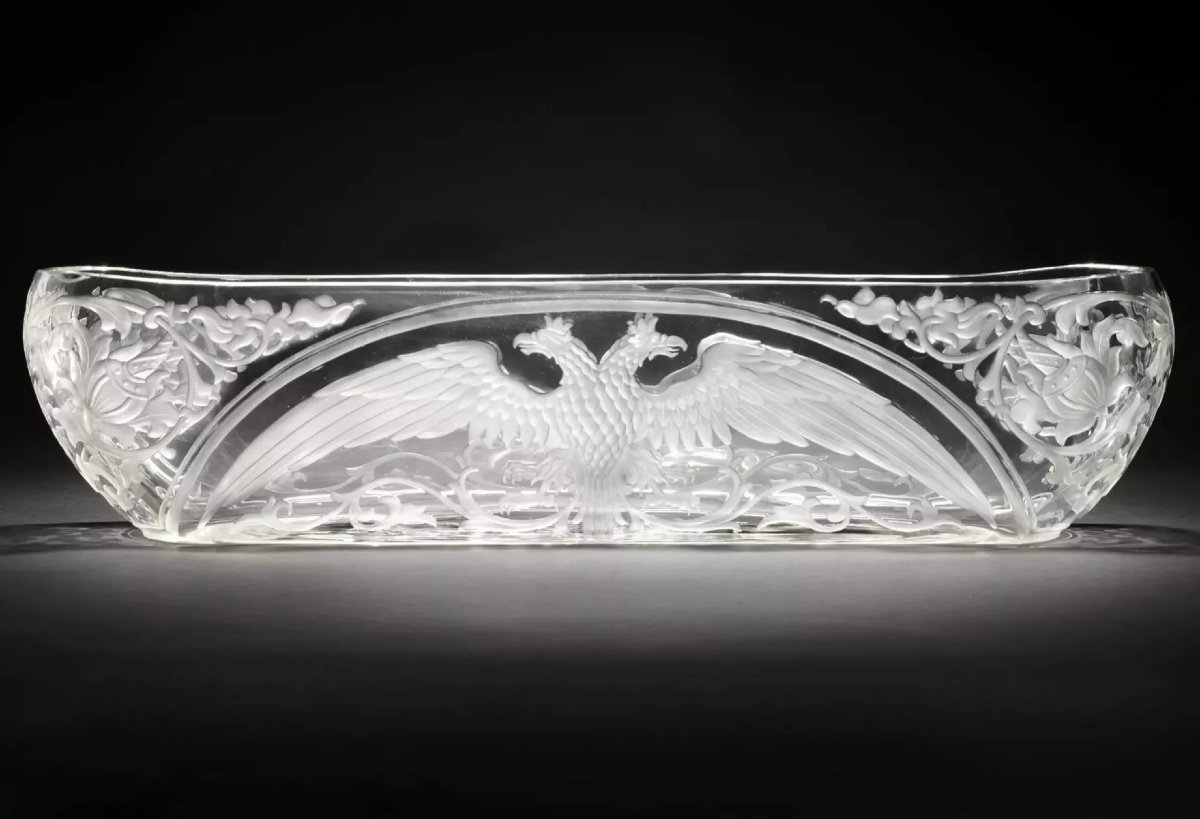
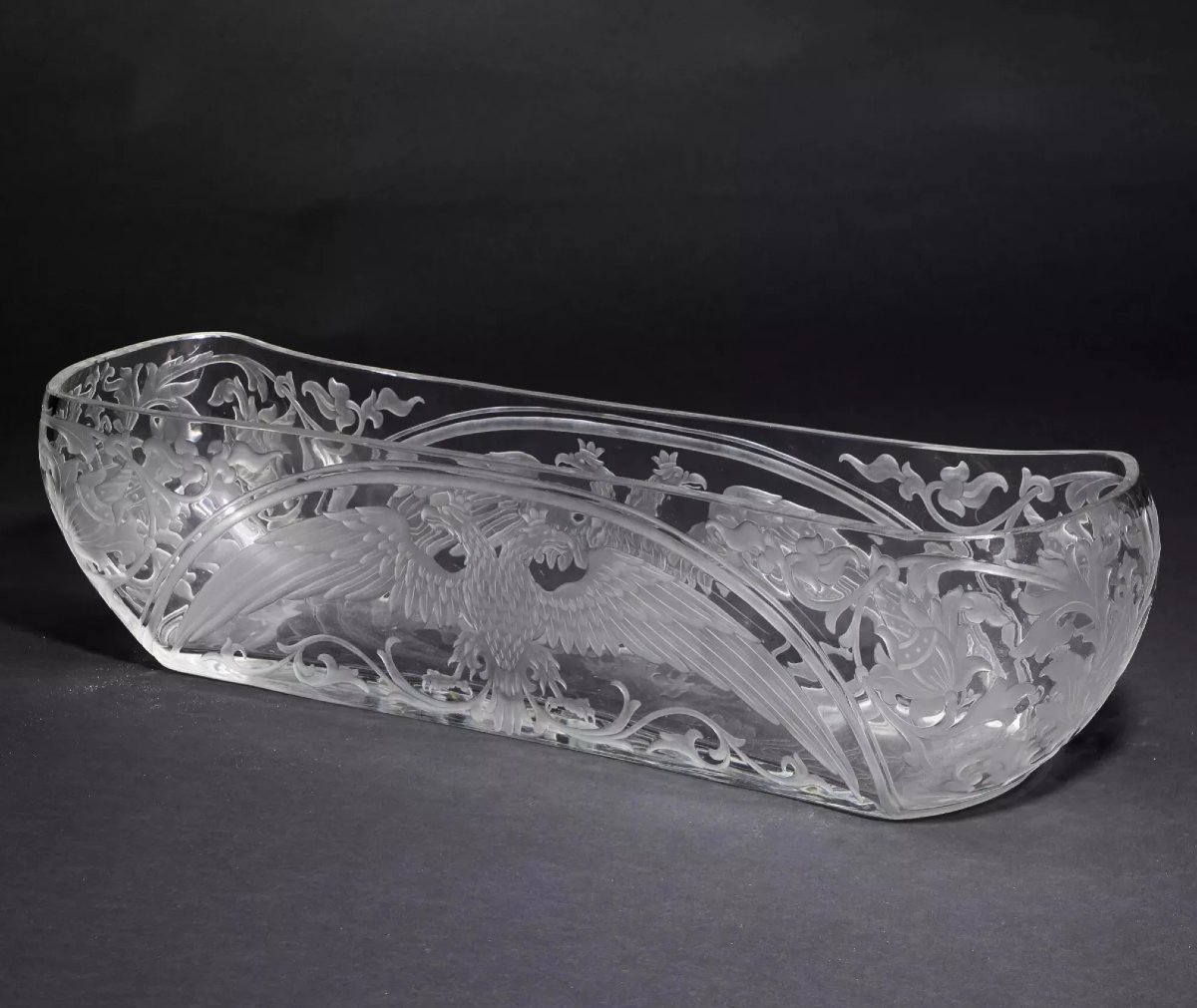
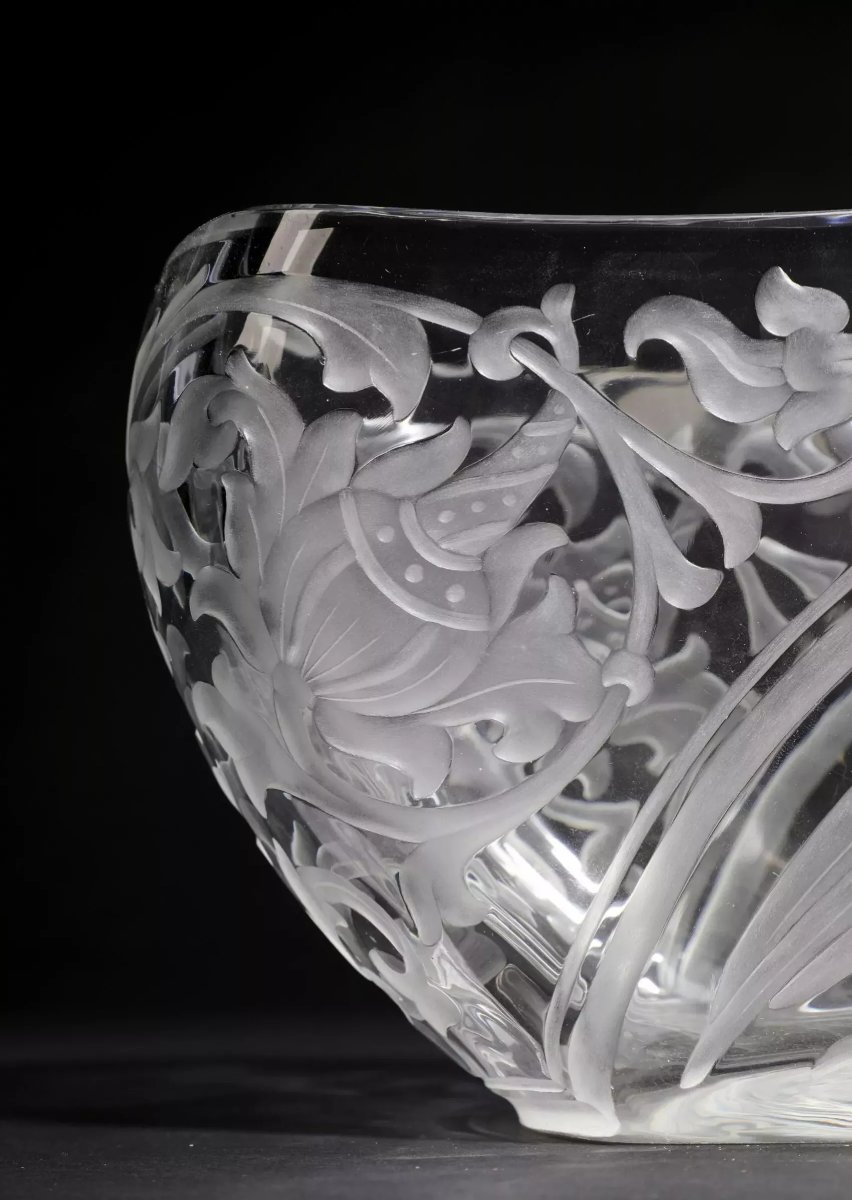
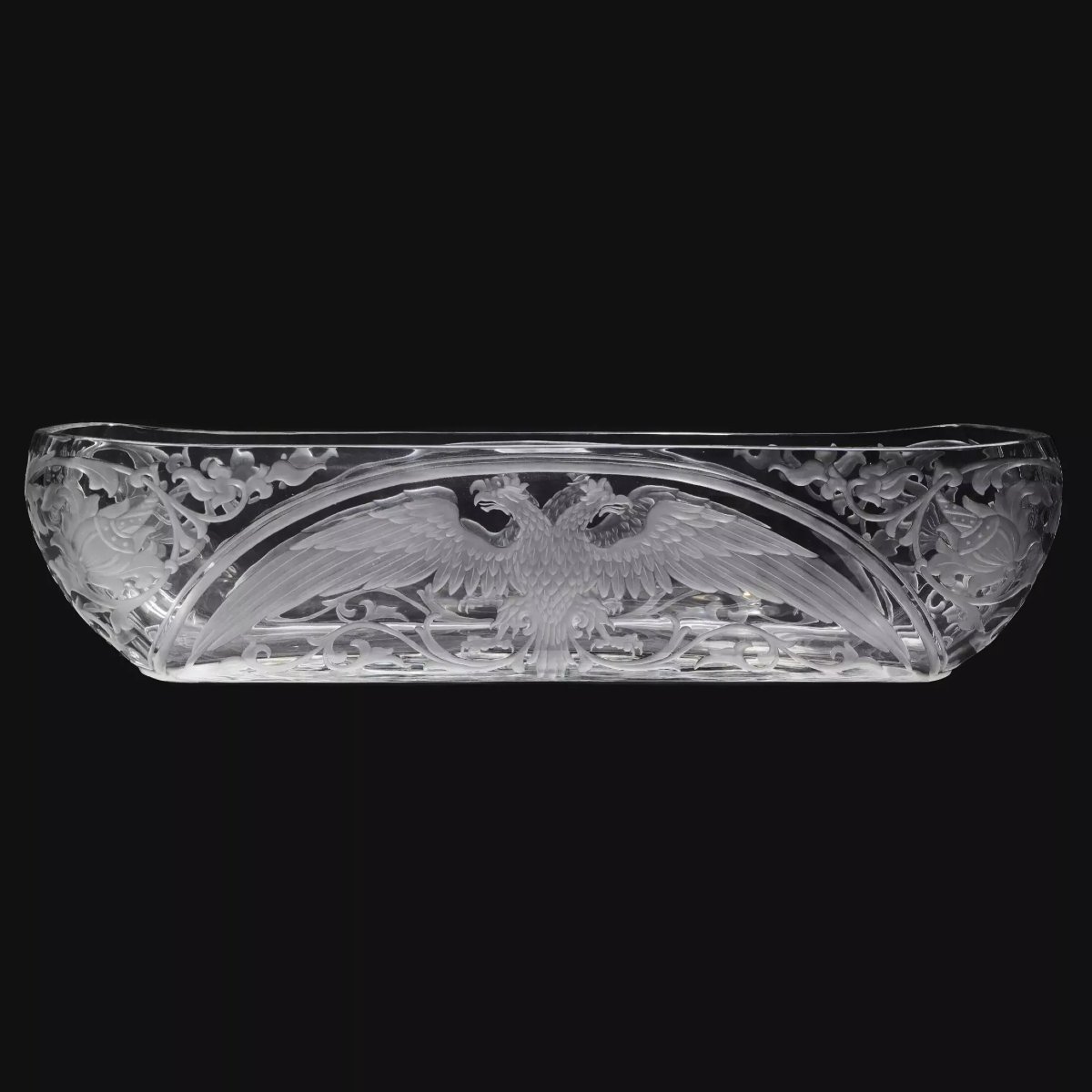
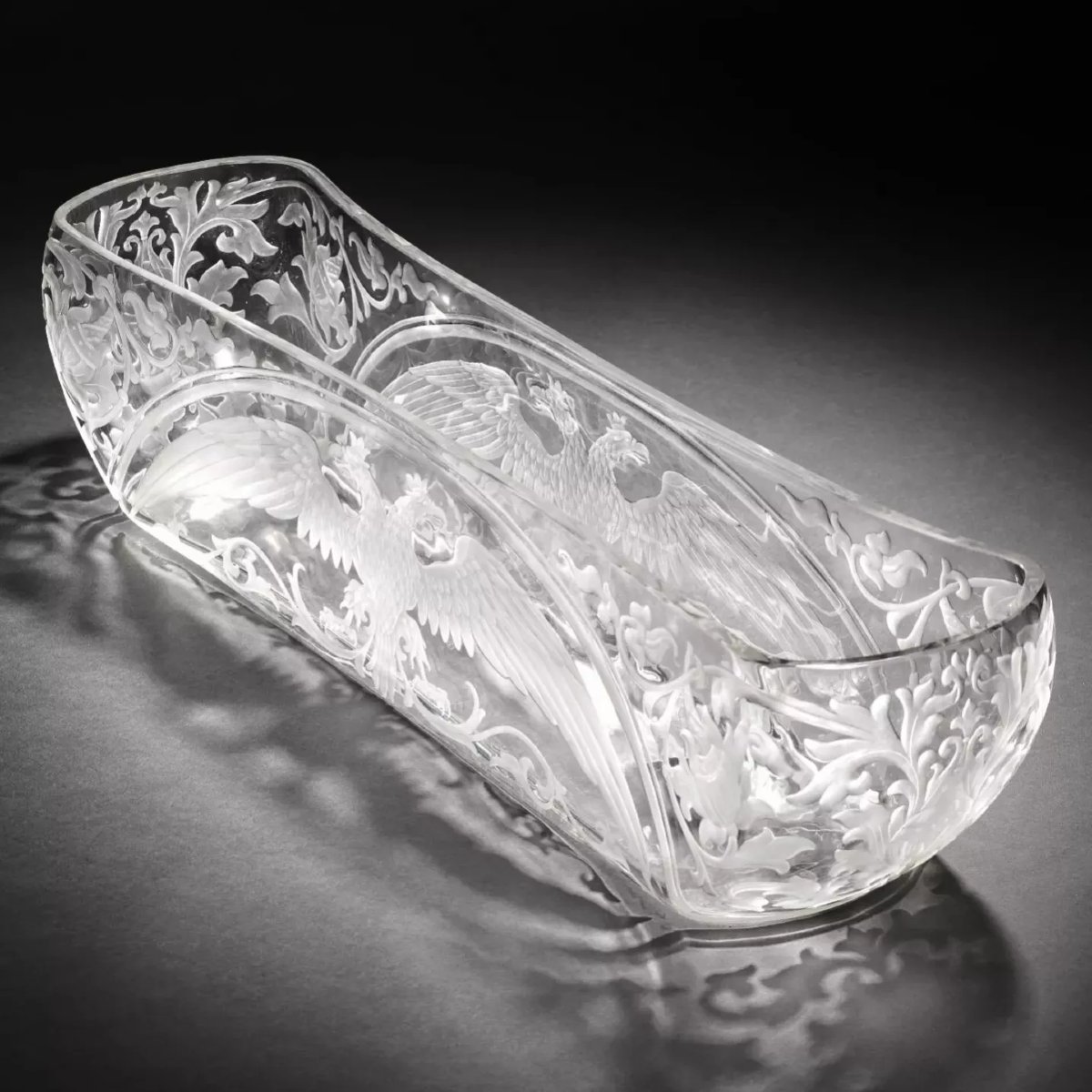
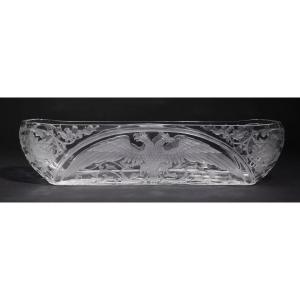
A remarkable crystal planter crafted at the Imperial Glassworks, a rare example of early 20th-century decorative art. Monumental in scale and designed for grand ceremonial interiors, it stands out for the architectural clarity of its form and the harmony of its lines. The rectangular body, with its slightly concave sides, rounded corners, and subtly projecting ends, lends the piece a dynamic and elegant balance.
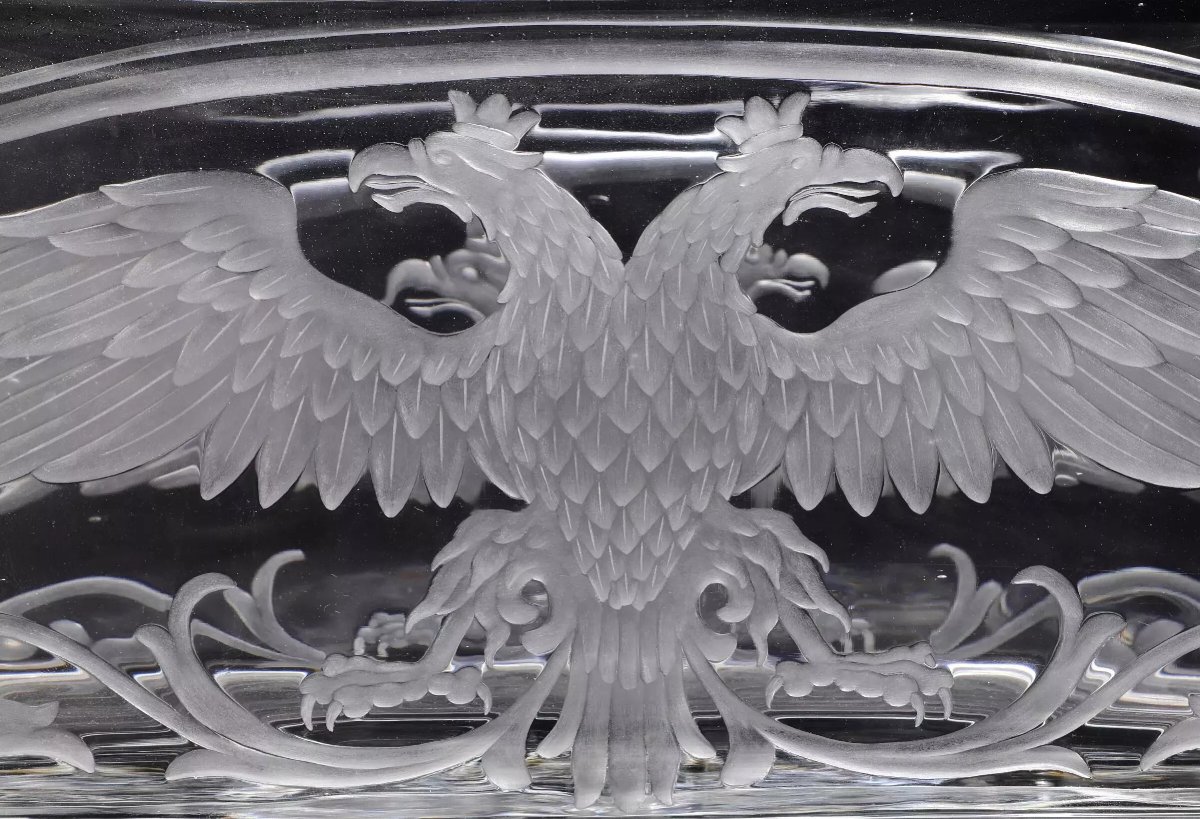
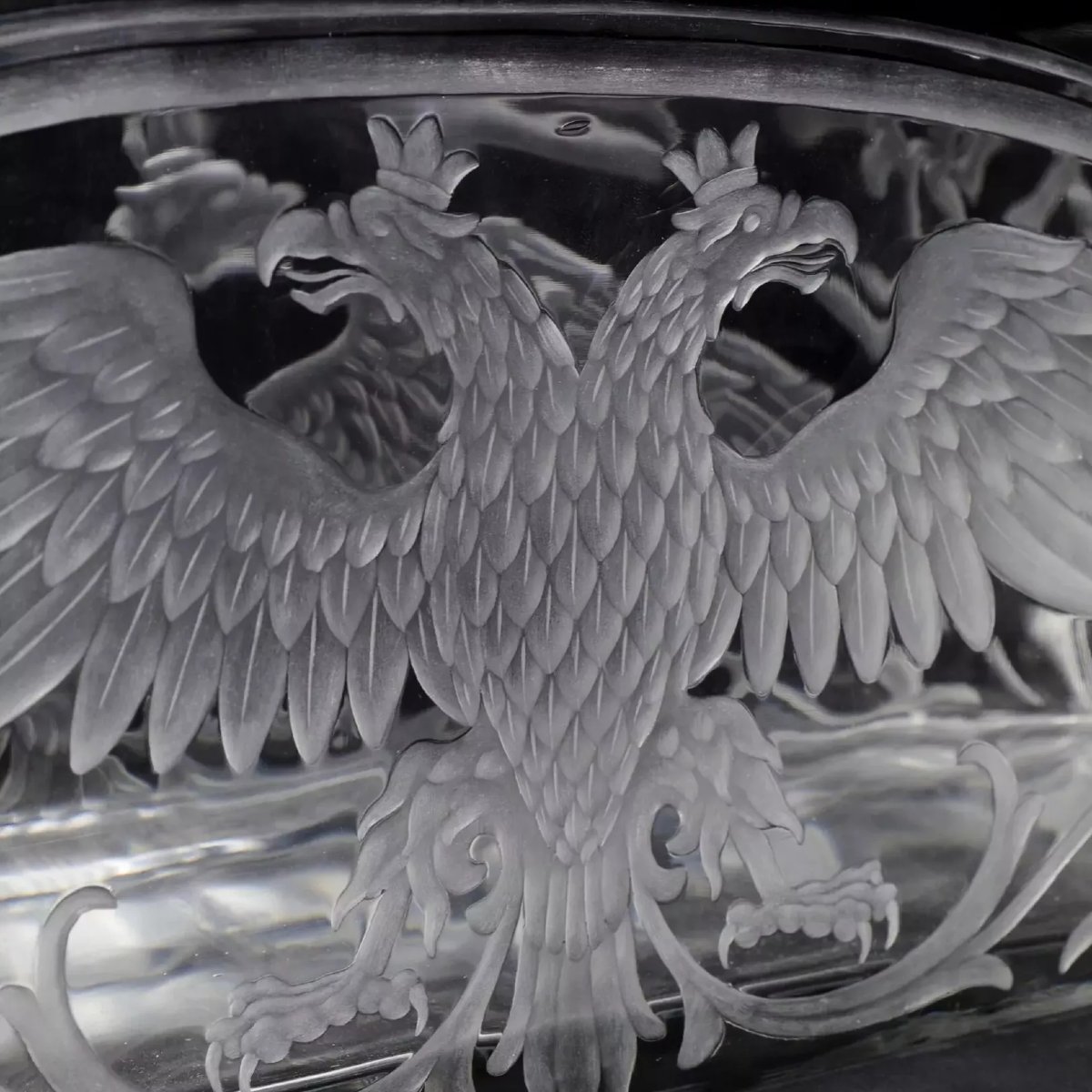
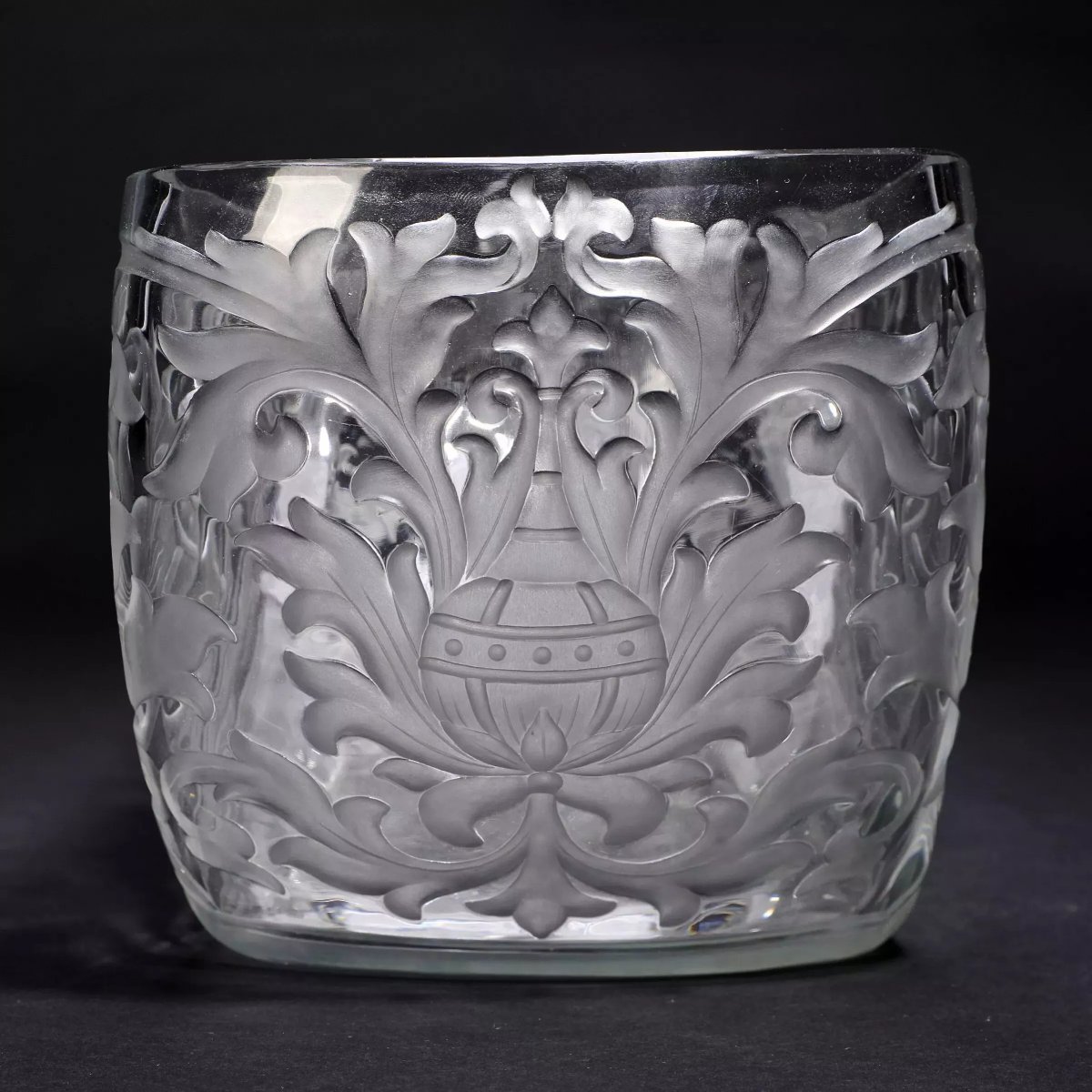
The sculpted decoration is of particular significance. The side panels are adorned with finely executed double-headed eagles, the emblem of the Russian Empire derived from the Byzantine heraldic tradition and adopted by the tsars as a symbol of sovereign authority. The deeply carved eagles feature precise rendering of the feathers and crowns, revealing the virtuosity of the manufactory’s master engravers. Floral scrolls and foliage motifs complete the composition, forming a rich ornamental pattern that unites imperial symbolism with decorative refinement.
The sculpture draws inspiration from the Renaissance, reflecting the historicist taste of the late 19th and early 20th centuries. At the same time, the ornamentation evokes 17th-century Russian motifs, demonstrating a deliberate synthesis between European artistic heritage and national tradition.
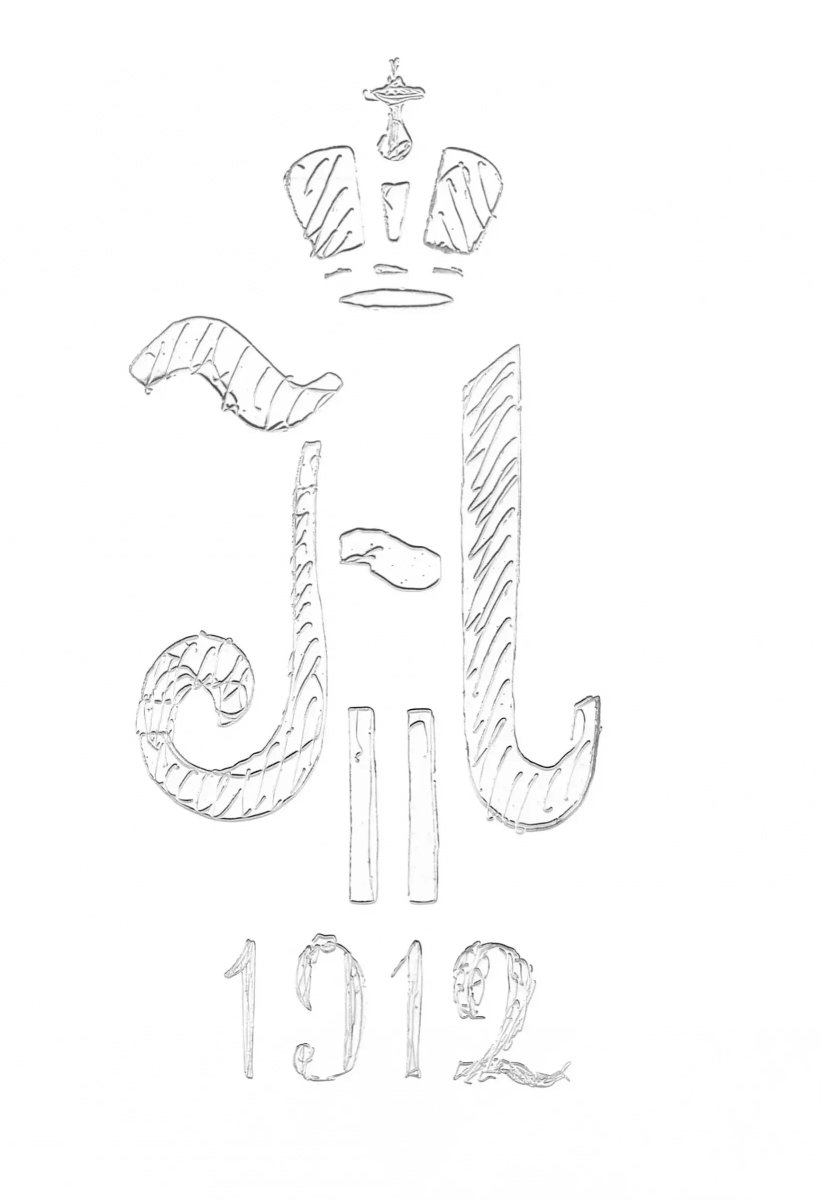
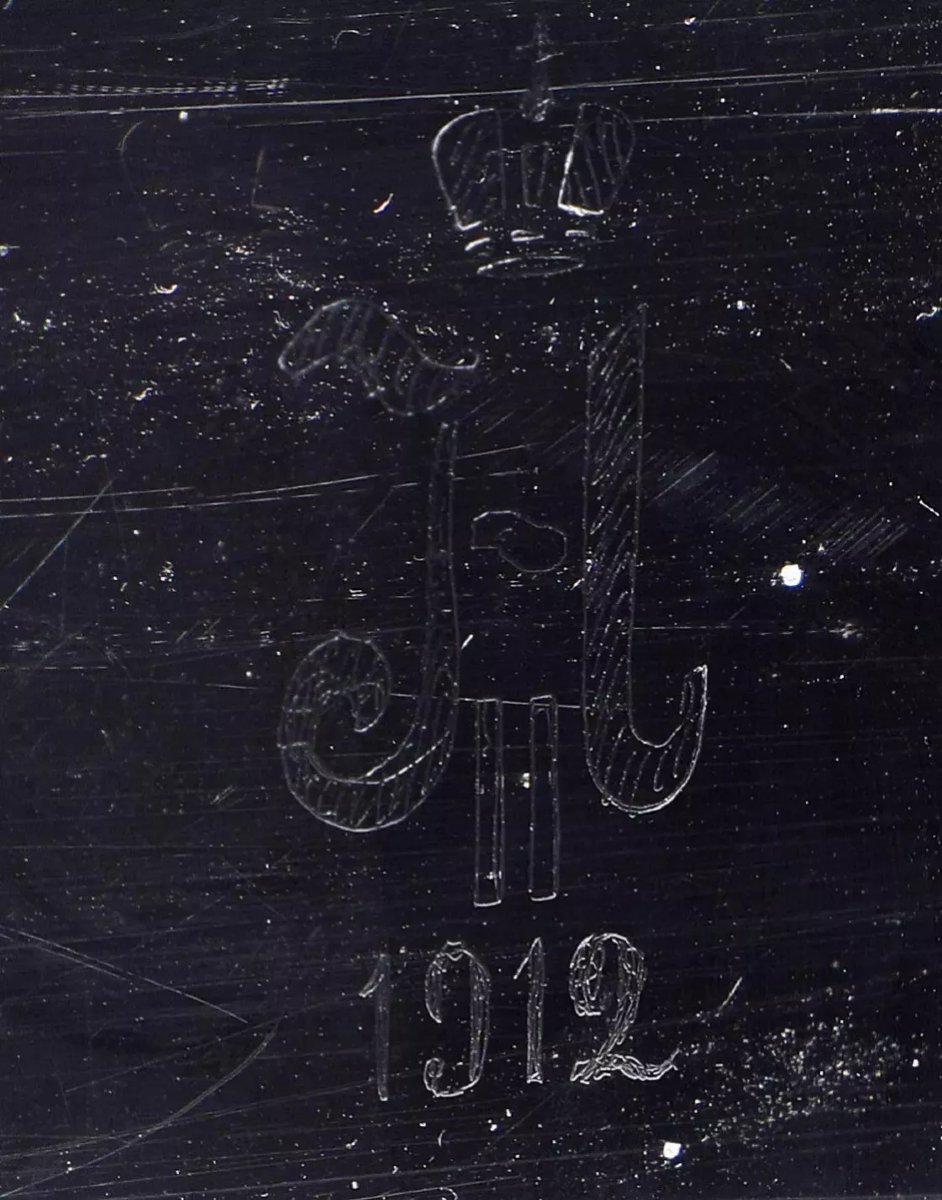
On the reverse is the engraved inscription “H II 1912,” indicating the reign of Nicholas II and confirming the date of creation.
Similar works are held in museum collections, notably at the Hillwood Museum in Washington, D.C., where pieces designed by Pyotr Ivanovich Krasnovsky and executed by the engraver Grigori Omrokov attest to the exceptional artistic caliber of the Imperial Glassworks in the early 20th century.
Material: Colorless crystal; blown, cut, sculpted, engraved, and polished.
Markings: Inscription engraved with a point under the base: “H II 1912.”
Dimensions: Height 15.5 cm; length 69 cm; width 15.5 cm.
Provenance: Private collection.
Condition: Very good.
ID-ANTQ-11146
Period: 20th century
Style: Other Style
Condition: Good condition
Length: 15.5
Width: 69
Height: 15.5
Reference (ID): 1839935
Availability: In stock