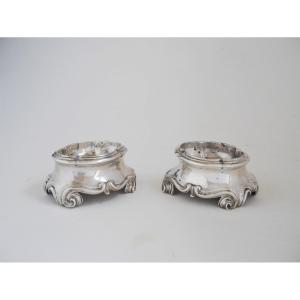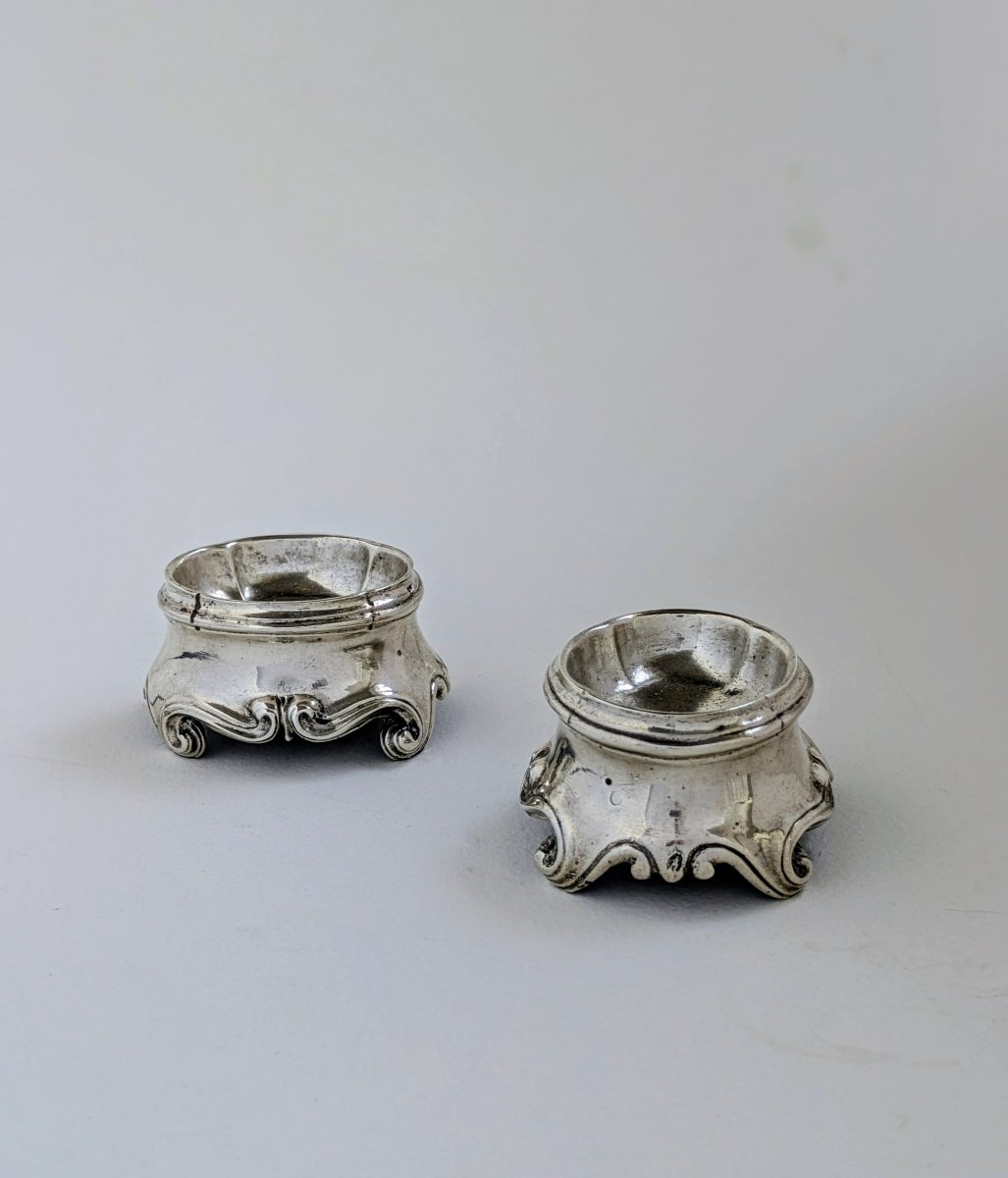
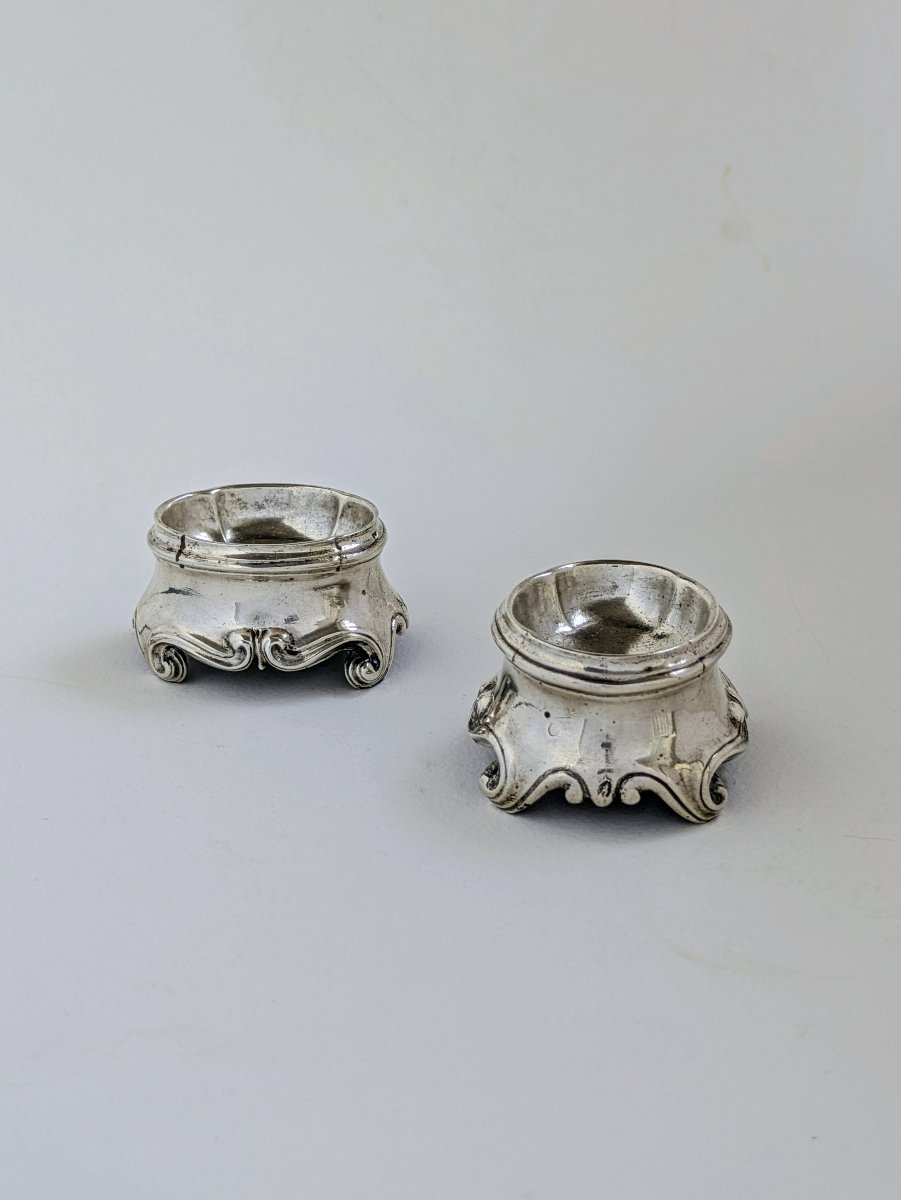
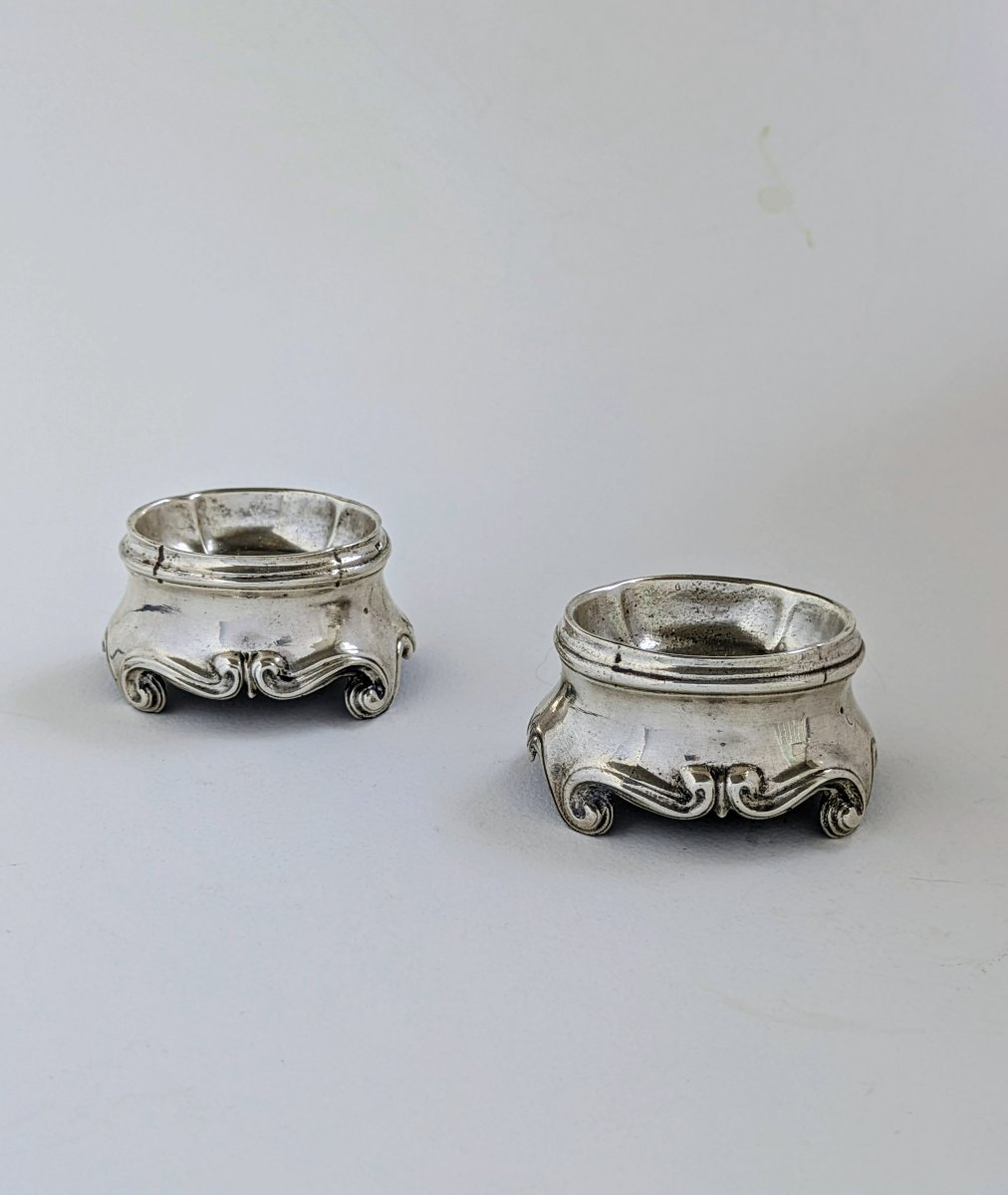
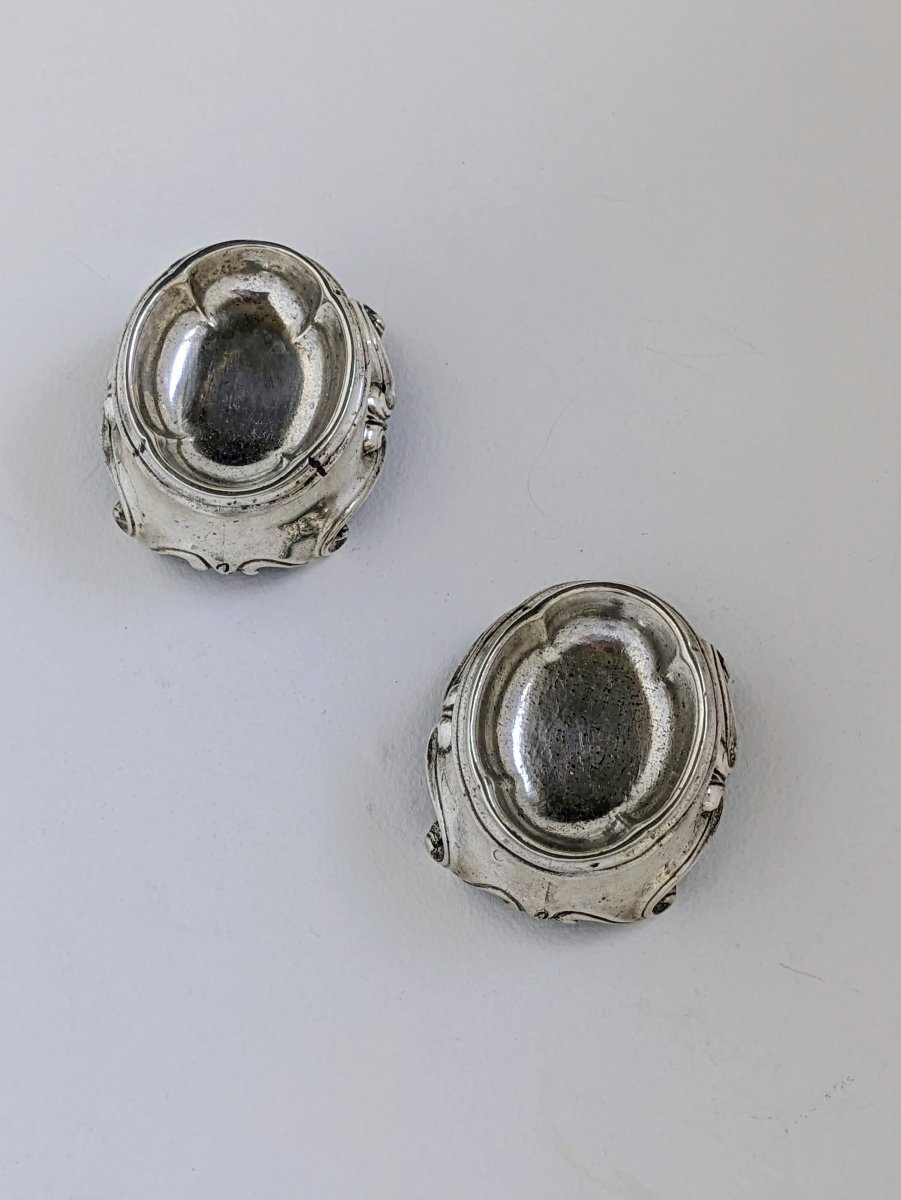


Narbonne: Pair Of Silver Salt Cellars By Jean-louis Lespinier, 1751–1752
Artist: Lespinier
- Pair ofsalt cellars
- Cast silver, soldered and engraved
- Jean-Louis Lespinier, master silversmith in Narbonne from 1731 to 1773
- Narbonne, 1751–1752
- Length:79 mm, width: 63 mm, height: 42 mm; weight: 227 g
- Very good condition, a few small traces of corrosion in one of the salt cellars, casting defects
- Pair of oval-shaped salt cellars consisting of a barrel-shaped body with amolded base resting on four scroll-shaped feet. The four-lobed, ribbed salt cellar set into the body is edged with a cavetto and bead molding.
- These salt cellars are based on the model produced in 1738 for the King of Denmark by Aymé Joubert [2, pp. 128–129, nos. 66–71]. It is characterized by very pronounced and deep moldings. This model was highly successful; it was produced in nearly all the provinces of the kingdom, without any. These salt cellars, as is often the case in Languedoc, are made of cast shell molds. An identical pair by Paul Roland, dated 1749–1758, was sold on June 20, 2005, at Sotheby’s Paris, lot 91.
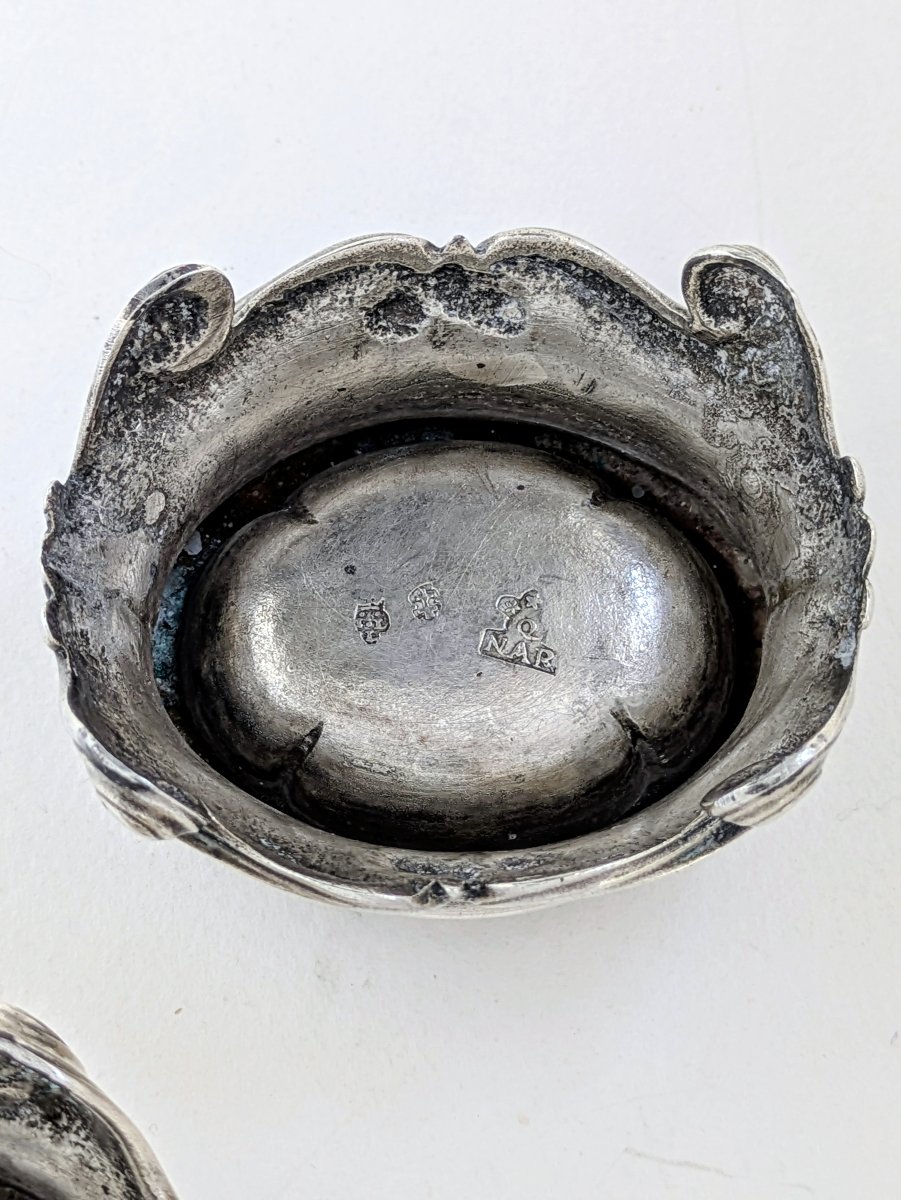
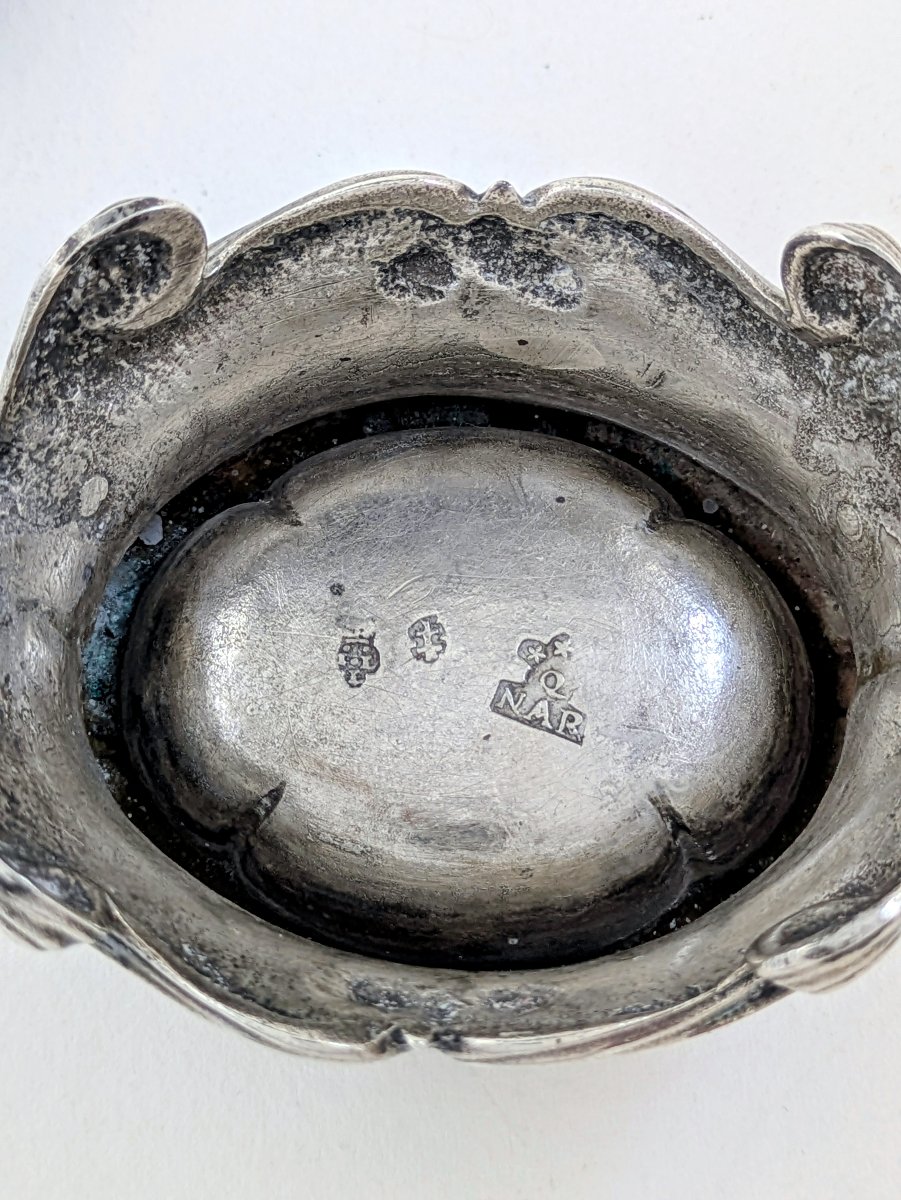
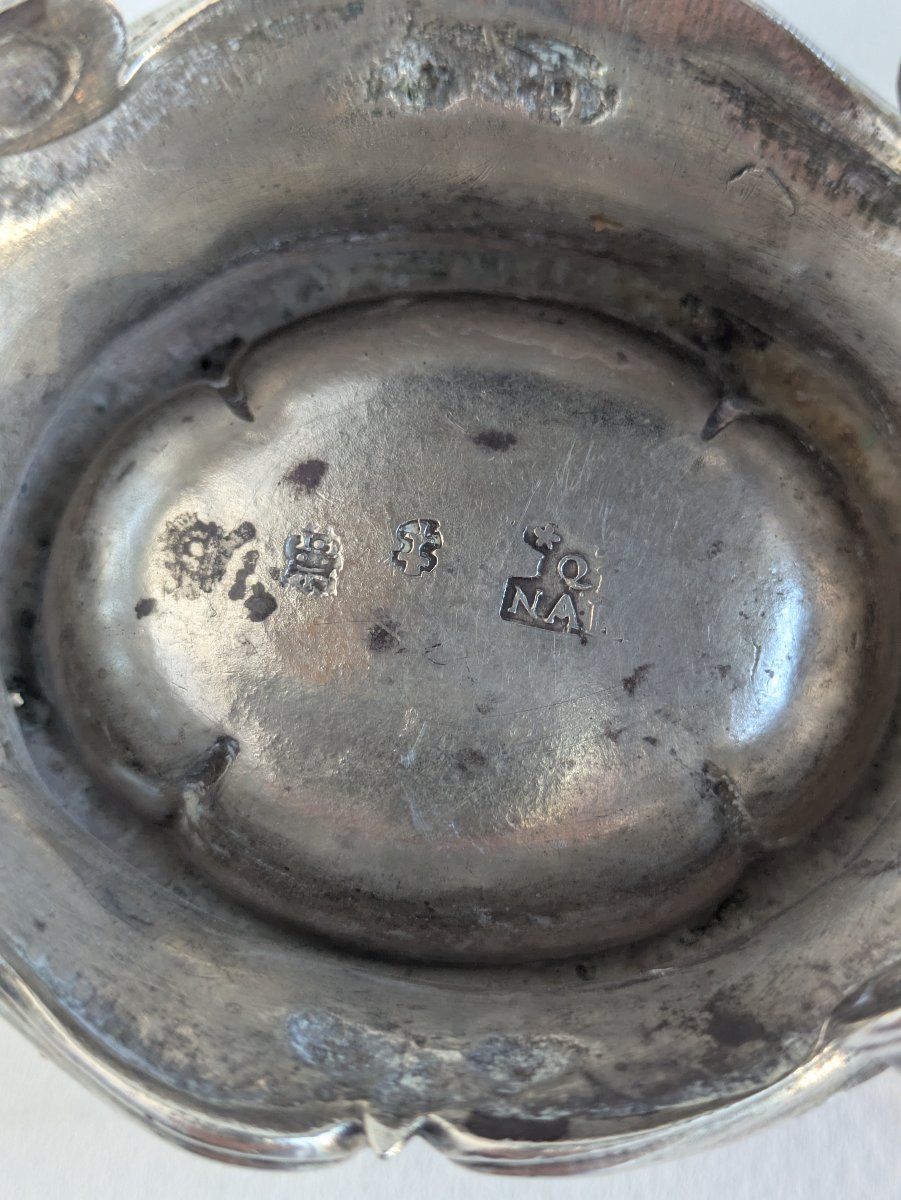
- Hallmarks (on each salt shaker): Master silversmith: ILL with three points surmounted by a crown, hallmark of Jean-Louis Lespinier from 1731 to 1773 [3, vol. III, p. 379]; charge: a Jerusalem cross, mark of the Narbonne town, circa 1750 ; warden mark: Q surmounted by three stars // NAR for the Narbonne guild, 1751-1752 ([1] & [3] n.d.]); discharge mark (along the edge where the twoshells meet): illegible.
- Ref. : [1]Helft, Jacques : "Les poinçons des provinces françaises", 1968; [2] Mabille,Gérard & Krog, Ole : " La table d’un roi- l’orfèvrerie duXVIIIe siècle à la Cour de Danemark ", Musée des Arts Décoratifs,Paris, 1987 ; [3] Thuile, Jacques : "Les poinçons des provincesfrançaises", 5. Vol, Schmied, Paris, 1968
2 400 €
Period: 18th century
Style: Louis 15th - Transition
Condition: Good condition
Material: Sterling silver
Length: 79 mm
Width: 63 mm
Height: 42 mm
Reference (ID): 1839594
Availability: In stock
Print